
Blepharoplasty is eyelid surgery: it removes excess skin above the eye and, below it, repositions fat rather than removing it. That single shift changes the result entirely, because the volume protruding forward is exactly what is missing in the hollow beneath it, so moving it corrects the fullness and the tear trough in one step. Published series report high satisfaction, a visible reduction in perceived age, and a scar that is either invisible or hidden in a natural crease.
This guide complements our Blepharoplasty in Turkey procedure page, which sets out how the operation is performed, the stay and the aftercare. Here we explain the technical shift from removal to repositioning, the figures from recent studies, a short test you can do at home, and how to tell whether the concern belongs to the eyelid or to the brow. It sits within our wider facial surgery in Turkey section, and you can see indicative pricing at any time. No figures appear in this guide itself: the amount depends on which eyelids are addressed and the technique chosen.
The Major Shift in This Surgery
For decades, lower eyelid surgery meant removing the fat that formed the fullness. Recent publications describe a clear evolution: that fat is now repositioned rather than taken away. The reason is simple. Removing fat alone often leaves the tear trough in place and can even accentuate the hollow just below it. Repositioning fills that hollow with the volume that was protruding, addressing both areas in one step.
What the Studies Document
Work covering ninety-seven people operated on transconjunctivally with refined fat adjustment reports results measured on a validated scale. 96.9% of patients report themselves satisfied. Among them, 67% describe themselves as very satisfied. Objective assessment by two independent surgeons reaches 4.2 out of 5, with excellent agreement between assessors.
Perceived Age
A study measuring the effect of fat repositioning with deep plane adjustment provides a concrete figure. Patients estimate they look 3.3 years younger after the operation. An automated analysis of the same photographs estimates 5.8 years. That gap between personal perception and outside assessment is interesting: the change often reads more clearly from outside than in your own mirror.
The Tear Trough
This oblique groove running from the inner corner of the eye toward the cheek is the commonest concern in this area. A technique combining internal and external fixation reports it eliminated in 86.7% of those treated. The authors used magnetic resonance imaging to verify the long-term fate of the transposed fat. That is a rare objective check in this field, and it confirms the stability of the repositioning.
Comparing Removal and Repositioning
The table sets the two approaches side by side.
| Criterion | Removing the fat | Repositioning the fat |
|---|---|---|
| Fullness below the eye | Addressed | Addressed |
| Tear trough | Often left in place | Filled by the transposed volume |
| Hollow below the eye | Can become more marked | Softened |
| Volume retained | Lost permanently | Kept and redistributed |
| Transition to the cheek | Can stay marked | Softened |
| Approach | Older | Documented in recent publications |
The fourth row counts most over the long term. Periorbital volume naturally diminishes over the years, so keeping the fat rather than removing it preserves a resource that will become valuable.
The Approach With No External Scar
The transconjunctival route passes through the inside of the lower eyelid, giving direct access to the fat without touching the skin. No scar therefore appears on the outside. Many authors now recommend this route precisely because it avoids skin removal. Where excess skin remains, it is addressed with a very limited pinch or a resurfacing technique, as a complement.
The Age of the People Concerned
The ninety-seven-patient study reports a mean age of thirty-seven. That is markedly younger than most people imagine for eye contour surgery. It follows from the nature of the fullness below the eye, which is often constitutional rather than age-related. Many people notice it in their twenties or thirties, and it does not diminish over time.
The Anatomy of the Eye Contour
Understanding the structures of this region explains why repositioning replaced removal, and why some steps succeed where others leave part of the concern in place.
The Fat Compartments
The lower eyelid holds three fat compartments separated by fine partitions: an inner, a central and an outer one. They surround the eyeball and cushion it within its bony socket. The outer compartment is the hardest to reach by the internal route, which several publications note. A surgeon who specifically mentions addressing it is describing a complete technique rather than a partial step.
The Membrane Holding Them
A fine membrane called the orbital septum holds those compartments in place. It becomes more yielding over time, which lets the fat push forward and form the visible fullness. It is therefore not excess fat but a displacement of what was already there. That is exactly why repositioning is coherent: what slid forward is brought back and downward.
The Tear Trough Ligament
A fibrous attachment links the skin to the bone along the lower orbital rim, on the inner side. It creates a fixed boundary that becomes visible when the volume above protrudes and the volume below diminishes. That attachment is what the surgeon releases during the operation. Without that release, the transposed volume cannot settle correctly into the hollow, and the groove stays marked despite the step.
The Structures and Their Roles
| Structure | What it produces | Addressed by the step |
|---|---|---|
| Fat compartments | The visible fullness below the eye | Repositioned, not removed |
| Orbital septum | Lets the fat come forward | Opened for access |
| Tear trough ligament | The oblique groove below the eye | Released |
| Orbicularis muscle | Eyelid tone | Preserved |
| Eyelid skin | Excess above, rarely below | Removed above if needed |
| Bony orbital rim | Limit of the repositioning | Serves as a landmark |
The muscle surrounding the eye provides eyelid tone, and current techniques preserve it carefully, which contributes to how the contour holds over time.
The Upper Eyelid
Excess skin there comes from two sources that add together: skin belonging to the eyelid itself, and skin the descended brow pushes downward. Telling the two apart governs the choice of step. Fat is present there too, and recent publications recommend keeping it rather than removing it. Work covering seventy-six people describes repositioning it toward the superior orbital rim to preserve the fullness of the region.
The Test That Identifies the Origin
Facing a mirror, relax your forehead completely, then lift the outer end of your brow three to four millimetres with a finger. Watch what happens at your upper eyelid. If it clears noticeably, part of what concerns you comes from brow descent. If it changes little, the excess genuinely belongs to the eyelid. That ten-second observation shapes the whole consultation ahead.
What You Can Observe Below
Look at yourself in three-quarter view rather than front on, under light coming slightly from above. That angle and that light reveal the fullness and the transition to the cheek best. Then look up toward the ceiling: the fullness increases, confirming it comes from orbital fat pushing forward. That small manoeuvre is useful to describe at consultation.
Both Eyelids in Detail
The upper and lower eyelids follow different logics. Here is what each involves and how the step proceeds.
The Upper Eyelid
Excess skin there forms a fold that comes to cover the natural crease, sometimes reaching the lash line. The step removes that surplus skin precisely, through an incision placed in the crease itself. The scar therefore hides entirely once the eye is open. It is one of the few facial steps where the scar sits in an existing crease rather than creating a new one.
An important evolution concerns this level too. Work covering seventy-six people describes repositioning the nasal fat pad toward the superior orbital rim rather than removing it. The authors note that removing volume from the upper eyelid produces a hollow that can become noticeable over the years. Keeping and redistributing that fat preserves the natural fullness of the region.
The Lower Eyelid
The fullness forming there comes from orbital fat pushing forward through a membrane that has become more yielding. It is therefore not excess fat but a displacement of what was already present. That is precisely why repositioning is coherent: the volume protruding forward is brought downward, to where the hollow has formed. One step corrects both contours.

Comparing the Two Eyelids
| Criterion | Upper eyelid | Lower eyelid |
|---|---|---|
| Main concern | Skin covering the crease | Fullness and tear trough |
| Approach | Incision in the natural crease | From inside, no scar |
| Work on the skin | Precise removal of the excess | Rarely, a limited pinch |
| Work on the fat | Kept and redistributed | Repositioned into the hollow |
| Length of the step | Thirty to forty-five minutes | About fifty-five minutes |
| Anaesthesia | Local with sedation | Local with sedation |
The measured length rests on published data. The ninety-seven-patient study reports a mean operating time of fifty-six minutes for the lower eyelid by the transconjunctival route.
How the Lower Eyelid Step Proceeds
The surgeon reaches the fat through the inside of the eyelid, then releases the ligament creating the tear trough. That release is what allows the transposed volume to settle correctly afterwards. He then moves the fat into the hollow below the orbital rim and secures it. Several fixation methods exist, some combining an internal suture with a temporary external one, which publications describe in detail.
The Refined Adjustment
The ninety-seven-patient study stresses one point: how much fat to keep is judged during surgery, by observing the contour obtained. The authors describe a refined adjustment rather than a standardized removal. That approach aims precisely at avoiding any overcorrection. The authors report that all their cases showed resolution of the fullness and improvement of the tear trough without excess volume in the midface.
The Documented Recovery
The same study describes precisely how the following weeks unfold. Swelling of the lower eyelid concerns everyone operated on and resolves within eight weeks. The other observations recorded are infrequent and transient: mild redness of the conjunctiva in 2%, resolving within two weeks, and numbness of the midface in 3%, resolving within three weeks.
Choosing Your Surgeon
On this operation, a single question separates older approaches from current ones. Do you remove the fat or reposition it? That question separates immediately, since recent publications describe repositioning as the reference technique for the lower eyelid. A surgeon who explains that he moves the volume into the hollow rather than taking it away is working to current protocols. One who describes removal alone is describing an older approach.
The Other Useful Questions
Do you go through the inside of the eyelid? The transconjunctival route avoids any external scar and gives direct access to the fat, which many authors now recommend. Then: do you release the tear trough ligament? That release governs how well the transposed volume settles, and a practitioner who mentions it is describing the complete technique.
What a Portfolio Must Show
Close views of the eye contour taken under the same lighting, rather than full portraits. The change concerns a few millimetres of contour, which a wide framing does not show. Look also for three-quarter views, the angle at which the transition from eyelid to cheek reads best. It is precisely that transition the repositioning softens.
What Each Criterion Tells You
| Criterion | What it indicates | Reliability |
|---|---|---|
| Fat repositioning described | Technique matching the publications | Very high |
| Transconjunctival route used | No external scar | Very high |
| Ligament release mentioned | The complete technique | Very high |
| Adjustment judged during surgery | Dosage adapted rather than standardized | High |
| Close eye-contour views in the portfolio | The right framing for this step | High |
| Brow position also assessed | The origin correctly identified | High |
| Fat removal alone proposed | An older approach | Low |
A surgeon who also examines your brow position before proposing a step on the eyelid is correctly identifying the origin of what concerns you.
Turkey Compared With Other Destinations
A search in English will often lead toward Mexico, the Dominican Republic, Colombia, Costa Rica and Thailand. The grid below compares working methods, and it applies equally to two practitioners in the same city.
| Value criterion | Turkey / Istanbul (Aylan) | Mexico | Dominican Rep. | Colombia / Costa Rica / Thailand |
|---|---|---|---|---|
| Fat repositioning | Systematic | To verify | To verify | To verify |
| Transconjunctival route available | Yes | To verify | To verify | To verify |
| Brow assessed alongside | Systematic | To verify | To verify | To verify |
| Direct with the clinic | Yes, no middleman | Often via agency | Often via agency | Often via agency |
| Cost vs private domestic care | Often up to around 70% less | Often lower | Often lower | Often lower |
The first row is the one to put everywhere. A practitioner who repositions is describing the technique recent publications document; one who only removes is describing the earlier approach. Availability, in most countries, is not the limiting factor here. It is the technique used on the lower eyelid that varies most, and it is verified with a single question.
Istanbul, Ankara, Izmir and Antalya
Istanbul concentrates teams performing eyelid surgery daily, often alongside a brow lift or fat grafting. That breadth allows the eye region to be addressed as a whole. Excellent practitioners also work in Ankara, Izmir and Antalya, with additional international connections. The deciding criterion remains the technique used on the lower eyelid.
Preparing Your Operation
Preparation is light and the stay short. What calls for most attention is the quality of your photographs and following the eye care instructions of the first days.
Two Months Ahead
First contact, sending your photographs and receiving a quote specifying which eyelids are involved and the technique chosen for the lower one. This is also when to stop smoking, eyelid skin being the thinnest on the body and its healing particularly sensitive. Also mention any known dry eye.
One Month Ahead
Preoperative work-up at home, light since the operation is often done under local anaesthesia with sedation. An eye examination is requested if you have an ocular history. Two weeks ahead, blood thinners stop on medical advice, including fish oil, turmeric and vitamin E. On a richly supplied area, that precaution markedly reduces bruising.
The Photographs to Send
| View | What it reveals |
|---|---|
| Front, looking straight ahead | Symmetry and general fullness |
| Right and left three-quarter | Transition from eyelid to cheek |
| Front, looking upward | Accentuation of the fatty fullness |
| Front, eyes closed | Upper eyelid skin |
| Front with outer brow lifted by finger | The share coming from brow descent |
The looking-upward view is the one surgeons request most and patients send least. Looking up accentuates the fatty fullness and confirms its origin, which a straight-ahead gaze does not show as clearly.
What to Pack
Artificial tears in single-dose vials, cold packs if your accommodation does not supply them, wide sunglasses and something to sleep with your head raised. Bring glasses rather than lenses for the first two weeks, and a concealer you know well for covering residual bruising.
The Day Before
The surgeon examines your eyelids seated, assesses lower eyelid tone, measures your brow position and confirms the technique chosen for each level. This is the moment to ask explicitly whether he will reposition the fat and release the tear trough ligament. A practitioner who confirms both is describing the complete technique.
How Your Stay Unfolds
| Day | What happens |
|---|---|
| Arrival | Airport welcome, transfer, rest |
| Day 1 | Consultation, seated examination, technique confirmed |
| Day 2 | Surgery, back to the hotel the same day |
| Days 3 to 4 | Rest, cold on the eyelids, swelling at its peak |
| Day 5 | Check-up, bruising receding |
| Days 6 to 7 | Sutures removed, first outings |
| Departure | Flight home around day ten |
This five to seven night stay allows suture removal and a check-up before you leave. It is among the shortest of the facial operations.
Getting Through Recovery
The First Days in Practice
Swelling of the eyelids and bruising occupy the first week, peaking around the second or third day. Cold applied over the first forty-eight hours markedly speeds up their resolution. Sleep with your head raised for a week and use artificial tears as often as needed. Avoid rubbing your eyes and keep screen sessions short during the first days.
The Result Calendar
| Milestone | What you see | What is happening |
|---|---|---|
| Days 1 to 5 | Swelling and bruising | Peak on day three then receding |
| Weeks 1 to 2 | Bruising coverable | Sutures out, outings possible |
| Weeks 3 to 8 | Contour refining | Residual swelling resolving |
| Around eight weeks | Swelling resolved | Duration documented in the publications |
| Months 3 to 6 | Result established | Final contour, scar faded |
The eight-week figure rests on a published measurement rather than an estimate. The ninety-seven-patient study describes full resolution of lower eyelid swelling within eight weeks.
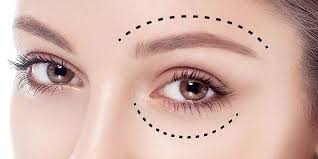
Follow-up From Home
It runs on close photographs reproducing exactly the same views and the same lighting as before surgery, generally at one and three months. Reproduce the three-quarter view without fail, the angle at which the transition from eyelid to cheek reads best. It is precisely that transition the repositioning softens.
The Misconceptions About Blepharoplasty
This operation carries ideas inherited from techniques current practice has moved beyond. Here are the commonest, clarified by recent publications.
Misconception: the fat below the eye is removed
That was the older practice. Recent publications describe repositioning as the reference technique, precisely because removing alone often leaves the tear trough in place. The volume protruding forward is exactly what is missing below. Moving it addresses both areas in one step, whereas removing it addresses only one and deprives the region of a volume that will become valuable over the years.
Misconception: it leaves a hollow look
That impression comes from overly generous volume removal performed without repositioning. Current techniques keep the fat and adjust it during surgery by observing the contour obtained. The ninety-seven-patient study describes that refined adjustment precisely and reports that all cases showed improvement without excess volume in the midface.
Misconception: the scar shows
On the lower eyelid, the transconjunctival route goes through the inside and leaves no external scar. On the upper eyelid, the incision sits exactly in the natural crease and hides as soon as the eye is open. It becomes very hard to find once mature, generally around the third month.
Misconception: it is for mature patients only
The ninety-seven-patient study reports a mean age of thirty-seven. Fullness below the eye is indeed often constitutional, present from the twenties in some people. It does not diminish over time, since it comes from the position of the fat rather than its excess. Acting early is therefore not haste but a response to an anatomical configuration.
Beliefs Against the Publications
| What you hear | What is actually the case |
|---|---|
| The fat is removed | It is repositioned into the hollow |
| It hollows the eye area | Repositioning preserves the volume |
| The scar shows | None below, in the crease above |
| It is for mature patients only | Documented mean age of thirty-seven |
| The result is immediate | Swelling resolves within eight weeks |
| It also fixes dark colouration | The hollow yes, colouration belongs to nanofat |
| A lot of skin must be removed below | Rarely, a limited pinch suffices |
Repositioning corrects the hollow of the tear trough, while transparency of the skin letting vessels show belongs to nanofat, often combined in the same session. And male demand is well established: the step is identical in principle, with the dosage adjusted, a male gaze readily keeping a little more fullness at the upper eyelid.
The Vocabulary You Will Hear
This short glossary lets you follow a consultation and express your request in the terms your surgeon uses.
- Blepharoplasty means eyelid surgery, upper, lower or both. The term covers several different steps depending on the level involved.
- The transconjunctival route passes through the inside of the lower eyelid and leaves no external scar. It is the access many authors now recommend.
- The orbital septum is the fine membrane holding the fat in its compartment. Its increasing yield lets the volume come forward and form the visible fullness.
- Fat repositioning means moving the protruding fat into the hollow below, rather than removing it. It is the current reference technique.
- The tear trough ligament is the attachment creating the oblique groove below the eye. Releasing it lets the transposed volume settle correctly.
- The outer compartment is the hardest to reach by the internal route. A surgeon who specifically mentions addressing it is describing a complete technique.
The Terms That Cause Confusion
| Term | Not to be confused with | The difference |
|---|---|---|
| Repositioning the fat | Removing the fat | Moving into the hollow, versus taking away |
| Tear trough | Dark circle colouration | A hollow, versus transparency of the skin |
| Blepharoplasty | Brow lift | The eyelid, versus the brow |
| Transconjunctival route | Skin route | Through the inside, versus through the skin |
The Decision Summary
Everything above fits into this table, worth consulting before your appointment.
| The question | The short answer |
|---|---|
| Reference technique below | Reposition the fat, do not remove it |
| Lower eyelid approach | Through the inside, no external scar |
| Upper eyelid scar | In the natural crease, invisible when open |
| Documented satisfaction | 96.9% of patients satisfied |
| Tear trough eliminated | 86.7% of cases in one series |
| Perceived age reduction | 3.3 years by patients, 5.8 by outside analysis |
| Documented mean age | Thirty-seven |
| Operation length | About fifty-six minutes below |
| Stay in Turkey | Five to seven nights |
| Flight home | Around day ten |
| Swelling resolved | Within eight weeks |
| Gap vs private domestic care | Often up to around 70% |
Three Checks Before You Commit
First: does the surgeon reposition the fat rather than remove it? Second: does he go through the inside of the eyelid and release the tear trough ligament? Third: does he also examine your brow position? That last check ensures the step proposed addresses the origin of what concerns you rather than a consequence.
In Summary: A Surgery That Moves Volume Rather Than Taking It Away
This surgery has changed its logic: it now moves the volume rather than taking it away, which addresses the fullness and the hollow in one step while preserving a resource that will become valuable. Published series report high satisfaction, a measurable reduction in perceived age, and a scar that is either invisible below or hidden in the crease above.
The next step is to read our Blepharoplasty in Turkey procedure page for the operation, stay and aftercare, and to review indicative pricing. To go further, explore the wider range of facial surgery in Turkey. The team at Aylan Clinic accompanies you in English at every stage, from reading your photographs through to the three-month check, with a plan that specifies the level addressed and the technique used.