Male pattern baldness, medically called androgenetic alopecia, follows a genuinely predictable progression classified by the Norwood scale, and this predictability shapes nearly every strategic decision a surgeon makes when planning a transplant for a male patient, from graft allocation between hairline and crown to the specific timing of surgery relative to a still-progressing pattern. This condition affects roughly half of men by age fifty, making it the single most common reason patients pursue hair restoration in Turkey, a country whose surgical teams have developed particularly deep, pattern-specific expertise through sheer accumulated case volume.
This page belongs to our hair transplant in Turkey hub, within our broader aesthetic surgery in Turkey content. Below you will find how the Norwood scale actually works and why it matters, who is a genuine surgical candidate at each stage, the complete process specific to male pattern restoration, realistic results by stage, risks worth understanding, and the practical details for pursuing this procedure in Turkey. At any point you can request a free quote, with no obligation.
Understanding the Norwood scale in genuine detail
The Norwood scale classifies male pattern baldness into seven progressive stages, each describing a specific combination of frontal hairline recession and crown thinning. Stage one shows no significant recession. Stages two and three describe increasing temporal recession, with stage three often marking the point patients first seek consultation. Stage four introduces noticeable crown involvement alongside frontal recession, while stages five and six show these two balding areas beginning to merge into a single connected zone. Stage seven represents the most extensive pattern, leaving only a narrow horseshoe-shaped band of permanent hair at the back and sides. A specific variant, called Norwood Class A, describes a pattern where the hairline recedes uniformly backward without the same crown involvement, requiring a somewhat different surgical strategy than the standard progression.
Why this specific pattern occurs in men
Male pattern baldness results from genetically inherited sensitivity to dihydrotestosterone, or DHT, in follicles located specifically at the frontal hairline and crown, while follicles at the back and sides of the scalp carry a lifelong genetic resistance to this same hormone. This is why the pattern is so consistent across affected men: it follows the specific anatomical boundary between DHT-sensitive and DHT-resistant follicles rather than occurring randomly across the scalp. This same boundary defines the donor zone used in every transplant technique, whether FUE, DHI, or Sapphire FUE.
Comparison table: surgical strategy by Norwood stage
| Norwood stage | Typical graft allocation priority | Surgical considerations |
|---|---|---|
| Stage 2-3 | Hairline definition, conservative approach | Often benefits from waiting to confirm pattern stability first |
| Stage 4-5 | Hairline plus moderate crown coverage | Requires careful donor budgeting across two zones |
| Stage 6-7 | Frontal third prioritized, conservative crown coverage | Donor supply becomes the primary limiting factor |
Who is a genuine candidate for male pattern hair transplant
- A pattern that has genuinely stabilized, or is being actively monitored, since transplanting into a still-progressing zone risks an unnatural future contrast.
- A donor zone with sufficient density for your specific target coverage, evaluated directly rather than assumed from appearance alone.
- Age-appropriate timing, since very young patients, generally under twenty-five, often benefit from confirming pattern stability or beginning medical therapy before considering surgery.
Indications and contraindications specific to male pattern restoration
| Common indications | Contraindications or precautions |
|---|---|
| Norwood stage 3 or beyond with a documented, examined pattern | Very early, actively progressing loss in patients under twenty-five without medical therapy first |
| Sufficient donor density relative to targeted Norwood-stage coverage | Donor supply insufficient for the extent of loss present |
| Realistic expectations calibrated specifically to Norwood stage and donor capacity | Family history suggesting continued rapid future progression without a long-term strategy |
Step-by-step: what the procedure involves for male pattern restoration
Before the procedure
Your surgeon classifies your specific Norwood stage, examines donor density directly, and discusses family history of hair loss progression, since a father or grandfather's ultimate pattern often predicts your own eventual extent of loss even if you have not reached that stage yet.
During the procedure
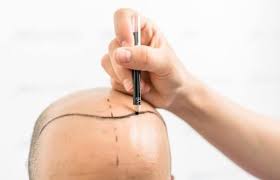
Performed under local anesthesia and generally lasting six to eight hours, extraction and implantation proceed following the FUE, DHI, or Sapphire FUE technique already detailed in our dedicated content, with graft allocation specifically planned around your documented Norwood stage and its likely future trajectory.
After the procedure
Recovery follows the standard timeline already detailed in our FUE content, with scabbing resolving within ten days and new growth beginning between three and six months later.
Recovery timeline
| Period | Typically reported progress |
|---|---|
| Days 1 to 10 | Scabbing resolves at both donor and recipient sites |
| Months 3 to 6 | New growth begins emerging in transplanted areas |
| Months 9 to 12 | Final density becomes apparent, allowing honest assessment against Norwood-stage goals |
Expected results by Norwood stage
Patients addressing an earlier stage, such as Norwood 3, generally achieve the most complete, dense-appearing results since their donor-to-recipient ratio remains favorable. Patients addressing stage 6 or 7 achieve genuine, meaningful improvement, but an honest surgeon sets expectations around a realistic, proportionate coverage rather than promising the same density achievable at an earlier stage, since donor supply simply cannot stretch indefinitely across an extensively balded scalp.
Risks and possible complications specific to this population
- Continued native hair loss surrounding a transplant, since surgery addresses only the follicles moved, not the underlying genetic progression affecting remaining native hair.
- An eventual "island" effect, where a transplanted area remains full while untreated surrounding areas continue thinning, creating an unnatural-looking contrast years later if future progression was not accounted for in planning.
- Standard FUE-related risks, including shock loss and folliculitis, already detailed in our dedicated FUE content.
The rigorous medical oversight behind Turkey's hair restoration industry
Turkey has built healthcare infrastructure specifically scaled to this procedure's volume, including Joint Commission International accredited facilities operating under Turkey's Ministry of Health framework for international patients, requiring licensed physician oversight of surgical extraction and implantation.
Why pattern-specific experience matters so significantly for male restoration
A surgeon who has treated large numbers of patients across every Norwood stage develops calibrated judgment about exactly how much donor supply a stage 5 pattern genuinely requires versus a stage 6, and precisely where to draw the line between hairline priority and crown coverage when both compete for the same finite donor resource. This pattern-specific calibration, built through repeated exposure to the same classification system, distinguishes an experienced male-pattern specialist from a surgeon with more general cosmetic experience.
Understanding why family history genuinely predicts your future pattern
Because male pattern baldness follows a strongly inherited genetic trajectory, examining your father's and maternal grandfather's ultimate extent of hair loss provides meaningful predictive information about where your own pattern may eventually progress, even if you currently present at an earlier stage. A thoughtful surgeon incorporates this family history directly into surgical planning, sometimes recommending a more conservative hairline placement or deliberately reserved donor supply specifically to accommodate this anticipated future progression.

The specific strategic tension between hairline and crown coverage
Because donor supply is finite and both the frontal hairline and the crown compete for this same resource, surgeons must make an explicit strategic choice about allocation priority, particularly for patients at Norwood stage 4 or beyond where both zones show involvement. Many experienced surgeons prioritize the frontal third, since this area carries disproportionate visual weight in everyday face-to-face interaction, reserving more conservative crown coverage or deferring crown treatment entirely to a potential future session.
Quality signals worth looking for in a clinic treating male pattern baldness
A genuinely experienced clinic classifies your specific Norwood stage explicitly during consultation, discusses your family history's implications for future planning, and shows portfolio results organized by starting Norwood stage rather than a generic gallery, allowing you to compare your own specific starting point to a genuinely comparable prior patient.
Preparing for your consultation
Bring photographs of your father's or grandfather's hair pattern if available, alongside your own hair loss progression over recent years, since both pieces of information meaningfully inform realistic surgical planning specific to male pattern baldness.
Maintaining continuity of care between Turkey and Canada
Request written documentation of your specific Norwood classification, graft count, and technique used, since this record supports any future consultation regarding continued progression or a potential second session.
Patient experiences reported after male pattern restoration
Many male patients describe a specific relief tied to reclaiming a sense of control over an otherwise entirely genetically predetermined process, particularly patients who had watched their pattern progress for years while feeling powerless to influence its course.
Combining this procedure with medical therapy
Finasteride specifically targets the same DHT mechanism responsible for male pattern baldness, and continuing this medication after surgery protects surrounding native hair that was not part of the transplant itself, a combination approach many surgeons specifically recommend for male patients given how directly this therapy addresses the underlying hormonal mechanism. Non-surgical support such as PRP hair treatment is sometimes used alongside this strategy.
Why a second opinion matters for this decision
Given how much long-term satisfaction depends on accurate Norwood staging and realistic donor allocation planning, a second consultation, ideally with direct physical examination rather than photo review alone, is genuinely worthwhile before committing to a specific graft count and plan.
Questions worth asking during your consultation
Ask specifically what Norwood stage your surgeon classifies you at, how they plan to allocate grafts between hairline and crown given your specific donor supply, and how they account for your family history's implications for future progression.
Understanding diffuse unpatterned alopecia: when the Norwood scale doesn't apply
A smaller subset of men present with a pattern that does not follow the classic Norwood progression at all, called diffuse unpatterned alopecia, where thinning occurs relatively evenly across the entire scalp, including areas typically considered permanently resistant. This presentation requires particular caution, since it suggests the donor zone itself may not carry the reliable, lifelong resistance that makes transplantation successful, and an experienced surgeon will specifically evaluate donor zone miniaturization, meaning early, subtle thinning of individual hair shafts within the supposed safe zone, using trichoscopic examination before proceeding. Patients with confirmed diffuse unpatterned alopecia are often advised against surgery entirely, since transplanting follicles that may themselves eventually thin defeats the fundamental premise of donor dominance.
Why crown-only presentations require distinct strategic thinking
Some men present with hair loss concentrated almost entirely at the crown while the frontal hairline remains fully intact, a pattern requiring different strategic thinking than the more common frontal-first progression. Because the crown's spiral growth pattern radiates from a central point and because crown balding tends to expand outward over subsequent years even in patients who have not yet lost their frontal hairline, surgeons treating crown-only presentations must plan conservatively, anticipating that the treated zone's boundary may need to expand in a future session as the surrounding native crown hair continues its own independent progression.
The role of scalp laxity in determining donor capacity
Beyond simple hair density, the physical flexibility of your scalp skin, called laxity, meaningfully affects how many grafts can be safely and comfortably extracted from your donor zone. Patients with tighter scalp skin sometimes experience more discomfort during extraction and may have a technically more limited safe extraction capacity than density measurements alone would suggest, which is why an experienced surgeon assesses laxity directly through manual examination rather than relying on density counts in isolation.
Understanding miniaturization as an early warning sign
Trichoscopic examination, using magnified imaging of the scalp, can detect miniaturization, the gradual narrowing of hair shaft diameter that precedes complete follicle shutdown, often years before this thinning becomes visible to the naked eye. Identifying miniaturization within a planned donor zone before surgery allows a surgeon to adjust extraction boundaries accordingly, while identifying it within an area a patient hoped to preserve untreated provides valuable information for realistic long-term planning, including whether medical therapy should begin immediately to slow this specific, detected progression.
Why younger male patients face a genuinely different calculus
A twenty-two-year-old presenting with Norwood stage 3 recession faces a fundamentally different strategic situation than a forty-five-year-old at the same stage, since the younger patient's pattern will almost certainly continue progressing for decades, potentially reaching stage 6 or 7 eventually, while an older patient's pattern has often already substantially stabilized. Many experienced surgeons specifically recommend that younger patients begin medical therapy immediately regardless of whether they proceed with surgery, since preserving existing native hair through pharmacological means extends the usefulness of a future transplant by preserving surrounding hair that would otherwise require its own eventual treatment.
Understanding the concept of "future-proofing" a hairline design
Experienced surgeons deliberately design hairlines with future progression in mind, sometimes placing the frontal border slightly more conservatively than a patient's current recession pattern alone would suggest, specifically to avoid a scenario where continued natural recession years later leaves a transplanted hairline looking artificially low relative to a further-receded natural background. This forward-looking design philosophy represents a meaningful point of differentiation between surgeons focused narrowly on a single satisfying result immediately after surgery versus those planning for a patient's entire remaining decades of natural hair loss progression.
Understanding why some men pursue multiple sessions deliberately, not as a failure
Rather than viewing a second session as evidence that a first procedure fell short, many surgeons specifically plan a staged approach for patients at more advanced Norwood stages, deliberately reserving donor capacity across two sessions performed a year or more apart. This staged strategy allows the surgeon to observe how the first session's results settle and how the patient's pattern continues progressing before committing remaining donor supply, often producing a more refined final outcome than attempting to address an extensive stage 6 or 7 pattern within a single maximum-volume session.
The relationship between body hair and scalp restoration in advanced cases
For patients whose scalp donor supply is genuinely insufficient relative to their extent of loss, body hair from the beard or chest occasionally serves as a supplementary donor source, though this approach carries specific limitations worth understanding honestly: body hair typically grows in a different phase cycle and texture than scalp hair, generally producing a coarser, more slowly growing result that blends less seamlessly than scalp-to-scalp transplantation. Surgeons offering this option should discuss these textural differences explicitly rather than presenting body hair transplantation as an equivalent alternative to standard donor extraction. Patients considering their facial hair specifically may also explore beard and mustache transplant as a distinct goal.
Pricing for male pattern hair transplant in Turkey
| Pricing factor | Cost impact |
|---|---|
| Norwood stage and corresponding graft count required | The primary driver of overall cost |
| Whether crown coverage is included alongside frontal restoration | Meaningfully affects total graft count and price |
For a fuller comparison across procedures, see our pricing in Turkey overview.
Recognizing when a surgeon should honestly advise against proceeding
An ethical surgeon sometimes declines to operate on a specific male patient, particularly when diffuse unpatterned alopecia is suspected, when donor supply is genuinely insufficient relative to Norwood stage 6 or 7 extent of loss, or when a very young patient's pattern remains too unpredictable to plan around responsibly. This kind of honest disqualification, while disappointing to hear, reflects a meaningfully more trustworthy standard of care than a provider willing to proceed regardless of whether the underlying anatomy genuinely supports a satisfying long-term result.
Why Turkey leads globally in male pattern restoration
Turkey compared to other medical tourism destinations
| Criterion | Turkey | Tunisia | Costa Rica | Dominican Republic | Colombia | Mexico |
|---|---|---|---|---|---|---|
| Volume of male pattern cases treated annually | Among the highest worldwide | Growing, more limited | Limited | Limited | Growing | Growing |
| Common clinic language | English widely spoken, growing French support | French and English widely spoken | Spanish, limited English | Spanish, variable English | Spanish, variable English | Spanish, variable English |
| Estimated pricing level | Particularly accessible | Accessible | Moderate to high | Moderate | Moderate | Moderate |
| Direct flight access from Canada | Direct flights to Istanbul | Generally via a European stopover | Variable | Variable | Variable | Variable |
The Turkish cities most recognized for this procedure
Istanbul's dedicated hair restoration clinics have developed particularly deep experience specifically with male pattern presentations, given this population's overwhelming share of total hair transplant volume performed nationally. Antalya, Izmir, and Ankara also host well-regarded clinics for patients whose travel plans favor these alternatives.
Why so many Canadian men choose Turkey for this procedure
Patients from Toronto, Montreal, Calgary, Ottawa, Edmonton, Winnipeg, Quebec City, Hamilton, Kitchener, London, Victoria, Halifax, Oshawa, Windsor, Saskatoon, Regina, Sherbrooke, St. Catharines, Barrie, Kelowna, Abbotsford, Kingston, Trois-Rivières, Guelph, Moncton, Brantford, Saint John, Peterborough, Thunder Bay, Saguenay, Lethbridge, Nanaimo, Kamloops, Belleville, Chilliwack, Drummondville, Sudbury, Sarnia, Wood Buffalo, and Fredericton travel to Turkey specifically for male pattern hair restoration, drawn by surgeon experience built on genuinely massive Norwood-classified case volume and pricing considerably below typical Canadian private clinic rates for comparable graft counts.
How to choose a clinic for this procedure
- Confirm your surgeon explicitly classifies your Norwood stage rather than treating this as a generic "hair loss" consultation.
- Ask specifically how they plan graft allocation between your hairline and crown given your particular donor supply.
- Request before-and-after results from patients at your same specific Norwood stage, not simply general hair transplant portfolios.
Planning your medical trip to Turkey
- Entry requirements: Canadian citizens generally need an electronic visa before departure.
- Flights and transfers: several airlines offer direct service from major Canadian cities to Istanbul.
- Length of stay: plan for four to five days, allowing time for the procedure and an initial follow-up before flying home.
Why the temples deserve their own specific discussion within male restoration
The temporal points, sometimes called temple peaks, present a specific technical challenge distinct from the central hairline, since achieving a natural-looking temple recession pattern, rather than an unnaturally squared-off or overly rounded shape, requires the surgeon to work with particularly fine, single-hair grafts placed at a sharp angle matching the natural direction hair grows in this specific region. Patients specifically concerned about temple recession, already detailed further in our dedicated content on temporal hairline restoration, should confirm their surgeon has specific experience recreating this particular anatomical feature rather than treating it as an extension of general hairline work.
In summary: a predictable pattern meeting precise surgical planning
Male pattern baldness follows the well-documented Norwood progression, and this predictability allows for genuinely strategic, individualized surgical planning around your specific stage, donor supply, and family history. Turkey's exceptional volume of male pattern cases has produced particularly deep, stage-specific surgical expertise.
Before making a decision, have your specific Norwood stage and donor supply evaluated directly by an experienced surgical team. Patients interested in a personalized assessment can request a free quote from the Aylan Clinic team to receive information suited to their specific pattern and goals. To go further, explore the full hair transplant in Turkey hub or the hair transplant for women.
Everything about Hair Transplant (Men) in Turkey
Technique, pricing, results and the full patient journey — every detailed answer in our complete guide.