Rhinoplasty reshapes the nose to improve its proportion and appearance, correct breathing difficulties, or both simultaneously, making it one of the most frequently requested and thoroughly refined procedures in all of facial plastic surgery. This surgery, offered at the best specialized centers in Turkey, relies on internationally accredited hospital infrastructure that allows this procedure to be performed with particularly well-documented medical rigor.
This page is part of our facial surgery in Turkey hub, within our broader aesthetic surgery in Turkey section. Below you will find the principle behind this procedure, the distinction between its main variations, who is a genuine candidate, the full step-by-step process, expected results, risks worth knowing, and the practical details to consider before choosing this treatment in Turkey. At any time, you can request a free quote, with no obligation.
What Rhinoplasty Actually Does
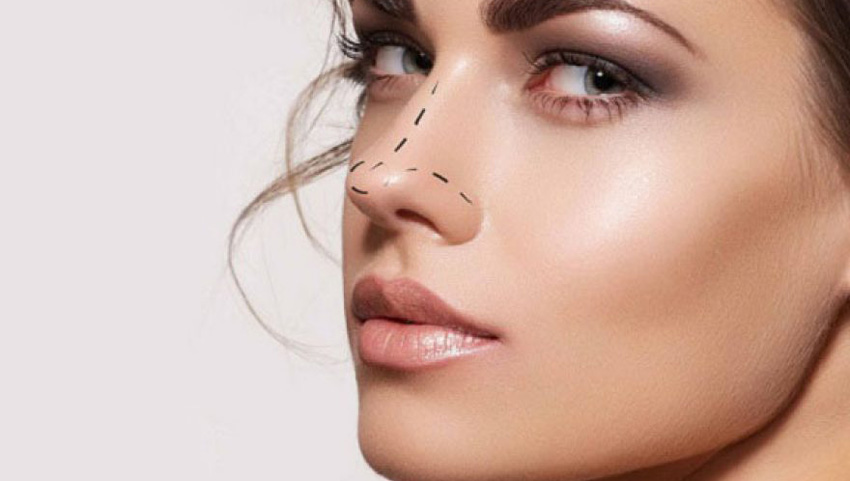
The nose is composed of bone in its upper portion and cartilage throughout its lower portion and tip, and this procedure reshapes these underlying structures to change the nose’s external appearance, its internal breathing function, or both together. A surgeon may reduce a prominent dorsal hump, refine a bulbous or poorly defined tip, narrow overly wide nostrils, straighten a crooked or deviated nose, or address internal structural issues affecting airflow, depending on each patient’s specific combination of concerns.
Open Versus Closed Rhinoplasty Technique
It is worth understanding this fundamental technical distinction, since it affects both the surgical approach and, for some patients, the decision-making process itself. Closed rhinoplasty places all incisions inside the nostrils, leaving no external, visible scarring at all, while open rhinoplasty adds one small incision across the columella, the small strip of skin between the nostrils, providing the surgeon with more direct visualization for more complex corrections at the cost of a tiny, though generally well-concealed, external scar. Some centers also offer an ultrasonic rhinoplasty approach for more precise bone reshaping.
Comparison Table: Open vs. Closed Rhinoplasty
| Criterion | Closed Rhinoplasty | Open Rhinoplasty |
|---|---|---|
| Incision location | Entirely inside the nostrils | Inside the nostrils plus a small incision across the columella |
| External scarring | None | Minimal, well concealed within the natural columella crease |
| Visualization | More limited, works through a smaller access | Direct, more comprehensive visualization |
| Best suited for | More straightforward corrections | More complex reshaping, significant structural work, or revision cases |
Who Is a Genuine Candidate for Rhinoplasty
- Nasal proportion concerns, including a dorsal hump, a poorly defined or overly wide tip, or an asymmetric or crooked appearance.
- Functional breathing difficulties, often related to a deviated septum or other internal structural airway issues.
- Realistic expectations about a proportionate, natural-looking result that harmonizes with the rest of the face rather than an idealized shape inconsistent with one’s own features.
Indications and Contraindications for Rhinoplasty
| Common Indications | Contraindications or Precautions |
|---|---|
| Nasal proportion or symmetry concerns affecting facial balance | Active nasal or sinus infection requiring treatment first |
| Functional breathing difficulties related to structural nasal issues | Incomplete facial growth in very young patients, generally requiring surgery to be delayed |
| Realistic expectations about a proportionate, natural-looking result | Active smoking, which can meaningfully affect healing |
Step-by-Step: What the Procedure Involves
Before the Procedure
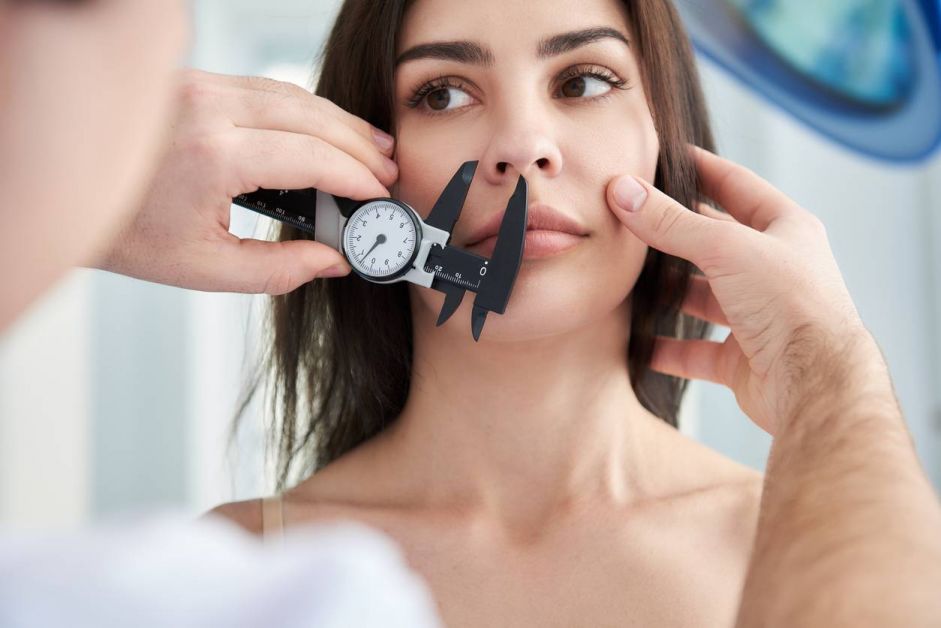
The initial consultation includes a thorough evaluation of your nasal anatomy, skin thickness, and cartilage strength, along with a detailed discussion of your specific aesthetic and functional goals, often supported by photographs or digital imaging to align expectations.
During the Procedure
This surgery is typically performed under general anesthesia, generally lasting between one and three hours depending on the complexity of the specific corrections needed, with the surgeon reshaping bone and cartilage through either the open or closed technique according to your specific surgical plan.
After the Procedure
Recovery involves swelling and bruising, particularly around the eyes, during the first one to two weeks, with a splint typically worn for the first week to support and protect the nose during this initial healing period.
Recovery Timeline
| Period | Typically Reported Progress |
|---|---|
| Days 1 to 7 | Swelling and bruising, particularly around the eyes, splint worn for support |
| Weeks 2 to 4 | Most visible bruising resolves, splint removed, gradual return to normal activities |
| Months 6 to 12 | Final, fully settled nasal shape becomes apparent as all subtle residual swelling resolves |
Expected Results and Longevity
This result is permanent, since the surgical reshaping of bone and cartilage does not reverse itself, though the nose continues to subtly settle and refine its final shape over a period that can extend up to a full year following surgery, this timeline varying somewhat based on individual skin thickness and healing characteristics.
Risks and Possible Complications
- Prolonged swelling, particularly relevant for patients with thicker skin, who may need more patience before their truly final result becomes apparent.
- Asymmetry, reduced through careful, symmetrical surgical planning and precise technique.
- Breathing difficulty, a risk minimized through careful attention to preserving or improving internal nasal airway structure during the procedure.
- Unsatisfactory aesthetic outcome, a risk reduced through thorough preoperative planning and clear communication between patient and surgeon regarding realistic, achievable goals.
The Rigorous Medical Oversight Behind Turkey’s Healthcare System
Turkey has built one of the most densely accredited healthcare infrastructures internationally among medical tourism destinations, with a number of Joint Commission International certified hospitals among the highest outside the United States. This accreditation enforces rigorous standards for this category of nasal surgery.
Turkey’s Ministry of Health has also developed a specific regulatory framework for medical tourism, including official certification of facilities authorized to receive international patients for this procedure.
The Specialized Training Behind Turkish Surgeons for This Procedure
Turkey has developed one of the world’s most experienced concentrations of facial plastic surgeons specifically for rhinoplasty, given both the enormous domestic demand for this procedure and the country’s role as a major international destination for nasal surgery specifically, and this accumulated experience contributes to particularly refined technical skill across a wide range of nasal anatomies and concerns.
Understanding the Balance Between Aesthetic and Functional Goals
It is worth emphasizing that this procedure ideally addresses both appearance and breathing function together whenever both are relevant to a patient’s situation, since focusing exclusively on aesthetic reshaping without attention to internal airway structure can occasionally worsen breathing, while focusing exclusively on function without aesthetic consideration may leave a patient dissatisfied with their appearance despite improved airflow. A thorough surgeon evaluates and addresses both dimensions together as a unified surgical goal.
The Role of Digital Imaging in Modern Surgical Planning
Many advanced clinics use digital imaging software to simulate a realistic range of potential outcomes during the consultation itself, allowing patients and surgeons to align on a specific, achievable target before any surgical commitment is made. While these simulations remain approximations rather than exact guarantees, they meaningfully improve communication and help set appropriately calibrated expectations for the final result.
Why Facial Proportion Analysis Matters for This Procedure
A thoughtful surgeon evaluates your nose in the context of your entire face, not in isolation, since ideal nasal proportions depend meaningfully on your specific chin projection, forehead slope, and overall facial dimensions. This holistic evaluation helps ensure your surgical plan produces a nose that looks proportionate and harmonious with the rest of your face, rather than a technically well-executed change that nonetheless feels disconnected from your overall facial structure.

Quality Signals Worth Looking for in a Surgical Team
A genuinely experienced team for this procedure takes real time during your consultation to understand your specific goals and evaluate your anatomy thoroughly, often using digital imaging or detailed illustration to confirm alignment before any surgical commitment is made. A team that discusses both aesthetic and functional considerations together, rather than focusing narrowly on one dimension alone, also reflects the kind of comprehensive care that distinguishes trustworthy surgical practice.
Preparing for Your Consultation
It is useful to bring reference photographs illustrating specific aspects of nasal shape you admire, alongside a clear articulation of your specific concerns, since this combination of visual reference and verbal description significantly improves communication with your surgical team.
Maintaining Continuity of Care Between Turkey and Canada
It is recommended to keep thorough documentation of your procedure, including the specific technique used and any structural work performed, since this information can be valuable for any future consultation with a surgeon in Canada.
Patient Experiences Reported After This Procedure
Many patients describe this procedure as producing one of the more transformative improvements available in facial plastic surgery, since the nose occupies such a central, prominent position in overall facial appearance, and even modest, well-executed changes can meaningfully improve overall facial harmony and balance.
The Psychological Dimension Behind This Common Concern
For many patients, nasal appearance has been a source of self-consciousness stretching back to adolescence, and this concern deserves to be taken seriously by any surgical team, one that listens carefully to how this feature has affected a patient’s confidence over time rather than treating the request as a purely cosmetic afterthought.
Combining This Procedure With Other Facial Treatments
This procedure is frequently combined with a chin implant, since nasal and chin proportions are closely related in overall facial balance, and addressing both together often produces a more harmoniously proportioned profile than either change alone.
Why a Second Opinion Matters for This Decision
Seeking a second surgical opinion remains worthwhile for this procedure, particularly given its permanence and its significant impact on overall facial appearance, and this consultation can help confirm that your surgical plan genuinely aligns with your specific goals and anatomy.
Questions Worth Asking During Your Consultation
It is useful to gather here the most relevant questions to bring to your surgeon, including whether they recommend an open or closed technique for your specific situation and why, how they plan to address both aesthetic and functional goals together, and what realistic timeline you can expect for your final result.
Understanding the Nasal Tip and Its Particular Complexity
It is worth understanding this specific anatomical region in more depth, since the nasal tip represents one of the more technically demanding areas to reshape successfully. The tip’s shape depends on the underlying cartilage’s specific configuration, including two paired cartilages whose exact shape, strength, and position significantly influence whether a tip appears refined and well-defined or bulbous and poorly shaped. A skilled surgeon carefully sculpts and, when needed, reinforces this cartilage to achieve a naturally proportionate tip that complements the rest of the nose rather than appearing disconnected from it.
The Role of the Nasal Septum in Both Function and Aesthetics
The nasal septum, the internal wall dividing your two nostrils, plays a dual role relevant to this procedure, providing crucial structural support for the external nose while also directly affecting airflow through each nostril. A deviated, or crooked, septum can contribute to both a visibly crooked external nose and genuine breathing difficulty, and addressing this internal structure often represents an essential component of a comprehensive rhinoplasty for patients experiencing both these concerns together, an approach detailed on our septorhinoplasty page.
Why Cartilage Grafting Sometimes Enhances Even Primary Rhinoplasty Results
While cartilage grafting is particularly associated with revision surgery, it also plays a valuable role in many primary rhinoplasty procedures, particularly for reinforcing a weak tip, camouflaging subtle irregularities, or building structural support in areas requiring additional strength. A surgeon’s thoughtful use of a patient’s own septal cartilage, when available, for these purposes reflects sophisticated surgical planning beyond simple reduction or reshaping alone.
The Importance of Understanding Skin Thickness Before Your Surgery
Skin thickness varies considerably between individuals and meaningfully affects both surgical planning and expected healing timeline, with thicker skin generally requiring more conservative cartilage work to avoid an overly bulky final appearance, while also taking longer to fully contract and reveal the truly final result following surgery. Understanding your own skin thickness characteristics, discussed openly during your consultation, helps calibrate realistic expectations for both your surgical plan and your recovery timeline.
Speaking With Your Surgical Team in Your Own Language
Communicating your specific aesthetic goals and functional concerns clearly benefits enormously from a direct conversation in a language you are fully comfortable in, particularly given how much nuance is involved in describing subtle preferences about nasal shape. Many clinics in Turkey now offer English-speaking and French-speaking coordination specifically to support this kind of clear, direct communication for their international patients.
The Value of an Extended, Thorough Consultation Process
Given how significantly this procedure affects overall facial appearance, the most reputable surgical teams typically schedule a genuinely thorough initial evaluation, encouraging follow-up questions and taking sufficient time to ensure both patient and surgeon share a clear, aligned vision before any surgical commitment is made.
Long-Term Maintenance Following This Procedure
Since this procedure produces a permanent structural change, minimal ongoing maintenance is required once healing is fully complete. Maintaining good sun protection over the nasal skin during the initial healing period, when this tissue can be more sensitive to sun exposure, helps support optimal healing and scar appearance where relevant.
A Final Word on This Foundational Facial Procedure
Rhinoplasty remains one of the most thoroughly studied and refined procedures in facial plastic surgery, continually benefiting from advancing surgical technique and a deepening understanding of nasal anatomy and function. This maturity is precisely why choosing an experienced, thoughtful surgical team matters so significantly for achieving a result that genuinely serves both your aesthetic and functional goals.
Taking the Time to Reflect Before This Permanent Decision
This procedure, given its permanent nature and its central role in overall facial appearance, deserves careful reflection and a thorough consultation process before moving forward, ensuring your decision rests on a clear, realistic understanding of the proportionate result you can expect.
Recognizing the Value of a Conservative, Proportionate Approach
The single most valuable thing a prospective patient can find in a consultation for this procedure is a surgeon who recommends a measured, proportionate correction that harmonizes with your existing facial features, rather than pursuing a dramatic transformation disconnected from your overall facial structure.
The Broader Trend Toward Individualized Rhinoplasty Planning
This procedure fits within a broader, welcome movement across facial plastic surgery toward genuinely individualized surgical planning, recognizing that ideal nasal proportions vary meaningfully based on each patient’s unique facial structure, ethnic background, and personal aesthetic goals, rather than a single universal template applied regardless of individual anatomy. For patients seeking to preserve the character of their features, our ethnic rhinoplasty page explores this approach in more depth.
Understanding the Recovery Support You May Need
Arranging some practical support for the first several days after this procedure is worthwhile, since swelling, bruising, and the nasal splint can temporarily affect your comfort with daily activities and, for some patients, their comfort in public settings during this initial healing period.
Final Thoughts on Achieving Natural Facial Harmony
Ultimately, the goal of this procedure is to restore or create a nose that looks like it genuinely belongs to your face, complementing rather than competing with your other features, and keeping this goal of natural harmony at the center of your decision-making tends to produce the most satisfying and enduring results.
The Value of Realistic Before-and-After Comparisons
When reviewing a surgeon’s portfolio, it is worth specifically seeking out patients whose starting nasal anatomy and skin thickness resemble your own, since a striking result on a patient with different starting characteristics may not translate to a similarly striking outcome for your particular anatomy.

Appreciating the Genuine Craft Behind This Established Procedure
There is real surgical artistry involved in reshaping something as central to facial identity as the nose while maintaining natural proportion and function, and patients who achieve this balanced result often describe others simply noticing they look more refreshed and balanced, without necessarily identifying the specific change responsible.
A Closing Thought on Identity and Facial Harmony
Your nose plays a central, distinctive role in your overall facial identity, and the best surgical outcomes honor this role, refining rather than erasing what makes your face uniquely yours, while resolving the specific concerns that brought you to consider this procedure in the first place.
Rhinoplasty Pricing in Turkey
Cost depends chiefly on the complexity of your case and whether the procedure is combined with other treatments. You can review indicative figures on our pricing in Turkey page.
| Pricing Factor | Cost Impact |
|---|---|
| Complexity of the specific corrections needed | A primary factor influencing overall cost |
| Combination with other facial procedures | May represent an additional investment depending on this broader treatment plan |
Why Turkey Has Become a Leading Destination for This Procedure
Turkey Compared to Other Medical Tourism Destinations
| Criterion | Turkey | Tunisia | Costa Rica | Dominican Republic | Colombia | Mexico |
|---|---|---|---|---|---|---|
| Common clinic language | English widely spoken, with growing French-speaking support | French and English widely spoken | Spanish, limited English | Spanish, variable English | Spanish, variable English | Spanish, variable English |
| Documented expertise with rhinoplasty | Particularly well established, among the world’s most experienced | Good availability | Variable | Variable | Good availability | Good availability |
| Estimated pricing level | Particularly accessible | Accessible | Moderate | Moderate | Moderate | Moderate to accessible |
| Direct flight access from Canada | Direct flights available to Istanbul | Generally with a stopover in Europe | Variable | Variable | Variable | Variable |
The Turkish Cities Most Recognized for This Procedure
Istanbul, a Major Hub for International Facial Plastic Surgery
This metropolis concentrates one of the highest densities of experienced rhinoplasty surgeons anywhere in the world, reflecting both substantial domestic demand and its status as a leading international destination for this specific procedure.
Antalya, Izmir, and Ankara as Complementary Hubs
These cities also host recognized clinics offering this procedure.
Why So Many Canadians Are Turning to Turkey for This Procedure
Patients from cities such as Toronto, Montreal, Calgary, Ottawa, Edmonton, Winnipeg, Quebec City, Hamilton, Kitchener, London, Victoria, Halifax, Oshawa, Windsor, Saskatoon, Regina, Sherbrooke, St. Catharines, Barrie, Kelowna, Abbotsford, Kingston, Trois-Rivières, Guelph, Moncton, Brantford, Saint John, Peterborough, Thunder Bay, Saguenay, Lethbridge, Nanaimo, Kamloops, Belleville, Chilliwack, Drummondville, Sudbury, Sarnia, Wood Buffalo, and Fredericton are researching rhinoplasty in Turkey, drawn by exceptionally well-documented surgical expertise combined with pricing that is significantly more accessible than what is typically available in Canada.
How to Choose a Clinic for This Procedure
- Confirm the facility holds internationally recognized accreditation, particularly JCI.
- Ask specifically about the surgeon’s experience with your specific combination of aesthetic and functional concerns.
- Request to see the surgeon’s own before-and-after results specifically for patients with a similar starting anatomy to your own.
Planning Your Medical Trip to Turkey
- Entry requirements: Canadian citizens generally need to obtain an electronic visa before departure.
- Flights and transfers: several airlines offer direct flights from major Canadian cities to Istanbul.
- Length of stay: plan for approximately ten days to two weeks for this procedure and initial recovery before flying home.
In Summary: A Well-Established Procedure for Nasal Proportion and Function
Rhinoplasty reshapes the nose to improve proportion, symmetry, and breathing function, addressing both aesthetic and functional concerns through a well-established, thoroughly refined surgical approach. Turkey offers exceptionally well-established expertise for this procedure.
Before making a decision, it is recommended to have your specific nasal anatomy and goals evaluated thoroughly by an experienced surgical team. Patients interested in a personalized assessment can request a free quote from the Aylan Clinic team to receive guidance suited to their situation. To explore further, browse all of our facial surgery in Turkey.
The Value of a Thorough, Unhurried Consultation Process
Given this procedure’s permanence and significant impact on overall facial appearance, a single brief consultation is rarely sufficient. The most reputable surgical teams schedule thorough evaluations, encourage follow-up questions, and take the necessary time to align on a clear, achievable surgical plan.
Everything about Rhinoplasty in Turkey
Technique, pricing, results and the full patient journey — every detailed answer in our complete guide.