
Full feminization brings together procedures on the face and the body which, taken as a whole, change how your features and your silhouette are read. It is not one operation but a project, planned and staged around your priorities. This guide covers the entire journey: every facial procedure, every body procedure, how to combine them, the order that makes most sense, and how it all works practically from wherever you live in Canada. It is written for anyone who wants to feminize their appearance, whatever their starting point: transgender women engaged in gender-affirming care, and cisgender women looking to soften their features. No figures appear here. Amounts depend entirely on the plan chosen, and a single number in isolation would mean nothing.
What the term actually covers
Facial feminization, widely known by the abbreviation FFS, gathers the procedures that soften features: the forehead, the brow ridge, the nose, the cheekbones, the jaw, the chin, the mouth and the neck. Body feminization gathers the chest, the waist, the hips, the buttocks and the limbs. It targets the relationship between volumes rather than each area in isolation, and it is that overall proportion that counts most.
Why face and body belong in one guide
Because that is how the project is actually thought about. Someone considering feminization does not reason in separate zones: they ask how long it will take, how many stages, and in what order. The staging decision is made across the whole plan too. Grouping certain procedures into one session, deferring others, choosing one trip or several: those trade-offs only make sense when you look at the complete journey.
The three ways to approach the journey
The table sets out the three possible logics, developed in detail later in this guide.
| Approach | What it delivers | Who it suits |
|---|---|---|
| Face only | Changes what people notice first | Priority on daily interactions |
| Body only | Changes silhouette and proportions | Features already read as soft |
| Face and body | Overall coherence | A complete project, staged over time |
None of these three routes is better than the others. The choice depends on your starting point, your priorities and the time available, and that is exactly what the consultation establishes.
What separates feminization from standard cosmetic surgery
Standard cosmetic surgery generally aims to rejuvenate or refine one particular feature. Feminization aims to change how the whole face reads, which calls for reasoning against different reference points. A surgeon used to this kind of request does not only ask whether a nose is harmonious, but how it sits within a set of features. It is a difference in reasoning as much as in technique, and it shows from the first consultation.
The reference points that separate features
Publications describe several average differences between masculine and feminine features, useful for understanding what each procedure changes.
| Area | Feature often read as masculine | What the procedure changes |
|---|---|---|
| Forehead | Marked ridge above the eyes | Reshaping of the bony table |
| Hairline | Recession at the temples | Advancement, sometimes grafting |
| Brows | Low position, flatter arch | Elevation of about four millimetres |
| Nose | Wider bridge, less rotated tip | Refinement, more open nasolabial angle |
| Cheekbones | Lower projection | Volume placed higher and further forward |
| Jaw | Marked angles, bigonial width | Reduction of the angles |
| Chin | Wider and taller | Narrowing and height reduction |
| Mouth | Longer philtrum, little tooth show | Shortening of two to four millimetres |
| Neck | Prominent thyroid cartilage | Reduction of the prominence |
These are averages, not rules. A face is read as a whole, and two people with identical measurements may need very different procedures depending on how their features are arranged.
What this guide covers, area by area
Every procedure listed below is developed fully in the blocks that follow, and most have a dedicated guide of their own. Upper third: forehead, brow ridge, temples, hairline, brows The eyes: eyelids, canthopexy, canthoplasty, tilt The nose: rhinoplasty, ultrasonic, nostrils, septum Middle third: cheekbones, cheeks, buccal fat, fat grafting Lower face: jaw, chin, genioplasty, implant The mouth: lip lift, lip volume The neck: neck lift, double chin, Adam's apple The chest: implants, fat grafting, lift, areolas The waist: rib remodelling, waist liposuction Abdomen and back: liposuction, tummy tuck Hips and buttocks: fat grafting, implants, lift The limbs: arms, thighs, knees, calves, ankles
How to read this guide
You can work through it in full, or go straight to the area that concerns you. Each block stands alone and points to the detailed guides when you want to go deeper on a specific procedure. The blocks on combinations and on the order of procedures deserve close reading even if you are only considering one area. They are what allow decisions to be made in the right sequence.
Terminology, and who these procedures are for
The vocabulary around this subject varies a great deal, and knowing which terms mean what makes consultations considerably clearer.
The terms you will encounter
FFS, facial feminization surgery, is the abbreviation used far more often than the full phrase. MTF, or male-to-female, is a common everyday term, though clinical settings increasingly use gender affirming care. Gender affirming surgery and gender confirmation surgery describe the same field, the first being the more current. Trans woman and gender diverse are the terms most widely used by the community itself.
Mapping the vocabulary
| Term | What it refers to |
|---|---|
| FFS | Facial feminization surgery, the face alone |
| MTF surgery | Broad term covering male-to-female procedures |
| Full feminization | Face and body planned as one journey |
| Gender affirming surgery | The current clinical term for this field |
| Gender confirmation surgery | An older term for the same field |
| Body feminization | The body procedures specifically |
| Facial gender surgery | Another phrasing for FFS |
Who these procedures are for
Transgender women engaged in a gender affirming path form a large share of the people who seek them, and the techniques were substantially developed within that context. Cisgender women seeking to soften particular features use exactly the same procedures, since the anatomy and the reference points are identical. What differs between any two people is only their starting point.
What changes and what does not, between paths
| Element | Does it differ by path? |
|---|---|
| The bone procedures themselves | No, identical |
| The reference points aimed for | No, the same measurements |
| The order of stages | Only through hormone therapy timing |
| Recovery and follow-up | No, identical |
| Provincial coverage questions | Yes, criteria differ by category |
| Documentation you may need | Sometimes, for coverage enquiries |
The fifth row is the main practical difference. Where a procedure is being considered under gender affirming care, provincial criteria apply that do not apply to purely aesthetic requests.
What a team should ask, and what it should not
A team building your plan needs to know your starting anatomy, your hormone therapy status where relevant, your medical history and your priorities. Those questions are clinical and directly shape the plan. It does not need to assess or validate your identity to operate. A consultation should feel like planning surgery, which is what it is.
How this guide uses the terms
Full feminization throughout, since it covers both face and body. FFS where the discussion is specifically about the face, since that is the established abbreviation. Gender affirming care where the context is clinical or relates to provincial coverage, since that is the term those systems use.
Support at Aylan Clinic
The whole journey runs in English, from the first remote exchange through to the checks across the first year, with the same team throughout. The certified surgeons handling these journeys are specialists in feminization, whatever your path to it. What they are assessing is anatomy and proportion, which is the same conversation for everyone.
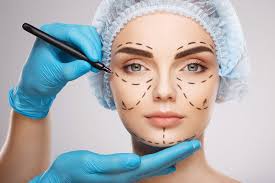
How a personal plan is built
No two feminization plans are alike. Here is the method teams experienced in this work follow, and the questions that shape it.
The first question: where are you starting from
Your starting point matters more than your goal. Two people aiming for the same result may need completely different procedures depending on bone structure, age and what has already been done. Hormone therapy, where it has been followed, already softens the soft tissues: fat redistributes, skin becomes finer, the chest develops. What surgery adds afterwards concerns bone, which hormones do not change.
What hormones change and what they do not
This distinction shapes a large part of the plan.
| Element | Changed by hormone therapy | Belongs to surgery |
|---|---|---|
| Fat distribution | Yes, markedly | Refined by fat grafting |
| Skin texture and fineness | Yes | Surface treatments |
| Breast development | Yes, variable | Implants or fat grafting if wanted |
| Forehead bone structure | No | Forehead reshaping |
| Jaw angles | No | Mandibular reduction |
| Chin width | No | Genioplasty |
| Thyroid cartilage | No | Chondrolaryngoplasty |
| Hairline | Little | Advancement or grafting |
Reading that table explains why many teams recommend waiting until hormone therapy has taken effect before planning soft tissue work, while bone procedures can be decided earlier.
The second question: what matters most to you
This sounds obvious and is the most useful question of all. Some people care above all that their face is read as feminine at first glance; others care more about their silhouette in clothes. The answer shapes everything. A given budget and a given amount of time produce very different results depending on whether they go into the upper third of the face or into the chest and hips.
What changes how a face is read
Surgeons experienced in this work broadly agree on a hierarchy, useful when budget or time are limited.
| Rank | Area | Why it carries so much weight |
|---|---|---|
| 1 | Forehead and brow ridge | First thing the eye reads, purely bony |
| 2 | Hairline and brows | Frame the eyes, highly visible from the front |
| 3 | Jaw and chin | Determine the perceived shape of the face |
| 4 | Nose | Central, but read after the frame |
| 5 | Mouth and lip lift | Measurable effect, short procedure |
| Rank | Area | Why it carries so much weight |
|---|---|---|
| 6 | Cheekbones and cheeks | Refine without changing structure |
| 7 | Neck and Adam's apple | Shows mainly in profile |
This hierarchy is not an obligation. It describes what the eye reads first, which helps when you cannot do everything at once, and it is discussed against your own face.
The third question: how much time do you have
This is the most concrete constraint. A complete journey can be concentrated into two closely spaced sessions, or spread across several years depending on your availability and your work. Both approaches hold up. Grouping limits the number of trips and anaesthetics; staging lets you live with each step before deciding on the next, which many people find more comfortable.
The fourth question: what budget, over what period
A complete project is an investment, and spreading it over time puts it within reach of many people. It is in fact the commonest way of proceeding. The useful benchmark: a plan carried out in Turkey commonly sits up to around 70 percent below what the same plan would cost in Canadian private care, all-inclusive. Our quote itemizes every procedure, which lets you stage it.
What a good consultation should produce
You should leave with four things: the list of procedures chosen, how they are split into surgical sessions, the proposed order with its reasoning, and an itemized quote. An experienced team that gives you that puts you in a position to decide. One who offers a lump-sum package without detail removes your ability to adjust, stage or compare.
The questions to ask at consultation
How many complete feminization journeys do you carry out each year? Which procedures do you choose for me, and why those first? How many surgical sessions do you propose, and why that split? Which areas are bone and which are soft tissue? What can I expect from each stage on its own? Can you show me results at one year, not only at three months? What do you advise against for me, and why?
Hormone therapy and surgical timing
Where hormone therapy is part of your path, it changes what surgery needs to do and when. Here is how the two fit together.
What changes, and over what period
Soft tissue changes follow a fairly consistent pattern. Fat redistribution begins within months and continues for two to three years. Skin becomes finer over a similar period. Breast development follows its own course and generally plateaus in the same window. Bone does not change at any point. The forehead, jaw angles, chin width and thyroid cartilage stay exactly as they are, whatever the duration or dose.
What this means for planning
| Procedure type | Best timing | Reason |
|---|---|---|
| Forehead reshaping | Any time | Bone, unaffected by hormones |
| Jaw and chin | Any time | Bone, unaffected by hormones |
| Tracheal shave | Any time | Cartilage, unaffected |
| Rhinoplasty | Any time | Largely bone and cartilage |
| Facial fat grafting | After soft tissue settles | Volumes still redistributing |
| Breast augmentation | After development plateaus | Volume choice depends on it |
| Body contouring | After redistribution settles | Fat distribution still changing |
That table explains a common pattern: many journeys start with the bony face while soft tissues are still evolving, then address volume and silhouette once things have settled.
What if you are not on hormone therapy
It is not a condition for any of these procedures. Bone work is identical either way, and soft tissue work simply proceeds from your current baseline rather than waiting for a plateau. Cisgender women seeking facial refinement follow exactly the same logic, since the reference points and techniques are the same. What differs is only where each person is starting from.
Practical points around surgery
Hormone therapy is generally continued, with arrangements discussed between the surgical team, the anaesthetist and your prescribing physician. Bring your current prescription details to the first exchange. Some teams adjust timing around a procedure as a routine precaution. Your prescriber and the surgical team decide that together, and it is worth raising early rather than in the final week.
What to bring to the first consultation
How long you have been on hormone therapy, if applicable Your current prescription and dosages Any recent changes to your regimen Whether breast development still seems to be progressing Any previous gender affirming surgery and its reports The name and contact of your prescribing physician The surgeon who asks for these before building a plan is thinking about your whole situation. It changes the order of stages more often than people expect.
The question of waiting
There is a real tension here worth naming. Waiting for soft tissues to settle gives more accurate volume decisions; not waiting means starting sooner on the bone work that changes most. The usual resolution is to do both: begin with bone procedures now, plan volume work for later. That is why many complete journeys naturally fall into two stages, and why the order tends to run face first.
What no timing changes
Bone structure is fixed until surgery addresses it, at any age and after any duration of hormone therapy. That is what makes it the stable foundation of a plan rather than a variable within it. Aylan Clinic builds the written plan around that distinction explicitly, setting out which procedures depend on timing and which do not, so you can see why each stage sits where it does.
The forehead, the brow ridge and the hairline
This is the area that changes how a face reads more than any other, and it is also the most purely bony. Here is what each procedure changes and how they combine.
Why the forehead carries so much weight
The eye reads the frame of a face before taking in its details. The forehead, the brow ridge and the hairline form that frame, which is why they head every hierarchy set out by specialized teams. It is also an area hormone therapy does not touch. Bone structure stays as it is, so only surgery changes it, which often makes it the first stage chosen.
The brow ridge
This is the bony prominence just above the eyes, between the brows and the forehead. Its projection is among the most-read markers, because it casts a shadow over the eyes and changes how open they appear. Reshaping is done through an incision placed in the scalp, leaving no scar on the forehead. Two approaches exist depending on the thickness of bone there, and the choice is made on imaging beforehand.

The two forehead reshaping techniques
The table sets out what separates them.
| Criterion | Direct burring | Setback of the anterior table |
|---|---|---|
| Principle | Bone is thinned with a burr | The wall is lifted, reshaped, replaced |
| Indication | Thick bone over the sinus | Frontal sinus extending forward |
| Scale achievable | Moderate | Greater |
| Decision | On prior imaging | On prior imaging |
| Length of procedure | Shorter | Longer |
Prior imaging is therefore not a formality: it determines which of the two routes applies to you. Someone who requests it systematically is working to the established method.
The brow ridge and the transition
Reshaping does not stop at the central prominence. The ridge continues toward the temples, and softening the centre without addressing that continuity would leave a perceptible transition at the sides. Complete work therefore follows the whole curve, from the centre through to the tail of the brow. It is worth raising at consultation, because it separates a partial procedure from a finished one.
The hairline
A hairline set back at the temples, forming two recessions, reads as a masculine marker. Two approaches change it, and they often combine. Advancement moves the line forward through the same incision as the forehead reshaping, which allows both to be addressed together. Hair grafting then adds density at the temples and softens the shape.
Comparing advancement and grafting
The table places each option.
| Criterion | Hairline advancement | Hair grafting |
|---|---|---|
| What it does | Moves the line forward | Adds density, redraws the shape |
| Scale | Up to about two centimetres | Gradual, across sessions |
| Timing | Same session as the forehead | Later, once healed |
| Number of sessions | One | Often two |
| Time to result | Immediate | Nine to twelve months |
| Combination | They complement each other well | They complement each other well |
The last row reflects common practice. Advancement gains the distance, grafting softens the shape at the temples, and many plans include both a few months apart.
The brows
A feminine brow sits higher and shows a more defined arch, particularly in its outer portion. Publications on brow lifting report a mean elevation of four point three five millimetres at that point. That figure matches exactly the area that descends most, because the frontal muscle does not cover the full width of the forehead and stops before the temple. The tail of the brow therefore has no muscular support.
The temples
Hollowing at the temples accentuates the perceived width of the forehead and hardens the transition toward the eyes. Restoring it with fat grafting softens the area without touching bone. It is an often overlooked procedure and an effective one, readily added to forehead reshaping in the same session. Our facial fat grafting guide sets out the technique and the retention rates reported.
What combines within one session
The table shows what teams usually group together.
| Procedure | Combines with forehead reshaping | Why |
|---|---|---|
| Hairline advancement | Yes, always possible | Same incision |
| Brow lift | Yes | Same access route |
| Temple fat grafting | Yes | Short procedure, same session |
| Rhinoplasty | Yes, very frequently | Adjacent areas |
| Hair grafting | No, later | Needs healing to be complete |
The last row matters for your calendar. Grafting is planned several months after reshaping, which naturally makes it a second stage rather than part of the first session.
What you can observe at home
Stand in profile before a mirror, under light coming from above. Look at the prominence above your eyes and the shadow it casts: that is exactly what reshaping reduces. Then look at your hairline from the front, with your forehead clear. The shape of the recessions at the temples and the distance from brow to hairline are the two measurements the surgeon will take at consultation.
The eyes: eyelids, canthopexy and the tilt of the gaze
After the frame of the face, the eyes are what people read next. Several procedures act on this area and they do not address the same structures.
What makes a gaze read as feminine
Three elements combine. The upper eyelid shows more space between the crease and the brow, which comes mainly from the position of the brow itself rather than from the eyelid. The outer corner sits slightly higher than the inner corner, about two millimetres on a harmonious gaze. And the transition from lower eyelid to cheek stays short, without a marked hollow.
Eyelid surgery
At the upper eyelid, the procedure removes the excess skin covering the crease, through an incision placed in the crease itself. The scar therefore hides as soon as the eye is open. At the lower eyelid, the modern technique repositions fat rather than removing it. A review of ninety-seven patients reports ninety-six point nine percent satisfaction, with access from inside and no external scar.
The five routes to changing the tilt
The effect often called fox eyes is achieved through five distinct approaches. The table places them.
| Route | What it changes | How long it lasts |
|---|---|---|
| Lateral canthopexy | Tendon tightened, not detached | Durable |
| Lateral canthoplasty | Tendon detached and reanchored higher | Around a decade |
| Temporal brow lift | Position of the brow tail | Several years |
| Thread lift | Superficial tissues of the temple | Twelve to eighteen months |
| Targeted injections | Pull of the depressor muscles | A few months |
A review published in a leading plastic surgery journal reports the result judged satisfactory by ninety-one percent of patients after lateral canthopexy, against eighty-six percent according to the surgeons themselves.
The anatomical criterion that decides
Two configurations clearly guide the choice. A shallow orbital framework supports a high canthal anchor less well, which points toward the temporal brow lift. Eyes already set deep beneath a prominent ridge gain more from forehead reshaping or temple volume. In a feminization plan, both of those often feature already, which simplifies the decision.
The test that guides you
Facing a mirror, lift the tail of your brow with a finger, then separately the outer corner of your eye. Compare the two effects. If the brow movement convinces you more, the origin sits at brow level. If it is the corner of the eye, the canthal route suits better. That thirty-second observation shapes the whole consultation.
How these procedures fit a feminization plan
Forehead reshaping and brow lifting feature in almost every plan, and they already move the brow by several millimetres. The eyes therefore change before any canthal procedure is even considered. This explains why many teams address the upper third first, then reassess the eye contour later. Deciding on a canthopexy before seeing the effect of the forehead would mean choosing without the full picture.
The recommended order in this area
The table gives the sequence experienced teams follow.
| Stage | Procedure | Timing |
|---|---|---|
| 1 | Forehead reshaping and brow lift | First surgical session |
| 2 | Eyelid surgery where indicated | Same session, very frequently |
| 3 | Reassessment of the eye contour | Six months later |
| 4 | Canthopexy or canthoplasty if wanted | Second session, later |
| 5 | Nanofat for skin quality | With either session |
This sequence avoids a redundant procedure. With the brow lift having already raised the outer portion, the question of canthopexy often looks different once the result has settled.
What each procedure does not do
Eyelid surgery does not raise the brow: it addresses skin and fat. A brow lift does not change the tilt of the outer corner: it acts on the brow. Canthopexy does not raise the brow either, and threads alter no deep structure. Knowing these limits lets you build a plan where each procedure contributes something the others do not.
The nose: from rhinoplasty to nostril refinement
The nose sits at the centre of the face and softening it features in almost every plan. Here is what each procedure changes and what separates a feminizing rhinoplasty from a standard one.
The reference points that change
A nose read as feminine shows a narrower bridge, a slightly more rotated tip and a finer base. The angle between the lip and the columella opens further, which gives the impression of a shorter nose. These differences are measured in millimetres and degrees, which makes the procedure precise. A surgeon who states the target angle and the planned narrowing is working toward a verifiable objective.

What sets a feminizing rhinoplasty apart
The technique is the same; the objective differs. A standard rhinoplasty seeks harmony with the existing face, while a feminizing rhinoplasty targets precise proportions set within an overall plan. The difference is therefore one of reasoning. A surgeon addressing the nose alongside the forehead and the jaw is thinking about global proportion, which an isolated procedure cannot achieve.
Ultrasonic rhinoplasty
This technique uses an ultrasonic instrument to reshape bone rather than manual instruments. It allows more selective work on the bony structure while respecting the surrounding soft tissues. It is of particular interest for wide bridges, where narrowing calls for precise bone work. Our ultrasonic rhinoplasty guide sets out the technique and the published data.
Comparing the approaches to the nose
The table places the main options.
| Technique | What it delivers | Typical indication |
|---|---|---|
| Open rhinoplasty | Full view of the structures | Extensive tip reshaping |
| Closed rhinoplasty | No external scar | More limited corrections |
| Ultrasonic rhinoplasty | Selective bone work | Wide bridge, hump to reduce |
| Preservation rhinoplasty | Keeps the natural bridge | Harmonious bridge, moderate hump |
| Septorhinoplasty | Adds the breathing function | Deviated septum alongside |
| Alarplasty | Reduces nostril width | Wide nasal base |
Alarplasty is worth knowing about, because it is often decided at the end of the operation. Reducing the nasal base clearly changes how the face reads from the front, and some plans overlook it.
The question of breathing
A rhinoplasty alters the structure air passes through. An attentive surgeon therefore assesses your breathing beforehand and corrects a deviated septum in the same session where needed. It is worth raising systematically at consultation. Combining the functional step with the aesthetic one avoids returning later, and it changes neither the length of the stay nor the recovery.
Where the nose sits in a complete plan
The nose is very often addressed in the same session as forehead reshaping, the areas being adjacent and the anaesthetic shared. It remains the commonest pairing in facial feminization plans. One point matters, though: a rhinoplasty result takes a year to settle completely, longer than most other procedures. It is therefore better placed early in the journey rather than last.
The calendar specific to the nose
The table gives the real reference points.
| Milestone | What you see | What is happening |
|---|---|---|
| Week 1 | Splint in place, swelling | Initial phase |
| Weeks 2 to 4 | Shape visible, still swollen | Swelling receding |
| Month 3 | Result readable | Most swelling gone |
| Month 6 | Tip refining | Settling under way |
| Month 12 | Final result | Assessment milestone |
The twelve-month row explains why placing the nose early makes sense. If you are planning several sessions, starting with it lets the result settle while the other stages take place.
What the nose cannot compensate for
A refined nose in a face where the forehead and jaw stay marked changes less than the same procedure within a complete plan. It is an observation specialized teams make regularly. That does not mean an isolated procedure has no value, but its effect is measured within a whole. It is also why the hierarchy places the frame of the face before the nose.
The middle third: cheekbones, cheeks and buccal fat
This area determines the perceived shape of the face. Three families of procedures act here and they answer different situations.
What the middle third brings to how a face reads
A face read as feminine generally shows higher, more forward projection at the cheekbones, with progressive narrowing below. That contrast is what produces the heart-shaped look. Two levers achieve it: adding volume above, or removing it below. They combine readily, and the choice depends entirely on your starting morphology.
The cheekbones: adding volume
Three approaches exist. Fat grafting uses your own fat, harvested by suction then reinjected after preparation, with retention between sixty and eighty percent at one year according to the publications. Malar implants provide permanent projection and are placed through an internal route, with no visible scar. Fillers offer a temporary preview, useful for testing a volume before committing.
Comparing the three approaches
The table sets out what separates them.
| Criterion | Fat grafting | Malar implant | Filler |
|---|---|---|---|
| Material | Your own fat | Custom implant | Absorbable product |
| Duration | Durable once settled | Permanent | Six to eighteen months |
| Scar | Cannula entry points | Internal, inside the mouth | None |
| Reversibility | Limited | Removal possible | Complete |
| Effect on the skin | Improves quality | None | None |
| Recovery | One week | Ten days | Immediate |
The second-to-last row deserves attention. Fat contains a regenerative fraction that improves skin texture, which no other option provides, and it is an argument many people are unaware of.
The mid-face lift
Where the cheekbone has slipped downward rather than emptied, adding volume is not enough. A temporal mid-face lift repositions it vertically through an incision hidden in the scalp. The distinction is simple: an emptied cheekbone calls for volume, a descended cheekbone calls for repositioning. Many faces show both, and the procedures then combine.
Buccal fat removal
This removes part of the fat pads sitting within the thickness of the cheek. The effect concerns the hollow beneath the cheekbone, which sharpens the contrast between the upper and lower face. It is a short procedure, done through an internal route with no visible scar. It suits round faces whose cheeks stay full despite a stable weight, and its effect reads fully at three to six months.
Choosing between the middle-third procedures
The table links each situation to the corresponding procedure.
| Your situation | Indicated procedure | Why |
|---|---|---|
| Low cheekbone projection | Fat grafting or implant | Adds the missing volume |
| Descended cheekbone | Mid-face lift | Repositions existing volume |
| Full cheeks below the cheekbone | Buccal fat removal | Hollows and sharpens the contrast |
| Round face overall | Buccal fat and cheekbones | Removes below, adds above |
| Reduced skin quality | Nanofat alongside | Acts on texture |
| Wanting to test first | Temporary filler | Reversible preview |
The fourth row describes the commonest combination in feminization. Removing below the cheekbone and adding above produces a contrast neither procedure achieves alone.
What to know about dosage
Buccal fat removal has an effect that grows over the years, since the face naturally loses volume with age. Experienced teams therefore remove a measured amount rather than a maximum one. It is worth raising at consultation. A surgeon who explains that restraint and proposes keeping a reserve is thinking long term, which counts for more than the immediate effect.
When these procedures happen in the plan
Cheekbones and buccal fat are readily addressed in the same session as forehead reshaping and the nose, the anaesthetic being shared and the areas neighbouring. Fat grafting is an exception on one point: it needs a donor site, usually the abdomen or thighs. That makes it particularly coherent when liposuction already features in the body plan, the harvested fat then serving twice.
The lower face: the jaw and the chin
This area determines the perceived shape of a face as much as the forehead does. It is also the second purely bony region of the plan, untouched by hormones.
What is read in a lower face
Two measurements count. The width between the two jaw angles, which surgeons call the bigonial distance, and the shape of the chin, both its width and its height. A lower face read as feminine shows rounder angles, less width, and a narrower and often shorter chin. Together they produce the lower half of the heart-shaped look.
Mandibular angle reduction
The procedure addresses the posterior angle of the jaw, where the ascending ramus meets the body of the bone. It is done through an internal route, with no scar on the face. Two components are addressed depending on the case: the bone itself, whose angle is softened, and the masseter muscle covering it, whose thickness can contribute markedly to the perceived width.
Telling bone from muscle
This distinction completely changes the procedure chosen, and it is simple to check.
| What you observe | What dominates | What suits |
|---|---|---|
| Width unchanged when clenching | Bone | Bone reduction |
| Width clearly increases when clenching | Muscle | Masseter treatment |
| Both combine | Bone and muscle | Reduction plus muscle treatment |
The test is within your reach: clench your teeth in front of a mirror with your fingers on the jaw angles. If the bulk clearly increases, muscle is contributing, and that is useful information to bring to consultation.

Genioplasty
This reshapes the chin, in width as in height. A chin read as masculine is often wider and taller, and refining it clearly changes how the lower face reads. The procedure is done internally. Depending on the case the bone is narrowed, shortened vertically, or repositioned to adjust projection, and these three dimensions are worked independently.
The three dimensions of the chin
The table explains what each one changes.
| Dimension | What it changes | Corresponding procedure |
|---|---|---|
| Width | Perceived shape from the front | Lateral reduction |
| Height | Proportion of the lower third | Vertical shortening |
| Projection | Profile and neck angle | Advancement or setback |
The projection row interests anyone also considering a neck lift. A well-projected chin tightens the skin beneath it and deepens the cervical angle, reinforcing the result obtained lower down.
Genioplasty and chin implants
Genioplasty moves or reshapes your own bone. Mentoplasty is the broader term covering procedures on the chin, and genioplasty is its commonest form. An implant instead adds volume over the bone, increasing projection without altering width or height. In feminization, genioplasty is more often chosen, because the aim is usually narrowing rather than adding. An implant can still complete the work where projection remains short.
How these procedures combine
The table shows the commonest pairings.
| Pairing | Frequency | Why it makes sense |
|---|---|---|
| Jaw and chin together | Almost always | They form one continuous contour |
| With forehead reshaping | Very frequent | Upper and lower frame made coherent |
| With a neck lift | Frequent | The cervical angle reads with the jaw |
| With buccal fat removal | Frequent | Complete refinement of the lower third |
| With tracheal shave | Frequent | Same region, same session |
The first row is worth underlining. Addressing the jaw without the chin, or the reverse, leaves a break in the contour, which is why experienced teams almost always plan them together.
Recovery specific to this area
Swelling in the lower face is more marked than elsewhere and takes longer to settle. Allow two to three weeks before feeling presentable, and three to six months for the result to establish. Soft food accompanies the first few days, and a support dressing is worn for one to two weeks. These are real constraints, better built into your calendar than discovered on arrival.
What you can observe at home
From the front, note the width of your face at the jaw angles and compare it with the width at your cheekbones. A ratio where the jaw equals or exceeds the cheekbones reads as a masculine feature. In profile, look at the height of your chin relative to the whole face. Both observations, brought to consultation, make the first appointment far more concrete.
The mouth: the lip lift and lip volume
This is the most measurable procedure on the face, and one of the shortest. A few millimetres change three parameters at once.
What is read in a mouth
An upper lip read as feminine shows a shorter distance between nose and lip, a taller red lip, and a few millimetres of tooth showing when the mouth is at rest. These three elements are linked. Shortening the skin above unrolls the red lip upward and brings the teeth back into view, so a single procedure acts on all three.
The published measurements
A 2026 systematic review covering one thousand seven hundred and fifty-four patients gives precise values.
| What is measured | Before | After |
|---|---|---|
| Philtral length | 14 to 14.5 millimetres | 10.8 to 12 millimetres |
| Red lip height | 5 to 6 millimetres | 7 to 9 millimetres |
| Tooth show at rest | 1.5 to 2 millimetres | 3.5 to 5 millimetres |
Mean satisfaction reported reaches four point four out of five, and more than ninety-three percent of patients needed no touch-up.
The proportion rule
Work on how lips are perceived provides a figure rarely cited. Every reduction of zero point six five millimetre in philtral length comes with a gain of zero point one five millimetre of visible red lip. It also brings a two-level rise on the tooth show scale the authors use. That proportion explains why such a measured procedure transforms the lower face so noticeably.
A lip lift and fillers do different things
Fillers add volume. A lip lift reveals what is already there, by unrolling a lip that was partly turned inward. The distinction is simple. If the nose-to-lip distance has lengthened, a lip lift suits. If the lip's own volume is genuinely thin, adding volume delivers more. Many plans include both, in that order.
Comparing the mouth options
The table places each procedure.
| Procedure | What it does | Duration |
|---|---|---|
| Lip lift | Shortens the skin, unrolls the lip | Permanent |
| Lip fat grafting | Adds your own fat | Durable once settled |
| Filler | Adds temporary volume | Six to eighteen months |
| Corner lift | Raises the corners of the mouth | Durable |
The fourth row addresses a separate concern. Downturned mouth corners at rest belong to their own procedure, which combines readily with a lip lift where both situations coexist.
The scar and where it sits
The incision sits exactly on the boundary that already separates, on everyone, the skin of the nose from that of the lip. It therefore benefits from a natural transition rather than creating a new one. That is also why the marking counts so much. An incision following the contour of the nostrils precisely disappears into an existing line, whereas one placed slightly lower would create one.
Where the lip lift sits in a complete plan
The procedure is short, about an hour, and done under local anaesthesia in most cases. It therefore adds easily to a session already planned without noticeably lengthening recovery. It pairs particularly well with rhinoplasty, the areas being adjacent. Many plans bring them together, which avoids a second anaesthetic for a one-hour procedure.
One calendar point worth knowing
If you wear braces, it is generally better to finish that treatment before a lip lift. The final position of the teeth directly influences the tooth show being aimed for. It remains the kind of detail easily planned when raised early, and one that forces a delay when discovered at consultation. Worth mentioning from the first exchange.
What you can measure at home
With a flexible ruler, measure the distance between the base of your nose and the upper border of your red lip, at the centre. Note the value. Then place a finger beneath your nose and lift the skin two or three millimetres in front of a mirror. You will see immediately what the procedure delivers, and that observation is worth more than any explanation.
The neck and the tracheal shave
The neck completes how a face is read and shows particularly in profile. Two distinct concerns are addressed here, by two different procedures.
Chondrolaryngoplasty
Also known as a tracheal shave, this reduces the prominence of the thyroid cartilage, commonly called the Adam's apple. It is a widely read marker, because it shows in profile and while speaking. The procedure uses a short incision placed in a natural crease of the neck so it blends into an existing line. Some teams use an even more discreet approach, placed higher beneath the chin.
The precaution that matters
The thyroid cartilage houses the vocal cords, whose attachment sits just behind its most prominent point. An experienced surgeon therefore keeps a safety margin above that insertion. It is a question to ask directly at consultation. A practitioner who explains that limit and how he identifies it is describing a controlled method, which counts for more than a promise of maximum reduction.
The voice
A tracheal shave does not change the voice: it reduces the prominence of the cartilage without touching the cords. Voice feminization belongs to a distinct surgery, carried out by teams specialized in laryngology. This distinction is worth stating plainly, because it is often confused.
The neck lift
The second concern is the contour itself: the angle beneath the chin, the fullness, and the vertical platysmal bands. All three are addressed together. One finding shapes the whole procedure: published measurements place seventy-three percent of the volume beneath the platysma muscle. Superficial suction therefore reaches only about a quarter of what gives the neck its thickness.
Telling superficial fat from deep
The table explains why this distinction commands the procedure.
| What you find | Where the volume sits | Corresponding procedure |
|---|---|---|
| The area pinches between fingers | Above the muscle | Submental suction |
| The area resists pinching | Beneath the muscle | Direct excision under visual control |
| Vertical bands on contraction | Muscle separated at the midline | Anterior plication |
| Angle open since youth | Often deep, genetic in origin | Complete deep work |
The last row describes a frequent and well-documented profile. A neck angle open since youth often comes from fat sitting mainly beneath the muscle, and it responds very well to deep work.
The sequence rule
The publications are explicit on one point. Partial division of the muscle must only be performed after anterior plication and lateral suspension. That sequence ensures uniform redistribution of the muscle around the neck. A team that describes that precise order is working to the published method, and the question makes an excellent test at consultation.
How these procedures combine
The table shows the usual pairings.
| Pairing | Frequency | Why |
|---|---|---|
| Tracheal shave and neck lift | Frequent | Same region, same session |
| With jaw and chin | Very frequent | The contour reads as one |
| With chin implant or genioplasty | Frequent | Projection deepens the cervical angle |
| With submental liposuction | Very frequent | Same operative field |
| With neck nanofat | Occasional | Acts on skin texture |
The third row links this block to the previous one. A well-projected chin tightens the skin beneath it, so work on the lower face directly reinforces the result achieved on the neck.
What you can observe at home
In profile, chin parallel to the floor, look at the angle between the underside of your chin and your neck. Then gently pinch the area beneath your chin to feel what comes easily and what resists. Finally, tense your neck as if grimacing. If two vertical bands appear, your platysma has separated at the midline, which points toward plication. Those three observations prepare a consultation very well.
Skin firming, the ears and the finishing touches
Some facial procedures complete the reshaping without touching bone. Here are the ones plans often overlook, and which nonetheless deliver a great deal.
Radiofrequency firming
FaceTite uses bipolar radiofrequency delivered beneath the skin through a fine cannula. It heats the tissues in a controlled way while fat is suctioned, which encourages them to retract. Its value lies in occupying the middle ground. Where suction alone would leave slight looseness but a lift would seem disproportionate, this technology fills exactly that space, with no additional scar.
Morpheus8
It combines radiofrequency with microneedling, allowing work on both the surface and the underlying layers. The treatment is given in sessions, without incision. It targets texture and firmness rather than structure. Within a feminization journey it usefully complements bone procedures by working on the envelope covering them.
Comparing the firming technologies
The table places each one.
| Technology | Principle | What it targets | Format |
|---|---|---|---|
| FaceTite | Radiofrequency beneath the skin | Retraction after suction | One session, with the procedure |
| Morpheus8 | Radiofrequency and microneedling | Texture and firmness | Repeated sessions |
| Nanofat | Regenerative fraction of your own fat | Skin quality | One session, with the procedure |
| Exosomes | Regenerative signals applied | Recovery and radiance | Sessions, often after laser |
The first two rows sit within a surgical session already planned, which avoids an extra trip. The last two are readily added between stages, and often carried out in Canada.
Exosomes
These are preparations delivering regenerative signals to the skin, used alone or after laser to support recovery. Their use has developed recently in aesthetic medicine. They belong to upkeep rather than transformation. A surgeon who presents them as a complement, and not as an alternative to a structural procedure, is describing their place accurately.
Otoplasty
Ears contribute to how a face is read more than people tend to think. Prominent ears draw the eye to the sides of the face, which widens how it is perceived overall. Otoplasty reshapes the cartilage through an incision placed in the crease behind the ear, invisible from the front and in profile. It is a short procedure, often added to a facial session already planned.
Its place in a feminization journey
It appears in no standard list of facial feminization, and that is an oversight. Bringing the ears closer narrows the perceived contour of the face, which works in the same direction as forehead and jaw reshaping. It combines without difficulty with the first surgical session, the positioning being compatible. Aylan Clinic includes it in the plan where the examination shows it would contribute to the whole.
What these procedures deliver and do not replace
The table clarifies their respective roles.
| Procedure | What it delivers | What it does not replace |
|---|---|---|
| FaceTite | Skin retraction after suction | A lift when the skin calls for one |
| Morpheus8 | Surface texture and firmness | A procedure on the structure |
| Exosomes | Recovery and radiance | A structural treatment |
| Otoplasty | A narrower perceived contour | Forehead or jaw reshaping |
| Nanofat | Skin quality | An addition of volume |
None of these substitutes for bone reshaping. They complete the envelope once the structure has been addressed, and that is precisely what makes them useful late in the journey.
When these procedures happen
Otoplasty is readily done in the first surgical session, alongside the forehead and the nose. FaceTite is added where facial or neck suction features in the plan. Morpheus8 and exosomes come afterwards, on a settled structure. Placing them earlier would mean working a surface still due to change, which limits their value.
Hair removal and skin treatments: when they fit
These run alongside surgery rather than during it, and planning them early saves a great deal of scheduling later.
Facial hair removal
Permanent facial hair removal features in many journeys and is planned early, because it calls for several sessions spread across months rather than a single appointment. That timing works in your favour. Sessions run in Canada between trips, which spreads the organization and means the surgical stays stay dedicated to surgery.
Laser and electrolysis
Laser suits darker hair against lighter skin and covers larger areas quickly. Electrolysis treats each follicle individually, which makes it slower but effective on lighter or finer hair. Many people combine the two, laser for the bulk and electrolysis for what remains. A practitioner who explains that combination rather than promising one method for everything is describing realistic practice.
Where it sits in the calendar
The table shows how the sessions interleave with the surgical stages.
| Period | What happens | Where |
|---|---|---|
| Before the first stay | Hair removal sessions begin | In Canada |
| During recovery | Sessions paused on operated areas | Paused |
| Between stages | Sessions resume | In Canada |
| After the journey | Maintenance as needed | In Canada |
The second row matters. Treated areas are left alone while healing, so building hair removal around the surgical dates avoids interrupting a course of sessions halfway through.
The skin treatments
Laser resurfacing addresses texture and marks over several spaced sessions. Chemical peels renew the surface at a depth chosen with your practitioner. Microneedling stimulates collagen across repeated sessions. Platelet-rich plasma and skin boosters belong to the same family of upkeep treatments. All of them are placed after surgery, on a structure that has settled.
Comparing the skin treatments
| Treatment | What it targets | Usual rhythm |
|---|---|---|
| Laser resurfacing | Texture, tone, marks | Several spaced sessions |
| Chemical peel | Surface renewal | According to depth chosen |
| Microneedling | Collagen stimulation | Repeated sessions |
| Platelet-rich plasma | Regenerative stimulation | Repeated sessions |
| Treatment | What it targets | Usual rhythm |
|---|---|---|
| Skin booster | Deep hydration | Regular upkeep |
| Nanofat | Skin quality | One session, with surgery |
The last row is the only one carried out during surgery, since it uses fat harvested at the same time. The others fit between stages or after the journey.
What matters most for your skin
Three measures carry more weight than any treatment. Daily sun protection first, including through Canadian winters where reflection off snow stays significant. Stopping smoking next, whose effect on skin elasticity is well documented. And weight stability last, which preserves placed volumes and avoids variations the skin has to follow.
Planning it all together
Hair removal begins first and runs longest. Surgery follows in stages. Skin treatments come afterwards, on a settled structure. Upkeep continues indefinitely. Aylan Clinic sets this out in the written plan alongside the surgical stages, so the whole journey is visible from the start rather than assembled piece by piece as you go.
Every procedure in one place, face and body
This block gathers the complete list, so nothing is missed when you build your own plan.
The face, procedure by procedure
| Area | Procedures available |
|---|---|
| Forehead | Forehead contouring, brow bossing reduction, anterior table setback |
| Hairline | Hairline advancement, hair grafting, temple density |
| Brows | Brow lift, temporal brow lift, endoscopic brow lift |
| Temples | Temple fat grafting, temple filler |
| Eyelids | Upper blepharoplasty, lower blepharoplasty, fat repositioning |
| Eye tilt | Canthopexy, canthoplasty, fox eyes, thread lift |
| Orbit | Orbital rim assessment, rim contouring |
| Nose | Rhinoplasty, ultrasonic, preservation, septoplasty, alarplasty |
| Cheekbones | Malar implants, cheek fat grafting, mid-face lift, filler |
| Cheeks | Buccal fat removal, facial slimming |
| Jaw | Mandibular angle reduction, masseter treatment |
| Chin | Genioplasty, mentoplasty, chin implant, chin reduction |
| Mouth | Lip lift, corner lift, lip augmentation, lip fat grafting |
| Neck | Neck lift, submental liposuction, platysmaplasty, double chin |
| Adam's apple | Chondrolaryngoplasty, tracheal shave |
| Ears | Otoplasty, ear pinning |
| Skin | FaceTite, Morpheus8, nanofat, exosomes, laser, peel, PRP |
| Hair | Laser hair removal, electrolysis |
Most of these have their own dedicated guide, developing the technique, the published data and the questions specific to it.
The body, procedure by procedure
| Area | Procedures available |
|---|---|
| Chest | Breast augmentation, implants, fat grafting, composite |
| Chest position | Breast lift, mastopexy, areola correction, reconstruction |
| Waist | Waist liposuction, rib remodelling, Ribxcar, costal contouring |
| Abdomen | Liposuction, lipo 360, HD, Full HD, VASER, WAL, PAL, Vibrofit |
| Abdomen skin | Tummy tuck, mini tummy tuck, BodyTite, J-Plasma, Renuvion |
| Back | Back liposuction, back remodelling |
| Arms | Arm liposuction, brachioplasty, short-scar lift, BodyTite arms |
| Hips | Hip fat grafting, hip dips filling, hip augmentation |
| Buttocks | BBL, Smart BBL, buttock implants, buttock lift, remodelling |
| Thighs | Thigh liposuction, thigh lift, inner thigh contouring |
| Area | Procedures available |
|---|---|
| Knees | Knee liposuction |
| Calves | Calf augmentation, calf fat grafting, calf implants |
| Ankles | Ankle contouring |
| Overall | Liposculpture, feminine contouring, body contouring |
The last row names the approach rather than a technique. Feminine contouring aims at a smooth contour and a marked waist-to-hip contrast, which shapes the settings used throughout.
How to use this list
Nobody needs everything on it. The list exists so you can identify what concerns you and check that nothing has been overlooked in the plan proposed to you. Bring it to your consultation if that helps. The surgeon who can explain why a given procedure is or is not indicated for you is reasoning about your anatomy rather than working from a menu.
What Aylan Clinic brings together
All of these procedures are carried out by the same team in Istanbul, which is what allows face and body to be planned as one journey rather than two separate projects. The surgeons handling these journeys are certified and specialized in feminization, carrying them out routinely. That combination of certification and genuine annual volume is the most reliable reference point you have.
The chest: implants, fat grafting and the composite approach
The chest opens the body section of this guide. It is often the first request made, and several approaches answer it depending on your starting point.
What hormone therapy has already delivered
Where it has been followed, it produces real breast development, varying from person to person. That development generally continues for two to three years, then settles. This is why most teams recommend waiting for that plateau before planning augmentation. Operating on a chest still changing would make the choice of volume less accurate.
The three approaches available
| Approach | What it delivers | Who it suits |
|---|---|---|
| Implants alone | Clear, predictable volume | Limited natural development |
| Fat grafting alone | Moderate volume, very natural look | Sufficient fat reserve |
| Composite approach | Implant volume, softened transitions | Seeking the most natural result |
The third row describes an increasingly common practice. The implant provides volume, while a thin layer of fat placed over it softens the contours, particularly in the upper pole.
Choosing the implant
Three parameters are decided together: shape, profile and volume. A round implant gives more fullness in the upper pole, while an anatomical shape reproduces a more gradual slope. Profile determines projection for a given volume. A high profile projects more on a narrow base, a moderate profile spreads across a wider one, and that choice follows the width of your chest directly.
The measurement that commands everything
Breast base width is the decisive parameter, and it is measured before any volume is chosen. An implant wider than that base would create lateral overhang; a narrower one would leave a gap. A team that measures that base in front of you and derives the possible range of implants is reasoning in the right order. Choosing volume before measuring would mean deciding without the main input.
Implant position
| Position | Principle | What characterizes it |
|---|---|---|
| Prepectoral | In front of the muscle | Immediate shape, no muscle animation |
| Retropectoral | Behind the muscle | Reinforced upper coverage |
| Dual plane | Partly behind | Combines both logics |
The choice depends mainly on the thickness of tissue available in the upper pole. Where it is limited, muscular coverage or a layer of fat softens the transition toward the décolletage.
Breast fat grafting
This uses your own fat, harvested by suction then reinjected after preparation. The volume gained per session stays moderate, and retention sits between sixty and eighty percent at one year according to the publications. Its value within a feminization journey goes beyond the chest itself. It needs a donor site, which makes it particularly coherent where waist or abdominal liposuction already features in the plan.
Breast lift and reconstruction
Where the chest has developed and the nipple sits low, a lift repositions the whole. It combines readily with an implant, the mastopexy giving position and the implant giving volume. Areola correction is frequently added: their diameter and position are addressed in the same session, without lengthening recovery. Breast reconstruction, which follows previous breast surgery, is a distinct indication and should be flagged at the first exchange.
How the chest fits the plan
| Pairing | Value | Frequency |
|---|---|---|
| With waist liposuction | The fat serves the grafting | Very frequent |
| With rib remodelling | Waist and chest contrast reinforced | Frequent |
| With the hips | Coherent overall proportion | Frequent |
| With a facial procedure | Two areas, one anaesthetic | Possible depending on extent |
The last row needs a caveat. Combining face and chest remains possible, but the total extent is discussed with the team: a surgeon who sets sensible limits on operating time is working with care.
The calendar for this area
Allow a week before returning to desk work, and four to six weeks before intense exercise. A support bra is worn for several weeks. The shape settles between three and six months, as the implant finds its place and the tissues settle around it. Fat grafting needs six months before the final volume is established.
The Barbie waist, the hourglass and rib remodelling
These terms circulate widely and describe one shared goal. Here is what they actually mean and what each procedure can deliver.
From social vocabulary to medical terms
Barbie waist, hourglass figure, wasp waist, snatched waist: all describe the same objective, a marked ratio between waist and hips.
| What people say | What it means medically |
|---|---|
| Barbie waist | A strongly marked waist-to-hip ratio |
| Hourglass figure | Contrast between chest, waist and pelvis |
| Wasp waist | Reduction of waist circumference |
| Rib removal surgery | Rib remodelling, or Ribxcar |
| Costal contouring | Repositioning of the floating ribs |
| A waist that will not budge | Width of bony rather than fatty origin |
The last row explains most situations. A waist that stays wide despite stable weight and regular activity often comes from the framework, which nothing but a bony procedure changes.
What actually determines waist width
Three elements combine: superficial fat, deep fat beneath the muscle, and the width of the ribcage itself. The first two respond to liposuction, the third does not. That is why two people of the same weight can have very different waists. The proportion between those three components varies considerably, and it is what the examination establishes.
The test that settles it
Place your hands flat on the sides of your waist and press gently. What compresses easily is fatty; what resists firmly from the first pressure is the costal framework. That simple observation shapes the whole consultation. It determines whether your waist calls for liposuction, rib remodelling, or both together, which is the commonest case.
Rib remodelling, or Ribxcar
The procedure addresses the floating ribs, those whose end is not attached to the sternum. Repositioning them reduces the width of the lower ribcage, exactly where the waist is drawn. It is a technical operation calling for an experienced team. Aylan Clinic performs it with certified surgeons, and our Ribxcar guide sets out the method, the selection criteria and the published data.
Comparing the approaches to the waist
| What you find | What dominates | Indicated procedure |
|---|---|---|
| The area compresses easily | Superficial fat | Waist liposuction |
| The area resists from first pressure | Costal framework | Rib remodelling |
| What you find | What dominates | Indicated procedure |
|---|---|---|
| Stable weight, waist unchanged | Bony component | Rib remodelling |
| Both combine | Fat and framework | Both procedures together |
| Hips also lacking definition | Missing contrast | Hip fat grafting alongside |
The last row is a reminder that a waist always reads by contrast. Hollowing one side and filling the other produces an effect neither achieves alone, for the same amount of fat moved.
The waist-to-hip ratio
This is the measurement that genuinely counts, more than waist circumference on its own. It explains why two people with the same waist measurement can have very different silhouettes. An effective plan therefore acts on both sides of the ratio. Fat harvested at the waist feeds the hips and buttocks directly, which puts one harvest to work in both directions.
What these procedures do not do
Neither replaces weight loss where that is indicated, and a serious team will say so. Rib remodelling addresses width of bony origin, not generalized excess fat. Equally, liposuction sculpts a contour without changing the framework. Knowing that limit allows an accurate expectation, and the consultation establishes it before any commitment.
Every way people describe a small waist, and what each one means
The waist attracts more vocabulary than any other area of the body. Here is what each term describes and which procedure answers it.
Why so many words for one idea
Barbie waist, snatched waist, cinched waist, hourglass, wasp waist, corset waist: all describe the same objective, a marked ratio between waist and hips. These terms come from everyday language rather than clinical practice. Knowing the medical equivalent lets you ask for what you want in terms a surgeon uses.
The vocabulary bridge
| What people say | What it means medically |
|---|---|
| Barbie waist | A strongly marked waist-to-hip ratio |
| Snatched waist | Sharp lateral contour, hollowed flanks |
| Cinched waist | Reduced circumference at the narrowest point |
| Corset waist | Narrowing of the lower ribcage itself |
| Hourglass figure | Contrast between chest, waist and pelvis |
| Wasp waist | Reduction of waist circumference |
| Slim waist or small waist | Reduced circumference, cause to determine |
| A waist that will not budge | Width of bony rather than fatty origin |
The corset row is the one worth understanding. Corset training compresses the ribcage temporarily; rib remodelling narrows it permanently. People asking for one are often looking for the other.
What actually sets waist width
Three components combine: superficial fat, deep fat beneath the muscle, and the width of the lower ribcage. The first two respond to liposuction, the third does not. It is also why two people of identical weight can have very different waists, and why some waists stay wide despite stable weight and regular training.
The test that settles which is which
Place your hands flat on the sides of your waist and press gently. What compresses easily is fat; what resists firmly from the first pressure is the costal framework. That observation determines whether your waist calls for liposuction, rib remodelling, or both together, which is the commonest situation of all.
What answers each description
| What you are asking for | What usually answers it |
|---|---|
| Snatched or cinched waist | Waist and flank liposuction |
| Barbie or corset waist | Rib remodelling, often with liposuction |
| Hourglass figure | Waist work plus hip and buttock fat grafting |
| Slim waist despite training | Assessment of the bony component |
| Waist unchanged after weight loss | Rib remodelling assessed on imaging |
The last two rows describe the people most often surprised by their assessment. Where the framework sets the width, no amount of training or weight loss changes it, and knowing that early saves years of effort in the wrong direction.
Ribxcar and rib remodelling
The procedure addresses the floating ribs, whose ends are not attached to the sternum. Repositioning them narrows the lower ribcage exactly where the waist is drawn. It is technically demanding and calls for an experienced team. Aylan Clinic carries it out with certified surgeons, and our Ribxcar guide sets out the method, the selection criteria and the published data in full.
Why the hips matter as much as the waist
A waist reads by contrast with what surrounds it. Hollowing one side and shaping the other produces an effect neither achieves alone, for the same amount of fat moved. Fat harvested at the waist feeds the hips and buttocks directly, which puts one harvest to work on both sides of the ratio. It is the most efficient articulation in the entire body plan.
What none of this replaces
None of these procedures replaces weight loss where that is indicated, and a serious team will say so plainly. Rib remodelling addresses bony width, not generalized excess fat. Equally, liposuction sculpts a contour without changing the framework. Knowing that boundary sets an accurate expectation, which the consultation establishes before any commitment.
The abdomen and the back: liposuction and tummy tuck
These two areas are usually addressed in the same session as the waist. Here is what separates them and how to choose between suction and skin removal.
The question that commands the choice
Everything turns on your skin elasticity. Skin that recontracts after fat is removed allows liposuction alone; skin whose elasticity has diminished calls for skin removal. The test happens at consultation: the surgeon pinches the abdominal skin and watches how quickly it returns. That observation, more than the amount of fat, determines the procedure chosen.
Abdominal liposuction
It removes superficial fat and, depending on the technique, sculpts the contour to bring out natural lines. Liposuction known as 360 treats the whole circumference rather than one isolated face. That circumferential approach gives the best result on a silhouette, because the contour reads from every angle. Treating only the front leaves the flanks and back unchanged.
Degrees of definition
| Approach | What it aims at | Who it suits |
|---|---|---|
| Standard liposuction | Volume removal | A contour simply to refine |
| Lipo 360 | The full circumference | A silhouette read from all angles |
| High definition liposuction | Marked definition of the contours | Seeking visible shaping |
| Full HD liposuction | The most pronounced definition | Toned skin and low body fat |
In feminization, pronounced definition is generally not the objective. A feminine abdomen reads through a smooth contour and a hollowed waist, which points to the first two rows of this table.
The liposuction technologies
| Technology | Principle | Where it excels |
|---|---|---|
| VASER | Ultrasound, emulsifies beforehand | Fibrous areas, definition work |
| WAL | Water jet, gentle release | Harvesting for fat grafting |
| PAL | Mechanical vibrating cannula | Larger volumes |
| Vibrofit | Vibration assisted | Comfort of the procedure, wide areas |
| BodyTite | Radiofrequency, skin firming | Skin with reduced elasticity |
| J-Plasma or Renuvion | Cold plasma beneath the skin | Firming alongside suction |
The WAL row matters directly for feminization. It preserves fat cells particularly well, which counts when the harvested fat is destined for the hips, the buttocks or the chest.
Tummy tuck
Where excess skin remains, or where the abdominal muscles have separated, skin removal becomes necessary. A tummy tuck removes the excess skin and tightens the muscular wall. A mini tummy tuck addresses only the area below the navel, with a shorter scar. It suits where the excess is limited to that zone, which the examination determines.
Comparing the two approaches
| Criterion | Liposuction | Tummy tuck |
|---|---|---|
| What it addresses | The fat | Skin and the muscular wall |
| Scar | Cannula entry points | Low horizontal, hidden |
| Skin required | Elasticity retained | Suits reduced elasticity |
| Recovery | Seven to ten days | Two to three weeks |
| Stay in Turkey | Seven nights | Ten to fourteen nights |
| Combination | Combines widely | Combines with liposuction |
The last row describes the commonest practice. Pairing flank liposuction with a tummy tuck addresses both lateral volume and central skin excess, which neither procedure does alone.
The back
The back contributes to a silhouette more than people expect. The folds beneath the bra line and the upper flanks show from behind and in three-quarter view, angles we rarely look at ourselves. Back liposuction and back remodelling are done in the same session as the waist, since you are already positioned face down. It is a logical addition that lengthens the operation little and clearly completes the contour.
Where these procedures sit in the plan
The abdomen and back are almost always addressed with the waist, in one surgical session. This is also the main harvest site when fat is destined for use elsewhere. That dual role is worth planning. If hip, buttock or chest fat grafting features in the plan, the amount harvested and the areas chosen are decided with that destination in mind.
Hips, hip dips and buttocks: creating the curve
This is the area producing the contrast with the waist. Several procedures act here, and fat harvested elsewhere finds its natural destination.
What makes a silhouette read as feminine
The ratio between waist and hips counts more than either measurement alone. It is the contrast that reads, not the absolute figure, which is why the two areas are planned together. Two levers contribute: hollowing the waist, and widening or shaping what surrounds it. Combining them produces an effect neither achieves alone, for the same amount of fat moved.
Hip dips
This term describes the depressions at the sides, between the iliac crest and the upper thigh. They are also called hip hollows, and both expressions describe the same thing. They come from pelvic shape and muscle insertion, not from excess weight. This explains why neither exercise nor weight loss changes them, which surprises many people.
How they are filled
Fat grafting places fat harvested elsewhere, usually from the waist or abdomen. The procedure calls for precise placement rather than large volume, the area being limited. The effect extends the hip curve toward the thigh and softens the lateral line. It almost always combines with buttock fat grafting, the two areas forming a continuity that treating separately would leave visible.
The available approaches
| Procedure | What it delivers | What it requires |
|---|---|---|
| Hip fat grafting | Widens the lateral curve | A sufficient fat reserve |
| Hip dip filling | Softens the side line | Precise placement |
| Buttock fat grafting | Projection and shape | A larger harvest |
| Buttock implants | Permanent projection | A longer recovery |
| Buttock lift | Repositions what is there | Excess skin to address |
| Buttock remodelling | Overall reshaping | A combination of the above |
The first and third rows almost always combine. Treating the hip without the buttock, or the reverse, leaves a visible transition between two areas that form one continuous curve.
Fat transfer to the buttocks
The principle is to harvest fat by liposuction, prepare it, then reinject it. The harvest site is chosen to serve twice: hollowing the waist and supplying the volume. Retention sits between sixty and eighty percent at one year according to the publications, meaning part of the injected volume resorbs during the first months. Teams account for that in the amount placed.
The safety of the procedure
This transfer has been the subject of precise international recommendations. The central point concerns the injection plane: fat is placed above the muscle rather than within it, and that rule is now widely followed. It is a question to ask directly at consultation. A practitioner who explains that plane and how he controls it is describing practice in line with the recommendations, which counts for more than the volume promised.
Comparing fat grafting and implants
| Criterion | Fat grafting | Implants |
|---|---|---|
| Material | Your own fat | Silicone implant |
| Volume available | Depends on your reserve | Independent of reserve |
| Effect on the waist | Hollows it through the harvest | None |
| Feel | Natural | Depends on placement |
| Recovery | Two to three weeks | Three to four weeks |
| Sitting | Care for a few weeks | Care for longer |
The third row explains why fat grafting is more often chosen in feminization. It acts on two areas at once, doubling its effect on the silhouette for a single surgical session.
The calendar for this area
Sitting is the main constraint after a fat transfer. A suitable cushion lets you sit while spreading the load, and that precaution continues for several weeks. Volume settles at around six months, once resorption is complete. That is the milestone at which the result is assessed, and the one serious portfolios show.
The limbs: arms, thighs, knees, calves and ankles
These areas often come after the major regions, yet they carry real weight on the silhouette both dressed and undressed. Here is what each one allows.
The arms
Two situations arise. Where the volume is fatty and the skin toned, liposuction refines the contour through very small incisions placed at the elbow and the armpit. Where the skin has lost elasticity, a brachioplasty removes the excess. Its scar follows the inner arm, discreet from the front but visible with the arm raised, a point worth raising plainly at consultation.
The middle option
Between the two sits radiofrequency combined with suction. BodyTite heats the tissues beneath the skin during the procedure to encourage retraction, which sometimes avoids the scar of a brachioplasty. It suits where looseness stays moderate. The surgeon who offers it in that precise case, rather than moving straight to skin removal, spares you a scar that was not necessary.
Comparing the arm approaches
| Approach | What it addresses | Scar |
|---|---|---|
| Liposuction alone | Fatty volume | Cannula entry points |
| Liposuction with radiofrequency | Volume and moderate looseness | Cannula entry points |
| Brachioplasty | Clear skin excess | Inner arm |
| Short-scar brachioplasty | Excess limited to the upper arm | Hidden in the armpit |
The last row is worth knowing. Where the excess is confined to the upper portion, a scar tucked into the armpit crease is enough, which completely changes how discreet the result is.
The thighs
The inner surface is the most requested area, because it shows in movement and in fitted clothing. The outer surface contributes to the line of the hip. Fat harvested from the thighs frequently serves buttock or hip grafting. It is another articulation of the body plan, making the harvest useful twice over.
The thigh lift
Where an excess of skin remains rather than fat, a thigh lift removes it. The scar sits in the groin crease where the excess is moderate, or runs down the inner thigh where it is greater. One point deserves care: liposuction performed on already loose skin can accentuate that looseness. A practitioner who steers toward a lift in that case, rather than accepting the initial request, is reasoning correctly.
Knees, calves and ankles
The inner knee is addressed with very targeted liposuction, a short procedure often added to thigh work since you are already positioned. Its effect refines the line of the whole leg rather than one isolated point. Calves call for addition rather than removal: fat grafting, or implants where the available reserve is insufficient. Ankle contouring uses very fine cannulas, with a longer period of compression than elsewhere.
How these areas fit the plan
| Grouping | Logic | Frequency |
|---|---|---|
| Thighs and knees | Same positioning, same session | Very frequent |
| Thighs and buttocks | Harvest and destination | Very frequent |
| Arms with the trunk | Same position, extended session | Frequent |
| Calves and ankles | Same anatomical region | Frequent |
| Limbs in a second stage | After the major regions | Frequent |
The last row describes a common and sensible choice. Limbs often come in a second surgical session, once the trunk has been addressed, because they change the overall silhouette less than waist and hips do.
The calendar for these areas
Allow seven to ten days off for limb liposuction, and two to three weeks for a brachioplasty or a thigh lift. Compression is worn for several weeks, longer still at the ankles. The contour refines over three to six months. For calves treated by fat grafting, final volume is assessed at around six months, once resorption is complete and any second session planned.
The remaining procedures, and where each one fits
This block gathers the procedures cited less often but which regularly feature in plans, from the face through to the limbs.
Around the chin and neck
Mentoplasty is the broad term for procedures on the chin, genioplasty being its commonest form. Both terms are used, the second being more precise. Submental liposuction addresses superficial fat beneath the jaw. It combines with double chin treatment and the neck lift, the area being the same and the positioning identical.
Around the eyes
The orbit is the bony cavity housing the eye. Its shape and the depth of its rim determine whether a high canthal anchor will hold, which is why it is examined before any canthopexy. Feminizing the eyes therefore combines several procedures according to your orbital configuration: brow lift, eyelid surgery, canthopexy or canthoplasty, and sometimes volume at the temples.
Lip augmentation
This differs from a lip lift, which shortens the skin above. Augmentation adds volume, by fat grafting with your own fat or by filler depending on the duration sought. Order matters: the lip lift generally comes first, since it reveals the volume already present. The question of adding then arises on a real basis rather than an assumed one.
Body firming technologies
J-Plasma, also called Renuvion, uses cold plasma beneath the skin to encourage retraction during suction. It occupies the same ground as BodyTite on the arms or abdomen. These technologies sit between liposuction alone and skin removal. They suit where moderate looseness would remain, without justifying a brachioplasty or a tummy tuck.
Comparing the body firming technologies
| Technology | Principle | Where it excels |
|---|---|---|
| BodyTite | Radiofrequency beneath the skin | Arms, abdomen, thighs |
| J-Plasma or Renuvion | Cold plasma beneath the skin | Arms, abdomen, neck |
| PAL | Mechanical vibrating cannula | Larger volumes |
| WAL | Water jet, gentle harvesting | Fat destined for grafting |
The last row recalls the most useful articulation of the body plan. WAL preserves fat cells particularly well, which counts when the harvest is destined for the hips, buttocks or chest.
Liposculpture and feminine contouring
These two terms describe an approach rather than a single technique. They refer to sculpting an overall contour rather than removing volume area by area. In feminization, that logic takes precedence over muscular definition. Feminine contouring aims at a smooth contour and a marked waist-to-hip contrast, which shapes the settings used.
Back remodelling and arm firming
Back remodelling addresses the folds beneath the bra line and the upper flanks. It is done in the same session as the waist, since you are already positioned face down. BodyTite on the arms accompanies suction where skin elasticity is intermediate. It sometimes avoids the scar of a brachioplasty, which makes it worth raising before deciding.
Hip augmentation and buttock remodelling
Hip augmentation widens the lateral curve by fat grafting, alongside filling of the hip dips. Both procedures are done together and form one continuous line. Buttock remodelling covers BBL, Smart BBL, implants and lift. The choice depends on your fat reserve, the projection sought, and whether or not excess skin is present.
Where each one sits in the plan
| Procedure | Usual surgical session |
|---|---|
| Mentoplasty, submental liposuction | With the jaw and neck |
| Lip augmentation | After the lip lift, later |
| J-Plasma, BodyTite | With the relevant suction |
| Back remodelling | With the waist and abdomen |
| Hip augmentation | With the liposuction that supplies it |
| Buttock remodelling | With the waist harvest |
That right-hand column shows the overall logic of the journey: almost every procedure finds its place alongside another, which limits the number of surgical sessions needed.
What each procedure does not do
Knowing the boundaries of each procedure is what allows an accurate expectation. Here they are, set out plainly.
On the face
| Procedure | What it does not do |
|---|---|
| Forehead reshaping | Does not raise the brow on its own |
| Brow lift | Does not change the tilt of the outer eye corner |
| Blepharoplasty | Does not raise the brow, addresses skin and fat |
| Canthopexy | Does not raise the brow |
| Rhinoplasty | Does not change the frame of the face around it |
| Cheek fat grafting | Does not reposition a descended cheekbone |
| Buccal fat removal | Does not add projection above |
| Genioplasty | Does not address the jaw angles |
| Lip lift | Does not add the lip's own volume |
| Tracheal shave | Does not change the voice |
| Neck lift | Does not raise formed jowls |
The tracheal shave row is the one most often misunderstood. Voice feminization belongs to a distinct surgery carried out by laryngology teams.
On the body
| Procedure | What it does not do |
|---|---|
| Liposuction | Does not change the bony framework |
| Rib remodelling | Does not replace weight loss where indicated |
| Tummy tuck | Does not shape the flanks on its own |
| Fat grafting | Does not survive entirely, sixty to eighty percent at one year |
| Breast implants | Do not reposition a low-sitting nipple |
| Breast lift | Does not add volume |
| BBL | Does not fill hip dips unless they are treated too |
| Buttock implants | Do not hollow the waist |
| BodyTite and J-Plasma | Do not replace skin removal where it is needed |
| Thigh liposuction | Does not tighten skin already loose |
The last row protects you most. Liposuction on skin that has already lost elasticity can accentuate that looseness, which is why an attentive surgeon steers toward a lift instead.
Why these boundaries matter
A plan works when each procedure contributes something the others do not. Knowing what each one leaves untouched is how you check that nothing has been left uncovered. It also explains why isolated procedures deliver less than complete groupings. A refined nose in a face whose frame stays marked changes less than the same procedure within a coherent plan.
What no surgery changes
Skin quality depends largely on you: sun protection, not smoking, and stable weight matter more than any treatment. Bone structure is fixed until surgery addresses it. And time keeps moving. The face continues ageing after any procedure, but from an altered structure that does not revert, which is what makes bone work the foundation of a journey.
What a good surgeon tells you
He tells you what he will not achieve as clearly as what he will. A team that names the boundaries of each procedure is giving you the means to plan rather than a promise to trust. Aylan Clinic sets these out in the written plan, procedure by procedure, alongside what each one delivers. This is the same document that lets you compare seriously with any other proposal.
One session, two stages or several
This is the decision that shapes the whole journey. Three scenarios exist and each has its own logic, advantages and constraints.
What limits grouping
Three parameters set what can reasonably be combined: total operating time, the number of areas addressed at once, and the positions the operation requires. Someone who sets limits on those three is working with care. One who accepts everything asked of him is not doing you a service, and that restraint is a quality signal rather than a lack of flexibility.
The single-session scenario
This concentrates most of the plan into one surgical session, generally confined to the face or confined to the body. Combining the whole face and the whole body in one session is not done. Its advantage is logistical: one trip, one anaesthetic, one recovery. Its constraint is duration, which means keeping the number of procedures reasonable.
The two-stage scenario
This is the commonest and often the best balanced. A first session addresses the face, a second the body, or the reverse depending on your priorities, several months apart. It lets you live with the first result before deciding on the second, which many people find more comfortable. It also allows the body plan to be adjusted in light of what the face has already delivered.
The multi-stage scenario
This spreads procedures across three trips or more, often over two to three years. This is the most flexible financially and the most gradual. It suits particularly where a budget is built over time, or where work commitments limit absences. Each stage is then decided in light of the one before.
Comparing the three scenarios
| Criterion | One session | Two stages | Several stages |
|---|---|---|---|
| Number of trips | One | Two | Three or more |
| Anaesthetics | One | Two | Three or more |
| Total journey length | A few weeks | Six to twelve months | Two to three years |
| Budget flexibility | Limited | Good | Maximum |
| Room to adjust | Low | Good | Maximum |
| Time away from work | One block | Two | Spread out |
The last two rows usually decide it. Someone with longer available absences will favour grouping; someone whose work allows little extended time off will spread the stages.
What groups well within one session
| Grouping | Why it works |
|---|---|
| Forehead, brows, temples, eyelids | Same access route, adjacent areas |
| Nose and lip lift | Neighbouring areas, short procedure added |
| Jaw, chin, neck, tracheal shave | Same region, same positioning |
| Waist, abdomen, back, hips, buttocks | Harvest and destination linked |
| Chest and waist | Fat harvested at the waist serves the chest |
| Thighs, knees and buttocks | Same positioning, useful harvest |
These first five groupings cover almost every plan. They correspond to areas the surgeon reaches without changing positioning, which limits duration without limiting ambition.
What gains from being separated
Some procedures sit poorly with grouping. Hair grafting needs the forehead reshaping to have healed, which naturally places it several months later. A canthopexy gains from waiting for the brow lift to settle, since that will already have raised the outer portion. And a touch-up fat grafting is always planned after the first has resorbed, at around six months.
How your plan is decided
The consultation starts from your priorities, then checks what groups reasonably and what needs an interval. The split into sessions follows from those two constraints rather than from a general rule. An itemized quote then lets you compose it yourself. Which is why Aylan Clinic always presents it that way rather than as a lump sum: it leaves you in control of the pace.
The order of procedures, and why it matters
Two plans containing exactly the same procedures can produce very different journeys depending on the order chosen. Here are the logics that govern that decision.
The first logic: what depends on nothing else
Bone procedures on the face are decided independently of everything else. Neither hormones, nor other procedures, nor time change the structure of the forehead, the jaw or the chin. That makes them the best candidates for a first surgical session. They also deliver the most visible change, which counts when you want a marked effect from the first stage.
The second logic: what needs an interval
Some procedures gain from waiting. Hair grafting needs the forehead reshaping to have healed; a canthopexy gains from following the brow lift once it has settled. A touch-up fat grafting is always planned after the first has resorbed, at around six months. These intervals are not administrative constraints: they ensure each decision is made with complete information.
The third logic: what supplies something else
A procedure that provides fat must precede those that consume it, or take place in the same session. That is the most concrete articulation of the body plan. Waist liposuction and hip fat grafting are therefore done in one session, the fat moving directly from one area to the other. Separating them would mean harvesting twice.
The fourth logic: what the previous result reveals
Some decisions are better made once the first stage has settled. Forehead reshaping changes the balance of the face, so the need for work on the cheekbones or the nose may read differently afterwards. It is a strong argument for two-stage journeys. Living for several months with the first result gives you a reading that neither photographs nor simulation can replace.
The commonest sequences
The table sets out three typical journeys, adapted to your priorities.
| Journey | First session | Second session |
|---|---|---|
| Face first | Forehead, brows, nose, jaw, chin | Neck, lip lift, refinements, body |
| Body first | Waist, abdomen, hips, buttocks | Chest, limbs, then the face |
| Balanced | Forehead and jaw, then waist and hips | Nose, mouth, chest, limbs |
None of these sequences is better than the others. The first suits where daily interactions matter most, the second where the dressed silhouette comes first, and the third spreads the effect.
The particular case of hormone therapy
Where it is being followed, it changes soft tissues for two to three years before settling. Procedures addressing volume therefore gain from coming after that plateau. Bone procedures can be planned earlier without drawback. It is also why many journeys begin with the bony face while soft tissues are still evolving.
What is decided last
| Procedure | Why last |
|---|---|
| Hair grafting | Needs the forehead reshaping to have healed |
| Canthopexy or canthoplasty | The brow lift has already changed the area |
| Touch-up fat grafting | Waits for the first graft to resorb |
| Skin treatments | Complete an already settled structure |
| Procedures on the limbs | Change the overall silhouette less |
This list is not absolute. It describes tendencies experienced teams follow, and each is discussed against your particular situation.
How to put the question at consultation
Ask the surgeon in what order he proposes the procedures and why that one. An answer resting on the four logics above describes reasoning rather than habit. Also ask what he advises against grouping, and for what reason. That question often reveals more about a team's method than the one about what they are willing to do.
Building a plan around your budget, your morphology and your goals
A complete plan is not always carried out at once, and that is entirely normal. Here is how to compose one when means or time are limited.
The question to ask first
If you could only do one stage, which would change most what concerns you? The answer guides everything else and comes before any discussion of budget. It differs a great deal between people. For some, the frame of the face matters far more; for others, the dressed silhouette counts because that is what shows day to day.
What changes most per stage
The table ranks stages by the scale of perceived change, at comparable investment.
| Stage | What it transforms | Perceived scale |
|---|---|---|
| Forehead, brows and hairline | The frame of the face | Very high |
| Jaw and chin | The shape of the lower face | Very high |
| Waist and hips together | The dressed silhouette | Very high |
| Chest | The dressed silhouette | High |
| Nose | The centre of the face | High |
| Mouth and lip lift | Expression at rest | Moderate to high |
| Neck and tracheal shave | The profile | Moderate |
| Limbs | The finishing | Moderate |
The third row deserves underlining. Treating waist and hips together produces a markedly greater effect than either area alone, because a silhouette reads by contrast.
Composing around morphology
Your starting point completely reshapes that hierarchy. Someone whose features already read as soft gains more by investing in the body; someone whose silhouette is already shaped will prioritize the face. That is why no general ranking replaces a consultation. The table above describes an average tendency, which examining your face and your silhouette then qualifies.
Three ways to compose a first session
| Composition | Procedures grouped | What it delivers |
|---|---|---|
| Frame of the face | Forehead, brows, temples, eyelids | The most-read change |
| Lower face | Jaw, chin, neck, tracheal shave | The shape of the lower third |
| Silhouette | Waist, abdomen, hips, buttocks | The contrast of the silhouette |
These three compositions group well because they address areas the surgeon reaches without changing positioning. They are therefore realistic first sessions rather than wish lists.
What spreading over time allows
Staging the journey puts a complete project within reach of far more people. It is in fact the commonest way of proceeding, and it is not a compromise. It also allows adjustment. Each stage gives information about the next, and many people revise their initial plan after living for a few months with the first result.
The cost benchmark
A plan carried out in Turkey commonly sits up to around 70 percent below what the same plan would cost in Canadian private care, all-inclusive. That gap applies to each stage taken separately. Our quote itemizes every procedure, which lets you compose your own stages and spread them over time according to your means. It is that detail which makes staging workable.
What is better not split
Some pairings lose their value when separated. Treating the waist without the hips, or the jaw without the chin, leaves part of the effect unused.
| Pairing to keep together | Why |
|---|---|
| Jaw and chin | They form one continuous contour |
| Waist and hips | The effect comes from the contrast between them |
| Forehead and brows | Same access route, linked result |
| Liposuction and fat grafting | The harvest supplies the destination |
Better, then, to complete one pairing than to do half of two different ones. It remains the most useful advice when a budget has to be divided between several wishes.
Combinations case by case, and the real calendar
Here is how the commonest journeys are actually composed, with what each scenario brings together and why.
Two stages, face first
First session: forehead reshaping, hairline advancement, brow lift, eyelid surgery, rhinoplasty. A two-week stay, with two to three weeks of recovery. Second session, six months later: jaw, chin, neck, tracheal shave, lip lift. Hair grafting is readily added, since the forehead has been healed for several months.
Two stages, body first
First session: lipo 360 of the waist, abdomen and back, with hip and buttock fat grafting in the same operation. The harvested fat directly supplies the areas to be shaped. Second session: chest, rib remodelling where the waist calls for it, and work on the limbs. The face then follows, in a third session or according to your priorities.
The balanced journey
Some people prefer to spread the effect between face and body from the outset. The first session then brings together the frame of the face, and the second the waist and hips pairing. That distribution gives a perceptible change on both fronts after the first stage alone. It suits well where neither face nor silhouette clearly dominates your priorities.
Comparing the three journeys
| Journey | After the first session | After the second |
|---|---|---|
| Face first | The frame of the face transformed | The complete lower-face contour |
| Body first | The silhouette redrawn | The chest and the finishing |
| Balanced | Face and waist both perceptible | Completion on both fronts |
None is better than the others. The choice follows what concerns you most day to day, a question that comes before any technical consideration.
Single-session combinations
| Combination | Procedures grouped | Indicative length |
|---|---|---|
| Frame of the face | Forehead, hairline, brows, eyelids | Four to five hours |
| Centre of the face | Rhinoplasty, lip lift, cheekbones | Three to four hours |
| Lower face | Jaw, chin, neck, tracheal shave | Four to five hours |
| Silhouette | Waist, abdomen, back, hips, buttocks | Four to six hours |
| Chest and waist | Augmentation, waist liposuction | Three to four hours |
| Limbs | Arms, thighs, knees | Three to four hours |
These lengths are indicative and vary case by case. They nonetheless give a sense of what fits reasonably into one session, and what calls for a second.
The three-year journey
This suits particularly where a budget is built over time. Each year holds one stage, with a complete result in itself and an interval allowing the next to be adjusted.
| Year | Stage | What it delivers |
|---|---|---|
| First | Frame of the face | The most-read change |
| Second | Lower face and neck | The complete contour |
| Third | Silhouette and finishing | The proportions of the body |
This distribution puts a complete project within reach of many people. It is no compromise: each stage stands on its own, and nothing is left unfinished if you decide to stop.
The calendar of a two-stage journey
| Point in time | What happens |
|---|---|
| Six months before | First contact, plan and quote |
| Three months before | Imaging, stopping smoking |
| Month zero | First surgical session, two-week stay |
| Months one to three | Recovery, photographic checks |
| Months four to six | Reassessment, second stage adjusted |
| Months six to nine | Second session, one to two week stay |
| Month twelve | One-year check, result established |
This calendar tightens or spreads according to your availability and budget. That is exactly what the itemized quote allows you to adjust, rather than a package that would impose its own pace.
What a complete plan looks like in practice
Everything in this guide comes together in one document. Here is what that document contains and how to read it.
The four parts of a written plan
The first is the list of procedures, area by area, with what each one addresses in your particular case rather than in general terms. The second is the division into surgical sessions, with the expected duration of each and what groups together in the same positioning.
The order and its reasoning
The third part sets out the sequence and why it runs that way. It should show the four logics: what depends on nothing, what needs an interval, what supplies something else, and what the previous result reveals. This is the part worth reading closely. A plan that lists procedures without explaining their order describes a menu; one that explains it describes reasoning.
The itemized quote
The fourth part prices each procedure separately, states what the package covers, and states what it does not. It is what lets you compose stages, defer some, and compare with other proposals. A single global figure removes all of that. That is the difference between being given a plan and being sold a package.
What a plan for a two-stage journey contains
| Section | What it sets out |
|---|---|
| Assessment | What was seen in your photographs and measurements |
| First session | Procedures, grouping, expected duration |
| Interval | Why that length, what settles during it |
| Second session | Procedures, grouping, expected duration |
| What is not included | Procedures considered and set aside, with reasons |
| Follow-up | Schedule at one, three, six and twelve months |
| Quote | Each procedure priced, inclusions and exclusions |
The fifth row is the one most often missing elsewhere and the most revealing. Someone who writes down what it considered and declined is showing you its reasoning rather than only its offer.
Reading a plan critically
Check that every procedure is tied to something specific about you. A plan that could apply to anyone has not been built from your assessment. Check that the pairings hold together. Jaw with chin, waist with hips, forehead with brows, liposuction with the fat grafting it supplies: splitting those leaves part of the effect unused.
Questions to ask about the plan itself
Why is this procedure in the first session rather than the second? What would change if I removed this one? What did you consider and decide against, and why? Which parts of this depend on my hormone therapy timing? What would you expect me to see after stage one alone? What is the realistic total timeline, including intervals? An experienced team that answers all six without hesitation has thought about your case specifically. That is the difference you are trying to detect, and these questions detect it reliably.
What happens after you receive it
Nothing, until you decide. The plan and quote commit you to nothing, and they exist first so you can think about them, discuss them and compare them. Take them to another team if you want a second view. Comparing two plans is genuinely informative, because the procedures chosen and their order reveal how each team reasons.
What Aylan Clinic provides
All four parts, in writing, in English, before any booking. The certified surgeons who would carry out your journey are the ones who build it, and specialization in feminization is what makes that plan specific rather than generic. Send your photographs and we will put one together for your case. From there, the pace is entirely yours to set.
From Greater Toronto and Ontario
Here is what is available locally in Ontario, what calls for travel, and how a journey is organized.
Toronto and the GTA
Toronto, Mississauga, Brampton, Markham and Hamilton form the most developed cosmetic surgery market in Canada. Isolated facial and body procedures are readily accessible here. A complete feminization journey remains far rarer. That practice calls for an annual volume few catchments allow to be maintained, which is why so many people in the GTA consider travelling once their plan is set.
Ottawa and eastern Ontario
Ottawa and Kingston give access to competent practitioners in standard aesthetic work. Bone procedures on the face usually mean travelling to Toronto or considering a wider option. Ottawa International connects to Istanbul with one stop. Aylan Clinic accompanies you in English throughout, from the first remote consultation to the checks across the first year.
London, Kitchener-Waterloo and Windsor
Southwestern Ontario sits within reach of Toronto Pearson, generally two hours by road. Local provision covers standard aesthetic work rather than complete journeys. That initial drive plans easily when dates are set several months ahead, which is the rule on a feminization journey rather than the exception.
Access to Istanbul from Ontario
Toronto Pearson links Istanbul without a stopover, in around ten hours. It is the most direct route from anglophone Canada, and it avoids the fatigue of a connection after surgery. That matters particularly on the return leg. A direct flight after a facial session is considerably easier than a journey involving an aircraft change and an airport wait.
The Ontario table
| City | Travel to airport | What is available locally |
|---|---|---|
| Toronto | On site | Extensive aesthetic provision |
| Mississauga | Twenty minutes to YYZ | Accessible practitioners |
| Brampton | Thirty minutes to YYZ | Accessible practitioners |
| Markham | Forty minutes to YYZ | Consultations in Toronto |
| Hamilton | One hour to YYZ | Consultations in Toronto |
| Ottawa | On site at YOW | Standard aesthetic work |
| Kingston | Two hours to YYZ or YOW | Standard aesthetic work |
| London | Two hours to YYZ | Standard aesthetic work |
| Kitchener-Waterloo | One hour to YYZ | Standard aesthetic work |
| Windsor | Three hours to YYZ | Standard aesthetic work |
The right-hand column shows a constant across the province: aesthetic provision exists everywhere, while feminization specialization stays concentrated. That is what Aylan Clinic provides, with certified surgeons who carry out these journeys routinely.
What a journey costs here compared with Istanbul
A plan carried out in Ontario private care represents a considerably higher investment, with surgeon fees, anaesthesia and facility charges generally billed separately. The same plan at Aylan Clinic in Istanbul commonly sits up to around 70 percent lower, all-inclusive. Our certified surgeons, specialists in feminization, carry out these journeys routinely.
Organizing from Ontario
Everything begins remotely: photographs, an exchange in English, a detailed plan and an itemized quote. Nothing commits you before those documents are in your hands. Travel only comes once dates are set. Aylan Clinic arranges the airport welcome in Istanbul, accommodation, transfers and checks, leaving only the flight from Toronto to you.
From British Columbia, Alberta, the Prairies and Atlantic Canada
Outside Ontario, organizing takes a little more forward planning. Here is how it works region by region.
Vancouver, Surrey and British Columbia
Vancouver, Surrey, Burnaby, Richmond and Victoria form the second-largest aesthetic market in the country. Isolated procedures are readily accessible, complete journeys much less so. The flight from Vancouver is long, and setting dates well ahead makes it comfortable. English matters throughout, and Aylan Clinic accompanies you in English from the first exchange to the one-year check.
Calgary, Edmonton and Alberta
Both cities have competent practitioners in standard aesthetic work. Bone procedures on the face remain the province of a limited number of teams. Calgary and Edmonton reach Istanbul through a European hub. Ask about annual volume when you first make contact; that single question sorts effectively before any appointment.
Winnipeg, Regina and Saskatoon
Across the Prairies, a complete journey means travelling to a larger centre. Travel therefore enters the calculation from the outset, which changes how you compare options. Since you are travelling either way, compare the specialization of the teams rather than the distances. A certified team carrying out these journeys routinely is worth more than proximity without feminization experience.
Halifax, Moncton, Saint John and St. John's
Atlantic Canadians already travel for specialized care, and a feminization journey is no different. Complete journeys are not carried out locally, so travel is a given. Halifax connects onward in one stop. The decision then rests entirely on choosing the team, which simplifies the comparison considerably.
The regional table
| Region | Cities | Airport | What is available |
|---|---|---|---|
| British Columbia | Vancouver, Surrey, Burnaby, Victoria | YVR | Extensive aesthetic provision |
| Alberta | Calgary, Edmonton, Red Deer | YYC, YEG | Standard aesthetic work |
| Manitoba | Winnipeg | YWG | Complete journeys absent |
| Saskatchewan | Regina, Saskatoon | YQR, YXE | Complete journeys absent |
| Nova Scotia | Halifax | YHZ | Complete journeys absent |
| New Brunswick | Moncton, Saint John | YQM, YHZ | Complete journeys absent |
| Newfoundland | St. John's | YYT | Complete journeys absent |
| Prince Edward Island | Charlottetown | YHZ | Complete journeys absent |
That last column repeats across most of the country. Aesthetic provision exists in the larger centres, while feminization specialization stays concentrated, which explains why so many Canadians travel.
What simplifies organizing from a distance
Remote consultation changes everything. Photographs, an exchange in English, a detailed plan and an itemized quote reach you without any travel at all. Follow-up works the same way: photographs and exchanges at one, three, six and twelve months. Suture removal can happen near you, with the written instructions we provide to whoever handles it.
Comparing the private cost at home with Istanbul
| Where you start | Airport | Access to Istanbul | Cost logic |
|---|---|---|---|
| Toronto and the GTA | YYZ | Direct | Package often up to around 70 percent less |
| Vancouver and BC | YVR | With connection | Same gap, longer flight |
| Calgary and Edmonton | YYC, YEG | Via a European hub | Same gap |
| Ottawa | YOW | With connection | Same gap |
| Winnipeg and the Prairies | YWG, YQR | With connection | Same gap |
| Atlantic Canada | YHZ, YYT | With connection | Same gap |
The cost logic is identical wherever you start from. What changes is the flight, and Aylan Clinic organizes everything from the Istanbul airport onward regardless of your point of departure.
Provincial coverage: what is covered and what is not
This question comes up constantly, and it deserves a careful answer rather than a simple one.
The general principle
Provincial health plans cover certain gender affirming procedures under defined criteria, while purely aesthetic work remains at your own cost. Where the line falls varies by province and changes over time. This explains why this block gives you the questions to ask rather than answers that would date. Your provincial plan is the only source that can confirm what applies to your situation.
Where the line generally falls
| Category | How it is usually treated |
|---|---|
| Gender affirming genital surgery | Often covered under defined criteria |
| Chest surgery in gender affirming care | Sometimes covered, criteria vary |
| Facial feminization | Generally considered aesthetic |
| Tracheal shave | Assessed case by case in some provinces |
| Body contouring | Generally considered aesthetic |
| Procedures carried out abroad | Generally not reimbursed |
The last row matters for planning. Even where a procedure would be covered at home, having it carried out abroad generally falls outside reimbursement, and that is worth confirming before you decide.
The plans by province
| Province | Plan | Where to enquire |
|---|---|---|
| Ontario | OHIP | Ministry of Health, prior approval process |
| British Columbia | MSP | Provincial health services authority |
| Alberta | AHCIP | Alberta Health |
| Manitoba | Manitoba Health | Provincial health department |
| Saskatchewan | Saskatchewan Health | Provincial health authority |
| Nova Scotia | MSI | Department of Health and Wellness |
| New Brunswick | Medicare NB | Provincial health department |
| Newfoundland | MCP | Provincial health department |
Each plan runs its own process, and most require prior approval before any procedure. Starting that enquiry early costs nothing and clarifies your budget considerably.
The questions to put to your plan
Which procedures are covered under gender affirming care in my province? Is prior approval required, and what does the process involve? What documentation or assessments are needed? Are any procedures covered if carried out outside Canada? What are the current wait times for covered procedures? Does coverage differ between facial and chest surgery? Ask them in writing where possible. A written answer gives you something to plan against, whereas a phone conversation leaves room for misunderstanding on criteria that are often detailed.
What this changes for your plan
It may shift the order. Where a procedure is covered at home and a wait is acceptable, having it in Canada while carrying out the aesthetic work abroad can make sense financially. A surgeon who asks about your provincial situation before building the plan is thinking about your whole picture. Aylan Clinic raises it at the first exchange, precisely because it can change the sequence.
Private insurance and financing
Some private plans cover part of gender affirming care, and terms vary widely. Check your policy wording rather than relying on general assumptions about what insurers do. Financing options exist through third parties in both countries. The simplest route for many people remains staging the journey itself, with each stage paid at its own point in time.
Documentation worth keeping
Keep every operative report, discharge summary and follow-up record. They serve any provincial enquiry, any insurance claim, and any future care with a Canadian practitioner. We provide detailed reports for every procedure, written in standard medical vocabulary so that any team can pick up your file without needing to reconstruct what was done.
The Turkish cities, and why Istanbul
Turkey has several centres of cosmetic surgery. Here is what separates them and why Istanbul stands out for a feminization journey.
Istanbul
The city concentrates most of the country's specialized teams and accredited facilities. It is also the international hub that makes it reachable without a stopover from Toronto. That concentration counts particularly on a feminization journey, which calls for surgeons carrying out these procedures routinely. It is where Aylan Clinic brings together certified feminization specialists, with the annual volume this practice requires.
Ankara
The administrative capital has respected university hospitals and a solid medical tradition. Provision is of good quality, with a more hospital-oriented than aesthetic focus. It requires an additional connection from Canada, which lengthens an already long journey. For a stay of several days followed by checks, that detour weighs on the organizing.
Izmir
The Aegean hub offers a calmer setting and an agreeable climate, appreciated for recovery. Several competent practitioners work there, within a less extensive provision than Istanbul. It suits a recovery stay after surgery carried out elsewhere better than a complete journey calling for a highly specialized team.
Antalya
A well-known coastal destination, it attracts people wanting to combine care with rest. The setting is pleasant and the hospitality infrastructure excellent. As with Izmir, surgical provision is less concentrated than in Istanbul. The choice therefore falls between the comfort of the setting and the specialization of the team, and on this kind of journey the second prevails.
Bursa
Close to Istanbul and known for its thermal springs, it offers a restful setting a short distance from the city. Some people spend a few days of recovery there after their surgery. That is its commonest role: an accessible place to rest, rather than a surgical destination in its own right for a journey of this scale.
Comparing the five cities
| City | Feminization specialization | Access from Canada | Usual role |
|---|---|---|---|
| Istanbul | Concentrated, certified teams | Direct from Toronto | The destination |
| Ankara | Present, hospital focus | Extra connection | Alternative |
| Izmir | More limited | Extra connection | Recovery |
| City | Feminization specialization | Access from Canada | Usual role |
|---|---|---|---|
| Antalya | More limited | Extra connection | Recovery |
| Bursa | Occasional | Via Istanbul | Rest after the stay |
The first row sums up the choice. On a journey bringing together several bone procedures and a body plan, the specialization of the team counts for more than the setting, which is what puts Istanbul first.
Pairing Canadian cities with Turkish ones
| From | To Istanbul | To another Turkish city |
|---|---|---|
| Toronto | Direct, around ten hours | One connection in Istanbul |
| Vancouver | With connection | Two connections |
| Calgary and Edmonton | Via a European hub | Two connections |
| Ottawa | With connection | Two connections |
| Winnipeg | With connection | Two connections |
| Halifax | With connection | Two connections |
The reading is straightforward: Istanbul is reached directly from Toronto, which limits the fatigue of the journey. Any other Turkish city adds a domestic connection, worth weighing on a stay that already involves several transfers.
Istanbul's medical districts
Accredited facilities sit on both sides of the Bosphorus, across several well-served hubs. Transfers between airport, accommodation and clinic are arranged in advance and form part of the care. That detail matters on a stay of several days with successive checks. Aylan Clinic arranges these movements, which spares you navigating a city you are seeing for the first time.
Comparing destinations, and what genuinely makes the difference
Canadians considering feminization abroad look at several countries. Here is a comparison on the criteria that matter for a journey of this scale.
The destinations Canadians consider
Mexico comes up often for proximity, the Dominican Republic for its package culture, Colombia for its reputation in body contouring. Costa Rica has established medical travel infrastructure. Thailand carries long-standing experience in gender affirming care, and the United States offers proximity at generally higher cost. Each of these has real arguments, and dismissing them would be dishonest.
What genuinely counts on this kind of journey
A feminization journey does not compare like an isolated operation. It brings together several bone procedures on the face, often a body plan, and spreads across several surgical sessions. Three criteria therefore weigh more here than elsewhere: the team's genuine specialization in this kind of journey, its ability to handle face and body together, and the continuity of follow-up between stages.
Comparing the destinations
| Value criterion | Turkey / Istanbul (Aylan) | Mexico | Dominican Rep. | Colombia / Costa Rica / Thailand |
|---|---|---|---|---|
| Certified feminization specialists | Yes, dedicated team | To verify | To verify | To verify |
| Annual volume of complete journeys | High | Variable | Variable | Variable |
| Face and body under one team | Yes | To verify | To verify | To verify |
| Support in English throughout | Yes, whole journey | Varies | Varies | Varies |
| Direct with the clinic | Yes, no middleman | Often via agency | Often via agency | Often via agency |
| Cost vs Canadian private care | Often up to around 70 percent less | Often lower | Often lower | Often lower |
The first row is the one to put everywhere, including here. A team bringing together certified surgeons specialized in feminization gives you a verifiable reference point, where general aesthetic competence gives none.
The follow-up question
Post-operative support matters particularly when surgery takes place abroad, and it deserves a direct answer. Aylan Clinic runs scheduled follow-up at one, three, six and twelve months, by photographs and exchanges in English, with the same team from one stage to the next. On a journey spread across two or three years, that continuity is what matters most.
What each destination brings
| Destination | What attracts people | What weighs from Canada |
|---|---|---|
| Mexico | Short flight | Continuity of follow-up |
| Dominican Republic | Package culture | Specialization in facial bone work |
| Colombia | Body contouring reputation | Distance and connections |
| Costa Rica | Established medical travel | Facial feminization volume |
| Thailand | Long experience in this care | Very long flight, time difference |
| United States | Proximity | Generally higher cost |
The right-hand column weighs particularly on a staged journey. Returning several times to a distant destination complicates the organizing, whereas Istanbul is reached directly from Toronto.
What Istanbul offers
What Turkey offers, and Istanbul in particular, is the best total value: highly specialized teams, direct access from Toronto, an all-inclusive package and a substantial cost difference. Aylan Clinic sits within that with certified feminization specialists and support in English from the first exchange to the final check.
What to verify everywhere
Are the surgeons certified and specialized in this kind of journey? How many complete feminization journeys does the team carry out each year? Are face and body handled by the same team? How is follow-up organized between stages and from Canada? A team that answers all four precisely gives you the means to compare. That is what we supply as a matter of course, because those answers are worth more than any argument.
Choosing your team: what marks out a specialized practice
On a feminization journey the team counts more than on any other operation. Here is how to recognize a genuinely specialized practice.
Why specialization changes everything here
A competent cosmetic surgeon can refine a nose or reshape a jaw. Feminization asks something else: reasoning about how a whole face reads rather than about each feature in isolation. That difference in reasoning shows from the first consultation. Aylan Clinic brings together certified surgeons specialized in feminization who carry out these procedures routinely rather than occasionally, and that regularity shows in how a plan is built.
The questions that mark out a specialized practice
| Question to ask | What a specialized answer contains |
|---|---|
| How many complete journeys each year? | A precise figure, given without hesitation |
| In what order do you propose the procedures? | A logic explained, not a habit |
| What is bone in my case? | A clear separation of bone and soft tissue |
| What do you advise against for me? | An honest answer rather than blanket agreement |
The last question is the most revealing. A practitioner who accepts everything asked of him is not doing you a service; one who sets limits generally explains why, and that explanation is worth more than agreement in principle.
What certification actually provides
Certification attests to a verified training pathway and a practice assessed by peers. It does not on its own guarantee a result, but it rules out improvisation. At Aylan Clinic, the surgeons handling feminization journeys are certified and specialized in these precise procedures. That combination, certification plus genuine annual volume, is the most reliable reference point you have.
What Canadians look for in credentials
In Canada, board certification through the Royal College is the familiar shorthand. Abroad, the equivalent is national board certification supported by international fellowships and society membership. Ask which body certified your surgeon and in what specialty. A practitioner who names it plainly and lets you verify it is offering something checkable rather than a claim.
What a portfolio must show
Results at one year minimum, not only at three months. A face continues changing for several months after bone reshaping, and an early image shows a settling phase. Look also for varied morphologies. A portfolio showing only one type of face tells you little about what the team would achieve with yours, which has its own starting proportions.
The quality markers to check
| Criterion | What it indicates | Reliability |
|---|---|---|
| Certified, specialized surgeons | Verified training, assessed practice | Very high |
| Annual volume of feminization journeys | Genuine regularity | Very high |
| Imaging requested before the forehead | Method matching the publications | Very high |
| Order of procedures explained | Reasoning rather than habit | Very high |
| Itemized quote, procedure by procedure | Leaves you in control of the pace | High |
| Results shown at one year | Settling genuinely achieved | High |
| Agreement given to every request | No limits set | Low |
The first two rows go together and are checked with a single question. A certified team carrying out these journeys regularly meets both conditions, and that is exactly what Aylan Clinic offers in Istanbul.
Support in English
On a journey that spreads over time and involves several procedures, understanding every explanation counts as much as the technique itself. Recovery instructions, intervals between stages and last-minute questions are all better handled in your own language. Aylan Clinic treats that as part of the care rather than an add-on: support runs in English from the first remote consultation through to the checks across the first year.
What to obtain before committing
Four written items: the list of procedures chosen, their division into surgical sessions, the proposed order with its reasoning, and an itemized quote. The surgeon who provides those four gives you the means to decide and to compare. One that offers a lump sum without detail removes your ability to adjust or stage, which matters particularly on a long journey.
How to read before and after photographs
Photographs are how most people judge a surgeon, and they are the easiest thing to misread. Here is how to look at them properly.
The first thing to check: how old is the image
Ask for the interval, every time. A face after bone reshaping is still swollen at three weeks, settling at three months, and only genuinely readable at one year. An image at three weeks flatters the result, because swelling temporarily lifts and fills. An image at one year shows what you would actually live with, which is the only thing worth comparing.
The second: is it the same photograph twice
Before and after images must match on four points: distance from the camera, angle, head position and lighting. Change any one of them and the comparison stops meaning anything. Lighting from above deepens the shadow under the brow ridge; lighting from the front removes it. That difference alone can make an unoperated forehead look reduced.
The four things that quietly distort a comparison
| What changes | What it does to the image |
|---|---|
| Camera height | Alters perceived chin and jaw proportions |
| Head tilt | Changes the apparent neck angle entirely |
| Lighting direction | Creates or removes the brow shadow |
| Distance and lens | Alters nose projection noticeably |
None of these requires bad faith. They happen naturally when photographs are taken casually, which is why serious teams use a fixed setup for every patient at every interval.
What a properly documented result looks like
Front, both profiles and both three-quarter views, at the same intervals for everyone. The three-quarter view matters most for the cheekbones and the jaw, and it is the one most often missing. A portfolio showing only front views is not hiding something deliberately, but it is showing you the angle where the least is visible. Ask for profiles specifically.
What to look for, area by area
| Area | What to look at in the photographs |
|---|---|
| Forehead | Profile view, the shadow above the eye |
| Hairline | Front view, hair pulled back |
| Brows | Front view, forehead relaxed, not raised |
| Nose | Profile and base view, both needed |
| Cheekbones | Three-quarter view, not front |
| Jaw | Front view for width, profile for angle |
| Area | What to look at in the photographs |
|---|---|
| Chin | Profile for projection, front for width |
| Neck | Profile only, chin parallel to the floor |
| Waist and hips | Front and back, arms away from the body |
The brow row is worth knowing. People instinctively raise their forehead when photographed, which lifts the brows and mimics a lift. A relaxed forehead is the only honest starting point.
Variety matters more than volume
Twenty results on similar faces tell you less than six on clearly different ones. What you want to know is whether the team achieves good outcomes on a face like yours. Ask specifically for results on a starting point resembling your own. A practitioner who can show you that is answering your actual question rather than displaying its best work.
What photographs cannot tell you
They cannot show how the plan was reasoned, what was declined, or how follow-up was handled. Those come from the consultation and from the written plan. They also cannot show movement. A face that photographs well but moves oddly is not visible in a still image, which is why some people ask to see video where a team has it.
Your own photographs
Take yours the same way you would want a surgeon's to be taken: fixed distance, neutral lighting, forehead relaxed, chin parallel to the floor, the same five views. Aylan Clinic uses the same protocol for the checks at one, three, six and twelve months, which is what makes your own progress readable rather than a matter of impression.
Preparing your journey and organizing your stays
A feminization journey takes longer to prepare than an isolated operation. Here is the arrangement, from first contact to the checks across the first year.
Six months before the first session
First contact with Aylan Clinic, sending your photographs and an exchange in English about your priorities. This is when the plan is built and the division into surgical sessions is decided. You then receive four written items: the list of procedures chosen, their distribution, the proposed order with its reasoning, and an itemized quote leaving you in control of the pace.
Three months before
Forehead imaging is carried out where reshaping features in the plan. It determines which of the two techniques applies according to how far your sinus extends, and it cannot be skipped. This is also when to stop smoking. On procedures that lift tissues and rely on their blood supply, that measure directly improves recovery comfort and scar quality.
One month before
Preoperative work-up in Canada, matched to the extent of the session planned. Results go to the team, who validate them, and the anaesthetist reviews your file remotely. Two weeks ahead, blood thinners stop on medical advice, including fish oil, turmeric and vitamin E. On an extended session, that precaution markedly improves the first week.
The photographs to send
They must document every area in the plan, which calls for precise views.
| View | What it documents |
|---|---|
| Front, face relaxed, camera at eye height | Overall proportions and symmetry |
| Right and left profile | Forehead, nose, chin, neck angle |
| Right and left three-quarter | Cheekbones and transitions |
| Front, hair clear of the forehead | Hairline and brow ridge |
| Silhouette front, back and profile | Body proportions |
| Pinch at the waist and beneath the chin | Superficial versus deep fat |
The last two views are the least often sent and among the most useful. They separate what is fat from what is bone or muscle, information that shapes the plan directly.
What to pack
Button-front tops, essential where a dressing wraps the head or neck. Pillows for sleeping raised, cold packs, and a compression garment where body work is planned. Bring the means to prepare soft food for the first days after jaw work, and a wide-brimmed hat for early outings. Sun protection matters particularly on recent scars.
How a stay unfolds
The table gives the rhythm of a facial session.
| Day | What happens |
|---|---|
| Arrival | Airport welcome, transfer, rest |
| Day 1 | Consultation, measurements, plan confirmed together |
| Day 2 | Surgery, one to two nights of monitoring |
| Days 3 to 6 | Rest, cold, swelling peaks around day three |
| Days 7 to 10 | Swelling receding, first outings |
| Days 11 to 13 | Sutures removed, check, written instructions |
| Departure | Flight to Canada in the second week |
A body session follows a shorter rhythm, seven to ten nights depending on extent. Aylan Clinic arranges transfers, accommodation and checks, which spares you navigating a city you are seeing for the first time.
Between stages
The interval between two surgical sessions generally sits between three and six months. It gives the first stage time to settle and lets the second be adjusted knowingly. That interval also gives you breathing room. On a staged journey, many people find it valuable to live for several months with each result before deciding on the next.
Follow-up from Canada
It runs on photographs reproducing exactly the same views and lighting, at one, three, six and twelve months depending on the procedures, with exchanges in English. Reproduce the same angles and head position without fail. On procedures measured in millimetres, a different shot is enough to distort the comparison completely.
Recovery, day by day
Knowing what to expect changes the experience of the first days entirely. Here is how it actually unfolds.
The day of surgery
You wake with dressings and a sense of swelling beginning to build. Monitoring lasts one to two nights depending on the extent of the procedures carried out. Cold is applied from the first hours, and it is the measure that helps most. Sleeping with the head raised begins that evening too, and continues through the first week.
Days two and three
Swelling reaches its peak. That is the most striking and most temporary phase, and many people find it helpful to know in advance that it says nothing about the result. Bruising appears at this point as well. It follows gravity and descends gradually, which is why it moves toward the lower face or body over the following days.
Days four to seven
Swelling begins receding clearly and the shape becomes perceptible. Short outings become possible, generally with a hat and sunglasses. The support dressing comes off gradually according to the procedures carried out. Precise instructions are given to you in writing, so nothing rests on remembering a conversation.
The first week in a table
| Day | What you feel | What helps |
|---|---|---|
| Day 0 | Swelling settling in | Cold, head raised |
| Days 1 to 3 | Peak swelling, bruising | Regular cold, rest |
| Days 4 to 5 | Clear reduction | Short walks, hydration |
| Days 6 to 8 | Shape perceptible | First outings, a hat |
| Days 9 to 12 | Sutures out, check | Written instructions given |
The second row is the one that worries people, and it is worth anticipating. It is an expected phase, the most marked of the journey, and it reverses entirely over the days that follow.
Weeks two to four
Swelling continues clearing and you regain a presentable appearance. Many people return to work at this stage, particularly for a desk job. This is also when the result seems to fade. It does not: the swelling is going and revealing the real shape, which then stays stable.
Months two to six
The contour refines progressively and scars soften. Firmness often persists in areas treated at depth, and it resolves gradually. This is when people around you notice the change without always being able to name it. Several reference points having moved together, the change becomes hard to locate precisely.
What speeds recovery
| Measure | What it delivers |
|---|---|
| Cold for the first forty-eight hours | Noticeably reduces the scale of swelling |
| Head raised for a week | Limits swelling on waking |
| Stopping smoking | Improves healing and comfort |
| Short, regular walks | Supports circulation |
| Hydration and light meals | Supports recovery |
| Sun protection on scars | Determines their final appearance |
The last row is what counts over the long term. Daily sun protection through the first year influences the final appearance of scars more than any other measure.
What to flag
Anything that strikes you as unusual is worth a message to the team, without waiting for the scheduled check. A question raised early is generally settled in a few words. Aylan Clinic keeps that contact in English after you return home, precisely so you do not have to judge alone what is worth flagging and what is not.
Recovering at home in Canada
Most of your recovery happens after you land. Here is how to set it up so the weeks at home go well.
The flight home
Long-haul travel a week or two after surgery is manageable but tiring. Swelling often settles back slightly after several hours seated, which surprises people who were improving steadily. Move around the cabin regularly, keep hydrated, and travel in something loose. If you were fitted with a compression garment, wear it for the flight unless told otherwise.
The first week back
Plan for genuine rest rather than a gradual return to normal activity. Two or three days of nothing much, after a flight, does more for recovery than pushing through. Arrange practical help for the first few days if your plan included extended body work. Reaching, lifting and bending are all limited, and having someone handle those makes a real difference.
What to have ready before you leave
| Item | Why |
|---|---|
| Extra pillows | Sleeping raised for the first week |
| Cold packs | Swelling in the early days |
| Soft food supplies | After jaw or mouth procedures |
| Loose, button-front clothing | Avoids pulling things over your head |
| High-factor sunscreen | Scar protection from day one |
| A thermometer | Simple daily monitoring |
| Your written instructions | Given to you before departure |
The last row matters most. Written instructions mean nothing rests on remembering a conversation held in a clinic corridor while you were still recovering.
Canadian winters and healing
Cold itself does not affect healing. Dry indoor air can make skin and nasal passages uncomfortable, particularly after rhinoplasty, and a humidifier helps considerably. Sun protection still applies through winter. Reflection off snow is significant, and scars from the first year burn easily even on overcast days.
Working from home and returning to work
Desk work is generally possible at two to three weeks after a facial session, one to two after a body session. Screen work is fine earlier, in shorter stretches. Physical work takes longer, four to six weeks depending on what was done. Discuss the actual demands of your job with the team before you travel, so the timeline is set realistically.
Local medical support
Arrange in advance who removes your sutures if the timing means it happens at home. A walk-in clinic or your family doctor can do it with the written instructions we provide. Register the fact of your surgery with your family doctor as well. Your reports let any Canadian practitioner understand exactly what was done without needing to reconstruct it.
The follow-up schedule from Canada
| Point | What happens |
|---|---|
| Week one back | First photographs, questions answered |
| Month one | Scheduled check, swelling assessed |
| Month three | Shape becoming readable |
| Month six | Result largely established |
| Month twelve | Final assessment, next stage discussed |
Each of these runs on photographs and an exchange in English with the team who treated you. On a staged journey, the twelve-month check is also where the next stage gets planned.
When to get in touch sooner
Anything that strikes you as unusual is worth a message, without waiting for the scheduled check. A question raised early is generally settled in a few words. Aylan Clinic keeps that line open in English after you return, precisely so you are not left deciding alone what is worth mentioning and what is not.
The questions people ask most, first series
Here are the questions patients ask most often, answered directly.
On the principle
What is full feminization? A set of procedures on the face and body which together change how your features and silhouette are read. What is the difference between FFS and full feminization? FFS covers the face alone. Full feminization adds the body and is planned as one journey. Do I have to do everything? No. Many people choose part of the procedures, according to their priorities and starting point. Is this only for trans women? No. These procedures suit anyone wanting to soften their features or feminize their silhouette, whatever their path. Do I need to be on hormones? It is not a condition. Where hormone therapy is followed, it changes soft tissues, which affects the timing of some procedures. Is there a minimum age? Legal adulthood, and enough stability in the project. Nothing on this kind of journey is decided in a hurry.
On the number of surgeries
How many surgeries does it take? Most often two surgical sessions, sometimes one where the plan stays within the face or the body, sometimes more when it is staged. Can everything be done at once? Combining the whole face and the whole body in one session is not done. A surgeon setting that limit is working with care. How long does the whole journey take? From a few months for two close sessions, to two or three years when stages are spread according to your availability. What do you start with? Most often the bone procedures on the face, which depend on nothing else and deliver the most-read change. Can I change my mind partway? Absolutely, and it is common. Each stage gives information about the next, which often leads to adjusting the initial plan.
On the face
What changes a face most? The forehead and brow ridge, followed by the jaw and chin. Those are what the eye reads first, and they are purely bony. How is a forehead feminized? By reshaping the bony table, through an incision hidden in the scalp, with no scar on the forehead. Is imaging needed beforehand? Yes. It determines which of the two reshaping techniques applies, according to how far your frontal sinus extends. What is a genioplasty? A reshaping of the chin, in width, height or projection, carried out internally with no visible scar. Can the hairline be moved forward? Yes, by up to around two centimetres, through the same incision as the forehead. Grafting then adds density at the temples if wanted. Is rhinoplasty essential? No, but it features in most plans. The nose sits at the centre of the face, even though the eye reads the frame first.
On the body
How do you get a wasp waist? By liposuction where the width comes from fat, by rib remodelling where it comes from the framework, often by both. What is Ribxcar? A remodelling of the floating ribs, reducing the width of the lower ribcage where that width is bony in origin. Can harvested fat be used elsewhere? Yes, and it is the most efficient articulation of the body plan. Harvested at the waist, it feeds the hips, buttocks or chest. Do I need implants for my chest? Not always. Fat grafting suffices where development is already present and the fat reserve allows it. How long before I can exercise again? Walking immediately, light activity at two or three weeks, intense exercise between four and six weeks depending on the procedures.
The questions people ask most, second series
Here is the next set of questions, covering recovery, cost and organizing.
On recovery
How much time off after facial surgery? Two to three weeks for a session bringing together several bone procedures. Swelling occupies most of that period. How much after body surgery? Seven to ten days for liposuction, two to three weeks where a tummy tuck or chest surgery is added. When can I fly home? Around two weeks after a facial session, one to two weeks after a body session depending on the extent. How long do I stay in Turkey? Ten to fourteen nights for a complete facial session, seven to ten for a body session. Do I need someone with me? It is not required and many people travel alone. Having someone simply makes the first days more comfortable. When do I see the result? The shape reads at six to eight weeks, and the result settles between three and six months. The nose takes a year.
On cost and organizing
How much does full feminization cost in Turkey? It depends entirely on the procedures chosen. The useful measure: up to around 70 percent below Canadian private care for a comparable plan, all-inclusive. Is there an all-inclusive package? Yes, covering surgery, accommodation, transfers and follow-up. Our quote itemizes each procedure separately. Can I pay in instalments? Terms vary. The simplest route is staging the journey itself, with each stage paid at its own point. Does my province cover any of it? Provincial plans cover certain gender affirming procedures under defined criteria, while aesthetic work stays at your cost. Check directly with your plan. How does the remote consultation work? Through standardized photographs and an exchange in English. The plan and quote are prepared that way, before any travel. What documents do I need? A valid passport and your medical file. Aylan Clinic sends the full list once dates are set.
On the result
Can people tell I have had surgery? Scars sit in the scalp, inside the mouth or in existing creases. What people notice is the change, not the surgery. Is the result permanent? The bone procedures are. The face then ages normally, but from an altered structure. Can it be touched up later? Yes, once fully settled, meaning six months minimum for most procedures and a year for the nose. Will I still look like myself? These procedures soften features rather than replacing one face with another. Many people describe the result as finally recognizing themselves. What do people around me see? A change they notice without always being able to name it, because several reference points have moved together rather than one alone.
On choosing a team
How do I know a surgeon is specialized? Ask for their annual number of complete feminization journeys and their certification. Aylan Clinic brings together certified surgeons specialized in these journeys. What should I ask at consultation? Four questions suffice: annual volume, the proposed order and its reasoning, what is bone in your case, and what they advise against. Should I be wary of a very low package price? A figure well below the market usually reflects what it excludes. Ask for the written detail of what is included. How do I compare two proposals? On the procedures chosen, their order and its justification. Two plans with the same procedures can differ by the logic organizing them. Is follow-up done remotely? Yes, through photographs and exchanges in English, at one, three, six and twelve months depending on the procedures.
The questions people ask most, third series
Here are the questions on specific procedures.
On the forehead and eyes
Can a forehead be feminized without surgery? No. The brow ridge is bone, and no surface treatment changes it. Only reshaping acts on that structure. Does the forehead scar show? It sits in the scalp and hair grows back through it, which conceals it entirely once mature. How much are the brows raised? Publications report around four point three five millimetres at the outer portion, where descent is most marked. Can the forehead be done without the brows? It is possible, but the two are almost always addressed together since they share the same access route. What opens up the eyes? Mainly the position of the brow, then the skin of the upper eyelid, and finally the tilt of the outer corner. Does forehead reshaping hurt? Tightness of the scalp dominates the first days rather than pain. It eases progressively over a few weeks.
On the nose and mouth
How long until the nose is final? About a year. This is the procedure needing the longest interval, which is why it is placed early in a journey. Can the nose and forehead be done together? Yes, very frequently. The areas are adjacent and the anaesthetic shared, making it the commonest pairing. What makes a nose more feminine? A narrower bridge, a slightly rotated tip, a finer base and a more open nasolabial angle. Does a lip lift leave a scar? It sits exactly on the boundary between nose and lip, a transition that already exists, which lets it blend. How many millimetres are removed from the lip? Two to four depending on your starting measurement, the philtrum moving from about fourteen millimetres to eleven or twelve.
On the jaw and neck
How do I know if it is bone or muscle? Clench your teeth with your fingers on the jaw angles. If the bulk clearly increases, muscle is contributing. Does jaw reduction leave scars? No, it is done through an internal route, inside the mouth, with no visible trace. Does a tracheal shave change the voice? No. It reduces the prominence of the cartilage without touching the vocal cords, which belong to a distinct surgery. How long does jaw swelling last? It is more marked than elsewhere and takes two to three weeks to recede clearly, then three to six months to resolve. Do I have to eat soft food afterwards? Yes, for the first week, until jaw movement is comfortable again.
On the body
Can the chest and waist be done together? Yes, and it is a coherent pairing: fat harvested at the waist can supply the chest fat grafting. How much fat survives after grafting? Between sixty and eighty percent at one year according to the publications, which teams account for in the volume placed. Does rib remodelling remove ribs? It repositions the floating ribs rather than removing them. Our dedicated guide sets out the method precisely. How long is the compression garment worn? Several weeks, the main constraint of a body session. Precise instructions are given to you in writing. Can I sit normally after buttock fat grafting? A suitable cushion spreads the load for several weeks. It is a real constraint, better built into your calendar.
The questions people ask most, fourth series
Here are the questions about the first appointment, the plan and what happens before anything is committed.
On the first contact
What happens at the first exchange? You send photographs and describe what concerns you, in English. The team assesses them and builds a plan before anything is booked. Is the consultation free? The remote consultation and the quote cost nothing and commit you to nothing. They exist so you can think and compare. How long does it take to get a plan? Usually a few days. A plan built in minutes from one front photograph cannot account for what a proper assessment requires. What does the surgeon look at in my photos? Brow ridge, brow position, hairline, bigonial width, chin, nose proportions, philtrum length, neck angle, silhouette and skin elasticity. Do I have to decide right away? No. Nothing on this journey is decided in a hurry, and a team that takes time before proposing dates is working properly. Can I get a second opinion? It is a good idea. Comparing two plans is instructive: the procedures chosen and their order reveal each team's reasoning.
On the written plan
What should the plan contain? The procedures chosen, their division into sessions, the proposed order with reasoning, and an itemized quote. Why itemized rather than a package? Because it lets you compose your own stages, defer some, and compare seriously with other proposals. Can I remove procedures from the plan? Yes, and it is common. Keep complete pairings rather than halves of different ones, and the plan holds together. What if I want to add something later? It is planned as a new stage. Each stage delivers a complete result, so additions fit without disrupting what came before. Does the plan change once I am there? It is confirmed at the appointment the day before, examining you standing. Adjustments are made then rather than afterwards.
On what is not included
What is not in the package? The flight, travel insurance, meals outside the arrangement, extra nights if you extend, and treatments in Canada between stages. Are medications included? Post-operative medications are provided. Anything you take regularly stays your own arrangement. What if I need to stay longer? Additional nights are at your cost and arranged easily. Some people plan a few days of rest before flying home. Are the follow-up checks included? Yes, both during the stay and afterwards at one, three, six and twelve months from Canada.
On safety and standards
Is the facility accredited? Ask which accreditation and by which body. An experienced team that names it plainly is offering something you can verify. Who administers the anaesthetic? A qualified anaesthetist, who reviews your file remotely before the stay and meets you before surgery. What monitoring is there afterwards? One to two nights depending on the procedures, then daily checks through to suture removal before departure. What if something needs attention after I fly home? You keep direct contact with the team who treated you, in English. A question raised early is generally settled in a few words.
The questions people ask most, fifth series
Here are the questions on particular situations and on the long term.
On particular situations
I have already had a rhinoplasty, can I have another? Yes, revision remains possible. It calls for a precise assessment of what was done and what structures remain workable. I am over fifty, is it too late? No. Bone procedures do not depend on age, and a lift can be added to the plan where looseness justifies it. I have never taken hormones, is that an obstacle? No. Hormone therapy is not a condition; it simply affects the timing of certain soft tissue procedures. My skin is very thin, is that a problem? It guides the dosage rather than the indication. Procedures are adjusted, particularly on superficial fat and placed volumes. I heal with thickened scars. Mention it at consultation. It shapes the discussion and may lead to favouring certain access routes over others. I wear braces. Better to finish that treatment before a lip lift or genioplasty, since tooth position influences the result aimed for. I smoke, do I need to stop? It is strongly recommended several weeks beforehand. The effect on healing and on recovery comfort is well documented. My weight fluctuates a lot. Stabilize it before the body plan. Placed volumes and the contour achieved follow weight variations.
On the long term
Will I need things redone in ten years? Bone procedures are permanent. What evolves is soft tissue, as on any face. Will ageing undo the result? No. The face ages normally, but from an altered structure that does not revert. Can I have a facelift later? Absolutely, and it is a natural continuation for some people. Bone procedures complicate a later facelift in no way. Do breast implants last a lifetime? They are monitored and possibly replaced over the years. Our breast augmentation guide sets out that follow-up. What happens to transferred fat? What has taken at one year stays in place durably, and then behaves like the fat of its new area.
On living through the journey
How long between two stages? Three to six months generally. That interval lets the result settle and allows the next stage to be adjusted. Can a journey be interrupted partway? Each stage delivers a complete result in itself. You can stop at any point without leaving anything unfinished. Do I need to tell my employer? That is your choice. Many people plan their stages around leave, which staging makes straightforward. How do I explain a two-week absence? That is entirely up to you. Staging the journey into shorter steps in fact makes this easier to manage. Do a lot of people hesitate for a long time? Very commonly, and it is entirely normal. Many say they took time to decide and are glad they eventually did. The pace stays yours.
On the final choice
How can I be sure about a clinic? On three verifiable points: certification of the surgeons, their specialization in this kind of journey, and their genuine annual volume. Should I consult several teams? It is a good idea. Comparing two plans is instructive: the procedures chosen and their order reveal each team's reasoning. How long should I take to decide? Nothing on this journey is decided in a hurry. An experienced team that takes time to build a plan before proposing dates is working properly. What if I change my mind after the quote? Nothing commits you before booking. The itemized quote exists precisely so you can think, compare and adjust.
The questions people ask most, sixth series
Here are the practical questions about before, during and after the stay.
On the lead-up
How far ahead should I start? Allow six months between first contact and the first surgical session. That gives time to build the plan, complete imaging and organize. Are any particular tests needed? A preoperative work-up in Canada, and forehead imaging where reshaping features in the plan. That imaging determines the technique used. Can the plan change after the quote? Absolutely. The itemized quote exists to allow thinking and adjusting, and nothing commits you before booking. When should I stop smoking? Several weeks beforehand. The effect on healing and on recovery comfort is well documented. Do I need to stop any medications? Blood thinners, two weeks ahead and on medical advice, including fish oil, turmeric and vitamin E. Can surgery happen while I am on hormone therapy? Yes. The arrangements are discussed with the team and your prescribing physician, according to the procedures planned.
On the stay
How many nights should I plan? Ten to fourteen for a facial session, seven to ten for a body session, depending on the extent of the procedures. Is accommodation included? Yes, for the whole stay, with transfers between hotel, clinic and checks. Can I extend the stay? Yes, with the additional nights at your cost. Some people plan a few days of rest before flying home. Does anyone speak English on site? Yes, all support runs in English at Aylan Clinic, from the airport welcome through to departure. What if I do not feel ready on the day? You say so. A serious team would rather postpone than operate on someone hesitating, and it is resolved without difficulty.
On afterwards
When can I wash my hair? After a few days, with a gentle shampoo and without rubbing the incision areas. Precise instructions are given in writing. When can I exercise again? Walking immediately, light activity at two or three weeks, intense exercise between four and six weeks depending on the procedures. Is there a particular sleeping position? On your back, head raised, for the first week. It markedly limits swelling on waking. When can I wear glasses normally? From the next day after most procedures, and after your surgeon's agreement following a rhinoplasty. How long before sensation returns? Altered sensation is common in the early weeks and fades progressively over a few months.
On the people around you
Do I need to tell people? That is entirely up to you. Staging the journey into shorter steps in fact makes this easier to manage. Can I bring someone with me? Yes, and many people do. The arrangements allow for it, to be specified when booking. Can my partner join the consultations? Of course, including the remote exchanges. Some people find a second perspective on the proposed plan useful. How do I handle a longer absence? It is your call, and staging into two to three week steps makes it easier to manage than one long block.
Questions about planning, work and everyday life
These come up once the medical questions are settled, and they matter just as much to how the journey goes.
On work and time off
How much leave do I actually need? Two to three weeks for a facial session including travel, one to two for a body session. Add a few days at home before returning to work. Can I work remotely during recovery? Screen work is possible within a few days, in shorter stretches at first. Meetings on camera are usually comfortable from week two or three. What if my job is physical? Four to six weeks depending on what was done. Discuss the real demands of your role with the team before travelling so the timeline is set honestly. Should I book leave before or after the plan is set? After. Dates are confirmed once the plan and quote are agreed, and booking leave first tends to force the plan rather than the reverse. How far ahead do people usually book? Around six months between first contact and the first session. That allows the plan to be built, imaging done, and everything organized without pressure.
On daily life during the journey
Can I drive after surgery? Not while taking anything that affects alertness, and not before you can turn your head comfortably. Usually within one to two weeks. When can I wear contact lenses again? Around two weeks after eyelid surgery, once handling the eyelid is comfortable. Glasses in the meantime. What about the gym? Walking immediately, light activity at two to three weeks, full training between four and six weeks depending on the procedures. Can I swim? Once incisions are fully closed and your surgeon confirms it, usually around four weeks. Chlorinated water earlier is best avoided. When can I fly domestically again? Short domestic flights are generally fine once you are home and settled, but check with the team if you have travel planned soon after.
On staging across years
Is it a problem if stages are far apart? No. Each stage delivers a complete result, and longer gaps simply mean the previous result is fully settled before the next is planned. Will the team still have my file in two years? Yes. Continuity with the same team is part of what makes a staged journey work, and your file stays with them throughout. Can I change the order partway? Yes, within the logic of what depends on what. The written plan sets out those dependencies so you can see what moves freely and what does not. What if my circumstances change? Stages can be deferred indefinitely. Nothing is committed beyond the stage you have booked, which is the point of the itemized approach.
On support and people
Is it better to travel with someone? It makes the first days more comfortable, particularly after an extended facial session. Many people travel alone without difficulty when everything is arranged. Can someone stay with me at the hotel? Yes, arrangements allow for a companion. Mention it when booking so the accommodation is set up accordingly. Who do I contact if I have a question at home? The team who treated you, directly, in English. That contact stays open throughout the first year and beyond. Can my family doctor be kept informed? Yes, and it is a good idea. Your operative reports are written in standard medical vocabulary so any practitioner can read them.
The budget, and how to stage it sensibly
A complete journey is an investment. Here is how it is made up, how it can be spread, and how to plan it without compromising on quality.
What a package covers
A complete package covers the surgery, the anaesthesia, the facility, accommodation, transfers and follow-up. What varies between clinics is how far that list actually extends. Hence the importance of asking for it in writing. Aylan Clinic itemizes every element, which allows a serious comparison rather than a face-off between global figures that are hard to interpret.
The cost benchmark
A plan carried out in Turkey commonly sits up to around 70 percent below what the same plan would cost in Canadian private care, all-inclusive. That gap applies to each stage taken separately. That difference reflects lower structural costs, salaries, property and overheads, which is what allows certified, specialized surgeons to offer that level of pricing.
How to spread it over time
| Approach | Pace | What it allows |
|---|---|---|
| Two close sessions | Six to twelve months | Moving quickly, concentrated budget |
| Two spaced sessions | Twelve to eighteen months | Building the budget between stages |
| Three stages or more | Two to three years | Maximum flexibility, room to adjust |
The third row is the commonest among people funding the journey themselves. It is not a compromise: each stage delivers a complete result in itself.
What is better not split
| Pairing to keep together | What you lose by splitting it |
|---|---|
| Jaw and chin | The continuity of the lower-face contour |
| Waist and hips | The contrast, which creates the whole effect |
| Forehead and brows | The coherence of the facial frame |
| Liposuction and fat grafting | The double benefit of one harvest |
This principle guides budget trade-offs well. One complete pairing delivers more than two halves of different pairings, for an equivalent investment.
Provincial plans and private insurance
Provincial plans cover certain gender affirming procedures under defined criteria, which vary and change. Purely aesthetic work stays at your cost, and procedures carried out abroad are generally outside reimbursement. Some private policies cover part of gender affirming care, with widely varying terms. Check the policy wording rather than relying on general assumptions, and start that enquiry early since it costs nothing.
Costs beyond the package
| Item | What to plan for |
|---|---|
| Flight from Canada | Depending on season and booking lead time |
| Travel insurance | To arrange, checking what it covers |
| Meals outside the package | Depending on the accommodation terms |
| Extra nights if you extend | If you lengthen the stay |
| Treatments in Canada between stages | Hair removal, skin care |
None of these items is large on its own, but building them in from the start avoids last-minute adjustments. We set them out in the quote rather than leaving them to be discovered.
How to compare two proposals
On three elements rather than the figure alone: the procedures chosen, precisely what the package includes, and the qualifications of the team who will operate. Two proposals at the same figure can cover very different realities. That is why the itemized quote counts for more than the final number, and why we provide it as a matter of course.
Travel, accommodation and the logistics of your stay
A surgical stay abroad is prepared differently from an ordinary trip. Here is what is arranged for you and what remains to organize.
The flight from Canada
Toronto connects to Istanbul without a stopover, in around ten hours. From other Canadian markets, allow one connection, generally through Toronto or a European hub. Book a changeable return where you can. On a surgical journey, a check may lead to shifting by a day or two, and a flexible ticket avoids choosing between follow-up and calendar.
What is arranged for you
| Element | What is provided |
|---|---|
| Airport welcome | Private transfer on arrival |
| Accommodation | For the whole duration of the stay |
| Transfers | Between hotel, clinic and checks |
| Language support | Accompaniment in English |
| Pre-operative consultation | The day before surgery |
| Post-operative monitoring | One to two nights depending on procedures |
| Checks during the stay | Through to suture removal |
| Return transfer | To the airport on departure day |
That arrangement spares you navigating a city you are seeing for the first time, during a period when you are recovering. It is part of the care rather than an add-on.
Passport and formalities
A valid Canadian passport is sufficient for a tourist stay in Turkey. Check its expiry date, since many countries require six months' validity beyond your return. Bring your medical reports if you have a relevant history, along with a list of your medications. Those documents ease the pre-operative consultation and avoid last-minute checking.
Insurance
Travel insurance covering a medical stay is arranged separately from ordinary holiday cover. Check precisely what it covers and what it excludes before you leave. Many people settle this late. Dealing with it when you book flights avoids having to handle it during the busy weeks before departure.
The season
No season is better for surgery, but each has its features. Winter makes wearing a compression garment more comfortable and makes protecting scars from sun straightforward. Summer makes moving around easier and spirits often better, but calls for strict sun protection. Choose according to your real availability rather than a general rule.
Travelling alone or accompanied
Both are common. Having someone with you makes the first days more comfortable, particularly after an extended facial session. Travelling alone stays entirely manageable when transfers, accommodation and checks are arranged. That is precisely what full support allows.
What to plan for the return
| Type of session | Interval before the return flight |
|---|---|
| Face, extensive bone procedures | Around two weeks |
| Face, limited procedures | Ten to twelve days |
| Body, liposuction and fat grafting | Seven to ten days |
| Body with a tummy tuck | Two weeks |
| A single short procedure | One week |
These intervals account for suture removal and a check before departure. They are confirmed on site according to how you are progressing, which is another reason for a changeable return ticket.
Arriving back in Canada
Plan a few extra days of rest before returning to work. The flight is tiring, and swelling can settle back slightly after several hours seated. Arrange help for the first days as well if your plan included extended body work. These simple precautions make the return considerably more comfortable.
The technical questions people eventually ask
These come up late in a consultation, once you have understood that the detail matters. They deserve precise answers.
On the forehead and imaging
What exactly does the imaging show? How far your frontal sinus extends forward, which determines whether the bone can be burred directly or whether the anterior table needs setting back. What if my sinus is very large? Setback of the anterior table then applies, allowing greater reduction. It is a longer procedure, decided on imaging rather than on the day. Is the plate fixed with anything? Yes, with fine plates and screws, generally left in place. Your surgeon will explain the material used and why. Will I feel the scalp incision afterwards? Tightness and altered sensation behind the line are usual for a few weeks and fade progressively over some months. How far back does the incision sit? Within the scalp, its exact position chosen according to your hairline and whether advancement is planned.
On the jaw and chin
How much can the jaw angle be reduced? The extent depends on your bone thickness and the position of the nerve running within it, which the surgeon assesses on imaging. Is the nerve at risk during the procedure? Its path is identified beforehand and a margin kept. A practitioner who explains that margin is describing a controlled method. Can the chin be both narrowed and shortened? Yes, the three dimensions are worked independently: width, height and projection, each adjusted to your proportions. Will chewing be affected? Soft food for the first week while movement becomes comfortable again. Function itself returns to normal. How is the bone fixed after a genioplasty? With plates and screws, which hold the repositioned segment while the bone consolidates over the following weeks.
On the body
How much fat can be harvested in one session? It depends on your reserve and on total operating time. A surgeon setting a sensible limit is working with care rather than restricting you. What happens to fat that does not take? It is resorbed naturally over the first months, which is why teams place more than the target volume from the outset. Can rib remodelling be done with liposuction? Yes, and it is the commonest combination, since waist width usually has both a bony and a fatty component. Are drains used? Depending on the extent and the team's practice. Where placed, they generally come out on the second or third day. How long is the compression garment worn on the body? Several weeks, with precise instructions given in writing. It is the main constraint of a body session.
On particular situations
I have had gender affirming surgery already. Mention it at the first exchange. It shapes the plan and the order, and your reports let the team pick up your history accurately. I take medication for a chronic condition. Bring the full list. The anaesthetist reviews it remotely before the stay, and adjustments are arranged with your prescribing physician. I have a history of keloid scarring. Say so at consultation. It shapes the discussion and may favour certain access routes over others. I live somewhere with very cold winters. No effect on healing. Simply protect scars from sun through the year, including in winter where snow reflection stays significant. I do a lot of video calls for work. A frequent and reasonable motivation. The lower face and neck angle show particularly at that camera height and lighting.
Long-term follow-up, and what keeps the result
A journey does not end at the last check. Here is what holds on its own and what asks for your attention.
What is permanently acquired
Every bone procedure is. Forehead reshaping, mandibular angle reduction, genioplasty and thyroid cartilage reduction do not revert over time. Philtrum shortening is too, since removed skin does not grow back. These procedures form the stable foundation of the journey, on which everything else rests.
What evolves over the years
Soft tissues continue their normal evolution, as on any face. Skin gradually loses elasticity, and volumes redistribute slowly. That evolution starts from an altered structure, though. A face whose bony frame has been softened ages from that new baseline, which changes the starting point entirely.
The long-term table
| Element | Evolution over time |
|---|---|
| Forehead reshaping | Permanently acquired |
| Mandibular reduction | Permanently acquired |
| Genioplasty | Permanently acquired |
| Chondrolaryngoplasty | Permanently acquired |
| Lip lift | Acquired, skin does not grow back |
| Rhinoplasty | Stable after the first year |
| Fat grafting | What has taken at one year remains |
| Breast implants | Monitored, replacement possible |
| Contour from liposuction | Follows weight variations |
| Skin quality | Evolves, upkeep useful |
The last two rows are where you have most influence. Stable weight preserves the contour, and daily sun protection preserves the skin far better than any occasional treatment.
The three measures that count
Weight stability first. Volumes placed by fat grafting and the contour achieved by liposuction follow variations, whereas bone procedures are unaffected. Daily sun protection next, including through Canadian winters where reflection off snow stays significant. It preserves skin quality and scar appearance across the first year and beyond.
Stopping smoking
Its effect on skin elasticity is well documented. It counts before surgery for healing, and afterwards for how the skin carries the result achieved. It remains the third measure, and often the hardest. Many people use the journey as an anchor for it, a scheduled operation giving a concrete point to work toward.
Touch-ups and additions
Some people want to complete their journey years later, with a facelift where looseness justifies it, or a touch-up fat grafting. Nothing stands in the way. Bone procedures complicate later surgery in no way, and the detailed reports we provide let any team pick up the file without reconstructing what was done.
Follow-up with Aylan Clinic
Four photographic checks mark the first year, at one, three, six and twelve months, with exchanges in English. On a staged journey they also serve to prepare the next step. Contact continues beyond that. On a project sometimes spread across three years, keeping the same team avoids re-explaining everything at each stage, and that continuity is part of what we offer.
What to take away
The bony foundation is acquired and does not revert. What evolves is normal ageing, from an altered structure that changes the starting point. Three simple measures preserve the rest: stable weight, daily sun protection and stopping smoking. They count for more than any maintenance treatment.
The misconceptions about feminization
This subject circulates widely and carries a fair amount of approximation. Here are the commonest, clarified by what the publications and practice establish.
Misconception: you have to do everything for it to matter
A well-built partial plan produces a real change. The priority hierarchy exists precisely for that: it shows what the eye reads first when you cannot address everything. The most useful advice concerns how you compose. Better to complete one grouping, such as jaw with chin or waist with hips, than to do half of two different ones.
Misconception: hormones are enough
They genuinely change soft tissues: fat distribution, skin fineness, chest development. Their effect is significant and should not be underestimated. They do not change bone, though. The forehead, the jaw angles, chin width and thyroid cartilage stay as they are, which explains why bone procedures sit at the centre of a plan.
Misconception: the result looks artificial
The procedures chosen soften existing features rather than replacing one face with another. Scars sit in the scalp, inside the mouth or in natural creases. What people around you notice is a change they cannot name. That comes from several reference points moving together, which makes the change hard to locate.
Misconception: it is one big operation
It is a journey, most often across two surgical sessions. Combining the whole face and the whole body in one session is not done, and a team setting that limit is working with care. That division is not a constraint imposed on you. It lets you live with each result before deciding on the next, which many people find more comfortable.
Comparing beliefs against practice
| What you hear | What is actually the case |
|---|---|
| You have to do everything | A well-composed partial plan genuinely changes things |
| Hormones are enough | They act on soft tissue, not on bone |
| The result looks artificial | Features are softened, not replaced |
| It is one operation | A journey, most often across two sessions |
| You have to be trans to access this | These procedures suit anyone concerned |
| The scars show | Scalp, mouth or natural creases |
| It gets decided quickly | The plan is built over several months |
The second-to-last row is worth underlining. Nothing on this journey is decided in a hurry, and a team that takes time to build a plan before proposing dates is working properly.
What comes from the surgery and what comes from you
| What you want | Comes from the surgery | Comes from you |
|---|---|---|
| Changing the bony structure | Yes, entirely | No |
| Softening soft tissues | Partly | Hormone therapy where followed |
| Redrawing the silhouette | Yes, through the body plan | Stable weight |
| Skin quality | Complementary treatments | A great deal: sun, care, smoking |
| How long the result lasts | Bone is permanent | Stable weight, lifestyle |
| Accuracy of the plan | The team's reasoning | Asking the right questions |
The last row sums up this guide. The choice of team and the quality of the plan determine most of it, and you now have the questions that let you check both.
The vocabulary of feminization
This glossary lets you follow a consultation and express your request in the terms surgeons use.
The words of the face
FFS, facial feminization surgery, covers the facial procedures. The abbreviation is used far more widely in English than its full form. Brow bossing is the bony prominence above the eyes. Its reshaping is the most-read procedure of a facial plan, and it is decided on imaging. The anterior table is the bony wall covering the frontal sinus. Depending on its thickness it is burred down or lifted, reshaped and replaced. Bigonial width measures the distance between the two jaw angles. This is the principal reference point of the lower face. Genioplasty reshapes the chin in width, height or projection, carried out internally with no visible scar. Mentoplasty is the broader term. Chondrolaryngoplasty, or tracheal shave, reduces the prominence of the thyroid cartilage. It does not change the voice, which belongs to a distinct surgery. The philtrum is the distance between the base of the nose and the lip. Shortening it unrolls the red lip and brings the teeth back into view at rest.
The words of the body
Fat grafting means transferring your own fat, harvested by suction then reinjected, with sixty to eighty percent retention at one year. Rib remodelling addresses the floating ribs where waist width comes from the framework rather than from fat. Lipo 360 treats the whole circumference rather than one isolated face, which gives a contour that reads from every angle. Breast base width is measured before any implant is chosen. It determines the range of volumes possible. Mastopexy is the breast lift. It repositions without adding volume, and combines with an implant where both are wanted.
The terms that cause confusion
| Term | Not to be confused with | The difference |
|---|---|---|
| FFS | Full feminization | The face alone, versus face and body |
| Tracheal shave | Voice surgery | The cartilage, versus the vocal cords |
| Fat grafting | Filler | Your own fat, versus an absorbable product |
| Genioplasty | Chin implant | Reshaping bone, versus adding volume |
| Lip lift | Lip filler | Shortening skin, versus adding volume |
The second pair is worth remembering. A tracheal shave reduces the prominence of the cartilage without touching the vocal cords, and voice feminization belongs to teams specialized in laryngology.
The words of the journey
A surgical session means one operation bringing together several procedures. A journey most often involves two. An itemized quote presents each procedure separately with its cost, which lets you compose your own stages rather than accept a fixed package. A certified feminization specialist combines two things: verified training assessed by peers, and regular practice of these particular journeys. This is the most reliable reference point you have, and it is what Aylan Clinic brings together in Istanbul.
Why Aylan Clinic, and what you can verify
This closing block gathers what sets our approach apart, with things you can check rather than claims to accept.
Certified surgeons, specialists in feminization
This is the first point and the most important. Aylan Clinic brings together certified surgeons in Istanbul, specialized in feminization journeys, who carry them out routinely rather than occasionally. That combination counts for more than a label alone. Certification attests to verified training assessed by peers; annual volume attests to genuine practice. Together they form the most reliable reference point you have.
Face and body with the same team
A feminization journey brings together facial and body procedures that connect to each other. Fat harvested at the waist feeds cheek grafting; the order of stages is decided across the whole. Handling both with one team makes that coherence possible. It is what we offer, where many structures separate the two fields and leave the coordination to you.
A written plan, itemized procedure by procedure
You receive four documents before any commitment: the list of procedures chosen, their division into surgical sessions, the proposed order with its reasoning, and an itemized quote. That itemized quote leaves you in control. It lets you compose your stages, defer some according to your means, and compare seriously with other proposals.
What is covered
| Element | What is provided |
|---|---|
| Remote consultation | In English, on photographs |
| Plan and quote | Written, itemized, no commitment |
| Welcome and transfers | Airport, hotel, clinic, checks |
| Accommodation | For the whole duration of the stay |
| Support in English | From first exchange to final check |
| Post-operative monitoring | One to two nights depending on procedures |
| Checks on site | Through to suture removal |
| Follow-up from Canada | One, three, six and twelve months |
This is deliberately comprehensive because a long journey involves many steps. What remains at your cost is stated in the quote rather than discovered along the way.
Support in English
On a journey sometimes spread across three years and involving several surgical sessions, understanding every explanation counts as much as the technique used. Everything therefore runs in English at Aylan Clinic: the remote consultation, the written plan, the welcome on site, the recovery instructions and the checks across the first year.
What you can verify
Four things, and we encourage you to ask them of every team you consult, including ours. The certification of the surgeons who will operate on you Their annual number of complete feminization journeys Results shown at one year, across varied morphologies The written detail of what the package includes and excludes A team answering all four precisely gives you the means to decide. That is what we supply as standard, because those answers are worth more than any argument.
The next step
Send your photographs and let us talk about your project in English. You will receive a detailed plan procedure by procedure, its division into sessions, the proposed order with its reasoning and a complete quote. Nothing commits you at that stage. Those documents exist first to let you think, compare, and decide on the pace that suits you.