Follicular Unit Extraction, known as FUE, is the reference technique in modern hair restoration: individual hair follicles are removed one by one from a genetically resistant donor area and relocated into thinning or balding zones, where they keep growing permanently thanks to a biological principle called donor dominance. Turkey performs more of these procedures every year than any other country in the world, a volume that has driven continuous technical refinement within a highly specialized industry built specifically around this surgery.
This page belongs to our hair transplant in Turkey hub, itself part of aesthetic surgery in Turkey. Below you will find exactly how this technique works at the follicular level, who is a genuine candidate, the complete surgical process, what results actually look like over time, the risks worth understanding, and the practical details for pursuing this procedure in Turkey. At any point you can request a free quote, with no obligation.
Understanding donor dominance: the biological principle behind this surgery
Hair loss in both men and women is driven primarily by dihydrotestosterone, or DHT, a hormone byproduct that gradually shrinks susceptible follicles until they stop producing visible hair. The follicles located at the back and sides of the scalp, known as the occipital and temporal zones, carry a genetic resistance to this hormone that persists for life. This resistance does not disappear when a follicle is surgically relocated: a follicle taken from this resistant zone and transplanted into a balding area continues behaving as if it were still in its original location, growing hair indefinitely. This single biological fact is the entire foundation of every hair transplant technique, whether standard FUE, DHI, Sapphire FUE, or their specialized applications to eyebrows or beard.
What actually happens at the follicular level
Hair grows in naturally occurring clusters called follicular units, each containing between one and four individual hairs emerging from a single point on the scalp. FUE extracts these complete units intact, using a circular punch tool between 0.6 and 1 millimeter in diameter, small enough to leave no linear scar, unlike the older strip harvesting method it has largely replaced. Each extracted unit includes the hair shaft, the follicle itself, the surrounding sheath, and the dermal papilla that nourishes ongoing growth. Damage to this papilla during extraction is the single most common cause of graft failure, which is why extraction speed and angle precision distinguish an experienced surgical team from a less skilled one.
Comparison table: FUE vs. older strip harvesting (FUT)
| Criterion | FUE | Strip harvesting (FUT) |
|---|---|---|
| Donor scarring | Tiny, scattered dot scars, generally invisible even with short hair | One linear scar across the donor area |
| Recovery | Faster, less post-operative discomfort | Longer, with stitch removal required |
| Graft yield per session | Slightly more limited per session | Can extract higher volumes in fewer sessions |
| Suitability for short hairstyles | Well suited | Poorly suited, given visible linear scar |
Who is a genuine candidate for FUE
- A stabilized or slow-progressing pattern of hair loss, since an actively progressing case in a very young patient may warrant waiting or combining with medical therapy first.
- A sufficiently dense and healthy donor zone, evaluated through direct examination and sometimes trichoscopic magnification.
- Realistic expectations calibrated to your specific donor supply, since this resource is finite and cannot be regenerated once depleted.
Indications and contraindications for FUE
| Common indications | Contraindications or precautions |
|---|---|
| Norwood or Ludwig-classified pattern hair loss with a healthy donor zone | Diffuse unpatterned alopecia without a clearly resistant donor area |
| Scarring alopecia from prior surgery, injury, or burns | Active scalp infection or inflammatory skin disease at the treatment site |
| Eyebrow, beard, or hairline density concerns suited to this same technique | Unrealistic expectations relative to available donor density |
Step-by-step: what the procedure involves
Before the procedure
Your surgical team examines your specific pattern of loss, donor density, and hair characteristics, sometimes using a densitometer to count follicular units per square centimeter, and calculates a realistic graft count matched to your donor supply and goals.
During the procedure
Performed under local anesthesia, this surgery generally lasts between six and eight hours depending on graft count. The surgeon extracts follicular units one at a time from the donor zone, then creates tiny recipient incisions at a precise angle and direction before manually placing each graft to recreate a natural growth pattern.
After the procedure
Both donor and recipient areas are covered with tiny scabs that shed within seven to ten days. Transplanted hairs typically fall out within the first month in a process called shock loss, a normal and expected part of healing before new growth begins.
Recovery timeline
| Period | Typically reported progress |
|---|---|
| Days 1 to 10 | Scabbing and mild swelling, particularly on the forehead in some patients |
| Weeks 3 to 6 | Transplanted hair shafts shed as follicles enter a resting phase |
| Months 3 to 6 | New growth begins emerging, initially thin and sparse |
| Months 9 to 12 | Final density and texture become apparent as growth cycles complete |
Expected results and longevity
Because transplanted follicles retain their genetic resistance to DHT, the results of a properly performed FUE are permanent. This permanence, however, applies only to the transplanted follicles themselves; surrounding native hair not treated by the procedure continues following its own natural progression, which is why a thoughtful surgical plan accounts for anticipated future loss rather than only your current pattern.
Risks and possible complications
- Shock loss of surrounding native hair, generally temporary, though occasionally affecting hair that was not part of the transplant itself.
- Folliculitis, small inflamed bumps around newly placed grafts, usually resolving with appropriate post-operative care.
- Poor graft survival from inexperienced handling, since follicles outside the body remain viable for only a limited window before implantation.
- An unnatural hairline pattern, resulting from incorrect angle or direction of implantation rather than the technique itself.
The rigorous medical oversight behind Turkey's hair restoration industry
Turkey has built a healthcare infrastructure specifically scaled to this volume of hair restoration surgery, including a substantial number of Joint Commission International accredited hospitals and clinics operating under Turkey's Ministry of Health framework for international patients. This regulatory structure requires licensed physician oversight of any surgical extraction and implantation, a distinction worth understanding given that some lower-cost providers rely primarily on technicians with limited physician involvement.
Why surgeon experience specifically matters for this technique
FUE's outcome depends heavily on two decisions made by hand, thousands of times per session: the precise angle of each extraction and the precise angle and direction of each implantation. A surgeon who has personally performed thousands of these procedures develops a trained eye for recreating the natural, slightly randomized growth pattern of real hair, particularly at the hairline, where even a few degrees of incorrect angle produces a visibly artificial result.
Understanding graft calculation and donor supply limits
A typical donor zone can safely provide roughly 4,000 to 7,000 grafts across a patient's lifetime without creating visible thinning in that area itself, though this range varies considerably based on individual scalp laxity and hair density. Extracting beyond this safe threshold in pursuit of a single dramatic session risks a permanently thinned donor zone, which is why an honest surgeon sometimes recommends a staged approach across multiple sessions rather than maximizing extraction in one sitting.
Quality signals worth looking for in a clinic
A genuinely reputable clinic performs extraction and implantation under direct physician involvement, provides a specific graft count estimate based on your own donor examination rather than a generic package price, and shows you results from patients with a starting hairline and density comparable to your own rather than only their most favorable outcomes.

Preparing for your consultation
Bring clear photographs of your hair loss progression over the past several years if available, since this history helps your surgical team judge whether your pattern has stabilized or is still actively progressing.
Maintaining continuity of care between Turkey and Canada
Request a written record of your specific graft count, extraction technique, and any post-operative medication prescribed, since this documentation supports any future consultation with a physician or dermatologist in Canada.
Patient experiences reported after FUE
Many patients describe the emotional weight of hair loss as disproportionate to how "purely cosmetic" it may sound to those who have not experienced it, and the relief following a successful, natural-looking result often extends well beyond appearance alone into everyday confidence.
Combining FUE with other treatments
FUE is frequently combined with PRP or finasteride therapy to support the health of surrounding native hair that was not part of the surgical transplant itself.
Why a second opinion matters for this decision
Given how much a hairline's final appearance depends on a single surgeon's artistic judgment, seeking a second consultation, particularly one that includes a hands-on donor examination rather than a photo review alone, is genuinely worthwhile before committing.
Questions worth asking during your consultation
Ask specifically who performs the extraction and implantation, whether this is the same physician you are consulting with, what graft count they recommend and why, and how they plan your hairline design around your specific facial proportions.
The three-phase hair growth cycle and why it explains your timeline
Every hair follicle, transplanted or native, cycles through three distinct phases: anagen, the active growth phase lasting two to seven years; catagen, a brief transitional phase of roughly two weeks; and telogen, a resting phase of about three months before the hair sheds and the cycle restarts. Immediately after transplantation, follicles are deliberately pushed into an early telogen phase by the trauma of relocation itself, which is precisely why shock loss occurs and why visible results take a minimum of three to four months to even begin appearing. Patients who understand this cycle in advance tend to navigate the discouraging early months with considerably more confidence than those expecting immediate visible growth.
Hairline design: where artistry meets anatomy
A natural-looking hairline is not a straight or symmetrical line but rather an irregular, gently curved border with a specific transition zone at the front containing finer, single-hair grafts placed at an acute angle, gradually increasing in density and thickness moving backward. This transition zone, sometimes called the "feathering zone," typically spans one to one and a half centimeters and uses exclusively single-hair follicular units to avoid the telltale "hair doll" appearance that results from placing thicker multi-hair grafts too far forward. Surgeons also calculate hairline position relative to a patient's specific facial proportions, generally measuring roughly seven to eight centimeters from the glabella, the smooth area between the eyebrows, while accounting for the patient's age to avoid designing a hairline that will look artificially youthful decades later.
Manual FUE, motorized FUE, and robotic extraction: understanding the tool differences
FUE extraction can be performed with a purely manual hand-held punch, a motorized punch that rotates automatically to ease penetration through skin, or robotic systems that use imaging software to identify and extract follicles with mechanical precision. Motorized extraction has become the most common approach in high-volume Turkish clinics because it reduces surgeon fatigue across long sessions without sacrificing the tactile judgment a skilled hand still provides. Robotic systems offer consistency advantages for extraction specifically but currently cannot perform implantation, meaning even robotic-assisted cases still rely entirely on manual placement for the artistic component of the procedure.
Understanding the donor "safe zone" and why its boundaries matter
The genetically resistant donor area is not the entire back and sides of the scalp indiscriminately, but a specific "safe zone" bounded by measurable landmarks, generally extending from just above the ear on both sides across the back of the head, tapering at the upper boundary based on individual hairline recession patterns predicted using established classification scales. Extracting outside this safe zone risks harvesting follicles that are not actually resistant to DHT, meaning they could eventually thin out even after being placed in a new location, undermining the permanence that makes this surgery worthwhile in the first place.
Graft survival rates and what actually affects them
Published clinical data generally places graft survival rates for well-performed FUE between 90 and 95 percent, meaning a small percentage of transplanted follicles will not survive regardless of technique. The specific factors most strongly correlated with lower survival include extended time outside the body before implantation, known as the "out-of-body time," inconsistent storage temperature of extracted grafts, and excessive handling trauma during extraction itself. Clinics processing very high graft counts within a single day sometimes extend this out-of-body time beyond what is optimal, which is one legitimate reason some patients prefer a session capped at a specific graft count rather than an unlimited maximum-volume approach.
Medical therapy as a companion to surgical transplantation
Finasteride and minoxidil, the two most extensively studied medical treatments for pattern hair loss, work through entirely different mechanisms than transplantation itself: rather than relocating follicles, they slow the progression of loss in native hair that has not yet been surgically addressed. Many surgeons recommend continuing one or both of these treatments after FUE specifically to protect the native hair surrounding a transplanted area, since a transplant addresses only the follicles actually moved, leaving remaining native hair subject to its own continued genetic progression without this pharmacological support.
Scalp micropigmentation as a complementary, not competing, option
For patients with donor supply too limited to achieve their desired density through transplantation alone, scalp micropigmentation, a specialized tattooing technique that creates the visual illusion of density between existing hairs, sometimes serves as a complementary addition rather than a replacement for surgery. This combination approach allows patients with more advanced hair loss to achieve a fuller visual impression than transplantation volume alone would permit given their specific donor constraints.
Understanding the Norwood and Ludwig classification systems
Surgeons use standardized scales to communicate hair loss severity precisely: the Norwood scale, running from stage one through stage seven, classifies male pattern baldness by the specific shape and extent of frontal and crown involvement, while the Ludwig scale classifies the more diffuse thinning pattern typically seen in women into three stages based on central scalp density loss. Referencing these specific stages during your consultation, rather than vague descriptions like "receding a bit," helps ensure your surgical team's graft calculation and technique recommendation genuinely matches your documented pattern rather than a general impression.
Why post-operative care instructions are not optional details
The specific washing protocol, sleeping position, and activity restrictions your clinic provides directly affect graft survival during the critical first week, when newly placed follicles have not yet established their own blood supply in the new location. Sleeping with the head elevated reduces swelling that could otherwise dislodge grafts, gentle rather than vigorous washing prevents scab removal that could pull follicles out prematurely, and avoiding direct sun exposure protects newly grafted skin that is temporarily more vulnerable to UV damage. Patients traveling internationally for this procedure should confirm they receive these instructions in written form, in their own language, before departing Turkey.
The financial reality of repeat and touch-up sessions
While a single well-planned FUE session addresses most patients' needs, individuals with more advanced hair loss patterns, or those whose loss continues progressing years after an initial transplant, sometimes require a second session to maintain a cohesive appearance. Understanding this possibility from the outset, and discussing your remaining donor capacity honestly during your first consultation, allows for more realistic long-term financial and aesthetic planning rather than an unwelcome surprise years later.
FUE pricing in Turkey
| Pricing factor | Cost impact |
|---|---|
| Total graft count required for your specific pattern | The primary driver of overall cost |
| Whether the package includes accommodation, transfers, and follow-up care | Affects total value beyond the surgical fee alone |
You can compare typical ranges on our pricing in Turkey page, or request a free quote for a graft count matched to your own examination.
Understanding why curl pattern and hair diameter affect graft yield
Not every donor zone yields the same visual density from an identical graft count. Coarser, more curved hair shafts, and thicker individual hair diameter, both create greater visual coverage per graft than fine, straight hair does, since curved follicles emerge from the skin at an angle that adds apparent volume beyond their literal count. This is one reason two patients with an identical graft count can achieve visibly different density results, and why an experienced surgeon evaluates your specific hair characteristics, not graft count alone, when setting realistic expectations for your particular case.
Why crown restoration requires a different strategic approach than the hairline
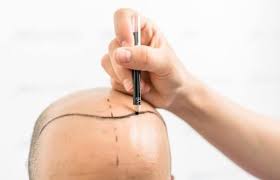
The vertex, or crown, presents a specific strategic challenge distinct from frontal hairline restoration: because this area sits at the visual center of a natural spiral growth pattern radiating outward from a central point, and because crown balding tends to expand outward gradually over many years even after treatment, many experienced surgeons recommend a more conservative approach to crown coverage, preserving donor supply for the frontal zone, which carries greater aesthetic weight and is more immediately visible in everyday social interaction. Patients specifically prioritizing crown density over hairline definition should discuss this trade-off explicitly, since donor supply allocated to one area is unavailable for the other.
Understanding why some patients are told they are not good candidates
An ethical surgeon sometimes advises against proceeding at all, particularly for very young patients whose loss pattern remains unpredictable, patients whose donor supply is already insufficient relative to their extent of loss, or patients whose expectations, such as restoring the density of an eighteen-year-old's hairline decades later, simply cannot be met by any surgical technique regardless of skill. Receiving this kind of honest disqualification, while initially disappointing, represents a meaningfully more trustworthy signal about a clinic's integrity than a provider willing to operate on anyone who can pay, regardless of whether the underlying anatomy genuinely supports a satisfying result.
Why Turkey leads globally in this procedure
Turkey compared to other medical tourism destinations
| Criterion | Turkey | Tunisia | Costa Rica | Dominican Republic | Colombia | Mexico |
|---|---|---|---|---|---|---|
| Annual procedure volume | Among the highest worldwide | Growing, more limited | Limited | Limited | Growing | Growing |
| Common clinic language | English widely spoken, growing French support | French and English widely spoken | Spanish, limited English | Spanish, variable English | Spanish, variable English | Spanish, variable English |
| Estimated pricing level | Particularly accessible | Accessible | Moderate to high | Moderate | Moderate | Moderate |
| Direct flight access from Canada | Direct flights to Istanbul | Generally via a European stopover | Variable | Variable | Variable | Variable |
The Turkish cities most recognized for this procedure
Istanbul concentrates the highest density of dedicated hair restoration clinics anywhere in the world, a specialization that has developed its own supporting ecosystem of experienced technicians, hairline designers, and physicians working exclusively within this field. Antalya, Izmir, and Ankara also host well-regarded clinics for patients whose travel plans favor these alternatives.
Why so many Canadians choose Turkey for FUE
Patients from Toronto, Montreal, Calgary, Ottawa, Edmonton, Winnipeg, Quebec City, Hamilton, Kitchener, London, Victoria, Halifax, Oshawa, Windsor, Saskatoon, Regina, Sherbrooke, St. Catharines, Barrie, Kelowna, Abbotsford, Kingston, Trois-Rivières, Guelph, Moncton, Brantford, Saint John, Peterborough, Thunder Bay, Saguenay, Lethbridge, Nanaimo, Kamloops, Belleville, Chilliwack, Drummondville, Sudbury, Sarnia, Wood Buffalo, and Fredericton travel to Turkey for FUE, drawn by surgeon experience built on genuinely massive case volume and pricing a fraction of typical Canadian private clinic rates for comparable graft counts.
How to choose a clinic for FUE
- Confirm the facility holds recognized accreditation and operates under direct physician supervision throughout extraction and implantation.
- Ask specifically how many FUE procedures your surgeon has personally performed, not the clinic as a whole.
- Request before-and-after results from patients with a starting pattern similar to your own, at the one-year mark rather than only three or six months.
Planning your medical trip to Turkey
- Entry requirements: Canadian citizens generally need an electronic visa before departure.
- Flights and transfers: several airlines offer direct service from major Canadian cities to Istanbul.
- Length of stay: plan for four to five days, allowing time for the procedure and an initial follow-up before flying home.
Understanding the role of blood testing before surgery
Most reputable clinics require basic blood work before proceeding, screening for bleeding disorders, communicable diseases, and conditions such as uncontrolled diabetes that could meaningfully affect wound healing and graft survival. Skipping this step to save time is a genuine warning sign about a clinic's overall safety standards, since this screening exists specifically to identify patients for whom proceeding without medical adjustment could produce a substantially worse outcome.
In summary: the reference technique behind permanent hair restoration
FUE relocates genetically resistant follicles one by one into balding areas, producing permanent results through the biological principle of donor dominance. Turkey's exceptional case volume and dedicated surgical expertise have made it the world's leading destination for this specific procedure.
Before making a decision, have your donor supply and hair loss pattern evaluated directly by an experienced surgical team rather than relying on photographs alone. Patients interested in a personalized assessment can request a free quote from the Aylan Clinic team, or explore related techniques across our hair transplant in Turkey hub.
Everything about FUE Hair Transplant in Turkey
Technique, pricing, results and the full patient journey — every detailed answer in our complete guide.