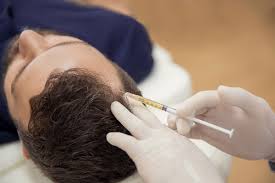
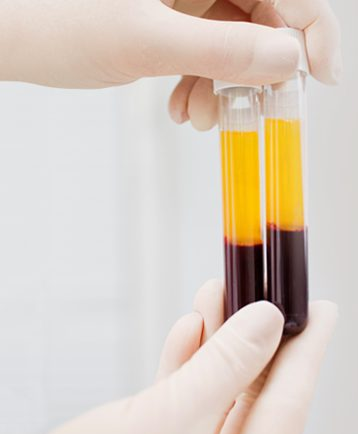
Platelet-Rich Plasma therapy draws a small sample of your own blood, concentrates its platelets through centrifugation, and injects this growth-factor-rich plasma directly into the scalp to support existing follicle health, distinguishing this treatment fundamentally from the transplantation procedures already detailed throughout our dedicated content since PRP adds no new hair at all, working instead to strengthen and prolong the life of follicles you already have.
Below you will find the biological mechanism behind why this treatment can genuinely help in specific situations, who is a realistic candidate, the complete treatment process, honest expected results, risks worth understanding, and the practical details for pursuing this in Turkey. This page sits within our hair transplant in Turkey hub, itself part of aesthetic surgery in Turkey. At any point you can request a free quote, with no obligation.
Understanding What Platelets Actually Do for Hair Follicles
Platelets, beyond their well-known role in blood clotting, contain and release a concentrated cocktail of growth factors, including platelet-derived growth factor, vascular endothelial growth factor, and epidermal growth factor, once activated. These specific growth factors stimulate increased blood vessel formation around the follicle, extend the active growth phase of the hair cycle, and support the health of the dermal papilla, the structure at the follicle's base responsible for regulating hair production. Concentrating platelets from your own blood and injecting this concentration directly into thinning areas delivers these growth factors in a dose considerably higher than what circulates in blood under normal conditions.
Why PRP Works Best on Follicles That Are Struggling, Not Already Dead
It is essential to understand the biological window where this treatment can genuinely help: PRP supports follicles that are miniaturizing but still alive and metabolically active, essentially struggling rather than fully dormant. Once a follicle has completed the miniaturization process characteristic of advanced androgenetic alopecia and effectively stopped producing any visible hair, PRP's growth factor stimulation has nothing left to meaningfully activate. This explains why PRP shows its most convincing results in early to moderate thinning, and considerably more limited benefit in areas of long-established, advanced baldness.
Comparison Table: PRP vs. Surgical Transplantation
| Criterion | PRP Therapy | Surgical Transplantation |
|---|---|---|
| Adds new hair follicles | No | Yes, relocates existing donor follicles |
| Best suited for | Early to moderate thinning with still-viable follicles | Areas of complete or near-complete baldness |
| Invasiveness | Minimally invasive injections, no incisions | Surgical procedure with incisions or micro-punches |
| Typical session structure | A series of sessions, then periodic maintenance | Generally a single procedure, occasionally staged |
| Permanence | Requires ongoing maintenance to sustain benefit | Permanent once healed, given donor dominance |
When new coverage is what you actually need, a surgical option such as FUE hair transplant addresses areas PRP cannot reach.
Who Is a Genuine Candidate for PRP Therapy
- Early to moderate androgenetic alopecia with follicles still visibly producing thinner, finer hair rather than areas of complete, long-established baldness.
- A specific interest in slowing progression or supporting a transplant's surrounding native hair, rather than expecting this treatment alone to reverse significant existing baldness.
- Willingness to commit to a multi-session protocol and ongoing maintenance, since PRP's benefit is not a single permanent intervention.
Indications and Contraindications for PRP Therapy
| Common Indications | Contraindications or Precautions |
|---|---|
| Early to moderate diffuse thinning with follicles still actively cycling | Areas of complete, long-established baldness with no viable follicles remaining |
| Support for surrounding native hair alongside a hair transplant procedure | Certain blood disorders or blood-thinning medications requiring evaluation first |
| A patient specifically seeking to slow progression while considering longer-term options | Active scalp infection or inflammatory skin conditions in the treatment area |
Step-by-Step: What the Treatment Involves
Before the Treatment
Your provider evaluates whether your specific pattern and stage of thinning genuinely falls within PRP's realistic window of benefit, discussing honestly whether your particular presentation is likely to respond meaningfully.
During the Treatment
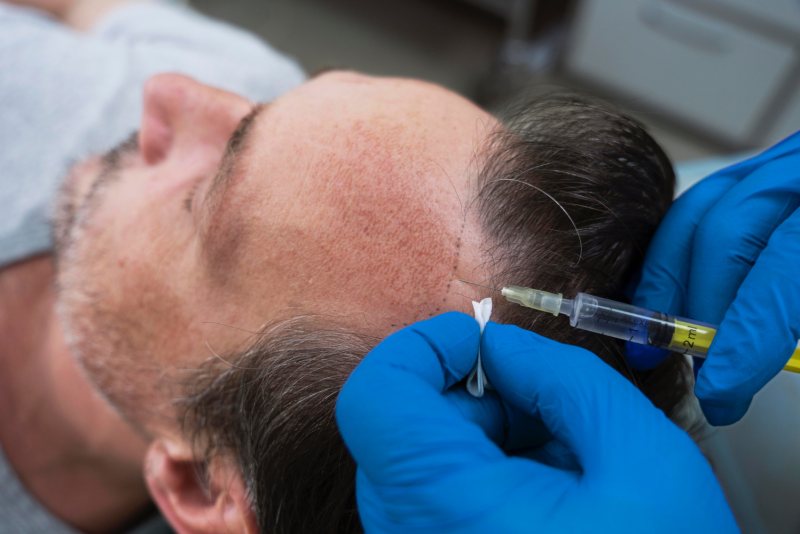
A blood sample is drawn, generally a small vial similar to routine blood work, then processed through centrifugation to separate and concentrate the platelet-rich plasma layer, which is then injected across the treatment area using a fine needle, typically completed within thirty to forty-five minutes total.
After the Treatment
Most patients resume normal activities the same day, with some mild scalp tenderness or minor swelling for a day or two following each session.
Recovery Timeline
| Period | Typically Reported Progress |
|---|---|
| Day 1 | Mild scalp tenderness or minor swelling, resolving quickly |
| Weeks 2 to 4 | No dramatic visible change yet; biological activation is occurring at the follicular level |
| Months 3 to 6 | Reduced shedding and, in responsive cases, visible improvement in hair thickness begins appearing |
| Ongoing | Periodic maintenance sessions, generally every four to six months, sustain any achieved benefit |
Expected Results and Realistic Benefit
It is essential to set genuinely honest expectations here: PRP is not a substitute for transplantation in areas of significant baldness, and its most realistic role is slowing further thinning and modestly improving the thickness of existing, still-viable hair, rather than producing dramatic new growth in areas that have already gone fully bald. Patients who understand and accept this realistic scope tend to report considerably higher satisfaction than those expecting transplant-level transformation from injections alone.
Risks and Possible Complications
- Minor injection site discomfort, bruising, or swelling, generally resolving within a few days.
- Limited or no response, since not every patient's follicles are in a biological state where PRP's stimulation produces a meaningful effect.
- The need for ongoing financial and time commitment, given this treatment's maintenance-dependent nature rather than a single permanent intervention.
- Variable PRP concentration quality between providers, since centrifugation protocols and resulting platelet concentration differ across clinics and equipment.
The Rigorous Medical Oversight Behind Turkey's Hair Restoration Industry
Turkey's Ministry of Health framework for international patients and the broader medical oversight structure supporting hair restoration clinics apply to PRP therapy as a genuine medical procedure involving blood processing and injection, distinguishing legitimate clinical protocols from less rigorous cosmetic-only settings sometimes offering this treatment elsewhere.
Understanding Why PRP Concentration Protocols Vary Significantly Between Providers
Not all PRP is created equal: the specific centrifugation speed, duration, and resulting platelet concentration achieved varies considerably between clinics depending on their equipment and protocol, and research suggests that platelet concentration below a certain threshold may not provide the growth factor dose needed for meaningful biological effect. Asking your provider directly about their specific protocol and resulting concentration standard represents a genuinely informed question rather than excessive technical scrutiny.
The Value of Understanding This as Part of a Broader Strategy, Not a Standalone Solution
Given PRP's realistic, more modest scope, this treatment achieves its greatest value as one component within a broader hair health strategy, often combined with topical minoxidil, addressing any underlying nutritional deficiencies already detailed in our hair transplant for women content, and, when appropriate, surgical transplantation for areas beyond PRP's realistic reach.
Quality Signals Worth Looking for in a Provider
A genuinely honest provider sets realistic expectations directly, explaining clearly which specific areas of your scalp are likely to respond and which are not, rather than promising uniform improvement regardless of how advanced your thinning has become in any given zone.
Preparing for Your Consultation
Bring a clear history of how your thinning has progressed over time, and ask specifically what platelet concentration protocol your provider uses and how many sessions they typically recommend for a case similar to yours.
Maintaining Continuity of Care Between Turkey and Canada
Request documentation of your specific treatment protocol and session schedule, since maintaining this same protocol with a provider in Canada, if you choose to continue treatment there, supports consistency in your ongoing care.
Patient Experiences Reported With PRP Therapy
Many patients describe genuine satisfaction with reduced shedding and modestly improved hair thickness when their expectations were realistically calibrated beforehand, while patients expecting dramatic new growth in already-bald areas frequently report disappointment, underscoring how critical honest pre-treatment expectation-setting proves to overall satisfaction.
Combining PRP With Other Treatments
PRP is frequently combined with surgical transplantation, supporting the health of surrounding native hair not directly addressed by the transplant itself, and is also commonly paired with exosome hair treatment, already detailed in our dedicated content, within an integrated non-surgical treatment plan.
Why a Second Opinion Matters for This Decision
Given how much PRP's realistic benefit depends on your specific stage of thinning and the quality of a given provider's concentration protocol, comparing recommendations and methodology between two consultations helps you form a more accurate picture of what genuinely realistic benefit to expect.
Questions Worth Asking During Your Consultation
Ask specifically what platelet concentration protocol is used, how many sessions are typically recommended for your specific stage of thinning, and what realistic outcome, in honest terms, you should expect given your particular pattern.
Understanding the Difference Between PRP and PRF
Some clinics offer a related variant called Platelet-Rich Fibrin, or PRF, which differs from standard PRP in its processing: PRF uses a slower centrifugation process without anticoagulant additives, resulting in a fibrin matrix that releases growth factors more gradually over time rather than delivering them in a single concentrated dose at injection. Some providers argue this slower-release mechanism may extend the biological stimulation window, though comparative evidence between PRP and PRF specifically for hair applications remains less extensive than the broader body of PRP research, making this a reasonable question to raise directly if your provider offers either option.
Understanding Why Blood Draw Volume and Processing Method Both Matter
The volume of blood drawn and the specific processing protocol used together determine the final concentration and total quantity of active plasma available for injection, meaning a larger initial blood draw processed correctly can yield meaningfully more treatment volume than a smaller draw, an important practical consideration for providers treating a larger total scalp area who need sufficient plasma volume to cover the full treatment zone adequately.
Understanding the Realistic Timeline for Judging Whether Treatment Is Working
Because PRP's biological mechanism operates at the level of extending growth cycles and supporting follicular health rather than producing an immediately visible change, patients should understand that judging treatment success too early, before the three-to-six-month mark when initial results typically become apparent, risks premature disappointment or premature abandonment of a protocol that may still be building toward its genuine benefit. Tracking shedding rate specifically, rather than density alone, often provides an earlier practical indicator of response, since reduced shedding frequently precedes visible thickness improvement by several weeks to months.
Understanding Why Combining Nutritional Assessment With PRP Often Improves Outcomes
Since PRP's growth factor stimulation works most effectively when the follicle otherwise has adequate biological resources to respond, addressing any underlying nutritional deficiencies, particularly iron and vitamin D as already detailed in our dedicated female hair loss content, alongside PRP treatment itself often produces more meaningful results than pursuing PRP in isolation while an underlying deficiency continues limiting the follicle's overall capacity to respond to this stimulation.
PRP Pricing in Turkey
| Pricing Factor | Cost Impact |
|---|---|
| Number of sessions included in your treatment plan | A primary factor influencing overall cost |
| Whether PRP is combined with a transplant or pursued as a standalone treatment | Influences overall total investment |
For a full breakdown across procedures, see our pricing in Turkey guide.
Why Turkey Has Become a Leading Destination for PRP Hair Treatment
Turkey Compared to Other Medical Tourism Destinations
| Criterion | Turkey | Tunisia | Costa Rica | Dominican Republic | Colombia | Mexico |
|---|---|---|---|---|---|---|
| Common clinic language | English widely spoken, growing French support | French and English widely spoken | Spanish, limited English | Spanish, variable English | Spanish, variable English | Spanish, variable English |
| Documented expertise integrating PRP with surgical care | Particularly well established | Good availability | Variable | Variable | Good availability | Good availability |
| Estimated pricing level | Particularly accessible | Accessible | Moderate to high | Moderate | Moderate | Moderate |
| Direct flight access from Canada | Direct flights to Istanbul | Generally via a European stopover | Variable | Variable | Variable | Variable |
The Turkish Cities Most Recognized for This Treatment
Istanbul's dense concentration of hair restoration clinics has led many facilities to integrate PRP as a standard complementary offering alongside surgical services, often supported by dedicated equipment and protocols refined through substantial patient volume. Antalya, Izmir, and Ankara also host recognized clinics offering this treatment.
Why So Many Canadians Choose Turkey for PRP Hair Treatment
Patients from Toronto, Montreal, Calgary, Ottawa, Edmonton, Winnipeg, Quebec City, Hamilton, Kitchener, London, Victoria, Halifax, Oshawa, Windsor, Saskatoon, Regina, Sherbrooke, St. Catharines, Barrie, Kelowna, Abbotsford, Kingston, Trois-Rivières, Guelph, Moncton, Brantford, Saint John, Peterborough, Thunder Bay, Saguenay, Lethbridge, Nanaimo, Kamloops, Belleville, Chilliwack, Drummondville, Sudbury, Sarnia, Wood Buffalo, and Fredericton travel to Turkey for this treatment, often combining it with a transplant procedure to benefit from pricing considerably below typical Canadian private clinic rates for comparable combined care.
How to Choose a Clinic for PRP Hair Treatment
- Confirm the facility follows genuine medical protocols for blood processing, storage, and injection, not a purely cosmetic, unregulated setting.
- Ask specifically about their centrifugation protocol and resulting platelet concentration standard.
- Request an honest assessment of whether your specific stage of thinning genuinely falls within PRP's realistic window of benefit before committing to a multi-session package.
Planning Your Medical Trip to Turkey
- Entry requirements: Canadian citizens generally need an electronic visa before departure.
- Flights and transfers: several airlines offer direct service from major Canadian cities to Istanbul.
- Length of stay: a standalone PRP session requires minimal time, though many patients combine this treatment with a transplant procedure requiring a longer stay of four to five days.
In Summary: A Realistic Complementary Treatment, Not a Transplant Substitute
PRP therapy concentrates growth factors from your own blood to support still-viable, struggling follicles, offering genuine but realistically modest benefit for early to moderate thinning rather than dramatic regrowth in fully bald areas. Turkey's extensive combined surgical and non-surgical experience has made it a well-established destination for this treatment.
Before making a decision, ensure your provider gives you an honest assessment of whether your specific pattern genuinely falls within this treatment's realistic scope. Patients interested in a personalized assessment can request a free quote from the Aylan Clinic team to receive information suited to their specific stage of thinning and overall hair health goals. To go further, explore the full hair transplant in Turkey hub.
Everything about PRP Hair Treatment in Turkey
Technique, pricing, results and the full patient journey — every detailed answer in our complete guide.