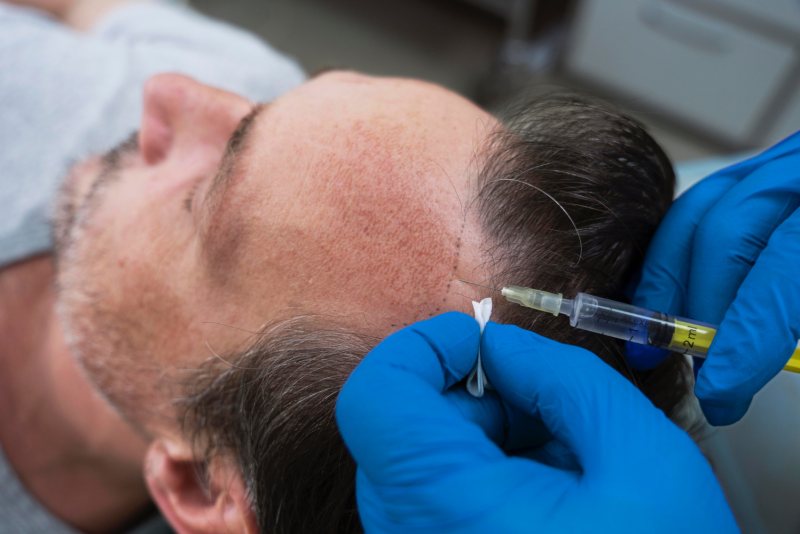
Exosome therapy delivers concentrated extracellular vesicles, microscopic cellular messengers containing growth factors, proteins, and signaling molecules, directly into the scalp to stimulate surrounding follicle activity. It represents a genuinely distinct mechanism from PRP, since exosomes are typically laboratory-processed from stem cell cultures rather than extracted from a patient’s own blood in the treatment room itself.
This page belongs to our hair transplant in Turkey hub, within our broader aesthetic surgery in Turkey content. Below you will find the cellular biology behind why this specific mechanism works differently from PRP hair treatment, who is a realistic candidate, the complete treatment process, honest expected results, risks worth understanding, and the practical details for pursuing this in Turkey. At any point you can request a free quote, with no obligation.
Understanding what exosomes actually are at the cellular level
Exosomes are tiny, membrane-bound vesicles, typically thirty to one hundred fifty nanometers in diameter, released naturally by cells as a way of communicating with neighboring and distant cells, carrying a specific cargo of proteins, growth factors, and genetic material called microRNA that can influence the behavior of whatever cell receives them. In the context of hair restoration, exosomes are typically harvested from cultured stem cells, most commonly derived from adipose tissue, umbilical cord tissue, or bone marrow, grown and processed in a laboratory setting rather than extracted directly from the patient during the treatment session itself.
Why this sourcing difference from PRP genuinely matters
Because exosomes are laboratory-processed rather than drawn from the patient’s own blood on the spot, this treatment does not require a blood draw at all, and the resulting product can be standardized to a specific, consistent concentration of active signaling molecules in a way that PRP’s individual-to-individual blood variation cannot fully control for. This standardization is exosome therapy’s primary theoretical advantage over PRP, though it also introduces a different consideration: verifying the specific sourcing, laboratory processing standard, and regulatory status of the exosome product being used, since not every product marketed under this name meets the same manufacturing rigor.
Comparison table: exosome therapy vs. PRP
| Criterion | Exosome therapy | PRP |
|---|---|---|
| Source material | Laboratory-cultured stem cell derivatives | Patient’s own blood, drawn during the session |
| Blood draw required | No | Yes |
| Concentration consistency | Potentially more standardized between sessions | Varies based on individual blood characteristics |
| Regulatory status | Varies by product and jurisdiction, worth verifying directly | Generally well-established as an autologous treatment |
| Mechanism | Cellular signaling molecules and microRNA | Concentrated platelet growth factors |
Who is a genuine candidate for exosome therapy
- Early to moderate thinning with follicles still biologically responsive, similar to the same realistic window already detailed in our PRP content.
- A specific interest in a treatment not requiring a blood draw, or a preference for a more standardized product concentration.
- Willingness to verify product sourcing and regulatory standing directly, given this treatment’s more variable manufacturing landscape compared to PRP’s more established autologous framework.
Indications and contraindications for exosome therapy
| Common indications | Contraindications or precautions |
|---|---|
| Early to moderate diffuse thinning with follicles still actively cycling | Areas of complete, long-established baldness with no viable follicles remaining |
| Support for surrounding native hair alongside a hair transplant procedure | Unverified or unregulated exosome product sourcing at a given clinic |
| Patients specifically seeking an alternative to PRP’s blood-draw requirement | Active scalp infection or inflammatory skin conditions in the treatment area |
Step-by-step: what the treatment involves
Before the treatment
Your provider evaluates whether your specific pattern and stage of thinning falls within this treatment’s realistic window of benefit, and should discuss directly the specific exosome product’s sourcing and regulatory standing.
During the treatment
No blood draw is required; the laboratory-processed exosome solution is injected across the treatment area using a fine needle, similar in sensation and duration to a PRP session, typically completed within thirty to forty-five minutes.
After the treatment
Most patients resume normal activities the same day, with some mild scalp tenderness or minor redness for a day or two following treatment.
Recovery timeline
| Period | Typically reported progress |
|---|---|
| Day 1 | Mild scalp tenderness or minor redness, resolving quickly |
| Weeks 2 to 4 | No dramatic visible change yet; cellular signaling activation is occurring at the follicular level |
| Months 3 to 6 | Reduced shedding and, in responsive cases, visible improvement in hair thickness begins appearing |
| Ongoing | Periodic maintenance sessions sustain any achieved benefit, similar to PRP’s maintenance requirement |
Expected results and realistic benefit
As with PRP, it is essential to set genuinely honest expectations: exosome therapy’s realistic role is supporting still-viable, struggling follicles and modestly improving existing hair thickness, rather than producing dramatic new growth in areas of long-established complete baldness. Current published research specifically on exosome therapy for hair loss remains less extensive than the more established PRP literature, meaning claims of superiority over PRP should be evaluated with appropriate caution until more robust comparative evidence accumulates.
Risks and possible complications
- Variable product quality and sourcing transparency, since exosome products marketed for hair restoration are not uniformly regulated to the same standard across every jurisdiction and supplier.
- Limited or no response, since the same biological window limitation applying to PRP applies equally here.
- Minor injection site discomfort or redness, generally resolving within a few days.
- A comparatively newer evidence base, meaning long-term outcome data remains less mature than more established treatments.
The rigorous medical oversight behind Turkey’s hair restoration industry
Turkey’s Ministry of Health framework for international patients establishes oversight requirements for clinics offering this treatment, though the specific regulatory classification of exosome products themselves varies, making direct verification of your chosen clinic’s specific product sourcing and documentation particularly important for this specific treatment.
Why verifying exosome sourcing matters more than for most treatments
Because exosome products originate from laboratory processing rather than the patient’s own body, and because regulatory frameworks for these specific products continue evolving across different jurisdictions internationally, asking direct, specific questions about your chosen clinic’s supplier, manufacturing standard, and any relevant certification represents a genuinely important verification step distinct from most other treatments detailed throughout our broader content.
Understanding the difference between various exosome source tissues
Exosomes marketed for hair restoration can originate from several different source tissues, including adipose-derived stem cells, umbilical cord-derived stem cells, and other cultured cell lines, and these different sources may carry somewhat different signaling molecule profiles relevant to hair biology specifically. Asking your provider which specific source tissue their product derives from, and what evidence supports that particular source’s relevance to hair restoration specifically, represents a reasonable, informed question. This closely relates to our hair stem cell therapy content.
The value of understanding this as part of a broader strategy
Similar to PRP, exosome therapy achieves its greatest realistic value as one component within a broader hair health strategy rather than a standalone solution, often combined with topical treatments, addressing underlying nutritional factors, and, when appropriate, surgical transplantation such as FUE hair transplant for areas beyond this treatment’s realistic reach.

Quality signals worth looking for in a provider
A genuinely trustworthy provider discusses their specific exosome product’s sourcing and regulatory standing transparently when asked, rather than deflecting this question or relying solely on general marketing language about advanced cellular technology without specific, verifiable detail.
Preparing for your consultation
Bring a clear history of how your thinning has progressed, and ask specifically about the exosome product’s source tissue, manufacturing standard, and any relevant regulatory documentation your provider can share.
Maintaining continuity of care between Turkey and Canada
Request documentation of the specific exosome product used, including its source and manufacturer if available, since this information may be relevant for any future consultation or continued treatment planning with a provider in Canada.
Patient experiences reported with exosome therapy
Many patients specifically choosing this treatment describe appreciating the absence of a blood draw compared to PRP, alongside similar realistic satisfaction levels when expectations were calibrated honestly beforehand regarding this treatment’s genuinely modest, supportive scope.
Combining exosome therapy with other treatments
Exosome therapy is frequently combined with surgical transplantation and is sometimes alternated with or combined alongside PRP sessions within an integrated non-surgical treatment plan, depending on a provider’s specific protocol and philosophy.
Why a second opinion matters for this decision
Given the genuinely variable regulatory landscape and product quality across providers offering this treatment, seeking a second opinion specifically to compare product sourcing transparency between clinics is particularly valuable before committing.
Questions worth asking during your consultation
Ask specifically what source tissue the exosome product derives from, what manufacturing and regulatory standard it meets, how many sessions are typically recommended, and what realistic outcome you should expect given your specific stage of thinning.
Understanding microRNA cargo and why it represents a genuinely distinct mechanism
Beyond growth factors alone, exosomes carry specific microRNA molecules capable of directly influencing gene expression within recipient follicle cells, a signaling pathway distinct from the growth-factor-only mechanism underlying PRP. This microRNA component represents the specific biological basis for exosome therapy’s theoretical distinction from PRP, since it operates at a genetic regulatory level rather than solely through direct growth factor stimulation, though translating this cellular-level distinction into a clearly demonstrated clinical advantage for hair specifically remains an active area of ongoing research rather than settled consensus.
Understanding storage and handling considerations specific to this product
Because exosome products are biological materials requiring specific temperature-controlled storage and handling to preserve their active signaling capacity, clinics offering this treatment should maintain documented cold-chain protocols from receipt through injection, and any degradation in this handling chain can meaningfully reduce the product’s biological activity by the time it reaches your scalp. Asking your provider directly about their specific storage protocol represents a reasonable verification step given this product’s particular sensitivity to handling conditions.
Understanding why cost varies considerably more than with PRP
Because exosome products must be purchased from external laboratory suppliers rather than processed from the patient’s own blood in-house, per-session costs tend to reflect this external sourcing expense directly, and pricing can vary considerably more between clinics than PRP’s more standardized in-house processing cost structure, making direct price and value comparison between providers particularly worthwhile for this specific treatment. You can compare full ranges on our pricing in Turkey page.
Understanding the broader regenerative medicine context this treatment sits within
Exosome therapy for hair restoration represents one specific application within a considerably broader regenerative medicine field exploring cellular signaling therapies across many areas of medicine, and this broader context helps explain both the genuine scientific interest driving this treatment’s development and the reason its hair-specific evidence base continues maturing alongside this wider field’s overall research progress.
Exosome therapy pricing in Turkey
| Pricing factor | Cost impact |
|---|---|
| Specific exosome product used and its sourcing or manufacturing standard | A primary factor influencing overall cost |
| Number of sessions included in your treatment plan | Influences overall total investment |
Why Turkey has become a destination for exosome hair treatment
Turkey compared to other medical tourism destinations
| Criterion | Turkey | Tunisia | Costa Rica | Dominican Republic | Colombia | Mexico |
|---|---|---|---|---|---|---|
| Common clinic language | English widely spoken, growing French support | French and English widely spoken | Spanish, limited English | Spanish, variable English | Spanish, variable English | Spanish, variable English |
| Availability of this newer treatment | Growing availability at leading facilities | Limited availability | Variable | Variable | Limited availability | Limited availability |
| Estimated pricing level | Particularly accessible | Accessible | Moderate to high | Moderate | Moderate | Moderate |
| Direct flight access from Canada | Direct flights to Istanbul | Generally via a European stopover | Variable | Variable | Variable | Variable |
The Turkish cities most recognized for this treatment
Istanbul’s leading hair restoration facilities have been among the earlier adopters of exosome therapy within the broader Turkish hair restoration industry, often integrating it as a premium complementary offering alongside more established treatments. Antalya, Izmir, and Ankara also host clinics beginning to offer this treatment.
Why so many Canadians consider Turkey for this treatment
Patients from Toronto, Montreal, Calgary, Ottawa, Edmonton, Winnipeg, Quebec City, Hamilton, Kitchener, London, Victoria, Halifax, Oshawa, Windsor, Saskatoon, Regina, Sherbrooke, St. Catharines, Barrie, Kelowna, Abbotsford, Kingston, Trois-Rivières, Guelph, Moncton, Brantford, Saint John, Peterborough, Thunder Bay, Saguenay, Lethbridge, Nanaimo, Kamloops, Belleville, Chilliwack, Drummondville, Sudbury, Sarnia, Wood Buffalo, and Fredericton exploring this treatment often combine it with a transplant procedure, benefiting from pricing considerably below typical Canadian private clinic rates for comparable combined care.
How to choose a clinic for exosome therapy
- Confirm the facility can provide specific, verifiable documentation regarding their exosome product’s source and manufacturing standard.
- Ask directly about the regulatory status of the specific product used in your jurisdiction and Turkey’s own regulatory framework.
- Request an honest assessment of whether your specific stage of thinning genuinely falls within this treatment’s realistic window of benefit.
Planning your medical trip to Turkey
- Entry requirements: Canadian citizens generally need an electronic visa before departure.
- Flights and transfers: several airlines offer direct service from major Canadian cities to Istanbul.
- Length of stay: a standalone session requires minimal time, though many patients combine this treatment with a transplant procedure requiring a longer stay of four to five days.
In summary: a newer mechanism with a similarly realistic, supportive scope
Exosome therapy delivers laboratory-processed cellular signaling molecules to support struggling follicles, offering a blood-draw-free alternative to PRP with a similarly realistic, modest scope rather than dramatic regrowth in fully bald areas. Turkey’s early adoption of this technology within its established hair restoration infrastructure has positioned it as a growing destination for this treatment.
Before making a decision, verify your chosen clinic’s specific exosome product sourcing and regulatory documentation directly. Patients interested in a personalized assessment can request a free quote from the Aylan Clinic team to receive information suited to their specific stage of thinning and overall treatment goals. To go further, explore the full hair transplant in Turkey hub.