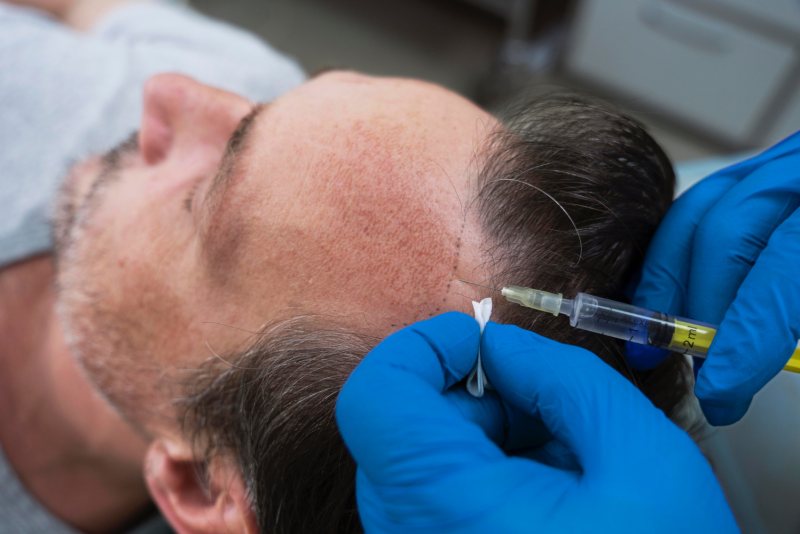
Hair stem cell therapy targets a genuinely distinct biological population from the treatments already detailed throughout our dedicated content: rather than relocating existing donor follicles through transplantation, or supporting already-active follicles through PRP or exosome therapy, this treatment aims to work at the level of the follicle’s own resident stem cell population, specifically the bulge region cells responsible for regenerating hair-producing structures across successive growth cycles.
This page belongs to our hair transplant in Turkey hub, within the broader aesthetic surgery in Turkey section. Below you will find the specific cellular biology behind why this treatment targets a different population than other non-surgical options already covered in our content, who is a realistic candidate, the complete treatment process, honest expected results, risks worth understanding, and the practical details for pursuing this in Turkey. At any point you can request a free quote, with no obligation.
Understanding the Hair Follicle’s Own Resident Stem Cell Population
Each hair follicle contains a specific reservoir of stem cells located in a region called the bulge, positioned along the follicle’s outer root sheath, and these cells serve a genuinely essential biological function: they are responsible for regenerating the follicle’s hair-producing structures at the start of each new growth cycle throughout a person’s lifetime. In androgenetic alopecia, research suggests this bulge stem cell population itself often remains present even as the follicle’s hair-producing capacity progressively diminishes through miniaturization, meaning the stem cells persist in a dormant or under-activated state even as visible hair production declines.
Why This Distinction From PRP and Exosomes Matters Biologically
This represents a genuinely important distinction worth understanding clearly: PRP and exosome therapy, already detailed in our dedicated content, work primarily by delivering external growth factors and signaling molecules to stimulate whatever follicular activity remains, essentially encouraging existing, still-functioning cellular machinery to work harder. Stem cell-focused approaches instead aim more specifically at the bulge stem cell population itself, attempting to reactivate or support this specific dormant reservoir directly, a theoretically more targeted mechanism, though one where translating this specific cellular target into a clearly proven clinical treatment remains a genuinely active, evolving area of research rather than settled, universally validated practice.
Comparison Table: Stem Cell Therapy vs. PRP and Exosome Approaches
| Criterion | Stem Cell Therapy | PRP / Exosome Therapy |
|---|---|---|
| Primary biological target | Follicle’s resident bulge stem cell population | General follicular growth factor stimulation |
| Mechanism specificity | More targeted at a specific cellular reservoir | Broader growth factor and signaling support |
| Evidence maturity | Earlier stage, more variable across specific protocols | More established, though still evolving |
| Regulatory landscape | Often more variable and jurisdiction-dependent | Generally more standardized, particularly for PRP |
Who Is a Genuine Candidate for Hair Stem Cell Therapy
- Early to moderate androgenetic alopecia with follicles still present, though functionally struggling, similar to the realistic window already discussed for PRP and exosome therapy.
- A specific interest in this particular cellular mechanism, alongside willingness to research and verify the specific protocol and evidence base a given clinic offers.
- Realistic expectations calibrated to this treatment’s genuinely evolving evidence base, rather than expecting a guaranteed, dramatic transformation.
Indications and Contraindications for Hair Stem Cell Therapy
| Common Indications | Contraindications or Precautions |
|---|---|
| Early to moderate diffuse thinning with follicles still structurally present | Areas of complete, long-established baldness where follicular structures, including bulge stem cells, may no longer persist |
| A patient specifically interested in this mechanism after appropriate research | Unverified or unregulated specific protocols lacking clear scientific basis |
| Support alongside, rather than instead of, surgical transplantation for areas requiring it | Active scalp infection or inflammatory skin conditions in the treatment area |
Step-by-Step: What the Treatment Involves
Before the Treatment
Your provider should explain clearly and specifically which particular protocol they use, since “stem cell therapy” for hair restoration is not a single standardized treatment but rather an umbrella term covering several genuinely different specific approaches and sourcing methods.
During the Treatment
Depending on the specific protocol, this may involve injections into the scalp similar in administration to PRP or exosome therapy already detailed in our dedicated content, sometimes incorporating the patient’s own adipose-derived cells processed through a specific extraction method, or, in other protocols, laboratory-processed cellular products.
After the Treatment
Recovery is generally comparable to PRP or exosome therapy, with mild scalp tenderness or swelling for a day or two following injection-based protocols.
Recovery Timeline
| Period | Typically Reported Progress |
|---|---|
| Day 1 | Mild scalp tenderness or swelling if an injection-based protocol was used, resolving quickly |
| Weeks 2 to 4 | No dramatic visible change yet; cellular activation, if occurring, happens at this stage |
| Months 3 to 6 | Any reduced shedding or improved thickness, in responsive cases, becomes apparent |
| Ongoing | Some protocols involve periodic maintenance sessions, similar to PRP scheduling |
Expected Results and Realistic Benefit
It is essential to approach this treatment category with particularly calibrated honesty, given its genuinely earlier-stage evidence base compared to more established options already detailed throughout our content: some specific protocols show promising preliminary results in published research, while others are marketed with considerably more confidence than their underlying evidence currently supports. Patients should specifically ask which published research, if any, supports the exact protocol being offered, rather than assuming all treatments marketed under this broad umbrella term carry equal scientific support.
Risks and Possible Complications
- Highly variable evidence quality and protocol standardization across different clinics and specific treatments marketed under this broad term, making informed comparison shopping particularly important here.
- Limited or no response, since the same fundamental biological window limitations discussed for PRP and exosome therapy likely apply here as well.
- Regulatory variability, since specific stem cell-based products and procedures face differing oversight depending on jurisdiction and specific sourcing method used.
- Minor injection site discomfort for injection-based protocols, generally resolving within a few days.
The Rigorous Medical Oversight Behind Turkey’s Hair Restoration Industry
Turkey’s Ministry of Health framework for international patients establishes general oversight requirements for clinics offering this treatment, though given this category’s genuinely variable specific protocols and sourcing methods, direct verification of your chosen clinic’s specific approach and its regulatory standing matters more here than for most treatments detailed throughout our broader content.
Why “Stem Cell Therapy” Requires More Specific Questioning Than Most Treatment Names
Unlike more standardized treatments such as PRP, which follows a relatively consistent underlying process across most providers, “stem cell therapy” for hair restoration encompasses several genuinely distinct specific approaches, including different cell sourcing methods, different processing protocols, and different injection or application techniques. Asking your provider to explain their exact specific protocol in detail, rather than accepting this broad category name alone, represents an essential step for this particular treatment given how much genuine variation exists beneath this single umbrella term.
Understanding Adipose-Derived Stem Cell Protocols Specifically
Some specific protocols within this broader category use the patient’s own adipose-derived stem cells, harvested through a minor liposuction-like extraction from body fat, then processed and injected into the scalp, an autologous approach conceptually similar to PRP’s own-blood sourcing but targeting a different specific cell population with a theoretically different regenerative mechanism.

Understanding Why Independent Research Verification Matters Particularly Here
Given how considerably marketing language can outpace actual published clinical evidence within this specific treatment category, patients considering this option benefit particularly from independently researching whether their specific proposed protocol has genuine, peer-reviewed published support, rather than relying solely on a clinic’s own internal marketing materials or anecdotal patient testimonials alone.
The Value of Understanding This as an Evolving, Rather Than Settled, Treatment Category
Given this field’s genuinely active, ongoing research trajectory, what represents best available evidence today may meaningfully evolve over the coming years, and patients considering this treatment should understand they are engaging with a genuinely developing area of medicine rather than a fully mature, standardized treatment protocol comparable to the more established options detailed elsewhere in our content.
Understanding the Difference Between Cell-Based and Cell-Derived Product Approaches
Some clinics distinguish between protocols using living, cultured cells directly versus those using cell-derived products, such as growth factors or vesicles secreted by stem cells during laboratory culture, without necessarily transplanting the cells themselves. This distinction affects both the theoretical mechanism and the specific regulatory considerations applicable to each approach, and understanding which category your proposed treatment falls into represents another important, specific question worth raising directly during consultation.
Understanding Why Combining This Treatment With Surgical Transplantation Requires Careful Sequencing Discussion
For patients considering both stem cell-based treatment and surgical transplantation as part of a broader treatment plan, discussing the specific sequencing and timing between these approaches directly with your surgical team matters, since some providers recommend allowing surgical healing to complete before introducing additional cellular treatments, while others integrate both within a more closely coordinated timeline depending on their specific clinical philosophy and protocol. Many patients pursue this alongside a FUE hair transplant for areas that require surgical restoration.
Understanding the Broader Regenerative Medicine Research Trajectory Behind This Field
Hair-specific stem cell research sits within a considerably larger regenerative medicine research trajectory exploring stem cell applications across numerous areas of medicine, from wound healing to orthopedic applications to various degenerative conditions. This broader context helps explain both the genuine scientific momentum driving continued investment in hair-specific applications and why methodological approaches, including specific cell isolation and delivery techniques, continue evolving as lessons learned in other regenerative medicine applications inform hair-specific protocol refinement over time.
Understanding Why Follicle Miniaturization Complicates This Treatment’s Realistic Scope
It is worth revisiting the concept of follicular miniaturization already introduced elsewhere in our broader hair restoration content, since this specific biological process directly affects stem cell therapy’s realistic scope of benefit. As androgenetic alopecia progresses, affected follicles do not disappear immediately but rather shrink progressively across successive growth cycles, producing increasingly fine, short hair before eventually, in advanced cases, ceasing production entirely. Stem cell-based approaches theoretically have the greatest opportunity to intervene during this progressive miniaturization process, before a follicle has fully completed this decline, which is precisely why earlier intervention during moderate rather than advanced thinning tends to offer more realistic potential benefit.
Understanding the Importance of Consultation Continuity for Evolving Treatment Categories
Given how actively this specific treatment category continues evolving, maintaining an ongoing relationship with a provider who stays genuinely current with emerging research, rather than treating your initial consultation as a one-time transaction, offers meaningful value for patients specifically interested in this treatment category. Some providers proactively update patients on relevant new research or protocol refinements between sessions, a practice worth asking about directly when evaluating potential providers.
Understanding How to Interpret Patient Testimonials Within This Specific Category
Because individual response to any hair restoration treatment varies considerably, and because this particular treatment category’s evidence base remains less mature than more established options, patient testimonials specifically for stem cell-based treatments should be interpreted with additional caution compared to testimonials for more standardized, well-established procedures. A single compelling patient testimonial, however genuine, does not substitute for broader published evidence when evaluating a specific protocol’s overall reliability across a wider patient population.
Understanding the Value of Asking About Treatment Failure Rates, Not Just Success Stories
A genuinely transparent provider offering this treatment category should be willing to discuss realistic non-response rates alongside success stories, since any honest accounting of a treatment’s actual population-level outcomes necessarily includes patients who did not experience meaningful benefit. Providers unwilling to discuss this less favorable side of their outcome data, focusing exclusively on curated success stories, warrant additional scrutiny before proceeding.
Understanding Cell Viability and Handling as a Practical Quality Determinant
Regardless of which specific stem cell-based protocol is used, cell viability, meaning the proportion of cells that remain genuinely alive and functional through extraction, processing, and injection, directly determines how much genuine biological activity the final injected product actually contains. Clinics with rigorous, well-controlled processing protocols typically achieve higher viability rates than those using less carefully controlled handling procedures, and while verifying this specific technical detail directly is difficult for most patients, asking whether a clinic can speak knowledgeably about their own viability testing and quality control practices offers a reasonable proxy for assessing their overall protocol rigor.
Understanding Why This Field Benefits From Patience Rather Than Urgency
Given genuine ongoing research progress within this specific field, patients who are not in a position requiring immediate treatment may reasonably choose to monitor developments for a period before committing, since protocols and evidence quality within this particular category continue meaningfully evolving in ways that more established treatments, such as standard FUE transplantation, generally do not.
Quality Signals Worth Looking for in a Provider
A genuinely trustworthy provider explains their specific protocol in clear, verifiable detail, can reference specific published research supporting that exact approach when asked, and discusses honestly where genuine evidence gaps remain rather than presenting this treatment category as uniformly proven regardless of the specific protocol in question.
Understanding the Role of Scalp Environment in Supporting Any Stem Cell-Based Intervention
Beyond the specific injected treatment itself, the broader condition of the surrounding scalp environment, including local blood supply, inflammation levels, and any underlying nutritional deficiencies already discussed in our dedicated female hair loss content, meaningfully influences how well any stem cell-based intervention can actually take effect once delivered. A thoughtful provider considers this broader scalp health context alongside the specific treatment itself, sometimes recommending complementary measures to optimize the local environment your follicles are operating within, rather than treating this specific injection in complete isolation from your overall scalp health.
Preparing for Your Consultation
Ask your provider to explain their specific protocol in detail, including cell source, processing method, and any published research specifically supporting that exact approach, and bring a clear history of how your thinning has progressed.
Maintaining Continuity of Care Between Turkey and Canada
Request thorough documentation of your specific protocol, including cell source and processing details, since this information may be relevant for any future consultation or continued treatment planning with a provider in Canada, particularly given this field’s regulatory variability.
Patient Experiences Reported With Stem Cell Therapy
Patient experiences vary considerably given this category’s genuinely diverse specific protocols, with satisfaction levels often correlating closely with how accurately expectations were calibrated beforehand relative to that specific protocol’s actual evidence base.
Combining Stem Cell Therapy With Other Treatments
This treatment category is sometimes combined with surgical transplantation and other non-surgical options already detailed in our dedicated content, though the specific rationale and evidence for any particular combination should be discussed directly and specifically with your provider.
Why a Second Opinion Matters Particularly for This Treatment Category
Given how considerably specific protocols and their supporting evidence vary within this broad category, seeking a second opinion specifically to compare the exact protocol, sourcing method, and cited research between two providers is genuinely valuable, arguably more so than for most other treatments detailed throughout our content.

Questions Worth Asking During Your Consultation
Ask specifically what cell source and processing protocol is used, what published research supports this exact approach, how many sessions are typically recommended, and what realistic, honestly calibrated outcome you should expect given current evidence for that specific protocol.
Hair Stem Cell Therapy Pricing in Turkey
| Pricing Factor | Cost Impact |
|---|---|
| Specific protocol used, including cell source and processing method | A primary factor influencing overall cost given considerable variation across approaches |
| Number of sessions included in your treatment plan | Influences overall total investment |
For a broader view of costs across treatments, see our pricing in Turkey overview, or request a free quote for a figure tailored to your specific protocol.
Why Turkey Has Become a Destination for This Emerging Treatment Category
Turkey Compared to Other Medical Tourism Destinations
| Criterion | Turkey | Tunisia | Costa Rica | Dominican Republic | Colombia | Mexico |
|---|---|---|---|---|---|---|
| Common clinic language | English widely spoken, growing French support | French and English widely spoken | Spanish, limited English | Spanish, variable English | Spanish, variable English | Spanish, variable English |
| Availability of this emerging treatment category | Growing availability at leading facilities | Limited availability | Variable | Variable | Limited availability | Limited availability |
| Estimated pricing level | Particularly accessible | Accessible | Moderate to high | Moderate | Moderate | Moderate |
| Direct flight access from Canada | Direct flights to Istanbul | Generally via a European stopover | Variable | Variable | Variable | Variable |
The Turkish Cities Most Recognized for This Treatment
Istanbul’s leading hair restoration facilities have been among the earlier adopters of various stem cell-based protocols within the broader Turkish hair restoration industry, often integrating specific approaches within their broader non-surgical treatment offerings. Antalya, Izmir, and Ankara also host clinics beginning to offer treatments within this category.
Why Some Canadians Consider Turkey for This Treatment
Patients from Toronto, Montreal, Calgary, Ottawa, Edmonton, Winnipeg, Quebec City, Hamilton, Kitchener, London, Victoria, Halifax, Oshawa, Windsor, Saskatoon, Regina, Sherbrooke, St. Catharines, Barrie, Kelowna, Abbotsford, Kingston, Trois-Rivières, Guelph, Moncton, Brantford, Saint John, Peterborough, Thunder Bay, Saguenay, Lethbridge, Nanaimo, Kamloops, Belleville, Chilliwack, Drummondville, Sudbury, Sarnia, Wood Buffalo, and Fredericton researching this treatment often combine it with more established options, benefiting from pricing considerably below typical Canadian private clinic rates for comparable combined care where this treatment is available.
How to Choose a Clinic for Hair Stem Cell Therapy
- Confirm the facility can provide specific, verifiable documentation regarding their exact protocol, cell source, and processing method.
- Ask directly for any published research specifically supporting that exact approach, rather than general category-level claims.
- Request an honest, specifically calibrated assessment of realistic outcomes given current evidence for that particular protocol.
Planning Your Medical Trip to Turkey
- Entry requirements: Canadian citizens generally need an electronic visa before departure.
- Flights and transfers: several airlines offer direct service from major Canadian cities to Istanbul.
- Length of stay: this varies by specific protocol, though many standalone sessions require minimal time, while some adipose-derived approaches involving extraction may require a somewhat longer visit.
In Summary: A Genuinely Promising but Still-Evolving Treatment Category
Hair stem cell therapy targets the follicle’s own resident stem cell population through several genuinely distinct specific protocols, representing a promising but still-evolving area of hair restoration research. Turkey’s early adoption of various approaches within this category has positioned it as a growing destination worth approaching with informed, specific questioning.
Before making a decision, ask your provider to explain their exact specific protocol and any published research supporting that particular approach. Patients interested in a personalized assessment can contact the Aylan Clinic team by requesting a free quote to receive information suited to their specific stage of thinning and treatment goals. To explore related options, see our hair transplant in Turkey hub.
Everything about Stem Cell Hair Treatment in Turkey
Technique, pricing, results and the full patient journey — every detailed answer in our complete guide.