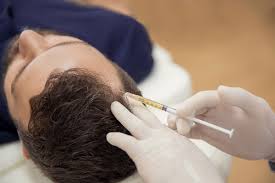
PRP (platelet-rich plasma) hair treatment uses a small sample of your own blood, spun in a centrifuge to concentrate its growth-factor-rich platelets, then injected into your scalp to stimulate dormant follicles and strengthen thinning hair. It is genuinely a non-surgical maintenance therapy rather than a permanent cure, meaning it suits early-stage thinning, weak hair, and post-transplant support far better than advanced baldness, and requires booster sessions every six to twelve months to sustain results. Because PRP uses your own blood, allergic reactions are rare, and international patients consistently find Turkish PRP packages run up to roughly 60% cheaper than equivalent private domestic care, especially when bundled with a hair transplant.
This guide complements our PRP hair treatment in Turkey procedure page, within our wider hair transplant in Turkey section. Below you will find exactly how PRP works, who genuinely benefits, what to expect during a session, the full cost picture, how to choose a quality clinic, and the practical details worth knowing before booking. At any time you can review our pricing in Turkey page or request a free quote, with no obligation.
Understanding What PRP Hair Treatment Actually Is
PRP is a maintenance therapy that stimulates and strengthens existing follicles rather than a permanent cure. It cannot stop the underlying genetic DHT process driving most hair loss, which makes honest expectations essential from the start. The concentrated growth factors in your own platelets stimulate dormant follicles back toward the active growth phase, increase blood supply to the scalp, and prolong the natural growth cycle, improving density and hair quality over a course of sessions.
The Science Behind PRP: How Growth Factors Work
When PRP is injected into the scalp, the concentrated platelets release growth factors such as PDGF and VEGF that stimulate cell repair, increase blood supply to the follicles, and signal dormant follicles toward the active growth phase, improving the environment your existing hair grows in.
Understanding the Hair Growth Cycle and PRP's Role
PRP works primarily by prolonging the anagen, or active growth, phase and encouraging follicles stuck in dormancy back into it. It genuinely extends how long each hair grows before shedding, which cumulatively improves overall density.
Why Platelet Concentration Genuinely Matters
Concentration matters considerably. Higher platelet concentration delivers more growth factors per injection, which is exactly why proper centrifuge protocols separate a quality clinic from a budget provider whose lower concentration may produce weaker, less consistent results.
What the Evidence Genuinely Says About PRP
The evidence is promising but mixed. Multiple studies show measurable density improvement for suitable patients, though results vary by individual, protocol, and concentration, making honest expectations more valuable than either dismissal or overselling.
The Three-Step PRP Process Explained
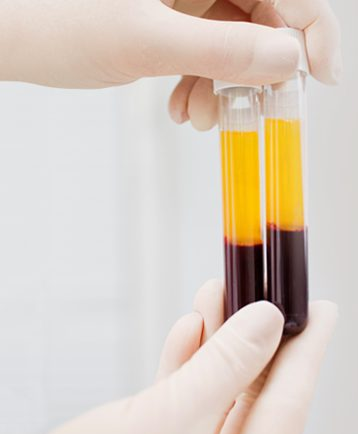
A small blood draw from your arm comes first, then centrifuge spinning separates the platelet-rich plasma over ten to fifteen minutes, and finally the concentrated plasma is injected across the thinning scalp zones, with the whole process typically taking thirty to forty-five minutes.
The Blood Draw
Usually about twenty to thirty millilitres, roughly two tablespoons, is drawn just like a standard blood test, a modest amount that poses no concern for healthy patients and takes only moments to collect.
The Centrifuge Wait
Your blood spins at high speed for ten to fifteen minutes, separating into layers so the platelet-rich plasma can be extracted, a quick preparation step during which you simply relax before the injection phase begins.
The Injection Phase
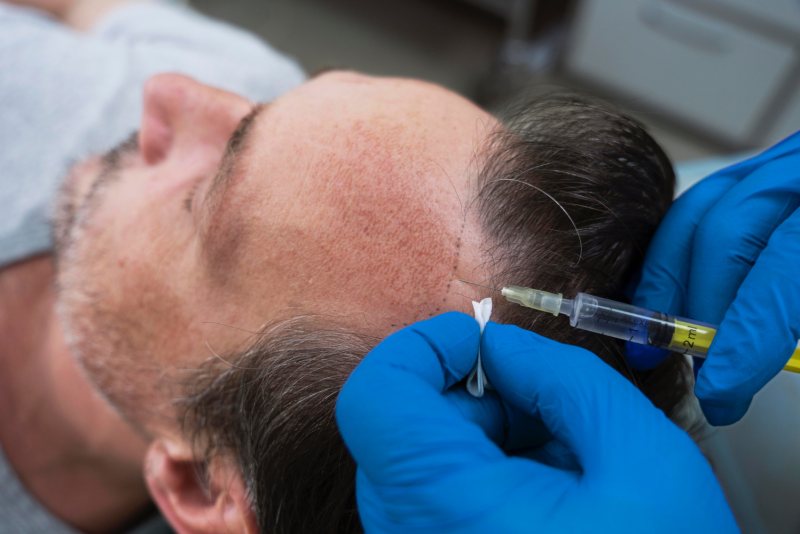
The concentrated plasma is injected through a series of small, shallow injections across the thinning zones, with pre-applied numbing cream keeping discomfort minimal, and the whole injection phase typically completing within fifteen to twenty minutes.
Who Genuinely Benefits Most From PRP Hair Treatment
Realistically, PRP is suited to early-stage thinning, weak or shedding hair, and post-transplant support. It offers little for areas already completely bald, since it stimulates existing follicles rather than creating new hair where none remains. An honest trichoscope-based assessment is essential before assuming it will help your specific case.
PRP for Women: A Particularly Suitable Option
Female pattern thinning often involves diffuse density loss rather than complete baldness, exactly the scenario PRP addresses best, making it an appealing non-surgical first step for women wanting to strengthen existing hair before considering anything more invasive. For postpartum or hormonal shedding, PRP often helps temporary shedding phases by supporting follicle recovery, though loss driven by ongoing hormonal conditions benefits most when PRP complements addressing the underlying cause rather than working alone.
PRP for Men: Early Intervention Advantage
Men in early thinning stages, before significant balding, benefit most from PRP's follicle-strengthening effect, and combining it with medication and a healthy scalp routine offers a genuine maintenance strategy that may delay the need for surgery. Men getting a transplant often benefit from adding PRP too: applied around fresh grafts it can support survival and healing, and used afterward it helps protect surrounding native hair.
Age and Hair Type Considerations
PRP works best when meaningful follicles remain to stimulate, meaning earlier intervention during active thinning outperforms starting after extensive loss, though there is no strict age limit provided viable follicles are present in the treatment zones. Its follicle-level mechanism works genuinely across all hair types and ethnicities, since it stimulates the follicle itself rather than depending on hair characteristics.
Candidacy at a Glance
You are likely a genuine PRP candidate if you have early-stage thinning, diffuse density loss, weak or shedding hair, or need post-transplant support, with viable follicles remaining. You are less suited if areas are already fully bald, where a transplant serves better, with PRP supporting the surrounding native hair.
PRP Hair Treatment Turkey Cost
PRP sessions in Turkey run considerably cheaper than in most Western countries, and multi-session packages typically land up to roughly 60% below equivalent private domestic pricing, with even greater value when PRP is bundled into a hair transplant package rather than booked standalone.
PRP Hair Treatment Turkey vs Canada
| Factor | Turkey | Canada |
|---|---|---|
| Package cost comparison | Up to roughly 60% cheaper | Full domestic pricing |
| Bundled with transplant | Commonly included | Rarely bundled |
| Multi-session packages | Standard, discounted blocks | Often priced per session |
Because provincial and most public plans classify PRP as elective cosmetic care, patients pay out of pocket regardless, which is precisely why the savings on a full multi-session course make treatment in Turkey worth considering for committed patients. For a fuller overview, see our pricing in Turkey page, or request a free quote.
Understanding the Full Cost of a PRP Course
The genuine total includes the initial series of sessions plus ongoing maintenance boosters over years, making Turkey's discounted package pricing and transplant bundling particularly valuable for keeping the long-term commitment financially manageable. Because PRP requires maintenance boosters, budgeting means planning for the initial series plus periodic follow-ups over time.
What an All-Inclusive PRP Package Should Cover
A complete package covers the consultation and trichoscope assessment, the blood processing and centrifugation, the injection sessions themselves, and follow-up review, ideally with transparent terms on how many sessions the quoted price includes.
Hidden Fees to Watch For With PRP Bookings
- Per-session charges revealed only after an initial low headline price.
- Extra fees for higher-concentration protocols presented as upgrades.
- Maintenance sessions priced separately without upfront disclosure.
- Consultation or trichoscope assessment fees excluded from the quote.
Compare the number of sessions included, the platelet concentration and centrifuge quality, whether a doctor injects, and the total course cost rather than a single session's headline price, since genuine value lies in the complete plan, not the entry price. An unusually cheap package may use lower-grade centrifugation delivering fewer growth factors, making the apparent saving a false economy over a full course.
The Genuine Value of Bundling PRP With a Transplant or Travel
PRP injected around fresh grafts can support graft survival and accelerate early healing, which is exactly why many Turkish clinics include complimentary or discounted PRP sessions with transplant packages, a genuine value advantage. For a standalone single session, travel costs may outweigh the saving, but for a multi-session course, or when bundled with a transplant, the value emerges clearly, making PRP most economical as part of a broader treatment plan rather than a solo trip.
Best Clinic for PRP Hair Treatment in Turkey
Proper centrifuge protocols producing high platelet concentration, single-use sterile kits, and a doctor-led assessment using a trichoscope all separate a quality clinic from a budget provider whose lower concentration may deliver weaker results. The cheapest package is not necessarily the best value: genuine results depend on platelet concentration quality, so an unusually cheap session may use lower-grade centrifugation delivering fewer growth factors.
Understanding Centrifuge Quality and Its Impact
The centrifuge determines how effectively platelets are concentrated, directly affecting how many growth factors each injection delivers, which is exactly why proper equipment and protocols separate a quality clinic from a budget provider producing weaker plasma. Single-spin versus double-spin protocols and different centrifuge speeds produce varying platelet concentrations, making a clinic's specific protocol worth understanding when comparing options.
Why Doctor-Led Injection and Single-Use Kits Matter
A qualified doctor understands scalp anatomy, injection depth, and even distribution, which affect both safety and results, making it worth confirming a medical professional rather than an untrained staff member performs your injections. Single-use blood collection and processing kits eliminate cross-contamination risk between patients, making them a non-negotiable safety standard any credible clinic maintains and should confirm confidently when asked directly.
Green Flags That Signal a Trustworthy PRP Clinic
- Honest framing of PRP as maintenance rather than a permanent cure.
- Proper centrifuge protocols producing genuine platelet concentration.
- Trichoscope-based candidacy assessment before recommending treatment.
- Single-use sterile kits opened in front of you.
- Clear explanation of the maintenance schedule you will need.
Red Flags Specific to PRP Bookings
- Vague answers about centrifuge protocols or platelet concentration.
- No trichoscope-based assessment of your actual candidacy.
- Promises of permanent results or regrowth in bald areas.
- Unclear whether a qualified doctor or an untrained staff member injects.
- No mention of the ongoing maintenance boosters PRP genuinely requires.
International Accreditation for PRP Providers
Confirm Ministry of Health licensing directly, ask specifically about centrifuge protocols and single-use kit standards, and verify whether a qualified doctor performs the injections, since concentration quality and sterility determine both safety and results. JCI accreditation signals institutional standards around sterilization and record-keeping that add reassurance for any injectable procedure, though many excellent clinics operate to equivalent standards under Ministry of Health licensing.
"PRP Hair Treatment Near Me": Why Turkey Still Wins
Checking local "PRP near me" options is worth doing for comparison, though most patients who search this quickly find domestic session pricing runs several times higher, making a bundled Turkish package particularly compelling when combined with a transplant or a multi-session course. Rather than a bare "near me" search, searching "PRP hair treatment clinic near me reviews" or "platelet-rich plasma hair therapy close to me cost" tends to surface more useful comparison information.
Searching "PRP close to me" is a natural first instinct, and most patients who follow through discover that while PRP is locally available, the per-session pricing over a full multi-session course adds up considerably, making Turkey's discounted packages a frequently more economical path.
Verified Reviews and Before-and-After Photos
Look for reviews describing genuine density improvement over several months rather than overnight miracles, alongside mentions of proper clinic protocols, since realistic PRP feedback reflects the gradual, maintenance nature of the treatment honestly. Watch for clusters of glowing reviews posted within days, generic praise lacking specific detail, and accounts with no other history, all patterns suggesting orchestrated rather than organic feedback.
Independent platforms with verification barriers carry more weight than a clinic's own curated testimonials, and cross-referencing feedback across multiple sources reveals realistic patterns no single curated source shows alone. Reviews from the past twelve months are far more relevant than older feedback, since clinic protocols, equipment, and staff shift over time.
For before-and-after evidence, look for photos taken several months apart under consistent lighting showing genuine density and thickness improvement, ideally from patients at a starting point similar to your own, since PRP results build gradually across a course rather than appearing dramatically. Honest documentation reflects the treatment's real, maintenance-level results.
The PRP Session Protocol: How Many and How Often
A typical protocol begins with three to four initial sessions spaced roughly four weeks apart to build the foundation, followed by maintenance boosters every six to twelve months to sustain results, since the growth-factor effect fades gradually over time. The four-week spacing allows the growth-factor stimulation to take effect and the scalp to recover between treatments, building the cumulative foundation that produces results.
Why PRP Requires Ongoing Maintenance
A single course cannot deliver permanent results. PRP stimulates existing follicles temporarily rather than altering the underlying genetic process, so without maintenance boosters the initial density gains gradually fade. Delaying boosters too far allows the growth-factor stimulation to fade, letting density gains slip, which is exactly why keeping to the recommended interval preserves the investment you have made.
Transitioning to the Maintenance Phase
After the initial series, maintenance means a single booster session every six to twelve months to sustain the density gains, a manageable ongoing commitment. Because maintenance boosters are single, quick, downtime-free sessions, patients fit them around travel, work, and life easily, whether returning to Turkey during a holiday or exploring comparable follow-up options closer to home between trips.
What to Expect on PRP Treatment Day
Expect a genuine assessment first, then a quick blood draw, a fifteen-minute centrifuge wait while your plasma is prepared, topical numbing cream application, then the scalp injections themselves, with the entire visit typically wrapping up within an hour and no downtime required afterward. There is no fasting or special preparation required beyond arriving rested and hydrated.
Immediate Aftercare Following a PRP Session
Aftercare is minimal. Avoid washing your hair for several hours, skip intense exercise and alcohol for the first day, and avoid harsh styling products briefly, with most patients returning to completely normal activity almost immediately. Any mild tenderness or slight redness typically fades within a day or two.
The Recovery Reality: Why PRP Fits Busy Lives
There is virtually no downtime. Unlike surgical options, PRP involves no incisions or grafts, meaning most patients return to work and normal life the same day, one of the treatment's genuine practical advantages. Its short sessions and immediate return to activity suit demanding schedules, including rotation and fly-in fly-out workers, letting them complete treatment during leave blocks without any recovery time.
Understanding the PRP Timeline: When Results Appear
Most patients notice reduced shedding within the first month or two, with visible density and thickness improvement emerging around three to six months as the stimulated follicles progress through their growth cycle, making patience part of the process.
| Period | What to Expect |
|---|---|
| Month 1 | Reduced shedding often becomes noticeable |
| Months 2 to 3 | Follicle stimulation takes hold beneath the surface |
| Months 3 to 6 | Visible density and thickness improvement emerges |
| Ongoing | Maintenance boosters sustain the gains |
The benefit builds cumulatively across the initial series and depends on maintenance to sustain, so inconsistent sessions or skipped boosters undermine results. Patients who track progress monthly and trust the cumulative process fare best, avoiding the disappointment that comes from expecting overnight transformation. Monthly photos under consistent lighting from the same angles reveal genuine density change far better than daily mirror checks.
Managing Realistic Expectations for PRP Results
Realistic outcomes include thicker, healthier existing hair, reduced shedding, and modest density improvement over a course of sessions, rather than dramatic regrowth or restoration of bald areas, making PRP a genuine enhancement rather than a transformation. The biggest misconception is expecting PRP to regrow hair in bald areas or cure genetic loss permanently, when it genuinely functions as a maintenance therapy strengthening existing follicles.
PRP cannot create hair in bald areas, halt genetic loss permanently, or deliver dramatic transformation, and understanding these genuine limitations upfront keeps satisfaction high and disappointment rare. A clinic willing to explain exactly what PRP can and cannot do for your specific case serves you far better than one promising miracles.
PRP Compared to Other Hair Loss Treatments
PRP vs Minoxidil and Finasteride
They work through different mechanisms and often complement each other, with medication addressing the hormonal loss process while PRP stimulates follicle activity directly, meaning many patients use both together for a comprehensive maintenance approach. PRP and medications like finasteride or minoxidil complement each other well, making the combination a comprehensive maintenance approach many patients use together safely.
PRP vs Exosome Therapy
PRP uses your own concentrated platelets, while exosomes are lab-derived signalling particles offering a newer, more concentrated regenerative approach. Some clinics combine both, though exosomes cost more and rest on emerging rather than established evidence.
PRP vs Mesotherapy
Mesotherapy injects a cocktail of vitamins, minerals, and medications into the scalp, while PRP uses your own growth-factor-rich plasma, though both are non-surgical injectable approaches that some clinics offer as complementary options.
PRP vs Low-Level Laser Therapy
They work differently and can complement each other, with laser therapy stimulating follicles through light energy at home over time, while PRP delivers concentrated growth factors directly during clinic sessions, making a combined approach appealing for some patients.
PRP vs Hair Transplant
PRP cannot replace a hair transplant: it strengthens and stimulates existing follicles but cannot create hair where follicles are gone, meaning it complements rather than replaces a transplant for anyone with areas already bald. Over many years, cumulative PRP maintenance can approach the cost of a one-time transplant, so for patients whose loss will progress regardless, a one-time transplant may prove more economical long-term. Many patients benefit from both, using a transplant to restore lost areas and PRP to protect the remaining native hair.
Combining PRP With Other Hair Loss Treatments
PRP pairs safely with medication, and some clinics combine it with exosomes or added growth factors for enhanced results, making it a flexible component of a broader hair health strategy rather than a standalone solution. A genuine hair health strategy might combine PRP for follicle stimulation, medication to slow genetic loss, good nutrition and scalp care, and surgery where needed.
PRP Safety, Side Effects, and Sterile Technique
Because PRP uses your own blood, the risk of allergic reaction or rejection is minimal, unlike synthetic injectables, making it one of the safer non-surgical hair treatments available when performed with proper sterile technique. Side effects are minor and temporary: mild scalp tenderness, slight swelling, brief redness at injection sites, and occasional light headache resolve within a day or two, with serious complications rare when sterile single-use kits are used properly.
Single-use blood collection kits, sterile centrifuge tubes, and proper injection technique all matter genuinely, since any injectable procedure carries infection risk if hygiene lapses. For needle-anxious patients, the blood draw is no more involved than a routine test, and topical numbing cream keeps the scalp injections comfortable.
Medical Conditions and Medications That Affect PRP Candidacy
Blood disorders, platelet dysfunction, active scalp infections, certain autoimmune conditions, and blood-thinning medication all warrant honest disclosure, since these affect either PRP's safety or its likely effectiveness. Blood thinners, daily aspirin, anti-inflammatory drugs, and supplements like fish oil and vitamin E all affect platelet function, making complete disclosure ahead of your session essential so the clinic can advise on any temporary adjustments safely.
Active scalp conditions such as dandruff or dermatitis should be treated first, since inflammation and infection can compromise both PRP safety and effectiveness. General health matters too: since PRP relies on your own platelets, overall health, nutrition, and factors like smoking all influence the quality of your plasma and your follicle response. Smoking impairs blood circulation and healing, potentially reducing PRP's effectiveness, so while it does not rule out treatment, reducing or quitting supports better outcomes.
Combining PRP With Scalp Health and Lifestyle
Good nutrition, stress management, gentle scalp care, and avoiding harsh treatments all support the follicle health PRP stimulates, making a holistic approach more effective than relying on injections alone. Adequate protein, iron, vitamin D, biotin, and zinc all support healthy hair growth, and while no supplement replaces PRP's follicle stimulation, addressing genuine nutritional deficiencies alongside treatment supports the best possible result. Chronic stress can trigger or worsen shedding through several mechanisms, and adequate sleep supports the regenerative processes in which PRP-stimulated follicles recover and grow.
Provincial and Public Health Coverage
No public or provincial plan covers PRP hair treatment: plans such as OHIP in Ontario, MSP in British Columbia, and AHCIP in Alberta classify PRP hair treatment as elective cosmetic care, leaving the full cost with the patient whether treated domestically or abroad. Because PRP requires maintenance boosters, budgeting means planning for the initial series plus periodic follow-ups, making Turkey's discounted package pricing particularly valuable for keeping the long-term cost manageable.
Turkish Cities Offering PRP Hair Treatment
The main Turkish cities offering PRP hair treatment, listed alphabetically, include Adana, Afyonkarahisar, Alanya, Ankara, Antalya, Bodrum, Bursa, Çanakkale, Denizli, Edirne, Eskişehir, Fethiye, Gaziantep, Istanbul, Izmir, Kayseri, Kocaeli, Konya, Kuşadası, Marmaris, Mersin, Sakarya, Samsun, Tekirdağ, Trabzon, and Yalova.
Turkey by Region: Where PRP Expertise Clusters
Istanbul anchors the Marmara region as the primary hub for regenerative hair medicine, hosting the widest selection of clinics with proper centrifuge protocols and doctor-led assessment. Izmir offers quality PRP services often at somewhat lower regional pricing, appealing to value-focused patients. Antalya combines PRP with a relaxed resort setting for patients folding a session into a longer wellness-focused stay. Ankara maintains solid regenerative medicine credentials, though patients should confirm specific protocols directly, while the Black Sea region has a smaller presence overall.
| Turkish Region | Cities | Best Suited For |
|---|---|---|
| Marmara | Istanbul, Bursa, Kocaeli, Sakarya, Tekirdağ, Yalova, Edirne, Çanakkale | Widest PRP clinic selection |
| Aegean | Izmir, Kuşadası, Denizli, Afyonkarahisar | Lower regional pricing |
| Mediterranean | Antalya, Alanya, Mersin, Fethiye, Marmaris | Resort-style wellness stays |
| Central & Eastern Anatolia | Ankara, Konya, Kayseri, Eskişehir, Gaziantep | Domestic-focused, verify protocols |
| Black Sea | Samsun, Trabzon | Travellers already in the region |
How Turkey Compares Internationally for PRP
Turkey combines concentrated hair-treatment expertise, proper protocols at accessible pricing, and the unique ability to bundle PRP with high-volume transplants, giving it a genuine global edge for hair-focused PRP that few other destinations match at comparable value. Its enormous volume of hair procedures over years built genuine depth in every related treatment, creating an ecosystem of experienced providers, refined protocols, and supporting infrastructure, from experienced coordinators and translators to hotels accustomed to medical tourists.
- Mexico: a solid aesthetic medicine sector generally, though Turkey's concentrated regenerative hair expertise and transplant bundling give it a genuine edge for hair-focused patients.
- Thailand and India: growing regenerative infrastructure at competitive prices, though Turkey's mature hair-specific ecosystem and centrifuge standardization remain more developed for scalp PRP.
- Hungary, Poland, and the Czech Republic: excel in dental and cosmetic tourism, but their dedicated PRP hair sectors remain smaller in scale than Turkey's.
- South Korea, Costa Rica, Colombia, and Malaysia: South Korea brings strong regenerative credentials at meaningfully higher pricing, while the others maintain smaller, less hair-specialized PRP sectors.
Remote Consultation and Follow-Up From Abroad
Clinics request clear photos of your thinning areas and scalp, plus details of your hair loss history and any medications, since PRP candidacy depends on whether viable follicles remain to stimulate, something a preliminary photo review can genuinely assess. After treatment, clinics typically schedule photo-based reviews at intervals to track density improvement over the following months, letting your provider assess response and advise on the optimal timing for maintenance boosters remotely.
Questions Worth Asking During Your PRP Consultation
- What centrifuge protocol and platelet concentration do you use?
- Who performs the injections, a qualified doctor or a technician?
- How many sessions do you realistically recommend for my case?
- What maintenance schedule will I need to sustain results?
- Do you offer PRP bundled with other treatments at better value?
Vague responses about centrifuge protocols, promises of permanent results or regrowth in bald areas, and reluctance to discuss the maintenance schedule all signal a clinic overselling PRP rather than honestly assessing whether it suits your case. Comparing at least two assessments helps confirm whether PRP truly suits you versus whether a different approach might serve you better.

Travel and Logistics for a PRP Trip
A standalone PRP session needs only a day, though patients combining it with a transplant or completing several sessions may stay longer, with the treatment's zero-downtime nature meaning no recovery time factors into your travel planning. Canadian citizens receive the same visa-free entry for short tourist stays no matter which treatment brought them to Turkey.
- Flights: year-round direct service runs from Toronto to Istanbul, and travellers from Vancouver, Calgary, Montreal, or Halifax generally connect via Toronto or a European hub, with total journeys spanning ten to sixteen hours.
- On arrival: most clinics arrange airport pickup, so patients typically find a coordinator or driver waiting, smoothing the transition from a long flight to your accommodation.
- Packing: little beyond normal travel essentials, since PRP requires no special recovery items, though bringing your medication list and any relevant medical records covers what the treatment requires.
- Currency: most clinics quote in euros or US dollars for international patients, and comparing your bank's exchange rates against dedicated currency services before paying can save on larger package payments.
Because PRP requires no downtime, patients can have a session and continue sightseeing the same day, making it uniquely easy to fold into a broader Turkey holiday compared to surgical options requiring rest. Some patients complete an intensive initial series during one longer stay, then arrange maintenance boosters during future trips.
Your Patient Coordinator and Language Support
A coordinator handles the logistics, from airport pickup and hotel arrangements through appointment scheduling and translation, and because PRP often involves multiple sessions or bundling with a transplant, a responsive coordinator smooths the coordination across your whole visit. Coordinator English typically runs fluent at internationally focused clinics, while confirming that whoever performs your assessment and injections can communicate clearly, or that qualified translation attends, keeps nothing lost during consultation and treatment.
Glossary of PRP-Specific Terms
| Term | What It Means |
|---|---|
| Platelet-rich plasma | Concentrated growth-factor-rich portion of your own blood |
| Centrifuge | Device spinning blood to separate the platelet-rich layer |
| Trichoscope | Specialized microscope assessing follicle and scalp health |
| Autologous | Using your own blood, minimizing allergic reaction risk |
| Growth factors | Proteins in platelets (including PDGF and VEGF) that stimulate follicle activity |
| Anagen phase | The active growth stage of the hair cycle that PRP aims to prolong |
| Miniaturization | Gradual shrinking of follicles in pattern loss, which PRP can slow early |
| Maintenance booster | Single follow-up session every six to twelve months that sustains results |
A Practical Checklist Before Booking PRP
- Confirmed you are a genuine candidate with viable follicles remaining.
- Verified the clinic's centrifuge protocol and platelet concentration.
- Confirmed a qualified doctor performs the injections.
- Understood the realistic maintenance schedule you will commit to.
- Checked recent independent reviews describing gradual, realistic results.
- Received clear package pricing covering the full initial course.
- Compared at least two clinic assessments where possible.
- Set realistic expectations about gradual improvement, not dramatic regrowth.
Your PRP treatment plan should contain confirmed candidacy based on a trichoscope assessment, the recommended number of initial sessions and their spacing, the maintenance booster schedule, centrifuge protocol and concentration details, confirmation that a qualified doctor injects, and a total package price covering the full initial course.
How Aylan Clinic Handles PRP Assessments
Our assessment starts with honest candidacy screening. If your loss has progressed beyond what PRP can genuinely help, we say so directly, because recommending the right approach for your actual situation serves you far better than selling a treatment unlikely to deliver. Expect a genuine conversation about your hair loss history and goals first, an honest trichoscope-based candidacy assessment second, and only then a realistic recommendation and cost breakdown, never a rushed sales pitch.
In Summary: PRP as Honest, Non-Surgical Hair Maintenance
PRP hair treatment uses your own growth-factor-rich platelets to stimulate existing follicles. It suits early-stage thinning, weak hair, and post-transplant support rather than complete baldness, requires an initial series of three to four sessions plus maintenance boosters every six to twelve months, and runs up to roughly 60% below domestic pricing, with even greater value bundled with a transplant. Because it uses your own blood, allergic reactions are rare, downtime is virtually none, and results build gradually over three to six months.
Before deciding, verify centrifuge protocols, platelet concentration, doctor-led injection, and realistic candidacy through a trichoscope assessment. To go further, read our dedicated PRP hair treatment in Turkey procedure page for how the treatment is delivered, and review our pricing in Turkey page. For a personalized assessment, request a free quote from the Aylan Clinic team, or explore the full range of hair transplant in Turkey options.