Beard and mustache transplantation applies the same FUE extraction principles used across our hair restoration content to facial hair, addressing patchy, thin, or entirely absent beard growth through follicle relocation, while requiring its own distinct design considerations given how significantly facial hair pattern varies between individuals and how visibly this specific area sits within everyday social interaction.
This page sits within our hair transplant in Turkey hub, part of aesthetic surgery in Turkey. Below you will find why genetics determine beard density in ways transplantation must work around rather than override, who is a genuine candidate, the complete process, realistic results, risks worth understanding, and the practical details for pursuing this in Turkey. At any time you can request a free quote, with no obligation.
Understanding why beard density is genetically determined and highly variable
Facial hair density and pattern are substantially influenced by genetics and androgen sensitivity specific to facial follicles, explaining why some men naturally grow dense, even beard coverage while others experience genuinely patchy growth, particularly along the cheeks and jawline, despite entirely normal testosterone levels and no broader hair loss elsewhere. This patchiness is not a medical abnormality requiring treatment in a disease sense, but rather normal genetic variation that many men nonetheless wish to address for aesthetic and social reasons, similar in spirit to how scalp hairline shape varies naturally between individuals.
Why this genetic reality shapes the entire treatment approach
Because beard patchiness reflects genetic follicle distribution rather than a progressive medical condition, transplantation here addresses a static, stable pattern rather than a condition requiring the same donor-stability verification emphasized throughout our scalp-focused content. This distinction simplifies candidacy evaluation considerably compared to scalp procedures, though it introduces its own specific technical consideration: matching transplanted hair's texture, curl pattern, and growth angle to naturally occurring facial hair characteristics, which often differ meaningfully from scalp hair even within the same individual.
Comparison table: beard transplant vs. scalp transplant considerations
| Criterion | Beard/mustache transplant | Scalp hair transplant |
|---|---|---|
| Underlying cause | Genetic pattern variation, generally stable | Often progressive androgenetic process |
| Donor stability verification needed | Less critical, given stable underlying pattern | Essential, given progressive pattern risk |
| Texture matching challenge | Often more pronounced, given facial vs. scalp hair differences | Generally more consistent within scalp donor zone |
| Design complexity | High, given visible facial prominence and expression-related movement | High, though centered on hairline rather than full facial mobility |
Who is a genuine candidate for beard or mustache transplantation
- Patchy or thin beard growth reflecting stable genetic pattern, rather than an active, progressive underlying condition requiring separate medical evaluation.
- Sufficient donor supply, typically from the scalp, with hair characteristics reasonably adaptable to facial hair's often somewhat different texture.
- Realistic expectations about texture blending, since transplanted scalp-derived hair sometimes requires an adjustment period or specific grooming technique to visually integrate with surrounding native facial hair.
Indications and contraindications for beard/mustache transplantation
| Common indications | Contraindications or precautions |
|---|---|
| Patchy or sparse beard growth reflecting stable genetic pattern | Active facial skin conditions requiring treatment first |
| Scarring from acne, injury, or previous surgery affecting facial hair growth | Unclear or potentially progressive underlying cause requiring medical evaluation |
| A desire for a fuller, more defined beard or mustache shape | Unrealistic expectations about achieving density beyond what donor supply and design can support |
Step-by-step: what the procedure involves
Before the procedure
Your surgical team examines your existing facial hair pattern, discusses your desired density and shape, and evaluates donor hair characteristics for texture compatibility with the specific facial zones requiring treatment.
During the procedure
Performed under local anesthesia, follicles are extracted from the scalp donor zone using the same FUE principles already detailed in our dedicated content, then implanted into the beard or mustache area with careful attention to matching natural facial hair growth direction, which varies considerably across different regions of the face.
After the procedure
Recovery is generally comfortable, though visible redness and scabbing directly on the face requires the same social and professional timing consideration already discussed in our eyebrow transplant content.
Recovery timeline
| Period | Typically reported progress |
|---|---|
| Days 1 to 7 | Redness and mild scabbing across the treated facial area |
| Weeks 3 to 6 | Transplanted hair sheds as follicles enter a resting phase |
| Months 3 to 6 | New growth begins emerging, initially thin and requiring patience |
| Months 9 to 12 | Final density and texture integration become fully apparent |
Expected results and longevity
Results follow the same permanent, donor-dominance-based principle already detailed in our foundational content, meaning transplanted facial hair grows permanently once regrowth completes, though patients should understand this transplanted hair, being scalp-derived, follows scalp hair's growth cycle characteristics rather than any distinct facial hair growth limitation.
Risks and possible complications
- Texture or curl pattern mismatch, particularly visible given how closely people typically observe facial features during conversation.
- Growth angle errors, especially problematic in the mustache area where even slight angle mistakes are highly visible.
- The same general risks already detailed in our foundational content, including folliculitis and standard graft placement considerations.
- Patchy regrowth requiring a touch-up session, occasionally needed to achieve fully even final density.
The rigorous medical oversight behind Turkey's hair restoration industry
Turkey's Ministry of Health framework for international patients and Joint Commission International accreditation held by many leading facilities apply to facial hair transplantation exactly as they do to scalp procedures, ensuring consistent regulatory oversight across this application.
Why growth direction mapping matters enormously in this specific application
Facial hair grows in notably varied directions even within a small area, with mustache hair often growing downward and slightly outward while beard hair along the jaw follows yet another distinct pattern, and cheek hair often growing in a different direction still. A surgeon must map these directional variations precisely across your specific facial structure and implant each follicle to match, since even small directional errors become immediately visible once the hair grows to a length where its direction becomes apparent.
Understanding the value of photographing your own natural growth pattern beforehand
For patients whose beard has always grown patchily, bringing photographs of any areas where you do have natural growth helps your surgeon understand your own specific, individual growth direction pattern in unaffected areas, providing a template to extend consistently into the areas requiring transplantation rather than guessing at a generic pattern that may not match your particular facial hair characteristics.
Understanding scarring considerations specific to facial skin
Facial skin characteristics and healing tendencies sometimes differ somewhat from scalp skin, and patients with any history of keloid or hypertrophic scarring, already discussed in greater depth within our Afro-textured hair content, should discuss this history directly with their surgeon given its relevance to this facial application as well.
Quality signals worth looking for in a clinic offering this procedure
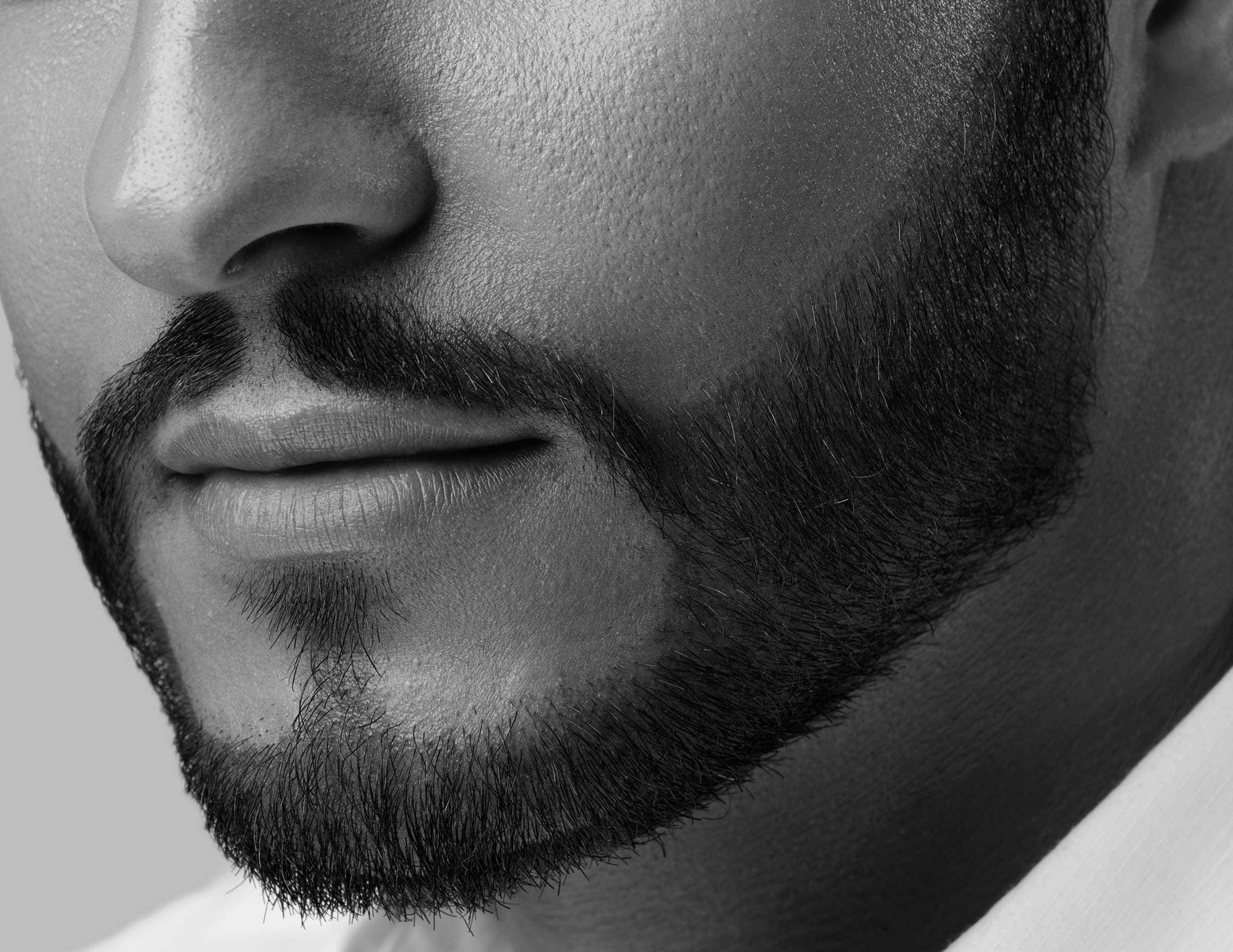
A genuinely skilled provider for this procedure demonstrates a dedicated facial hair portfolio showing natural-looking density and directional accuracy across diverse facial hair patterns, and discusses your specific desired shape and density collaboratively rather than applying a single generic beard template regardless of your individual facial structure and preference.
Preparing for your consultation
Bring clear photographs of beard or mustache styles you find aesthetically appealing, along with photographs of your own current, even if patchy, growth pattern from multiple angles.
Maintaining continuity of care between Turkey and Canada
Request a written record of your specific design plan and graft count, since this documentation supports any future touch-up consultation you might pursue closer to home.
Patient experiences reported after facial hair transplantation
Many patients describe significant confidence improvement following this procedure, particularly those who had lived with visible patchiness for years and found this a source of ongoing self-consciousness in social and professional settings.
Combining this procedure with other treatments
Facial hair transplantation is sometimes combined with scalp procedures within the same broader treatment plan, and occasionally performed alongside eyebrow transplantation already detailed in our dedicated content for patients addressing multiple facial hair areas simultaneously.
Why a second opinion matters for this decision
Given how significantly design judgment and growth direction mapping affect this procedure's natural-looking outcome, comparing proposed approach and portfolio results between two surgeons provides valuable perspective before committing.
Questions worth asking during your consultation
Ask specifically to see a dedicated facial hair portfolio, discuss how your surgeon plans to map growth direction across your specific facial structure, and confirm realistic expectations about texture blending given your particular donor hair characteristics.
Understanding why beard density expectations differ from scalp density norms
Because natural beard density even in men with genetically full facial hair growth is typically lower per square centimeter than natural scalp hair density, surgeons calibrate beard-specific density targets accordingly rather than applying scalp density benchmarks to this different anatomical context. A surgeon aiming for scalp-typical density in a beard transplant would create an unnaturally dense, artificial-looking result inconsistent with how facial hair actually grows in nature.
Understanding the specific consideration of graying and mixed pigmentation
Some patients seeking this procedure have beards that include natural gray or white hair mixed with their base color, and thoughtful donor selection sometimes specifically incorporates some gray-pigmented follicles from the scalp donor zone, when available, to authentically replicate this mixed pigmentation pattern rather than transplanting exclusively pigmented hair that would create an artificially uniform color inconsistent with the patient's natural, currently graying pattern.
Understanding why this procedure sometimes reveals underlying skin texture considerations
Because beard transplantation places hair follicles into facial skin that may have its own texture characteristics, including acne scarring in some patients seeking this procedure specifically to camouflage such scarring, a thorough surgeon evaluates how transplanted hair will interact visually with this underlying skin texture, sometimes recommending complementary skin treatment before or alongside the hair transplant itself for optimal overall camouflage effect.
Understanding the practical grooming adjustment period following transplantation
Once transplanted hair begins growing in, patients typically need to adjust their grooming routine and expectations during this transitional period, since new growth initially appears finer and less uniform than the eventual mature result, and premature shaping or trimming before growth has sufficiently progressed can create an uneven appearance that resolves naturally with additional patience and time.
Beard/mustache transplant pricing in Turkey
| Pricing factor | Cost impact |
|---|---|
| Graft count required to achieve your desired density across the treated area | A primary factor influencing overall cost |
| Complexity of your specific design across multiple facial zones, such as combined beard and mustache treatment | Can influence overall cost given the added planning this requires |
For a broader view of costs across procedures, see our pricing in Turkey overview, or request a free quote tailored to your specific pattern.
Why Turkey has become a destination for facial hair restoration
Turkey compared to other medical tourism destinations
| Criterion | Turkey | Tunisia | Costa Rica | Dominican Republic | Colombia | Mexico |
|---|---|---|---|---|---|---|
| Common clinic language | English widely spoken, growing French support | French and English widely spoken | Spanish, limited English | Spanish, variable English | Spanish, variable English | Spanish, variable English |
| Documented expertise with facial hair-specific design | Particularly well established | Good availability | Variable | Variable | Good availability | Good availability |
| Estimated pricing level | Particularly accessible | Accessible | Moderate to high | Moderate | Moderate | Moderate |
| Direct flight access from Canada | Direct flights to Istanbul | Generally via a European stopover | Variable | Variable | Variable | Variable |
The Turkish cities most recognized for this procedure
Istanbul's extensive hair restoration infrastructure includes numerous surgeons with dedicated facial hair transplant portfolios alongside their broader scalp-focused work, this specific specialization having grown considerably given consistent patient demand. Antalya, Izmir, and Ankara also host recognized clinics offering this procedure.
Why so many Canadians choose Turkey for facial hair restoration
Patients from Toronto, Montreal, Calgary, Ottawa, Edmonton, Winnipeg, Quebec City, Hamilton, Kitchener, London, Victoria, Halifax, Oshawa, Windsor, Saskatoon, Regina, Sherbrooke, St. Catharines, Barrie, Kelowna, Abbotsford, Kingston, Trois-Rivières, Guelph, Moncton, Brantford, Saint John, Peterborough, Thunder Bay, Saguenay, Lethbridge, Nanaimo, Kamloops, Belleville, Chilliwack, Drummondville, Sudbury, Sarnia, Wood Buffalo, and Fredericton travel to Turkey for this procedure, drawn by dedicated facial hair design expertise and pricing considerably below typical Canadian private clinic rates.
How to choose a clinic for beard/mustache transplantation
- Confirm the facility holds recognized accreditation and operates under direct physician supervision throughout the procedure.
- Ask specifically to review a dedicated facial hair transplant portfolio, evaluating both density and directional accuracy across diverse cases.
- Request an honest assessment of realistic texture blending given your specific donor hair characteristics.
Planning your medical trip to Turkey
- Entry requirements: Canadian citizens generally need an electronic visa before departure.
- Flights and transfers: several airlines offer direct service from major Canadian cities to Istanbul.
- Length of stay: plan for three to four days, allowing time for the procedure and an initial follow-up before flying home.
In summary: addressing genetic facial hair patterns with precision design
Beard and mustache transplantation fills patchy or sparse facial hair growth by relocating follicles with careful attention to natural growth direction and texture matching across the face's varied hair patterns. Turkey's dedicated facial hair design expertise makes it a well-established destination for this procedure.
Before making a decision, review your prospective surgeon's dedicated facial hair portfolio and discuss their approach to growth direction mapping for your specific facial structure. Patients interested in a personalized assessment can request a free quote from the Aylan Clinic team, or explore the full hair transplant in Turkey hub to receive information suited to their particular pattern and aesthetic goals.
Everything about Beard & Mustache Transplant in Turkey
Technique, pricing, results and the full patient journey — every detailed answer in our complete guide.