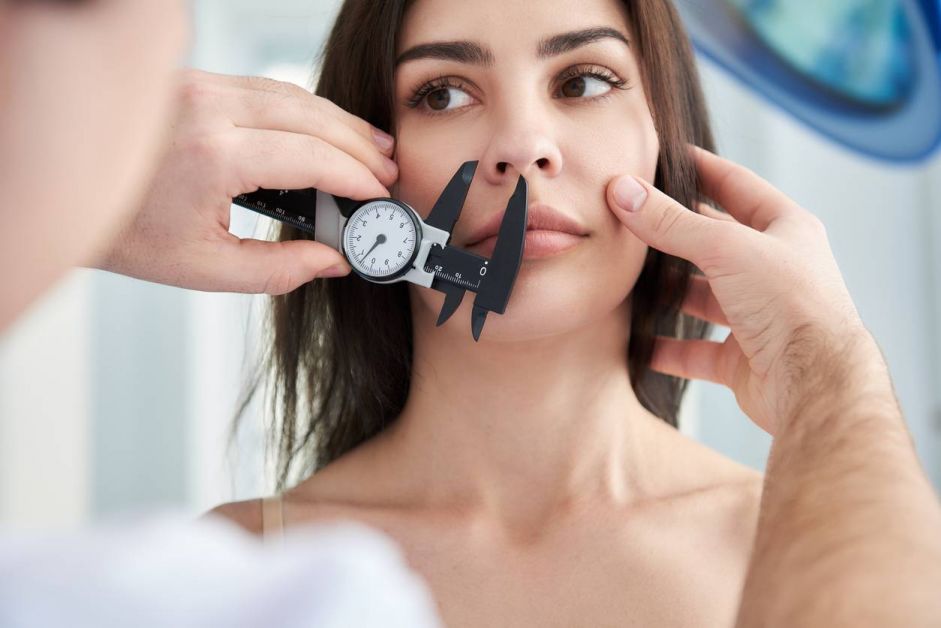
Rhinoplasty is the most requested facial operation and the most technical, and it is where the gap between a surgeon operating on noses every week and one operating on a handful a year shows most plainly in the result. This guide explains what genuinely happens beneath the skin, the two schools dividing the specialty, how the choice is made for your particular nose, and why the thickness of your skin governs everything else. You will find published data rather than promises, the full sequence, the real swelling calendar, how to recognize a capable surgeon, and how cost compares between private Canadian care and Istanbul.
This guide sits within our facial surgery in Turkey section and complements our dedicated Rhinoplasty in Turkey procedure page, which covers how the operation itself is delivered, the stay and the aftercare. No prices appear in this guide: the amount depends on the technique chosen, the grafts required and any functional work, so a single number would mean nothing. For a figure built on your own case, see our pricing in Turkey page.
What the Surgeon Actually Changes
A nose has three levels. The upper third is bone, formed by the nasal bones. The middle third is cartilage, supported by the upper lateral cartilages forming the sidewalls. The lower third is the tip, carried by the alar cartilages. Over that framework runs the skin, and its thickness largely determines how much of the work will show. It is the most decisive parameter and the least explained, and it deserves a section of its own further on.
The Key Zone Nobody Names for You
Where bone meets cartilage sits a region called the keystone. It is where the nasal bones, the upper lateral cartilages and the septum converge, and it provides both the solidity of the nasal bridge and the opening of the internal nasal valve. Whether that region is opened or preserved is precisely what separates the two schools of modern rhinoplasty. Understanding this lets you follow a consultation rather than sit through one.
The Two Schools of Modern Rhinoplasty
Structural Rhinoplasty, the Classical School
The surgeon removes the hump from above, which opens the roof of the nose and separates the structures meeting at the keystone. He then rebuilds that roof with cartilage grafts, called spreader grafts, usually harvested from the septum. This approach gives maximum control over the final shape and remains the reference in complex cases. It carries decades of track record, and the great majority of noses operated on worldwide were done this way.
Preservation Rhinoplasty, the Other School
Rather than removing the hump from above, the surgeon lowers the entire bridge from underneath, working at the base. The original curve is kept intact and the keystone is never opened. The direct consequence: no spreader grafts are needed since the roof was never opened. Tissue trauma is lower, recovery often quicker, and the dorsal lines keep a natural appearance because they were never rebuilt.
What the Published Data Show
A survey of surgeons belonging to rhinoplasty societies found that fifty-four percent use preservation techniques, with an average of fifty-eight rhinoplasties a year and nearly ten years of experience. A recent systematic review places revision rates between zero and eight percent across approaches, generally addressing minor contour irregularities rather than major complications. Those figures apply across all techniques and give an honest order of magnitude.
Comparing the Two Schools
The table sets out what genuinely separates them, beyond the marketing that sometimes presents preservation as universally superior.
| Criterion | Preservation | Structural |
|---|---|---|
| Handling of the hump | Lowered from beneath | Removed from above |
| The keystone area | Kept intact | Opened then rebuilt |
| Spreader grafts | Not required | Frequent |
| Tissue trauma | Lower | Greater |
| V-shaped hump, single curve | Excellent indication | Possible |
| S-shaped hump, double curve | Limits reached sooner | Better suited |
| Thick skin | Less indicated | Better suited |
| Marked septal deviation | Limits reached sooner | Maximum control |
The last four rows settle the question better than any argument. Preservation excels on favourable anatomy, structural keeps the advantage as soon as the case becomes complex. A surgeon applying one school to every nose is working from a method rather than a diagnosis.
The Tension Nose, Preservation's Ideal Indication
The literature describes a particularly favourable anatomical profile: a high radix, a projected dorsum, a narrow middle third and thin nostrils. What surgeons call a tension nose. On that configuration, lowering the whole bridge from beneath achieves a result that classical resection reaches less easily, with lines that stay yours rather than reconstructed. If your profile matches, the question is worth putting to your surgeon.
Hybrid Approaches
Operative reality is less clear-cut than the debate. Many surgeons now combine both philosophies: preserving the dorsum and reconstructing the tip, or lowering from beneath with a few targeted structural moves. That flexibility is a good sign. A practitioner capable of both chooses the one that suits your nose; a practitioner who commands only one will adapt your nose to his technique, which is not the same thing.
Open or Closed: the Route In
Two questions dominate every rhinoplasty consultation: where will the surgeon go in, and how long before I see the result. Both come back to the same parameter, your skin.
The Open Approach
A short incision crosses the columella, the bridge of skin between the nostrils, and joins the internal incisions. The surgeon then lifts the skin of the nose like raising a bonnet, giving direct sight of the whole framework. That access makes precise graft placement, bleeding control and accurate diagnosis of deformities far easier. It becomes the approach of choice in complex cases, difficult tips and revisions, where seeing beats guessing.
The Closed Approach
Every incision stays inside the nostrils. No external scar, less undermining, and according to several studies less disruption of the nasal ligamentous support, which translates into generally less tip swelling. The trade-off is technical: the surgeon works with indirect vision through retraction, which demands more experience for the same result. It suits moderate corrections on noses that have not been operated on before.
Comparing the Two Approaches
The table sets out what separates them, beyond school preferences.
| Criterion | Closed approach | Open approach |
|---|---|---|
| External scar | None | A few millimetres, columella |
| Surgeon's view | Indirect, through retraction | Direct across the framework |
| Tissue undermining | Limited | More extensive |
| Tip swelling | Generally less | More marked, longer |
| Graft placement | Possible but demanding | Made easier |
| Complex cases and revisions | Limits reached sooner | Reference approach |
Neither is superior in the abstract. Asking which your surgeon has chosen for you, and above all why, tells you more about their command of the field than any question about equipment.
Your Skin Thickness, the Deciding Parameter
Under thin skin, the slightest irregularity in the framework reads through. The surgeon must therefore work with extreme precision, and the result appears quickly because nothing masks the work done. Under thick skin the opposite happens. The skin holds more subcutaneous fat, more sebaceous glands and more collagen, which partly masks the definition achieved and retains swelling far longer.
What Thick Skin Changes
Three practical consequences, all manageable but worth knowing in advance. The result takes longer to appear. Tip definition is harder to achieve. And the surgeon often needs to reinforce support so the skin redrapes properly. That last point is counterintuitive and worth understanding: on thick skin you often add support rather than removing it, because a solid framework helps heavy tissue remould over it. It is also why the structural technique is frequently preferred there.
The Swelling Calendar
Published reference points give an honest picture, and they differ markedly according to your skin.
| Milestone | Thin to medium skin | Thick skin |
|---|---|---|
| Day 7 to 10 | Splint removed | Splint removed |
| Week 2 | Bruising resolved | Bruising resolved |
| Month 2 | Around 70 percent of swelling gone | Less; the tip stays thick |
| Month 6 | Shape well defined | Definition still building |
| Month 12 | Result close to final | Refinement still under way |
| Month 18 | Settled | Final result reached |
Hold on to the right-hand column if your skin is thick. Many patients find their nose still too wide at six months and discover a refinement they had stopped expecting around month twelve or eighteen. Judging too early is the leading cause of needless worry.
How the Operation Runs
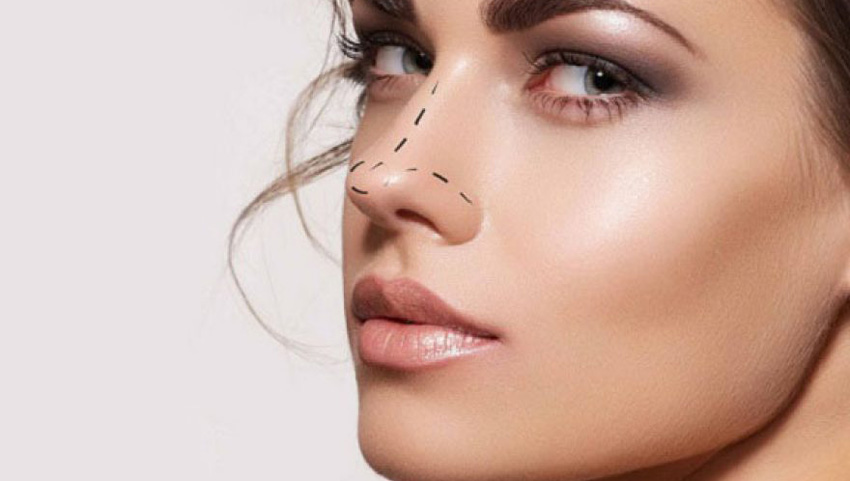
After the preoperative marking and general anaesthesia, the surgeon makes the incisions and exposes the framework by the chosen approach. He then addresses the dorsum, the middle third and the tip in turn, in an order set by the technique. Functional work is frequently added: straightening the septum, reducing the turbinates, reinforcing a weak nasal valve. Total duration sits between two and three hours for a primary rhinoplasty, longer where grafts are numerous.
Nasal Packing, a Practice in Retreat
Compressive packing placed in the nostrils was long the worst memory patients carried away. It is clearly retreating in favour of soft internal silicone splints, which support the septum while letting air through. Comparative studies show less pain and better sleep with those splints. Put the question to your surgeon: the answer tells you as much about how current the practice is as about your own comfort ahead.
Removing the External Splint
It comes off between day seven and ten, and patients frequently describe that appointment as emotional. Even with swelling still present, the change is usually striking and makes the whole thing suddenly real. Keep in mind, though, that what you see that day is not your result. The nose is still swollen, the tip still wide, and refinement will continue for months. Many surgeons ask for nightly taping over the following weeks to help control tip swelling.
Grafts, Cartilage and Structural Support
Modern rhinoplasty adds as often as it removes. For decades the operation was understood as reduction: take away the hump, narrow the tip, make everything smaller. Long-term results taught the specialty something uncomfortable, which is that noses reduced beyond what their framework supports collapse inward over the following years. The nose is a tent held up by its poles. Remove too much of the structure and the canvas sags, the tip drops, the middle third pinches inward and breathing suffers along with appearance. Contemporary practice therefore reinforces while it refines, and that shift explains most of what distinguishes current results from those of the nineteen-nineties.
This is also why an operation described as making the nose smaller may involve placing several pieces of cartilage. It is not a contradiction: the visible size decreases while the underlying support increases, and it is that combination which holds the result for decades.
Where the Cartilage Comes From
The septum is the first choice and covers most primary cases. It sits inside the nose, provides straight and reasonably firm cartilage, and harvesting it requires no additional incision anywhere. A portion is always left in place to support the bridge. The ear is the second source, taken from the bowl of the concha through an incision hidden behind the ear; that cartilage is naturally curved, which suits some grafts particularly well, and harvesting it changes neither the shape nor the position of the ear. Rib cartilage is the third source, reserved for cases where large amounts are needed, typically revisions or noses requiring substantial reconstruction. It provides the strongest and most abundant material, at the cost of a second surgical site and a scar beneath the breast fold or on the chest.
| Source | Quantity available | Character | Additional scar |
|---|---|---|---|
| Septum | Modest | Straight, firm | None |
| Ear concha | Moderate | Naturally curved | Behind the ear, hidden |
| Rib | Abundant | Strongest | Chest, few centimetres |
Most primary rhinoplasties use septal cartilage alone. If a surgeon mentions rib cartilage for a straightforward primary case, ask why: sometimes there is a good reason, such as a septum already harvested or unusually weak, and sometimes it signals a plan more extensive than your nose requires.
The Grafts You Are Most Likely to Hear About
Spreader grafts are thin strips placed alongside the septum in the middle third. They rebuild the roof after a hump is removed and, just as importantly, hold the internal nasal valve open so breathing is not compromised by the aesthetic work. Columellar strut grafts sit between the alar cartilages, supporting the tip from beneath like a tent pole; they stabilize projection and stop the tip dropping over the years, which is one of the commonest late changes after older techniques. Tip grafts refine the shape of the tip itself, adding definition where cartilage is soft or poorly shaped, and on thick skin they are often essential since the framework must be more defined than the final appearance in order to show through at all. Alar batten grafts reinforce the nostril rims where they collapse inward on breathing in; they are functional rather than aesthetic, and their presence in a plan usually means your surgeon examined your breathing carefully rather than only your profile.
What Grafts Mean for Your Recovery
More grafts generally means a longer operation, slightly more swelling and a marginally longer timeline before the final shape emerges. It does not mean a more painful recovery, which surprises most patients. Where rib cartilage is used, the chest site is often the more uncomfortable of the two for the first week, more than the nose itself; it settles quickly and the scar fades well, but it is worth knowing in advance rather than discovering it on waking.
One of preservation's arguments is precisely that it avoids needing spreader grafts, since the roof is never opened and the internal valve never disturbed. That does not mean preservation cases use no grafts at all: tip work frequently still requires a strut or tip graft, which is why so many surgeons describe their practice as hybrid. The label matters less than knowing which parts of your nose will be preserved and which reconstructed. Three questions worth asking are where the cartilage will come from and why that source, how many grafts the surgeon expects to place and what each one does, and whether any of them are functional rather than aesthetic.
Your Anatomy, and the Cases That Need Particular Attention
Every nose presents its own combination of features. This section covers the configurations that come up most often in consultation, and what each one implies for technique and timeline.
The Dorsal Hump
It is the commonest reason for consulting, and its shape in profile determines the technique more than its size does. A single smooth curve, described as V-shaped, flattens readily when the bridge is lowered from beneath. A double curve, described as S-shaped, resists that approach because lowering it as a block would leave residual irregularity; those cases favour structural resection with reconstruction, and a surgeon who identifies your hump shape at examination is telling you something useful.
The Drooping Tip
A tip that falls, particularly when you smile, comes from the pull of a small muscle running between the nose and the upper lip, combined with weak tip support. It is one of the features patients notice most in photographs. Correcting it means both releasing that pull and building support so the tip holds its new position over the years, precise work that often favours the open approach since the sutures placing tip support need to be positioned exactly.
The Wide Tip
Width comes from the shape and splay of the alar cartilages, and sometimes from skin thickness on top of them. The distinction matters enormously: cartilage width can be narrowed, skin thickness cannot. This is exactly where thick skin sets expectations. The surgeon can narrow and define the framework beneath, but the envelope will always soften what shows through. Understanding that beforehand is the difference between satisfaction and a year of doubt.
The Deviated Nose
A nose deviating in profile or from the front usually involves both the septum inside and the framework outside. Correcting only the visible part leaves the underlying cause in place, and the deviation tends to reassert itself as healing pulls tissue back. These cases need a full septal correction alongside the aesthetic work, which lengthens the operation and often calls for structural technique with grafts to hold the correction. They are among the cases where surgeon experience shows most.
The Wide Nasal Base
Where the nostrils flare beyond the width of the eyes, a base reduction can be added. It involves small incisions in the natural crease where the nostril meets the cheek, and the scars settle very discreetly there. This is a finishing step rather than a starting point, usually decided at the end of the operation once the tip has been refined, because refining the tip alone sometimes narrows the base enough on its own.
Comparing the Common Configurations
| Feature | Technique implication | Timeline implication |
|---|---|---|
| V-shaped hump, thin skin | Preservation well suited | Result visible early |
| S-shaped hump | Structural or hybrid | Standard |
| Drooping tip | Open approach often preferred | Tip defines last |
| Wide tip with thick skin | Support reinforced | Twelve to eighteen months |
| Deviated septum | Functional work added | Longer operation |
| Wide nasal base | Base reduction at the end | Scars settle discreetly |
Most patients present two or three of these at once, which is why a plan built for someone else rarely fits. It also explains why the same operation name covers experiences that differ considerably from one person to another.
Rhinoplasty in Men
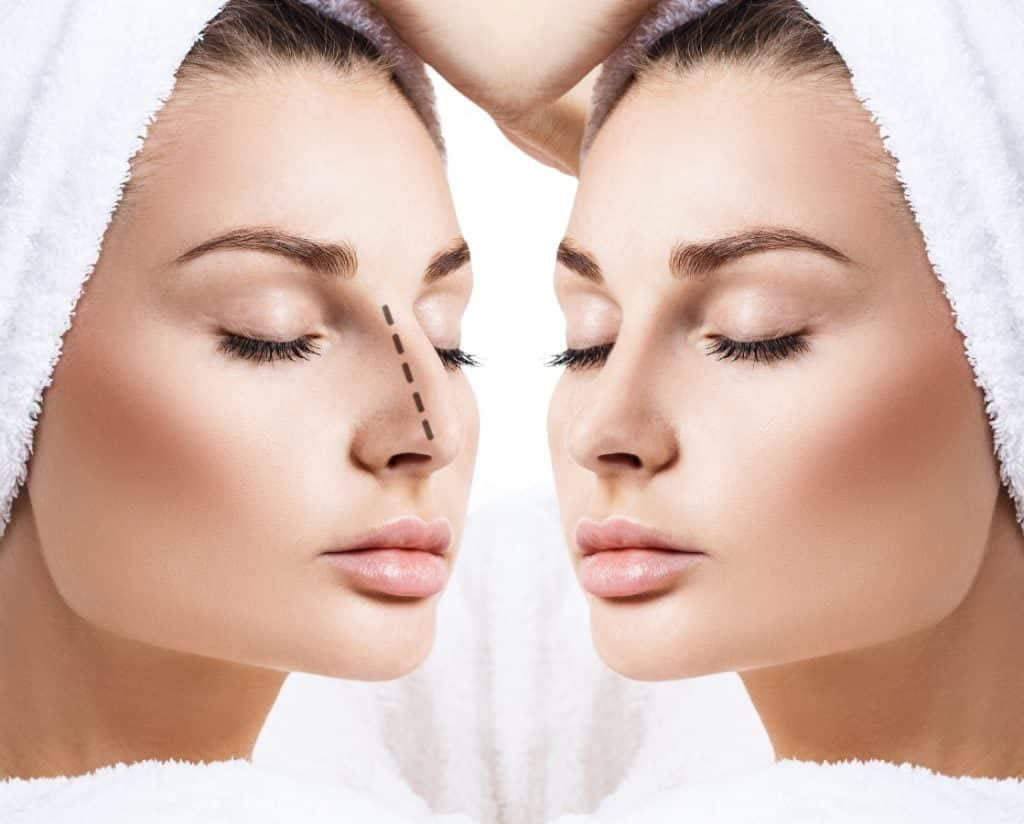
Male demand is substantial and rising, and the aesthetic targets differ. A male nose keeps a straighter dorsum, less tip rotation and a stronger bridge; applying female proportions feminizes a face without anyone being able to say why. Male skin also tends to be thicker and more sebaceous, which lengthens the swelling timeline and often calls for reinforced support. A surgeon accustomed to operating on men builds both differences into the plan from the outset.
Rhinoplasty and Skin Tone
Skin rich in melanin heals well but reacts more strongly to inflammation, which can leave a darker mark along an open-approach incision if it is exposed to sun too early. Strict sun protection for a year prevents it entirely. Nasal anatomy also varies with background, and that shapes strategy rather than limiting it: noses with thicker skin, softer cartilage and lower projection are refined by reinforcing support rather than by reducing.
Rhinoplasty After Trauma
An old fracture, even one that healed years ago, often leaves both a visible deviation and a hidden septal one. Patients frequently arrive believing they simply have a crooked nose and discover a functional component they had adapted to without noticing. These cases combine aesthetic and functional work and are technically closer to a complex primary than to a simple hump reduction. Mentioning any history of a broken nose, however long ago, changes the assessment.
When to Wait Rather Than Operate
Growth should be complete, which generally means the late teens. A weight in the middle of significant change matters less here than for facial surgery, but active smoking matters a great deal, since it affects healing of the delicate nasal skin. The other reason to wait is expectation. Arriving with a filtered photograph as the target, or with an image of someone whose facial structure differs entirely from yours, sets up a mismatch no technique resolves. A frank consultation sorts that before theatre rather than after.
Proportion, the Profile and the Rest of Your Face
A nose is never judged alone. It sits between your eyes, above your lips and in front of your chin, and those relationships determine what will look right far more than any measurement of the nose itself.
Why the Chin Comes Up in Nasal Consultations
It surprises almost every patient. You arrive to discuss your nose and the surgeon spends several minutes looking at your chin in profile, because the two structures define each other completely. When the chin sits back, the nose appears longer and more projected than it actually is. Reduce the nose alone and the imbalance persists in a subtler form; project the chin as well and the same nose suddenly reads as proportionate. Many patients who were quoted for a rhinoplasty find that a chin implant achieves more of what they wanted. This is not an upsell when it comes from a surgeon who examines you properly; it is the difference between treating a feature and treating a profile.
The Angles Surgeons Actually Measure
The nasofrontal angle sits where the nose meets the forehead, and its depth influences whether the nose reads as beginning high or low; a shallow angle makes a nose look longer even when its length is unremarkable. The nasolabial angle sits between the columella and the upper lip and describes tip rotation: a more open angle reads as an upturned nose, a more closed one as a drooping tip. These numbers are guides rather than targets. A surgeon quoting exact degrees as goals is applying a template; one describing them as reference points while looking at your particular face is using them as they are meant to be used.
Comparing What Proportion Means by Feature
| Structure | Effect on how the nose reads | What it may imply |
|---|---|---|
| Receding chin | Nose appears longer and larger | Chin implant worth discussing |
| Prominent chin | Nose appears shorter | Less reduction needed |
| Wide face | Nose appears narrower | Aggressive narrowing unnecessary |
| Narrow face | Nose appears wider | Modest narrowing achieves more |
| Deep-set eyes | Bridge appears higher | Radix adjustment considered |
| Full lips | Tip rotation reads differently | Rotation planned accordingly |
Reading this table explains why the same nose looks appropriate on one face and out of place on another, and why bringing a photograph of someone else rarely helps. The nose that suits them was designed around their proportions, not yours.
What Proportion Means for Your Expectations
Good rhinoplasty refines within your own framework rather than converting it toward a single template. A nose can be narrowed, defined and better projected while remaining unmistakably consistent with the face it belongs to. The honest answer to how small can my nose be is rarely a number: it is a range set by your skin thickness, your framework strength and the features surrounding it. The most satisfying results often involve less change than patients initially imagine. Refining rather than transforming keeps a face recognizable, ages considerably better, and is what people mean when they say a nose looks natural.
Choosing Your Surgeon
On no other facial operation does volume of practice weigh so heavily.
The Number That Sorts Everything
How many rhinoplasties do you perform each year? The published survey of specialist surgeons puts their average around fifty-eight a year. That is a useful benchmark: below twenty or thirty, familiarity is simply not the same. The nose concentrates more technical decisions per square centimetre than any other facial region, and every anatomy differs. That variety is only mastered by meeting it often, which makes annual volume more predictive here than anywhere else.
Two Questions That Reveal Genuine Command
The first: do you work in preservation, in structural, or both according to the case? A surgeon who answers both and can explain when he chooses each is reasoning from diagnosis. The second: does my skin thickness change your plan, and how? A practitioner who raises it spontaneously has examined your nose; one who never mentions it is applying a protocol.
What a Rhinoplasty Portfolio Must Show
Noses that differ from one another, first of all. A surgeon producing the same nose on every face is following a recipe, and that nose may not be yours. Look at ten results and check they do not resemble each other. Then comparable images: same angles, same lighting, same time points. Compare a three-month result with another three-month result, never with one at a year. And insist on profile and three-quarter views, not only front-facing ones.
Comparing Selection Criteria
On this operation, some criteria predict the result and others predict nothing.
| Criterion | What it indicates | Reliability |
|---|---|---|
| Annual number of rhinoplasties | Genuine familiarity | Very high |
| Command of both schools | Reasoning from diagnosis | Very high |
| Portfolio of noses all different | No single house recipe | Very high |
| Skin thickness taken into account | Thoroughness of examination | High |
| One-year images, profile and three-quarter | Real outcome after swelling | High |
| Use of piezoelectric instruments | Comfort of recovery | Moderate |
| Follower count on social media | Reach, not competence | None |
Ultrasonic technology genuinely improves recovery, but it replaces neither judgement nor experience. An excellent surgeon with conventional instruments will give you a better nose than an occasional one with the newest device.
Reaching Rhinoplasty From Across Canada
Here is how access and cost logic work region by region. No figures appear, cosmetic rhinoplasty being self-funded everywhere in the country.
Toronto, the GTA and Mississauga
The region holds good nasal surgeons, though few reach the annual volumes seen in high-activity centres. On an operation where repetition builds command, that parameter weighs more than proximity does. Toronto Pearson serves Istanbul directly. Allow seven to ten nights on site and around three weeks before a long-haul flight. A free quote compares the local total against a Turkish package, often up to around 70 percent lower.
Vancouver, Surrey and Victoria
The West Coast has capable surgeons, but the same question applies: how many noses a year? Private cost here is high and entirely yours, which makes the comparison worth running properly. The flight from Vancouver is long, and it matters here because the return waits around three weeks. Build that into your planning rather than discovering it after booking, and confirm your fitness to fly at the final check.
Calgary and Edmonton
Alberta has surgeons performing rhinoplasty, though rarely at the volumes seen in dedicated nasal practices. Ask each of them the annual figure before assuming that being close is the same as being right. Both cities reach Istanbul through a European hub. Have it specified in the quote whether functional work is planned for your breathing, since it changes operating time and sometimes the technique itself.
Ottawa and Eastern Ontario
Proximity to a border changes nothing here: the operation is self-funded on both sides. What varies is the number of noses your chosen practitioner operates on each year, and that is the figure worth chasing. Ottawa International connects to Istanbul. Ask for your taping and swelling instructions in writing, because rhinoplasty follow-up runs across a year and the guidance that matters most arrives in weeks three and four.

Winnipeg, Regina and Saskatoon
Across the Prairies, rhinoplasty at high volume is not performed locally, and travel to a larger centre is a given. The question therefore becomes which centre, and annual volume becomes the first filter rather than distance. From Winnipeg or Regina, reaching Istanbul takes a connection. What decides is the logistics afterwards: written instructions, photographic follow-up across twelve to eighteen months, and a team that answers when you send an image at month four.
Halifax, Moncton and St. John's
Atlantic Canadians already travel for surgery of this order. On rhinoplasty the useful step is comparing annual volumes between the centre you would fly to domestically and the one abroad, since that figure predicts your result better than anything else. Halifax connects onward in one stop. Plan for the splint to still be on if you travel within the first ten days, which is entirely manageable but organized in advance rather than improvised.
Canadian Cities Against Istanbul
| City / region | Airport | Access to Istanbul | Local offer and cost |
|---|---|---|---|
| Toronto, GTA, Mississauga | YYZ | Direct links | Good surgeons; package often up to around 70 percent less |
| Vancouver, Surrey, Victoria | YVR | With connection | Costly; long flight, plan the return |
| Calgary / Edmonton | YYC / YEG | Via Europe | Volumes more modest than dedicated centres |
| Ottawa | YOW | With connection | Self-funded; check annual volume |
| Winnipeg, Regina, Saskatoon | YWG | With connection | High-volume practice not local |
| Halifax, Moncton, St. John's | YHZ | With connection | Travel required regardless |
The reading is constant: once a high-volume surgeon does not practise nearby, travel enters the calculation, and the comparison rests on how many noses are operated on each year rather than on kilometres.
Comparing the Destinations Canadians Consider
Search for rhinoplasty in English and you will meet clinics in Mexico, the Dominican Republic, Colombia, Costa Rica and Thailand. The table ranks ways of working rather than countries.
| Value criterion | Turkey / Istanbul (Aylan) | Mexico | Dominican Rep. | Colombia / Costa Rica / Thailand |
|---|---|---|---|---|
| Annual rhinoplasty volume | Very high | High | Variable | Variable |
| Command of both schools | Common | Variable | Variable | Variable |
| Piezoelectric instruments | Routine | Variable | Variable | Variable |
| Direct with the clinic | Yes, no middleman | Often via agency | Often via agency | Often via agency |
| Cost vs private Canadian care | Often up to around 70 percent less | Often lower | Often lower | Often lower |
The first row dominates every other on this operation. No destination, no equipment and no price compensates for a surgeon who operates on few noses, and it is the one criterion no website can dress up.
Istanbul, Ankara, Izmir and Antalya
Istanbul concentrates some of the highest rhinoplasty volumes in the world, with teams operating on several noses a day. On a procedure where repetition builds command, that concentration explains the city's pull far better than price does. Ankara, Izmir and Antalya also hold excellent practitioners, with slightly less direct air access from Canada. The city decides nothing on its own; the annual number of noses your surgeon handles decides a great deal.
Preparing for Surgery and Organizing Your Stay
Rhinoplasty asks for more preparation than most facial procedures, largely because the result unfolds across a year and the early weeks carry specific constraints. Here is everything to settle, in order.
What to Arrange Three Months Ahead
First contact, photographs and a quote. This is also when to stop smoking if you smoke, because nasal skin is delicate and its blood supply matters more here than almost anywhere; three months gives you comfortable margin. If you wear glasses daily, this is the moment to arrange contact lenses or a lightweight frame that can be taped to the forehead, since nothing may rest on the nose for several weeks while the bone consolidates, and improvising that after surgery is unpleasant.
What to Arrange One Month Ahead
The preoperative work-up is done in Canada on a request sent by the clinic: blood tests and, depending on your age and history, an electrocardiogram. Results are reviewed by the team before you travel. This is also when to review your medications. Aspirin and blood thinners stop two weeks beforehand on medical advice, along with several supplements that thin the blood without anyone considering them, notably fish oil, turmeric, ginkgo and vitamin E.
The Photographs That Make a Difference
Standardized images allow a serious remote assessment. Take them in natural light near a window, without makeup, hair pulled back, against a plain background, with the camera at eye level and the same distance for every view.
| View | How | What it reveals |
|---|---|---|
| Front, neutral | Looking straight ahead | Width, symmetry, deviation |
| Right and left profile | Shoulders side on | Hump shape, projection, tip rotation |
| Right and left three-quarter | Face turned halfway | Dorsal lines, transitions |
| Basal view | Camera below, chin raised | Nostril shape, base width, columella |
| Front, smiling | Natural smile | Whether the tip drops on smiling |
The profile is the single most informative view, and the basal one is the most neglected. Together they tell a surgeon more about your nose than several paragraphs of description ever could.
What to Pack
Tops that button or zip at the front, so nothing is pulled over your head while a splint is in place. Contact lenses or forehead-taped frames. Lip balm, because breathing through the mouth dries everything for several days. Add a wedge pillow or the assurance that the clinic supplies one, since sleeping with the head elevated for the first two weeks limits swelling considerably. And bring something to occupy quiet evenings, because this is a recovery spent resting rather than sightseeing.
The Day Before Surgery
You meet the surgeon for the physical examination that photographs cannot replace: he palpates the cartilage to judge its strength, assesses skin thickness by pinching, checks your breathing side by side and confirms the plan drawn up remotely. This is when the plan can still change. Cartilage weaker than expected, a septal deviation more marked than the photographs suggested, skin thicker than it appeared: those findings sometimes shift the technique, and a team that schedules this examination is working properly.
The Day Itself
You arrive fasted according to instructions, usually six hours without food and two without clear fluids. The surgeon marks your profile with you sitting upright, the anaesthetist reviews your file, and the operation follows. You wake with a splint on the nose, soft internal supports inside it if they were used, and tape across the bridge. Breathing happens through the mouth for the first days, which is the part patients find hardest, and it improves markedly once internal swelling settles.
Your First Week in Istanbul
Days one to three are the most uncomfortable, and day three is almost universally described as the low point: facial pressure peaks, congestion feels permanent and bruising is at its darkest. From day four everything improves. Cold compresses on the cheeks, never pressed on the nose itself, help considerably. So does sleeping propped up. By day five or six most patients are walking around the neighbourhood, tired but no longer uncomfortable. The splint comes off between day seven and ten, the appointment everyone remembers: the nose beneath is swollen and the tip wide, but the change in profile is usually immediate and striking. Your surgeon will then usually ask for nightly taping across the bridge and tip for a few weeks; it is unglamorous and it genuinely helps control swelling in the area that takes longest to refine.
Comparing Stay Lengths
| Programme | Nights in Istanbul | Flight home |
|---|---|---|
| Primary rhinoplasty | Seven to ten | Around three weeks |
| Rhinoplasty with functional work | Seven to ten | Around three weeks |
| Rhinoplasty with chin implant | Seven to ten | Around three weeks |
| Revision rhinoplasty | Ten to fourteen | Three to four weeks |
| Rhinoplasty with rib cartilage | Ten to fourteen | Three to four weeks |
The flight column is what structures everything. A long-haul journey pressurizes the cabin and swells tissue, which is why the interval matters more from Canada than it would from within Europe. Settle it before booking anything.
Coming Home
Allow two or three quiet days after landing. The time difference westbound is harder than eastbound, and it compounds the fatigue of a recovery that is already asking something of you. Prepare the practical side before you leave: soft food for the first days, somewhere to sleep propped up, and sunglasses for the light sensitivity that often accompanies periorbital swelling. Those small arrangements make the first week at home considerably easier.

Recovery Month by Month
Rhinoplasty is the facial operation that asks the most patience. Knowing precisely what each month brings turns a year of waiting into a year of watching progress, which is an entirely different experience.
Weeks One and Two
The splint comes off, bruising fades and you become presentable. Most patients return to desk work between day seven and ten, often with makeup covering any residual discolouration around the eyes. Internal swelling still restricts breathing through the nose, which improves steadily across these two weeks. Saline rinses, if your surgeon recommends them, help clear crusting and make the difference between tolerable and unpleasant.
Weeks Three and Four
Breathing normalizes for most people, and the nose starts to look like a nose rather than a swollen version of one. This is when patients typically stop thinking about it constantly. Light exercise resumes around week three; anything risking a knock to the nose waits far longer, and glasses still cannot rest on the bridge. Nightly taping usually continues through this period.
Month Two, the First Real Look
Around seventy percent of the swelling has gone by now. The profile is close to what it will be, the bridge has settled, and photographs start to show the change clearly. The tip remains the exception: it is thicker than it will end up, sometimes noticeably, and patients who compare themselves to a friend's result at the same stage often worry unnecessarily. Tip swelling is the last to leave, always.
Months Three to Six
Refinement continues quietly. The tip narrows, definition emerges, and the transitions between bridge and tip smooth out. Most patients stop noticing daily change and only see progress when comparing photographs weeks apart. This is also when the nose settles into the face. Something that looked slightly unfamiliar at month two starts to read simply as your nose, which is the point at which most people say they stopped thinking of themselves as someone who had surgery.
Months Six to Twelve
On thin to medium skin, the result is essentially final by month twelve. The remaining change is subtle and mostly visible only to you, in the definition of the tip and the crispness of the dorsal lines. On thick skin, month twelve is a milestone rather than an endpoint: definition continues emerging through month eighteen, and patients who were told this in advance experience it as progress rather than as delay.
The Recovery Calendar in One Table
| Period | What happens | What you can do |
|---|---|---|
| Days 1 to 3 | Peak pressure and bruising | Rest, head elevated, cold on cheeks |
| Days 4 to 7 | Steady improvement | Short walks, mouth breathing eases |
| Days 7 to 10 | Splint removed | Return to desk work, makeup allowed |
| Weeks 2 to 4 | Breathing normalizes | Light exercise, nightly taping |
| Month 2 | Around 70 percent of swelling gone | Photographs start to show it |
| Months 3 to 6 | Tip narrows, definition emerges | Full activity, avoid impact |
| Months 6 to 12 | Result close to final | Sun protection on any scar |
| Months 12 to 18 | Thick skin still refining | Patience, nothing more |
The right-hand column matters as much as the middle one. Almost everything that helps a nose heal well is passive: rest, elevation, protection and patience. There is remarkably little you need to actively do.
What Helps and What Does Not
Sleeping with the head raised for the first two weeks genuinely reduces swelling. Sun protection prevents any scar from darkening. Saline rinses ease crusting. Nightly taping helps the tip. Those four measures are worth following properly. What does not help: massaging the nose without instruction, which can shift healing tissue; anti-inflammatory medication beyond what your surgeon allows, since some affect bleeding; and comparing yourself daily to other people's results at unmatched time points.
Living With the Waiting
Patients describe the psychological arc more consistently than the physical one. Week one is difficult and expected. Month two brings relief. Months three to six bring impatience, particularly with the tip. Month twelve brings a quiet satisfaction. Knowing that arc exists makes it far easier to travel. The patients who struggle most are those who expected the month-two result to be final, and nobody told them otherwise.
Follow-up From Canada
Photographic follow-up at set intervals does most of the work, because a surgeon reads swelling and definition from an image far better than from a description. Points are typically scheduled at one, three, six and twelve months. You also leave with an operative report naming the technique used, what was reduced, what was grafted and where. Any Canadian physician can read it, which matters if you ever want something checked closer to home.
Safety, the Facility, and What to Verify
Rhinoplasty is among the most controlled operations in facial surgery, and the elements that make it so are all verifiable before you commit.
What Makes This Operation Safe
Three things account for most of it, and none is a matter of luck. An accredited facility with a compliant theatre and the ability to observe you afterwards. An anaesthetist assigned to you for the whole operation rather than moving between rooms. And a surgeon who performs this procedure often enough that your particular anatomy is familiar territory. With those three in place, published series across tens of thousands of cases describe rhinoplasty as a well-tolerated operation with straightforward recovery in the great majority of patients.
The Anaesthetic, in Plain Terms
Rhinoplasty is performed under general anaesthesia in almost every case. You are asleep for two to three hours, with your breathing supported and every parameter monitored continuously by a doctor whose only responsibility during that time is you. Many patients fear the anaesthetic more than the surgery itself. It is worth knowing that modern anaesthesia is among the most closely controlled areas of medicine, that nausea is now well prevented by routine protocols, and that pain relief is given before you feel any rather than in response to it. Your anaesthetic consultation is the moment to mention everything: previous experiences, tendency to nausea, family reactions, medications and supplements.
What the First Night Involves
Most rhinoplasty patients stay one night, largely for comfort and monitoring rather than because anything is expected to happen. You wake with a splint, tape across the bridge and often soft internal supports, breathing through your mouth. The team checks bleeding, which is minimal in the great majority of cases and settles within hours. A small amount of bleeding from the nostrils is expected in the first hours and settles on its own; more persistent oozing is uncommon and is managed simply when someone qualified is present, which is precisely why the overnight stay exists. Swelling around the eyes appears overnight and peaks around day two or three; it looks dramatic and resolves entirely.
What to Verify Before You Commit
| What to verify | How to check it |
|---|---|
| Facility accreditation | Ask for the name of the hospital, not the office |
| Dedicated anaesthetist | Ask whether they stay for the whole operation |
| Surgeon's annual volume | Ask for a number, not a description |
| One-year photographs | Ask specifically for twelve-month images |
| Written aftercare instructions | Ask whether they are provided in English |
| Follow-up arrangements | Ask when the scheduled check-ins fall |
Every row can be answered in a sentence by a clinic that has nothing to hide. Vagueness on two or more of them is worth taking seriously, not because it proves anything, but because precision costs a serious team nothing.
Smoking, and Why It Matters Here Specifically
Nasal skin is thin, delicate and dependent on a fine blood supply that tobacco directly restricts. On rhinoplasty this affects healing quality more than on almost any other facial procedure, particularly where the open approach is used. The encouraging part is that the effect reverses completely: stopping for a few weeks before and after brings your healing back to the level of someone who has never smoked, and few preparatory measures offer that kind of return for so little.
Why Dealing Directly With a Clinic Matters
Search rhinoplasty in Turkey and the first results belong overwhelmingly to directories, comparison sites and medical tourism agencies. None of them operates on anyone. They refer, and are paid a commission by whichever facility receives you. That commission is folded into the figure you are quoted, which explains why the same surgeon in the same theatre can appear at very different prices depending on the route you took. At Aylan Clinic the team reading your photographs is the team that operates, and the same people read your progress images at three, six and twelve months. On an operation whose result unfolds across a year, having the same interlocutor throughout is worth considerably more than it sounds.
The Misconceptions About Rhinoplasty
No facial operation carries as many beliefs, sustained in equal measure by social media and by clinic marketing. Here are the commonest, examined one at a time.
Preservation is always superior. This has been the dominant message for a few years, and it is true for part of the caseload only. Systematic reviews place its ideal indication on straight profiles, moderate humps with a single curve, and thin to medium skin. On an S-shaped hump with two curves, a significant septal deviation or thick skin, those same reviews recommend a structural or hybrid approach. Presenting preservation as universally better is a sales argument rather than a reading of the literature.
The closed approach is safer because it is less invasive. It does leave fewer external traces, having no columellar scar, and undermining is indeed less. But less invasive does not mean easier: working without direct vision demands more experience for the same result. An inexperienced surgeon will produce a better nose through an open approach than through a closed one where he must infer.
You see the result when the splint comes off. On that day you see a change, often a striking one. You do not see a result: the nose is still swollen, the tip still wide. Around seventy percent of swelling clears by month two, but the remaining thirty percent resolves across the whole year, and longer on thick skin.
Ultrasonic technology changes the result. It changes recovery, which is already considerable: less bruising, less periorbital swelling, bone divided by vibration rather than percussion. It changes neither the surgeon's judgement, nor the shape he decides to give your nose, nor his ability to manage a difficult tip.
Revisions are common. Published reviews put revision rates between zero and eight percent across all approaches, and those revisions typically address minor contour irregularities. What is genuinely common is impatience: a great many noses judged imperfect at three months look entirely settled at twelve, which is why serious surgeons decline to reoperate before a full year has passed.
Comparing Beliefs Against the Published Evidence
| What you hear | What is actually the case |
|---|---|
| Preservation is always better | False: depends on hump, skin and deviation |
| The closed approach is safer | False: it is technically more demanding |
| You see the result at ten days | False: seventy percent of swelling remains |
| Ultrasonic changes the result | False: it changes recovery |
| Thick skin prevents a refined nose | False: it lengthens the timeline |
| Revisions are frequent | False: zero to eight percent in reviews |
| Every surgeon can do a nose | False: annual volume makes the difference |
The last row sums up the whole guide. On no other facial operation does repetition build so much command, and no destination, technology or price compensates for a surgeon who operates on few noses.
A nose can be designed from a photograph of someone else. Simulations and reference images help convey taste, but they cannot transplant another person's proportions onto your facial structure. Your nose sits between your eyes, above your lips and in front of your chin, and those relationships govern what will look right.
A smaller nose is always better. Over-reduction is the classic error of previous decades and the leading cause of revision work today. A nose reduced beyond what its framework can support collapses inward over the years, and breathing suffers along with appearance. Contemporary practice aims for proportion rather than minimum size.
You have to decide quickly to secure a price. No indication in rhinoplasty is urgent, and no legitimate clinic prices its work on a countdown. An offer valid until Friday is a sales technique, not a schedule constraint. Take the time to compare annual volumes, look at one-year photographs and get a second opinion if the first left you uncertain.
The Vocabulary, and How to Decide
Rhinoplasty consultations are dense with terms. This glossary lets you follow the conversation.
The dorsum is the bridge of the nose, running from between the eyes down to the tip. The radix is its highest point, where the nose meets the forehead. The columella is the strip of skin and cartilage between the nostrils; it carries the open approach incision. The alar cartilages form the tip and the nostril rims, and their shape, strength and splay determine tip width and definition more than anything else. The septum is the partition dividing the two nasal passages; it provides cartilage for grafts and, when deviated, obstructs breathing. The internal nasal valve is the narrowest point of the airway, where the septum meets the upper lateral cartilage; narrowing it during reduction is what causes breathing problems after otherwise successful surgery. Spreader grafts are strips of cartilage placed alongside the septum to rebuild the middle vault and hold the internal valve open. Rotation describes how far the tip is turned upward, and projection how far it sits forward from the face. Polybeak describes a fullness just above the tip that can appear during healing; it usually reflects swelling rather than structure and settles across the year.
Terms That Cause the Most Confusion
| Term | Not to be confused with | The difference |
|---|---|---|
| Rotation | Projection | Turned upward, versus pushed forward |
| Preservation | Closed approach | A philosophy, versus a route in |
| Ultrasonic | A type of rhinoplasty | An instrument, not an indication |
| Septoplasty | Rhinoplasty | Breathing inside, versus shape outside |
The last pair matters most practically. A septoplasty alone changes nothing visible; a rhinoplasty alone may not improve breathing. Where both are needed, they are done together, and knowing the distinction lets you ask for exactly that.
The Decision Summary
| The question | The short answer |
|---|---|
| V-shaped hump, thin skin | Preservation, ideal indication |
| S-shaped hump, marked deviation | Structural or hybrid |
| Thick skin | Structural, support reinforced |
| Complex tip, numerous grafts | Open approach |
| Moderate correction, unoperated nose | Closed approach possible |
| Breathing difficulty | Functional work in the same operation |
| Operation length | Two to three hours |
| Stay in Turkey | Seven to ten nights |
| Splint removal | Day seven to ten |
| Flight home to Canada | Around three weeks |
| Final result | One year, eighteen months on thick skin |
| Gap vs private Canadian care | Often up to around 70 percent |
The first rows place you before the consultation even begins. Arriving knowing whether your hump is V or S shaped, and whether your skin is thin or thick, transforms the quality of that conversation entirely.
Three Checks Before You Commit
First: how many rhinoplasties does this surgeon perform annually, and can he show ten noses that differ from one another at one year? Second: does he command both schools and explain which he has chosen for you and why? Third: did he raise your skin thickness spontaneously and its effect on your timeline? Those three answers together separate a nose surgeon from a surgeon who also does noses.
In Summary: a Year of Patience for a Nose That Looks Like Yours
Rhinoplasty is the facial operation where surgeon experience counts most and where patient patience is most tested. A year of waiting for a nose that looks like yours remains a good trade, provided the surgery was right. Take whatever time you need to compare annual volumes, look at one-year photographs and, if you are uncertain, get a second opinion. When you are ready, our Rhinoplasty in Turkey procedure page sets out how the operation, the stay and the aftercare are delivered, and our pricing in Turkey page explains how a figure is built on your own case. You can also explore the wider facial surgery in Turkey section. The team at Aylan Clinic will answer you in English, from your first message through to your final check, with nobody standing between you and the people who will care for you.