
Hair loss and baldness range from early recession through complete Norwood stage 7 balding, and Turkey has become a leading destination for patients seeking effective, affordable treatment regardless of severity. Genetics, specifically DHT sensitivity in susceptible follicles, drives the overwhelming majority of male and female pattern baldness cases, and understanding your specific stage matters enormously for realistic treatment planning. This guide walks through every stage of baldness, what genuinely determines candidacy for surgical versus non-surgical treatment, and what you should know before booking.
This guide sits within our hair transplant in Turkey hub, part of our wider aesthetic surgery in Turkey section, and complements the procedure pages that explain exactly how treatment is performed, the length of stay, and aftercare. Below you will find the causes of hair loss, the Norwood and Ludwig staging systems, who genuinely makes a good candidate, realistic cost context, how to choose a clinic honestly, and the full recovery timeline. At any time you can review our pricing in Turkey page for an overview of what treatment involves financially.
Understanding What Causes Hair Loss and Baldness
Androgenetic alopecia, commonly called male or female pattern baldness, accounts for the overwhelming majority of cases, driven by genetic sensitivity to DHT that gradually miniaturizes susceptible follicles over years until they stop producing visible hair. Beyond pattern baldness, stress-related telogen effluvium, certain medications, nutritional deficiencies, and autoimmune conditions like alopecia areata can all cause hair loss, though these typically present differently from the gradual, patterned thinning genetics produces.
The Norwood Scale: Understanding Your Specific Stage of Baldness
The Norwood scale classifies male pattern baldness into seven progressive stages, from minor hairline recession at stage 1 through complete baldness at stage 7, and knowing your specific stage helps determine whether surgery, non-surgical support, or a combination genuinely suits your case.
Norwood Stage 1 and Stage 2: Early Recession
Stage 1 shows minimal to no visible recession, essentially a baseline hairline, while stage 2 introduces slight recession at the temples forming a subtle M-shape, often barely noticeable to anyone but the person experiencing it.
Norwood Stage 3: The Threshold Stage
Stage 3 marks the point where recession becomes clinically significant and cosmetically noticeable to others, deep temple recession with thinning that most men first seek professional consultation to address.
Norwood Stage 4 and Stage 5: Progressive Crown Involvement
Crown thinning becomes clearly visible alongside continued frontal recession at stage 4, while stage 5 shows these two balding areas growing larger and the bridge of hair separating them narrowing considerably.
Norwood Stage 6 and Stage 7: Advanced Baldness
Stage 6 shows the frontal and crown balding areas merging into one continuous bald region, while stage 7, the most advanced classification, leaves only a narrow band of hair around the sides and back of the head.
Why the Norwood Scale Does Not Apply Directly to Women
Women typically use the Ludwig scale instead, which classifies diffuse thinning across three stages rather than the Norwood scale's receding hairline pattern, reflecting how female pattern hair loss genuinely presents differently. Ludwig stage 1 shows mild, barely noticeable thinning along the part line, stage 2 shows more pronounced widening of the part with visible scalp, and stage 3 shows extensive diffuse thinning across the crown with significant scalp visibility.
Given how diffusely female pattern hair loss typically presents, non-surgical support often plays a more central role for women than for men, with surgery reserved for cases showing clearly defined, surgically addressable bald zones. Using the appropriate classification system, Norwood for men and Ludwig for women, ensures treatment planning genuinely reflects how each pattern actually presents rather than forcing an ill-fitting framework onto a different underlying condition.
Who Actually Makes a Good Candidate for Baldness Treatment
Not every stage of baldness qualifies for the same treatment approach. Early-stage recession often responds well to non-surgical intervention alone, while advanced Norwood 6 or 7 baldness typically requires surgical transplantation to achieve meaningful visual change, making accurate staging essential before any treatment recommendation.
Not every Norwood stage automatically qualifies for surgical transplantation either. Donor supply, overall hair health, and specific density goals all factor into whether surgery, non-surgical support, or a combination genuinely suits an individual case, making a thorough consultation examining your specific stage essential. For younger patients still actively losing hair, committing donor supply to a surgical plan before a pattern has stabilized risks needing revision later, making non-surgical stabilization support a reasonable first step until baldness settles into its final pattern.
Hair Loss and Baldness Treatment Turkey Cost
Package pricing depends heavily on baldness severity and treatment type, though patients consistently find comprehensive treatment packages in Turkey run up to roughly 60% cheaper than equivalent private care at home. Per-graft pricing common at Western clinics creates a genuine trap for advanced cases: cases requiring six thousand to eight thousand grafts become financially prohibitive extremely quickly under a per-graft billing model, which is exactly why Turkish clinics offering all-inclusive package pricing genuinely change the calculation for patients with more severe baldness. No patient should feel priced out of treatment simply because their baldness progressed further before they sought help.
Hair Loss Treatment Turkey vs Canada
| Factor | Turkey | Canada |
|---|---|---|
| Package cost comparison | Up to roughly 60% cheaper | Full domestic pricing |
| Advanced-stage baldness expertise | Widely available | Often limited, fewer specialists |
| All-inclusive travel packages | Standard offering | Rarely bundled |
For a fuller overview of what treatment involves financially, see our pricing in Turkey page.
Best Clinic for Hair Loss and Baldness Treatment in Turkey
What separates a genuinely skilled baldness specialist from a standard clinic is documented experience treating your specific Norwood stage, since advanced baldness demands genuinely different surgical planning than early-stage recession, and a clinic's honesty about what is realistically achievable matters more than flashy marketing. The cheapest package is rarely a good sign: treating advanced baldness well demands genuine surgical skill and careful donor management, so an unusually cheap quote often signals corners cut on exactly the expertise severe cases require.
How to Search Effectively: "Hair Loss Clinic Near Me"
Checking local "hair loss clinic near me" options is worthwhile for comparison, though most patients searching this way quickly find domestic pricing runs considerably higher, and clinics offering genuinely deep experience with advanced baldness stages remain relatively limited locally compared to Turkey's concentrated expertise. Searching "baldness treatment clinic near me reviews" or "Norwood 6 hair transplant close to me cost" tends to surface more useful comparison information than a bare "near me" search alone. Across major cities, patients typically find a genuinely limited number of local clinics with documented advanced-stage baldness experience, making a dedicated Turkish specialist frequently the more accessible option despite the distance.
Verified Reviews and Before-and-After Photos
In reviews from other baldness treatment patients, look for the patient's starting Norwood stage and final result, since this context matters enormously for setting your own realistic expectations, alongside photos taken well past twelve months and posted recently rather than years ago. For before-and-after photos specifically, consistent lighting, hairstyle, and genuine density documentation between the shots, plus a visible timestamp past the twelve-month mark, are what make a result trustworthy, since these details are considerably harder to fake than a single polished photo.
Turkish Cities Offering Hair Loss and Baldness Treatment
The main Turkish cities offering baldness treatment services, listed alphabetically, are: Adana, Afyonkarahisar, Alanya, Ankara, Antalya, Bodrum, Bursa, Canakkale, Denizli, Edirne, Eskisehir, Fethiye, Gaziantep, Istanbul, Izmir, Kayseri, Kocaeli, Konya, Kusadasi, Marmaris, Mersin, Sakarya, Samsun, Tekirdag, Trabzon, and Yalova.

Turkey by Region: Where Genuine Baldness Specialists Cluster
| Turkish Region | Cities | Best Suited For |
|---|---|---|
| Marmara | Istanbul, Bursa, Kocaeli, Sakarya, Tekirdag, Yalova, Edirne, Canakkale | Widest advanced baldness expertise |
| Aegean | Izmir, Kusadasi, Denizli, Afyonkarahisar | Lower regional pricing |
| Mediterranean | Antalya, Alanya, Mersin, Fethiye, Marmaris | Resort-style, private recovery |
| Central & Eastern Anatolia | Ankara, Konya, Kayseri, Eskisehir, Gaziantep | Domestic-focused, verify experience |
| Black Sea | Samsun, Trabzon | Travellers already in the region |
The Marmara region hosts the deepest bench of advanced-stage baldness specialists in the country, anchored by Istanbul's international airports and largest concentration of clinics. Izmir has built a genuine reputation for handling complex baldness cases specifically, often at somewhat lower regional pricing than Istanbul's most prominent practices. Antalya's resort-recovery model draws many patients for the relaxed, private setting it offers during a longer recovery stay. Central and Eastern Anatolia maintain fewer dedicated advanced specialists, so patients considering these cities should confirm specific experience directly, while the Black Sea region suits patients already travelling through the area more than a dedicated destination choice.
How Turkey Compares to Other Destinations
Mexico's medical tourism sector runs solid generally, though genuine experience treating advanced-stage baldness specifically remains considerably less developed than what Turkish clinics have built through sheer procedure volume over the past decade. Thailand and India both offer growing medical tourism infrastructure, though dedicated specialists with deep advanced-stage baldness experience remain considerably harder to find outside Turkey's concentrated ecosystem. Hungary, Poland, and the Czech Republic excel in dental and general cosmetic tourism, but their hair loss treatment sectors remain considerably smaller in scale than Turkey's dedicated infrastructure. South Korea brings respected cosmetic credentials to the table, though pricing sits meaningfully higher there, and Costa Rica, Colombia, and Malaysia together maintain considerably smaller, less specialized sectors overall.
The Full Recovery Timeline, Month by Month
Expect initial scabbing to clear within about ten days, some shock loss around week three or four, meaningful new growth beginning around month four to six, and full results reaching maturity somewhere between month ten and month fourteen depending on the case's original severity. The same non-linear pattern of visible progress followed by plateaus applies to baldness treatment results, which is completely normal regardless of your starting stage. Setting a mental expectation for the complete timeline from the very start, rather than hoping for a faster outcome, tends to produce considerably less frustration throughout recovery, particularly for advanced cases with longer maturation windows.
Aftercare and Activity Restrictions
The core aftercare principles stay consistent regardless of starting severity, though patients with more extensive treated areas sometimes require slightly more careful attention during the initial healing window. Most surgeons recommend sleeping with the head elevated at roughly a forty-five degree angle for the first few nights to minimize swelling and protect the freshly treated area, since the first forty-eight hours represent a particularly delicate window where grafts are still establishing their initial blood supply connection.
- Exercise: a two-to-four-week wait before heavier exercise applies across every Norwood stage.
- Contact sports and flying: any direct impact to the scalp poses an immediate risk to freshly implanted grafts; most surgeons clear patients to fly home three to five days post-procedure, with a travel pillow and good hydration recommended.
- Sun exposure: avoid direct sun to the scalp for at least the first month, using a hat once cleared for wear, since fresh grafts remain more vulnerable to UV damage.
- Itching: completely normal as scabs form; resist scratching and use surgeon-approved gentle patting or a mild moisturizing spray, since even small scratching pressure can dislodge a graft that has not yet fully anchored.
- Swimming: wait at least three to four weeks before swimming in pools or the ocean given chlorine, saltwater, and general water exposure risks to still-healing grafts.
- Washing and alcohol: follow the gentle-washing protocol consistently through early recovery no matter how large the treated area.
Swelling occasionally migrates downward toward the forehead and eyes a few days after the procedure, a completely normal pattern related to gravity and fluid movement that tends to resolve within about a week. Telemedicine follow-up through messaging and video check-ins with your coordinator typically continues for months following your trip.
International Accreditation and Safety
Confirm Ministry of Health licensing directly, and ask specifically about the clinic's documented experience treating your exact Norwood stage, since general accreditation does not necessarily confirm genuine advanced-case expertise. Hospital-grade accreditation standards hold steady no matter the specific baldness severity being treated, since sterilization and safety protocols do not shift based on graft count or treatment complexity. Visa requirements stay fully consistent: citizens who receive visa-free entry for short tourist stays do so no matter which specific procedure brought them to Turkey.
Red Flags Specific to Baldness Treatment Bookings
- A clinic promising full density regardless of your specific Norwood stage or donor supply.
- No dedicated before-and-after portfolio showing results from patients starting at your severity level.
- Pressure to book without an honest discussion of realistic outcomes for advanced cases.
- Vague answers about donor supply limitations and how they affect your specific plan.
A trustworthy consultation, by contrast, includes honest discussion of exactly what your specific donor supply can realistically achieve, rather than a generic sales pitch promising the same density regardless of starting severity.
How Advanced Cases Are Treated
Many experienced clinics combine DHI and Sapphire FUE within the same Norwood 6 or 7 treatment plan, using Sapphire FUE to cover wider bald areas efficiently through higher graft extraction volume while reserving DHI for more controlled, precise placement in targeted zones like the hairline. For Norwood stage 7 specifically, where donor supply simply cannot support full coverage, some surgeons recommend creating a smaller, well-defined frontal hairline island, an "isolated forelock", rather than attempting unrealistic full coverage that would leave every area looking thin and unconvincing.
Advanced Norwood 7 cases often require six thousand to eight thousand grafts, sometimes across multiple sessions, since most experienced clinics cap single-session extraction somewhere around four thousand to five thousand grafts given the slower, more careful pace precision technique demands. Spreading treatment across two or more sessions allows the donor area to partially recover between procedures while achieving more strategic, layered density than one exhaustive single-day session might allow. Only when scalp donor supply has genuinely run low is beard hair typically considered as a secondary donor source, since its different texture profile requires careful, strategic placement to blend convincingly.
Graft survival rates remain broadly similar across severity levels when performed skillfully, typically in the 85 to 95% range, though advanced cases genuinely demand more surgical stamina and precision given the sheer volume of grafts involved. Adding PRP therapy alongside surgical treatment is reported by several surgeons to improve graft survival, particularly valuable when donor supply is already stretched thin. Transplanted follicles carry the same donor-area genetic resistance regardless of your starting Norwood stage, meaning results remain equally permanent once fully established across every severity level.
Donor Zone and Scarring Considerations
Donor density typically peaks in the mid-occipital region and tapers somewhat toward the edges, meaning experienced surgeons strategically allocate extraction from the densest zones first, particularly important for advanced cases where every graft counts. A skilled surgeon distributes extraction evenly across the donor area rather than concentrating it in one visible patch, preserving a natural, undetectable appearance. FUE leaves tiny, dot-like scars that are typically undetectable once hair grows back over them regardless of graft count, though careful distribution matters even more when higher volumes are extracted. The donor zone itself typically remains genetically resistant to balding regardless of how far the top and front of the scalp have progressed.
Preparing for Treatment: Nutrition, Smoking, and Health
Restricted blood flow from smoking threatens graft survival regardless of starting baldness stage, though the stakes feel higher for advanced cases where donor supply leaves less room for error. Disclosing every medication remains important no matter your Norwood stage, since blood thinners influence bleeding and healing independent of how much surface area requires treatment, and the same careful evaluation of an active autoimmune condition applies regardless of severity. Healing gets support from a generally balanced diet rich in protein and vitamins, and staying genuinely well-hydrated in the days surrounding your procedure benefits overall healing and can help minimize swelling, though no specific miracle food accelerates the underlying biological timeline. Any supplement plan, including biotin or a multivitamin, should be discussed directly with your surgical team rather than self-prescribed, particularly for patients also using DHT-blocking medication.
Consultations, Second Opinions, and Written Plans
A video consultation is genuinely useful for a preliminary staging assessment and realistic expectation discussion well before you commit to travel, though final confirmation typically happens in person given how much lighting and angle affect accurate staging. A specialist cannot accurately gauge your specific Norwood stage and donor viability from a brief photo alone, making thorough photo documentation combined with an in-person assessment necessary before any reliable quote can be finalized.
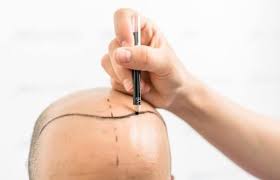
Getting a second opinion specifically on Norwood staging and treatment recommendations is worthwhile, since staging assessment involves genuine clinical judgment that can vary between specialists. Most reputable clinics also draw the proposed hairline directly on the skin for patient approval before starting, and adjusting that drawn hairline is a normal, encouraged part of the process. A written plan specifying your specific Norwood stage, graft estimate, and total price protects both parties and gives you something concrete to reference throughout your treatment journey; the initial quote should match the final invoice exactly at any transparent clinic offering a fixed-price guarantee.
Common Baldness Myths, Debunked
- "Baldness comes only from the mother's side." False. Genetic predisposition comes from both parents' contributions, making family history on either side genuinely relevant.
- "Wearing hats causes or accelerates baldness." False. Normal hat wearing has no meaningful effect on hair loss.
- "Frequent shampooing accelerates hair loss." False. Normal washing frequency does not meaningfully affect pattern baldness progression; hair loss noticed during washing simply becomes more visible.
- "Once you reach Norwood 6 or 7, surgery can no longer help." False. While donor supply limits what is achievable, thoughtful design combining efficient extraction with strategic placement can still produce genuinely satisfying, natural-looking improvement.
- "Baldness progression follows the same timeline for every man." False. Progression speed varies enormously between individuals, making individual assessment more valuable than generic timelines.
- "Medication alone can reverse Norwood 5 or higher baldness." False. DHT-blocking medication can slow progression and sometimes modestly improve existing thinning hair, but it cannot regrow hair in areas already fully bald.
Conditions That Are Not Pattern Baldness
Accurate diagnosis matters more than many patients realize, since confusing pattern baldness with a different underlying condition can lead to inappropriate treatment recommendations. Alopecia areata is an autoimmune condition causing patchy, sometimes sudden hair loss, distinct from the gradual, genetically driven progression of pattern baldness, and it typically requires dermatological treatment rather than surgical transplantation as a first approach. Scarring alopecia can compromise blood supply to transplanted grafts, so surgeons often recommend confirming it has been fully stabilized by a dermatologist before considering surgery in affected areas. Diffuse thinning spreads more evenly without the concentrated bald zones typical pattern baldness creates, meaning surgical solutions work less predictably and non-surgical support often plays a more central role. Some patients consult a local dermatologist first, primarily seeking independent confirmation that their hair loss is genuinely pattern baldness rather than something else.
Glossary of Baldness-Specific Terms
| Term | What It Means |
|---|---|
| Androgenetic alopecia | The clinical term for genetic pattern baldness |
| Norwood scale | The seven-stage classification system for male pattern baldness |
| Ludwig scale | The three-stage classification system for female pattern hair loss |
| Miniaturization | The gradual shrinking of follicles that precedes visible balding |
| Donor-dominant | The principle that transplanted hair retains its original resistance to balding |
The Emotional Dimension of Advanced Baldness
Real emotional weight tied to age perception and self-image is described by many patients, particularly those who delayed treatment for years hoping the progression would slow on its own, and acknowledging that openly tends to ease the entire decision-making process. Genuine relief at finally reversing changes quietly accepted over many years is something patients addressing advanced, long-standing baldness often describe, a benefit extending well beyond the purely cosmetic result. The confidence many patients describe gaining beyond the purely physical result is worth acknowledging explicitly, even though it rarely appears in a clinic's marketing material or before-and-after gallery.
Practical Considerations Before You Travel
- Accommodation and transfers: stay close to the clinic, use the included airport transfer service, and arrive a day early to adjust for jet lag.
- Deposit and cancellation: a credit card payment is generally recommended for the deposit; confirm exact cancellation conditions with your clinic before booking.
- Communication: WhatsApp remains the standard communication channel across nearly all Turkish clinics; some larger clinics staff French-speaking coordinators, worth confirming directly if that matters to your comfort.
- What to pack: passport and printed travel confirmations, comfortable front-opening clothing, current medications, a loose-fitting cap for later coverage, and sunglasses for comfort during early recovery.
- Season: spring and fall generally offer more comfortable temperatures for recovery, though clinics operate year-round; summer booking requires earlier planning given higher demand and heat.
Boutique clinics with lower daily volume often suit advanced-case donor management particularly well, offering the careful, patient pace and focused surgeon attention that extended sessions demand, though hospital-affiliated clinics sometimes offer additional reassurance around emergency backup and broader medical resources. Booking availability is just one factor worth weighing, not the primary selection criterion, and a genuinely researched second-choice clinic offers real peace of mind should scheduling conflicts arise.
Final Comparison Table: Baldness Treatment Considerations at a Glance
| Consideration | What to Look For |
|---|---|
| Accurate staging | Honest Norwood or Ludwig assessment before any treatment recommendation |
| Donor supply transparency | Clear explanation of what is realistically achievable |
| Advanced-case experience | Documented history treating your specific severity level |
| Realistic timeline honesty | Ten-to-fourteen-month framing rather than rushed promises |
In Summary: Matching Treatment to Your Specific Stage
Hair loss and baldness range from minor Norwood 1 recession through complete Norwood 7 balding, and accurate staging genuinely determines whether surgery, non-surgical support, or a combination suits your specific case. Turkish clinics deliver expert treatment across every severity level at up to roughly 60% below private pricing at home, with advanced cases sometimes combining Sapphire FUE and DHI technique for optimal coverage and precision, and the all-inclusive package model genuinely changing what is financially accessible compared to per-graft billing common at Western clinics.
Verify your specialist's documented experience with your exact stage, confirm realistic donor supply expectations honestly, check fresh independent reviews, examine timestamped before-and-after photos from patients starting at similar severity, and give the ten-to-fourteen-month timeline the patience it genuinely requires. To go further, explore the full range of hair transplant in Turkey, or review our pricing in Turkey page to understand what treatment involves before your consultation.