
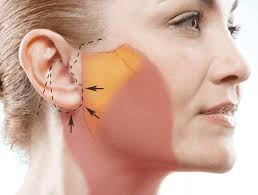
A deep plane facelift is a precise, anatomically defined technique in which the surgeon works beneath the musculoaponeurotic layer (the SMAS), releases the three retaining ligaments that hold facial tissue in its descended position, and lifts the membrane, the muscles it carries and the cheek fat resting on it as a single block, upward and slightly outward. The skin is then redraped with no tension, which is precisely why the result avoids a pulled look. It suits established jowls combined with a cheekbone that has flattened, and its benefit largely disappears when only the jawline has softened.
This guide explains what that dissection plane genuinely changes, who it is worth the extra complexity for, and where a more conventional technique delivers an equivalent result with a shorter recovery. It complements our Deep Plane Facelift in Turkey procedure page, which sets out how the operation is performed, the stay and the aftercare, and it sits within our wider facial surgery in Turkey section. No figures appear here: on this operation the amount depends on the plane chosen, what is combined with it and how long it takes in theatre, so a single number would mean nothing. Instead this guide teaches you to read a quote line by line, and at any time you can see our pricing in Turkey or request a free, no-obligation assessment.
Where the Technique Comes From
The principle was described in 1990 by the American surgeon Sam Hamra, who proposed working beneath the musculoaponeurotic layer rather than tightening it from above. Three decades of refinement later, it has established itself in high-volume practices. That historical detail is not trivia: it means the technique carries more than thirty years of track record, with published series and documented long-term results. It is neither a fashion nor a marketing novelty.
The Musculoaponeurotic Layer, Plainly
Beneath the skin of the face runs a thin membrane carrying the muscles of expression and linking them to the skin. It is called the SMAS, short for superficial musculoaponeurotic system. Every modern facelift manipulates it in one way or another. The question is therefore not whether a lift touches that layer, but how. Some techniques fold it from above, some remove a strip of it, and some pass underneath. That depth is what defines the deep plane.
The Three Ligaments Holding the Face
Facial tissue does not hang loose: it is anchored to the skeleton by retaining ligaments at a limited number of points. Three matter for the lower face — the zygomatic ligament at the cheekbone, the masseteric ligament along the cheek, and the mandibular ligament near the chin. Over the years those ligaments stretch and tissue slides downward while staying tethered. That is precisely what produces a jowl: cheek fat descends until it meets the mandibular anchor, and accumulates there.
What the Deep Plane Actually Does
The surgeon passes beneath the musculoaponeurotic layer, releases those three ligaments, then lifts the whole thing — the membrane, the muscles it carries and the cheek fat resting on it — as a single block, upward and slightly outward. The skin is then simply redraped over the top, with no tension whatsoever, because the work has already been done underneath. That absence of skin tension is what explains the absence of a pulled look, rather than any gentleness of technique.
The Sentence That Sums Up the Difference
Surgeons put it in one line: a conventional facelift tightens the structure, a deep plane repositions it. The first pulls what has descended, the second returns it to where it used to sit. The visible consequence follows directly. Tightening improves the jawline but leaves the cheekbone where it is; repositioning lifts the cheek at the same time, which softens the nasolabial fold structurally rather than by filling it.
Comparing the Lifting Techniques
The table sets out what each approach actually does with that layer.
| Technique | What it does with the layer | Ligaments released | How long it lasts |
|---|---|---|---|
| Mini lift | Little or nothing | No | Three to five years |
| Plication | Folds and secures it with sutures | No | Five to seven years |
| Strip removal | Removes a band of it | No | Five to seven years |
| Sub-layer dissection | Elevates it without releasing | Partly | Seven to ten years |
| Deep plane | Elevates it and releases the ligaments | Yes, all three | Ten to fifteen years |
The right-hand column explains the enthusiasm, and it deserves reading with nuance: these durations describe observed averages, not guarantees. Your heredity, your sun exposure and your weight swings weigh heavily on the real figure.
Why the Skin Is Not Pulled
The stretched look so many patients dread comes from a precise mechanism: when skin carries the tension of a lift, it pulls on the corner of the mouth and produces that slightly displaced smile you spot instantly. In a deep plane, tension rests entirely on the repositioned deep layers. The skin simply follows and closes without effort, which mechanically removes the cause of that appearance. It is an anatomical argument rather than a promise.
What the Deep Plane Reaches That Others Do Not
The middle third of the face, meaning the cheekbone and the upper cheek. Techniques working above the musculoaponeurotic layer pull backward and improve the jawline, but do not lift malar volume. That is why a patient whose cheekbone has flattened at the same time as her jowls appeared gains more from the deeper plane. In a patient where only the jawline has softened, that advantage largely disappears.
The Limits of the Technique
The deep plane does not suit every configuration, and honesty requires saying so. On very creased skin with substantial excess, deep release adds little that a well-performed conventional technique does not already achieve. It suits moderate to marked slackening, in patients whose skin retains some elasticity, and gives its best before the sixties. A surgeon offering it to everyone is applying a method rather than making a diagnosis.
What It Demands Technically
This dissection runs alongside the branches of the facial nerve, which is why it calls for particular familiarity. It is not an operation improvised after watching a few videos, and a surgeon's annual volume counts here more than on any other facial technique. It is also why the deep plane remains a minority technique in many countries, concentrated in high-volume practices. Asking for that annual number becomes the first filter, before any discussion of price or destination.
The Profile That Gains Most
A patient between forty-five and sixty-five whose jowls are established but whose skin retains elasticity, and above all whose cheekbone has flattened at the same time as the jawline blurred. That last characteristic is what makes the difference. The test is simple: place your fingers on your cheekbones and lift the tissue upward and backward. If that improves both your jawline and the fullness of your cheek, the deep plane will give you what no plication can.
The Profile for Whom Another Technique Will Do
A patient whose jawline alone has softened, with a cheekbone still full, will get a comparable result from a well-performed conventional technique, with shorter recovery and a shorter operation. An honest surgeon will say so, even at the cost of proposing something less impressive on paper. The deep plane is not superior in itself: it is superior for a specific indication, and needlessly complex outside it.
When the Deep Plane Is Not Indicated
Very creased skin with substantial excess, early slackening in a patient in her forties, a weight in the middle of significant change, active smoking that has not stopped, or health incompatible with four to six hours of anaesthesia. Add one particular case: a hollow face with no real descent of tissue belongs to fat grafting rather than any lift, however deep. Repositioning what has not descended produces a tight, empty result.
Matching Your Situation to the Available Techniques
The table helps you place yourself before the consultation even begins.
| Your situation | What suits | What would be excessive |
|---|---|---|
| Jawline barely softened, under fifty | Tightening or a mini lift | A deep plane |
| Clear jowls, cheekbone still full | Conventional lower face lift | A deep plane |
| Jowls and a flattened cheekbone | Deep plane | Nothing beyond it |
| Jowls, flat cheekbone and slack neck | Deep plane with neck work | Nothing beyond it |
| Hollow face with no descent | Fat grafting alone | Any lift at all |
| Very creased skin, marked excess | Conventional technique with excision | The deep plane adds nothing |
The right-hand column is the one protecting you. A practitioner proposing the deep plane on all six rows is selling a technique rather than making a diagnosis, and that is a signal you can spot without any medical knowledge.
How the Operation Runs
The deep plane takes longer in theatre than a conventional technique and asks for a slightly longer recovery. Here is what that means in practice, hour by hour and then week by week.
The Consultation the Day Before
The surgeon checks on you what photographs cannot show: how mobile the tissue actually is when lifted by hand, how thick the skin feels when pinched, and where the cheekbone sits when you are standing and then lying down. That last point confirms or overturns the indication. If the cheek rises clearly when traction is applied upward and backward, ligament release will give you what no plication can.
The Morning Marking
Marking is done standing and includes, for this technique, landmarks the others do not require: cheekbone projection before and after traction, the limit of the planned undermining, and the approximate course of the nerve branches to protect. That drawing serves as the map throughout the dissection. A surgeon who rushes it gives up his own reference at precisely the moment he will be working alongside the facial nerve.
The Dissection, Step by Step
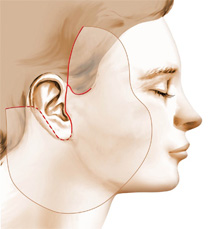
After the incision around the ear, the surgeon first raises a short skin flap, far shorter than in a conventional technique. This is counterintuitive: the deep plane undermines less skin, precisely because it does not rely on it. He then opens the musculoaponeurotic layer and passes beneath it, in a plane followed under direct vision. There he releases in turn the zygomatic attachments at the cheekbone, the masseteric attachments along the cheek, and the mandibular attachments near the chin.
The Repositioning
Once the three ligaments are free, the whole becomes mobile. The surgeon lifts that composite block — membrane, muscles and the cheek fat resting on it — upward and slightly outward, then fixes it with deep sutures at its new height. The skin is redraped over the top and the excess simply trimmed, never used to hold anything. That is where the naturalness of the result is decided: it closes like a sheet laid down rather than a canvas stretched.
Comparing Durations
The table places this operation among the other techniques.
| Technique | Time in theatre | Hospital | Back in circulation |
|---|---|---|---|
| Mini lift | One to two hours | Day case | One to two weeks |
| Conventional lift | Three to four hours | One night | Two to three weeks |
| Deep plane | Four to six hours | One night | Three weeks |
| Deep plane with eyelids | Five to seven hours | One night | Three weeks |
| Deep plane with fat grafting | Five to seven hours | One night | Three weeks |
These figures explain why the deep plane cannot be combined indefinitely. Past six or seven hours the anaesthetist sets a limit, and a rigorous team proposes staging rather than stacking.
Anaesthesia Across a Long Operation
An anaesthetist stays with you from beginning to end. On this procedure their role goes beyond monitoring: keeping blood pressure low and steady directly reduces bleeding in a deep, richly supplied dissection plane. They are also the one who calls a halt if the operation runs long. A clinic where the anaesthetist moves between theatres does not work to that standard, and the question deserves asking before you book.
Recovery, Week by Week
The First Forty-Eight Hours
You wake with a compression dressing and usually two small drains, feeling tightness rather than pain. Local anaesthetic still working makes those first hours surprisingly comfortable. The dressing and drains come out the next day. That is when you see your swollen face for the first time, and it is worth knowing: that reflection bears no relation to the result. The team accompanies you at that exact moment for that reason.
The First Week
Swelling peaks on day two or three, then recedes. On a deep plane it runs slightly heavier and slightly longer than after a conventional technique, because the dissection was more extensive at depth. Bruising travels down toward the neck and collarbone under gravity, across about ten days. Sleeping propped at thirty to forty-five degrees speeds that retreat considerably, and a wedge pillow holds better than a stack of ordinary ones.
The Real Calendar
Here are the reference points reported by teams performing this technique regularly.
| Milestone | What happens |
|---|---|
| Day 1 | Dressing and drains removed |
| Days 2 to 3 | Peak swelling and bruising |
| Days 5 to 7 | Sutures out, first hair wash |
| Days 10 to 14 | Bruising coverable with makeup |
| Week 3 | Back in circulation for most patients |
| Month 3 | First genuine sight of the result |
| Month 6 | Swelling roughly ninety percent resolved |
| Month 12 | Scars softened, result final |
Social recovery sits at three weeks rather than two, which is the main practical cost of this technique in daily life. It is a parameter to build into planning a trip to Turkey.
The Sensations Specific to This Dissection
Numbness across the cheek is more extensive than after a conventional lift, since the plane dissected is deeper and wider. It often covers the region between the ear and the corner of the mouth, and takes a few months to fade. Stiffness on opening the mouth is also common in the early weeks, linked to release of the masseteric attachments. It settles on its own and calls for nothing beyond patience.
What Speeds Recovery
The same measures as for any lift, with particular emphasis on two of them.
| What helps | Why it matters here | For how long |
|---|---|---|
| Sleeping propped up | The deep plane swells more | Three weeks |
| Lymphatic drainage | Clears a more extensive swelling | From the first week |
| Walking daily | Keeps circulation moving | From day one |
| Sun protection | Scars exposed for twelve months | One year |
| Stopping smoking | Deep undermining, supply is critical | Before and after |
The last row counts more on this technique than on any other. The skin flap is shorter, true, but the deep dissection draws heavily on local blood supply, and tobacco weighs proportionally more.
Choosing a Surgeon for a Deep Plane
On this technique more than any other in facial surgery, volume of practice decides the result. The dissection runs alongside the facial nerve, and that familiarity is only acquired by repeating it.
The Question That Sorts Everything
How many deep planes did you perform last year? Not lifts in general, not facial procedures: deep planes. The wording matters, because many surgeons perform conventional lifts regularly and the deep plane occasionally. A practitioner doing a handful a year does not carry the same ease in that plane as one doing several a week. This is not a moral judgement but a fact about learning.
The Term Has Become a Sales Argument
It has to be said plainly: since this technique acquired a flattering reputation, many sites use the term to describe operations that are not one. A dissection beneath the musculoaponeurotic layer without ligament release is not a deep plane. Verification takes one technical question you can ask exactly as written: do you release the zygomatic, masseteric and mandibular ligaments? A surgeon who genuinely performs this will answer without hesitating and tell you which matter most in your case.
What a Portfolio Must Show
Two areas are particularly informative here. The first is the cheekbone in three-quarter view: it is the only angle where you can see whether volume has been lifted or merely pulled backward. The second is the corner of the mouth in profile. Ask also for images at one year rather than three months. The deep plane takes longer to deliver its result, and a portfolio limited to the early months hides precisely the period when its advantage becomes visible.
Comparing Selection Criteria
On this operation, some criteria predict the result and others predict nothing.
| Criterion | What it indicates | Reliability |
|---|---|---|
| Annual number of deep planes | Familiarity with the dissection | Very high |
| Able to name the ligaments released | Genuine practice of the technique | Very high |
| Three-quarter portfolio at one year | Whether malar volume was lifted | Very high |
| Accreditation of the facility | Safety framework | High |
| Anaesthetist present throughout | Safety across six hours | High |
| Use of the term on the website | Nothing at all | None |
| Follower count on social media | Reach, not competence | None |
The word on a page proves nothing: this is currently the most used and least verified term in facial surgery.
What Makes This Operation Safe
Three elements account for most of it, and all three can be verified beforehand: a surgeon performing this dissection regularly, an accredited facility able to monitor you overnight, and an anaesthetist present for the whole duration. With those three in place, the deep plane does not present a different safety profile from a conventional lift. Thirty years of published series confirm it, and it is precisely the track record of the technique that allows that statement.
The Facial Nerve Question
It arises legitimately, since the dissection approaches the nerve branches. It is also exactly why this technique is performed under direct vision in an identified plane rather than blindly beneath the skin. A passing effect on a terminal filament can produce temporary asymmetry, for instance a brow rising less on one side. It stays rare and resolves within three months. Experienced teams work precisely in the plane that protects those branches, and that is where their volume pays.
What Monitoring Settles Easily
As after any lift, a collection of blood can appear in the first hours. It shows as localized, tense swelling and is treated according to volume: spontaneous resorption, drainage through a one-centimetre opening, exceptionally more. That is exactly what the overnight stay detects immediately. A later collection of clear fluid is drawn off in clinic. These are follow-up procedures, quick and without consequence for the result, provided you are on site.
Signals That Should Stop You
A site using the term without ever describing what it involves. Someone unable to name the ligaments released. A quote stating three hours of surgery for a deep plane, which is materially improbable. Add a clinic that never mentions operating time, or one proposing this technique regardless of the anatomy described. Any one of these justifies digging further before paying anything.
A Clinic, Not a Middleman
Search this technique online and the top positions belong to directories and comparison sites. Some go as far as publishing worldwide registers of practitioners, which conveys an impression of thoroughness without any surgical verification having taken place. These sites live on a commission paid by the clinic they direct you to, and that commission travels inside the quoted price. It is the mechanical reason why the same surgeon can be billed to you very differently depending on the route you came by.
Here nobody stands in between. The surgeon who comments on your photographs is the one who performs the dissection, and the same team reads your check-up images at six months. Removing that link changes the final figure more than any argument about local living costs.
| At each stage | Via a register or comparison site | Straight to the clinic |
|---|---|---|
| Who answers your message | A sales advisor | The surgical team |
| Who verifies the technique claimed | Nobody | The surgeon himself |
| Commission inside the price | Yes, not itemized | None |
| At six months, questions go to | An inbox that has moved on | The people who know your file |
| Your operative report | Rarely provided | Given before you leave |
A register listing thousands of practitioners across dozens of countries has verified no dissection: it has collected declarations. On a procedure where the word has become an argument, that distinction is expensive.
Comparing the Destinations Patients Consider
Search for a deep plane facelift in English and you will meet clinics in Mexico, the Dominican Republic, Colombia, Costa Rica and Thailand. What follows does not rank countries: it ranks ways of working, and the grid serves equally well to separate two addresses in the same city.
| Value criterion | Turkey / Istanbul (Aylan) | Mexico | Dominican Rep. | Colombia / Costa Rica / Thailand |
|---|---|---|---|---|
| Annual volume of deep plane | High | Variable | Low | Variable |
| Can name the ligaments released | Yes, verifiable | To check | To check | To check |
| Direct with the clinic | Yes, no middleman | Often via agency | Often via agency | Often via agency |
| English-speaking support | Yes, coordinator | Variable | Variable | Variable |
| Cost vs private care at home | Often up to around 70 percent less | Often lower | Often lower | Often lower |
On this technique, read the first two rows before any others. The deep plane is where the gap between a regular operator and an occasional one shows most, and no destination compensates for that. The second row is a question you can ask anyone, anywhere.
Istanbul, Ankara, Izmir and Antalya
Istanbul concentrates the teams whose practice is predominantly facial, the ones performing this dissection weekly rather than a few times a season. That regularity is what counts on a technique worked alongside the facial nerve. Ankara, Izmir and Antalya hold excellent practitioners too, with slightly less direct air access. The city decides nothing on its own; the annual number of deep planes performed decides a great deal.
The Misconceptions About the Deep Plane
This technique attracts as many flattering beliefs as unfounded objections. Here are the commonest, examined one at a time.
It Is Always Superior
This is the most frequent claim and the most heavily sold. It is true for one precise indication and false outside it. In a patient whose cheekbone has stayed full, ligament release adds nothing a well-performed plication does not already give. What you buy in that case is two extra hours in theatre and an extra week of recovery, for an equivalent result.
It Is a New Technique
It was described in 1990 and refined across three decades. That track record is precisely what allows anyone to cite observed result durations of ten to fifteen years, which no genuinely recent technique could do. What is new is its popularity with the public and its use in clinic marketing. The technique itself is older than most of the patients asking for it.
It Is More Dangerous Because You Go Deeper
Depth is not the danger, improvisation is. This dissection is performed under direct vision in an identified anatomical plane, which makes it more controlled than extensive undermining carried out blindly beneath the skin. What genuinely changes is the demand for familiarity: the work runs alongside the branches of the facial nerve. In hands that repeat it weekly, its safety profile does not differ from a conventional lift.
More Skin Is Undermined
The opposite is true, and it is counterintuitive. The skin flap raised in a deep plane is shorter than in a conventional technique, precisely because the surgeon does not rely on skin to hold the result. That also explains often better healing: less undermined skin means better preserved blood supply, and closure without tension gives a finer scar.
Comparing Beliefs Against What Is Observed
| What you hear | What is actually the case |
|---|---|
| The deep plane is always better | False: only if the cheekbone has descended |
| It is a recent technique | False: described in 1990 |
| It is more dangerous | False: direct vision, identified plane |
| More skin is undermined | False: the flap is shorter |
| It lasts a lifetime | False: ten to fifteen years on average |
| Every surgeon does it | False: the word is commoner than the practice |
| It necessarily pulls less | True, because the skin holds nothing |
The last row is the only common claim that is accurate, and it rests on a verifiable anatomical mechanism rather than a promise: when tension sits on the deep layers, skin cannot pull on the corner of the mouth.
At That Price It Cannot Be a Real Deep Plane
The suspicion is healthy but pointed in the wrong direction. An international price gap is explained by cost of living, wages and volume of procedures, not by the depth of the dissection. What can be verified, though, is the stated duration. A deep plane takes four to six hours. A quote stating three hours describes something else, whatever the figure, and it is that inconsistency which should alert you.
You Should Wait Until Slackening Is Severe
For this technique it is precisely the reverse. The deep plane gives its best before the sixties, on tissue that retains elasticity, and its limits appear on very creased skin with substantial excess. Waiting too long can therefore move you out of the ideal indication rather than into it. That is no reason to rush, but it is a reason not to postpone indefinitely on principle.
Fat Grafting Replaces the Deep Plane
They treat two different things and often complement one another. Fat grafting restores lost volume; the deep plane lifts descended volume. Filling a cheek that has descended produces a full face that is still sagging. In many patients the right answer combines both in the same operation: reposition first, then fill whatever is still missing. Order matters, and the reverse does not work.
Comparing What the Operation Delivers and What You Deliver
Some improvements are not bought in an operating theatre, and it is honest to say so.
| What you want | Comes from the operation | Comes from how you live |
|---|---|---|
| A lifted cheekbone | Yes, specifically the deep plane | No |
| Jowls and jawline | Yes, entirely | No |
| Nasolabial fold | Partly, structurally | No |
| Complexion and pigmentation | No, outside its scope | A great deal, sun and tobacco |
| How long the result lasts | No | A great deal, weight, sun, tobacco |
The deep plane softens the nasolabial fold by lifting the cheek that was creating it, without touching the fold itself. It is a structural correction, more durable and more natural than filling.

Comparing the Deep Plane Against the Alternatives
Against the Conventional Facelift
The difference comes down to one word: release. A conventional lift handles the musculoaponeurotic layer from above, folding it or removing a strip. The deep plane passes underneath and detaches the ligaments holding tissue in its descended position. The conventional improves the jawline, the deep plane adds the cheekbone. In a patient where only the jawline is involved, both give the same result, and the conventional gives it with three weeks of recovery instead of four.
Against the Mini Lift
The comparison only makes sense on early slackening. A mini lift treats barely descended skin in a younger patient, with short recovery and a result holding three to five years. Offering a mini lift to someone who needs the deep plane means selling a recovery for a benefit that will fade quickly. The reverse holds too: imposing a deep plane on a forty-two-year-old whose tissue has not really moved.
Against the Endoscopic Lift
These two techniques do not work the same level and combine rather than compete. The endoscopic repositions the forehead, temples and cheekbone through short incisions in the hair, removing no skin. The deep plane treats the cheek, jawline and neck while removing excess skin. In a patient whose sagging is global, both are performed under one anaesthetic, and it is a frequent pairing in high-volume practices.
Comparing the Surgical Techniques
| Technique | Level treated | Slackening suited | Result duration | Recovery |
|---|---|---|---|---|
| Mini lift | Lower jawline | Early | Three to five years | One to two weeks |
| Conventional lift | Jawline and neck | Moderate | Five to seven years | Two to three weeks |
| Deep plane | Cheek, jawline, neck | Moderate to marked | Ten to fifteen years | Three weeks |
| Endoscopic | Forehead, temples, cheekbone | Early to moderate | Several years | Two weeks |
No row outranks the others in the abstract. Each corresponds to a level and a degree of slackening, and the surgeon's job consists precisely of placing you on the right one.
Against the Non-Surgical Options
Threads, focused ultrasound, radiofrequency: all have a genuine place on early slackening. None removes skin, and that is where the comparison ends. Once excess skin is established, they produce an improvement only you will notice. Continuing with sessions then funds a delay rather than a treatment, and their cumulative cost across five years often exceeds that of surgery.
| Solution | Slackening suited | Duration | Lifts the cheekbone | Removes skin |
|---|---|---|---|---|
| Focused ultrasound | Early | About a year | No | No |
| Subdermal radiofrequency | Mild to moderate | Lasting | No | No |
| Thread lift | Early | Months to a year | Slightly | No |
| Conventional lift | Moderate | Five to seven years | No | Yes |
| Deep plane | Moderate to marked | Ten to fifteen years | Yes | Yes |
The two right-hand columns settle it alone. Only one row lifts the cheekbone, and only two remove skin. Everything else is maintenance or postponement.
The Test That Places You in Thirty Seconds
At a mirror, put two fingers on each cheekbone and lift the tissue upward and backward. Watch three things: your jawline, the fullness of your cheek, and the fold running from your nose toward your mouth. If all three improve together, you fall within the deep plane indication. If only the jawline changes and the cheek stays the same, a conventional technique gives you the same result sooner. That test beats any brochure, and it costs nothing.
Combining With Other Procedures
The deep plane combines readily, within the limits of total duration. Eyelids are the commonest addition, bringing the operation to five or seven hours. Fat grafting also finds its place where the face is both descended and hollow. Order matters: reposition first, then fill whatever is still missing. Filling before lifting means relocating volume that is in the wrong place, a sequencing error experienced teams avoid systematically.
What the Deep Plane Will Never Do
It changes neither your skin texture, nor your pigmentation, nor your fine surface lines. Those belong to lasers and peels, and are scheduled some months after surgery, once skin circulation has recovered. Nor does it alter the position of your hyoid bone, which partly determines how crisp the neck angle can be. That is the one anatomical limit no technique crosses, and an honest surgeon tells you beforehand rather than after.
Preparing Your Trip and Deciding With Confidence
This technique asks for slightly longer preparation than the others, essentially because of its operating time and its three-week recovery.
The Work-Up to Do Before You Travel
Blood tests, an electrocardiogram depending on your age and history, and a review of your blood pressure. That last one matters more than usual here: well-controlled pressure directly reduces bleeding in a deep dissection plane. Results go to the team, who validate them before you travel. A clinic asking for nothing before your arrival risks an abnormal finding discovered the day before overturning the entire trip.
What to Stop and When
Smoking several weeks ahead, and that point is not negotiable on this technique. Aspirin and blood thinners two weeks ahead on medical advice, along with several supplements that thin the blood without anyone considering them. Bring the complete list of what you take, including fish oil, turmeric and ginkgo. It is the commonest omission and the one causing the most unnecessary bruising.
What to Pack
Tops that open at the front rather than pulling over your head, a wedge pillow if you can carry one, wide sunglasses, and something to occupy you through days spent propped up and barely moving. Add your documents, the list of your medications with doses, and contact details for someone at home. That last item is requested at every admission and always hunted for at the wrong moment.
The Stay and the Journey Home
Reckon on ten to fourteen nights in Istanbul, slightly more if eyelids are added. The long-haul flight home is planned around three weeks after surgery, which governs the entire arrangement. Allow two or three quiet days after landing, with nothing scheduled. The time difference on the way back compounds a recovery that is already longer than average, and a few meals prepared in advance change everything.
The Decision Summary
This table condenses the guide onto one page.
| The question | The short answer |
|---|---|
| Who it suits | Established jowls AND a flattened cheekbone |
| Who it is pointless for | A cheekbone still full, or major skin excess |
| Time in theatre | Four to six hours |
| Hospital | One night |
| Stay in Turkey | Ten to fourteen nights |
| Back in circulation | Three weeks |
| Flight home | Around three weeks |
| First sight of the result | Third month |
| Final result | One year |
| How long the benefit lasts | Ten to fifteen years |
| Gap vs private care at home | Often up to around 70 percent |
The first two rows are the most useful in the table. If the second one describes you, you have just saved two hours in theatre and a week of recovery, and that is exactly the kind of information an honest guide should give you.
Three Checks Before You Commit
First: how many deep planes did this surgeon perform last year, and can he show results at one year in three-quarter view? Second: can he name the ligaments he releases? Third: what duration does he state for the operation? Four to six hours is coherent; three hours describes something else. Those three answers together sort the great majority of offers you will encounter.
In Summary: Matching the Technique to Your Face
The deep plane is an excellent technique for the indication it matches, and an unnecessary complication outside it. Knowing which case you fall into is worth more than any sales argument, and that is what this guide set out to give you. It suits established jowls combined with a flattened cheekbone; where only the jawline has softened, a conventional technique gives the same result sooner.
When you are ready, take photographs front on, in profile and above all in three-quarter view, in natural light and without makeup, adding one where you lift your cheekbones with your fingers. To go further on how the operation is performed, the stay and the aftercare, see our Deep Plane Facelift in Turkey page, explore the wider facial surgery in Turkey section, or review our pricing in Turkey and request a free, no-obligation assessment. The team at Aylan Clinic answers in English, from your first message through to your final check, with nobody standing between you and the people who will care for you.