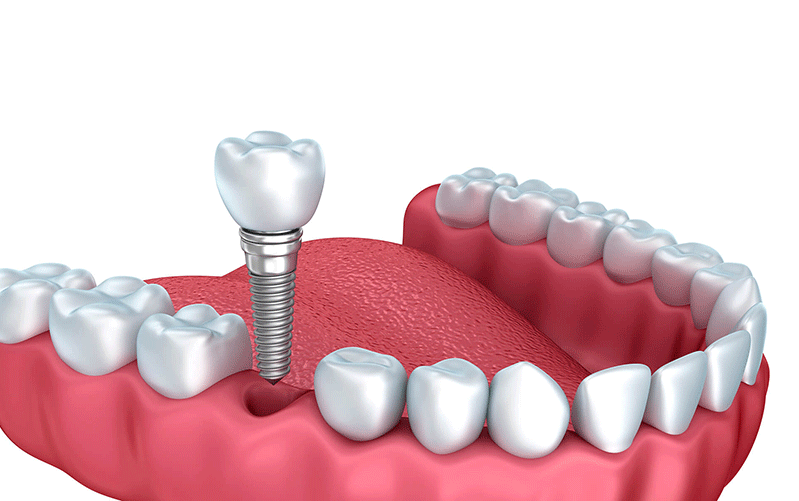
The short answer is yes. Dental implants placed in Turkey at Aylan Clinic allow patients from Toronto, Montreal, Vancouver, Calgary, Ottawa and across Canada to replace missing teeth with a permanent, fixed solution, for up to 60% less than Canadian private prices. Two facts belong at the top of any honest page: a dental implant is not one item but three — the fixture in the bone, the abutment, and the crown you see — and implants take time, because the bone must grow onto the implant over three to six months.
This guide complements our Dental Implants in Turkey procedure page, which sets out how the treatment itself is performed, the stay, and the aftercare. It sits within our wider dental care in Turkey section. Here you will find the biology, the honest two-trip timeline, the insurance reality for Canadians, the traceability that protects you, and the practical planning that makes the whole project straightforward. For a full breakdown of what treatment costs, see our pricing in Turkey page.
Two things belong at the top of this guide, because they are where most patients get misled. First: a dental implant is not one item. It is three — the implant fixture in the bone, the abutment that connects to it, and the crown you see. A quote showing a low “per implant” price may cover only the first of these. Comparing that number against a Canadian quote that includes all three is comparing nothing to nothing. Second: implants take time. The bone must grow onto the implant surface, a process called osseointegration, and it takes three to six months. Any offer promising a complete implant treatment finished in a single week has either skipped that healing period or is describing something other than what you think.
1. Understanding Dental Implants
What is a dental implant?
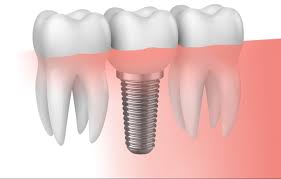
A dental implant is a small screw, almost always made of titanium, placed into the jawbone to replace the root of a missing tooth. Over the following months, bone grows directly onto its surface — osseointegration — which anchors it firmly. Once integrated, an abutment is attached, and a crown is fitted on top. The result is a tooth that is fixed, functions like a natural tooth, and does not rely on neighbouring teeth for support.
The three components you are actually paying for
This is the single most important commercial point on this page. A treatment is only complete when all three components are in place. When comparing quotes, confirm in writing which components are included. A quote of “X per implant” that excludes the abutment and crown will roughly double or triple by the time your treatment is finished. Ask directly: “Does this price include the fixture, the abutment and the final crown?” An honest clinic answers immediately and specifically.
- The implant fixture — the titanium screw placed in the bone.
- The abutment — the connector between the fixture and the crown, sometimes custom-made.
- The crown — the visible tooth, usually zirconia or a ceramic material.
Why choose an implant over a bridge or a denture?
An implant replaces a single tooth without touching the neighbouring teeth. A conventional bridge requires the two adjacent teeth to be cut down and crowned — a permanent sacrifice of healthy tooth structure, which is a significant consideration if those teeth are sound. An implant also preserves the bone. When a tooth is lost, the bone that supported it begins to resorb, because nothing is stimulating it. An implant, transmitting chewing forces into the bone, slows that process considerably. Compared with a removable denture, an implant-supported solution does not move, does not need adhesive, and restores far more chewing efficiency.
How long do implants last?
With good oral hygiene and regular professional maintenance, implant fixtures frequently last decades. The crown on top has a shorter life — typically ten to twenty years depending on material, bite forces and wear. It is worth understanding this distinction: the expensive part in the bone is the durable part. The visible part will need replacing at some point, and that is a normal maintenance cost rather than a failure.
What is the actual success rate?
Published survival rates for dental implants are high — generally reported above 90% at ten years in well-selected patients with adequate maintenance. Those figures come with conditions attached: adequate bone, good oral hygiene, absence of untreated gum disease, and not smoking. Smoking is the single most consistently identified risk factor for implant failure. A smoker’s implant does not fail immediately, but the long-term figures are meaningfully worse.
2. Am I a Candidate?
What makes someone a good candidate?
Sufficient bone volume at the implant site, healthy gums, good oral hygiene, general health permitting minor oral surgery, and a willingness to maintain the result long term.
What if I do not have enough bone?
This is extremely common, particularly if the tooth was lost years ago. Options include bone grafting to rebuild volume, sinus lifting where the upper back teeth are involved, or shorter or angled implants that work with the bone you have. Each has its own dedicated guide. What matters here is that a shortage of bone is usually a solvable problem, not a disqualification — but it adds time and cost, and you should know that before comparing quotes.
What conditions require particular caution?
- Untreated gum disease must be addressed first. Placing an implant in an actively infected mouth invites failure.
- Uncontrolled diabetes impairs healing and increases infection risk. Well-controlled diabetes is generally not a barrier.
- Bisphosphonates and other bone medications, particularly intravenous forms used in oncology, must be disclosed. They carry a risk of jaw complications after oral surgery, and this genuinely changes the treatment plan.
- Previous radiotherapy to the head or neck requires specialist assessment.
- Bruxism — habitual grinding — does not prevent implants but requires a protective night guard, discussed in section 24.
- Smoking is not an absolute contraindication in most practices, but it substantially worsens the odds and every serious clinician will raise it.
Is there an age limit?
Not at the upper end — implants are placed successfully in patients in their eighties. At the lower end, jaw growth must be complete, generally around eighteen to twenty years of age. Placing an implant in a growing jaw leaves it stranded as the surrounding bone and teeth continue to develop.
3. Why Canadians Consider Turkey — and the Insurance Reality
| Factor | Canada (private) | Turkey — Aylan Clinic |
|---|---|---|
| Cost | High; implants rarely covered | Up to 60% less, all-inclusive |
| Wait time | Variable | Rapid scheduling |
| Accommodation | Your responsibility | 5-star hotel, full board included |
| Companion | Additional cost | Free, accommodated and fed |
| Number of trips | None | Usually two |
Are dental implants covered in Canada?
Generally not, and this is where dental care differs fundamentally from the surgical procedures in our other guides. Provincial health plans do not cover routine dental care for most adults. The Canadian Dental Care Plan, introduced recently, extends coverage to certain groups based on household income and other criteria — but its scope for major restorative work such as implants is limited, and it does not cover care received outside Canada. Private and employer dental plans are the more relevant consideration, and here the problem is usually not exclusion but annual maximums. Many Canadian dental plans cap benefits at somewhere between $1,500 and $3,000 per year. A single implant with abutment and crown can consume an entire annual maximum; a full-mouth case exhausts several years of benefits.
So what does that mean practically?
It means the honest comparison for implants is Canadian private fees versus Turkish fees — there is no publicly funded alternative to weigh, unlike breast reduction or reconstruction. The price gap is the argument, and it is a legitimate one.
Can I claim anything back?
Possibly a portion, depending on your plan. Practical steps:
- Ask your insurer in advance whether they reimburse treatment received abroad, and at what rate. Some plans reimburse at the provincial fee guide rate regardless of where treatment occurred; others exclude foreign care entirely.
- Request itemised invoicing rather than a single package figure. Insurers reimburse by procedure code, and an invoice reading “dental package — $X” is far harder to process than one listing each implant, abutment and crown separately.
- Request the treatment plan in writing before you travel, and submit it for pre-determination if your insurer offers that. It converts uncertainty into a written answer.
Are there tax considerations?
Medical expenses, including dental treatment and in some circumstances associated travel, may be eligible for the Medical Expense Tax Credit on your Canadian return. Eligibility rules are specific and change; keep every receipt and consult a tax professional rather than assuming. This is not tax advice, simply a prompt to keep your documentation.
4. The Timeline: Why Implants Usually Mean Two Trips
Why can this not be done in one visit?
Because bone biology sets the pace. After an implant is placed, bone cells must grow onto its surface. That process takes three to six months depending on bone quality, implant location and whether grafting was involved. Loading an implant with a permanent crown before integration is complete risks losing it.
What does the two-trip timeline look like?
- Trip 1 (5–10 days): assessment including 3D imaging, any extractions, bone grafting if needed, implant placement, and fitting of temporary teeth where appropriate.
- Healing at home (3–6 months): osseointegration. You wear temporary teeth. No dental travel required.
- Trip 2 (5–10 days): confirmation of integration, abutment placement, impressions or digital scanning, and fitting of the final crowns or bridge.
Are there exceptions?
Yes, several, and they are legitimate.
- Immediate loading — in selected cases with excellent bone quality and good primary stability, a temporary fixed bridge can be fitted at the time of placement. This is the basis of All-on-4 protocols. It provides functioning teeth immediately, but the final prosthesis still comes months later.
- Immediate placement — an implant placed into the socket at the time of extraction, when conditions allow, saving a healing phase.
- Bone grafting extends rather than shortens the timeline — often requiring six to nine months before implant placement, which can mean three trips.
What about “full mouth in one week”?
This is the claim to scrutinise. What can genuinely be done in one week is placement of implants and fitting of a temporary fixed bridge. What cannot be done in one week is the complete, finished treatment with the definitive prosthesis. The distinction is not pedantic. A temporary prosthesis is designed to function for months, not years; it is less durable, less refined aesthetically, and it must be replaced. A patient who believes she has received her final teeth, and who is then told she must return, has been misled — even if the clinical work was competent. Ask this question specifically: “Is the prosthesis I leave with temporary or final, and if temporary, when and where is the final one made?”
5. Procedures and Techniques at Aylan Clinic
| Procedure | Indication |
|---|---|
| Single implant with crown | One missing tooth, adjacent teeth healthy |
| Multiple individual implants | Several missing teeth in different locations |
| Implant-supported bridge | Several adjacent missing teeth, fewer implants than teeth |
| All-on-4 / All-on-6 | Full arch, using four or six implants |
| Implant-retained overdenture | Removable denture clipped onto two to four implants |
| Immediate placement | Implant at the time of extraction, where conditions permit |
| Implant with bone graft | Insufficient bone volume |
| Implant with sinus lift | Insufficient height in the upper back jaw |
Each of the major options has its own detailed guide, linked at the end of this page.
The clinical team
- Senior oral and maxillofacial surgeon — implant placement, bone grafting, sinus lifting
- Implantology-focused dentist — treatment planning and prosthetic phase
- Prosthodontist — design and fitting of crowns, bridges and full-arch prostheses
- Dental radiologist — interpretation of 3D imaging
- In-house dental laboratory — allowing same-visit adjustments and try-ins
What the package includes
- Free consultation and detailed treatment plan, no obligation
- 3D cone beam CT imaging on site
- Implant placement, abutments and final prosthesis as specified in your plan
- Temporary teeth during the healing phase where applicable
- 5-star hotel accommodation, full board
- A companion at no extra cost, accommodated and fed in the same room
- Airport–clinic–hotel transfers
- A personal coordinator throughout your stay
- Implant passport recording brand, model, diameter, length and lot number for each implant
- Written treatment report and radiographs for your Canadian dentist
- English and French-speaking Canadian patient liaison available on request
6. Pre-Treatment Assessment: What Should Never Be Skipped
Why 3D imaging is essential, not optional
A conventional panoramic radiograph is a two-dimensional image. It shows you roughly where things are. It does not reliably show bone thickness, the exact path of the nerve in the lower jaw, or the precise floor of the sinus in the upper jaw. Cone beam computed tomography (CBCT) provides a three-dimensional dataset. It allows measurement of available bone in height and width, identification of the inferior alveolar nerve canal, assessment of sinus anatomy including any septa, and detection of existing pathology. Placing implants without CBCT means working from an estimate. In the lower jaw, that estimate can put an implant close to a nerve. In the upper jaw, it can put one into the sinus. A clinic offering implants without 3D imaging is planning blind. Ask about it before anything else.
Can I have the CBCT done in Canada?
Yes, and some patients prefer to. It means the scan is in your own records, and it allows a Canadian dentist to review your case independently. If you do this, ask for the raw DICOM data on a USB drive or download link, not just printed images — the raw data is what allows proper planning software analysis.
What else does assessment involve?
A full clinical examination of the remaining teeth and gums, periodontal charting, assessment of your bite, photographs, and a review of your medical history and medications. Two items are frequently overlooked and genuinely matter: bone medications including bisphosphonates and denosumab, and untreated gum disease. Both change the plan.
Does gum disease need treating first?
Yes, and this is non-negotiable. Placing an implant into a mouth with active periodontal disease is placing it into an infected environment. The bacteria responsible for gum disease around natural teeth are the same ones implicated in peri-implantitis, the inflammatory condition that destroys bone around implants. Periodontal treatment first, implants second. A clinic willing to reverse that order is not protecting your investment.
7. Implant Brands and Traceability
Does the brand matter?
Yes, more than most patients realise, and for reasons that only become apparent years later. Established international implant systems have extensive published clinical data, standardised components available worldwide, and long-term manufacturer support. Lesser-known systems may perform adequately, but if you need a replacement component in ten years — a new abutment, a screw, a crown refitted — your Canadian dentist has to be able to obtain the matching parts. This is the practical problem with an unidentified implant system: a dentist in Winnipeg cannot order components for a system that is not distributed in Canada, and may be unable to service your implant at all without replacing it.
What is an implant passport?
A document recording, for each implant placed: brand, model, diameter, length, lot number, position in the mouth, and date of placement. Request this before leaving the clinic. Photograph it. Give a copy to your Canadian dentist. Keep the original. Ask this question at the quotation stage: “Which implant brand and system will be used, and is it distributed in Canada?” An honest clinic names the brand immediately.
Why does this matter more for treatment abroad?
Because in Canada, your dentist placed the implant and has the components on file. Abroad, that link is broken unless you carry the information home yourself. Patients who cannot identify their implant system are the ones who encounter difficulty a decade later — and by then the clinic records may be hard to retrieve.
8. Planning Your Timeline
How far ahead should I begin?
Allow six to ten weeks between first enquiry and your first trip, and understand from the outset that you are planning a project spanning roughly a year, not a single holiday.
- Ten weeks out: send panoramic radiograph and photographs, receive a treatment plan and quote. If you smoke, this is when you begin stopping.
- Eight weeks out: clarify with your insurer what may be reimbursable and request pre-determination if available. Identify a Canadian dentist willing to see you between trips and afterwards — have this conversation now.
- Six weeks out: if you are having your CBCT in Canada, arrange it. Have any necessary periodontal treatment or fillings completed at home; it is cheaper and it means your mouth is in good condition on arrival.
- Four weeks out: book flights only after confirming the length of stay with the clinical team.
- Two weeks out: arrange soft food for your return, and time off if extractions or grafting are planned.
Planning the gap between trips
The three-to-six-month healing interval is not empty time. During it you will need occasional monitoring, and if a temporary prosthesis becomes loose or breaks, you will need someone locally to help. Identify that person before your first trip. A Canadian dentist who has agreed in advance to see you for interim checks and minor temporary repairs makes the gap straightforward. Turning up unannounced at a clinic that has never met you, with a foreign implant system and a broken temporary, is a far less pleasant experience.

9. The Journey, Step by Step
Trip 1
- Arrival — transfer to your 5-star hotel with your companion
- Assessment day — clinical examination, CBCT imaging, treatment plan confirmed with measurements
- Preparatory treatment — extractions, cleaning, or periodontal work if needed
- Implant placement — under local anaesthesia, or with sedation if you prefer; one to two hours depending on numbers
- Temporary teeth — fitted where the plan allows
- Review and discharge — post-operative instructions, medication, implant passport, and radiographs
Between trips
Osseointegration at home over three to six months. Occasional local check-ups. Meticulous oral hygiene.
Trip 2
- Arrival and review — radiograph confirming integration
- Abutment placement — connectors fitted to the integrated implants
- Impressions or digital scan — for fabrication of the final prosthesis
- Try-in — where applicable, an aesthetic and functional check before finalising
- Fitting of the final prosthesis — crowns, bridge or full arch
- Adjustment appointments — bite refinement over the following days
- Discharge documentation — final report for your Canadian dentist
Why the try-in stage matters
For anything more than a single posterior crown, there should be an opportunity to assess the prosthesis before it is finalised — a wax or resin mock-up you can see, speak with, and approve. This is the only point at which shape, shade and length can still be changed. A full-arch prosthesis delivered without a try-in is a gamble on someone else’s aesthetic judgement.
10. Recovery After Implant Placement, Day by Day
The day of surgery
Local anaesthesia wears off over two to four hours. Expect some bleeding or oozing for the first several hours — this is normal. Bite gently on gauze if needed. Take your prescribed pain relief before the anaesthetic fully wears off rather than waiting for pain to arrive. Apply ice to the outside of the cheek in twenty-minute cycles. Eat nothing hot and nothing requiring chewing. Cool liquids and soft foods only. Do not use a straw and do not rinse forcefully — both can disturb the healing site.
Day 1
Swelling begins to develop and is often more noticeable than pain. It typically peaks on day two or three. Continue ice, continue soft cool foods, and continue the prescribed medication on schedule. Brush your other teeth normally. Avoid the surgical site itself for the first day or two, then follow the specific instructions you were given.
Days 2 to 3
Swelling peaks. If you have had multiple implants, extractions or grafting, the swelling can be substantial and may extend to the cheek and occasionally toward the eye. Bruising may appear. This looks worse than it is. This is also the window in which infection would begin to declare itself. Pain that is increasing rather than decreasing, fever, or a foul taste all warrant contact with the clinic.
Days 4 to 7
Clear improvement. Swelling recedes, discomfort becomes intermittent, and most patients stop prescribed analgesia and manage with simple over-the-counter medication. Diet progresses from liquid and pureed to soft. Still nothing hard, crunchy or requiring vigorous chewing on the implant side.
Days 7 to 14
Sutures are removed if they are not self-dissolving, ideally before you fly home. Gum tissue closes over. Most patients feel essentially normal by the end of the second week, with only occasional tenderness.
Weeks 2 to 12
Osseointegration proceeds silently. You will feel nothing happening, which is precisely the point — but this is the phase in which the outcome is determined. Avoid loading the implant, maintain scrupulous hygiene, and do not smoke.
Months 3 to 6
Integration completes. A radiograph confirms it before the prosthetic phase begins.
11. Managing Pain and Swelling
How painful is implant placement?
Considerably less than most patients anticipate. The procedure itself is painless under local anaesthesia. Afterwards, most patients describe a dull ache rather than sharp pain, comparable to an extraction, and well managed with standard analgesia. Patients are frequently surprised that a bone graft or a sinus lift is more uncomfortable than the implant itself.
What actually helps
- Ice, applied to the outside of the cheek in twenty-minute cycles for the first forty-eight hours, does more for swelling than anything else.
- Sleeping propped up on two pillows reduces morning swelling noticeably.
- Taking analgesia on schedule for the first two days rather than waiting for pain.
- Avoiding heat — hot drinks, hot showers directed at the face, saunas — for the first few days, as heat increases swelling.
What about sedation?
If dental anxiety is a significant issue for you, conscious sedation is available and worth discussing. It is particularly worth considering for multiple placements or where grafting is involved. It requires that you not travel alone afterwards. There is no reason to endure a treatment you are frightened of. Mention anxiety at the planning stage rather than on the day.
12. Risks and Complications
Early complications
- Infection at the surgical site — uncommon with antibiotic prophylaxis and good hygiene, but requiring prompt treatment.
- Bleeding — usually minor and self-limiting.
- Swelling and bruising — expected rather than complications.
- Nerve injury — in the lower jaw, the inferior alveolar nerve runs in a canal that can be close to implant sites. Injury causes numbness or altered sensation in the lip and chin. In most cases this resolves over weeks to months, but it can occasionally be permanent. This is precisely why CBCT imaging matters: it shows where the nerve actually is.
- Sinus perforation — in the upper back jaw, where the sinus floor is close. Usually managed at the time.
- Failure of osseointegration — the implant does not integrate and becomes loose. This occurs in a small percentage of cases. It is usually managed by removing the implant, allowing healing, and replacing it later.
Late complications
- Peri-implantitis — inflammation with progressive bone loss around an integrated implant, driven by bacterial plaque. It is the leading cause of late implant loss and is discussed in detail in section 23.
- Screw loosening or fracture — mechanical, usually straightforward to address if the components can be identified.
- Crown fracture or wear — expected over ten to twenty years.
- Aesthetic issues — gum recession exposing the abutment, particularly in the front of the mouth where tissue is thin.
What increases the risk of failure?
In rough order of significance: smoking, untreated gum disease, poor oral hygiene, uncontrolled diabetes, bruxism without a protective guard, inadequate bone at placement, and absence of regular professional maintenance. Most of these are within your control, which is genuinely good news.
13. Warning Signs: What to Do and When
Contact the clinic promptly if you notice
- Pain that increases rather than decreases after day three
- Swelling that continues to grow beyond day four
- Fever
- Purulent discharge or a persistent foul taste
- Numbness of the lip or chin that is not resolving
- An implant or temporary prosthesis that feels loose
- Bleeding that does not settle with pressure
Seek care immediately if you have
- Rapidly spreading facial swelling
- Difficulty swallowing or breathing
- Swelling extending toward the eye or down the neck with fever
Spreading facial infection is a genuine emergency. Go to an emergency department, not a dental office.
What to do if a problem develops after you get home
Contact your Canadian dentist and, in parallel, the clinic. Take three things to any appointment: your implant passport, your radiographs, and your written treatment report. A Canadian dentist seeing an unexplained problem around an implant of unknown brand, with no radiographs and no records, is working at a serious disadvantage. The same dentist with full documentation can usually help immediately. This is the practical reason we insist on documentation throughout this guide. It is not administrative diligence; it is what makes local help possible.
14. Bone Grafting and Sinus Lifting
When is grafting needed?
When CBCT shows insufficient bone height or width to anchor an implant safely. This is common after a tooth has been missing for years, since bone resorbs when it is no longer stimulated.
Does grafting extend the timeline?
Significantly. A simple socket graft at the time of extraction may allow implant placement at four months. A more substantial block or guided bone regeneration graft often requires six to nine months before implants can be placed — which may mean a third trip. Build this into your planning. A quote that includes grafting but presents a two-trip timeline deserves a question.
What is a sinus lift?
In the upper back jaw, the maxillary sinus sits above the teeth. When those teeth are lost, the sinus tends to expand downward, leaving too little bone for an implant. A sinus lift raises the sinus membrane and places graft material beneath it, creating height. The sinus cavity itself is never entered — the membrane is lifted and material placed below it. Understanding this reassures most patients considerably.

Sinus lift and flying: a specific warning
This is the one dental procedure with a genuine flight restriction. After a sinus lift, cabin pressure changes can disturb the graft, and forceful nose blowing can displace it. A stay of seven to ten days is generally recommended before flying, sometimes longer. You will also be told not to blow your nose and to sneeze with your mouth open for two to three weeks. Confirm the interval before booking your return flight. This is not a precaution to negotiate.
Can grafting be avoided?
Sometimes, and it is worth asking. Shorter implants can work where six millimetres or more of bone remains, with outcomes reported as comparable to standard implants placed after grafting in several studies. Angled implants can exploit available bone and bypass the sinus, which is the principle behind All-on-4. A clinic that proposes grafting without discussing whether it can be avoided is not exploring the least invasive option. Ask: “Could shorter or angled implants avoid the graft in my case?”
15. The Healing Phase: What to Do Between Trips
What actually matters during these months?
Three things: hygiene, not smoking, and not overloading the site.
Oral hygiene during healing
Brush normally, including gently around the healing site once you are told it is safe. Use whatever interdental cleaning your dentist recommends. Consider an antiseptic mouthwash if prescribed, for the period specified rather than indefinitely. Bacterial plaque around a healing implant is the enemy. This is the single most useful thing you can control.
Eating
Progress from soft to normal over several weeks, but avoid chewing hard foods directly on the implant site until you are cleared. If a temporary prosthesis is in place, treat it gently: it is designed to function for months, not to withstand hard nuts and crusty bread.
Smoking
If you are going to stop for only one period in your life, make it this one. Nicotine impairs the bone healing that this entire treatment depends on. The osseointegration months are when smoking does the most damage.
Interim check-ups in Canada
A review at around six weeks and again at three months is sensible: a quick look at the tissue, confirmation that nothing is loose, and reassurance. This is what your Canadian dentist arrangement is for.
If a temporary breaks or loosens
This happens, and it is not an emergency, but it needs attention within a few days. A loose temporary can irritate the gum and, in some designs, transmit unwanted force to the healing implant. Your Canadian dentist can usually recement or adjust it. Contact the clinic as well, so it is recorded in your file.
16. The Prosthetic Phase: Your Final Teeth
What happens on the second trip?
Integration is confirmed radiographically. Abutments are placed. Impressions are taken, either conventionally or with a digital intraoral scanner. The laboratory fabricates your definitive prosthesis, and it is fitted with adjustment appointments over the following days.
What materials are used?
- Zirconia — strong, well suited to posterior teeth and full arches, available in monolithic form for maximum strength or layered for better aesthetics.
- Lithium disilicate ceramic — excellent optical properties, often preferred for visible anterior teeth.
- Metal-ceramic — durable and long established, though less favoured aesthetically in the front of the mouth.
A well-planned case often uses more than one material: something highly aesthetic at the front, something maximally strong at the back. A plan proposing a single material throughout is not necessarily wrong, but it is worth asking why.
Why does the bite adjustment matter?
Because an implant does not feel force the way a natural tooth does. A natural tooth sits in a socket with a ligament that provides sensory feedback and slight cushioning. An implant is fused directly to bone, with neither. That means an implant crown set even slightly high receives excessive force without your feeling it clearly. Over years, this contributes to screw loosening, crown fracture and bone stress. Take the bite adjustment appointments seriously, and report anything that feels high or that catches when you chew. This is not a cosmetic detail.
Shade matching
If your implant crown is next to natural teeth, shade matching matters. Two practical points:
- Whiten first if you intend to whiten. Ceramic does not respond to whitening agents. If you whiten your natural teeth after your crown is made, the crown will no longer match — and the only remedy is remaking it.
- Bring a reference. A photograph of your smile from before tooth loss helps the technician considerably, particularly for anterior work.
17. Eating and Long-Term Oral Care With Implants
What can I eat once treatment is complete?
Essentially anything. A well-integrated implant with a properly fitted crown handles normal chewing forces. Most patients report function very close to a natural tooth. Sensible limits remain: avoid using teeth as tools, avoid cracking nuts and ice, and be cautious with very hard foods if you have a full-arch prosthesis.
What does daily care involve?
Brushing twice daily with a soft brush. Interdental cleaning is essential — brushes sized to each space, or floss designed for implants. A water flosser is particularly useful around implants and under bridges, where conventional flossing is awkward. The area where the crown meets the gum is where plaque accumulates and where peri-implantitis begins. That is the area to clean most attentively.
How often do I need professional cleaning?
Twice yearly for most patients, more frequently if you have a history of gum disease. The hygienist should use instruments appropriate for implants, which differ from those used on natural teeth. This is not optional maintenance. Peri-implantitis develops silently, and the professional check is what detects it before bone loss becomes significant.
18. Aylan Clinic Across Canada: 50 Cities We Serve
Aylan Clinic works with patients from every province and territory. The process starts identically wherever you live: a free online consultation, with no need to travel beforehand. Below are the fifty Canadian cities from which we most frequently receive enquiries, in both English-speaking and French-speaking communities.
Ontario
Toronto and the surrounding Greater Toronto Area generate the largest volume of enquiries, including Mississauga, Brampton, Markham, Vaughan, Richmond Hill and Oshawa. Further along the lake, patients contact us from Hamilton, Burlington, Oakville, St. Catharines and Niagara Falls. In southwestern Ontario we work with patients from London, Kitchener, Waterloo, Cambridge, Guelph, Windsor and Barrie. Eastern Ontario is represented by Ottawa and Kingston, and northern Ontario by Sudbury, Thunder Bay and Sault Ste. Marie — the first two with substantial francophone populations we serve in French.
Quebec
Montreal and its surrounding municipalities including Laval, Longueuil and Brossard account for the majority of Quebec enquiries. We also work regularly with patients from Quebec City, Gatineau, Sherbrooke, Trois-Rivières, Saguenay, Drummondville, Saint-Jérôme and Lévis. All Quebec patients are served in French from first contact through the prosthetic phase.
British Columbia
Vancouver leads, together with Surrey, Burnaby and Richmond in the Lower Mainland. We also receive enquiries from Victoria, Kelowna, Abbotsford, Nanaimo and Kamloops.
Alberta
Calgary and Edmonton generate the majority of Alberta enquiries, with additional patients from Red Deer and Lethbridge.
Prairies
Winnipeg in Manitoba, including the francophone community of Saint-Boniface, along with Saskatoon and Regina in Saskatchewan.
Atlantic Canada
Halifax in Nova Scotia, Moncton, Fredericton and Saint John in New Brunswick — with Moncton and the surrounding region served in French for Acadian patients — Charlottetown in Prince Edward Island, and St. John’s in Newfoundland and Labrador.
Northern Canada
Whitehorse in Yukon, and patients from the Northwest Territories and Nunavut, for whom access to specialist dental care already involves significant travel.
A note for patients in remote and northern communities
Implant treatment requires interim monitoring and access to help if a temporary prosthesis fails. If you live somewhere with limited dental access, this is worth planning explicitly: identify who you would see, and consider timing your trips so that the healing interval coincides with a period when you have easier access to a dental office. This is a genuine practical consideration rather than a reason not to proceed, but it deserves thought before you book rather than after.
19. The Honest Comparison
| What matters to you | Canada (private) | Turkey — Aylan Clinic |
|---|---|---|
| Clinical quality | Excellent | Equivalent, with high-volume experience |
| Cost | High; rarely covered | Up to 60% less, all-inclusive |
| Coverage | Annual maximums, typically $1,500–$3,000 | Same limitations; foreign care often excluded |
| Number of trips | None | Usually two, spanning about a year |
| Interim monitoring | Your own dentist | Requires a Canadian dentist arranged in advance |
| If a component needs replacing in 10 years | Your dentist has the records | Depends on your implant passport |
| Accommodation and meals | Your expense | 5-star hotel, full board included |
| Companion | Your expense | Free |
The bottom line: unlike breast reduction or reconstruction, there is no publicly funded Canadian alternative to weigh here. Implants are a private expense either way, and the price gap is genuine. What you must construct deliberately is the continuity that would come automatically at home: a Canadian dentist for the interim, and documentation good enough that any dentist can service your implants in a decade.

20. Common Misconceptions
“A quoted implant price is the price of a finished tooth.”
Frequently not. Fixture, abutment and crown are three items. Confirm in writing which are included before comparing anything.
“Implants can be done in a week.”
Placement can. Temporary teeth can. A finished treatment with the definitive prosthesis cannot, because osseointegration takes three to six months. Any offer suggesting otherwise is describing a temporary result.
“Implants last forever and need no maintenance.”
The fixture often lasts decades — but only with maintenance. Peri-implantitis, driven by plaque, is the leading cause of late failure, and it is preventable. The crown will need replacing at some point regardless.
“Any implant is as good as any other.”
Clinically, many systems perform well. Practically, the brand determines whether a Canadian dentist can obtain replacement components in ten years. This is the reason to ask which system is being used.
“Grafting is always necessary if I’m short of bone.”
Not always. Shorter or angled implants can sometimes avoid it entirely, saving several months and considerable cost. Ask the question.
“Implants can’t get gum disease because they’re not real teeth.”
They can develop peri-implantitis, which behaves similarly and destroys the bone that holds the implant. Being artificial protects the implant from decay, not from bacteria.
21. Mistakes to Avoid
- Comparing quotes without confirming whether abutment and crown are included
- Accepting a plan with no 3D CBCT imaging
- Believing a complete implant treatment can be finished in one week
- Leaving without your implant passport — brand, model, lot number
- Not identifying a Canadian dentist for the interim period before you travel
- Placing implants before treating existing gum disease
- Not disclosing bone medications such as bisphosphonates
- Booking a return flight too soon after a sinus lift
- Whitening natural teeth after your crown has been made
- Not asking whether shorter or angled implants could avoid a bone graft
- Neglecting the bite adjustment appointments
- Skipping professional maintenance after treatment is complete
- Continuing to smoke through the osseointegration months
- Not requesting itemised invoicing for an insurance claim
22. Illustrative Cases
A single missing molar
A patient who lost a lower molar two years ago, with adequate bone on CBCT and healthy gums. One implant is placed at trip one with no temporary needed, integration is confirmed at four months, and a zirconia crown is fitted at trip two. Straightforward, predictable, and the neighbouring teeth are untouched — which a bridge would not have allowed.
Several missing teeth, one arch
A patient missing four adjacent upper teeth. Rather than four implants, the plan uses two implants supporting a four-unit bridge. Fewer implants, lower cost, and a stable result. This is worth asking about: an implant for every missing tooth is not always necessary.
A case where the plan changed after imaging
A patient quoted for straightforward upper implants on the basis of a panoramic radiograph. CBCT reveals only four millimetres of bone beneath the sinus. The plan becomes either a sinus lift with a nine-month delay and a third trip, or angled implants avoiding the sinus entirely. This is exactly why the imaging comes before the commitment, and why a quote based on a panoramic film alone is provisional at best.
A case requiring periodontal treatment first
A patient with moderate gum disease and several loose teeth requesting implants. The honest plan begins with periodontal treatment, reassessment, and only then implants. A clinic proceeding directly to placement would be building on unstable ground.
A revision case
A patient with an implant placed abroad eight years ago, now with a loose crown and no records. The implant brand cannot be identified, so the connection type is unknown and a matching abutment cannot be ordered. The implant is sound; the problem is entirely documentary. This case is included because it is common, avoidable, and the single best argument for insisting on an implant passport.
23. Peri-Implantitis: The Main Long-Term Threat
What is it?
An inflammatory condition around an implant, caused by bacterial plaque, that progressively destroys the supporting bone. It is the leading cause of implant loss years after successful placement.
How would I know?
Often you would not, early on — which is the problem. It is typically painless in its initial stages. Signs include bleeding when brushing around the implant, gum swelling or redness, gum recession, and in advanced cases a loose implant. Because it is silent, professional monitoring with periodic radiographs is what detects it in time.
Who is at risk?
Patients with a history of periodontal disease, smokers, those with poor plaque control, those with uncontrolled diabetes, and those who do not attend maintenance appointments.
How is it prevented?
Meticulous daily cleaning around the implant, particularly at the gum margin. Professional cleaning twice yearly with appropriate instruments. Not smoking. Control of diabetes if present. Prompt attention to bleeding gums rather than ignoring them.
Can it be treated?
Early inflammation confined to the gum, without bone loss, responds well to professional cleaning and improved hygiene. Once bone loss is established, treatment becomes more complex — surgical cleaning, sometimes grafting, occasionally removal of the implant. The lesson is unglamorous but valuable: the maintenance appointments are what protect a substantial investment.
24. Bruxism: The Mechanical Threat
Why does grinding matter for implants?
Because implants lack the cushioning ligament that surrounds a natural tooth. Grinding transmits repeated heavy force directly into the implant, the screw and the crown. Over time this causes screw loosening, crown fracture and, in severe cases, bone stress around the implant.
What is the solution?
A custom night guard, worn every night, protecting the prosthetic work. It should be included in your treatment plan if you grind, and it should be checked and replaced periodically as it wears.
How do I know if I grind?
Common indicators: waking with jaw ache or headache, worn or flattened tooth surfaces, a partner who has heard it, or chipping of existing restorations. Your dentist can usually identify the wear pattern. If you know you grind, say so at planning. It affects material choice, the design of the prosthesis, and whether a guard is needed — and it is far cheaper to plan for than to repair.
25. Smoking and Implants: The Specific Problem
Why is it worse for implants than for most procedures?
Because the entire treatment depends on bone growing onto a titanium surface. Nicotine constricts blood vessels and impairs that process directly. Smoking also increases the risk of infection at placement and of peri-implantitis afterwards. Published data consistently show higher failure rates in smokers. The implant does not fail immediately; it fails more often over the years.
For how long should I stop?
Ideally permanently. At minimum, from two weeks before placement until osseointegration is complete — that is, three to six months.
Practical support
Canadian provincial quitlines are free. Your pharmacist can advise on nicotine replacement and prescription options. Combining behavioural support with pharmacological help roughly doubles success rates. Be honest with your dental team about where you are. A patient who admits to still smoking can have the plan adjusted; a patient who conceals it cannot.
26. Finding a Canadian Dentist for the Interim and After
Why is this necessary?
Because implant treatment spans a year and involves a healing interval you will spend at home. You may need an interim check, a loose temporary recemented, or advice about something that concerns you.
Will a Canadian dentist agree to see me?
Many will. Some are reluctant to take responsibility for treatment they did not plan — which is a reasonable professional position rather than obstruction. What makes the conversation easier: approaching them before your first trip, bringing your treatment plan, and being clear about what you are asking for. You are not asking them to adopt the case; you are asking for interim monitoring and help if something comes loose.
How do I ask?
Straightforwardly. “I’m having implant treatment abroad over the next year. Would you be willing to see me for interim check-ups, and to help if a temporary comes loose? I’ll bring the full treatment plan and radiographs.” A yes makes the year simple. A no is useful information you would rather have now than in month four.
What about the completed treatment?
Once your final prosthesis is fitted, you need ordinary ongoing dental care — check-ups, hygiene visits, radiographs. Any Canadian dentist can provide this, provided you supply the implant passport so they know what system they are dealing with.
27. Choosing a Clinic: The Questions That Discriminate
We have included what a reassuring answer sounds like, and what should give you pause.
| Question to ask | Reassuring answer | Concerning answer |
|---|---|---|
| Does this quote include the fixture, abutment and final crown? | An itemised breakdown showing each component. | A single figure “per implant” with no detail. |
| Will I have a 3D CBCT scan before you finalise the plan? | “Yes, on your assessment day — or bring the DICOM data from Canada.” | “The panoramic X-ray is enough.” |
| Which implant brand and system, and is it available in Canada? | An immediate, specific answer naming the system. | “A high-quality European brand.” That is not an answer. |
| Will I receive an implant passport with lot numbers? | “Yes, in your discharge folder.” | Vagueness. |
| Is the prosthesis I leave with temporary or final? | A clear explanation of the two-trip timeline. | Implying that one week completes the treatment. |
| Could shorter or angled implants avoid the bone graft in my case? | A considered answer either way, based on your scan. | Dismissal of the question. |
| How long before I can fly after a sinus lift? | Seven to ten days, with the reason explained. | “You can fly the next day.” |
| What happens if a component fails in five years? | An explanation of the warranty, and of how your Canadian dentist would obtain parts. | “That won’t happen.” |
28. Warranties: What They Actually Cover
Is there a warranty on implants?
Most reputable implant manufacturers guarantee the fixture itself, frequently for life, against manufacturing defect. Clinics typically offer their own guarantee on the prosthetic work for a defined period.
What is usually excluded?
Failure caused by smoking, by inadequate oral hygiene, by missed maintenance appointments, or by trauma. Also generally excluded: normal wear of the crown, and problems arising from an untreated condition such as gum disease or bruxism.
The practical questions to ask
“What exactly is covered, and for how long?” “Does the warranty require me to attend maintenance appointments, and do they have to be with you?” “If a crown fails in three years, who pays for the remake — and who pays for the travel?” That last question is the one that matters for a patient treated abroad. A warranty that covers the component but not the trip is worth considerably less than it sounds. Get the answers in writing before you commit.
29. Understanding the Full Cost
What the quote should cover
Consultation, CBCT imaging, extractions where needed, implant fixtures, abutments, temporary prosthesis where applicable, final prosthesis, hotel accommodation with full board, transfers, coordination, and documentation.
What is not in the quote
Flights for two trips, travel insurance, interim check-ups in Canada, ongoing professional maintenance, a night guard if you grind, and eventual crown replacement in ten to twenty years.
Building an honest total
For a realistic comparison with a Canadian quote, add: two sets of flights, the Canadian interim visits, and the maintenance you will need either way. That total is the number to compare — not the headline price. For our transparent starting figures, see the pricing in Turkey page.
Why the cheapest quote is usually not the best value
Savings on implant treatment come from identifiable places: omitting CBCT, using an unidentified implant system, excluding the abutment and crown from the headline price, using a temporary prosthesis presented as final, or compressing the timeline. Every one of those transfers cost or risk to you, usually years later when it is expensive to fix.
30. Second Opinions
Is it worth getting one?
Yes, particularly on two questions: whether you need bone grafting, and how many implants your case actually requires. These are the two points on which treatment plans differ most between clinicians, and both have substantial cost implications. A Canadian consultation also tells you what the same work would cost at home, and may identify a dentist willing to handle your interim care.
How does Aylan Clinic respond?
We encourage it. A patient who has compared plans and understands why a particular approach was proposed proceeds with more confidence — and is a better long-term patient.
31. Glossary
- Implant fixture — the titanium screw placed in the jawbone
- Abutment — the connector between fixture and crown
- Crown — the visible artificial tooth
- Osseointegration — bone growing onto the implant surface; takes three to six months
- CBCT — cone beam computed tomography; 3D dental imaging
- DICOM — the raw data format of a CT scan, needed for planning software
- Peri-implantitis — inflammation with bone loss around an implant; leading cause of late failure
- Bone graft — material placed to rebuild insufficient bone volume
- Sinus lift — raising the sinus membrane to create bone height in the upper jaw
- Immediate loading — fitting a temporary prosthesis at the time of implant placement
- Implant passport — document recording brand, model, dimensions and lot number
- Primary stability — how firmly an implant sits at the moment of placement
- Inferior alveolar nerve — the nerve in the lower jaw supplying sensation to lip and chin
- All-on-4 — full-arch restoration on four implants, often angled
- Overdenture — removable denture clipped onto implants
32. How Canadians Actually Search for This
- “Dental implants Turkey cost” — the search that begins most enquiries. The honest answer requires knowing whether abutment and crown are included.
- “How much are dental implants in Canada” — the comparison point. Implants are a private expense in Canada for most adults.
- “Are dental implants covered by insurance Canada” — rarely fully. The obstacle is usually the annual maximum, not outright exclusion.
- “Dental implants in one week” — placement and temporaries, yes. Finished treatment, no.
- “Full mouth dental implants abroad” — usually All-on-4 or All-on-6; see the dedicated guides.
- “Do dental implants hurt” — less than most patients expect; a dull ache rather than sharp pain.
- “How long do dental implants last” — the fixture often decades; the crown ten to twenty years.
- “Dental implant failure signs” — looseness, bleeding around the implant, gum recession, occasionally pain.
- “Not enough bone for dental implant” — grafting, sinus lift, or shorter and angled implants. Ask about the last option.
- “Peri-implantitis” — the main long-term threat, plaque-driven and largely preventable.
- “Dental implant brands list” — worth caring about, because your Canadian dentist needs matching components years later.
- “Flying after sinus lift” — seven to ten days minimum; the one dental procedure with a real flight restriction.
- “Dental tourism Turkey reviews” — read them, but weigh process details over photographs: imaging, documentation, timeline, follow-up.
- “Canadian Dental Care Plan implants” — coverage for major restorative work is limited, and foreign care is not covered.
In Summary: A Permanent Solution, Planned Honestly
Dental implants in Turkey with Aylan Clinic combine experienced oral surgeons and prosthodontists, mandatory 3D CBCT planning, recognised implant systems with full traceability documentation, an in-house laboratory, and comprehensive support — 5-star hotel, free companion, coordination throughout — for up to 60% less than Canadian private prices. Five things determine whether this goes well:
- Confirm what the quote includes — fixture, abutment and crown are three separate items.
- Insist on 3D CBCT imaging before the plan is finalised. A panoramic film is not enough.
- Accept the two-trip, one-year timeline. Anyone promising a finished result in a week is describing a temporary.
- Leave with your implant passport — brand, model, lot number. This is what lets a Canadian dentist help you in a decade.
- Arrange a Canadian dentist before your first trip, for the healing interval and afterwards.
When you are ready to move from research to a concrete plan, read how the treatment itself is delivered on our Dental Implants in Turkey procedure page, review our pricing in Turkey page, and explore the wider range of dental care in Turkey.