
A face and neck lift addresses the lower face and the neck in a single operation, because the two areas form one anatomical continuity along the platysma muscle. Treating them separately leaves a visible transition at the jawline. This guide explains what genuinely gives a neck its thickness, why superficial treatments reach only part of it, and what the deep plane technique brings that is superior on this operation, drawing on the published data, the deep structures that count, and the cost difference between private Canadian care and Istanbul.
This guide complements our Face & Neck Lift in Turkey procedure page, which sets out how the operation is performed, the stay and the aftercare, and it sits within our wider facial surgery in Turkey section. No figures appear here, because the amount depends on the extent of the work and the structures addressed. At any time you can see our pricing in Turkey or request a free, no-obligation quote built on your own case.
Why the Face and Neck Are Treated Together
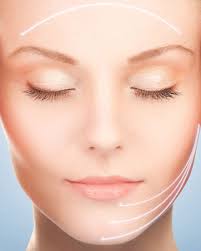
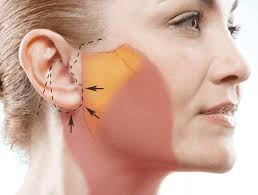
The platysma muscle, a thin muscular sheet, runs from the collarbones up to the lower face without interruption. The tissues it supports descend as one, which is why jowls and neck laxity appear together. Treating one area without the other therefore leaves a break at the jawline. That is why modern surgery addresses both areas in the same operation, with a continuity that neck surgery alone does not achieve.
The Finding That Changes How This Subject Reads
A study of deep cervicoplasty measured the volumes removed precisely. The mean total reaches twenty-two point three cubic centimetres, and the portion sitting beneath the platysma muscle represents seventy-three percent of it. In other words, less than a third of what gives a neck its thickness sits above the muscle. That proportion explains why superficial approaches reach their limit, and why work beneath the platysma has become central.
The Six Deep Structures That Count
The same literature identifies precisely what produces fullness under the chin. Fat lying beneath the platysma comes first, reduced in ninety-six percent of patients in the series cited. Then come the submandibular gland, addressed in seventy-six percent of patients, the anterior belly of the digastric muscle in seventy percent, then fat between the heads of the sternocleidomastoid, the position of the hyoid bone and the tail of the parotid.
Comparing What Each Approach Reaches
The table shows why the depth of the work changes everything.
| Structure | Share of the volume | Reached by superficial work |
|---|---|---|
| Fat above the platysma | About a quarter | Yes |
| Fat beneath the platysma | The majority | No |
| Submandibular gland | Variable, often notable | No |
| Anterior belly of the digastric | Modest but decisive | No |
| Position of the hyoid bone | Determines the neck angle | No |
| Platysmal bands | Visible contour | No |
The right-hand column explains why results vary so much on this area. Superficial fat suction addresses what it can reach, while the greater part of what gives a neck its thickness sits deeper down.
What the Deep Plane Brings Here
The deep plane technique repositions the deep planes vertically, along the exact axis of the tissues' descent, after releasing the ligaments that were holding them. It never pulls on the skin, which gives a natural result and entirely free expressions. On the neck, this approach carries a further advantage: it moves a composite block in which the skin stays attached to the fat and the muscle, so the skin is barely undermined at all. Recovery is markedly faster as a result.
How Long the Result Lasts
A study published in 2026 followed people operated on by deep plane technique. The average interval before a revision was even considered approaches eleven years, and some kept their result for as long as thirty. That same work reports ninety-four point four percent documented satisfaction within the first year. A traditional lift, tightening a superficial layer, sits between three and seven years according to the publications.
Comparing the Two Techniques on This Operation
| Criterion | Deep plane | Traditional lift |
|---|---|---|
| Working plane | Beneath the SMAS and platysma | Skin and superficial layer |
| Direction of movement | Vertical, axis of descent | Lateral, toward the ear |
| Skin undermining | Almost none | Extensive |
| Speed of recovery | Markedly faster | Longer |
| Continuity of face and neck | Complete | Transition sometimes visible |
| Look of the result | Natural, no skin tension | Depends on the pull |
| How long the result lasts | More than fifteen years | Three to seven years |
The recovery row deserves an anatomical explanation. Because the deep plane leaves the skin attached to the deep planes, the dead space beneath it stays minimal and swelling resolves far faster than after extensive skin undermining.
The Anatomy of the Neck, Layer by Layer
Understanding the six layers of the neck explains within minutes why some operations transform this area and others merely skim it. Skin comes first, then a layer of superficial fat. Next comes the platysma muscle, the thin sheet running from the collarbones up to the lower face. Beneath that muscle lies deep fat, then the digastric muscles, the submandibular gland and finally the hyoid bone. That deep level determines the neck angle, and it stays out of reach of any superficial work.
The Platysma, the Hinge Muscle
It forms a continuous sling between neck and face, which is why both areas age together. Its two halves meet along the midline in most people, then separate progressively over the years. That separation lets two vertical bands appear, which platysmaplasty closes. The muscle also loosens laterally, letting the jawline descend and forming the jowls.
The Cervicomental Angle
This is the angle between the underside of the chin and the vertical line of the neck. A crisp, well-defined angle reads as a youthful neck, and its sharpness depends directly on the deep structures rather than on the skin. Four elements determine it: the position of the hyoid bone, the volume of the anterior belly of the digastric, the amount of fat beneath the platysma and the position of the submandibular gland. None is reached by superficial work.
Comparing the Layers and What Addresses Them
| Layer | What it produces | Corresponding step |
|---|---|---|
| Skin | Suppleness of the contour | Redraping without tension |
| Superficial fat | About a quarter of the volume | Suction as a finishing step |
| Platysma muscle | Vertical bands, jowls | Platysmaplasty and repositioning |
| Subplatysmal fat | The greater share of volume | Resection under visual control |
| Digastric muscle | Thickness under the chin | Reduction or plication |
| Submandibular gland | Fullness under the jaw | Partial reduction |
| Hyoid bone | Depth of the cervical angle | Repositioning by plication |
The last four rows correspond to the structures only a deep approach reaches. They represent the greater part of the volume and determine how crisp the angle becomes, which explains the central place of work beneath the platysma.
Why the Hyoid Bone Matters
This horseshoe-shaped bone, sitting at the base of the tongue, is attached to no other bone. Its position determines the depth of the neck angle, and it tends to descend over the years. Publications describe plicating the digastric muscles to reposition it higher. That technique was used in a third of patients in the series cited, and it deepens the cervicomental angle in a way no other step achieves.
What You Can Observe at Home
Stand in profile before a mirror, chin parallel to the floor. Look at the angle between the underside of your chin and your neck: is it crisp, softened, or lightly defined? Then clench your teeth and tense your neck as if grimacing. If two vertical bands appear, your platysma has separated along the midline, which points toward platysmaplasty. That simple observation is worth bringing to a consultation.
The Neck Procedures in Detail, and What Each Brings
Neck work brings together several distinct steps, chosen according to what the examination finds. Here is each of them and its effect.
Corset Platysmaplasty
The platysma muscle often separates along the midline over the years, letting two vertical bands appear. Platysmaplasty rejoins its two edges with a continuous suture, recreating a taut muscular sling from one jaw to the other. This technique, whose principles were described as early as 1928, has been considerably refined since. Recent publications describe several suture patterns, purse-string, crisscross or in successive layers, each improving how well the result holds.
Lateral Platysma Repositioning
Beyond the midline closure, the muscle is also repositioned backward and secured, which redraws the jawline. Publications describe this combination as providing both structural support and mandibular definition. It is the pairing of both steps, midline and lateral, that produces the most complete effect. Addressing only the midline leaves the muscle free at its sides, whereas the combination closes the sling along its whole length.
Addressing the Deep Fat
Fat lying beneath the platysma represents the greatest share of the volume removed during a deep cervicoplasty. It is addressed under direct visual control, which sets it clearly apart from blind suction. The series cited reports a reduction in this fat in ninety-six percent of patients, with a mean volume of seven cubic centimetres. It is the step most consistently performed during deep neck work.
The Submandibular Gland
This salivary gland, sitting under the jaw, descends over the years and creates a fullness nothing superficial corrects. Its partial reduction is among the documented steps of deep work. It was addressed in seventy-six percent of patients in the series cited, with a mean volume of six and a half cubic centimetres. It is a delicate step calling for a team accustomed to this depth.
The Digastric Muscle
The anterior belly of this muscle, running beneath the chin, contributes directly to the neck angle. Its partial reduction or plication refines the submental area in a way no other step reproduces. The series reports it addressed in seventy percent of patients, with a mean volume of one point eight cubic centimetres. In a third of them, these muscles were also plicated to reposition the hyoid bone and deepen the cervical angle.
Comparing the Steps and Their Effect
| Step | What it addresses | Visible effect |
|---|---|---|
| Corset platysmaplasty | Midline separation of the muscle | Vertical bands smoothed |
| Lateral repositioning | Laxity of the sling | Jawline redrawn |
| Fat beneath the platysma | The greater share of volume | Neck markedly refined |
| Submandibular gland | Fullness under the jaw | Clean mandibular contour |
| Belly of the digastric | Thickness under the chin | Cervical angle deepened |
| Plication and hyoid | Position of the hyoid bone | Cervicomental angle defined |
| Superficial fat | The upper quarter of the volume | Finishing the contour |
The last row puts superficial fat in its proper place. It is addressed as a finishing step, after the deep work, and represents about a quarter of the total volume according to the published measurements.
The Submental Incision
Access to the deep neck goes through a short incision placed under the chin, in a natural crease, measuring two to three centimetres. It allows direct vision of every structure described above. That incision combines with those of the lift, sitting in front of and behind the ear then into the hairline. Together they leave scars hidden in creases and hair-bearing areas, very hard to find once mature.
The Length of the Operation
Allow four to six hours for a complete deep plane face and neck lift, depending on how many deep structures are addressed. It is a long operation, and that duration reflects the precision of the work carried out. That extra time is the surgeon's, not yours. Recovery from a deep plane stays markedly faster than from a traditional lift, the skin being barely undermined at all.
Choosing Your Surgeon
On this operation, the real depth of the work determines everything. Many practitioners perform a facelift. Considerably fewer address the six deep neck structures described in the literature, which calls for dissection beneath the platysma and particular ease in that area. The question to ask is therefore precise: do you address the fat beneath the platysma, the submandibular gland and the belly of the digastric? A surgeon who names those three structures is describing work he genuinely performs.
The Questions That Sort Best
How many deep plane face and neck lifts do you perform each year? This technique calls for regular practice, and a practitioner who tracks that figure will give it without hesitating. Then: in which direction do you reposition the tissues? The expected answer is vertical, along the axis of their descent. A lateral pull toward the ear describes the traditional technique, whatever name is used.
What a Portfolio Must Show
Profile and three-quarter views, the angles at which the cervicomental angle genuinely reads. A front view shows almost nothing of the work carried out on the neck. Look also for results at five years, the strength of the deep plane lying precisely in its duration. Images at three months show a healing phase rather than a settled result.
What Each Criterion Tells You
| Criterion | What it indicates | Reliability |
|---|---|---|
| The six deep structures named | Genuinely deep work | Very high |
| Annual number of deep plane neck lifts | Regular practice of the technique | Very high |
| Vertical direction explained | Understanding of the mechanism | Very high |
| Results shown at five years | The durability that distinguishes | Very high |
| Profile and three-quarter views | The neck angle genuinely visible | High |
| Corset platysmaplasty described | Complete treatment of the sling | High |
| Superficial suction offered alone | A quarter of the volume reached | Low |
The last row rests on the published measurements. Superficial suction addresses about a quarter of the volume giving a neck its thickness, which explains the difference in result from deep work.
Reaching This Operation From Canada
Here is how availability looks, English-speaking region by region, alongside how each city reaches Istanbul.
Toronto, the GTA and Mississauga
The region has capable facial surgeons, and deep neck work is performed by a limited number of them. The question of the six structures therefore matters from the moment you book. Toronto Pearson links Istanbul without a stopover. Allow ten to fourteen nights on site and around three weeks before the return flight. A free quote compares both figures, the Turkish one often sitting up to around 70 percent lower.
Vancouver, Surrey and Victoria
Facelift surgery is available on the West Coast, while deep cervicoplasty remains scarcer. It is a matter of volume: this technique is maintained through regular practice that few population catchments allow. The flight from Vancouver is long. English matters for the recovery instructions, particularly regarding the support dressing worn over the first days.
Calgary and Edmonton
Alberta has facelift surgeons without that guaranteeing deep neck practice. Ask directly about the structures addressed; that question sorts very effectively. Both cities reach Istanbul through a European hub. Have the deep structures planned specified in the quote, which lets you compare operations rather than names.
Ottawa and Eastern Ontario
The region gives access to a reasonable number of practitioners without deep cervicoplasty being widespread among them. The central question stays which structures will be addressed. Ottawa International connects to Istanbul. Ask for your recovery instructions in writing, and note that the deep plane brings you back to normal appearance faster than a traditional lift would.
Winnipeg, Regina and Saskatoon
Across the Prairies, reaching a surgeon who performs deep neck work regularly means travelling to a larger centre. Travel therefore enters the calculation whatever you decide. From Winnipeg or Regina, reaching Istanbul takes a connection. Since you are travelling either way, compare the depth of the work offered rather than the distance covered.
Halifax, Moncton and St. John's
In Atlantic Canada facelift surgery is performed and deep cervicoplasty rarely so. Travel is a given, which reduces the decision to choosing the team. Halifax connects onward in one stop. The rest comes down to arrangements: who meets you, where you stay for two weeks, and how the first-year photographic checks are handled.
Canadian Cities Against Istanbul
| City / region | Airport | Access to Istanbul | Availability and cost |
|---|---|---|---|
| Toronto, GTA, Mississauga | YYZ | Direct links | Limited practitioners; package often up to around 70 percent less |
| Vancouver, Surrey, Victoria | YVR | With connection | Facelift yes, deep cervicoplasty scarcer |
| Calgary / Edmonton | YYC / YEG | Via Europe | Available, depth to verify |
| Ottawa | YOW | With connection | Not widespread among practitioners |
| Winnipeg, Regina, Saskatoon | YWG | With connection | Travel a given |
| Halifax, Moncton, St. John's | YHZ | With connection | Technique rarely performed locally |
The right-hand column reveals a constant reality: deep cervicoplasty calls for regular practice, and that regularity presupposes a volume few Canadian catchments allow. That is what explains so many journeys on this operation.
Comparing the Destinations Canadians Choose
A search in English will lead you toward Mexico, the Dominican Republic, Colombia, Costa Rica and Thailand. The grid that follows compares working methods, and it applies equally to two surgeons in the same city.
| Value criterion | Turkey / Istanbul (Aylan) | Mexico | Dominican Rep. | Colombia / Costa Rica / Thailand |
|---|---|---|---|---|
| Annual deep plane neck lift volume | High | Variable | Variable | Variable |
| Six deep structures addressed | Systematic | To verify | To verify | To verify |
| Results available at five years | Ask everywhere | To check | To check | To check |
| Direct with the clinic | Yes, no middleman | Often via agency | Often via agency | Often via agency |
| Cost vs private Canadian care | Often up to around 70 percent less | Often lower | Often lower | Often lower |
The second row is the one to put everywhere, including here. A surgeon who names precisely the structures he addresses is describing an operation he performs; one who stays general is describing an operation he has heard about.
Istanbul, Ankara, Izmir and Antalya
Istanbul concentrates teams performing deep plane face and neck lifts routinely, with the annual volume that command requires. That regularity accounts for the results seen there on this demanding operation. Excellent practitioners also work in Ankara, Izmir and Antalya, with additional connections from Canada. The deciding criterion remains the annual number and the real depth of the work.
Preparing Your Operation and Organizing Your Stay
This is among the most extensive facial operations, and its preparation calls for more attention than most.
Three Months Ahead
First contact, sending your photographs and discussing which structures you would like addressed. This is when the plan takes shape, separating the deep neck work from the steps on the lower face. It is also when to stop smoking. On an operation that lifts tissues and calls on their blood supply, that measure directly improves the comfort of your recovery.
One Month Ahead
A full preoperative work-up in Canada, more extensive than for an isolated procedure given the operating time. Results go to the team, who validate them, and the anaesthetist reviews your file remotely. Two weeks ahead, blood thinners stop on medical advice, including fish oil, turmeric and vitamin E. On an operation of this extent, that precaution markedly improves the first week.
The Photographs to Send
| View | What it reveals |
|---|---|
| Right and left profile, chin parallel to the floor | Cervicomental angle |
| Profile, head slightly raised | Real thickness under the chin |
| Front, face relaxed | Jowls and jawline |
| Front, neck tensed | Vertical platysmal bands |
| Right and left three-quarter | Transition between face and neck |
The fourth view is the one surgeons request most and patients send least. Tensing the neck as if grimacing reveals the platysmal bands, invisible at rest, and determines whether platysmaplasty is indicated.
What to Pack
Button-front tops, essential when a dressing wraps around the neck and jaw. Pillows for sleeping with the head raised, and cold packs if your accommodation does not supply them. Bring loose clothing around the collar as well, and something to occupy the quieter days. This operation calls for more rest than the lighter facial steps.
The Day Before
The surgeon examines your neck standing and lying down, palpates the submandibular gland, assesses the position of the hyoid bone and has you tense the platysma to locate the bands. This is also when he confirms which deep structures will be addressed. Ask him to name them: the subplatysmal fat, the gland, the digastric. A surgeon who answers precisely is describing work he commands.
How Your Stay Unfolds
| Day | What happens |
|---|---|
| Arrival | Airport welcome, transfer, rest |
| Day 1 | Consultation, examination standing and lying, plan confirmed |
| Day 2 | Surgery, one night of monitoring |
| Days 3 to 5 | Rest, support dressing, swelling peaks on day three |
| Days 6 to 8 | Drains and dressing removed, first outings |
| Days 9 to 12 | Sutures removed, check-up, instructions |
| Departure | Flight to Canada at around three weeks |
This ten to fourteen night stay matches the extent of the work carried out. The deep plane markedly speeds recovery once you are home, the skin having barely been undermined.
The First Days in Practice
A support dressing wraps the neck and jaw for the first days, holding the tissues while the muscular sling heals. Sleeping with the head raised and applying cold speeds up comfort. Soft food is recommended for the first week, movements of the neck and jaw being best kept gentle. These instructions are simple and following them shows directly in the quality of your first week.
The Result Calendar
| Milestone | What you see | What is happening |
|---|---|---|
| Days 1 to 5 | Swelling and dressing | Peak on day three then receding |
| Weeks 2 to 4 | Contour emerging | Swelling clearly receding |
| Weeks 6 to 8 | Shape readable | Tissues settling back in |
| Months 3 to 6 | Crisp neck angle | Result close to final |
| Months 6 to 12 | Result established | Full stabilization |
| Beyond | Durable hold | More than fifteen years with deep plane |
Swelling recedes faster here than after a traditional lift, the skin staying attached to the deep planes. It is one of the most concrete advantages of this technique for anyone wanting to be seen in public sooner.
Follow-Up From Canada
It runs on photographs reproducing exactly the same views as before surgery, particularly the profiles with the chin parallel to the floor, generally at one, three, six and twelve months. Reproduce the profile view in the same head position without fail. On an operation whose result reads at the neck angle, a difference of a few degrees in tilt is enough to distort the comparison completely.
The Misconceptions About Face and Neck Lifts
This operation carries approximations that often come from unfamiliarity with the deep anatomy. Here are the commonest, clarified against the published measurements.
Misconception: Liposuction Is Enough to Refine the Neck
Published measurements place seventy-three percent of the volume removed beneath the platysma muscle. Superficial suction therefore reaches about a quarter of what gives a neck its thickness. That is a measured figure rather than an opinion, and it explains why results vary so much between approaches. Deep work is what allows the neck angle to be genuinely redrawn.
Misconception: The Neck Can Be Treated Independently of the Face
The platysma runs from the collarbones to the lower face without interruption, so the tissues descend as one along that sling. Treating the neck alone therefore leaves the jowls in place and creates a visible break at the jawline. That anatomical continuity is what justifies the combined operation.
Misconception: The Deep Plane Calls for a Longer Recovery
It is the reverse, and for a precise anatomical reason. The deep plane moves a composite block in which the skin stays attached to the fat and the muscle, so it is barely undermined at all. Its blood supply stays intact, the dead space beneath the skin is minimal, and swelling and bruising resolve far faster than after the extensive skin undermining of a traditional lift. The extra time is the surgeon's, not yours.
Misconception: All Facelifts Give the Same Result
The difference happens entirely beneath the skin. The deep plane repositions the deep planes vertically, along the exact axis of the descent, after releasing the ligaments that were holding them. A traditional lift tightens a superficial layer with a lateral pull toward the ear. That direction does not match the descent, which explains the difference in appearance and in duration between the two techniques.
Comparing Beliefs Against the Measurements
| What you hear | What is actually the case |
|---|---|
| Liposuction is enough | It reaches about a quarter of the volume |
| The neck can be treated alone | The platysma links neck and face without interruption |
| The deep plane recovers more slowly | The reverse, the skin is barely undermined |
| All facelifts are equivalent | Vertical against lateral, fifteen years against three to seven |
| Neck bands always come back | Platysmaplasty closes the sling durably |
| The result looks pulled | The deep plane applies no tension to the skin |
| It is only for women | Published series include nearly half men |
The last row is worth noting. A recent series of one hundred and seventy-seven people who had neck surgery included seventy-eight men against ninety-nine women, which reflects a well-established male demand.

Misconception: It Is Better to Wait Until Laxity Is Marked
The published data points the other way. A 2026 study shows that people operated on at fifty-three or earlier keep their deep plane result twelve and a half years on average, against nine and a half beyond that age. Acting while the tissues retain their quality therefore gives a result that lasts longer. Waiting does not make the operation more worthwhile; it simply shortens how long the result you obtain will last.
Misconception: Men Do Not Have This Operation
Male demand is well established and recent series confirm it. Work covering one hundred and seventy-seven people included seventy-eight men, with a mean age of fifty-nine. Treatment differs slightly in men, the skin being thicker and facial hair altering the placement of incisions. A surgeon accustomed to male patients adjusts those parameters, which counts toward how natural the result looks.
What Comes From the Operation and What Comes From You
| What you want | Comes from the operation | Comes from you |
|---|---|---|
| A redrawn neck angle | Yes, through the deep work | No |
| Vertical bands smoothed | Yes, through platysmaplasty | No |
| A defined jawline | Yes, through repositioning | Stable weight |
| Continuity of face and neck | Yes, through the combined approach | No |
| Skin quality | No, a separate treatment | A great deal: sun, skincare |
| How long the result lasts | More than fifteen years with deep plane | Stable weight, lifestyle |
The second-to-last row deserves a note. A lift repositions the structures without altering skin texture, which is why many people pair it with nanofat or fat grafting in the same session.
The Vocabulary, and How to Decide
This glossary lets you follow a consultation and express your request in the terms your surgeon uses. The platysma is the thin muscular sheet running from the collarbones up to the lower face; its midline separation produces the vertical bands, its lateral laxity the jowls. Corset platysmaplasty means rejoining the two edges of the muscle along the midline with a continuous suture, recreating a sling taut from one jaw to the other. Subplatysmal fat is the fat sitting beneath the muscle; it represents the greater share of the volume removed during deep work and stays out of reach of any superficial suction. The digastric muscle runs beneath the chin, its anterior belly contributing directly to the neck angle. The hyoid bone, horseshoe-shaped, is attached to no other bone; its position determines the depth of the cervical angle. The cervicomental angle is the angle between the underside of the chin and the line of the neck. Deep cervicoplasty covers all the steps performed beneath the platysma, under direct visual control, through a short submental incision.
The Terms That Cause Confusion
| Term | Not to be confused with | The difference |
|---|---|---|
| Deep cervicoplasty | Neck liposuction | Beneath the muscle, versus above it |
| Face and neck lift | Neck lift alone | Face and neck, versus neck only |
| Deep plane | Traditional lift | Vertical beneath the SMAS, versus lateral at the surface |
| Platysmal bands | Loose skin | A separated muscle, versus excess skin |
The last pair explains some poorly set expectations. The vertical bands come from separation of the muscle and are corrected by closing it, not by removing skin.
The Decision Summary
| The question | The short answer |
|---|---|
| What the operation addresses | The lower face and the neck together |
| Share of volume beneath the platysma | Seventy-three percent |
| Deep structures involved | Fat, gland, digastric, hyoid |
| Technique to favour | Deep plane, vertical and without tension |
| Speed of recovery | Markedly faster than a traditional lift |
| How long the result lasts | More than fifteen years with deep plane |
| Traditional lift | Three to seven years |
| Operation length | Four to six hours |
| Stay in Turkey | Ten to fourteen nights |
| Flight home to Canada | Around three weeks |
| Result settled | Six to twelve months |
| Gap vs private Canadian care | Often up to around 70 percent |
The rows on volume and structures alone are enough to prepare your consultation. Arriving knowing that most of the volume sits beneath the muscle lets you ask the one question that genuinely separates the proposals.
Three Checks Before You Commit
First: does the surgeon address the subplatysmal fat, the submandibular gland and the digastric? Second: in which direction does he reposition the tissues? Third: can he show results at five years, in profile views? On an operation whose strength is duration, that is the only milestone proving what it delivers.
In Summary: Working Beneath the Muscle for a Natural, Lasting Result
This operation happens beneath the muscle, where three quarters of what gives a neck its thickness sits. That depth, combined with the vertical repositioning of the deep plane, is what produces a natural and lasting result. The team at Aylan Clinic accompanies you in English at every stage, from reading your profiles through to the first-year check, with a plan that names precisely each structure addressed.
To go further, read our Face & Neck Lift in Turkey procedure page for how the operation is carried out, and see our pricing in Turkey or request a free, no-obligation quote built on your own case. You can also explore the wider range of facial surgery in Turkey.