A hairline and temple transplant rebuilds or lowers the front edge of your hair and restores receded temples, moving follicular units from the permanent donor zone at the back of your scalp to recreate a natural front. The honest heart of it is this: the procedure is won or lost in the first one to two centimetres, where artistry matters more than graft count. A natural hairline is never a straight line; it is a soft, irregular transition of fine single hairs at the very front, thickening gradually behind, with age-appropriate temple angles that frame the face. The single biggest mistake is placing a hairline too low or too straight, which looks obviously transplanted and wastes precious donor hair. A good surgeon designs your hairline for how you will look at fifty, not just today.
This guide complements our Hairline & Temple Transplant in Turkey procedure page, which covers exactly how the operation is performed, the stay and the aftercare. Here we go deeper into design, temple restoration, candidacy, cost and how to choose a surgeon. It sits within our wider hair transplant in Turkey section, and at any point you can compare figures on our pricing in Turkey page. Patients consistently find Turkish packages run up to roughly 60% cheaper than equivalent Western clinics, with the surgeon-led design included rather than billed as a costly extra.
What a Hairline and Temple Transplant Actually Involves
It rebuilds the frontal edge of your hair and restores the temple points that frame your face, moving follicular units from your permanent donor zone to recreate a natural front. Because the hairline is the most visible part of any restoration, this procedure is as much about artistic design as surgical skill, which is exactly why it deserves its own careful conversation.
Why is the hairline considered the hardest part to get right? Because the front one to two centimetres are what everyone sees, and the eye instantly spots anything unnatural there. Get the angles, irregularity and density gradient right and the whole result reads as real; get them wrong and no amount of density elsewhere can rescue it. That is why the hairline is where a transplant is truly won or lost.
Why Hairline Design Is an Art, Not Just Surgery
A natural hairline is not a measurement you can copy-paste; it is a bespoke design balancing your face shape, age, hair characteristics and how you will age. It needs subtle irregularity, a soft transition zone and temple angles that suit your features. This blend of anatomy and artistry is why the best results come from a surgeon with a genuine aesthetic eye, not a template. A hairline that suits one face looks wrong on another, so an experienced surgeon draws a bespoke line rather than repeating a favourite pattern.
The Three Zones of a Natural Hairline
A natural hairline is built in three graded zones, and this gradient is what makes it seem to emerge from the forehead rather than start as an abrupt wall of hair.
| Zone | Grafts used | Purpose |
|---|---|---|
| Transition zone (front 0.5–1 cm) | Fine single-hair grafts only | A soft, wispy, irregular leading edge |
| Defined zone (just behind) | Two-hair grafts | Builds the shape of the hairline |
| Density zone (further back) | Three and four-hair grafts | Creates fullness and depth |
The transition zone does the heavy lifting of naturalness because it is what the eye reads first. Nature starts a hairline with fine, single hairs, never a thick wall, so placing two or three-hair grafts at the leading edge, as poor work does, creates an abrupt, pluggy line the eye instantly rejects. This is one of the simplest yet most important rules of natural hairline design.
Why the Temple Points Matter So Much
The temporal points frame your face and quietly signal youth; when they recede, you look older even if the rest of your hair is fine. Rebuilding them at the right subtle angle restores that frame and rejuvenates the whole face. But temples are delicate work, since the wrong angle or too much density there looks instantly artificial, so they demand real skill. Well-designed temples complete the frame the hairline begins, while temples that are too full look feminine on men or artificial on anyone, and absent temples leave the face looking incomplete. The frontotemporal angle, where the front hairline meets the temple, is a subtle but crucial detail; getting it wrong throws off the whole frame of the face.
Hairline and Temple Transplant Turkey Cost
Turkish clinics price as flat all-inclusive packages rather than per graft, and because hairline and temple work is often a smaller, focused procedure, it sits comfortably within standard packages. Patients consistently find these run up to roughly 60% cheaper than equivalent Western clinics, where the artistic hairline design alone can carry a hefty separate fee.
Why is hairline work so much more affordable in Turkey? Lower operating costs, a favourable exchange rate and intense competition drive prices down without necessarily cutting quality. Turkish clinics perform enormous volumes of hairline work, so you are paying accessible prices for surgeons who design frontal hairlines daily, rather than the premium Western clinics charge for the same artistry. Compare full figures on our pricing in Turkey page.
Comparing Hairline Transplant Costs: West vs Turkey
The honest comparison favours Turkey, particularly since hairline design is charged as a costly add-on in many Western clinics.
| Factor | Private West | Turkey with Aylan Clinic |
|---|---|---|
| Pricing model | Per graft plus design fee | Flat all-inclusive package |
| Hairline design | Often a separate charge | Included, surgeon-led |
| Consultation | Often paid | Free photo assessment |
| Package inclusions | Surgery only | Hotel, transfers, aftercare |
| Public/insurance coverage | Not covered (cosmetic) | Not covered (cosmetic) |
Finding the Best Hairline Transplant Clinic for You
Skip any clinic branding itself the best clinic outright and focus on what predicts a natural hairline: a surgeon who personally designs the frontal line, who talks about age-appropriate placement and irregularity, and who shows honest one-year results. A clinic promising the lowest possible hairline is chasing what patients want to hear, not what looks natural for life.
A good clinic has the surgeon design your hairline by hand, considering your face, age and future loss, and refuses to place it unnaturally low. A poor one lets technicians draw a straight, aggressive line to impress you now, producing a result that looks transplanted within years. The difference is artistry and honesty, and it defines your outcome.
Searching "Near Me" and "Close to Me" Wisely
Searching near me helps you understand local pricing and who is available, but limiting yourself to only what is near me often means paying far more for the same artistic work. When you search near me, compare who actually designs the hairline, whether it is the surgeon or a technician, their portfolio of natural results, the pricing model and honest reviews. A clinic near me is not automatically more artistic simply for being close, and hairline work lives or dies on that artistry.
For a tiny refinement, a clinic close to me might do. But the hairline frames your whole face for decades, so the design experience and savings in Turkey often outweigh the convenience of staying close to me. When artistry is everything, choosing the more skilled surgeon usually matters more than choosing the nearer one. Proximity does not guarantee artistic skill, and many patients find no local option matches the design experience and value available in Turkey.
Reviews, Before and After Photos: What to Look For
Useful reviews show natural, undetectable hairlines a year or more out, ideally on patients of a similar age and hair type. Look for mentions of the surgeon personally designing the hairline and honest talk about age-appropriate placement. Be wary of raves showing suspiciously low, straight, freshly-cut hairlines, which often age badly. Read across several independent platforms rather than a clinic's own gallery, and seek patients whose starting hairline and age resemble yours.
Honest before and after photos show a natural, soft, irregular hairline at least eight to twelve months out, once the fine front hairs have grown in, ideally on someone your age. Be cautious of same-day photos showing a dense, straight line, since that shows freshly placed grafts, not the natural, feathered result that takes months to emerge. Watch for fake reviews too: floods of identical raves, same-day photos of dense low lines passed off as results, and vague reviews with no mention of the surgeon or design. Video testimonials add real authenticity, since a patient showing their grown-in hairline on camera from different angles a year out is harder to fake than a single flattering still.

The Art and Science of Hairline Design
A surgeon designs a natural hairline by balancing mathematics and artistry, using facial landmarks, the glabella, mid-frontal point and temporal peaks, to place a line that suits your face, then hand-drawing natural irregularity into it. Facial thirds and proportion guide the height, while an artistic eye adds the soft, uneven front edge that keeps it from looking engineered. Neither science nor art alone produces a believable hairline.
Surgeons anchor the design to fixed landmarks like the glabella, the smooth area between the eyebrows, and the lateral canthus, because these stay constant even as hair recedes. Measuring from them ensures the hairline sits at a natural height and the temples align correctly, giving the design an objective foundation beneath the artistry. A hairline set to make the upper third roughly proportional to the others looks harmonious, while one dropped too low to shrink the forehead throws the balance off.
Why Micro and Macro Irregularity Matter
Real hairlines have two kinds of irregularity. Macro-irregularity is the gentle waves that follow your forehead's curve, while micro-irregularity is the tiny random scatter of single hairs and small clusters at the very front. Together they create what surgeons call organised chaos, a line that reads as clean from a distance but reveals natural randomness up close. A perfectly straight or uniformly zig-zag hairline looks engineered, like a wig or a saw blade, because nature never draws a ruler-straight line, which is why skilled surgeons deliberately break up the front edge with irregular, staggered placement.
The Importance of Correct Hair Angles
Hair does not grow straight up; it emerges at a shallow forward angle that shifts across the scalp, and along the hairline this angle is especially acute. Placing grafts at the wrong angle makes them stick up or point oddly, instantly signalling a transplant. Matching each graft to your natural growth direction is one of the most demanding parts of hairline artistry. The angle and direction of each recipient site, the tiny incision a graft sits in, determine how the hair grows out, and along the hairline these must be shallow and forward-flowing to look natural.
Designing an Age-Appropriate Hairline
A hairline that looks good at twenty-five can look absurd at forty-five if it ignores aging. A youthful line sits low with sharp temples, while a mature line sits slightly higher with softer temple recession. Good surgeons design for your current age plus roughly ten years, so the result still suits your face as you continue to age naturally. A line placed too low for a young face looks increasingly odd as the surrounding hair recedes, which is why the conservative, mature design is the one that genuinely ages gracefully.
Younger patients often push for the lowest possible line, but their hair loss usually has years to progress. A surgeon who places a low, dense hairline on a twenty-five-year-old can strand them later, with a juvenile line above advancing baldness and no donor left to fix it. A slightly conservative, mature line protects both their appearance and their future options.
Male and Female Hairlines Differ
Male hairlines naturally feature some temporal recession, forming a gentle M-shape rather than a flat line across the forehead. Filling those recessions completely creates a juvenile, feminine look that reads as transplanted. A skilled surgeon recreates age-appropriate temple angles and a natural degree of recession, restoring strength and framing without erasing the maturity a male face should have.
Women typically have a rounder, lower, fuller hairline without the temporal recession men develop. Female hairline work often aims to lower a high forehead, fill thinning temples softly, or restore density along an existing line, with the goal of framing the face gently rather than rebuilding a receded pattern. Because women usually keep their hair long, techniques that avoid shaving the whole head are often preferred, making discreet recovery easier. The design principles differ meaningfully from male work.
Which Technique Suits Hairline Work Best
DHI, using an implanter pen, gives exceptional control over the angle, direction and depth of each graft, which is prized for the precise, dense placement a natural hairline needs. Sapphire FUE creates fine recipient sites that heal neatly and allow close, natural placement too. Many clinics use DHI or a hybrid at the hairline specifically for that fine control.
Does the technique matter more than the surgeon? No. However good the tool, the design and placement decisions rest with the surgeon, so their artistic judgment matters far more than whether they use DHI or Sapphire FUE. A brilliant surgeon produces a natural hairline with either method, while an unskilled one produces an obvious result regardless of the technology on offer.
Hairline Lowering Surgery Versus a Transplant
They suit different people. Hairline lowering is a surgical procedure that physically advances your existing hairline forward, which can suit patients with a naturally high forehead, good density, good scalp laxity and no significant recession, giving instant fullness but leaving a fine scar. A transplant rebuilds the hairline with grafts, suiting recession or thinning. Hairline lowering is not right for those with active recession or thinning, since advancing a hairline that will keep receding makes little sense, which is exactly why an honest assessment comes first. An honest surgeon helps you weigh which fits your anatomy.
What Actually Happens During Hairline and Temple Work
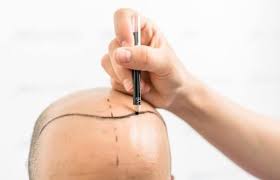
The day begins with the surgeon hand-designing your hairline and getting your approval, the most important step of all. Local anaesthetic then numbs the scalp, grafts are extracted from the donor area, sorted by hair count under magnification, and placed one by one along the designed line and temples at precise angles. A focused hairline session often runs three to six hours. You are awake throughout, comfortable after the numbing, and can listen to music or chat. Because hairline work is detailed rather than huge in volume, the day is often shorter than a full-scalp transplant.
Before a single graft is placed, you should see and approve the drawn hairline on your own forehead, because once grafts go in, the shape is permanent. A good surgeon takes time here, explaining the height and shape and adjusting to your wishes within what looks natural. A clinic that rushes or skips this step is skipping the most important moment of the whole procedure.
Candidacy: Who Suits Hairline Work
A surgeon assesses your donor supply, the stability of your loss, your hair calibre and curl, your forehead height and face shape, and your expectations. Hairline work needs enough quality donor hair to build a natural front without depleting reserves, and realistic goals about height. The best candidate has good donor density, stable loss, realistic expectations about a natural age-appropriate line, and clear reasons for wanting the work, whether recession, a high forehead or thinning temples.
People with very limited donor supply, rapidly advancing loss, or fixed expectations of an aggressively low line are poor candidates for ambitious hairline work. That does not mean no procedure; it means a more conservative, sustainable design. An honest surgeon would rather place a natural line you will love for decades than a low one you will regret in years.
Aftercare Following Hairline and Temple Work
The essentials mirror any transplant, with extra care for the highly visible front: sleep elevated for the first nights, avoid touching or knocking the hairline, follow the gentle washing routine exactly, skip strenuous exercise and sweating for around two weeks, and protect the delicate new front from sun. Because the hairline is so visible, disciplined aftercare directly protects your result. Light walking is fine within days, but avoid heavy lifting and heavy sweating for around two weeks. Most surgeons advise waiting around four weeks before colouring your hair, since the scalp and delicate front grafts need to heal. Shock loss, where existing hairs near the transplanted area shed briefly, can happen around a thinning hairline and typically regrows within months.
Verifying the Surgeon Designs Your Hairline
Ask directly, and expect a clear answer. In the best clinics the surgeon personally draws the hairline, since the first one to two centimetres define the entire result and require medical and aesthetic expertise a technician is not trained for. If a clinic is vague about who designs the line, or admits technicians do it, that tells you how much they value the most important step. Because the hairline is the single most visible, least forgiving part of any transplant, and designing it well demands judgment about your face, age and future loss that only an experienced surgeon has, who holds the pen matters enormously.
Red Flags and Green Flags When Choosing a Clinic
| Red flags | Green flags |
|---|---|
| Promising the lowest possible hairline to please you | Surgeon personally designs and approves the hairline with you |
| Technicians, not the surgeon, designing the line | Talks about age-appropriate height and natural irregularity |
| Portfolios of straight, uniform, aggressively low hairlines | Portfolio of soft, natural, aged results |
| No talk of age-appropriate placement or future loss | Recreates age-suitable temple angles rather than filling them |
| Same-day dense front photos shown as final results | Honest about donor limits and future loss |
| Pressure to book immediately with a discount | Clear, all-inclusive pricing with design included |
| No discussion of natural irregularity or temple design | No pressure, giving you time to decide |
Travel and Visa Considerations
Canadian passport holders can generally enter Turkey for short medical-tourism stays under current arrangements, and the process is usually straightforward. Rules do change occasionally, so confirm the latest official requirements yourself before booking flights. Plan for around three to four days: the procedure itself is a focused session of a few hours, but clinics like to see you the next day for a first wash and check, and a short buffer lets you rest before flying home. It is often a shorter stay than a full-scalp transplant requires. Clinics serving international patients arrange airport pickup, hotel and transfers as part of the package, and provide English-speaking coordinators and staff.
A Realistic Hairline Transplant Timeline
| Stage | What happens |
|---|---|
| Procedure day | Design and approval, then extraction and precise placement |
| Weeks 2–6 | Transplanted hairs shed; scabbing clears; the area looks much as before |
| Around month 3 | New hairs begin emerging along the designed line |
| Months 6–9 | A natural-looking hairline takes real shape |
| Months 10–15 | The fully matured, feathered front softens in; judge the artistry here |
The fine single hairs at the leading edge take time to soften in, so patience rewards you. Take photos of your hairline under the same lighting and angle each month, because the front softens and fills gradually and your memory will undersell the progress. Give it a full twelve to fifteen months before you and your surgeon fairly evaluate the natural, matured result.
Cost, Coverage and Financing
No provincial plan covers a hairline transplant. Public plans treat hairline restoration as elective cosmetic surgery, so you pay entirely out of pocket wherever you have it done. Since you pay the full amount everywhere at home, the only real variables are price and quality, and Turkey delivers surgeon-led hairline design at up to roughly 60% less through flat packages. With no public help, patients fund it through savings, personal financing, or clinic payment plans where offered.
A transparent quote covers the consultation, the surgeon-led hairline design, the procedure itself, anaesthesia, medications, the first wash, follow-up, and usually hotel and transfers. The design should be included, not billed separately as many Western clinics do. Ask whether design, medications, the post-op kit, follow-up and transfers are covered, or cost extra, since some clinics quote a low surgery price then add a separate hairline design fee. Compare what is included, who designs the line, and the naturalness of the clinic's portfolio, not just the headline price.
How Turkey Compares to Other Destinations
Turkey pairs an enormous volume of hairline procedures, giving surgeons deep design experience, with flat pricing that includes the artistic work. Against other destinations, that concentrated design expertise and value generally give it the edge for anyone wanting a natural front.
| Compared to | Why Turkey often wins for hairline work |
|---|---|
| Mexico | Far higher procedure volume and a deeper bench of surgeons designing frontal lines daily |
| Thailand | Concentrated experience and case volume for the specific artistry of hairline and temple design |
| India | More developed hair-tourism machinery, from coordinators to hotels used to international patients |
| Hungary / Poland / Czech Republic | Greater throughput of hairline procedures, refined design experience and lower pricing |
| South Korea | Comparable quality without the premium South Korea charges |
| Costa Rica / Colombia / Malaysia | Deeper design expertise, higher case volumes and flat all-inclusive pricing |
Where Hairline Surgery Happens Across Turkey
Istanbul is the clear hub for artistic hairline surgery, but skilled clinics operate across all five major regions of Turkey.
| Region | Representative cities |
|---|---|
| Marmara | Istanbul, Bursa, Kocaeli, Sakarya, Tekirdag, Yalova, Edirne, Canakkale |
| Aegean | Izmir, Kusadasi, Denizli, Afyonkarahisar |
| Mediterranean | Antalya, Alanya, Mersin, Fethiye, Marmaris |
| Central / East Anatolia | Ankara, Konya, Kayseri, Eskisehir, Gaziantep |
| Black Sea | Samsun, Trabzon |
The Marmara region, centred on Istanbul, holds Turkey's deepest concentration of surgeons who design hairlines daily. The Aegean and Mediterranean coasts pair capable clinics with a relaxed seaside backdrop for recovery, while inland Anatolia offers solid surgical care away from the busy coastal tourist areas.
A Canadian City Reference for Hairline Transplants
Wherever you are, the principles hold: verify who designs your hairline, insist on age-appropriate placement, check natural aged results, and expect artistry over an aggressively low line. Patients right across the country pay premium prices for hairline work at home, often with design billed separately, which is why Turkey's flat packages make natural restoration more accessible.
| Region | Representative cities served |
|---|---|
| Ontario / GTA | Toronto, Ottawa, Hamilton, London, Mississauga, Brampton |
| Ontario (other) | Kitchener, Waterloo, Windsor, Barrie, Kingston, Sudbury |
| British Columbia | Vancouver, Victoria, Surrey, Burnaby, Kelowna |
| Prairies | Calgary, Edmonton, Winnipeg, Regina, Saskatoon |
| Atlantic | Halifax, Saint John, Fredericton, Charlottetown, St. John's |
| Territories | Whitehorse, Yellowknife, Iqaluit |
Hairline Design Across Different Hair Types
Hair calibre, curl and colour contrast all shape the design. Coarse or curly hair achieves fullness with fewer grafts and hides the transition beautifully, while fine, straight, dark hair on pale skin shows every detail and demands especially careful, conservative placement. Curly and wavy hair covers the transition zone more forgivingly, so it can achieve a natural look with fewer grafts, whereas straight hair reveals every detail of the leading edge, demanding more meticulous single-hair work. High contrast between dark hair and pale skin makes the front edge more visible, so it demands especially fine, irregular single-hair work. An experienced surgeon adjusts the design and graft choice to your specific hair type for the most natural result.
Repair and Special Cases
A transplant can often fix a hairline lost to traction alopecia, the hair loss from years of tight ponytails, braids or buns; the key is stopping the tension first and confirming the loss is stable. Older transplants that left hairlines too low, too straight, or with pluggy multi-hair grafts at the front can also be softened by adding fine single hairs, adjusting the shape, and sometimes removing or redistributing bad grafts. Fixing a previous unnatural hairline is harder than a first procedure, because the scalp's blood supply is partly used, scar tissue may be present, and existing bad grafts constrain the design, which is why repair cases especially reward choosing a highly experienced surgeon. A hairline transplant can also reduce a large forehead, either by transplanting grafts to build a lower hairline or, for suitable candidates, by hairline lowering surgery.
Factors That Support Graft Survival
Well-nourished tissue heals and forms new blood vessels better, so a diet with enough protein, iron and key vitamins gives your delicate front-edge grafts the best chance to survive and grow. Chronic stress and poor sleep both slow healing, so managing stress and resting properly supports the revascularization those fine front grafts depend on. Smoking narrows blood vessels and reduces scalp blood supply, which the finely placed hairline grafts rely on to survive, so most surgeons strongly advise cutting back or quitting around surgery. Conditions affecting healing, bleeding or the immune system need honest disclosure, and active scalp conditions like psoriasis, dermatitis or infection should be treated and settled first. Some clinics apply PRP or exosome therapy around the newly placed grafts to support healing; it is an optional add-on rather than a necessity.
Age and Life Stage
There is no single right age, but the design shifts with it. Younger patients in their twenties need conservative, slightly higher lines because their loss will likely progress, and a responsible surgeon may advise medication first while protecting donor supply. By the thirties and forties many patients have a clearer, more stable loss pattern, letting a surgeon design a definitive age-appropriate line with confidence, which makes this a common and well-suited age range. Older patients in their fifties and beyond benefit from a settled loss pattern; a mature, slightly higher hairline with soft temples suits an older face beautifully. What matters more than age is the stability of your loss and realistic expectations about a natural height.
Understanding Guarantees, Accreditation and Success Rates
Some clinics offer graft-survival guarantees, but treat bold aesthetic promises cautiously, since a natural-looking result depends on design judgment that cannot be guaranteed by a percentage. JCI accreditation signals that a facility meets rigorous international standards for safety and quality, a meaningful marker for any procedure involving anaesthesia and precise surgical work. In skilled hands, graft survival for hairline work commonly reaches the nineties as a percentage, but the honest measure of success here is aesthetic as much as biological: a natural, undetectable line. A surgeon can achieve high survival yet still produce an obvious hairline if the design is poor, which is why artistry defines real success.
A Pre-Booking Checklist for Hairline Work
- Confirmed the surgeon personally designs and approves your hairline.
- Verified age-appropriate placement, not an aggressively low line.
- Reviewed a portfolio of natural, aged, irregular results.
- Checked good donor supply and stable loss.
- Read independent reviews showing matured natural hairlines.
- Examined honest before-and-after photos at eight to twelve months.
- Received clear, all-inclusive pricing with design included.
- Discussed natural temples and future loss.
- Set realistic expectations about a natural line, not a teenage one.
Practical Trip Planning
Book flights with a couple of days' buffer after the procedure, confirm the clinic arranges pickup and hotel, pack loose button-up shirts so nothing pulls over your new hairline, bring your medication list, and plan a gentle schedule. Arrive rested and hydrated, avoid alcohol and blood-thinning substances beforehand as advised, and sleep well the night before. Most Turkish clinics offer free initial photo-based consultations for international patients, so you can get an honest assessment of your candidacy and a sense of the design before committing. The procedure works year-round, so the best time is whenever you are ready and can protect the new front from strong sun afterward.

Combining Hairline Work Within a Complete Plan
Many patients combine a hairline and temple transplant with density work further back, in one session or over time, for a complete result. The hairline frames the face while added density behind it builds fullness. For patients whose loss is still active, pairing a transplant with medication to slow further thinning protects the result, since native hair behind the new line can keep receding. Hairline work usually needs fewer grafts than full-scalp restoration, so it is gentler on the donor area, but a careful surgeon still harvests conservatively to preserve supply for any future needs. Seen correctly as one part of lifelong hair health, alongside medication, good scalp care and protected donor supply, a hairline transplant serves patients well.
Why Restraint and the First Row Define the Result
The very first row of grafts sets the tone for the whole hairline, because it is the edge everyone sees. Fine single hairs, irregular placement and correct forward angles here make everything behind look natural, while a dense, straight or misangled first row betrays the transplant instantly. A natural hairline is roughly symmetrical but never perfectly so, since real faces have subtle asymmetries; a surgeon aiming for a mirror-perfect line paradoxically creates an artificial look. In hairline work, restraint, resisting the urge to go too low, too dense or too symmetrical, is often the clearest mark of a skilled surgeon. When a surgeon gently talks you up from an aggressively low line to a natural, age-appropriate height, that honesty is a mark of skill and integrity.
The Long-Term Value of a Well-Designed Hairline
For the right candidate, a hairline transplant is very much worth it long-term. Transplanted hairline follicles typically resist the hormone driving pattern loss, so a well-designed line can frame your face naturally for decades, making the one-time cost excellent value. The key word is well-designed: an age-appropriate, natural line is the one that keeps looking right, while an aggressively low one dates badly. A hairline designed for your current age plus about ten years still suits your face as you mature, because it accounts for how features and hair change over time. The finest hairline work is the work you never notice, because it mimics nature so closely: the right height, natural irregularity, correct angles and age-suitable temples.
In Summary: The Honest, Artistic Version
A hairline and temple transplant rebuilds the frontal edge and temples using follicular units, and it is won or lost in the first one to two centimetres where artistry matters most. A natural hairline is soft, irregular and age-appropriate, built in three graded zones from single hairs at the front, with age-suitable temple angles and correct growth direction. The surgeon, not a technician, should design it, and an aggressively low line looks transplanted and ages badly. For the right candidate, Turkey offers this artistic work at up to roughly 60% below Western pricing with surgeon-led design included in flat packages.
For exactly how the operation is performed, the stay and the aftercare, see our Hairline & Temple Transplant in Turkey procedure page, and compare figures on our pricing in Turkey page. To explore related options, browse the full hair transplant in Turkey section. Whatever you decide, the aim of this guide is to leave you equipped to choose a surgeon whose artistry you trust, with realistic expectations about what a natural, lasting hairline truly involves.