A high-density hair transplant places grafts closer together, usually around 40 to 50 follicular units per square centimetre, to create a fuller, thicker look in a single session. Here is the honest part most clinics will not lead with: denser is not automatically better. Graft survival stays near-complete around 30 to 40 units per cm², but starts dropping once you push past 50, because overcrowded grafts compete for blood supply, so a surgeon packing 60-plus per cm² can actually end up with fewer surviving hairs than one placing 45 well. Real high-density work is about smart placement and strong donor hair, not cramming. It suits people with good donor density and stable loss who want maximum fullness in key areas, and international patients consistently find Turkish packages run up to roughly 60% cheaper than equivalent Western clinics.
This guide complements our high-density hair transplant in Turkey procedure page, within our wider hair transplant in Turkey section. It walks through what density is genuinely achievable for you, how survival works, what a realistic result looks like, how costs compare, and what to check before booking. Aylan Clinic wrote it to give you the honest version, not the sales version. At any point you can review our pricing in Turkey or request a free, no-obligation photo assessment.
What a High-Density Hair Transplant Actually Means
High density usually means placing roughly 40 to 50 follicular units per square centimetre, approaching the look of naturally full hair, compared with the 30 to 35 units per cm² used for standard coverage. The higher figure gives a thicker result, but it comes with real trade-offs around graft survival and donor supply that an honest clinic explains upfront.
Is a denser transplant always a better transplant? No, and this is the single most important thing to understand. Beyond a certain point, packing grafts closer together starves them of blood supply and lowers how many survive, so past around 50 units per cm² you can end up with a thinner final result than a more measured placement would have given. Better is about survival, not just numbers on a page.
The Honest Truth About Density and Graft Survival
Survival is tied directly to blood supply. Around 30 units per cm² almost every graft survives, but by 50 units per cm² survival drops to roughly 84%, and pushing higher drops it further. That means a surgeon who overpacks to 60 or 70 per cm² may deliver fewer living hairs than one who places 45 with near-complete survival. It is counterintuitive, and it is exactly why honest planning matters more than a big density promise.
| Placement density | Typical graft survival |
|---|---|
| Around 30 units per cm² | Near-complete |
| Around 50 units per cm² | Roughly 84% |
| 60 units per cm² and above | Falls further, with rising risk of poor healing |
Why More Grafts Per Square Centimetre Is Not the Goal
The real goal is social fullness that looks natural and lasts, not recreating the density of a teenager. The eye reads hair as full at roughly half of natural density, because of how hair shafts overlap and cast shadow, so a well-placed 40 to 50 units per cm² in the right zones looks convincingly thick without risking the survival problems that aggressive packing creates.
The Illusion of Fullness Principle
This is the elegant part of hair restoration. Because hair shafts have width and cast tiny shadows, the eye reads a scalp as fully covered at roughly half of its original natural density. That means a well-planned 40 to 50 units per cm² can look convincingly thick, and chasing the 80 to 100 units of a teenage scalp is neither necessary nor safe. Smart surgeons design around this principle rather than fighting it.
Understanding the Graft Survival Curve
The numbers tell a clear story. Survival is near-complete at 30 units per cm², sits around 84% by 50, and keeps falling as you go higher. Do the math and something surprising appears: a surgeon placing 60 units per cm² at 84% survival delivers about 50 living grafts, while one placing 45 at near-complete survival delivers about 44, but with far healthier tissue, better direction, and room to add more later. Overpacking buys you almost nothing and risks a lot.
The Science of Density and Blood Supply
Every transplanted graft needs the scalp to grow new tiny blood vessels around it to feed it, a process that starts within a few days of surgery. When grafts are crammed too close, they compete for that limited blood supply, and some simply do not get enough to survive. That is the biological reason dense packing has a ceiling: past it, you are planting grafts that will die.
What is the safe upper limit? Most surgeons treat 40 to 50 units per cm² as the safe working range, with around 50 to 60 seen as an absolute upper threshold under ideal conditions: strong donor hair, a well-vascularized scalp, and a virgin, never-transplanted area. Beyond that, survival drops sharply and the risk of poor healing rises, which is why cautious surgeons rarely push it.
Why Hair Thickness Matters as Much as Density
Two people can get the same number of grafts per cm² and end up looking very different, because the width of each hair shaft hugely affects visual fullness. Thick or curly hair covers far more scalp per graft than fine, straight hair, so a patient with coarse hair can reach a full look at a lower, safer density, while someone with fine hair may need thicker coverage to match, within survival limits.
Curly and coarse hair often reaches fullness faster: each strand is wider and the curl adds volume and shadow, so these hair types reach a full look at a lower, safer density. Fine, straight hair covers less scalp per strand, so achieving visual fullness can require higher density or clever placement, always within survival limits. How much your hair colour contrasts with your scalp also matters: dark hair on pale skin shows scalp more and can need slightly higher density, while a low-contrast combination looks fuller at lower density.
Your Donor Area Is a Lifetime Budget
Why do surgeons hold back on density sometimes? Because your donor area is finite. Most people have only around 4,000 to 8,000 grafts they can safely harvest across their entire life, and taking too many at once thins the donor zone permanently. A responsible surgeon treats that supply like a lifetime budget, spending it carefully across the zones that matter most rather than blowing it on extreme density in one area.
Younger patients often want maximum density immediately, but their hair loss usually has years left to progress. A surgeon who packs a young scalp densely today can leave them stranded later, with a depleted donor area and new bald zones appearing behind the transplanted hair. Honest clinics plan conservatively for younger patients precisely to protect their future options.
Who Is Genuinely a Good Candidate for High-Density Work
Can everyone get a high-density transplant? No, and a good clinic will tell you honestly. High-density work needs strong donor hair, usually donor density above 80 units per cm², good scalp laxity, and stable loss. People with thick or curly hair get better visual fullness from fewer grafts, making them ideal candidates, while limited donor supply or ongoing rapid loss means a more conservative plan protects you better in the long run.
A proper assessment measures your donor density, checks your scalp laxity and quality, evaluates how stable your loss is, and considers your hair thickness and colour contrast with your skin. The best candidate has dense, thick, or curly donor hair, stable hair loss, good scalp laxity, a virgin recipient area, and realistic expectations about natural fullness. People with limited or thin donor supply, rapidly progressing loss, poor scalp quality, or unrealistic expectations are not ideal candidates for aggressive density; that does not mean no transplant, it means a more measured plan.
Density Planning Zone by Zone
Good density planning treats the scalp as distinct zones, not one flat number. The hairline and frontal area, which frame the face and matter most visually, get the highest safe density. The mid-scalp gets moderate density using multi-hair grafts for efficient coverage. The crown, with its swirl pattern and tendency to keep thinning, is often treated more conservatively to preserve donor supply for the zones that show most.
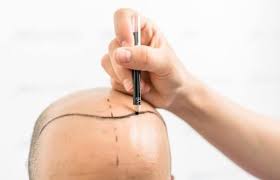
The hairline frames the face and draws the eye, so surgeons concentrate their highest safe density there, using the finest single-hair grafts at the leading edge for a soft, natural start. A natural hairline is slightly irregular, with single-hair grafts at the very front giving way to denser multi-hair grafts behind, and soft temple transitions. Packing a hairline densely but in a straight, uniform line looks obviously transplanted, so artistry matters as much as density. The temples, when they recede, can age the face noticeably, and restoring them needs delicate, fine-graft work at a natural angle rather than sheer density.

Density Versus Coverage: The Core Trade-Off
Why can you not have maximum density and full coverage at once? Because your donor supply is finite, every graft spent adding density in one zone is a graft not available to cover another. A patient with extensive loss usually has to choose between concentrated density in the zones that matter most and thinner coverage spread wider. For patients with advanced baldness, an experienced surgeon often prioritizes reasonable coverage across the visible scalp over maximum density in one spot, because broad, moderate density usually looks more natural and balanced than a dense patch beside a bare area.
Density is how many grafts sit per square centimetre; coverage is how much total area you treat. A mega-session transplants a very large number of grafts in one sitting, usually to cover extensive baldness rather than to maximize density in a small area, and the two goals compete: spreading a big graft count over a large area means moderate density, while concentrating density in one zone limits coverage. An honest surgeon helps you prioritize based on your donor budget.
Which Technique Suits High-Density Work Best
Is DHI or FUE better for high density? Both can deliver dense results in skilled hands. DHI, using an implanter pen, allows very precise angle and depth control and lets the surgeon place grafts close together without pre-cut channels, which suits dense hairline work. Sapphire FUE uses fine sapphire blades to make neat recipient sites that heal well and allow tight placement. The technique matters less than the surgeon's judgment about safe density.
Does the choice of technique change how dense you can safely go? Only at the margins. A meticulous technique reduces tissue trauma and can support slightly tighter placement, but the biological survival ceiling still applies regardless of method. Any clinic claiming a particular tool lets them safely pack 70 units per cm² is overselling the technology, since blood supply, not blade type, sets the real limit. Some surgeons combine techniques in a hybrid approach, using FUE for bulk coverage and DHI for precise dense hairline work. FUT, the strip method, can yield the highest number of grafts in a single session, but its linear donor scar means most modern Turkish clinics favour FUE.
What Actually Happens During a High-Density Procedure
The day starts with the surgeon designing your hairline and mapping density zone by zone. Local anaesthetic numbs the scalp, grafts are extracted one by one from the donor area, sorted under magnification, and then placed at planned densities across the recipient zones. A dense session can run six to eight hours or more, since careful placement at high density simply takes time.
Placing grafts densely and at natural angles is painstaking work, and rushing it is exactly how survival suffers. Each graft has to be positioned carefully in a crowded field without damaging its neighbours. Recipient sites, the tiny incisions the surgeon makes to receive each graft, largely determine both density and how natural the result looks; making them well, close enough for fullness but not so tight that grafts starve, is one of the most skilled parts of dense work. Grafts placed at the wrong angle look unnatural no matter how densely they are packed, so a skilled surgeon matches each recipient site to the natural growth direction. Because grafts are living tissue, how gently and quickly they are handled between extraction and placement also affects survival.
Your Treatment Day and What to Expect
Expect an early start, a hairline design you get to approve, local anaesthetic, and then a long but comfortable day with breaks for meals. You are awake throughout, can listen to music or watch something, and feel little beyond the initial numbing. Because dense work takes hours, clinics build in rest so both you and the surgical team stay fresh.
Aftercare Following a High-Density Transplant
The essentials are the same as any transplant but worth extra care given the investment: sleep elevated for the first nights, avoid touching or scratching the grafts, follow the gentle washing routine exactly, skip strenuous exercise and sweating for a couple of weeks, and protect the scalp from sun. Densely placed grafts are still delicate early on, so disciplined aftercare genuinely protects your survival rate.
The first wash, usually done at the clinic the day after surgery, gently loosens crusting without dislodging the newly placed grafts, which are still fragile. Some forehead swelling in the first few days is common and harmless, often settling within a week, and a sensation of numbness or tightness across the scalp in the weeks after surgery is normal as nerves and tissue heal. A few weeks after surgery the transplanted hairs shed, which alarms people who do not expect it, but it is completely normal and the follicles stay safely in place; new growth begins around month three. With a dense transplant there is a lot of transplanted hair, so the shedding can look dramatic, making it all the more important to understand it is a normal step, not a failure.
A Realistic High-Density Transplant Timeline
| Stage | What happens |
|---|---|
| First month | Grafts settle, scabbing clears within a couple of weeks, transplanted hairs begin to shed |
| Weeks 2 to 6 | Shedding of transplanted hairs (normal, follicles remain in place) |
| Around month 3 | New hairs start pushing through |
| Months 6 to 9 | Meaningful early density as more grafts produce hair |
| Months 12 to 15 | Full dense result matures into its final density and texture |
Dense work can take the longer end of that range to mature fully, so patience is part of the deal. Take photos under the same lighting and angle each month from surgery onward, because dense growth emerges gradually and your memory will undersell the progress. Give it a full twelve to fifteen months before judging the final result; assessing earlier risks needless disappointment over a result that is not finished.
High-Density Hair Transplant Cost in Turkey
Turkish clinics almost always price as flat all-inclusive packages rather than per graft, which is a real advantage for high-density work since dense placement uses more grafts. International patients consistently find these packages run up to roughly 60% cheaper than equivalent Western clinics, where per-graft pricing means a denser result quickly inflates the bill.
Why is high-density work so much cheaper in Turkey? Lower operating costs, a favourable exchange rate, and fierce competition between clinics push prices down without necessarily cutting quality. Because Turkish packages typically include the whole procedure regardless of graft count, you get the density you need without watching a per-graft meter climb the way you would in the US, UK, or Canada.
Comparing High-Density Costs: Canada / West vs Turkey
| Factor | Private Canada / West | Turkey with Aylan Clinic |
|---|---|---|
| Pricing model | Usually per graft | Flat all-inclusive package |
| High graft counts | Cost climbs steeply | Included in package |
| Consultation | Often paid | Free photo assessment |
| Package inclusions | Surgery only | Hotel, transfers, aftercare |
| Coverage | Not covered (cosmetic) | Not covered (cosmetic) |
For a fuller overview, see our pricing in Turkey page.
Understanding the Full Cost Breakdown
A transparent quote covers the consultation, the surgery itself regardless of graft count, anaesthesia, medications, the first wash, follow-up, and usually hotel and transfers in an all-inclusive package. Because dense work uses more grafts, the flat-package model is a real advantage: you should see one total price, not a meter that climbs with every graft placed. Compare what is actually included, the surgeon's involvement, and the honesty of the density plan, not just the headline price. A cheap quote built on a technician-run, overpacked approach is not comparable to a surgeon-led plan aiming for strong survival.
Watch for hidden fees. Ask whether the price covers medications, the post-op kit, follow-up, and transfers, or whether those cost extra. Some clinics quote a low surgery price then add charges for things a genuinely all-inclusive package would cover. Clarifying exactly what is included protects your budget, since surprises tend to appear after you have committed.
How the Graft Number Is Calculated
The math is simple in principle: area to be covered multiplied by target density gives the graft count. A 50 cm² frontal zone at 45 units per cm² needs around 2,250 grafts. A good surgeon works backward from your donor supply, deciding how to spend a finite budget across zones, which is why the honest graft number sometimes comes in lower than a patient hoped, but sized for a result that lasts.
Note that a graft is not the same as a hair. A graft, or follicular unit, contains one to four hairs, so 2,000 grafts might mean 4,000 to 5,000 actual hairs. A clinic quoting hair counts can make a number look bigger, so always confirm whether a figure means grafts or hairs. Skilled surgeons place single-hair grafts at the hairline for a soft, natural edge, then use denser multi-hair grafts behind it to build bulk efficiently.
Finding the Best High-Density Clinic for You
Skip any clinic calling itself the best in absolute terms and focus on what actually predicts a good result: a surgeon who talks honestly about realistic density and survival, who assesses your donor supply carefully, and who has recent independent reviews. A clinic that promises 60-plus units per cm² is waving a red flag, not showing off. A good clinic plans density around your blood supply and donor reserves, aiming for strong survival and lasting fullness; a reckless one chases a big density number, overpacks the scalp, and risks poor survival or a depleted donor area.
Red Flags When Choosing a High-Density Clinic
- Promising extreme density figures like 70 or 80 units per cm².
- Guaranteeing a specific graft survival percentage.
- No proper measurement of your donor density before quoting.
- Pressure to book immediately with a limited-time discount.
- Technicians doing everything with little surgeon involvement.
- Same-day dense photos presented as final results.
- No honest discussion of donor limits or future loss.
Green Flags When Choosing a High-Density Clinic
- Honest that density has survival-based limits.
- Measures donor density and scalp quality before planning.
- Surgeon-led design and placement.
- Realistic one-year before-and-after photos.
- Plans around your lifetime donor budget.
- Clear, all-inclusive pricing with no hidden fees.
- No pressure, giving you time to decide.
Verifying Accreditation and Surgeon Credentials
Look for internationally recognized standards like JCI accreditation, proper surgical licensing, and above all a named, qualified surgeon who actually performs or closely leads the procedure rather than delegating everything to technicians. JCI accreditation signals that a facility meets rigorous international standards for safety and quality, which matters for any surgery involving anaesthesia and a long operating day.
Why does surgeon involvement matter so much for density? Because judging safe density in real time, adjusting to your scalp's blood supply and donor reserves, is a skilled surgical decision, not a technician's checklist. A clinic where the surgeon designs the plan, performs the critical steps, and stands behind realistic density is worth far more than one selling volume with minimal doctor involvement.
What Reviews and Before-and-After Photos Should Show
Useful reviews show believable, natural-looking fullness a year or more after surgery, not just freshly-packed photos taken the same day. Look for patients who mention the surgeon's honesty about density and donor limits, and be wary of walls of identical five-star raves showing suspiciously perfect same-day density. Read across several independent platforms rather than trusting a clinic's own gallery, and seek out patients with a similar hair type and loss pattern to yours.
Honest before-and-after photos show natural-looking fullness at least eight to twelve months out, once transplanted hair has grown in and settled, ideally from patients with a similar starting point. Be cautious of same-day photos showing dense placement, since that shows grafts sitting in the scalp, not hairs that have actually survived and grown. To spot fake reviews, watch for floods of identical raves, vague reviews with no mention of the surgeon or timeline, and suspiciously uniform wording. Video testimonials add real authenticity, since a patient showing grown-in density on camera, ideally a year out, is harder to fake than a still photo.
Searching "High-Density Hair Transplant Near Me" or "Close to Me"
Most patients searching "high-density hair transplant near me" find a handful of local options priced per graft, which makes dense work expensive fast. That is exactly why so many compare what is near me at home against Turkish clinics offering flat packages, where high-density placement does not send the price spiralling upward. Searching near me is a fine starting point for understanding local pricing and who is available, but limiting yourself to only what is near me often means paying far more for the same density.
When you search near me, compare the surgeon's honesty about realistic density, their credentials, the pricing model, and independent reviews. A clinic near me is not automatically safer or better simply for being close, and for high-density work the survival-focused approach matters far more than the postcode. Proximity does not guarantee good judgment about density, and many patients find no option close to me matches the value and honest planning available in Turkey. For a small procedure, a clinic close to me can make sense, but high-density work is demanding and expensive per graft in the West, so the savings and surgical experience in Turkey often outweigh the convenience of staying close.
Why the Lack of Public Coverage Strengthens the Case for Turkey
No public plan covers a high-density transplant. Provincial plans in Canada, including Ontario's OHIP, British Columbia's MSP, and Alberta's AHCIP, classify hair restoration as elective cosmetic surgery, so you pay entirely out of pocket wherever you have it done. That is precisely why Turkey's flat pricing matters so much for high-density cases, where Western per-graft billing would otherwise make a full result punishingly expensive. Since you are paying the full amount everywhere at home, the only real variables are price and quality, and Turkey delivers experienced high-density surgery at up to roughly 60% less through flat packages. With no public help, patients fund the procedure through savings, personal financing, or clinic payment plans where offered.
Regional Reach Across Canada
Across Ontario and the Greater Toronto Area, patients in Toronto, Mississauga, Brampton, Ottawa, Hamilton, London, Kitchener, Waterloo, Windsor, Barrie, Kingston, and Sudbury face steep per-graft pricing at home, which hits high-density cases hardest. Out west, patients in Vancouver, Victoria, Surrey, Burnaby, Kelowna, Calgary, Edmonton, Winnipeg, Regina, and Saskatoon deal with the same per-graft reality; even factoring in the longer flight, Turkey's combination of experienced surgeons and flat pricing makes the trip worth serious thought. In Atlantic Canada, patients from Halifax, Saint John, Fredericton, Charlottetown, and St. John's already travel a fair distance for specialized care, and patients in the territories, from Whitehorse and Yellowknife to Iqaluit, routinely head south for specialized treatment anyway.
| Region | Representative cities served |
|---|---|
| Ontario / GTA | Toronto, Ottawa, Hamilton, London, Mississauga, Brampton |
| Ontario (other) | Kitchener, Waterloo, Windsor, Barrie, Kingston, Sudbury |
| BC | Vancouver, Victoria, Surrey, Burnaby, Kelowna |
| Prairies | Calgary, Edmonton, Winnipeg, Regina, Saskatoon |
| Atlantic | Halifax, Saint John, Fredericton, Charlottetown, St. John's |
| Territories | Whitehorse, Yellowknife, Iqaluit |
Where High-Density Surgery Happens Across Turkey
The Marmara region, anchored by Istanbul, holds the deepest concentration of high-volume hair surgeons in the country, and Istanbul in particular offers the experience and infrastructure that demanding high-density cases genuinely benefit from. Along the Aegean coast, Izmir and neighbouring cities pair capable clinics with a relaxed seaside setting. The Mediterranean coast, taking in Antalya, Alanya, and others, draws medical travellers with its mix of established clinics and genuine holiday atmosphere. Inland, Ankara and central Anatolia deliver solid surgical care away from the coastal crowds, while Samsun and Trabzon round out countrywide coverage on the Black Sea.
| Region | Representative cities |
|---|---|
| Marmara | Istanbul, Bursa, Kocaeli, Sakarya, Tekirdağ, Yalova, Edirne, Çanakkale |
| Aegean | Izmir, Kuşadası, Denizli, Afyonkarahisar |
| Mediterranean | Antalya, Alanya, Mersin, Fethiye, Marmaris |
| Central / East Anatolia | Ankara, Konya, Kayseri, Eskişehir, Gaziantep |
| Black Sea | Samsun, Trabzon |
How Turkey Compares to Other Destinations
Mexico, Costa Rica, and Colombia appeal to North Americans with their proximity and fair pricing, but Turkey's far higher volume of hair surgery, deeper bench of high-density specialists, and flat-package model generally give it the edge for a demanding dense result. Thailand and Malaysia have polished medical-tourism infrastructure, yet when the focus is specifically dense hair restoration, Turkey's concentrated expertise and sheer case volume tend to make it the sharper choice. India offers keen pricing and skilled surgeons, but Turkey's more developed hair-tourism machinery, from coordinators to hotels used to international patients, gives a smoother, better-supported experience.
In Europe, Hungary, Poland, and the Czech Republic deliver sound care at moderate rates, but Turkey's specific depth in high-volume hair surgery and its lower pricing generally make it the stronger pick for a dense, natural result. South Korea leads in some advanced cosmetic fields, but its higher pricing relative to Turkey means you pay a premium there. Across the board, Turkey pairs an enormous volume of hair surgery, giving surgeons deep dense-packing experience, with flat all-inclusive pricing that makes high graft counts affordable, a combination few destinations match.
Travel, Stay, and Practical Planning
Direct and connecting flights run from major Canadian cities to Istanbul regularly, and clinics serving international patients typically arrange airport pickup, hotel accommodation, and transfers as part of the package. Plan for around three to five days: the surgery itself is one long day, but clinics like to see you the following day for a first wash and check, and a short buffer lets you rest before the flight home. Confirm the latest official entry requirements yourself before booking, since rules change from time to time.
Pack loose button-up shirts so nothing pulls over fresh grafts, bring any regular medications with a list, and plan a gentle schedule. Within reason you can turn the trip into a bit of a holiday: light sightseeing during recovery is fine, but you will need to protect the grafts, avoid sun, swimming, and heavy exertion, and keep things gentle. Pin down the total price and exactly what the package includes before you travel, ideally quoted in a stable reference currency, and confirm which payment methods the clinic accepts. A good patient coordinator guides you from the first photo consultation through booking, travel, the surgery day, and follow-up, and clinics serving international patients provide English-speaking staff, so language is rarely a barrier.

High-Density Work for Women, Men, and Different Ages
Women can and do get high-density transplants, though their diffuse thinning pattern means the surgeon assesses donor stability carefully first. Women often benefit from techniques that avoid shaving the whole head, and because female hairlines and partings need soft, natural density, precise dense placement in the right zones can make a real difference without an unnatural look. For men with strong donor hair and stable loss, high-density work in the hairline and frontal zone restores the framing of the face powerfully; the key caution is future loss, so a good surgeon protects donor supply for later work.
There is no single right age, but the calculus differs. Younger patients need conservative density planning because their loss will likely progress, and a responsible surgeon may advise waiting or starting medication first. By the thirties and forties many patients have a clearer, more stable loss pattern, letting a surgeon plan definitive density with confidence. Older patients with a settled pattern can often be planned more definitively, with donor supply and overall health for a long surgery the main considerations. What matters more than age is the stability of your loss and the strength of your donor area.
Factors That Support Graft Survival
Well-nourished tissue heals and revascularizes better, so a diet with enough protein, iron, and key vitamins gives your densely placed grafts the best environment to survive and grow. Chronic stress and poor sleep both interfere with healing, so managing stress and getting proper rest in the weeks after surgery supports recovery. Smoking constricts blood vessels and reduces the scalp's blood supply, which is exactly what densely packed grafts depend on, so most surgeons strongly advise cutting back or quitting before and after surgery.
Conditions affecting healing, bleeding, or the immune system, such as uncontrolled diabetes or certain blood-thinning medications, can affect safety and graft survival, so they need honest disclosure. Tell the clinic about every medication, condition, and past procedure, which lets them assess safety accurately and tailor the approach. Active scalp conditions like psoriasis, dermatitis, or infection should be treated and settled first, since inflammation compromises both safety and graft survival. Some clinics apply PRP or exosome therapy around dense grafts to support healing and revascularization; it is an optional add-on rather than a necessity, but for demanding dense work the extra support can be worthwhile.
Guarantees, Success Rates, and Realistic Assurances
Some clinics offer graft-survival guarantees, but treat bold ones cautiously, since survival depends partly on your biology and aftercare, not the clinic alone. An honest clinic sets realistic expectations and may offer reasonable assurances rather than promising a precise percentage, and a guarantee of extreme density is a warning sign, not reassurance. In skilled hands at sensible densities, graft survival commonly reaches the nineties as a percentage, but the honest figure depends on your biology, the density chosen, and aftercare. A surgeon quoting near-perfect survival at extreme density is overstating it, since the survival curve is real.
High-Density Work and Ongoing Hair Care
A transplant restores lost hair but does not stop your native hair from thinning further, so many surgeons recommend medication such as finasteride or minoxidil to slow ongoing loss and protect the non-transplanted hair around your dense result. When can you colour your hair? Most surgeons advise waiting around four weeks, since the scalp and grafts need to heal first. Ease back into exercise: light walking is fine within days, but avoid strenuous exercise, heavy lifting, and heavy sweating for around two weeks. Avoid anything touching the recipient area for the first days, and clinics often provide a special loose cap for travel.
You may need a second transplant later, usually because native hair keeps thinning rather than because the first transplant failed, which is exactly why conserving donor supply during your first dense procedure matters. High-density work can sometimes repair a previous bad transplant, but dense placement in previously operated tissue survives less reliably, so repair demands an especially skilled surgeon and realistic expectations. The transplanted follicles are typically permanent, since they resist the hormone that causes pattern loss, but the native hair around them can continue thinning, which is why long-term planning and sometimes medication keep the overall result looking full.
Why Conservative Planning Protects Your Future
It sounds counterintuitive, but slightly conservative density today often gives a better lifetime outcome than maximum density now. It preserves donor grafts for future loss, keeps survival high, and leaves room to add density later if you want it. The patients who regret their transplant are rarely those who got slightly less density than they wanted; they are the ones who overpacked young, depleted their donor area, and had nothing left when loss progressed. Realistic planning, even when it means a lower density number today, is what prevents that regret. When a surgeon quotes a lower density than you hoped, that honesty is usually a mark of skill and integrity, not caution for its own sake.
Combining a Dense Transplant With a Complete Hair Plan
The most effective approach treats a high-density transplant as one part of a complete plan: dense restoration of priority zones, medication to slow native loss where appropriate, good scalp care, and possibly regenerative support around the grafts. Comprehensive, individualized, honest care, matching realistic density to your donor supply, protecting that supply, and supporting the result over time, is the gold standard in hair restoration. For the right candidate, transplanted follicles typically resist the hormone driving pattern loss, so a well-planned dense result can last decades, making the one-time cost excellent value compared with ongoing treatments.
A Pre-Booking Checklist for High-Density Work
- Confirmed strong donor density and stable hair loss.
- Verified a named, qualified surgeon leads the procedure.
- Got an honest density plan based on survival, not extreme numbers.
- Checked accreditation and sterile facilities.
- Read recent independent reviews showing natural one-year results.
- Examined honest before-and-after photos at eight to twelve months.
- Received clear, all-inclusive pricing with no hidden fees.
- Understood the trade-off between density and coverage.
- Set realistic expectations about natural fullness, not teenage density.
High-Density Transplant Glossary
Follicular unit (FU): a natural grouping of one to four hairs, the unit density is measured in. Grafts per cm²: how many units are placed per square centimetre. Dense packing: placing grafts very close together. Graft survival: the percentage of transplanted grafts that live and grow. Donor density: how many units per cm² your donor area holds. Recipient site: the incision a graft is placed into. Scalp laxity: how loose and mobile your scalp is, affecting extraction and healing. Vascularity: the blood supply available to feed grafts. Ischemia: lack of blood supply that can kill overcrowded grafts. Neovascularization: the new blood-vessel growth that feeds grafts. Virgin scalp: an area never transplanted before, with intact blood supply. Donor budget: your finite lifetime supply of harvestable grafts. Mega-session: a very large single-session graft count.
In Summary: Smart Placement Beats Maximum Packing
A high-density hair transplant places roughly 40 to 50 grafts per cm² to create natural fullness, but survival drops when placement exceeds 50 because overcrowded grafts compete for blood supply, so smart placement beats maximum packing every time. The eye reads full at about half of natural density, hair thickness matters as much as graft count, and your donor area is a finite lifetime budget. For patients with strong donor hair and stable loss, Turkey offers experienced dense surgery at up to roughly 60% below Western pricing through flat all-inclusive packages, provided you verify a surgeon who plans around survival and protects your donor supply.
To go further, read our high-density hair transplant in Turkey procedure page for how the operation works, the stay, and aftercare, review our pricing in Turkey, or explore the full range of hair transplant in Turkey. If a clinic has promised you the moon, that is a reason to pause, not proceed.