
A mid-face lift repositions the cheekbone and cheek upward, through an approach hidden entirely in the hair, leaving no scar on the face at all. It addresses the middle third of the face, the area other lifts reach least and which nonetheless changes expression a great deal. Unlike injections, which add volume, it raises the volume you already have that has descended, restoring its original position by lifting it along the exact axis of its descent.
This guide complements our Mid-Face Lift in Turkey procedure page, within our wider facial surgery in Turkey section. Below you will find exactly what descends in this region, the direction of movement that sets this technique apart, the published data on its results, and why it often suits people younger than those considering a full facelift. You will also find the real order of improvements, as the series document them, and the cost difference between private Canadian care and Istanbul. No figures appear here: the amount depends on the fixation technique chosen and any combined steps, and you can at any time see our pricing in Turkey or request a free, no-obligation quote.
What Descends in the Middle Third
Four changes happen together and reinforce one another. The malar fat pad, the cushion giving the cheekbone its fullness, descends progressively. The junction between lower eyelid and cheek lengthens, which stretches the look of the eye. The fold running from the nostril toward the corner of the mouth deepens as the tissues slide downward. And cheekbone projection diminishes, flattening the central contour of the face.
The Vertical Vector, the Heart of the Technique
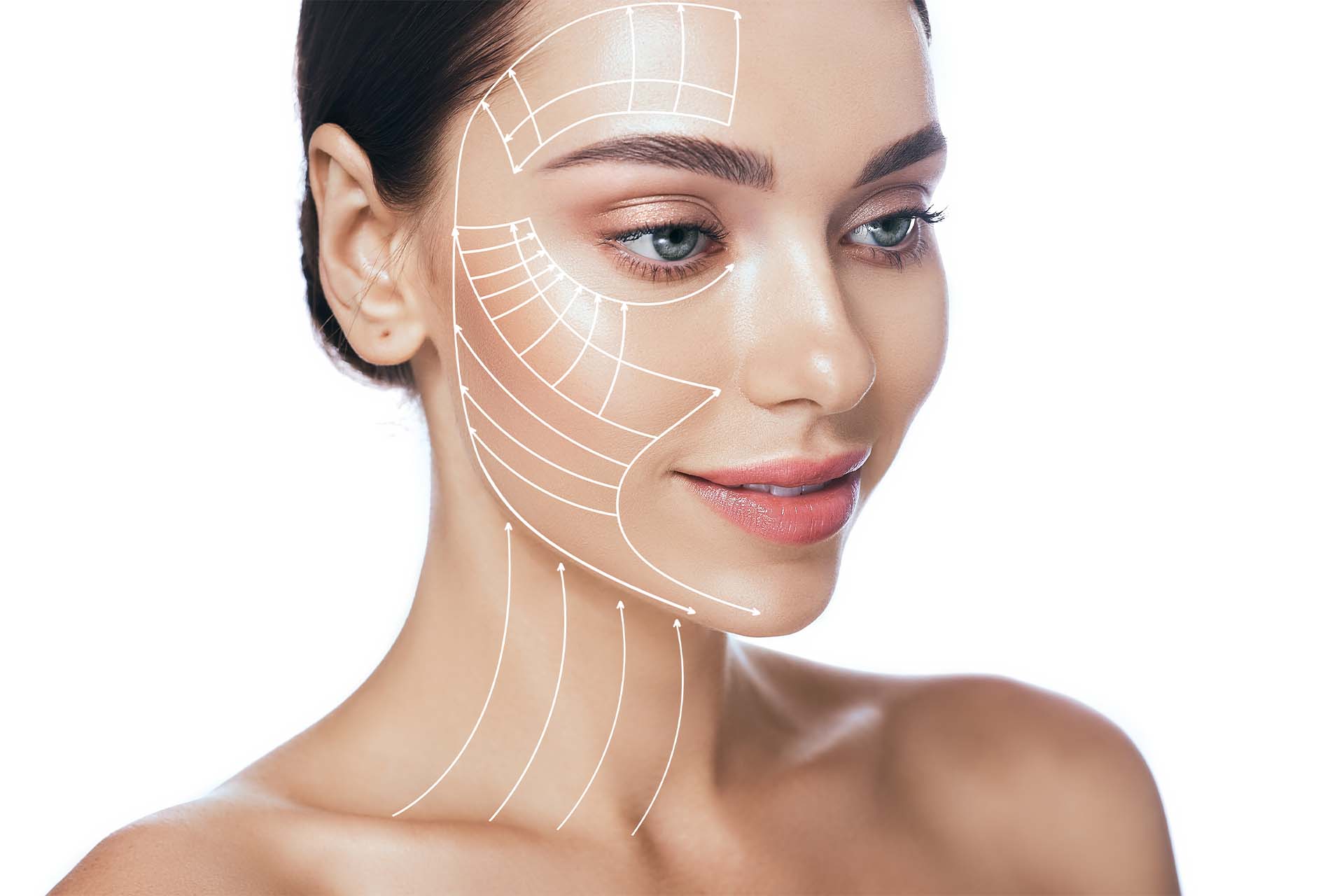
Ageing brings the tissues down vertically under gravity. A mid-face lift therefore raises them in that same direction, restoring their original position rather than moving the volumes laterally. Publications in fact describe two combined vectors. The superior vector repositions the malar fat and the pad sitting beneath the orbicularis muscle above the infraorbital rim, while a lateral component softens the nasolabial fold.
The Temporal Approach
The operation goes through a short incision placed in the scalp at the temple, measuring five to six centimetres. It hides entirely within the hair and leaves no scar on the face at all. Some teams use an even shorter incision, of one and a half centimetres, paired with a second incision in front of the ear. In every case, the absence of any facial scar is among the most appreciated features of this technique.
Comparing the Approaches to the Middle Third
The table places this operation among the other options.
| Approach | What it does | Scar |
|---|---|---|
| Mid-face lift | Repositions the malar fat upward | In the hair, at the temple |
| Cheekbone fat grafting | Adds volume without repositioning | Invisible cannula points |
| Malar implant | Adds permanent projection | Internal, inside the mouth |
| Deep plane facelift | Repositions the whole face | In front of and behind the ear |
| Dermal fillers | Temporary volume, six to eighteen months | None |
The first and fourth rows complement one another rather than compete. A mid-face lift addresses the middle third on its own, while the deep plane incorporates it into a complete repositioning of the face and neck.
The Real Order of Improvements
A series of more than four hundred procedures establishes precisely what this technique improves, from most to least marked. Correcting the descent of the middle third and the hollow under the eye comes first. Softening the nasolabial fold follows, then improvement of the jawline in third place. That order is worth knowing: it tells you what the operation transforms most, and where it acts more modestly.
The Documented Results
A series assessing results by operated side reports eighty-seven percent judged excellent or good by the surgeons, with a substantial proportion in the higher category. Another series, covering one hundred and eighty-three people followed for an average of seven years, describes how fixation techniques evolved. The authors note more symmetric elevation of the malar fat and reduced swelling with recent devices.
The Age of the People Concerned
That same series reports a mean age of forty-six, within a range from thirty-nine to fifty-four. That is markedly younger than the usual population for a full facelift. It follows from the chronology of facial ageing: the middle third begins to descend before the lower face and neck loosen noticeably. Addressing this area early therefore means acting on the first visible change.
The Anatomy of the Middle Third, and What Moves Within It
Understanding the structures of this region explains within minutes why some approaches transform it and others merely skim it.
The Malar Fat Pad
This is the triangular cushion giving the cheekbone its fullness, sitting in front of and above the muscle. It slides progressively downward, flattening the contour and forming a fullness above the nasolabial fold. Repositioning it upward restores the projection lost without adding volume. It is the main target of this operation, and it is what makes the result look so natural.
The Pad Beneath the Orbicularis Muscle
A second fatty mass sits beneath the muscle encircling the eye, just above the bony rim. Its descent lengthens the junction between lower eyelid and cheek, which visually stretches the look of the eye. Publications describe repositioning it above the orbital rim as one of the two objectives of the superior vector. That step is what improves the hollow under the eye, first in the documented order of improvements.
The Attachments to the Skeleton
Fibrous attachments link the soft tissues to the orbital rim and the zygomatic arch. They hold the structures in place, and they prevent any repositioning until they have been released. That is why release is the decisive stage of the operation. Tissues still anchored do not rise, whatever traction is applied; released, they return to their position without tension.
Comparing the Structures and Their Roles
The table links each element to what it determines.
| Structure | What it determines | Addressed by the step |
|---|---|---|
| Malar fat pad | Cheekbone projection | Yes, repositioned upward |
| Suborbicularis pad | Hollow under the eye | Yes, brought above the rim |
| Attachments to the orbital rim | Mobility of the tissues | Yes, released |
| Deep temporal fascia | Anchor point for the suspension | Serves as support |
| Orbital rim | Bony limit of repositioning | No, it constrains |
| Skin quality | How the result holds over time | No, a separate treatment |
The second-to-last row is worth knowing. The bony rim sets a limit on repositioning, which explains why the amplitude obtained varies between people with the same technique.
The Eyelid-Cheek Junction
On a youthful face this junction is short and the passage from eye to cheek reads as continuous. It lengthens as the tissues descend, creating a marked transition under the eye. Shortening that junction by raising the suborbicularis pad produces a change patients notice immediately. It is also what makes the gaze read as more rested after this operation.
The Link With the Vertical Vector
All these structures descend vertically under gravity. Raising them along that same axis restores exactly their original position, which is the fundamental principle of modern repositioning. It is the same logic that separates the deep plane facelift from the traditional lift across the whole face. Vertical movement follows the descent; lateral traction moves the volumes toward the ear without putting them back.
What You Can Observe at Home
Place two fingers on your cheekbone and lift the skin vertically, toward the temple, without pulling toward the ear. Watch what happens at the hollow under the eye and at the nasolabial fold. That movement approximately simulates the effect of the operation and lets you discuss it concretely at consultation. Photograph yourself before and during it: that comparison is among the most telling you can bring.
The Technique in Detail, and How the Operation Runs
This operation is performed under endoscopic control, which allows precise work through a short incision. Here is how it proceeds.
Access and Dissection
The surgeon makes the temporal incision in the scalp, then advances under endoscopic control along the deep temporal fascia, a natural gliding plane that protects the neighbouring structures. He then joins the plane beneath the SMAS, heading toward the cheekbone. That continuity between the two planes is what allows the middle third to be reached from the temple, with no incision on the face.
Releasing the Attachments
The tissues of the middle third are held by attachments to the orbital rim and the zygomatic arch. The surgeon releases them, which makes the tissues mobile and allows repositioning without tension. That release is what separates genuine repositioning from simple traction. Tissues still anchored do not rise; released, they return to their original position and hold there.
The Suspension
Once released, the malar fat is suspended upward and secured to the deep temporal fascia, a solid structure serving as anchor. Several fixation methods exist, by sutures or by dedicated device. Publications describe how those methods evolved across more than a decade. The authors of a series of one hundred and eighty-three people note more symmetric elevation and reduced swelling with recent fixation devices.
Comparing the Fixation Methods
The table sets out what distinguishes them.
| Method | Principle | What the series report |
|---|---|---|
| Direct sutures | Strong thread anchored to temporal fascia | A long-established technique |
| Suspension device | Fixation at several points, adjustable | More symmetric elevation, reduced swelling |
| Hybrid suspension | Endoscopy plus a short preauricular incision | Vertical vector well controlled |
What counts more than the method chosen is the direction of the suspension. Publications agree on the superiority of the vertical vector, which follows exactly the axis of the tissues' descent.
The Dual Vector
Authors practising the temporal approach describe two combined directions. The superior vector brings the malar fat and the suborbicularis pad above the bony rim, restoring cheekbone projection. A more discreet lateral component then softens the nasolabial fold. That combination reproduces the reverse of the descent more faithfully than a single pull in one direction.
A Favourable Side Effect
Publications note a benefit few patients anticipate. Repositioning the middle third brings about a one to one and a half centimetre elevation of the skin sitting over the mandible. This technique is not designed to address the jawline, and yet it improves it modestly. It is an additional benefit accounting for part of the satisfaction reported.
Anaesthesia and Duration
The operation is performed under general anaesthesia or deep sedation depending on the team, and generally takes an hour and a half to two and a half hours when done alone. It is very often combined with eyelid surgery or a brow lift, the temporal area already being approached. That pairing is frequent and lengthens the total time only modestly.
The First Few Days
Swelling of the middle third and sometimes of the lower eyelid occupies the first week, peaking around the second or third day. Adhesive dressings placed at the end of surgery help shape the tissues during that phase. A compression band is worn for a few days. The sensation most often reported is tightness at the temple, which eases progressively and belongs to the expected course.
Choosing Your Surgeon, and Reaching This Technique From Canada
This operation calls for regular endoscopic practice and a precise understanding of the vector. Here is how to assess that, English-speaking region by region.
What Sets Surgeons Apart
Endoscopic work beneath the SMAS calls for particular ease: vision comes through a screen, the space is confined, and releasing the attachments entirely governs the mobility obtained. The question to ask therefore concerns actual practice. How many mid-face lifts do you perform each year, and which attachments do you release? A surgeon who answers precisely is describing work he commands.
The Questions That Tell You Most
In which direction do you suspend the tissues? The expected answer is vertical, along the exact axis of the descent, with a more discreet lateral component for the nasolabial fold. Then: to which structure do you fix the suspension? The deep temporal fascia is the solid anchor publications describe, and a practitioner who names it is working to the established technique.
What a Portfolio Must Show
Three-quarter and front views, the angles at which cheekbone position genuinely reads. A profile shows little of what this operation alters. Look also for results at one year minimum, and if possible at several years. A series followed for seven years on average exists in the literature, and an experienced practitioner can show older results.
What Each Criterion Tells You
The table separates what predicts a good result from what predicts nothing.
| Criterion | What it indicates | Reliability |
|---|---|---|
| Annual number of mid-face lifts | Regular endoscopic practice | Very high |
| Vertical vector explained | Understanding of the mechanism | Very high |
| Attachments released named | Real repositioning, not traction | Very high |
| Deep temporal fascia cited as anchor | The established technique | High |
| Three-quarter views in the portfolio | The angle where the cheekbone reads | High |
| Results shown at one year or more | How the suspension holds | High |
| Lateral traction described | A different logic of movement | Low |
The last row deserves clarifying. Lateral traction moves the volumes toward the ear rather than raising them, which produces a different look from the one this technique aims for.
Toronto, the GTA and Mississauga
The region has facial surgeons, and endoscopic work on the middle third remains a subspecialty practised by a limited number of them. Annual volume therefore becomes the central criterion. Toronto Pearson links Istanbul without a stopover. Allow seven to ten nights on site and around two weeks before the return flight. A free quote compares both figures, the Turkish one often sitting up to around 70 percent lower.
Vancouver, Surrey and Victoria
Facial surgery is available on the West Coast, while the endoscopic approach to the middle third remains scarce there. It is a matter of volume: this technique is maintained through regular practice. The flight from Vancouver is long. English matters for the first-days instructions, particularly regarding the band and resting the temporal area.
Calgary and Edmonton
Alberta has facial surgeons without that guaranteeing endoscopic practice. Ask about the annual number and the vector used; those two answers sort very effectively. Both cities reach Istanbul through a European hub. Have it specified in the quote whether the operation is paired with eyelid surgery, a frequent combination that changes the programme.
Ottawa and Eastern Ontario
The region gives access to a reasonable number of practitioners without this technique being widespread among them. The central question stays the annual figure and the direction of suspension. Ottawa International connects to Istanbul. Ask for your instructions in writing, particularly regarding sun protection of the temporal area over the following months.
Winnipeg, Regina and Saskatoon
Across the Prairies, reaching a practitioner who performs this technique regularly means travelling to a larger centre. Travel therefore enters the calculation from the outset. From Winnipeg or Regina, reaching Istanbul takes a connection. Since you are travelling either way, compare annual volume between the accessible practitioners rather than distances.
Halifax, Moncton and St. John's
In Atlantic Canada this technique is not performed and travel is a given. That reduces the decision to choosing the team. Halifax connects onward in one stop. The rest comes down to arrangements: who meets you, where you stay, and how the first-year photographic checks are handled.
Canadian Cities Against Istanbul
Here is what awaits you depending on your starting point, with the real availability of this technique.
| City / region | Airport | Access to Istanbul | Availability and cost |
|---|---|---|---|
| Toronto, GTA, Mississauga | YYZ | Direct links | Subspecialty present; package often up to around 70 percent less |
| Vancouver, Surrey, Victoria | YVR | With connection | Facial surgery yes, endoscopic mid-face scarce |
| Calgary / Edmonton | YYC / YEG | Via Europe | Available, practice to verify |
| Ottawa | YOW | With connection | Not widespread among practitioners |
| Winnipeg, Regina, Saskatoon | YWG | With connection | Travel a given |
| Halifax, Moncton, St. John's | YHZ | With connection | Technique not performed locally |
The right-hand column shows a constant: the endoscopic approach to the middle third calls for regular practice that few Canadian catchments allow to be maintained. That is what explains so many journeys on this operation.
Comparing the Destinations Canadians Choose
A search in English will lead you toward Mexico, the Dominican Republic, Colombia, Costa Rica and Thailand. The grid that follows compares working methods, and it applies equally to two practitioners in the same city.
| Value criterion | Turkey / Istanbul (Aylan) | Mexico | Dominican Rep. | Colombia / Costa Rica / Thailand |
|---|---|---|---|---|
| Annual endoscopic mid-face volume | High | Variable | Variable | Variable |
| Vertical vector explained at consultation | Systematic | To verify | To verify | To verify |
| Pairing with eyelid surgery available | Yes, same session | Yes | Yes | Yes |
| Direct with the clinic | Yes, no middleman | Often via agency | Often via agency | Often via agency |
| Cost vs private Canadian care | Often up to around 70 percent less | Often lower | Often lower | Often lower |
The second row is the one to put everywhere. A practitioner who spontaneously explains the vertical direction and its reason is describing a technique he performs; one who stays general is describing a technique he has heard about.
Istanbul, Ankara, Izmir and Antalya
Istanbul concentrates teams performing facial endoscopy routinely, often alongside eyelid surgery or a brow lift. That breadth allows a coherent programme to be composed in one session. Excellent practitioners also work in Ankara, Izmir and Antalya, with additional connections from Canada. The deciding criterion remains annual volume and understanding of the vector.
Preparing Your Operation and Organizing Your Stay
Preparation is lighter than for a full facelift, and the stay shorter. Here is the arrangement.
Two Months Ahead
First contact, sending your photographs and receiving a quote specifying the fixation technique envisaged and any combined steps. This is also when to stop smoking. The temporal area and the middle third benefit directly from good blood supply during the phase when the suspension settles.
One Month Ahead
Preoperative work-up in Canada, suited to an operation under general anaesthesia or deep sedation. Results go to the team, who validate them before you travel. Two weeks ahead, blood thinners stop on medical advice, including fish oil, turmeric and vitamin E. On a richly supplied area, that precaution markedly improves the first week.
The Photographs to Send
They must document cheekbone position, which calls for precise angles.
| View | What it reveals |
|---|---|
| Front, face relaxed | Position and projection of the cheekbones |
| Right and left three-quarter | Transition from cheekbone to cheek |
| Front, smiling | How the volumes behave on contraction |
| Front with cheekbones lifted by your fingers | Approximate effect of the step |
| Close-up of the eye contour | Length of the eyelid-cheek junction |
The fourth view is the most telling and the least often sent. Lifting your own cheekbone vertically, without pulling toward the ear, approximately simulates the result and lets you discuss a concrete objective.
What to Pack
Button-front tops, a spare band, cold packs if your accommodation does not supply them, and something to sleep with your head raised. Bring a wide-brimmed hat as well for early outings. The temporal area needs careful sun protection for several months, including through the hair.
The Day Before
The surgeon measures the position of your cheekbones, palpates your orbital rim to assess the margin for repositioning, and shows you the vector he will use. This is the moment to ask which attachments he intends to release and to which structure he will fix the suspension. A practitioner who names the deep temporal fascia is working to the established technique.
How Your Stay Unfolds
The table gives the usual rhythm for this operation performed alone.
| Day | What happens |
|---|---|
| Arrival | Airport welcome, transfer, rest |
| Day 1 | Consultation, measurements, vector confirmed |
| Day 2 | Surgery, one night of monitoring |
| Days 3 to 5 | Rest, band, swelling peaks on day three |
| Days 6 to 8 | Swelling receding, first outings |
| Days 9 to 10 | Sutures removed, check-up, instructions |
| Departure | Flight to Canada at around two weeks |
This seven to ten night stay is shorter than for a full facelift, reflecting the more limited extent of the operation. Paired with eyelid surgery, it stays within the same format.
The First Days in Practice
Swelling of the middle third and sometimes of the lower eyelid occupies the first week, peaking around the second or third day. Sleeping with the head raised and applying cold markedly speeds up comfort. Tightness at the temple is usual and belongs to the expected course. It corresponds to the suspension put in place and eases progressively over a few weeks.
The Result Calendar
The table gives the real reference points.
| Milestone | What you see | What is happening |
|---|---|---|
| Days 1 to 5 | Swelling of the middle third | Peak on day three then receding |
| Weeks 2 to 4 | Cheekbones strongly lifted | Swelling still present |
| Weeks 6 to 8 | Shape becoming clearer | Tissues settling back in |
| Months 3 to 6 | Result readable | Position stabilized |
| Beyond six months | Result established | Suspension consolidated |
The second row explains some of the questions received at one month. The cheekbones look more lifted than they will be, swelling adding to the repositioning, and that impression eases progressively.
Follow-up From Canada
It runs on photographs reproducing exactly the same views and the same lighting as before surgery, generally at one, three, six and twelve months. Reproduce the three-quarter view without fail. It is the angle at which cheekbone position reads best, and it is essential for genuinely judging the repositioning obtained.
What People Ask Assistants, Out Loud, and Online
Phrasing shifts by channel. Here are three registers people use when they research this operation, each answered in the same wording they type or speak.
I Am Forty-Five, My Cheekbones Are Descending but My Neck Is Fine, Which Operation?
Your description matches exactly the profile documented for this technique. Published series report a mean age of forty-six, within a range of thirty-nine to fifty-four, precisely because the middle third descends before the lower face and neck loosen. A full facelift would address areas that do not yet concern you.
What Is the Difference From Cheekbone Fat Grafting?
They answer different questions. Fat grafting adds volume where it is wanted; a mid-face lift repositions the volume you already have that has descended. If your cheekbone has emptied, fat grafting suits. If it has slid downward, raising it gives a result adding volume does not reproduce. Many programmes in fact combine the two.
Why the Vertical Vector Rather Than Lateral?
Because the tissues descend vertically under gravity. Raising them along that same axis restores their original position, whereas a pull toward the ear moves the volumes without putting them back where they were. It is the same principle that makes the deep plane superior to a traditional lift, applied here to the middle third. Vertical repositioning restores an original position, which goes unnoticed; it is lateral displacement that gets noticed.
When Were Those Before-and-After Photographs Taken?
Often at three weeks, when swelling of the middle third distorts everything. Ask for images at six months, and beware photographs of cheeks still swollen at one month. The shape settles between three and six months.
Why Turkey for This Technique?
Because teams there perform facial endoscopy routinely, with the annual volume its command requires. The endoscopic approach to the middle third remains an uncommon subspecialty in Canada, since screen-based vision and releasing the attachments call for regular practice.
Further Questions, and the Ones People Hesitate to Ask
These come up constantly in consultation and rarely appear on clinic websites.
Everyday Questions
Will my hair grow back over the scar? The technique preserves the follicles along the line, which lets hair grow through the scar and conceal it entirely. Can I wear my hair in a ponytail? After a few weeks, once the scar has matured; simply avoid traction on the temporal area during the first month. Can I colour my hair? Wait about six weeks, until the scar has closed and settled. Will I feel tightness at the temple? Yes, and it belongs to the expected course, easing progressively over a few weeks. Can I wear glasses? Yes, avoiding arms that press firmly on the temples for the first two weeks; light frames suit better. Is there numbness of the scalp? A transient sensation is common over the temporal area and fades progressively over a few months.
Questions About the Result
Will the result be symmetrical? The surgeon adjusts each side separately, the two halves of the face never being identical to begin with, and recent series note more symmetric elevation with current fixation devices. Does it change my expression? No; the step repositions volumes without touching the muscles carrying expression, which preserves your facial mobility entirely. Can volume be added later? Absolutely, fat grafting is readily done later to restore what is wanted after the repositioning. What happens as I keep ageing? The face ages normally, but from a restored position; that is what repositioning provides, a new starting point. Can I have a full facelift later? Yes, and many people do when the lower face and neck call for it; the two operations complement each other over time.
Questions About Combinations
What is it most often combined with? With lower eyelid surgery, very frequently, the areas being adjacent, and also with a brow lift, the temporal approach already being used. And with fat grafting? It is a coherent pairing: repositioning descended volume and restoring what has gone answer two different questions. Can it be combined with nanofat? Yes, for the skin quality repositioning does not alter, and both are done in the same session. Does it lengthen the stay much? Not much; pairing with eyelid surgery stays within the seven to ten night format.

Questions Canadians Ask Specifically
Can I have my consultation remotely? Yes, through standardized photographs including the view where you lift your own cheekbone; the examination the day before confirms the margin for repositioning. Does the Canadian cold affect healing? No; protect the temporal area from sun for several months, including in winter where reflection off snow stays significant. How does remote follow-up work? Through photographs reproducing the same views, particularly the three-quarters, at one, three, six and twelve months. Can I have sutures removed near home? Depending on the timing, yes, and the clinic then provides written instructions for whoever handles it. Will my doctor be able to read the report? Yes, it specifies the approach, the attachments released, the vector and the fixation method, in standard medical vocabulary.
The Misconceptions About Mid-Face Lifts
This operation is less well known than a full facelift, which leaves several approximations circulating. Here are the commonest, clarified against the published series.
Misconception: It Is a Facelift on the Cheap
It is not a reduced version of anything else, but an operation designed for a precise area. It uses a different approach, a different plane of dissection and a direction of repositioning of its own. It also addresses a different moment in facial ageing. The mean age documented in the series is forty-six, against a decade more for a full facelift, because the middle third descends first.
Misconception: Injections Do the Same Thing
Fillers and fat grafting add volume; this operation repositions the volume you already have. On a cheekbone that has emptied, adding suits perfectly. On a cheekbone that has slid downward, raising the existing volume produces a different result, one that adding does not reproduce. The two approaches combine readily, one restoring position and the other volume.
Misconception: The Scar Shows in the Hair
The five to six centimetre incision sits in the scalp and hides beneath the hair once healed. Some teams use an incision of only one and a half centimetres. No scar appears on the face itself, which is among the most appreciated features of this technique. It is also what makes it accessible to people who hesitate at the scars of a full facelift.
Misconception: The Result Does Not Last
A series followed for seven years on average documents how the suspension holds. The authors also note more symmetric elevation with recent fixation devices. Duration then depends on the quality of your tissues, as with any repositioning operation. What the step provides is a restored position that becomes the new starting point for ageing.
Comparing Beliefs Against the Published Series
The table sets the commonest claims against the studies.
| What you hear | What is actually the case |
|---|---|
| It is a facelift on the cheap | An operation designed for a precise area |
| Injections do the same thing | They add, they do not reposition |
| The scar shows | It sits in the hair, nothing on the face |
| The result does not last | A series followed seven years documents the hold |
| It only changes the cheekbones | The hollow under the eye comes first |
| It is for the over-sixties | Documented mean age of forty-six |
| It does nothing for the jawline | A one to one and a half centimetre elevation reported |
The second-to-last row surprises many people. This operation addresses an early moment in facial ageing, when the middle third has begun to descend while the lower face still holds.
Misconception: Better to Wait and Have a Full Facelift
The two operations do not address the same moment or the same structures. Waiting means letting the middle third descend further over several years. Many people in fact have both, spaced apart: the middle third first, around forty-five, then a full facelift later if the lower face and neck call for it. Each operation then addresses what concerns it.
Misconception: Endoscopy Limits What the Surgeon Can Do
It is the reverse: the camera gives a magnified view of the deep structures through a short incision. The surgeon sees precisely the attachments he releases and the plane he works in. What limits the amplitude is not the technique but the anatomy, notably the shape of your orbital rim. A surgeon who states that margin rather than a general promise is working accurately.
What Comes From the Operation and What Comes From You
Some things are decided in theatre, others belong entirely to you.
| What you want | Comes from the operation | Comes from you |
|---|---|---|
| Raising the cheekbone | Yes, that is its purpose | No |
| Reducing the hollow under the eye | Yes, first of all | No |
| Softening the nasolabial fold | Yes, second | No |
| Restoring lost volume | No, that belongs to fat grafting | No |
| Skin quality | No, a separate treatment | A great deal: sun, skincare |
| How the result holds | The suspension is solid | Elasticity, lifestyle |
The fourth row explains why so many programmes combine the two steps. Repositioning what has slid and restoring what has gone answer two different questions, and many faces present both.
The Vocabulary, and How to Decide
This glossary lets you follow a consultation and express your request in the terms your surgeon uses.
The Words You Will Hear
The malar fat pad is the triangular cushion giving the cheekbone its fullness; its descent flattens the contour and forms a fullness above the nasolabial fold. The suborbicularis pad is the fatty mass sitting beneath the muscle encircling the eye; repositioning it above the bony rim reduces the hollow under the eye. The deep temporal fascia is the solid structure at the temple serving as anchor for the suspension; a surgeon who names it is working to the established technique. The retaining attachments link the soft tissues to the orbital rim and the zygomatic arch; releasing them is what makes repositioning possible. The vector means the direction of repositioning; the vertical vector follows the exact axis of the tissues' descent, and it is the one publications favour. The eyelid-cheek junction is the transition from the lower eyelid to the top of the cheek; it lengthens with descent and shortens with repositioning.
The Terms That Cause Confusion
Four confusions come up regularly.
| Term | Not to be confused with | The difference |
|---|---|---|
| Mid-face lift | Full facelift | The middle third, versus the whole face |
| Repositioning | Filling | Raising what exists, versus adding |
| Vertical vector | Lateral traction | Following the descent, versus moving toward the ear |
| Brow lift | Mid-face lift | Brows and forehead, versus cheekbone and cheek |
The second pair costs most in poorly set expectations. An emptied cheekbone calls for volume, a descended cheekbone calls for repositioning, and many faces present both.
The Decision Summary
Everything above fits into this table, worth consulting before your appointment.
| The question | The short answer |
|---|---|
| What the operation addresses | The middle third, cheekbone and cheek |
| Direction of repositioning | Vertical, axis of the descent |
| Approach | Temporal, in the scalp |
| Scar on the face | None |
| Order of improvements | Middle third, then fold, then jawline |
| Documented results | 87 percent excellent or good |
| Documented mean age | Forty-six |
| Operation length | An hour and a half to two and a half hours |
| Stay in Turkey | Seven to ten nights |
| Flight home to Canada | Around two weeks |
| Result settled | Three to six months |
| Gap vs private Canadian care | Often up to around 70 percent |
The order-of-improvements and mean-age rows help most with deciding. The first tells you what the operation genuinely transforms, the second that it addresses an earlier moment than a full facelift.
Three Checks Before You Commit
First: how many mid-face lifts does the surgeon perform each year? Second: in which direction does he suspend the tissues, and to which structure does he fix them? Third: can he show results at one year minimum, in three-quarter views? That is the angle at which cheekbone position genuinely reads.
In Summary: Raising What Has Descended, Along the Axis of the Descent
A mid-face lift raises what has descended, along the exact axis of the descent, leaving no scar on the face. It addresses an early moment in facial ageing and treats first what the series place at the head of the improvements: the descent of the middle third and the hollow under the eye, then the nasolabial fold, then the jawline. The team at Aylan Clinic accompanies you in English at every stage, from reading your photographs through to the first-year check, with a vector explained and a margin stated rather than a general promise.

To go further, read our Mid-Face Lift in Turkey procedure page for how the operation works, the stay and the aftercare, explore the wider facial surgery in Turkey section, or see our pricing in Turkey for a figure built on your own case.