
The short answer is yes. Orthodontic treatment at Aylan Clinic allows patients from Toronto, Montreal, Vancouver, Calgary, Ottawa and across Canada to straighten their teeth with clear aligners or braces, for up to 60% less than Canadian private prices. Orthodontics is different from every other treatment in this series, and it is worth saying so at the outset. It takes months, and it involves periodic review. That does not make it impractical to have done abroad, but it does mean the plan has to be built around remote monitoring and a small number of trips rather than around monthly appointments.
This guide complements our Orthodontic Treatment in Turkey procedure page and sits within our wider dental care in Turkey section. It sets out honestly how treatment abroad works, which approaches suit long-distance treatment and which do not, and what you need in place at home. Orthodontics is also the treatment that moves your teeth rather than covering them, which for a patient considering veneers for crowding is worth understanding before committing to anything irreversible. At any time you can review our pricing in Turkey for an overview of what treatment costs.
1. Understanding Orthodontic Treatment
What Orthodontics Does
It moves teeth through bone into better positions. Gentle sustained force applied to a tooth causes the bone in front of it to remodel and the bone behind it to fill in, and over months the tooth travels. That mechanism is why treatment takes time and why it cannot be rushed. It is biological remodelling rather than mechanical repositioning.
What It Can Correct
- Crowding, where there is insufficient space and teeth overlap or twist.
- Spacing, where gaps exist between teeth.
- Overbite, where the upper front teeth overlap the lower ones excessively.
- Underbite, where the lower teeth sit ahead of the upper ones.
- Crossbite, where some upper teeth sit inside the lower ones.
- Open bite, where the front teeth do not meet when the back teeth are closed.
- Rotated or tipped individual teeth.
- Midline discrepancies, where the centre line between the front teeth is off centre.
Why Moving Teeth Is Preferable to Covering Them
This matters for anyone considering cosmetic options for crowding. Veneers or crowns can make crowded teeth look straight, by building a new front surface where the eye expects it. That works, and for some patients it is the right answer. But it involves permanently removing enamel from teeth that are otherwise healthy, and committing to replacing those restorations every ten to twenty years for the rest of your life.
Orthodontics achieves alignment by moving the teeth, and leaves them intact. Treatment takes months rather than days, which is why it is rarely offered in a cosmetic package, but the teeth remain your own. For a patient in their twenties or thirties with healthy but crowded teeth, this is worth weighing carefully. Many patients arrive asking about veneers and choose aligners once the comparison is set out.
Orthodontics Before Other Treatment
Frequently the correct sequence. Teeth in better positions make for better restorations: crowns that are not compensating for a poor position, implants placed where the tooth should be rather than where the space happens to be, and veneers that need minimal preparation because the tooth is already where it belongs. Where both are planned, orthodontics usually comes first.
2. Treatment Options
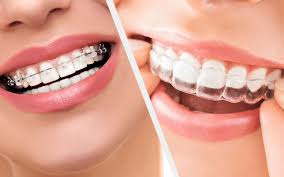
Clear Aligners
A series of removable transparent trays, each moving the teeth slightly, worn twenty to twenty-two hours a day and changed every one to two weeks. For Canadian patients treated abroad, this is usually the most practical option: the sequence is planned digitally in advance, you take the aligners home with you, and progress can be monitored remotely. They are nearly invisible, removable for eating and cleaning, and comfortable. They depend entirely on being worn; an aligner in a drawer moves nothing.
Fixed Braces — Metal
Brackets bonded to the teeth connected by an archwire, adjusted periodically. The most versatile approach, capable of correcting more complex problems than aligners, and effective for every type of malocclusion. For treatment abroad they require more in-person visits, since the wire must be adjusted physically. Suitable where a Canadian orthodontist will handle interim adjustments, or where the case allows longer intervals between visits.
Fixed Braces — Ceramic
The same mechanics with tooth-coloured brackets, considerably less visible than metal. Slightly more fragile and marginally slower in some cases.
Lingual Braces
Brackets bonded to the inner surfaces of the teeth, completely invisible from the front. Technically demanding, and the most discreet fixed option. Speech takes some adaptation and the tongue needs a week or two to settle. For patients for whom visibility is the barrier to treatment, they solve it entirely.
Which Suits Treatment Abroad?
Clear aligners, in most cases. The entire sequence is planned before you start, you carry the whole series home, and monitoring is done remotely with periodic in-person review. Fixed braces are workable where your case allows longer intervals between adjustments, or where a Canadian dentist or orthodontist will handle interim visits. This is arranged before treatment begins rather than assumed. We will tell you honestly at assessment which approach suits your case and your circumstances. For a complex case requiring frequent hands-on adjustment, the honest answer is sometimes that local treatment is more practical, and we would rather say so.
3. How Treatment Abroad Actually Works
This is the section that matters most, and it deserves to be set out plainly.
The Digital Planning Phase
Everything begins with a digital scan of your teeth and a full assessment. From that, the entire movement sequence is planned in software: every tooth, every stage, from your starting position to the final result. You see this before treatment starts, a simulation showing how your teeth will move and what the outcome will be. This is your opportunity to say whether the proposed result is what you want.
With Clear Aligners
The complete series is manufactured to that plan. Depending on the case, you may receive the entire course at your first trip, or the first several months worth with the remainder shipped to you. You change trays on schedule at home. Progress is monitored remotely, typically by photographs at defined intervals, using a smartphone and a small positioning aid, reviewed by your orthodontist. Where a tooth is not tracking as planned, that shows up in the monitoring and is addressed: sometimes by holding a stage longer, sometimes by a revised sequence, occasionally by an in-person visit. Most aligner cases require one or two in-person trips in total, with everything else handled remotely.
With Fixed Braces
More in-person contact is needed, since the wire must be changed physically. Two arrangements work:
- Longer intervals. Some cases tolerate ten to twelve weeks between adjustments rather than the conventional six, which makes two or three trips across a course feasible.
- Shared care. A Canadian dentist or orthodontist handles interim adjustments to a plan we provide, with you returning for key stages. This requires their agreement in advance, and we help you set it out.
What You Need in Place at Home
For aligner treatment: a smartphone, and a Canadian dentist for routine check-ups and cleaning during treatment. That is genuinely all. For fixed braces: a Canadian dentist or orthodontist willing to handle interim adjustments, or a case that tolerates long intervals. Establish this before treatment begins. For either: someone locally who can help if a bracket comes loose or an aligner is lost. Both are minor and both are more comfortable to resolve locally than by waiting.
Being Honest About the Limitations
Remote monitoring works well, and the technology has changed what is practical considerably. It is not identical to monthly in-person review. What it handles well: tracking whether teeth are moving as planned, identifying problems early, adjusting timing. What it handles less well: complex cases requiring frequent hands-on intervention, and situations where the plan needs substantial revision mid-course. At your assessment we will tell you which category your case falls into. For most patients seeking alignment of mild to moderate crowding or spacing, remote-monitored aligner treatment is entirely appropriate. For a complex skeletal case, local treatment may serve you better.
4. Assessment: Building Your Plan
What Happens at Assessment
A full examination of your teeth, gums and bite, radiographs including a cephalometric view showing the relationship between your jaws, photographs, and a digital scan of both arches. Your bite is analysed in function: how your teeth meet, how they guide each other, and whether your jaw joints are comfortable.
The Digital Treatment Plan
From the scan, your entire treatment is planned in software. You see the simulation: the starting position, the sequence of movements, and the predicted result. This is the moment to be particular. If the predicted result is not what you had in mind, or if you want a specific tooth positioned differently, this is where it is discussed. Adjusting the plan at this stage costs nothing.
Duration
Established from the plan rather than estimated. Simple alignment of mild crowding may be six months; comprehensive correction of a significant bite problem may be eighteen to twenty-four. Your plan states the expected duration and the number of trips.
What Must Be Treated First
- Gum disease. Moving teeth through inflamed tissue with active bone loss accelerates that loss. Periodontal treatment comes first, always.
- Decay. Treated before treatment begins, since it is considerably harder to address once brackets or aligners are in place.
- Wisdom teeth, in some cases, where they will interfere with the planned movements. This is assessed and, where needed, dealt with first, often in the same trip.
Is There an Age Limit?
No upper limit. Adult orthodontics is now entirely routine, and a substantial proportion of orthodontic patients are over thirty. Two things differ in adults: the bone remodels slightly more slowly, so treatment can take marginally longer; and there is no growth to work with, so skeletal discrepancies are corrected within the teeth rather than by guiding development. Neither is a barrier. Adults frequently make better patients than teenagers for the simple reason that they wear their aligners.
5. Clear Aligners in Detail
How They Work
Each tray is manufactured slightly differently from your current tooth position, applying gentle pressure that moves specific teeth. You wear each for one to two weeks, then move to the next.
Wear Time
Twenty to twenty-two hours a day. This is the single factor that determines whether treatment works to schedule. They come out for eating, for drinking anything other than water, and for cleaning your teeth. Everything else, including sleeping, they stay in. Patients who wear them consistently finish on time. Patients who do not, do not, and with remote monitoring this becomes apparent quickly, which is useful rather than punitive.
Attachments
Small tooth-coloured bumps bonded to some teeth, giving the aligner something to push against for certain movements. They are removed at the end of treatment and leave nothing behind. Not all cases need them; most benefit from some.
Interproximal Reduction
Where crowding is moderate and there is insufficient space, a very small amount of enamel, a fraction of a millimetre, is polished from between certain teeth to create room. This is a well-established technique, it is imperceptible, and it removes considerably less enamel than a single veneer preparation. Where it forms part of your plan, it is set out in advance.
What Aligners Handle Well
Mild to moderate crowding and spacing. Rotations within limits. Mild to moderate bite corrections. Relapse after previous orthodontic treatment, a very common presentation in adults.
What Is More Demanding for Aligners
Substantial rotations of round teeth, significant vertical movements, and complex skeletal discrepancies. These are not necessarily impossible, but they may be better served by fixed braces. Your assessment establishes which applies.
Eating and Drinking
Aligners out for all food and for anything other than cool water. Hot drinks can distort the plastic; coloured drinks stain it. Practically this means a routine: aligners out, eat, brush, aligners back in. Most patients settle into it within a week and many find it reduces snacking, which is an unexpected benefit several have mentioned.
Cleaning Them
Rinse whenever they are out, brush them gently with a soft brush and cool water, and use a cleaning solution periodically. Not hot water, and not toothpaste, which is abrasive.
If You Lose One
Move to the next tray if you are near the end of the current stage, or revert to the previous one, and contact us. Replacements can be made and shipped. Keeping your previous tray rather than discarding it is a small habit that saves difficulty.
6. Fixed Braces in Detail
How They Work
Brackets bonded to each tooth, connected by an archwire. The wire wants to return to its original shape, and in doing so it moves the teeth toward the planned positions. Wires are changed periodically as treatment progresses.
Adjustment Intervals
Conventionally six to eight weeks. Some cases tolerate ten to twelve, which is what makes treatment abroad feasible with a small number of trips. Where longer intervals are used, the wire sequence is planned accordingly, a wire designed to work over twelve weeks rather than six.
Metal, Ceramic or Lingual
Metal is the most efficient and the most versatile, and the most visible. Ceramic is considerably less visible, marginally more fragile, and slightly slower in some movements. Lingual is invisible from the front, and it is the option that makes treatment possible for patients whose work or circumstances make visible braces impractical. Adaptation takes a week or two, particularly for speech.
The First Week
Some discomfort for three to five days as the teeth begin moving. Soft food helps considerably. Over-the-counter pain relief is usually sufficient. The lips and cheeks take a few days to toughen against the brackets. Wax is provided and it works.
Eating With Braces
Avoid hard foods that can break a bracket: nuts, hard crusts, ice, whole apples and carrots unless cut up. Avoid sticky foods that pull at brackets. Cutting food smaller and chewing with the back teeth resolves most of it.
Cleaning
More demanding than usual, and it genuinely matters. Brackets trap plaque, and decalcification around a bracket leaves a permanent white mark on the tooth. You will be shown a specific routine: a soft brush, interdental brushes designed for braces, and ideally a water flosser. Ten minutes a day rather than three.
If a Bracket Comes Loose
Not an emergency, but it needs reattaching within a week or two, since a loose bracket stops moving its tooth. This is where a Canadian dentist willing to help is valuable. Keep the bracket if it comes off entirely, and contact us.
7. Retainers: The Part That Determines Whether It Lasts
This is the most important section on this page, and it is the one most patients underestimate.
Why Teeth Move Back
Because the fibres around a tooth root have an elastic memory of the original position, and because teeth continue to shift throughout life regardless of orthodontic treatment. Relapse is not a failure of treatment. It is what teeth do. A substantial proportion of adult orthodontic patients we see are people who had braces in their teens, wore a retainer for a year, stopped, and are now back where they started.
The Honest Position on Retention
Retention is indefinite. Not a year, not five years. Some form of retention, for as long as you want your teeth to stay where they are. That sounds burdensome. In practice it is a clear retainer worn at night, which most patients find entirely unremarkable after a few weeks. We say this plainly because the patients who understand it at the outset keep their results, and those who treat retention as an optional epilogue frequently do not.
Types of Retainer
- Removable clear retainers. Worn at night indefinitely. Comfortable, invisible, and easily replaced. The most common approach for adults.
- Fixed retainers. A thin wire bonded behind the front teeth, permanently. No compliance required, which is its great advantage. It needs careful cleaning and occasional checking, since a bonded wire can come loose without you noticing.
- Both. Frequently the most secure arrangement: a fixed wire behind the front teeth and a removable retainer at night for the whole arch.
What We Recommend for Canadian Patients
Usually both, and for a specific reason: a fixed retainer does not depend on you remembering, and a removable one covers the rest of the arch. You also receive spare removable retainers, so that a lost retainer does not become a month of no retention while a replacement is arranged from abroad. This matters more for a patient in Canada than for one down the road from the clinic.
Replacement
Removable retainers wear out, typically every two to five years. Replacements can be made from a scan we hold, or by any Canadian dentist from a new impression. Keep your final scan or models. It makes replacement straightforward for the rest of your life.
If You Stop Wearing Them
Teeth drift. How much and how quickly varies, but the direction is consistent. If you have stopped and your teeth have moved, retreatment is possible and frequently short, a few months of aligners rather than a full course. Many of our adult patients are in exactly this position, and it is entirely fixable.
8. Your Trips: How the Schedule Works
Aligner Treatment — Typically One or Two Trips
Trip 1, four to five days. Assessment, radiographs, digital scan. Presentation of your digital treatment plan and simulation. Any preparatory work: cleaning, fillings, interproximal reduction. Attachments bonded. First aligners fitted, with instruction on wear and cleaning. Remote monitoring set up on your phone. Then months of treatment at home, changing trays on schedule, submitting monitoring photographs at defined intervals.

Trip 2, three to four days, at the end. Attachments removed, final polishing, a scan for your retainers, and your retainers fitted. Sometimes combined with whitening, which is a natural finishing step once the teeth are aligned. Where a mid-course review is needed in person, that becomes a short third trip, but for most cases two is sufficient.
Fixed Brace Treatment — Typically Two to Four Trips
Trip 1, four to five days. Assessment, planning, preparatory work, and bonding of the brackets. Interim trips or shared care. Either you return for adjustments at extended intervals, or a Canadian dentist handles them to a plan we provide. Final trip, four to five days. Brackets removed, thorough polishing, scan and fitting of retainers.
Combining Orthodontics With Other Treatment
Frequently sensible. Where you need crowns, veneers or implants as well, orthodontics comes first, and the final trip can combine debonding, retainers and the restorative work in one visit. This is efficient, and it means your restorations are made to teeth that are already in the right position.
What Happens Between Trips
You wear your aligners or carry your braces, submit monitoring photographs, and attend your Canadian dentist for routine cleaning. We are available throughout. Most questions are resolved by message and photograph within a day.
9. Why Canadians Choose Turkey for Orthodontics
| Factor | Canada (private) | Turkey — Aylan Clinic |
|---|---|---|
| Cost | High, and adult orthodontics rarely covered | Up to 60% less |
| Appointments | Monthly or six-weekly for 12–24 months | One or two trips, remote monitoring between |
| Digital planning | Standard with aligners | Standard, with the full simulation shown to you |
| Aligner supply | Collected in stages | Whole course, or large batches shipped |
| Retainers | Additional cost, often per set | Included, with spares |
| Accommodation | Not applicable | 5-star hotel, full board included |
| Companion | Not applicable | Free, accommodated and fed |
Where the Saving Comes From
Adult orthodontics is a substantial private expense in Canada and is rarely covered by insurance to any meaningful degree. Aligner treatment in particular is priced at a level that puts it out of reach for many patients. The saving is genuine, and for a treatment that is almost never subsidised it makes alignment accessible to patients who had ruled it out.
The Convenience Argument, Honestly Stated
For someone living twenty minutes from an orthodontist, monthly appointments are not a burden and local treatment is simpler. For patients where local access is genuinely difficult, the calculation is different. A patient in a smaller centre without a local orthodontist, facing a two-hour drive every six weeks for eighteen months, is looking at more than twenty round trips. Two trips to Istanbul with remote monitoring in between is, for them, less travel rather than more. This applies with particular force to patients in northern and remote communities, and it is worth doing the arithmetic on your own situation.
Insurance
Adult orthodontics is rarely covered by Canadian dental plans. Where a plan does include an orthodontic benefit, it is frequently a lifetime maximum rather than annual, and often restricted to dependants under a certain age. Ask your insurer specifically about adult orthodontic coverage, whether it is a lifetime maximum, and whether treatment received abroad is reimbursable. Where coverage exists, your itemised invoice supports the claim.
10. Aylan Clinic Across Canada: 50 Cities We Serve
Aylan Clinic works with patients from every province and territory in Canada. Wherever you live, the process begins the same way: a free online consultation, with photographs sent from home and no need to travel before your treatment dates are confirmed. Below are the fifty Canadian cities from which we most frequently receive enquiries. For orthodontics specifically, we have noted where remote-monitored treatment tends to make the most practical sense.
Greater Toronto Area and Southern Ontario
Toronto is our single largest source of Canadian patients, and Pearson offers the most direct connections to Istanbul of any Canadian airport, convenient for a two-trip course. Across the wider Greater Toronto Area we regularly work with patients from Mississauga, Brampton, Markham, Vaughan, Richmond Hill and Oshawa. Along the western end of Lake Ontario, patients travel to us from Hamilton, Burlington and Oakville, and from the Niagara region including St. Catharines and Niagara Falls. In southwestern Ontario we see patients from London, from the Waterloo region (Kitchener, Waterloo and Cambridge), and from Guelph, Windsor and Barrie. For patients in these well-served areas, local orthodontic care is readily available, and the reason to consider treatment here is generally cost rather than convenience. That is a legitimate reason, and we say so plainly.
Eastern and Northern Ontario
Ottawa patients typically connect through Toronto or Montreal. Kingston patients generally drive to either. In northern Ontario we work with patients from Sudbury, Thunder Bay and Sault Ste. Marie. For patients in these regions the convenience argument is real: where the nearest orthodontist is a significant drive, twenty round trips over eighteen months is a substantial commitment, and two trips with remote monitoring compares favourably. Sudbury and Thunder Bay both have substantial francophone populations, and those patients are served in French throughout.
Montreal and the Surrounding Region
Montreal is our second-largest Canadian source, with excellent connections to Istanbul from Trudeau. Patients from Laval, Longueuil and Brossard are all within easy reach of the airport. The frequency of Montreal departures makes a two-trip course simple to arrange, and many patients time their final trip around travel they were making anyway.
Quebec City and Across the Province
From Quebec City and the Capitale-Nationale region, including Lévis, most patients connect through Montreal. The same applies to Trois-Rivières, Sherbrooke, Drummondville and Saint-Jérôme. Gatineau patients usually depart from Ottawa or drive to Montreal. From Saguenay, a domestic connection through Montreal is the norm, and for Saguenay patients the convenience comparison is worth making, given the distance to specialist care. All Quebec patients are served in French throughout, including the remote monitoring, which matters over a treatment lasting a year or more. Your monitoring reviews and any question you raise are handled in French.
Vancouver and British Columbia
Vancouver patients connect through European hubs, typically one connection and a full day of travel. Because the journey is long, aligner treatment with remote monitoring suits British Columbia patients particularly well, two trips rather than a course requiring regular attendance. Across the Lower Mainland we work with patients from Surrey, Burnaby and Richmond. From Victoria and Nanaimo, patients cross to Vancouver by ferry or short flight. Kelowna, Abbotsford and Kamloops patients typically connect through Vancouver or Calgary. For patients in the interior of British Columbia, where specialist access can mean substantial driving, the arithmetic frequently favours the two-trip model.
Alberta
Calgary and Edmonton both offer good European connections, and Alberta is consistently among our strongest sources of Canadian dental patients. Patients from Red Deer and Lethbridge generally drive to Calgary.
Manitoba and Saskatchewan
Winnipeg patients connect through Toronto or Montreal. The francophone community of Saint-Boniface is served in French, as are Franco-Manitoban patients from the surrounding region. From Saskatoon and Regina, journeys involve a domestic connection followed by a transatlantic flight. For prairie patients outside these centres, where orthodontic care may involve significant travel already, the two-trip model is worth comparing against local attendance.
Atlantic Canada
Halifax offers seasonal and connecting European service, and Nova Scotia patients typically route through Toronto or Montreal. In New Brunswick we work with patients from Moncton, Fredericton and Saint John. Moncton and the surrounding Acadian communities are served in French, as are Acadian patients across the province. From Charlottetown in Prince Edward Island and St. John's in Newfoundland and Labrador, journeys involve one or two connections. For patients in smaller Atlantic communities the convenience comparison is frequently favourable, since local specialist access can already involve travel.
Northern Canada
We work with patients from Whitehorse in Yukon, and from communities across the Northwest Territories and Nunavut. Orthodontics is the treatment where the northern comparison is most striking. Conventional treatment ordinarily means flying south every six to eight weeks for a year or more, potentially fifteen or twenty flights. Remote-monitored aligner treatment reduces that to two trips, with monitoring by photograph in between. Several of our northern patients have described this as the only way the treatment was practical for them at all. We plan northern itineraries with buffer days at both ends, and we ship aligner batches directly rather than requiring collection.
How We Handle the Logistics
Whichever city you are travelling from, your coordinator arranges airport transfers at both ends in Istanbul, confirms your hotel before you depart, and builds your clinical schedule around your arrival time. Two recommendations. Schedule your assessment for the day after you land: reviewing your treatment simulation is a decision worth making rested. And where aligners are being shipped, confirm your address and any customs considerations with your coordinator before your first trip. One orthodontics-specific point: arrange a Canadian dentist for routine cleaning during treatment before you start. You will need check-ups during a treatment lasting a year, and it is a straightforward conversation to have in advance.

11. What the Package Includes
- Free online consultation and preliminary assessment from your photographs
- Full on-site assessment: examination, radiographs including cephalometric view, photographs, digital scan of both arches
- Digital treatment plan with simulation, presented to you before treatment begins
- Preparatory treatment: cleaning, and interproximal reduction where planned
- The complete aligner course, or the first batches with the remainder shipped
- Attachments bonded and removed
- Brackets, wires and adjustments where fixed braces form your plan
- Remote monitoring set up and reviewed throughout treatment
- Debonding, polishing and final scan
- Retainers included, fixed, removable, or both, with spare removable sets
- Written care instructions in English or French
- Treatment report and records for your Canadian dentist
- 5-star hotel accommodation, full board, for each trip
- A companion at no extra cost, accommodated and fed in the same room
- Airport-clinic-hotel transfers
- A personal coordinator throughout each stay
- English and French-speaking Canadian patient liaison, including for remote monitoring
The Clinical Team
- Orthodontist — assessment, digital planning, and treatment supervision throughout
- Dental hygienist — cleaning before and during treatment
- General dentist — any restorative work needed before orthodontics begins
- Oral surgeon — extractions where the plan requires them
- Remote monitoring team — reviewing your submitted photographs and flagging anything needing attention
12. Results by Patient Profile
Mild Adult Crowding
A patient in her thirties with mild crowding of the lower front teeth and slight upper irregularity, who had been quoted for eight veneers elsewhere. Aligner treatment over seven months, two trips, and whitening at the final visit. Her teeth are straight, they are entirely her own, and she has no restorations to replace in fifteen years. This is the comparison worth making before committing to veneers for crowding.
Relapse After Teenage Braces
A patient in his forties who had braces at fifteen, wore a retainer for a year, and had gradually relapsed. A short aligner course of five months, then a fixed retainer behind the front teeth plus a removable one at night. The retreatment was straightforward; the retention plan is what makes it durable this time. This is one of the most common adult presentations we see, and it is entirely fixable.
Orthodontics Before Restorative Work
A patient needing crowns on several worn teeth, with those teeth in poor positions. Aligners first over nine months to reposition them, then crowns made to teeth that were already where they should be. The crowns required less preparation and produced a better result than they would have if made to compensate for poor positions.
Invisible Treatment for Professional Reasons
A patient whose work involved constant client contact and who would not consider visible braces. Lingual braces, bonded behind the teeth, invisible from the front. Speech took ten days to settle. Nobody noticed for the entire fourteen months.
A Northern Patient for Whom Local Treatment Was Impractical
A patient from a northern community facing flights south every six weeks for local treatment. Remote-monitored aligner treatment over eleven months with two trips to Istanbul. She has said she would not have had the treatment at all under the conventional model.
A Patient for Whom We Recommended Local Treatment
A patient with a significant skeletal discrepancy requiring complex fixed appliance work with frequent hands-on adjustment, and no local dentist willing to handle interim visits. The honest assessment was that local treatment would serve her better. She appreciated being told, and she has since sent us two family members for other work.
13. Questions Worth Asking Any Clinic
- Will I see a digital simulation of my result before treatment starts? This is standard with aligners and it is your opportunity to shape the outcome.
- How exactly will my treatment be monitored between trips? The answer should be specific: what you submit, how often, who reviews it, and what happens if a tooth is not tracking.
- How many trips will my case need, realistically? Established from the plan rather than estimated.
- Are aligners or fixed braces better for my case, and why? The answer should reference your specific problem rather than a default.
- Are retainers included, and are spares included? Retention is indefinite, and for a patient in Canada spares matter.
- What happens if a bracket comes loose or I lose an aligner? You want a plan for this before it happens.
- Does my case need any teeth removing, and can that be avoided? Extraction is sometimes necessary and sometimes avoidable through interproximal reduction or expansion.
- Is my periodontal health adequate to begin? Moving teeth through unhealthy tissue is not appropriate, and it should be checked.
14. Practical Points to Know
What to Expect
With aligners: mild pressure and tenderness for a day or two with each new tray, easing quickly. Slight speech adjustment for the first week. A settling-in period of a week or so for the routine of removing them to eat. With fixed braces: discomfort for three to five days initially, soft food helping considerably, and a week or two for the lips and cheeks to toughen. Lingual braces additionally require a week or two of speech adaptation.
Recognised Points
Orthodontic treatment is well established and low-risk. As with any treatment there are recognised considerations.
- Root resorption — very slight shortening of tooth roots occurs commonly and is almost always clinically insignificant. Radiographs monitor it.
- Decalcification around brackets, leaving permanent white marks, where cleaning has been inadequate. This is entirely preventable and it is why the cleaning routine matters.
- Gum recession, where teeth are moved in patients with thin tissue or existing recession. Assessed beforehand and planned around.
- Relapse if retainers are not worn. This is the most common issue by a wide margin, and it is the reason section 7 exists.
- Treatment taking longer than planned, usually where aligner wear time has been below twenty hours a day. Remote monitoring identifies this early.
- Jaw joint symptoms, uncommon, and assessed before treatment where you have existing symptoms.
Your assessment notes anything specific to your case.
Who This Suits
Adults and adolescents with healthy gums, no untreated decay, and, for aligners, the willingness to wear them consistently. Existing gum disease and decay are treated first.
Smoking
Not a barrier to orthodontics as such, though it worsens gum health, which matters when teeth are being moved.
Pregnancy
Orthodontic treatment can generally continue, though gum tissue is more reactive during pregnancy and hygiene needs particular attention. Radiographs are avoided.
15. Aftercare and Working With Your Canadian Dentist
During Treatment
You need routine cleaning and check-ups as normal, every six months, or more often with fixed braces, where plaque control is more demanding. Arrange this before you start. It is a straightforward request: you are asking for routine care during orthodontic treatment, not for them to manage the orthodontics.
If Something Needs Local Attention
A loose bracket, a lost aligner, a poking wire. All minor, all more comfortable to resolve locally than by waiting. Most Canadian dentists will reattach a bracket or trim a wire without difficulty. We provide details of your appliance so they know what they are working with, and our team is available if they want to confirm anything.
After Treatment
Your retainers, worn as instructed, indefinitely. A check on the fixed retainer at your routine dental visits, since a bonded wire can debond without your noticing. Replacement removable retainers every two to five years, which any Canadian dentist can make.
Keep Your Records
Your final scan or models, and your treatment report. These make retainer replacement straightforward for the rest of your life, and they document what was done.
Staying in Touch
Send us a photograph annually if you would like your retention reviewed, or at any point if something concerns you. We are glad to hear how cases are holding.
16. Price: How It Is Built and How to Compare It
Why We Quote Per Case Rather Than Publishing a Price List
Because orthodontic cases vary enormously in duration and complexity. Six months of aligners for mild crowding and twenty months of lingual braces for a significant bite correction are entirely different undertakings. Your quote is built from your digital treatment plan, which establishes the number of stages and the duration, and it is fixed once you approve it. See our pricing in Turkey page for an overview of how our all-inclusive quotes are structured.
What Determines Your Price
Six factors.
- The appliance. Aligners, metal brackets, ceramic brackets and lingual braces sit at different price points, with lingual the most involved technically.
- The duration and complexity, which the digital plan establishes precisely rather than estimating. More stages means more aligners or more wire changes.
- Whether extractions are needed, and any preparatory restorative work.
- The number of trips your plan requires.
- Retainers, including how many spare sets, though these are included in our quotes.
- The length of each stay, since accommodation and full board are included.
What Is Included in Your Quote
Assessment with radiographs and digital scan. The digital treatment plan and simulation. Preparatory cleaning and interproximal reduction where planned. The complete appliance, aligners for the full course, or brackets and all wire changes. Attachments bonded and removed. Remote monitoring throughout. Debonding and polishing. Final scan. Retainers, fixed or removable or both, with spare removable sets. Care instructions. Your treatment report. Hotel with full board for each trip. Airport transfers. Your coordinator throughout. A companion is accommodated and fed at no additional cost, on each trip.

What Sits Outside It
Flights for each trip, travel insurance, routine cleaning and check-ups in Canada during treatment, any local intervention for a loose bracket, and replacement retainers after several years.
How to Compare Quotes Properly
Five checks, and orthodontic quotes are frequently harder to compare than they look.
- Is the full course included, or a fixed number of aligners? Some quotes cover a set number of trays, with additional refinement aligners charged separately. Ask whether refinements are included if a tooth does not track as planned.
- Are retainers included, and how many? Retention is indefinite, and retainers charged separately add up over a lifetime. Spares matter particularly for a patient in Canada.
- Is remote monitoring included, and for how long? This is the mechanism that makes treatment abroad work, and it should run for the whole course.
- How many trips does the quote assume, and what does that imply for flights?
- Is preparatory work included? Cleaning, interproximal reduction, and any restorative work needed first.
Why the Lowest Quote Is Rarely the Best Value
On orthodontics the savings usually come from a limited number of aligners with refinements charged as extras, retainers excluded, or monitoring that stops partway through the course. The refinement question in particular is worth pressing. Teeth do not always track exactly as planned, this is normal, and a well-run case simply produces a revised set of aligners to finish the job. A quote that excludes refinements can increase substantially at exactly the point where you have no practical alternative. Ours includes refinements needed to reach the planned result. Ask any clinic you compare us with whether theirs does.
Payment
A deposit confirms your treatment dates. The balance is settled according to the schedule set out when you approve your plan; for a treatment spanning months, this is frequently arranged in stages rather than as a single payment. There are no additional charges once the plan is accepted, including for refinement aligners needed to reach the agreed result.
Getting Your Figure
Send photographs of your teeth, smiling, front teeth apart, and views of your upper and lower arches from above, plus a note of what you would like changed and any previous orthodontic treatment. You will receive a preliminary assessment and cost estimate within 24 to 48 hours, and a definitive quote after your digital scan and treatment plan.
17. Glossary
| Term | Meaning |
|---|---|
| Malocclusion | A bite that does not meet correctly |
| Clear aligners | Removable transparent trays moving the teeth in stages |
| Attachment | A small tooth-coloured bump giving the aligner purchase |
| Interproximal reduction | Polishing a fraction of a millimetre between teeth to create space |
| Bracket | The component bonded to a tooth in fixed brace treatment |
| Archwire | The wire connecting brackets, which drives the movement |
| Lingual braces | Brackets bonded behind the teeth, invisible from the front |
| Debonding | Removal of brackets at the end of treatment |
| Retainer | Appliance holding teeth in their new positions |
| Relapse | Teeth drifting back toward their original positions |
| Refinement | Additional aligners produced to finish a case precisely |
| Cephalometric radiograph | The side view showing jaw relationships |
| Remote monitoring | Review of submitted photographs between in-person visits |
18. How Canadians Search for This
- Invisalign Turkey cost — clear aligner treatment, and the most common orthodontic search. Ask what is included, particularly refinements and retainers.
- Clear aligners abroad — practical with remote monitoring, and usually two trips.
- Adult braces Canada cost — a substantial private expense, rarely covered by insurance.
- Braces vs Invisalign — aligners for mild to moderate cases and for discretion; fixed braces for more complex movements.
- Lingual braces — invisible from the front, and the answer for patients who cannot have visible appliances.
- Veneers or braces for crooked teeth — orthodontics moves the teeth and leaves them intact; veneers cover them and commit you to replacements. Worth comparing carefully.
- How long does Invisalign take — six to twenty-four months depending on the case, established precisely by the digital plan.
- Teeth moved back after braces — relapse, and it is what teeth do without retention. Retreatment is usually short.
- Do I have to wear retainers forever — yes, in some form. A clear retainer at night is what protects the result.
- Orthodontist far from me — where local access involves significant travel, the two-trip model can mean less travel overall rather than more.
- Aligner not tracking — normal, identified by monitoring, and addressed with refinements. Ask whether your quote includes them.
- Is adult orthodontics covered by insurance Canada — rarely. Where a benefit exists it is often a lifetime maximum and restricted to dependants.
- Braces before implants — frequently the correct sequence, so the implant goes where the tooth should be.
In Summary
Orthodontic treatment at Aylan Clinic combines a digital treatment plan you see and approve before starting, remote monitoring that makes long-distance treatment practical, the complete appliance course, and retainers with spare sets included, with 5-star accommodation and a companion at no extra cost on each trip, for up to 60% less than Canadian private prices.
Five things that determine the outcome:
- Wear time is everything with aligners. Twenty to twenty-two hours a day is what makes treatment finish on schedule.
- Ask whether refinements are included. Teeth do not always track exactly as planned, and a quote that excludes refinements can increase at the point you have no alternative.
- Retention is indefinite. A clear retainer at night, often with a fixed wire behind the front teeth. This is what makes the result permanent.
- Arrange routine dental care in Canada before you start. You will need check-ups over a year of treatment.
- If you are considering veneers for crowding, compare properly. Orthodontics moves the teeth and leaves them your own.
To go further, read our full Orthodontic Treatment in Turkey procedure page for how the treatment works, the stay and the care that follows, or explore the wider range of dental care in Turkey. When you are ready, review our pricing in Turkey and send your photographs, and you will have a preliminary assessment within 24 to 48 hours, including an honest view of whether remote-monitored treatment suits your case.