Buccal fat removal takes away a measured portion of the buccal fat pad, a deep pocket of fat sitting inside the cheek between the masseter and the buccinator muscles. Properly indicated, it refines the lower face and brings out the jawline in a way no other technique achieves. This guide explains what that structure actually is, why it behaves differently from the other fat in your face, what makes a good candidate, and how to obtain a result that ages with you.
This guide complements our buccal fat removal in Turkey procedure page, which sets out how the operation itself works, the stay and the aftercare. It belongs to our wider facial surgery in Turkey section. Here you will find published data rather than the contradictory opinions circulating online, the selection reference experienced surgeons apply, and the cost comparison between private Canadian care and Istanbul. No prices appear in the text itself, because the amount depends on the steps chosen and any combinations, so a single number would mean nothing. At any time you can consult our pricing in Turkey page for a personalized estimate.
What the Buccal Fat Pad Is
It is a rounded mass of fat wrapped in a thin capsule, sitting in the middle third of the cheek between two muscles: the masseter, which powers chewing, and the buccinator, which holds the cheek against the teeth. It has three lobes. Its deep position sets it clearly apart from subcutaneous fat. The latter sits just under the skin and can be suctioned; the buccal fat pad lies beneath muscle and is reached only through a dedicated surgical approach.
What Makes It Distinctive
The most useful piece of information in this whole guide is this: unlike the fat in the upper face, the buccal fat pad does not shrink significantly with age. It stays stable over time, which published work confirms. That stability has a direct and reassuring consequence. In someone whose pad is substantial, it will remain so, and its weight will continue to make itself felt on the lower face across the decades. It is in fact one reason certain lower faces grow heavier with the years.
Why That Changes How the Subject Reads
Many online discussions assume the face loses fat everywhere with age and conclude that removing any would be premature. The anatomical reality is more nuanced: the loss mainly concerns the superficial compartments of the upper face. The buccal fat pad follows a different course. In a well-selected candidate whose volume is genuinely surplus, reducing it gives a more defined lower face that ages exactly as any other face does.
What the Studies Measure
A study of middle-aged patients, averaging fifty-four years, documents the outcome precisely. The operation takes about an hour, and the portion removed weighs on average one point seven grams on the right and one point six on the left. Lower facial volume moves from roughly two hundred and nine millilitres to two hundred and five on each side, a statistically significant difference at twelve months. The patients' body weight was identical before and after, confirming the change comes from the procedure rather than from weight loss.
The Selection Reference That Decides Everything
Experienced surgeons put it simply: the cheekbones are the foundation of a face that stays youthful. A patient with high, well-projected cheekbones can have the buccal fat pad reduced while retaining a solid architecture. In a patient whose cheekbones are less pronounced, the approach is to reinforce them before or during the operation, by fat grafting or with an implant. That combination gives the most durable results, and a surgeon who raises it spontaneously commands the subject.
Comparing the Profiles
The table below helps you place yourself before the consultation even begins.
| Your profile | What suits | Expected result |
|---|---|---|
| Round cheeks persisting at a stable weight | Buccal fat removal alone | Lower face refined, durable |
| Round cheeks and high cheekbones | Buccal fat removal alone | Marked definition, excellent hold |
| Round cheeks and discreet cheekbones | Removal with malar reinforcement | Balance preserved |
| Lower face growing heavier after forty | Removal, sometimes with a lift | Jawline redrawn |
| Face already fine, little volume | Fat grafting rather than reduction | Volume restored |
| Weight currently changing | Stabilize first | A truer assessment afterwards |
The fifth row is the one that protects you best. A face that is already fine has no need of this operation, and a surgeon who directs you toward something else is doing you the best possible service.
How It Differs From What Can Be Suctioned
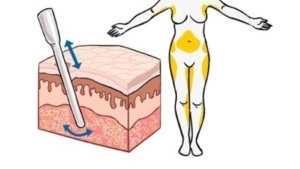
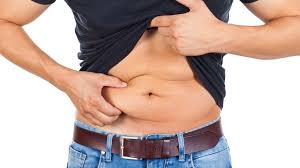
Liposuction addresses superficial fat, the kind you pinch between two fingers. The buccal fat pad sits considerably deeper, beneath muscle, and its removal calls for a dedicated approach that allows it to be seen directly, which protects the neighbouring structures. That is why the diagnosis matters so much. Fullness from superficial fat belongs to suction or radiofrequency, fullness from the buccal fat pad belongs to this operation, and clinical examination distinguishes them perfectly.
What Makes a Cheek Look Full
Four elements can contribute, often in combination: the buccal fat pad, superficial fat, the volume of the masseter muscle, and the bony structure itself. Each is addressed differently. A surgeon who examines all four before proposing anything is working from a diagnosis. That distinction explains why two patients with apparently similar cheeks sometimes receive different proposals, and why both can be right.
The Anatomy of the Lower Face, Layer by Layer
Understanding the four layers making up your cheek lets you identify what produces its fullness and assess a proposal rather than accept it. Beneath the skin lies subcutaneous fat, the kind you pinch between two fingers. It responds to weight loss and is addressed by suction or radiofrequency where it is in excess. Next comes the buccinator muscle, holding the cheek against the teeth. Then the buccal fat pad, sitting behind it within a capsule that keeps it in place. Finally the masseter, the powerful chewing muscle, further back toward the angle of the jaw. That arrangement explains why each layer calls for a distinct treatment: superficial fullness and deep fullness produce a similar appearance and are corrected in entirely different ways.
How the Surgeon Tells Them Apart
The simplest test is to pinch the cheek between two fingers, one inside the mouth and one outside. A substantial thickness between the fingers points toward subcutaneous fat. He then asks you to clench your teeth, which makes the masseter stand out and allows its bulk to be judged. What remains once those two components are set aside corresponds to the buccal fat pad, which gives that characteristic fullness to the middle of the cheek.
Comparing the Four Origins of a Full Cheek
| Layer involved | Appearance produced | Suitable treatment |
|---|---|---|
| Subcutaneous fat | Diffuse fullness, weight-sensitive | Suction or radiofrequency |
| Buccal fat pad | Fullness at the middle of the cheek | Buccal fat removal |
| Masseter muscle | Square look toward the jaw angle | Targeted medical treatment |
| Bony structure | Width of the jaw itself | Bone surgery, particular cases |
| Cheekbones with little projection | Reduced contrast with the cheek | Fat grafting or malar implant |
The last row surprises people and explains a great deal. A cheek can look full simply because the cheekbone above lacks projection, which reduces the contrast and flattens the transition. Reinforcing the cheekbone then refines the cheek visually without removing anything from it.
Where the Buccal Fat Pad Sits
It occupies the middle third of the cheek, deep down, and has three lobes extending in different directions. The anterior lobe advances in front of the masseter border, the intermediate lobe slips between the two muscles, and the posterior lobe extends toward the temple. That configuration explains why removal uses gentle pressure rather than traction: the surgeon lets the volume present itself through the opening and takes the intended portion, leaving the rest of the structure in place.
What Surrounds This Structure
The buccal fat pad has close relations with the chewing apparatus, with branches of the facial nerve and with the parotid duct, which carries saliva. Those relations are precisely described in the anatomical literature. That is why access uses a dedicated approach allowing the capsule to be seen before it is opened. This standard precaution among experienced practitioners explains why the procedure typically proceeds so straightforwardly.

What You Can Observe at Home
Place a finger inside your cheek and a thumb outside, then pinch gently. If you gather a clear, soft thickness, your fullness has a superficial component. Then clench your teeth and feel the area in front of your jaw angle. A muscle that stands out clearly indicates a bulky masseter. What remains, that fullness in the middle of the cheek moving neither on pinching nor on clenching, corresponds to the buccal fat pad.
The Role of Volume in How the Lower Face Evolves
The study of middle-aged patients offers an interesting perspective. In some people, the gradual descent of the buccal fat pad contributes to the lower cheek growing heavier over the years. In those patients, reducing that volume improves the jawline in a way the study's author describes as a useful alternative in situations where a more extensive procedure had been under consideration. It is a little-known and documented reading. The same study notes that certain populations have a relatively larger buccal fat pad, which explains a fullness of the lower cheek that is more frequent and often inherited. A surgeon accustomed to these anatomies assesses volume against what he ordinarily encounters rather than against a single norm, which is what allows accurate dosage in each patient.
How the Operation Runs and How the Result Unfolds
Buccal fat removal is among the shortest facial procedures and among the easiest to recover from. Here is exactly how it proceeds and how the result settles in.
The Preliminary Examination
The surgeon palpates your cheek from inside and outside to gauge the volume of the pad and distinguish it from superficial fat. He sometimes asks you to clench your teeth to assess the bulk of the masseter. He then examines your cheekbones, their height and projection, since that architecture determines how stable your result will be. This dual assessment, cheek and cheekbone, forms the heart of the consultation.
The Anaesthetic
The operation is most often performed under local anaesthesia with light sedation, which makes it accessible and comfortable. General anaesthesia remains available when it is combined with other procedures. Staying awake during the procedure surprises some patients and reassures others. The choice is discussed at consultation and depends as much on your preference as on the programme chosen.
The Operation, Minute by Minute
The surgeon makes a small incision inside the cheek, on the lining, at the level of the upper molars. No external scar is created, which is one of the major advantages of this technique. He gently parts the fibres of the buccinator muscle, identifies the capsule enclosing the pad, then delivers the intended volume with light pressure on the cheek. The step is repeated on the other side, and the whole takes about an hour according to published studies.
Dosage, the Heart of the Craft
This is where practitioners differ from one another. The surgeon removes a measured portion rather than the whole, assessing the effect on the cheek contour in real time. Publications report weights in the order of one and a half to one point seven grams per side in well-selected patients. These are small quantities, and it is precisely that restraint which produces a natural, durable result.
Closing
The incision is closed with a few dissolving stitches that disappear on their own within one to two weeks. Nothing needs removing, and the lining heals remarkably well, far faster than skin does. You leave the same day in the great majority of cases. It is an outpatient procedure by nature, which makes it compatible with a short stay.
The Result Calendar
The table gives the real reference points, which often surprise people by how gradual they are.
| Milestone | What is happening | What you see |
|---|---|---|
| Days 1 to 3 | Swelling at its peak | Cheeks fuller than before |
| Days 4 to 7 | Swelling receding | Return to the starting appearance |
| Weeks 2 to 4 | Refinement beginning | First visible signs |
| Months 2 to 3 | Contour emerging | Clear change |
| Months 4 to 6 | Result settled | Full definition |
| Beyond | Stable if weight is | Final result |
The first row is worth knowing in advance. The cheeks look fuller for a few days, which is the expected course of any swelling, and that phase passes calmly when you know it exists.
Why the Result Takes Months to Appear
Because the pad sits deep, the change transmits gradually to the more superficial structures. The tissues above reorganize, the skin adapts to the new volume, and the whole takes several months to find its balance. That gradualness is an advantage. It makes the change imperceptible to those around you, who notice a more defined face without identifying what has altered, and that is exactly the effect most patients are after.
Recovery, in Practice
Moderate discomfort when chewing for a few days, a sense of tightness in the cheek, and visible swelling for about a week. Ordinary painkillers suffice in the great majority of cases. A soft diet is recommended for three to five days, along with antiseptic mouthwashes to keep the lining clean. Those are the only constraints, and they stay modest compared with other facial procedures.
Returning to Activity
| Activity | When to resume |
|---|---|
| Desk work | Two to three days |
| Social life | About a week, once swelling has gone |
| Normal diet | Three to five days |
| Light exercise | One week |
| Intense exercise | Two to three weeks |
| Long-haul flight to Canada | A few days afterwards |
The last row is of particular interest to Canadian patients. Unlike nasal surgery or a facelift, this operation lets you travel home quickly, which makes a stay of three to four nights entirely realistic.
Choosing Your Surgeon
On this procedure the selection criterion rests less on technique, which is widely available, than on judgement in selection and dosage. The step itself is short and well codified. What separates practitioners is their ability to judge whether you will gain a durable benefit, and to gauge the quantity that suits your facial architecture. So the question to put is this: how do you determine how much to remove, and what are you looking at in my case to decide? A surgeon who answers by mentioning your cheekbones and your current volume is reasoning correctly.
The Three Questions That Sort
First: are my cheekbones pronounced enough to carry this result, or would they need reinforcing at the same time? Second: does my fullness come from the buccal fat pad, from superficial fat, or from muscle? Third: may I see results at one year at least, and if possible at three? On a procedure whose result settles across six months and is judged over time, that last request is the most revealing.
Comparing Selection Criteria
| Criterion | What it indicates | Reliability |
|---|---|---|
| Cheekbones assessed at consultation | An architectural view of the face | Very high |
| The four causes of fullness distinguished | A real diagnosis | Very high |
| Results shown at one year or more | What the face becomes | Very high |
| Dosage explained and justified | Command of the step | High |
| Malar reinforcement offered where useful | Concern for lasting balance | High |
| Willingness to direct you elsewhere | Honesty and experience | High |
| Portfolio limited to the first weeks | Does not show what matters | Low |
The second-to-last row deserves underlining. A surgeon who explains that your fullness comes from superficial fat and points you toward another solution renders you considerable service, and that frankness is more common than people assume.
Reaching This Operation From Across Canada
What varies between regions is not the availability of the step but the depth of the assessment preceding it, and that is what determines how durable your result will be. In and around Toronto, the GTA and Mississauga, the procedure is offered in several clinics, often as an isolated step; what is met less frequently is the full architectural assessment linking the analysis of your cheekbones to the volume to be removed. Toronto Pearson serves Istanbul directly, and the return flight being possible a few days afterwards suits a short stay well. In Vancouver, Surrey and Victoria, availability is good across the Lower Mainland, though results shown at several years remain scarce; ask explicitly for older images, a perfectly legitimate request. The flight from Vancouver is long, and this is one of the few facial procedures where that matters least.
In Calgary and Edmonton, what varies is whether the consultation covers your cheekbones as well as your cheeks; both cities reach Istanbul through a European hub, and it is worth having the quote specify whether malar reinforcement is being considered, since it changes the nature of the project. In Ottawa and Eastern Ontario, the difference between practitioners lies in the depth of assessment rather than in technical capability; ask for your oral hygiene and diet instructions in writing, covering the first week. Across Winnipeg, Regina and Saskatoon, access usually means travelling to a larger centre, and the brevity of recovery makes that journey easier to organize than for most facial surgery. In Halifax, Moncton and St. John's, Atlantic Canadians already travel for procedures of this order, and the short recovery makes a compact return trip realistic; plan for soft food and antiseptic mouthwash at home for the first days.

Canadian Cities Against Istanbul
No sums appear in this table, and no public plan covers this procedure anywhere in the country.
| City / region | Airport | Access to Istanbul | Local offer and cost |
|---|---|---|---|
| Toronto, GTA, Mississauga | YYZ | Direct links | Available; package often up to around 70 percent less |
| Vancouver, Surrey, Victoria | YVR | With connection | Older results worth requesting |
| Calgary / Edmonton | YYC / YEG | Via Europe | Architectural approach to verify |
| Ottawa | YOW | With connection | Depth of assessment varies |
| Winnipeg, Regina, Saskatoon | YWG | With connection | Travel required, recovery short |
| Halifax, Moncton, St. John's | YHZ | With connection | Compact trip realistic |
The right-hand column shows a constant: what varies between regions is not the availability of the step but the depth of the assessment preceding it.
Comparing the Destinations Canadians Consider
A search in English will lead you toward Mexico, the Dominican Republic, Colombia, Costa Rica and Thailand. What follows ranks methods of working rather than countries, and the grid applies equally to two clinics in the same city.
| Value criterion | Turkey / Istanbul (Aylan) | Mexico | Dominican Rep. | Colombia / Costa Rica / Thailand |
|---|---|---|---|---|
| Architectural facial assessment | Systematic | Variable | Variable | Variable |
| Malar reinforcement available same session | Yes | Variable | Variable | Variable |
| Results available at one year | Ask everywhere | To check | To check | To check |
| Direct with the clinic | Yes, no middleman | Often via agency | Often via agency | Often via agency |
| Cost vs private Canadian care | Often up to around 70 percent less | Often lower | Often lower | Often lower |
The second row counts particularly here. Being able to reinforce the cheekbones in the same session turns an isolated step into an architectural project, and that is what separates a full clinic from a practice offering a single service.
Istanbul, Ankara, Izmir and Antalya
Istanbul brings together teams performing every lower-face procedure daily, from this one through fat grafting to malar implants. That breadth allows a plan to be composed rather than a service applied. Excellent practitioners also work in Ankara, Izmir and Antalya, with additional connections from Canada. The deciding factor lies elsewhere: the ability to read your whole facial architecture before proposing anything.
Preparing Your Procedure and Organizing Your Stay
This is one of the simplest facial procedures to organize. About two months ahead, first contact, sending your photographs and receiving the quote. This is also when to stop smoking if you smoke, since the oral lining heals considerably better without tobacco, and to stabilize your weight if it is currently changing, since assessing the volume to remove requires a settled face. About one month ahead, a simple preoperative work-up in Canada, generally blood tests; because the procedure is often performed under local anaesthesia, the investigations requested stay light. Two weeks ahead, blood thinners stop on medical advice, including fish oil, turmeric and vitamin E, which limits the swelling of the early days.
The Photographs to Send
They allow a precise remote assessment. Take them in natural light, without makeup, hair pulled back, camera at eye level.
| View | What it reveals |
|---|---|
| Front, face relaxed | Cheek volume, width of the lower face |
| Right and left profile | Cheekbone projection, jawline |
| Right and left three-quarter | Transition from cheekbone to cheek |
| Front, smiling | How volume behaves on contraction |
| Front, cheeks drawn in | What refinement would look like |
The last view is the one surgeons request most and patients send least. Drawing the cheeks in slightly simulates the effect of the step approximately and helps considerably in defining the objective.
What to Pack, and the Day Before
Very little, this being a light procedure: antiseptic mouthwash if you have a preferred brand, straws for the first days, and the means to prepare soft meals. Add cold packs if your accommodation does not supply them; applied to the cheeks for the first two days, they markedly limit swelling. The day before, the surgeon carries out the full examination, palpating the cheek inside and outside, assessing masseter volume, and analysing your cheekbones and the drawing of your jaw. This is also when the dosage is finally decided, and you are entitled to ask the surgeon to explain the quantity he is aiming for and why.
How Your Stay Unfolds
| Day | What happens |
|---|---|
| Arrival | Airport welcome, transfer, rest |
| Day 1 | Consultation, examination, dosage confirmed |
| Day 2 | Procedure, back to the hotel the same day |
| Day 3 | Rest, soft diet, cold on the cheeks |
| Day 4 | Check-up, swelling receding |
| Departure | Flight to Canada possible from this point |
This four-night stay is among the shortest in all of facial surgery. That is what makes this procedure particularly compatible with limited leave, a frequent constraint for Canadian patients.
Instructions for the First Days, and Follow-up From Canada
Antiseptic mouthwash after every meal for a week, soft diet for three to five days, cold on the cheeks for the first forty-eight hours, and relative rest. Avoid very hot food and alcohol in the first week, both of which increase swelling. Follow-up then happens through photographs at the same angles, generally at one, three and six months. Since the result settles gradually, that rigorous comparison is the only way to perceive a change daily observation misses; take your images under the same conditions each time, same light and same distance.
Combinations and Alternatives
This procedure combines easily and belongs to a set of steps that redraw the lower face. With cheekbone reinforcement is the most logical and most frequent pairing: removing volume from the middle of the cheek while reinforcing the cheekbone above creates a contrast that defines the entire middle third. Reinforcement uses fat grafting with your own tissue, or a malar implant depending on the volume wanted. With a chin implant, a well-projected chin lengthens the lower face and visually strengthens the jawline; both steps happen in one session, the implant placed at the end so the whole profile can be judged, a combination particularly requested by male patients. With submental treatment, the area under the chin and the middle of the cheek belong to two different structures, but treating them together redraws the whole lower face and extends the stay by only a night or two.
Comparing the Commonest Combinations
| Combination | What it brings | Stay |
|---|---|---|
| This procedure alone | Lower cheek refined | Three to four nights |
| With malar reinforcement | Contrast and architecture | Four to five nights |
| With a chin implant | Profile and jawline redrawn | Four to five nights |
| With submental treatment | Complete jawline | Four to six nights |
| With rhinoplasty | Harmony of the whole face | Seven to ten nights |
| With a lower face lift | Volume and repositioning | Ten to fourteen nights |
The first four rows stay within a short-stay format, which keeps them compatible with limited leave. The last two move into a different category and are organized differently.
The Alternatives
In some patients, the impression of a full cheek comes from a lack of cheekbone projection rather than surplus volume below; adding volume above by fat grafting then refines the lower area visually, without removing anything, and suits faces that have lost volume in the middle third particularly well. Where the square look comes from muscle rather than fat, a targeted masseter treatment gradually reduces its volume; the effect appears within weeks and holds for several months, requires no surgery, and is renewed as needed.
| Solution | What it addresses | Durability |
|---|---|---|
| Buccal fat removal | Deep fat volume | Permanent |
| Suction or radiofrequency | Superficial fat | Durable if weight is stable |
| Masseter treatment | Muscle volume | Several months, renewable |
| Malar fat grafting | Lack of projection above | Durable, part resorbed |
| Malar implant | Cheekbone projection | Permanent |
| Lower face lift | Descended tissue | Around a decade |
This table shows why diagnosis outranks technique. Six different solutions address what looks like the same reason for consulting, and only a full examination allows the right combination to be chosen.

What a Good Consultation Should Produce
A diagnosis naming precisely the origin of your fullness among the possibilities in that table, a proposal that may combine several steps, and an explanation of the dosage envisaged for each. It should also address your cheekbones, even if that is not what brought you in. It is the best indication that a surgeon reasons in architecture rather than in isolated services, and it requires no technical knowledge to judge.
The Misconceptions About Buccal Fat Removal
Few facial procedures attract as many contradictory claims online. The most frequent is that this fat disappears with age anyway: age-related volume loss mainly concerns the superficial compartments of the upper face, while the buccal fat pad stays stable over time, which is precisely what justifies removing a measured portion without compromising the face's future. Another holds that it is a passing trend, when the step has long been described and performed, initially in reconstructive surgery, and rests on anatomy that is thoroughly understood; only its visibility on social media is recent. A third claims the more removed the better, but studies report modest quantities, in the order of one and a half grams per side, and experienced surgeons reason in proportion rather than in maximum quantity. A fourth is that it replaces a facelift: this one reduces volume, a facelift repositions descended tissue, and the two combine readily rather than substituting for each other.
Comparing Beliefs Against the Evidence
| What you hear | What is actually the case |
|---|---|
| This fat melts away with age | It stays stable, unlike the upper face |
| It is a recent trend | The step has long been described and performed |
| The more removed the better | Measured dosage produces the natural look |
| It replaces a facelift | Two different steps, often complementary |
| It is only for the under-thirties | A study documents benefit at fifty-four |
| The result shows immediately | It settles between four and six months |
| Liposuction would do the same | It addresses another, superficial layer |
The second-to-last row explains much of the impatience observed. The result settles gradually, and patients who know this pass through that period calmly rather than questioning themselves each morning.
Two Further Misconceptions
That it is only for very round faces: a genuinely surplus volume produces the most visible change, but patients with moderately full cheeks also benefit, particularly where the jawline lacks definition. And that men do not have this done: male demand is rising clearly, because a refined lower face brings out the jawline, a feature particularly sought after in men. The dosage differs slightly, a male face readily keeping a little more lateral volume, and a surgeon accustomed to male patients adjusts that nuance.
What the Surgery Delivers, and What You Deliver
| What you want | Comes from the surgery | Comes from you |
|---|---|---|
| Refining the lower cheek | Yes, precisely | No |
| Defining the jawline | Largely | Stable weight |
| Reinforcing the cheekbones | Yes, a combined step | No |
| Durability of the result | The step is permanent | A great deal: stable weight |
| Skin quality | No, outside its scope | A great deal: sun, skincare |
| Masseter muscle volume | No, a separate treatment | Chewing habits |
The last row deserves a note. A bulky masseter, sometimes linked to jaw clenching, contributes to a square look in the lower face and belongs to a distinct treatment, which a full examination identifies.
Further Questions People Hesitate to Ask
Everyday concerns come up constantly and rarely appear on clinic websites. You will keep a soft diet for three to five days, then a gradual return; a slight awkwardness in articulation for a few days, linked to internal swelling, resolves completely within a week. Chewing function stays unchanged in the long term, and you can brush your teeth normally while simply avoiding the incision area for the first days. You may feel a small irregularity in the lining for a few weeks, the dissolving stitch then the mucosal scar softening, and braces or a night guard can be resumed gradually after the first week.
On the result, the surgeon removes a quantity suited to each side, volumes never being perfectly identical naturally; the fat removed does not reform, though what remains can increase, so a stable weight keeps the result exactly as it settled. More can be removed later but is rarely needed, and if you change your mind, fat grafting can restore volume in that area. For Canadians specifically, the consultation can happen remotely through standardized photographs and a video call, the physical examination happening the day before; the return flight is genuinely possible a few days afterwards; the Canadian cold does not affect internal healing; and it is a good idea to tell your dentist before any dental work in the following weeks, the incision sitting at the level of the upper molars.
The Vocabulary, and How to Decide
The buccal fat pad, or fat body of the cheek, is the deep pocket this procedure reduces; it carries the name of the anatomist Marie François Xavier Bichat, which is why the operation is also called bichectomy, and it has three lobes. The buccinator is the muscle holding your cheek against your teeth, reached by parting its fibres gently. The masseter is a muscle rather than fat, which is why it belongs to an entirely different treatment. The malar region refers to the cheekbone area, whose projection forms the architectural foundation on which the durability of your result rests. Fat grafting means harvesting your own fat and reinjecting it, here most often at the cheekbones. Ptosis describes the gradual descent of a structure, applied to how the buccal fat pad weighs on the lower cheek over the years in some people.
The Terms That Cause Confusion
| Term | Not to be confused with | The difference |
|---|---|---|
| Buccal fat pad | Subcutaneous fat | Deep beneath muscle, versus superficial |
| Buccal fat removal | Cheek liposuction | Two different layers, two steps |
| Refining | Hollowing | Measured definition, versus excess |
| Bulky masseter | Full cheek | A muscle, versus fat |
The last pair explains why some patients do not obtain what they hoped from a volume reduction: their square appearance came from muscle rather than fat, and a full examination identifies that distinction immediately.
The Decision Summary
| The question | The short answer |
|---|---|
| What the procedure removes | A measured part of the buccal fat pad |
| Who it suits | Persistent round cheeks, well-projected cheekbones |
| If the cheekbones are discreet | Reinforce them in the same session |
| Does this fat melt with age | No, it stays stable |
| Quantity removed | Around one and a half grams per side |
| Scar | None, incision inside the cheek |
| Operation length | About an hour |
| Anaesthesia | Local with sedation most often |
| Stay in Turkey | Three to four nights |
| Flight home to Canada | A few days afterwards |
| Result settled | Four to six months |
| Gap vs private Canadian care | Often up to around 70 percent |
A solid malar foundation and a structure that stays stable over time are the two elements guaranteeing a durable result.
Three Checks Before You Commit
First: did the practitioner assess your cheekbones as much as your cheeks, and offer to reinforce them where needed? Second: did he distinguish the four possible origins of your fullness? Third: can he show results at one year at least? On a procedure whose effect settles across six months, a portfolio limited to the early weeks does not show what interests you.
In Summary: A Short Procedure With a Durable Result
Buccal fat removal is a short procedure, with no visible scar, whose result settles gently and holds over time. Its success rests on two things: good selection and measured dosage. The team at Aylan Clinic accompanies you in English at every stage, from reading your photographs through to the six-month check, with an assessment covering your whole face rather than a single area.
To go further into how the operation itself is organized, see our buccal fat removal in Turkey procedure page, and consult our pricing in Turkey page for an estimate built on your own case. You can also explore the full range of facial surgery in Turkey.