
Two techniques carry the name facelift and produce very different results. A traditional facelift lifts the skin and tightens a membrane just beneath it, called the SMAS. The deep plane passes under that membrane, releases the ligaments holding the tissues down, and repositions the whole upward without pulling on the skin. That distinction determines the direction of movement, how long the result lasts, how quickly you recover, and above all how natural the face looks once healing is complete.
This guide complements our deep plane vs traditional facelift in Turkey procedure page, within our wider facial surgery in Turkey section. You will find what each technique actually does, the published data on how long each lasts, what accounts for the natural look of one of them, and the markers that tell you which is being offered to you. No figures appear here: the amount depends on the technique and any combined steps, so a single number would mean nothing. You can compare on our pricing in Turkey page or request a free quote at any time, with no obligation.
The Difference in One Sentence
A traditional facelift lifts the skin and tightens the SMAS, the fibrous membrane just beneath it. The deep plane passes under that membrane, releases the ligaments holding the tissues down, and repositions the whole face upward without pulling on the skin. That distinction is no matter of vocabulary: it determines the direction of movement, how long the result lasts, how quickly you recover, and how natural the face looks once healing is complete.
Why the Deep Plane Looks Natural
The reason lies in the direction of the movement. Ageing brings the tissues down vertically under gravity. The deep plane therefore raises them vertically, along the exact axis of their descent, restoring their original position.
A traditional lift applies a more lateral pull, toward the ear, because it works on a superficial layer that cannot be raised any other way. That lateral direction is what produces the pulled look the public associates with facelifts of the past.
The Ligaments, Key to Natural Movement
Ligaments anchor the soft tissues of the face to the skeleton at a few precise points, notably at the cheekbone and along the jaw. They stretch over the years and let go of what they were holding.
The deep plane releases them, which lets the tissues rise freely to their original height. A traditional lift leaves those ligaments in place and pulls on what stays attached, which accounts for the difference in how the two techniques read.
Comparing the Two Techniques
The table sets out what genuinely separates them.
| Criterion | Deep plane | Traditional facelift |
|---|---|---|
| Working plane | Beneath the SMAS, deep planes | Skin and superficial SMAS |
| Retaining ligaments | Released then repositioned | Left in place |
| Direction of movement | Vertical, along the axis of descent | More lateral, toward the ear |
| Look achieved | Natural, no skin tension | Depends on the pull applied |
| Midface and cheekbone | Corrected directly | Barely reached |
| Skin undermining | Almost none | Extensive |
| Speed of recovery | Markedly faster | Longer |
| How long the result lasts | More than fifteen years | Three to seven years |
The midface row explains much of the perceived difference. The deep plane reaches the cheekbone and the nasolabial fold, which a traditional lift largely leaves in place, giving the face a coherence that skin tension alone does not produce.
What the Longevity Data Shows
A study published in 2026 followed ninety-three people who had a deep plane and later considered a revision. The average interval before that second procedure was even considered reached close to eleven years, and some people kept their result for as long as thirty.
The same study records a striking figure: 94.4 percent of people reported documented satisfaction within the first year, and the great majority maintained it beyond a decade.
Age at the Time of Surgery
That same study offers an observation few sites relay. People who had surgery at fifty-three or earlier kept their result for twelve and a half years on average, against nine and a half years for those who had it later.
In other words, addressing facial changes earlier gives a result that lasts longer. It is useful information for anyone hesitating between acting now and waiting a few more years.
The Layers of the Face, and Where Each Technique Works
Understanding the five layers a facelift passes through explains within minutes why the two techniques produce such different results. Skin comes first, then a layer of superficial fat. Next comes the SMAS, the fibrous membrane wrapping the muscles of expression and transmitting their movement to the skin. Beneath the SMAS lies a gliding plane, then deep fat and the ligaments anchoring everything to the skeleton. It is in that gliding plane that the deep plane works, while the traditional technique stays above the SMAS.
What the SMAS Transmits
This membrane links the muscles of expression to the skin. Tightening it at the surface puts the whole structure carrying your expressions under tension, which accounts for the sense of stiffness some people describe after a traditional lift.
The deep plane passes beneath it and moves the whole as one block, never placing the membrane under tension. Expressions therefore stay entirely free, and that is one reason facial movement looks natural after this technique.
The Ligaments, in Detail
Three groups matter particularly. The cheekbone ligament, which holds the malar fat and whose stretching explains the hollow forming under the eye. The ligaments along the jaw, whose loosening lets the jowls appear. Added to those are the attachments in front of the ear, which limit the mobility of the whole. The deep plane releases all three groups, letting the tissues rise freely. The traditional technique leaves them in place and pulls on what stays anchored.
Comparing the Working Plane
The table shows where each technique operates.
| Layer | Deep plane | Traditional facelift |
|---|---|---|
| Skin | Barely undermined | Widely undermined |
| Superficial fat | Moved with the block | Left in place |
| SMAS | Passed through, never tensioned | Tightened and sutured |
| Deep gliding plane | The main working plane | Not approached |
| Retaining ligaments | Released then repositioned | Left intact |
| Deep fat | Repositioned | Not reached |
The last three rows contain the whole difference. The deep plane works on structures the traditional technique does not reach, and those are precisely the ones carrying the position of the midface.
Why the Skin Is Barely Undermined
This is the point that explains both the natural look and the faster recovery. The deep plane moves a composite block in which skin, fat and SMAS stay attached to one another, so the skin keeps its blood supply and takes no tension.
The traditional technique widely separates the skin from the layer beneath, then redrapes it after tightening the SMAS. That extensive undermining explains two things: the skin then depends on the pull applied, and its recovery takes longer than that of a block left intact.
The Midface, the Decisive Zone
The malar fat, which gives the cheekbone its fullness, sits deep beneath the SMAS. It descends over the years and forms the fullness visible above the nasolabial fold. The deep plane reaches it directly and repositions it. The traditional technique, staying above the SMAS, cannot mobilize it, which explains why the midface remains largely unchanged after a traditional lift.
What You Can Observe at Home
Place two fingers on your cheekbone and lift the skin vertically, toward the temple. Watch what happens at the nasolabial fold and the jowl: that is approximately the effect of a deep plane.
Then repeat the same movement pulling toward the ear rather than upward. The difference between the two directions is immediately visible in a mirror, and it illustrates in ten seconds everything this guide explains.
What the Deep Plane Addresses Better
The midface first of all. A cheekbone that has emptied, the fold running from the nostril toward the corner of the mouth, and the transition between lower eyelid and cheek all belong to the deep planes this technique reaches directly.
Thick tissue next. A full face, dense skin or a strong framework call for structural repositioning that superficial tension alone does not achieve. It is also why this technique suits male patients particularly well, male tissue generally being thicker.
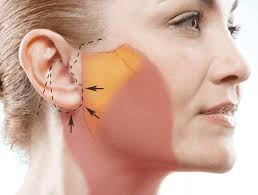
Why Recovery Is Faster
This is the point that surprises most people, and it follows from the anatomy. The deep plane moves a composite block in which skin, fat and SMAS stay attached to one another, so the skin is barely undermined at all. Its blood supply stays intact, the space left beneath it is minimal, and swelling and bruising therefore resolve considerably faster than after the extensive skin undermining a traditional lift requires.
What Makes the Result Last
The deep plane anchors the correction in stable deep tissue rather than in the elasticity of the skin. That difference in anchoring accounts for a hold exceeding fifteen years, where the traditional technique sits between three and seven. The skin continues to age in both cases; the distinction concerns the structure beneath it, which, once repositioned in depth, does not descend at the same rate as a simple superficial tightening.
Comparing Against Your Situation
The table helps you place yourself before the consultation.
| Your situation | Suitable technique | What you obtain |
|---|---|---|
| Midface descended, cheekbone emptied | Deep plane | Full repositioning, long hold |
| Marked nasolabial fold | Deep plane | Direct correction of the fold |
| Full face, thick tissue | Deep plane | Movement tension cannot achieve |
| Jawline to redraw | Deep plane | Durable vertical repositioning |
| Very early changes, toned skin | Traditional possible | More limited correction |
| A further lift after a first procedure | Deep plane | Reaches planes never touched |
The second-to-last row is the only one where the traditional technique keeps a domain of its own: very early changes in someone whose skin is still toned. As soon as the midface is involved, the deep plane delivers a correction the other technique does not reach.
The Case of Second Procedures
Someone who has already had a traditional facelift still has deep planes that were never approached. A deep plane can therefore work there on untouched tissue, which often gives results superior to a second superficial procedure.
It is a frequent and well-documented situation. It explains why many people operated on ten or fifteen years ago by traditional technique now turn to the deep plane rather than to a repeat of the same step.
What Each Technique Asks of the Surgeon
The traditional lift remains a well-codified step, widely performed and widely taught. Its dissection stays superficial, which accounts for its spread and its long history.
The deep plane calls for dissection beneath the SMAS, close to the nerve branches, and precise knowledge of which ligaments to release. It is a demanding technique, and command of it comes from regular practice rather than from initial training alone. That is why the question to ask is not only which technique is used, but how many deep plane procedures are performed each year. A surgeon who practises it routinely will give you that figure without hesitating.
Comparing Duration and Scope
The table gathers the published data.
| What is measured | Deep plane | Traditional facelift |
|---|---|---|
| How long the result lasts | More than fifteen years | Three to seven years |
| Interval before revision considered | Close to eleven years on average | Considerably shorter |
| Satisfaction at one year | 94.4 percent documented | High as well |
| Midface correction | Direct and complete | Partial |
| Operating time | Longer | Shorter |
| Speed of recovery | Markedly faster | Longer |
The last row is the one that surprises most. The deep plane asks more of the surgeon in theatre and less of you afterwards, since the skin it leaves attached recovers far faster than skin that has been widely undermined.
What Both Techniques Share
The incision follows the same path, hidden in front of and behind the ear then into the hairline. General anaesthesia and length of hospital stay are comparable. What separates the two happens entirely beneath the skin, in the depth of the dissection and in how the ligaments are handled. It is invisible on a photograph of a scar and decisive for the result at fifteen years.
Recognizing a Genuine Deep Plane
The name of this technique is used more often than the technique is performed. Three precise questions verify what is being offered.
First: how many deep plane procedures do you perform each year? A surgeon practising it routinely tracks that figure and gives it without hesitating.
Second: which ligaments do you release in my case? An answer naming precisely the cheekbone attachments and those along the jaw signals genuine command of the deep planes.
Third: in which direction do you reposition the tissues? The expected answer is vertical, along the axis of their descent, which immediately separates this technique from the lateral pull of a traditional lift.
What a Portfolio Must Show
Results at one year minimum, and ideally at five where the surgeon has been practising long enough. The strength of the deep plane reads precisely in its durability, which images at three months do not show. Look also for three-quarter views, the angle at which midface repositioning shows most. A raised cheekbone and a softened fold are immediately visible there, whereas a front view leaves them to be guessed at.
What Each Criterion Tells You
The table separates what predicts a genuine deep plane from what predicts nothing.
| Criterion | What it indicates | Reliability |
|---|---|---|
| Annual number of deep plane procedures | Genuine practice of the technique | Very high |
| Ligaments named precisely | Knowledge of the deep planes | Very high |
| Vertical direction explained | Understanding of the mechanism | Very high |
| Results shown at five years | The durability that distinguishes | Very high |
| Three-quarter views in the portfolio | The midface made visible | High |
| Realistic operating time quoted | A genuinely deep dissection | High |
| The words deep plane without detail | A label rather than a technique | Low |
The last row is worth knowing before any consultation. The term circulates widely, and only precise questions about ligaments and the direction of movement separate the technique from its name.
Choosing Turkey, and Comparing Destinations
Istanbul concentrates teams performing the deep plane routinely, with the annual volume that command requires. That regularity, more than any facility, accounts for the results seen there. Excellent practitioners also work in Ankara, Izmir and Antalya. The deciding criterion remains the annual number of deep plane procedures, wherever the surgeon practises.
A search in English will also lead toward Mexico, the Dominican Republic, Colombia, Costa Rica and Thailand. The grid that follows compares working methods, and it applies equally to two surgeons in the same city.
| Value criterion | Turkey / Istanbul (Aylan) | Mexico | Dominican Rep. | Colombia / Costa Rica / Thailand |
|---|---|---|---|---|
| Annual deep plane volume | High | Variable | Variable | Variable |
| Ligaments named at consultation | Systematic | To verify | To verify | To verify |
| Results available at five years | Ask everywhere | To check | To check | To check |
| Direct with the clinic | Yes, no middleman | Often via agency | Often via agency | Often via agency |
| Cost vs private home-country care | Often up to around 70 percent less | Often lower | Often lower | Often lower |
The second row is the one to put everywhere. A surgeon who names precisely the ligaments he releases is describing a technique he performs; one who stays general is describing a technique he has heard about.
Access and the Stay
Deep plane facelift surgery is available in many countries, while the deep plane itself remains scarcer: it is a question of volume, since this technique is maintained through regular practice that few population catchments allow. That is what explains so many journeys. Direct links reach Istanbul from many major cities, and additional connections serve Ankara, Izmir and Antalya.
Plan for ten to fourteen nights on site, as for a traditional facelift, and around three weeks before a long-haul return flight. English matters for the recovery instructions, which run across the weeks following surgery and involve several stages. Ask for those instructions in writing, and note that the deep plane brings you back to a normal appearance faster than a traditional lift would.
Three Checks Before You Commit
First: how many deep plane procedures does this surgeon perform each year? Second: which ligaments does he intend to release in your case? Third: can he show results at five years? On a technique whose strength is durability, that is the only milestone proving what it delivers.
In Summary: What to Take From This Guide
The deep plane repositions the deep planes vertically after releasing the ligaments, applying no tension to the skin at all. That is what produces a natural result, a fast recovery and a hold exceeding fifteen years. The traditional lift tightens a superficial layer with a lateral pull, after widely undermining the skin; it keeps a domain on very early changes, with a hold sitting between three and seven years. Everything above fits into this table, worth consulting before your appointment.
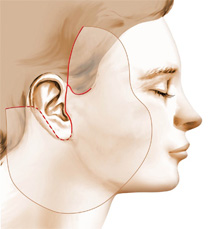
| The criterion | Deep plane | Traditional facelift |
|---|---|---|
| Working plane | Beneath the SMAS, deep planes | Skin and SMAS at the surface |
| Retaining ligaments | Released | Left in place |
| Direction of movement | Vertical, axis of descent | Lateral, toward the ear |
| Look of the result | Natural, no skin tension | Depends on the pull |
| Midface and cheekbone | Corrected directly | Barely reached |
| Skin undermining | Almost none | Extensive |
| Speed of recovery | Markedly faster | Longer |
| How long the result lasts | More than fifteen years | Three to seven years |
| Facial expressions | Entirely free | Membrane under tension |
| Thick tissue, full faces | Particularly suited | Limited repositioning |
| Second lift after a first | Works on intact planes | Repeats the same layer |
The recovery and duration rows are the ones that decide most often. A faster return to normal and a hold two to four times longer change the whole calculation, even allowing for the difference in price. For the full detail of the procedure itself, see our deep plane vs traditional facelift in Turkey page, compare on our pricing in Turkey page, and request a free quote built on your own photographs and situation.