
The short answer is yes. Dentures at Aylan Clinic allow patients to replace missing teeth — a few or a whole arch — with a well-fitting, natural-looking prosthesis, completed in a single trip of seven to ten days, for up to 60% less than Canadian private prices. Our in-house laboratory is what makes single-trip treatment possible: a denture normally requires four or five separate appointments spread across six to eight weeks, because each stage involves sending work away and waiting; here those stages happen days apart, with the technician in the same building.
This guide complements our Dentures in Turkey procedure page and sits within our dental care in Turkey section. It covers full dentures, partial dentures, and — the option most patients have not properly considered — implant-retained dentures, which solve the stability problem that makes conventional lower dentures difficult. At any time you can review our pricing in Turkey to understand how a quote is built.
1. Understanding dentures
What is a denture?
A removable prosthesis replacing missing teeth and the surrounding gum tissue. A complete denture replaces all the teeth in an arch; a partial denture fills gaps where some natural teeth remain.
Modern dentures are considerably better than their reputation suggests. Materials, tooth forms and fabrication techniques have all improved substantially, and a well-made denture designed for your particular anatomy is a very different object from one made to a generic template.
What a denture does
Restores appearance, restores a good deal of chewing function, supports the lips and cheeks — which affects how your whole lower face looks — and prevents remaining teeth from drifting into the gaps.
That third point is worth expanding on. When teeth are lost, the lips and cheeks lose their internal support and gradually fall inward, which is what produces the collapsed appearance associated with tooth loss. A properly designed denture restores that support, and the change in facial appearance is often more striking to patients than the teeth themselves.
How stable is a denture?
This is the honest question, and the answer differs markedly between the two arches.
An upper denture gains suction from the palate, which gives it genuine stability. Most patients manage an upper denture well.
A lower denture has no palate to seal against, and the tongue and lip muscles work against it constantly. Even a well-made lower denture is less stable than an upper one, and for some patients — particularly those with a resorbed lower ridge — a conventional lower denture is genuinely difficult to wear.
This asymmetry explains a pattern we see constantly: patients who are content with their upper denture and cannot manage the lower one. It is also why implant retention is worth understanding before you decide.
What are dentures made of?
The base is usually acrylic, and flexible thermoplastic materials are available for some partial dentures. The teeth are acrylic or composite, in a range of qualities — higher-grade teeth resist wear better and look more natural.
A cast metal framework is used for many partial dentures, providing rigidity and allowing a thinner, less bulky design than all-acrylic.
2. Types of denture
Complete denture
Replaces all the teeth in an arch. Rests on the gum and underlying ridge, gaining retention from the fit of the base against the tissue and, in the upper arch, from suction across the palate.
Partial denture — acrylic
A plastic base carrying the replacement teeth, held by small clasps around some of the remaining teeth. Straightforward and economical, though bulkier than a metal-framed design. Often used as an interim solution, or where several teeth may be lost in future and the denture will need adding to.
Partial denture — cast metal framework
A precision-made metal framework carrying the replacement teeth, with clasps engaging the remaining teeth. Considerably thinner and more rigid than an acrylic partial, which means it is less bulky, more comfortable, and it distributes force better across the supporting teeth. For a long-term partial denture, this is generally the better choice, and the difference in comfort is noticeable.
Flexible partial denture
A thermoplastic base that flexes slightly, allowing it to be inserted where a rigid design could not, and with gum-coloured clasps that are less visible than metal. More aesthetic and comfortable for some patients; less rigid, which means force distribution is less controlled. Suited to particular situations rather than universally.
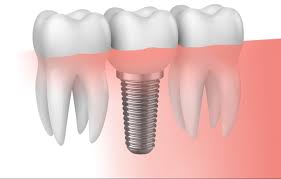
Implant-retained overdenture
A denture that clips onto implants. It still comes out for cleaning, but it does not move while you eat or speak. For a lower arch this is transformative, and it is the option most patients have not had explained to them properly. Two implants with attachments convert an unstable lower denture into something that stays put — at a fraction of the cost of a fixed implant bridge. If you have struggled with a lower denture, this is the section of the page to read twice. It is covered in detail in section 4.
Immediate denture
Fitted at the time of extraction, so that you are never without teeth. Made in advance from impressions taken before the teeth are removed. The gum shrinks substantially as it heals over the following months, so an immediate denture requires relining or replacing once healing is complete. It is a bridging solution rather than a definitive one — but for patients who cannot be without teeth, it matters a great deal.
3. Getting a denture that fits: what makes the difference
The gap between a good denture and a poor one is mostly in the process rather than the materials. Five stages matter.
Accurate impressions
A denture is only as good as the impression it is made from. Well-made dentures typically involve two impression stages: a first to make a custom impression tray shaped to your mouth, and a second using that tray to capture the tissue precisely. Single-stage impressions with a stock tray are quicker and produce a less accurate fit. This is one of the most common corners cut in denture fabrication, and it is invisible to the patient until the denture is in the mouth.
Recording how your jaws relate
The vertical distance between your jaws and the way they meet has to be recorded and transferred to the laboratory. Get this wrong and the denture is too tall or too short — which affects appearance, comfort, speech and chewing, and cannot be corrected without remaking.
The wax try-in
The most important appointment. Your denture is assembled in wax, with the actual teeth set in place, and tried in your mouth before anything is finalised. You see it, speak with it, and assess the appearance while everything can still be changed. Tooth position, shade, how much shows when you smile, the fullness of the lip — all adjustable at this stage and effectively fixed afterwards. A denture made without a wax try-in is a denture you see for the first time when it is finished. Ask about this specifically.
Careful finishing
The fit surface, the borders and the polish all affect comfort. Borders that are slightly too long cause soreness; slightly too short and retention suffers.
Adjustment appointments afterwards
Almost every new denture needs adjusting in the first days as sore spots appear. This is normal and expected — the denture is settling against tissue that has not carried one before, or not this one. Having those adjustment appointments available before you fly home is one of the practical advantages of a single-trip approach with a longer stay.
4. Implant-retained dentures: the option worth understanding
What is it?
Two, three or four implants placed in the jaw, with attachments that your denture clips onto. The denture still comes out for cleaning, but while it is in, it does not move.
Why it matters so much for the lower arch
A conventional lower denture floats on a ridge with no palate to hold it and active muscles working against it. Two implants change that completely: the denture is anchored at the front and cannot lift or rock. Patients who have struggled for years with a lower denture frequently describe this as the most significant improvement in their quality of life from any dental treatment. Being able to eat without the denture moving, laugh without holding it, and speak without adjusting it are not small things.
How does it compare to a fixed implant bridge?
A fixed bridge on four or six implants does not come out at all, feels closest to natural teeth, and gives the highest chewing efficiency. It also costs considerably more. An overdenture on two implants delivers a large proportion of the practical benefit — stability, confidence, the ability to eat normally — for substantially less. It comes out, which some patients actually prefer for cleaning, and it covers more tissue. For a patient for whom a fixed bridge is out of reach, this is not a consolation prize. It is a genuinely good treatment, and for the lower arch it solves the actual problem most denture wearers have.

Can I convert my existing denture?
Sometimes, yes. Where your current lower denture fits well and is in good condition, it can occasionally be adapted to receive attachments after implants are placed, which reduces the cost further. Whether yours is suitable is assessed at your consultation — bring it with you if you are travelling, or send photographs.
What is the timeline?
Implants need three to six months to integrate before the denture can be connected to them. In the meantime you wear your denture unattached, as before. Practically that means two trips, unless implants are placed during a first trip that you were making anyway for other treatment. Your plan sets this out clearly.
How many implants?
Two is the usual minimum for a lower overdenture and it works well. Four gives greater stability and is sometimes preferred for an upper overdenture, where retention demands are different. Your CBCT establishes what your bone allows.
5. Assessment: building your plan
What happens at assessment
A full examination of any remaining teeth and of the ridges where teeth are missing, radiographs, photographs, and an assessment of your existing denture if you have one. We look at ridge shape and height, the quality of the gum tissue, the position and condition of any remaining teeth, how your jaws relate to each other, and — for a partial denture — whether the teeth intended to carry it have adequate root support.
If you already have a denture, bring it
This is genuinely useful. An existing denture tells us a great deal: where it is worn, where it rubs, how the teeth have been positioned, and what has and has not worked for you. Bring it even if you dislike it, and be specific about what bothers you. “It moves when I eat” and “it looks too big” lead to different design decisions.
Assessing remaining teeth for a partial denture
A partial denture transmits force to the teeth that carry it. Those teeth need adequate root support, and the radiograph shows it. Where a tooth is already loose or has substantially reduced bone support, using it as a clasp tooth accelerates its loss. Sometimes the honest plan is to remove it and make a complete denture rather than build a partial around a tooth that will not last.
For implant-retained options
CBCT establishes whether you have adequate bone for implants and where they can be placed. For a lower overdenture the bone at the front of the jaw is usually adequate even in patients with substantial resorption elsewhere, which is part of why this option is available to so many people.
Existing gum disease and decay
Treated first. A denture resting on inflamed tissue is uncomfortable, and a clasp on a decayed tooth is building on something that will fail.
6. Why Canadians choose Turkey for dentures
| Factor | Canada (private) | Turkey — Aylan Clinic |
|---|---|---|
| Cost | High, particularly for metal-framework and implant-retained | Up to 60% less, all-inclusive |
| Timeline | Four or five appointments over 6–8 weeks | One trip of 7–10 days |
| Laboratory | External, adding a week or more per stage | In-house, technician on site |
| Try-in and adjustments | Separate appointments over weeks | Within the same visit |
| Accommodation | Not applicable | 5-star hotel, full board included |
| Companion | Not applicable | Free, accommodated and fed |
Why the in-house laboratory matters here more than anywhere
Denture fabrication is a sequence of stages, each dependent on the last. Impressions, custom tray, second impression, jaw relationship record, wax try-in, finishing. In a conventional arrangement each stage means a week or two of waiting. With the laboratory on site, those stages happen every day or two. More importantly, the technician can see you. For the wax try-in in particular, having the person who set the teeth in the room while you assess the appearance is worth more than any written instruction.
The adjustment period
This is a practical advantage patients notice. New dentures need adjusting, and having those appointments in the same trip means you leave with a denture that has already been refined against your tissue rather than one you will be adjusting at home over the following weeks.
Insurance
Dentures are restorative rather than cosmetic work, and they are the kind of treatment Canadian dental plans typically do cover — subject to your annual maximum, and frequently with a replacement frequency limit of several years. Implant components are usually treated separately and less generously. Ask your insurer specifically about both, and use your itemised invoice, which separates the denture from any implant work.
7. Your trip, day by day
Seven to ten days for most cases. Complete dentures for both arches, or cases involving extractions, run toward the upper end.
Day 1 — Arrival
Airport transfer to your hotel. Nothing clinical today — Canadian flights generally arrive after an overnight leg.
Day 2 — Assessment and first impressions
Two to three hours. Examination, radiographs, photographs, and assessment of your existing denture if you have brought one. Then first impressions, from which your custom trays are made overnight. Your plan is confirmed: which type of denture, materials, and whether any extractions or implant work forms part of it.
Day 3 — Second impressions and jaw records
Using the custom trays made from your first impressions, so the fit surface is captured precisely. The relationship between your jaws is recorded, and the shade and shape of the teeth are selected together — with reference to photographs of you before tooth loss if you have any.
Day 4 — Wax try-in
The appointment that determines your result. Your denture is assembled in wax with the actual teeth set in position, and you try it in. Speak with it. Smile. Look at yourself in natural light. Assess how much tooth shows, how full your lip looks, whether the teeth are too even or too white, whether the length looks right for your face. Say what you want changed. Everything is adjustable now.
Day 5 — Second try-in if needed
Where changes were requested, the revised try-in is presented. Some patients approve at the first try-in; others prefer to see an adjustment, and there is time for that.
Days 6 to 7 — Finishing
Your denture is processed and finished in the laboratory. Free time in Istanbul. Patients visit the historic quarter, the Bosphorus, the bazaars.
Day 8 — Fitting
Your finished denture is fitted, the bite is checked and adjusted, and the borders are refined. Most patients wear it out of the clinic. It will feel bulky and strange — this is universal and it passes.
Days 9 to 10 — Adjustment appointments
This is where the single-trip approach earns its value. Sore spots appear in the first day or two of wearing a new denture, and they are relieved in minutes once identified. Having one or two adjustment appointments before you fly means you leave with a denture that fits you rather than one you will be struggling with at home.
Departure
You receive your documentation: a treatment report describing the denture type and materials, care instructions, and — for a partial denture — details of which teeth carry it, for your Canadian dentist.
If your case involves extractions or implants
Extractions require healing before a definitive denture is made. Where teeth are being removed, the usual approach is an immediate denture fitted at extraction, then a definitive denture or a reline once the ridge has healed at three to six months — which means two trips. Implant-retained cases also require two trips, since the implants must integrate before the denture is connected. Your plan states which applies and the intervals involved, from the outset.
8. Getting the appearance right
This matters more than patients expect
A complete denture determines the entire appearance of your lower face: how much tooth shows, how full your lips look, the proportions of your smile. It is facial design as much as dentistry.
Tooth shade
Denture teeth are available in a wide range of shades. The most common regret is choosing teeth that are too white and too uniform for the patient’s age — a full arch of brilliant white teeth on a patient of seventy reads as artificial immediately. Our practical advice: choose a shade one step less bright than your instinct, and assess it in natural daylight rather than under clinic lighting. Almost nobody regrets slightly less white.
Tooth shape and arrangement
Denture teeth can be set with slight irregularity — a minor rotation, subtly different edges, a canine a touch more prominent. This is what makes an arch read as real rather than manufactured. Natural teeth are never perfectly aligned or identical, and a good technician builds that in. If you prefer a more uniform look, say so at the try-in.
Lip support and facial fullness
The thickness of the denture base at the front, and the position of the teeth, determine how much your upper lip is supported. Too little and the lip falls inward; too much and it looks pushed out. This is one of the things the try-in settles, and it is why looking at yourself in profile matters as much as from the front.
How much tooth shows
At rest and when smiling. Too much looks startling; too little looks aged. This varies naturally with age and lip length, and it is a design decision rather than a given.
Bring photographs
An old photograph of yourself smiling, from before you lost your teeth, is the single most useful thing you can bring. It tells us the shape, shade and arrangement of your own teeth — which is frequently exactly the target. Patients who bring one consistently get a more natural result.
9. Living with a denture: the first weeks
The first few days
It will feel bulky, and your tongue will be aware of it constantly. Saliva production often increases initially. Speech feels odd. All of this is universal and all of it passes. Most patients adapt substantially within one to two weeks, and stop noticing within a month.
Speech
Practise. Reading aloud for fifteen minutes a day accelerates adaptation considerably, and most patients find their speech normal within a week or two. Certain sounds — s, f and th — take the longest. If a specific sound remains difficult after a few weeks, a small adjustment can often resolve it.
Eating
Start with soft food cut small, and chew on both sides simultaneously rather than one side at a time. Biting with the front teeth dislodges a denture, so use the side teeth to cut. Progress over two to three weeks. Hard, sticky and very chewy foods are the last to return, and some patients never fully manage things like corn on the cob with a conventional denture. An implant-retained denture removes most of these limitations, which is worth bearing in mind if food is important to you.
Sore spots
Expected in the first days. A new denture presses on tissue in ways that only become apparent with use. They are relieved in minutes by adjusting the denture. Do not attempt to adjust it yourself, and do not stop wearing it — an unworn denture cannot be adjusted to fit. This is why the adjustment appointments in your trip matter.
Adhesive
A well-fitting denture should not need adhesive, and a denture that requires substantial adhesive to stay in usually needs relining or is poorly fitted. That said, some patients like a small amount for confidence, particularly in social situations. Used sparingly it is entirely reasonable. If you find yourself needing more and more adhesive over months or years, that is a sign the fit has changed rather than a problem with you.
Overnight
Take your denture out at night unless specifically advised otherwise. The tissue benefits from a period without pressure, and it reduces the risk of fungal infection. Store it in water or a cleaning solution, never dry — acrylic can distort if it dries out.
10. Caring for your denture
Daily
Remove and clean it after meals where you can, and thoroughly once daily. Brush it with a denture brush and a denture cleaner or mild soap — not ordinary toothpaste, which is abrasive and gradually scratches the acrylic, making it stain more readily. Clean over a basin filled with water or a folded towel. Dentures are dropped most often while being cleaned, and acrylic fractures on a hard surface.
Your gums and remaining teeth
Brush your gums and tongue daily with a soft brush. For a partial denture, the teeth carrying it need particular attention — clasps trap plaque, and decay under a clasp is the most common reason a partial denture eventually fails.
Soaking
Overnight in water or a denture cleaning solution. Follow the product instructions on duration, and rinse thoroughly before wearing.
What to avoid
Hot water, which distorts acrylic. Bleach, unless specifically recommended. Abrasive cleaners. Ordinary toothpaste.
Professional review
Annually, even if everything feels fine. Your dentist checks the fit, the condition of the denture, the health of the tissue beneath it, and — critically — the remaining teeth for a partial denture.
11. Relines, repairs and replacement
Why a denture stops fitting
Because the ridge beneath it continues to resorb. A denture that fitted perfectly two years ago may be loose today, not because it has changed but because the tissue it rests on has. This is normal and expected, and it is managed with a reline rather than a new denture.
What is a reline?
New material is added to the fit surface of your existing denture so that it matches your current ridge shape. The teeth and the appearance stay the same; only the fit surface changes. Typically needed every two to five years, and considerably less expensive than a new denture.
Repairs
A fractured denture or a lost tooth can usually be repaired. Keep all the pieces, do not attempt to glue it, and see a dentist — household adhesives make a proper repair considerably harder and some are not safe in the mouth. A denture that fractures repeatedly in the same place usually indicates a fit problem, and relining may prevent recurrence.
Replacement
Most dentures are replaced every five to ten years, as materials wear and as accumulated changes in the ridge make relining insufficient. Denture teeth wear down over years of use, which gradually reduces chewing efficiency and changes the bite. This happens slowly enough that patients often do not notice until a new denture makes the difference obvious.
Planning for this in Canada
A reline is straightforward work that any Canadian dentist can do, and your treatment report tells them what materials your denture is made from. For patients who prefer to have relines done here, it is a short appointment that combines easily with a trip you were making anyway.
12. Aylan Clinic across Canada: 50 cities we serve
Aylan Clinic works with patients from every province and territory in Canada. Wherever you live, the process begins the same way: a free online consultation, with photographs sent from home and no need to travel before your treatment dates are confirmed. Below are the fifty Canadian cities from which we most frequently receive enquiries, with practical notes on travelling to Istanbul from each region.
Greater Toronto Area and southern Ontario
Toronto is our single largest source of Canadian patients, and Pearson offers the most direct connections to Istanbul of any Canadian airport — the simplest journey in the country. Across the wider Greater Toronto Area we regularly work with patients from Mississauga, Brampton, Markham, Vaughan, Richmond Hill and Oshawa, all within straightforward reach of Pearson. Along the western end of Lake Ontario, patients travel to us from Hamilton, Burlington and Oakville, and from the Niagara region including St. Catharines and Niagara Falls. In southwestern Ontario we see patients from London, from the Waterloo region — Kitchener, Waterloo and Cambridge — and from Guelph, Windsor and Barrie. Most drive to Pearson rather than connecting domestically.
Eastern and northern Ontario
Ottawa patients typically connect through Toronto or Montreal, with many choosing Montreal for its frequency of European departures. Kingston patients generally drive to either. In northern Ontario we work with patients from Sudbury, Thunder Bay and Sault Ste. Marie. Journeys from the north involve a domestic connection, so we recommend an overnight stay near your arrival airport on the return. Sudbury and Thunder Bay both have substantial francophone populations, and those patients are served in French from first contact onward. For patients from these regions, having the adjustment appointments completed before flying home matters particularly — it avoids needing local appointments for sore spots in the first weeks.
Montreal and the surrounding region
Montreal is our second-largest Canadian source, with excellent direct and one-stop connections to Istanbul from Trudeau. Patients from Laval, Longueuil and Brossard are all within easy reach of the airport. Because denture treatment can be completed in one trip, many Montreal patients treat it as a week away rather than a course of treatment spread over months.
Quebec City and across the province
From Quebec City and the Capitale-Nationale region, including Lévis, most patients connect through Montreal. The same applies to Trois-Rivières, Sherbrooke, Drummondville and Saint-Jérôme — all within driving distance of Trudeau. Gatineau patients usually depart from Ottawa or drive to Montreal. From Saguenay, a domestic connection through Montreal is the norm. All Quebec patients are served in French throughout: consultation, the try-in appointment where the appearance is decided, aftercare guidance, and the written report you take home. For a denture in particular, discussing appearance in your own language matters — this is a conversation about how you will look.
Vancouver and British Columbia
Vancouver patients connect through European hubs, typically one connection and a full day of travel. We schedule assessment for the day after arrival so that you are rested. Across the Lower Mainland we work with patients from Surrey, Burnaby and Richmond. From Victoria and Nanaimo, patients cross to Vancouver by ferry or short flight. Kelowna, Abbotsford and Kamloops patients typically connect through Vancouver or Calgary. Given the journey length, patients from British Columbia often combine denture work with other treatment, and we schedule a slightly longer stay so the adjustment appointments are comfortably included.
Alberta
Calgary and Edmonton both offer good European connections, and Alberta is consistently among our strongest sources of Canadian dental patients. Patients from Red Deer and Lethbridge generally drive to Calgary. We schedule Alberta patients with the same rest-day approach as British Columbia.
Manitoba and Saskatchewan
Winnipeg patients connect through Toronto or Montreal. The francophone community of Saint-Boniface is served in French, as are Franco-Manitoban patients from the surrounding region. From Saskatoon and Regina, journeys involve a domestic connection followed by a transatlantic flight. An overnight stay near your arrival airport on the return is worth building in.

Atlantic Canada
Halifax offers seasonal and connecting European service, and Nova Scotia patients typically route through Toronto or Montreal. In New Brunswick we work with patients from Moncton, Fredericton and Saint John. Moncton and the surrounding Acadian communities are served in French, as are Acadian patients across the province. Most connect through Montreal, which for francophone patients has the added convenience of French-language service throughout the journey. From Charlottetown in Prince Edward Island and St. John’s in Newfoundland and Labrador, journeys involve one or two connections. St. John’s patients benefit from the shortest transatlantic leg in Canada.
Northern Canada
We work with patients from Whitehorse in Yukon, and from communities across the Northwest Territories and Nunavut. For northern patients, denture treatment ordinarily means several trips to a southern centre — impressions, try-in, fitting, adjustments — each requiring travel. Completing the entire sequence including adjustments in a single visit removes most of that burden, and it is one of the treatments where the single-trip model makes the clearest difference. Northern patients frequently combine denture work with any other treatment needed. We plan these itineraries with buffer days at both ends.
How we handle the logistics
Whichever city you are travelling from, your coordinator arranges airport transfers at both ends in Istanbul, confirms your hotel before you depart, and builds your clinical schedule around your arrival time. Two recommendations for every Canadian patient. Schedule your assessment for the day after you land. And avoid a same-day domestic connection on your return, particularly in winter. One denture-specific point: bring your existing denture if you have one, and bring an old photograph of yourself smiling before you lost your teeth. Both make a measurable difference to the result.
13. What the package includes
- Free online consultation and detailed treatment plan
- Radiographs, photographs and assessment of any existing denture
- Two-stage impressions with custom trays for an accurate fit surface
- Jaw relationship records
- Wax try-in before anything is finalised, with a second try-in if you want changes
- Denture fabrication in our on-site laboratory
- Fitting, bite adjustment and border refinement
- Adjustment appointments before you fly home
- Cast metal framework where a partial denture calls for it
- Extractions and an immediate denture where these form part of the plan
- Implants and attachments where an overdenture is planned
- Written care instructions in English or French
- Treatment report specifying the denture type, materials and — for a partial — which teeth carry it
- 5-star hotel accommodation, full board
- A companion at no extra cost, accommodated and fed in the same room
- Airport–clinic–hotel transfers
- A personal coordinator throughout your stay
- English and French-speaking Canadian patient liaison available on request
The clinical team
- Prosthodontist — planning, impressions, try-in and fitting
- Oral surgeon — extractions and implant placement where these form part of your plan
- Dental technician — on site, present at your try-in
- Periodontist — treatment of gum disease before denture work
- Dedicated nurse — adjustment appointments and aftercare
14. Results by patient profile
A lower denture that would not stay in
A patient in her seventies who had worn a lower denture for eleven years and could no longer keep it in place. Two implants at the front of the lower jaw with attachments, and her existing denture adapted to clip onto them. She describes it as the single best thing she has done for herself. Being able to eat in a restaurant without thinking about it was, in her words, what she had missed most. This is the case for reading section 4 carefully if a lower denture is your problem.
Replacing a fifteen-year-old upper denture
A patient whose upper denture had served him well but had become loose as the ridge resorbed, with worn teeth that had reduced his bite. A new complete upper denture with a two-stage impression, a wax try-in where he asked for slightly less white teeth than the technician had first set, and adjustments before flying home. The change in his facial appearance surprised him more than the teeth did.
A metal-framework partial
A patient with six remaining upper teeth in good condition, wearing a bulky acrylic partial she disliked. A cast metal framework partial — considerably thinner, more rigid, and noticeably more comfortable. The difference between acrylic and metal-framework partials is one patients feel immediately.
Immediate denture at extraction
A patient needing several upper teeth removed who could not contemplate being without teeth. An immediate denture made in advance from impressions taken before extraction, fitted the same day. A definitive denture followed at four months on a second trip, once the ridge had healed and settled.
A partial denture that would have been the wrong plan
A patient wanting a partial denture clasped to two teeth that the radiograph showed had substantially reduced bone support. Using them as clasp teeth would have accelerated their loss within a few years. The plan discussed instead was removal of those two teeth and a complete denture, or implants to support a more stable prosthesis. She chose implants with an overdenture, which gave her a better long-term result than the partial she had come asking for.
Photographs that shaped the result
A patient who brought a photograph of herself from twenty-five years earlier. The technician set the teeth to match the shape and slight irregularity in the photograph rather than to a standard arrangement. Her family commented that she looked like herself again — which is the objective, and which a shade guide alone cannot achieve.
15. Questions worth asking any clinic
- “Will there be a wax try-in before the denture is finalised?” — the single most important question. Without it, you see your denture for the first time when it is finished.
- “Are two-stage impressions with a custom tray used?” — this determines how accurately the fit surface is captured.
- “Are adjustment appointments included before I fly home?” — sore spots are expected, and having them relieved here is far better than at home.
- “For a partial, do the teeth carrying it have adequate root support?” — the radiograph shows this, and it determines whether a partial is the right plan at all.
- “Would an implant-retained overdenture be worth considering?” — particularly for a lower arch. A clinic that raises this without being asked is thinking about your outcome.
- “Metal framework or acrylic for my partial?” — the difference in comfort is substantial, and worth understanding.
- “Is the laboratory on site, and will the technician be at my try-in?” — for appearance, this genuinely matters.
- “Can I see denture cases on patients my age?” — a portfolio of natural-looking results across age groups tells you more than a single bright smile.
16. Practical points to know
What to expect
A new denture feels bulky for the first days, with increased saliva and altered speech. Adaptation is substantial within one to two weeks. Sore spots in the first days are expected and relieved by adjustment. Eating takes two to three weeks to become comfortable, starting with soft food cut small.
Recognised points
A denture rests on tissue and relies on fit rather than attachment, so there are some inherent characteristics worth knowing.
- Lower dentures are less stable than upper ones, for anatomical reasons rather than fabrication ones. Implant retention addresses this directly.
- The ridge continues to resorb beneath a denture, which is why relines are needed periodically. Long-term denture wear accelerates ridge resorption compared with retaining teeth or implants.
- Chewing efficiency with a conventional denture is lower than with natural teeth or implants, though considerably better than with no teeth. Some foods remain difficult.
- Fungal infection of the tissue beneath a denture can occur where hygiene is inadequate or the denture is worn continuously — which is why it comes out at night.
- For a partial denture, the teeth carrying it take additional load, and decay under a clasp is the most common cause of eventual failure. Cleaning those teeth carefully matters.
Your assessment notes anything specific to your case.
Who this suits
Adults with missing teeth and healthy tissue, or teeth that can be treated to be healthy. Existing gum disease and decay are addressed first.
Pregnancy
Denture treatment can generally proceed, though elective work is often postponed for comfort.
17. Aftercare and your Canadian dentist
What you take home
Your denture, written care instructions, and a treatment report specifying the type, the materials, and — for a partial — which teeth carry it.
What to arrange in Canada
An annual review with a Canadian dentist. They check the fit, the tissue beneath, and any remaining teeth. Give them your treatment report so they know what your denture is made from, which matters when a reline or repair is needed.
Relines
Every two to five years, as the ridge changes. Straightforward work that any Canadian dentist can carry out.

If a problem arises
A sore spot that persists beyond a few days, a denture that has become loose, a fracture, or a lost tooth. All are straightforward to address locally, and your report gives your dentist what they need. Contact us as well — we are available, and for anything that concerns you a photograph is often enough for us to advise.
If it fractures
Keep every piece. Do not glue it. See a dentist within a few days, and avoid wearing a fractured denture, which can cut the tissue and make repair harder.
18. Price: how it is built and how to compare it
Why we quote per case rather than publishing a price list
Because denture treatment varies widely. A single acrylic partial and a pair of complete dentures with implant retention are entirely different undertakings. Your quote is itemised and fixed once you approve it. For a fuller overview of costs, see our pricing in Turkey page.
What determines your price
Six factors.
- Complete or partial, and how many arches.
- The construction. A cast metal framework partial involves precision laboratory work that an acrylic partial does not, and the difference in comfort is proportionate to the difference in cost.
- The quality of the denture teeth. Higher-grade teeth resist wear better and look more natural over years. This is a genuine variable between quotes and it is invisible on the day.
- Extractions, where teeth are being removed and an immediate denture made.
- Implants and attachments, where an overdenture is planned. This is the largest single variable, and it is also the one that most changes the result for a lower arch.
- The length of your stay, since accommodation and full board are included.
What is included in your quote
Assessment, radiographs, photographs, two-stage impressions with custom trays, jaw records, the wax try-in and a second try-in if you want changes, fabrication, fitting, bite adjustment, adjustment appointments before you fly, care instructions, your treatment report, your 5-star hotel with full board, airport transfers, and your coordinator throughout. A companion is accommodated and fed at no additional cost.
What sits outside it
Flights, travel insurance, future relines and repairs in Canada, denture cleaning products, and eventual replacement after five to ten years.
How to compare quotes properly
Five checks, and this is worth doing carefully because denture quotes are frequently not comparable.
- Is a wax try-in included? The single largest determinant of whether you like your denture, and the easiest stage to omit from a cheaper schedule.
- Are two-stage impressions with a custom tray used? This determines fit accuracy, and single-stage impressions are quicker and cheaper.
- Metal framework or acrylic, for a partial? Substantially different prices and substantially different comfort.
- What grade of denture teeth? Rarely specified in quotes, and worth asking.
- Are adjustment appointments included before you fly? Without them you leave with an unrefined denture.
Why the lowest quote is rarely the best value
On dentures, the savings come from the process rather than the materials: single-stage impressions, no wax try-in, an acrylic partial instead of a metal framework, lower-grade teeth, and no adjustment appointments. Every one of those is invisible in a quote and obvious in the mouth. A denture is worn every day for years, and the difference between one that fits and one that nearly fits is felt constantly.
The comparison worth making first
Conventional denture against implant-retained overdenture, priced properly, for a lower arch. For many patients the overdenture costs meaningfully more and solves the problem that would otherwise define their experience of wearing a denture. Whether that trade is worth it is your decision, but it should be an informed one.
Insurance
Dentures are restorative work and are typically covered by Canadian plans, subject to your annual maximum and often a replacement frequency limit of five years or more. Implant components are generally treated separately and less generously. Practical steps: ask your insurer in writing whether they reimburse treatment received outside Canada and at what rate; ask about the replacement frequency limit if you have had a denture before; request pre-determination if available; and use your itemised invoice, which separates the denture from any implant work.
Payment
A deposit confirms your treatment dates. The balance is settled on site, under terms set out in full when you approve your plan. There are no additional charges once accepted.
Getting your figure
Send photographs of your mouth — smiling, and close views of both arches — a recent panoramic radiograph if you have one, photographs of your existing denture if you have one, and a note of what does and does not work about it. An itemised plan follows within 24 to 48 hours.
19. Glossary
- Complete denture — replaces all the teeth in an arch
- Partial denture — fills gaps where some natural teeth remain
- Cast metal framework — precision metal base for a partial denture; thinner and more rigid than acrylic
- Flexible partial — thermoplastic base with gum-coloured clasps
- Immediate denture — fitted at the time of extraction
- Overdenture — a denture clipping onto implants
- Attachment — the component on an implant that the denture clips onto
- Custom tray — an impression tray made to the shape of your mouth for accuracy
- Wax try-in — the denture assembled in wax, tried in before finalising
- Reline — new material added to the fit surface as the ridge changes
- Resorption — the gradual loss of ridge bone beneath a denture
- Clasp — the arm of a partial denture engaging a natural tooth
20. How Canadians search for this
- “Dentures Turkey cost” — the most common search. Our quotes are itemised by arch and construction.
- “Lower denture won’t stay in” — an anatomical problem rather than a fabrication one, and the reason implant retention exists.
- “Implant retained denture cost” — meaningfully more than a conventional denture, and for a lower arch it solves the actual problem.
- “Snap in dentures” — the common term for an implant-retained overdenture.
- “Metal vs acrylic partial denture” — metal framework is thinner, more rigid and more comfortable for long-term wear.
- “Immediate dentures” — fitted at extraction so you are never without teeth. Requires relining or replacing once the ridge heals.
- “How long do dentures last” — five to ten years, with relines every two to five.
- “Denture reline” — adding material to the fit surface as the ridge resorbs. Considerably cheaper than a new denture.
- “New dentures sore spots” — expected in the first days and relieved in minutes by adjustment.
- “Denture adhesive” — a well-fitting denture should need little or none. Increasing need suggests a reline.
- “Eating with new dentures” — soft food cut small, chewing on both sides, progressing over two to three weeks.
- “Denture teeth too white” — the most common regret. Choose one step less bright than your instinct.
- “Dentures covered by insurance Canada” — typically yes, subject to your annual maximum and a replacement frequency limit.
- “Do dentures change your face” — yes, and usually for the better. Restored lip support often surprises patients more than the teeth.
In Summary
Dentures at Aylan Clinic combine two-stage impressions for an accurate fit, a wax try-in where you assess the appearance before anything is finalised, an in-house laboratory with the technician present at that appointment, and adjustment appointments completed before you fly home — with 5-star accommodation and a companion at no extra cost, for up to 60% less than Canadian private prices.
Four things that make the difference: insist on the wax try-in, where your denture’s appearance is decided and the easiest stage for a cheaper schedule to omit; consider implant retention for a lower arch, since two implants convert an unstable denture into one that stays put; choose a metal framework for a long-term partial, where the difference in comfort is immediate; and bring your old photograph, which tells us what your own teeth looked like and is usually the target.
To go further, read our Dentures in Turkey procedure page for how the treatment works, the stay and the aftercare, review the full range of dental care in Turkey, or see our pricing in Turkey. Send your photographs and you will have an itemised plan within 24 to 48 hours.