
FaceTite is a radiofrequency-assisted lipolysis device that tightens the lower face and neck from beneath the skin, occupying the space between injections that tighten nothing and a facelift demanding weeks of recovery. A fine cannula is introduced through a tiny entry point while an external electrode rests on the surface, heating the tissue from both sides at once. The literature places achievable tightening at around forty percent of the lower face and neck, a real improvement but not the result of a facelift, which is why the entire value of the technique rests on getting the indication right.
This guide complements our FaceTite in Turkey procedure page, and sits within our wider facial surgery in Turkey section. Below you will find the mechanism explained plainly, published figures rather than promises, an honest comparison against surgery and against external technologies, how the session runs, recovery, and the cost picture. No fixed figure appears here, because the amount depends on the areas treated and what is combined, so a single number would mean nothing; you can see our pricing in Turkey or request a personalized quote at any time.
What FaceTite Actually Is
It is a radiofrequency-assisted lipolysis device, a technique first described in 2009. A fine cannula is introduced beneath the skin through a tiny entry point, while an external electrode rests on the surface. Current passes between the two and heats the tissue from both sides at once. That double heating is what separates it from external devices, which must travel through the full thickness of the skin to reach the deep dermis. Here the heat is delivered exactly where it must act, at a controlled temperature.
The Mechanism, Without Jargon
Fat is wrapped in a network of fibrous septa linking it to the skin above and the fascia below. Heat contracts that network, rather as fabric shrinks in a wash, and tightens the attachment between the layers. At the same time it liquefies part of the fat, which is aspirated through the same cannula, and it stimulates collagen and elastin production over the following months. Three effects from one procedure, which explains the appeal on mixed cases.
Published Figures Rather Than Promises
The literature places achievable tightening at around forty percent of the lower face and neck. That is a real improvement, sometimes dramatic in certain patients, but it is not the result of a facelift, and claiming otherwise is advertising.
A published series of two hundred and twenty-seven patients treated between 2012 and 2019 reports good preservation of the effect at three and five years, the longest follow-up available. Another study measures an average reduction of twenty-three millimetres in submental length at six months.
The Two-Step Method
Experienced teams now apply radiofrequency after performing the liposuction, rather than simultaneously. That sequence, described in the literature as safer and more effective, allows energy to be dosed precisely on tissue already de-fatted. Asking your surgeon whether he works in one step or two is therefore a relevant technical question, and the answer tells you whether he keeps up with recent publications rather than with the manufacturer's leaflet alone.
FaceTite and AccuTite, Two Sizes of One Tool
FaceTite treats broad areas: jowls, jawline, neck and the submental region. AccuTite is a miniaturized version of the same principle, designed for delicate zones such as around the eyes or mouth, where the standard cannula would not pass. Both are often used in the same session on different regions. This is not a choice between two technologies but the adaptation of one tool to the delicacy of the area.
Comparing the Tightening Technologies
The table places subdermal radiofrequency among the other approaches. The difference lies in the path the energy takes: an external technology loses part of its power crossing the epidermis, while a cannula placed beneath the skin delivers the intended dose at the intended depth. That explains the gap in effectiveness.
| Technology | Where energy is delivered | Tightening effect | Sessions |
|---|---|---|---|
| External radiofrequency | Through the skin | Mild, maintenance | Repeated course |
| Focused ultrasound | At deep points | Moderate, variable | One to two a year |
| Fractional radiofrequency | Dermis, via microneedles | Moderate, texture mainly | Three to four |
| Subdermal radiofrequency | Under the skin, double heating | Strongest of the group | One only |
| Surgical facelift | No energy, excision | Maximum | One only |
What FaceTite Will Never Do
It removes no skin. On frank cutaneous excess, particularly after significant weight loss, it cannot take up what hangs, and no setting will change that physical limit. Nor does it reposition descended tissue or release ligaments. A jowl established through ligamentous stretching belongs to a facelift, not to skin tightening. Confusing the two produces exactly the disappointing results that fuel scepticism toward these devices.
Who It Genuinely Suits
The ideal profile sits precisely between two worlds: slackening too marked for external technologies to achieve anything, but not marked enough to justify surgical excision and its scars. These are often patients between thirty-five and fifty-five, with an early blurring of the jawline, moderate submental fat and skin retaining elasticity. It is also an option for those who categorically refuse surgery and accept a more measured result.
How the Session Runs
This is one of the technique's great advantages: a short procedure, often under local anaesthesia, with a quick return to normal. Here is the real detail rather than the brochure version.
The Anaesthetic
The session is most often performed under tumescent local anaesthesia, meaning generous infiltration of the area that numbs it and eases the cannula's passage. Light intravenous sedation can be added for comfort. A general anaesthetic remains possible where several procedures are combined or according to the team's habits. The choice is discussed at consultation, and being able to stay awake is a decisive argument for many patients.
The Session, Minute by Minute
The surgeon marks the areas with you standing, then infiltrates the anaesthetic solution and waits for it to act. He creates one or two tiny entry points, under the chin and sometimes behind the earlobes. Fat aspiration follows, then radiofrequency along the same tracks, with temperature monitored continuously by the probe. Total duration sits around an hour to an hour and a quarter for treating the lower face and neck.
The Settings, to Understand What Is Proposed
Published series quote precise parameters: power of the order of ten watts, skin temperature held around thirty-nine degrees, and total energy of several kilojoules distributed across the treated zones. You do not need to memorize those figures, but their existence signals something useful: this technique is dosed, not applied by guesswork. A team talking about energy delivered and target temperature is working to landmarks rather than to a single fixed setting.
The Microneedling That Often Follows
Many teams finish the session with a pass of fractional radiofrequency delivered by microneedles at the surface. It complements the deep action with contraction of the superficial dermis and an improvement in texture. This pairing is not compulsory but it is frequent, and it explains why certain protocols give a crisper result on skin quality. Ask whether it is included, since it rarely appears explicitly on a quote.
Compression
A compression garment is worn continuously for about three days, then at night for a week. It limits swelling, guides skin retraction and improves comfort by supporting the tissue. This is the technique's main constraint, and it is modest compared with a facelift. Most patients describe it as irritating for the first two days and easily tolerated thereafter.
Pain, Said Honestly
Publications report that over-the-counter painkillers suffice in the great majority of cases, without recourse to strong analgesics. The dominant sensation is tightness and residual warmth rather than sharp pain. Numbness of the treated area is common for a few weeks, along with a firmness to the touch that sometimes worries people. That induration is part of the retraction process and softens gradually across two to three months.
The Result Calendar
Here are the real reference points, which differ markedly from those of surgery. The essential difference from a facelift lies in that gradual climb: the result does not appear as swelling subsides, it builds as collagen reorganizes. Six months are therefore needed to judge, and that patience is the technique's real price.

| Milestone | What happens |
|---|---|
| Days 1 to 3 | Swelling, garment worn continuously |
| Day 7 | Back in circulation for most patients |
| Weeks 2 to 4 | Swelling resolved, first visible results |
| Month 3 | Retraction well under way, induration softening |
| Month 6 | Result close to final, maximum measurements |
| Month 12 | Effect stabilized, collagen remodelled |
Returning to Activity
The table gives the usual reference points. The last row is what interests international patients most: unlike a facelift requiring around three weeks before flying, this technique allows a quick departure, which makes a short stay entirely realistic.
| Activity | When to resume |
|---|---|
| Desk work | Three to seven days |
| Social life without makeup | About a week |
| Light exercise | One to two weeks |
| Full training | Three to four weeks |
| Long-haul flight home | A few days after the session |
What Makes the Session Safe
Three things: a temperature monitored continuously by the probe, which cuts out automatically beyond the threshold; an operator performing this procedure regularly; and an accredited facility able to keep you under observation as long as needed. The two-step method, radiofrequency after aspiration, follows the same logic: it delivers energy to prepared tissue rather than doing everything at once. That protocol rigour is what separates an experienced team from a practice that has just bought the device.
FaceTite Against a Face and Neck Lift
The real question is not FaceTite versus injections but FaceTite versus a facelift. A facelift removes skin, tightens muscle and repositions tissue. FaceTite does none of those three: it tightens the network linking skin to the deeper layers and reduces a little fat. These are two different levels of intervention.
The result follows that logic. A facelift corrects marked slackening and lasts around a decade; FaceTite improves mild to moderate slackening, around forty percent tightening, with no scar and no long recovery. One is not an economy version of the other: they treat different degrees.
| Criterion | FaceTite | Face and neck lift |
|---|---|---|
| Removes skin | No | Yes |
| Repositions tissue | No | Yes |
| Slackening suited | Mild to moderate | Moderate to marked |
| Anaesthesia | Local, most often | General |
| Scars | Invisible entry points | Around the ear |
| Back in circulation | About a week | Two to three weeks |
| Result duration | Several years | Around a decade |
The slackening row is the one that decides. On frank cutaneous excess FaceTite disappoints and a facelift is required; on early blurring a facelift is disproportionate and FaceTite suffices. An honest surgeon places you on the right row rather than selling the device he owns.
Access and Cost, Region by Region
Subdermal radiofrequency is available in a great many clinics, often within aesthetic medicine. The advantage of a surgical practice is being able to say no: if your case belongs to a facelift, it will propose that rather than stretching the FaceTite indication. Because this technique allows departure a few days after the session, it suits a short stay particularly well, and a free quote typically compares your local cost against a Turkish package, often up to around 70 percent lower.
| Region | Access to Istanbul | Local offer and cost logic |
|---|---|---|
| Toronto, GTA, Mississauga | Direct links | Available; package often up to around 70 percent less |
| Vancouver, Surrey, Victoria | With connection | Aesthetic medicine, surgical arbitration rare |
| Calgary / Edmonton | Via Europe | Device present, framing opinion rarer |
| Ottawa | With connection | Single-device practices common |
| Winnipeg, Regina, Saskatoon | With connection | Device sometimes present, opinion rare |
| Halifax, Moncton, St. John's | With connection | Travel usual for a full assessment |
The right-hand column shows the essential point: the device is available almost everywhere, but the opinion deciding between it and a facelift much less so. On this technique that arbitration is where the value lies, not the machine.
Comparing the Destinations Patients Consider
Search for this treatment in English and you will meet clinics in Mexico, the Dominican Republic, Colombia, Costa Rica and Thailand. The table ranks ways of working rather than countries.
| Value criterion | Turkey / Istanbul (Aylan) | Mexico | Dominican Rep. | Colombia / Costa Rica / Thailand |
|---|---|---|---|---|
| Two-step method documented | Yes | To check | To check | To check |
| Can arbitrate FaceTite or facelift | Yes, full clinic | Variable | Variable | Variable |
| Direct with the clinic | Yes, no middleman | Often via agency | Often via agency | Often via agency |
| English-speaking support | Yes, coordinator | Variable | Variable | Variable |
| Cost vs private local care | Often up to around 70 percent less | Often lower | Often lower | Often lower |
The first two rows are specific to this technique. A practice commanding the two-step method and able to switch to a facelift where needed offers a safeguard a single-device clinic cannot, whatever the country.
Istanbul, Ankara, Izmir and Antalya
Istanbul brings together teams performing subdermal radiofrequency and neck surgery daily, which lets them choose between the two on informed grounds. That dual competence matters more than raw volume alone. Ankara, Izmir and Antalya also hold excellent practitioners, with slightly less direct air access. The city decides nothing; the team's ability to arbitrate decides a great deal.
The Misconceptions Worth Clearing Up
Misconception: it is a facelift without surgery
This is the most used and most misleading phrase. A facelift removes skin and repositions descended tissue; FaceTite tightens a fibrous network and removes a little fat. Those two sentences do not describe the same procedure. The literature places tightening at around forty percent, considerable for a technique with no scar and no long recovery, and far below what surgical excision achieves. Both statements are true at once.
Misconception: it does not work
That conviction almost always traces back to poorly set indications. A patient whose skin frankly hung saw nothing, which is logical, and concluded the device is useless. Published series across several hundred patients nonetheless show a measurable and durable effect in well-selected candidates. The problem lies not in the machine but in the sorting at the door, which is exactly why this guide insists on the indication.
Misconception: it is completely non-invasive
There is a cannula beneath the skin, an anaesthetic infiltration, fat aspiration and controlled heat. It is minimally invasive, which is not the same thing: a garment to wear, a few days of discomfort, an area that stays firm for two to three months. Nothing comparable to surgery, but nothing like a facial treatment either.
Misconception: the result is immediate
It is the opposite of surgery. After a facelift you see the result as swelling subsides. Here the effect builds as collagen reorganizes, across three to six months. Many patients worry at one month that nothing is happening. That is the expected course, and a serious team tells you so beforehand rather than reassuring you afterwards.
Comparing Beliefs Against the Published Evidence
The table sets the commonest claims against what studies show. The second-to-last row deserves attention: the longest available series shows the effect still present at five years, a longer follow-up than most competing technologies can claim, and one rarely quoted by those selling the device.
| What you hear | What is actually the case |
|---|---|
| It is a facelift without surgery | False: around forty percent tightening |
| It does not work | False: measurable effect if the indication is right |
| It is completely non-invasive | False: cannula, aspiration, garment |
| The result is immediate | False: three to six months |
| Several sessions are needed | False: one only |
| The effect fades within a year | False: preserved at three and five years |
| It replaces injections | False: two different registers |
The Decision Summary
This table condenses the guide onto one page. The first two rows decide everything else: if the second describes you, no following row concerns you, and a surgical opinion will save you both time and money.
| The question | The short answer |
|---|---|
| Who it suits | Mild to moderate slackening, elastic skin |
| Who it is pointless for | Frank skin excess, descended tissue |
| Anaesthesia | Local, most often |
| Session length | An hour to an hour and a quarter |
| Stay in Turkey | Three to five nights |
| Back in circulation | About a week |
| Flight home | A few days after |
| First result | Three to four weeks |
| Maximum result | Six months |
| Duration of the effect | Preserved at five years |
| Gap vs private local care | Often up to around 70 percent |
Three Checks Before You Commit
First, the indication: has the team tested your skin elasticity in front of you and accepted that a facelift might suit you better? Second, the method: do they work in two steps, aspiration then radiofrequency? Third, the landmarks: do they talk about energy delivered and target temperature, or apply a single fixed setting? Those three answers separate a team that commands the technique from a practice that owns the machine.
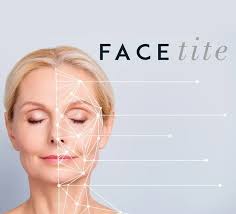
When you prepare photographs, take three: front on, strict profile and chin raised. Add one where you lift the skin of your cheek with your fingers, which shows the surgeon what retraction could deliver.
In Summary: Knowing Which Side of the Threshold You Sit On
FaceTite is an excellent answer to a specific problem and an expensive disappointment outside it. It tightens the lower face and neck by around forty percent from beneath the skin, in one session, with no scar and a quick return to normal, provided your slackening is mild to moderate and your skin still retains elasticity. Knowing which side of the threshold you sit on is worth more than any sales argument.
To go further, read our FaceTite in Turkey procedure page for how the intervention works, the stay and aftercare, and see our pricing in Turkey or request a personalized quote built on your own case. You can also explore the wider range of facial surgery in Turkey.