
No-shave FUE, sometimes called unshaven or U-FUE, lets you undergo hair transplant surgery while keeping your existing hairstyle intact, trimming only tiny sections around each individual follicle rather than shaving the entire donor and recipient areas. Genuinely skilled surgeons using true "Long FUE" technique can work through existing hair up to a certain length, though this specialized approach demands considerably more surgical time and precision than standard FUE. It therefore carries a premium and suits patients with mild to moderate hair loss rather than extensive baldness requiring several thousand grafts.
This guide walks through exactly how the no-shave technique works, who genuinely makes a good candidate, and what to know before booking. It complements our dedicated No-Shave FUE in Turkey procedure page, which covers how the intervention itself is performed, your stay and your aftercare, and it sits within our wider hair transplant in Turkey section. At any time you can consult our pricing in Turkey page or request a free quote, with no obligation.
Understanding What No-Shave FUE Actually Means
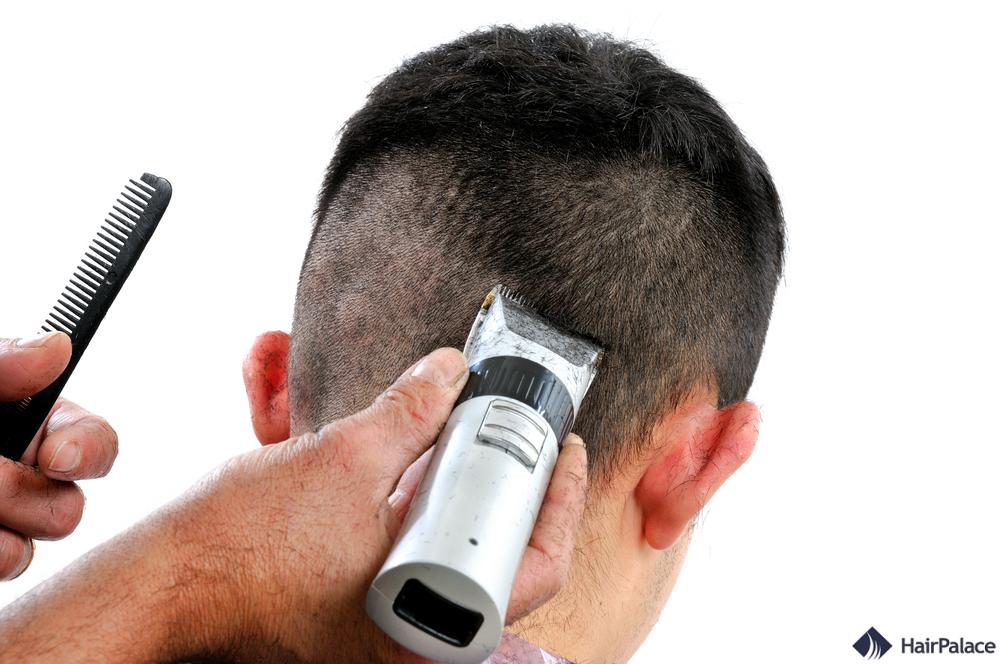
Is no-shave FUE genuinely different from standard FUE, or just a marketing term? It is genuinely different in execution. Standard FUE typically shaves the donor area fully for clear visibility during extraction, while the no-shave technique trims only tiny sections around each individual follicle being harvested, leaving the surrounding hair long enough to conceal the entire process.
Working around longer surrounding hair while precisely extracting individual follicles demands considerably more surgical patience and skill than clear-scalp extraction, which directly explains why genuine no-shave technique carries a documented time and cost premium.
Long FUE: Understanding the True No-Shave Technique
True Long FUE allows surgeons to extract grafts through existing hair up to a certain length without any visible trimming pattern. Some clinics, however, market a partial or undercut-style shave as "no-shave," a meaningfully different and less discreet result worth clarifying directly before booking. Ask whether the approach uses true Long FUE technique working through existing hair, or a partial undercut-style shave concealed by longer hair on top, since these represent genuinely different levels of discretion.
There is a practical limit to hair length. Most experienced surgeons can work through hair up to roughly two to three centimetres without any shaving, though considerably longer hair sometimes requires a brief trim specifically for the extraction area, worth clarifying directly during consultation.
Who Actually Makes a Good Candidate for No-Shave FUE
The technique is genuinely suited to mild to moderate hair loss requiring roughly 1,500 to 2,500 grafts, since its slower, more meticulous pace makes it considerably less practical for extensive cases requiring several thousand grafts across a broad area. Candidacy is not automatic: donor hair length, overall graft requirement, and specific density goals all factor into whether the technique genuinely suits an individual case, making a thorough consultation essential before assuming candidacy.
- Mild to moderate hair loss within the technique's realistic graft ceiling.
- Adequate donor supply for the density goals discussed.
- Existing hair long enough to conceal the process.
- Realistic expectations about the graft ceiling and timeline, and a strong preference for discretion.
Patients with curly hair sometimes see a genuine visual advantage: the natural volume and texture help conceal the treated area throughout recovery even more effectively than straight hair might.
No-Shave FUE Turkey Cost
No-shave technique typically carries a 20 to 30% premium over standard FUE given the additional surgical time and precision required. Even so, patients consistently find that even premium no-shave packages in Turkey run up to roughly 60% cheaper than equivalent private care back home. The premium reflects real surgical economics: a no-shave session ties up the surgeon and team considerably longer for the same graft count, meaning fewer patients per day and genuinely more skilled hands-on time invested per case, not arbitrary markup.
An unusually cheap no-shave quote is rarely a good sign. Genuine no-shave technique demands real surgical patience and skill working around existing hair, so a quote dramatically undercutting the market almost always signals either a partial-shave substitution or inexperienced hands, making the apparent saving a genuine gamble on your permanent result. For a fuller overview, see our pricing in Turkey page.
No-Shave FUE: Turkey vs Home
| Factor | Turkey | Home (Canada) |
|---|---|---|
| Package cost comparison | Up to roughly 60% cheaper | Full domestic pricing |
| True Long FUE specialization | Widely available | Often limited, fewer specialists |
| All-inclusive travel packages | Standard offering | Rarely bundled |
Best Clinic for No-Shave FUE in Turkey
What separates a genuinely skilled no-shave specialist from a clinic offering a partial shave marketed as no-shave? Ask directly whether their approach uses true Long FUE technique working through existing hair, or a partial undercut-style shave concealed by longer hair on top. These represent genuinely different levels of discretion worth clarifying before booking.
How to choose comes down to a short list of checks:
- Confirm Ministry of Health licensing directly, and ask specifically about documented experience with true Long FUE technique, since general accreditation does not necessarily confirm no-shave expertise.
- Ask exactly which steps the named surgeon performs personally versus delegates to technicians; the surgeon should handle site creation and design at minimum, and ideally extraction too.
- Request before-and-after photos showing hair kept intact throughout recovery, not just the final result.
JCI accreditation signals institutional standards around sterilization, record-keeping, and emergency readiness that genuinely add reassurance, though many excellent standalone clinics operate to equivalent standards under Ministry of Health licensing without the international badge.
Verified Reviews and Trustworthy Before-and-After Evidence
Look for reviews specifically confirming the patient's existing hairstyle remained genuinely intact throughout recovery, since this discretion is the entire point of the technique, alongside photos taken well past twelve months and posted recently rather than years ago. The strongest before-and-after photo shows the patient's hair remaining long and styled throughout the recovery documentation, not just the final result, proving the technique's discreet promise held true across the entire timeline.
How to read reviews critically:
- Independent platforms with verification barriers carry more weight than a clinic's own curated testimonials; cross-reference Google, dedicated medical tourism platforms, and genuine patient forums.
- Watch for clusters of glowing reviews posted within days of each other, generic praise lacking specific procedure details, identical phrasing, and accounts with no other review history.
- A handful of negative reviews among many positive ones is genuinely healthy; how a clinic responds to criticism often reveals more than the complaint itself.
- Recency matters considerably, since clinic quality, staff, and technique consistency all shift over time.
- Video testimonials add confidence through visible tone and the ability to see hair remaining intact, though they remain as susceptible to selective curation as written reviews.
"No-Shave FUE Near Me" and "Close to Me": Why Turkey Still Wins
Searching "no-shave FUE close to me" is a completely natural first instinct, and most patients who follow through discover something notable: genuinely documented true Long FUE specialists remain relatively limited locally, making a dedicated Turkish specialist frequently the stronger option once travel costs are weighed against local scarcity and higher domestic pricing.
Turkish Cities Offering No-Shave FUE
The main Turkish cities offering no-shave FUE services, listed alphabetically, are: Adana, Afyonkarahisar, Alanya, Ankara, Antalya, Bodrum, Bursa, Canakkale, Denizli, Edirne, Eskisehir, Fethiye, Gaziantep, Istanbul, Izmir, Kayseri, Kocaeli, Konya, Kusadasi, Marmaris, Mersin, Sakarya, Samsun, Tekirdag, Trabzon, and Yalova.
| Turkish Region | Cities | Best Suited For |
|---|---|---|
| Marmara | Istanbul, Bursa, Kocaeli, Sakarya, Tekirdag, Yalova, Edirne, Canakkale | Widest true Long FUE selection |
| Aegean | Izmir, Kusadasi, Denizli, Afyonkarahisar | Lower regional pricing |
| Mediterranean | Antalya, Alanya, Mersin, Fethiye, Marmaris | Resort-style, private recovery |
| Central & Eastern Anatolia | Ankara, Konya, Kayseri, Eskisehir, Gaziantep | Domestic-focused, verify technique |
| Black Sea | Samsun, Trabzon | Travellers already in the region |
The Marmara region hosts the deepest bench of true Long FUE specialists in the country, anchored by Istanbul's international airports and largest concentration of clinics with documented no-shave case history. Izmir has built a genuine reputation for meticulous no-shave technique, often at somewhat lower regional pricing. For many patients, the relaxed, private setting Antalya's resort-recovery model offers proves genuinely appealing compared to a purely clinical environment. Fewer clinics in Central and Eastern Anatolia maintain dedicated no-shave specialization, so patients considering these cities should confirm technique directly, while the Black Sea region is better suited to patients already travelling through the area than as a dedicated destination.
Turkey Compared With Other Destinations
Does Mexico offer comparable no-shave FUE expertise to Turkey? Mexico's medical tourism sector runs solid generally, though genuine true Long FUE specialization remains considerably less developed than what Turkish clinics have built through sheer procedure volume over the past decade. Thailand and India both offer growing medical tourism infrastructure, though dedicated specialists with documented Long FUE case history remain considerably harder to find outside Turkey's concentrated ecosystem.
Hungary, Poland, and the Czech Republic excel in dental and general cosmetic tourism, but their no-shave FUE sectors remain considerably smaller in scale than Turkey's dedicated infrastructure. South Korea's respected cosmetic credentials come with meaningfully higher pricing, while Costa Rica, Colombia, and Malaysia together maintain considerably smaller, less specialized sectors overall.
What Surgery Day Actually Looks Like
Expect a noticeably longer day overall. The meticulous work of extracting follicles through existing hair extends surgical time considerably, often turning what would be a six-hour standard session into eight hours or more for the same graft count. The same local anaesthetic approach applies, though surgeons monitor comfort more actively across the extended timeline, sometimes adding touch-up applications during particularly long sessions to keep the entire experience genuinely pain-free.
Extraction is the hardest phase: isolating and extracting individual follicles while surrounding hair stays long demands exceptional visibility management and hand precision, exactly where a genuinely experienced Long FUE specialist separates from a surgeon who mostly performs standard shaved extraction. Implantation also becomes harder, since placing new grafts between existing long hairs without damaging healthy follicles nearby requires careful angling and spacing judgment, another reason the technique carries its documented time premium.
Surgeons typically use fine micro-punches, often 0.7 to 0.9 millimetres, and the no-shave context demands even steadier hands since surrounding long hair reduces visibility. Because sessions run longer, minimizing grafts' time outside the body matters even more, which is why skilled clinics use chilled holding solutions and efficient team coordination to protect follicle viability. The existing hair actually serves as a genuine reference guide, letting the surgeon match the exact angle and direction of your natural growth pattern, an advantage over shaved technique where those cues must be estimated from memory or markings. Density is concentrated strategically at the hairline and any visible parting zones, blending gradually into existing hair behind so the finite graft count delivers maximum visual impact.
The Awake, Local-Anaesthesia Experience
The extraction phase itself feels the same under local anaesthesia regardless of technique, though the longer session means more total time in the chair, which some patients find more tiring, addressed through breaks, meals, and comfortable positioning. Local scalp anaesthesia carries a genuinely strong safety record, avoiding general anaesthesia's systemic risks entirely, with patients remaining comfortably awake throughout, able to take breaks, eat lunch, and communicate freely. Many clinics now offer pressure-jet anaesthesia delivery reducing initial injection discomfort, worth requesting specifically if needle anxiety genuinely factors into your hesitation. Good clinics build breaks into the extended timeline naturally, and most provide a proper lunch break, unlike general-anaesthesia procedures requiring fasting.
Realistic Graft Counts and Staged Sessions
Most experienced clinics complete roughly 1,500 to 2,500 grafts in a single no-shave session, considerably below the 4,000-plus achievable with standard shaved FUE, an honest limitation any credible clinic should state upfront rather than downplay. Working through existing hair without a clear scalp view genuinely slows extraction speed, meaning surgeons can safely complete only a limited number of grafts per session.
Patients needing more coverage can either stage two or three smaller no-shave sessions months apart, or accept a partial shave for a single larger session, a personal trade-off between discretion and efficiency worth discussing openly. Most surgeons recommend spacing staged sessions at least six to twelve months apart, allowing earlier grafts to establish and donor areas to recover fully. Each session builds on the last, gradually increasing density while preserving discretion throughout, and many patients approach no-shave restoration as a two-stage journey from the outset, budgeting and scheduling accordingly. A planned second session for fuller density is genuinely common rather than a sign of failure.
The Full Recovery Timeline, Month by Month
Expect initial scabbing to clear within about ten days, hair remaining genuinely styleable throughout given the technique's discreet design, meaningful new growth beginning around month four to six, and full results reaching maturity somewhere between month ten and month twelve.
| Period | What to Expect |
|---|---|
| Week one | Day one brings tightness and careful movement; days two and three see swelling peak then settle; days four and five bring the first gentle wash; days six and seven, scabs loosen, with existing hair concealing everything throughout. |
| Weeks two to three | Scabs finish clearing, any temporary shock loss of surrounding hair may appear and begins recovering, and normal activity resumes progressively. |
| Weeks four to twelve | The quiet months. Transplanted hairs shed and follicles rest beneath the surface with little visible happening, a completely normal phase that rewards patience. |
| Months three to six | New growth genuinely begins emerging, fine and soft at first, gradually thickening and blending with surrounding hair. |
| Months six to twelve | Density builds steadily, texture matures, and transplanted hair becomes increasingly indistinguishable from native hair, with most patients reaching substantially complete results in this window and subtle refinement continuing even into month fourteen. |
The visible hair shafts shed while the follicle roots remain safely anchored beneath the skin, a completely normal phase that surprises unprepared patients. Temporary shedding of some existing hair near treated zones can also occur, typically recovering within a few months, though skilled placement minimizing trauma to neighbouring follicles keeps this risk meaningfully lower. Keeping existing hair long genuinely improves how results look during the growth phases, since new growth emerging among intact styled hair blends far more gracefully at every stage than growth on a previously shaved scalp. Photograph your own progress with monthly photos under consistent lighting, from the same angles and distance each time, which reveals genuine progress far better than daily mirror checks.
Aftercare Once You Are Back Home
The core aftercare principles stay consistent with standard FUE, though you can style and cover the treated areas more naturally throughout recovery given how much existing hair remains intact, a genuine advantage during the healing window. The first post-procedure wash differs somewhat: washing around intact long hair while protecting fresh grafts demands gentler technique and more patience, which is exactly why most clinics perform the first wash themselves before departure and demonstrate the method hands-on.
- Return to work: many patients return to office settings within roughly 72 hours, since colleagues typically notice nothing at all.
- Styling products: keep gels, waxes, and styling products away from treated zones for at least two to four weeks, though surrounding untreated hair can typically be styled normally much sooner.
- Swelling: follows the same general pattern as any FUE procedure, peaking around day three before settling, with longer surrounding hair helping conceal any temporary puffiness.
- Sleeping: semi-upright at roughly a 45-degree angle for the first several nights protects grafts from pillow friction and helps drain swelling.
- Exercise: light walking resumes almost immediately, moderate cardio typically waits about two weeks, and heavy lifting or contact sports generally wait a full month.
- Alcohol and smoking: smoking restricts the blood flow fresh grafts depend on and alcohol interferes with medication and hydration, making at least two smoke-free, alcohol-free weeks around surgery a meaningful investment.
- Sun and hats: a loose-fitting hat typically becomes safe within about a week once your surgeon confirms, and direct sun exposure to treated areas should wait at least a month.
Mild temporary numbness in treated or donor zones is genuinely common and typically resolves over weeks to a few months. Mild redness typically fades within one to two weeks and stays largely concealed by intact surrounding hair. Most patients resume entirely normal daily life within one to two weeks, with only longer-term restrictions like heavy lifting and swimming extending to about a month. Canadian pharmacies can supply direct equivalents for Turkish aftercare products: saline sprays, gentle sulphate-free shampoos, and standard medications all have local equivalents, and your clinic can name specific substitutes carried by any Shoppers Drug Mart or Jean Coutu.
No-Shave FUE for Women
For many women, shaving any portion of their hair represents a genuinely larger barrier than the surgery itself, making no-shave technique the difference between pursuing treatment and postponing it indefinitely, which explains its outsized importance in female hair restoration. The curtain or lapel-style approach conceals the donor area beneath a section of longer hair styled specifically to drape over the treated zone, allowing women to avoid any visible sign of the procedure without altering their existing hairstyle dramatically. Given how significantly hair length and styling matter to many women's identity and confidence, this ability to preserve styling flexibility makes the technique a particularly valued option.
- Ponytails, braids and updos: loose styles resume within about two weeks, while tight ponytails and braids pulling tension across treated zones should wait roughly a month.
- Hair colouring: wait at least four to six weeks before applying any chemical colour, with a strand test on untreated hair a sensible first step.
- Extensions: typically come out before surgery for clear donor access, with reattachment waiting at least six to eight weeks and avoiding direct traction on newly treated zones.
- Hairline lowering: genuinely well-suited, since forehead reduction targets a defined zone requiring moderate graft counts squarely within no-shave limits.
- Traction alopecia: often suitable provided the traction damage has stabilized and styling habits have changed.
- Hormonal factors: thyroid conditions, recent pregnancies, menopause transitions, and any hormonal medication all influence hair loss patterns and treatment timing, making full disclosure essential.
No-Shave FUE for Professional Men
Client-facing roles, leadership positions, and industries where appearance changes draw comment make the ability to return Monday morning looking completely unchanged genuinely valuable, often justifying the technique's premium entirely on workplace discretion alone. For suitable candidates, beard extraction can supplement scalp donor supply, leaving minimal visible trace within days, though texture matching requires careful placement judgment. The technique naturally attracts privacy-minded patients, most of whom keep their treatment entirely private.
Different Hair Types and Ethnicities
The technique adapts to different hair types with appropriate surgical adjustments. Curly and wavy hair often conceals the process even more effectively, while very fine straight hair requires particularly meticulous placement to achieve convincing density.
- Afro-textured hair: genuinely possible with a surgeon experienced in the curved follicle structure specific to this hair type, since extraction demands specialized technique regardless of shaving status.
- Asian hair: typically thicker individual shafts and higher contrast against scalp demand careful density planning to avoid an overly stark look, though the same characteristics can deliver excellent coverage per graft.
- Fine and thinning hair: requires denser packing and particularly careful angle matching, making an experienced surgeon's judgment even more critical.
- Grey and salt-and-pepper hair: offers lower contrast against the scalp, sometimes creating an impression of fuller coverage, with grafts growing in your natural current colour and greying naturally over time.
A thorough consultation genuinely assesses your specific hair type, calibre, curl pattern, and colour, since these characteristics shape realistic density expectations and technique adjustments as much as your loss pattern does. Because the technique preserves and works around your existing hair, the surgeon designs directly with your natural texture and growth pattern as a live reference, producing integration that shaved technique must estimate rather than observe.
Combining No-Shave FUE With Other Techniques
DHI's implanter pen approach naturally suits unshaven recipient areas, and many clinics combine unshaven DHI implantation with minimal donor trimming, making the two techniques complementary rather than competing. The sapphire blade advantage applies to recipient site creation regardless of shaving status, meaning patients can combine sapphire channel precision with no-shave extraction when their surgeon offers both. In contrast, FUT strip surgery removes a strip of scalp leaving a linear scar, the complete opposite of no-shave discretion, making the two approaches fundamentally incompatible for patients whose entire priority is invisibility.
| Your Priority | Technique Direction |
|---|---|
| Maximum discretion, mild loss | True Long FUE no-shave |
| Larger graft count, some flexibility | Partial-shave FUE or DHI |
| Finest channel precision | Sapphire blade combined approach |
| Dense packing small zones | Unshaven DHI implanter pens |
Adjunct therapies can support overall hair health: PRP injections can support graft survival and stimulate existing follicles; exosome therapy is a newer regenerative approach with promising but still-emerging evidence; and low-level laser therapy shows modest evidence for supporting existing hair health. None replaces the surgery itself or overcomes the technique's graft ceiling, so view them as optional enhancements rather than core requirements. The best technique for your specific case should follow honest assessment of your donor supply, loss pattern, and hair characteristics, making flexibility during consultation more valuable than a rigid predetermined choice.
Scarring, Donor Area and Hairline Design
The tiny circular extraction points heal to become genuinely undetectable within surrounding hair, one of FUE's core advantages over strip surgery, and the no-shave context means even the donor area shows no visible change from day one. Skilled surgeons distribute extraction evenly across the donor zone so density reduction stays imperceptible, which matters even more in staged plans where future sessions must find quality follicles remaining. Working with intact existing hair actually helps hairline design accuracy, since the surgeon sees exactly how your natural hair falls and frames your face. For smaller zones like temples or a modest hairline refinement, a single session can achieve full cosmetic density; for broader thinning, one session typically delivers meaningful improvement rather than complete density, with staged sessions closing the remaining gap.
Safety, Screening and Complications
With a properly licensed clinic and experienced surgeon, no-shave FUE carries a genuinely strong safety record, using local anaesthesia only and avoiding the systemic risks of general anaesthesia entirely, with serious complications remaining rare in qualified hands. Minor temporary issues like small scabs, brief numbness patches, and mild folliculitis affect a modest share of patients and resolve with basic care.
- Medical conditions: diabetes affecting healing, blood clotting disorders, active scalp conditions like psoriasis in treatment zones, and autoimmune conditions affecting hair all warrant honest disclosure and sometimes additional clearance.
- Medications and supplements: prescription anticoagulants, daily aspirin, fish oil, vitamin E, and even ginkgo supplements all affect bleeding during extraction, making complete disclosure weeks ahead essential.
- Pre-operative bloodwork: standard panels screen clotting function, blood sugar, infectious markers, and general health indicators, typically completed the morning of or day before surgery.
- Infection prevention: single-use extraction punches, sealed sterile instrument sets opened in front of you, and proper surgical field draping represent baseline standards any credible clinic maintains.
Contact your clinic during recovery for any signs of infection such as spreading redness, warmth, or unusual discharge; persistent pain not improving after the first several days; concerns about unusual shedding beyond the expected phase; or questions about resuming any specific activity or product.
Age, Medication and Planning for Future Loss
Caution genuinely applies to younger candidates: loss patterns remain unpredictable before the late twenties, and responsible surgeons often recommend stabilizing medication first, since transplanting into an actively progressing pattern risks an isolated island of grafts as surrounding loss continues. For older patients, health status matters far more than birth year; patients in their fifties, sixties, and beyond undergo successful treatment regularly, provided donor supply remains adequate.
Medication protecting existing non-transplanted hair genuinely complements surgical results, since transplanted grafts resist future loss while surrounding original hair remains vulnerable, making finasteride or minoxidil a standard recommendation for most male patients. Thoughtful surgeons design today's work anticipating tomorrow's pattern, conserving donor supply for potential future sessions and placing hairlines at maturity-appropriate positions rather than chasing an ultra-low line that ages poorly. Because donor supply is finite and permanent, conserving it thoughtfully across any staged plan genuinely matters. Transplanted follicles retain their genetic resistance to balding permanently, meaning properly placed grafts continue growing for decades, though natural ageing still thins all hair gradually.
Red Flags and Green Flags When Choosing a Clinic
Red flags worth ending a consultation over:
- Refusal to distinguish true Long FUE from a partial-shave approach clearly.
- Graft promises far exceeding the technique's realistic ceiling.
- Pressure to book immediately with a limited-time discount.
- Vague or evasive answers about who performs the surgery.
- No willingness to show relevant before-and-after documentation.
Green flags that signal a trustworthy clinic:
- Honest acknowledgment of the technique's genuine graft limitations.
- Clear distinction between true Long FUE and partial-shave approaches.
- Transparent pricing with written no-hidden-fees confirmation.
- Relevant before-and-after photos matching your starting point.
- Willingness to recommend against no-shave if it does not suit your case.
Vague responses about which team member performs extraction, reluctance to distinguish true no-shave from partial-shave clearly, or graft promises far exceeding the technique's realistic ceiling all signal a clinic prioritizing bookings over honest assessment.

Packages, Warranties, Deposits and Hidden Fees
A genuine all-inclusive package bundles the procedure itself, hotel nights, all airport and clinic transfers, medications, the aftercare kit, follow-up washing, and remote post-return check-ins, leaving only your flights and personal spending outside the quoted figure. Your aftercare kit typically comes home with a specialized gentle shampoo, saline or panthenol spray, a short antibiotic course, anti-inflammatory medication, and written day-by-day instructions in English.
Meaningful warranties tie to graft survival thresholds with defined remedy terms, typically a free touch-up session if survival falls below a stated percentage, while vague "satisfaction guarantees" without measurable terms offer little genuine protection. Smoking against medical advice, skipping prescribed aftercare, missing follow-up check-ins, and undisclosed medical conditions all commonly void coverage. A reasonable deposit secures your specific date and surgeon while remaining a modest fraction of the total, with clear written terms distinguishing a professional operation from a pressure-driven one. Confirm in writing how far ahead you can reschedule without penalty and what portion of any deposit returns on cancellation.
Hidden fees to watch for:
- Graft-count overage charges applied if the surgeon "finds" more grafts needed.
- Premium surgeon surcharges revealed only after the base quote.
- Extra nights charged if recovery requires a longer stay than quoted.
- Airport transfer or medication fees excluded from the headline price.
A written treatment plan should contain the confirmed technique (true Long FUE versus any partial trimming, stated explicitly), a realistic graft count with the no-shave ceiling acknowledged, the named surgeon performing extraction personally, complete package inclusions, a follow-up schedule with specific remote check-in dates, and total price with written no-hidden-fees confirmation.
Comparing Two Clinic Offers Side by Side
Build a simple two-column comparison covering technique specificity, surgeon involvement, graft realism, package contents, and review freshness. A cheaper quote promising 3,500 no-shave grafts in one session loses instantly to an honest 2,000-graft plan, since the inflated promise reveals either dishonesty or a hidden partial shave. Genuine value comes from matching surgeon expertise to your specific case at a fair price, not from chasing either the lowest quote or assuming the most expensive equals the best.
Choosing poorly carries a genuine cost: beyond wasted money, a poor choice can mean a partial shave you did not want, damaged surrounding hair, unnatural results requiring correction, and permanently depleted donor supply. Correcting a poorly executed transplant genuinely costs more than doing it well initially, requiring work around scar tissue and existing poor placement while drawing further on finite donor supply, which is exactly why verifying quality upfront protects both your result and your wallet.
Comparing No-Shave FUE Across Turkish Price Tiers
Istanbul's premium reputation and higher operating costs push packages somewhat above regional cities like Antalya or Izmir, though the genuine question is surgeon expertise rather than city, since a skilled regional Long FUE specialist may serve you better than an average Istanbul practice. Turkey's price advantage stems from lower operating costs, favourable currency, and sheer procedure volume creating genuine efficiency, not from compromising the surgical standards that built the country's reputation in the first place.
Planning Your Trip: Flights, Stay and Packing
Direct routes operate from Toronto to Istanbul year-round, while patients from Vancouver, Calgary, Montreal, and Halifax typically connect through Toronto or a European hub, with total travel times ranging from ten to sixteen hours depending on origin. Three nights covers consultation, the procedure itself, and a first follow-up wash comfortably, though patients preferring extra buffer sometimes stay four or five nights, particularly when combining the trip with sightseeing. Canadian citizens receive the same visa-free entry for short tourist stays regardless of which technique brought them to Turkey.
Pack sensibly for a no-shave trip:
- Button-up or zip-front shirts, avoiding anything pulled over the head.
- A travel pillow supporting semi-upright sleeping on the return flight.
- Any regular prescription medications in original packaging.
- Loose, comfortable clothing for the procedure day itself.
- A wide-brimmed hat for sun protection once your surgeon clears wearing one.
Flying itself poses no direct risk to grafts, though sleeping semi-upright, staying well hydrated, and avoiding any headrest friction against treated areas remain sensible precautions for the long journey home. During recovery days, gentle activity suits well: quiet café afternoons, unhurried Bosphorus ferry rides, and relaxed neighbourhood walks all fit comfortably, while patients should skip the humid Turkish baths, intense sun, and dusty crowded sites during the first week. Prioritize accommodation with a quiet room supporting semi-upright sleep, reliable air conditioning, easy clinic proximity, and a gentle rain shower for careful washing. Spring and autumn offer the most comfortable recovery temperatures, though clinics operate year-round. Light sightseeing works beautifully once the delicate first week passes, letting patients explore Cappadocia's landscapes or Antalya's coast during weeks two and three.
Coverage, Financing and Currency
No Canadian provincial plan covers no-shave FUE: OHIP in Ontario, MSP in British Columbia, AHCIP in Alberta, and every other provincial plan classify hair transplants as elective cosmetic procedures regardless of technique, leaving the full cost with the patient whether treated domestically or abroad. Dedicated savings remains the healthiest funding route, and patients considering credit options should honestly calculate total repayment cost against the procedure's price advantage before committing to any borrowing. Most clinics quote in euros or US dollars for international patients, and comparing your bank's exchange rates against dedicated currency services before transferring any deposit can save a meaningful amount on larger payments. Add flights, meals, and personal spending to the package price, then compare that honest total against a domestic quote: even with travel fully loaded in, the no-shave trip typically lands up to roughly 60% below equivalent domestic private treatment.
The Remote Consultation and Follow-Up Process
Clinics request clear photos of your hairline, crown, and donor area, plus details about your hair length and styling habits, since no-shave candidacy depends partly on whether your current length genuinely supports the technique's requirements. Most clinics schedule photo or video reviews at roughly one month, four months, and twelve months, letting your surgeon track growth remotely and flag anything worth addressing without another international trip. Comparing at least two or three clinic assessments genuinely strengthens your decision, particularly when recommendations differ meaningfully on technique or graft count.
Questions worth asking during your consultation call:
- Do you perform true Long FUE through existing hair, or a partial-shave approach?
- How many no-shave cases specifically has this surgeon completed?
- What graft count do you realistically recommend for my case in one session?
- Can I see before-and-after photos showing hair kept intact throughout recovery?
- Who performs the extraction personally, the surgeon or technicians?
A genuinely good patient coordinator handles everything logistical: airport pickup timing, hotel confirmation, appointment scheduling, translation during consultations, pharmacy runs, and post-return communication, making coordinator responsiveness during your inquiry a genuine preview of your entire experience. Coordinator English typically runs fluent at internationally focused clinics, while surgeon fluency varies, so confirm your surgeon can discuss your case directly in English or that qualified medical translation attends every clinical conversation.
How Aylan Clinic Handles No-Shave Assessments
Aylan Clinic works with patients seeking genuinely discreet hair restoration, and we prioritize honest candidacy assessment for true no-shave technique as much as the procedure itself. Our assessment process starts with honest candidacy screening: if your loss pattern or hair characteristics genuinely suit standard FUE better than no-shave technique, we say so directly, because a well-matched technique serves your result far better than an upsold specialty. Expect a genuine conversation about your specific hair loss pattern and length first, honest candidacy screening second, and only then a realistic technique recommendation and cost breakdown, never a rushed sales pitch.
Genuine Long FUE specialists maintain fuller calendars than general FUE surgeons given the technique's scarcity, making four to eight weeks of advance booking typical and earlier inquiry sensible around peak summer travel months. We view a no-shave transplant as the beginning of an ongoing hair health partnership rather than a single transaction, offering continued guidance on maintenance, medication, and any future sessions.
Scheduling Around Your Life
Since visible results take ten to twelve months, patients wanting fuller hair for a wedding or milestone should book roughly a year ahead, though the technique's day-one discretion means even mid-recovery they will look entirely presentable. The technique's defining advantage means many patients need only the travel days themselves plus a long weekend, returning to work looking entirely unchanged. Rotation schedules actually suit treatment planning well: booking surgery at the start of a leave block gives one to two full weeks of private recovery. Snowbirds already comfortable with extended international stays sometimes schedule treatment early in a winter trip, completing the most delicate recovery weeks abroad before returning home.

| Province / Region | Typical Patient Profile |
|---|---|
| Ontario | Professionals prioritizing workplace discretion |
| British Columbia | Active lifestyles wanting minimal downtime |
| Alberta & Prairies | Rotation workers scheduling around blocks |
| Quebec | Style-conscious patients protecting longer cuts |
| Atlantic Canada | Value-focused researchers comparing thoroughly |
| Northern Territories | Remote consultation-dependent planners |
Cities and Regions We Serve
Aylan Clinic works with patients across the country, with remote consultation making distance a non-issue for those in more remote communities.
| Region | Cities We Serve |
|---|---|
| Ontario & GTA | Toronto, Ottawa, Hamilton, London, Kitchener, Waterloo, Windsor, Mississauga, Brampton, Barrie, Kingston, Sudbury |
| BC & the Prairies | Vancouver, Victoria, Surrey, Burnaby, Kelowna, Calgary, Edmonton, Winnipeg, Regina, Saskatoon |
| Atlantic Canada | Halifax, Saint John, Fredericton, Charlottetown, St. John's |
| Northern Canada | Whitehorse, Yellowknife, Iqaluit |
Managing Expectations Through the Waiting Months
Patients who thrive emotionally treat months three through eight as a background process rather than a daily watch, scheduling just two or three photo comparisons across the window and otherwise living normally while biology does its slow work. At the twelve-month mark, laying your current photos beside the original plan and before images reveals genuine achievement objectively, cutting through the emotional impatience that makes gradual results feel slower than they were. If twelve-month results genuinely fall short, document with clear photos, contact your clinic through official channels citing any warranty terms, and request an honest assessment of whether a touch-up session addresses the gap.
Individual results genuinely vary: hair calibre, donor density, healing capacity, age, and adherence to aftercare all differ between individuals, meaning even identical technique and graft counts produce somewhat different outcomes, which is exactly why honest surgeons avoid guaranteeing specific density figures. Published patient surveys consistently show high satisfaction when expectations were set honestly upfront, with dissatisfaction concentrating heavily among patients promised outcomes beyond what their donor supply or the technique's limits could deliver. Beyond the mirror, patients consistently mention smaller daily shifts: stopping worrying about overhead lighting, swimming without a cap, letting wind do whatever it wants.
Repeat Patients and Correction Work
Patients who had a previous transplant can often undergo no-shave FUE next time, provided adequate donor supply remains and any previous scarring allows, with the technique offering repeat patients a discreet way to add density. A thorough consultation genuinely assesses how much quality donor hair remains after any previous extraction. For patients with an old strip-surgery scar, careful graft placement into and around the scar can genuinely soften its visibility, and the no-shave approach means this refinement happens without a fresh visible recovery. With donor supply already partly used and confidence perhaps shaken by a first disappointment, choosing genuinely well the second time carries even higher stakes.
Glossary of No-Shave FUE Terms
| Term | What It Means |
|---|---|
| Long FUE | True no-shave technique extracting grafts through existing hair |
| Partial shave | An undercut-style shave concealed by longer hair, sometimes marketed as no-shave |
| U-FUE | Another common name for unshaven or no-shave FUE technique |
| Curtain technique | A styling approach concealing the donor area, common for female patients |
Common No-Shave FUE Myths, Debunked
- "It works for any amount of hair loss." False. The slower, more meticulous extraction pace limits realistic graft counts to roughly 1,500 to 2,500 per session.
- "It is the same as a partial undercut shave." False. True no-shave involves no visible shaving pattern whatsoever, while a partial undercut still creates a distinct shaved section even if concealed by longer hair.
- "It always costs the same as standard FUE." False. The demanding, slower pace adds a documented premium for the additional surgical time and precision.
- "Results look less natural than shaved FUE." False. Naturalness depends on surgeon skill in angle, direction, and density planning, not on whether surrounding hair was shaved.
- "It is only for minor touch-ups." An overstatement. Documented cases reach 2,500 grafts in skilled hands, enough for meaningful hairline restoration and moderate thinning.
- "You cannot combine no-shave with other techniques." False. It pairs naturally with DHI implantation and sapphire channel creation.
- "It damages surrounding existing hair." Overstated. Some temporary shock loss can occur, but lost surrounding hair typically recovers within months.
- "Recovery takes longer because hair stays long." False. The biological healing timeline runs identical; intact hair actually makes recovery feel easier day to day.
- "It is not really permanent." False. Transplanted follicles retain their genetic resistance to balding permanently.
- "Turkish clinics cut corners to offer lower prices." A misconception. The price advantage stems from lower operating costs, favourable currency, and procedure volume, not compromised standards.
Your No-Shave FUE Decision Checklist
- Confirmed you are a genuine candidate: mild to moderate loss within the graft ceiling.
- Verified the clinic performs true Long FUE, not a partial-shave substitute.
- Checked the named surgeon's specific no-shave case volume and credentials.
- Reviewed fresh before-and-after photos showing hair intact throughout recovery.
- Read recent independent reviews across at least two separate platforms.
- Received a written plan with realistic graft count and full package contents.
- Compared at least two or three clinic assessments side by side.
- Confirmed warranty terms, deposit conditions, and cancellation flexibility in writing.
Work through verification in order: confirm candidacy first, then technique authenticity, then surgeon credentials, then review authenticity, then written plan clarity, then price transparency, treating each step as a genuine gate rather than rushing to secure a date. Postpone when your loss pattern has not stabilized, when finances would be genuinely strained, when research still leaves real doubts, or when a stabilizing medication trial has not been given a fair chance first, since this elective decision rewards patience over urgency.
In Summary: The Genuine No-Shave Advantage
For the right candidate with mild to moderate loss, no-shave FUE in Turkey delivers genuinely discreet, permanent, natural-looking hair restoration at up to roughly 60% below domestic pricing even with its premium, provided you verify true Long FUE technique and genuine surgeon expertise before committing. The defining advantage remains constant across every consideration: the ability to restore your hair while keeping your existing hairstyle entirely intact, returning to normal life within days rather than weeks. If one lesson matters above all others, it is verifying that a clinic performs genuine true Long FUE working through existing hair, not a partial shave concealed by longer hair marketed misleadingly as no-shave.
To go further, read our dedicated No-Shave FUE in Turkey procedure page for how the intervention itself is performed and what your stay involves, explore the wider range of options in our hair transplant in Turkey section, or consult our pricing in Turkey page. When you are ready for a personalized assessment, request a free quote from the Aylan Clinic team.