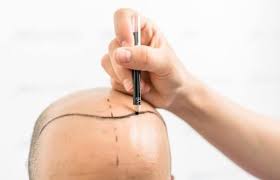
No-shave hair transplantation, sometimes called unshaven FUE, adapts the standard extraction and implantation techniques already detailed throughout our dedicated content to work directly among existing longer hair, avoiding the full or partial head shaving that conventional FUE typically requires and allowing patients to return to normal social and professional life without the visibly altered appearance a shaved recovery period creates.
This page belongs to our hair transplant in Turkey hub, within the wider aesthetic surgery in Turkey section. Below you will find exactly how surgeons extract and implant grafts without shaving, who genuinely benefits from this approach, the complete process, realistic results, risks worth understanding, and the practical details for pursuing this in Turkey. At any point you can request a free quote, with no obligation.
Understanding why shaving is normally part of the standard process
In conventional FUE, shaving the donor zone, and often the recipient area as well, serves a specific practical purpose: it allows the surgeon clear visibility of each follicle's exact exit point and angle at skin level, information essential for precise extraction and placement. Working through longer, unshaved hair removes this visual clarity, requiring the surgeon to identify and extract individual follicles by parting through surrounding longer hair strand by strand, a meaningfully more time-consuming and technically demanding process than working with a fully visible, shaved scalp.
How surgeons adapt technique for this specific approach
Surgeons performing this technique typically trim only very narrow channels or individual strips within the donor area, hidden beneath surrounding longer hair, extracting follicles from these narrow trimmed channels while the longer hair around them conceals any visible alteration. This same careful, hidden-channel approach can be applied to recipient site creation as well, allowing implantation among existing hair without requiring this area to be shaved either. The underlying FUE hair transplant and DHI hair transplant principles remain unchanged; only the visibility and concealment strategy differs.
Comparison table: no-shave FUE vs. standard shaved FUE
| Criterion | No-Shave FUE | Standard Shaved FUE |
|---|---|---|
| Visible alteration during procedure | Minimal, hidden beneath surrounding hair | Full or partial shaving clearly visible |
| Technical difficulty | Higher, given reduced visibility during extraction | Comparatively more straightforward with full visibility |
| Procedure duration | Often longer given the more meticulous process required | Generally more efficient |
| Discretion during recovery | Considerably higher | Requires concealment strategies during healing |
| Achievable graft count per session | Sometimes more limited given technical constraints | Generally allows higher volume per session |
Who is a genuine candidate for no-shave transplantation
- Existing hair long enough to provide meaningful concealment, since this technique depends on surrounding hair length to hide the treated channels.
- A specific professional or social need for discretion, making a fully shaved recovery period impractical or undesirable.
- Realistic expectations about session efficiency, since this technique's more meticulous process sometimes limits achievable graft count compared to standard shaved FUE within a single session.
Indications and contraindications for no-shave transplantation
| Common indications | Contraindications or precautions |
|---|---|
| A specific need for discretion during recovery, given professional or social circumstances | Very short existing hair length insufficient to provide meaningful concealment |
| Moderate graft count needs where this technique's session limitations remain practical | Very high graft count requirements better suited to standard shaved technique for efficiency |
| Patients specifically prioritizing this discretion over maximum single-session efficiency | The same donor stability and candidacy considerations relevant to any transplantation |
Step-by-step: what the procedure involves
Before the procedure
Your surgical team evaluates whether your specific hair length provides adequate concealment for this technique and discusses realistic session planning given your specific graft count needs.
During the procedure
Performed under local anesthesia, the surgeon works through narrow, hidden channels within your existing hair, extracting and implanting grafts using the same fundamental FUE or DHI principles already detailed in our dedicated content, but adapted to this more meticulous, visibility-constrained working method.
After the procedure
Recovery is notably more discreet than standard shaved FUE, since surrounding longer hair conceals both the donor extraction channels and the recipient area, allowing a return to normal social and professional settings considerably sooner without an obviously altered appearance.
Recovery timeline
| Period | Typically reported progress |
|---|---|
| Days 1 to 10 | Scabbing and mild swelling, well concealed by surrounding longer hair |
| Weeks 3 to 6 | Transplanted hair sheds as follicles enter a resting phase |
| Months 3 to 6 | New growth begins emerging, initially thin and sparse |
| Months 9 to 12 | Final density becomes fully apparent as growth cycles complete |
Expected results and longevity
Results follow the same permanent, donor-dominance-based principle already detailed in our foundational content, since this technique changes only the visibility and concealment strategy during the procedure and recovery period rather than the underlying biological outcome of transplanted follicles.
Risks and possible complications
- Higher technical difficulty potentially affecting graft survival, since reduced visibility during extraction requires exceptional surgeon skill to maintain the same low transection rate achievable with full visibility.
- More limited graft count per session, given this technique's more time-consuming, meticulous process compared to standard shaved extraction.
- The same general risks already detailed in our foundational content, including folliculitis and shock loss affecting surrounding native hair.
- Potential for inconsistent results if the surgeon lacks specific experience with this particular technique, distinct from general FUE competency alone.
The rigorous medical oversight behind Turkey's hair restoration industry
Turkey's Ministry of Health framework for international patients and Joint Commission International accreditation held by many leading facilities apply to no-shave technique exactly as they do to standard FUE, though this particular approach's genuinely distinct technical demands make surgeon-specific verification especially important.
Why this technique requires genuinely distinct surgical skill
Working through longer hair without the visual clarity a shaved scalp provides demands considerably more surgical patience and precision, since the surgeon must rely on tactile feedback and careful, strand-by-strand parting rather than the direct visual access standard technique allows. A surgeon skilled at standard shaved FUE does not automatically possess equal proficiency with this specific, more visibility-constrained approach, making documented no-shave-specific experience a meaningful verification point.
Understanding the genuine trade-off between discretion and session efficiency
It is worth understanding honestly that this technique's discretion benefit comes with a genuine practical trade-off: because extraction and implantation proceed more slowly through this more meticulous, hidden-channel method, achieving very high graft counts within a single session becomes more challenging, sometimes requiring patients with substantial coverage needs to consider a staged, multi-session approach rather than addressing everything in one comprehensive sitting.
The value of understanding which specific hair length genuinely supports this technique
Patients considering this approach should understand that meaningful concealment generally requires hair of a certain minimum length, and patients with very short haircuts or naturally very fine, sparse coverage may find this technique offers less practical concealment benefit than anticipated, making an honest, direct assessment of your specific hair length and density during consultation particularly important.

Quality signals worth looking for in a clinic offering this technique
A genuinely experienced provider demonstrates specific documented case volume with this exact no-shave approach, discusses realistic session limitations honestly rather than promising unlimited graft counts regardless of technique constraints, and provides an honest assessment of whether your specific hair length genuinely supports meaningful concealment.
Preparing for your consultation
Bring your hair at whatever length you currently maintain it, since your surgeon needs to assess this directly to determine whether this technique genuinely suits your specific situation, and discuss your specific discretion needs and timeline directly.
Maintaining continuity of care between Turkey and Canada
Request a written record specifying that no-shave technique was used, along with your specific graft count, since this detail provides relevant context for any future consultation regarding additional sessions.
Patient experiences reported with no-shave transplantation
Many patients specifically choosing this technique describe genuine appreciation for returning to work or social settings without any visible indication a procedure had occurred, particularly valuable for those in client-facing professional roles or with limited flexibility to take extended visible recovery time.
Combining this technique with other treatments
No-shave technique is sometimes combined with PRP hair treatment already detailed in our dedicated content, and some patients pursue this approach specifically for a touch-up or supplementary session following an earlier, standard shaved procedure.
Why a second opinion matters for this decision
Given how significantly this technique's success depends on surgeon-specific skill with this particular visibility-constrained approach, comparing documented experience and realistic session planning between two consultations is genuinely worthwhile before committing.
Questions worth asking during your consultation
Ask specifically how many no-shave procedures your surgeon has personally performed using this exact technique, what realistic graft count they can achieve within a single session given this approach's constraints, and whether your specific current hair length genuinely supports the discretion benefit you are seeking.
Understanding the partial shave compromise some clinics offer
Some clinics offer a middle-ground compromise sometimes called a partial or hidden shave, where only a small, strategically positioned strip within the donor area is trimmed short while surrounding hair remains at its original length and is styled to cover this narrower trimmed section, achieving reasonable technical visibility for the surgeon while still preserving meaningful discretion since the trimmed strip itself is not directly visible under normal hair styling. This represents a genuine middle option between full no-shave technique and complete traditional shaving, worth discussing directly if you want to balance surgical efficiency against discretion needs.
Understanding why recipient-area no-shave work presents its own distinct challenge
While donor-area no-shave extraction has become relatively well-established at experienced clinics, performing recipient-area implantation without shaving presents its own separate technical challenge, since the surgeon must create new recipient sites precisely among existing hair without disturbing or damaging that existing native hair's own follicles in the process. Not every clinic offering no-shave donor extraction necessarily offers this same no-shave approach for the recipient area, making this a distinct, separate question worth asking directly.
Understanding how this technique affects post-operative washing and care
Because transplanted grafts sit among existing longer hair rather than on a fully visible, shaved scalp, post-operative washing technique requires particular gentleness and care to avoid dislodging healing grafts while still adequately cleansing the treated area, and surgeons offering this technique typically provide more detailed, hands-on washing guidance during your follow-up given this added complexity compared to the more straightforward care instructions typical of a fully shaved recovery.
Understanding why this technique particularly suits touch-up and supplementary sessions
Beyond its value for patients undergoing a first-time procedure who specifically prioritize discretion, this technique proves particularly well-suited to touch-up or supplementary sessions performed after an initial procedure has already grown out, since shaving previously transplanted, now-grown hair simply to add modest additional density in a second session would be a considerable, often unnecessary sacrifice when no-shave technique can achieve this same supplementary goal.
No-shave transplant pricing in Turkey
| Pricing factor | Cost impact |
|---|---|
| Graft count achievable within this technique's session constraints | A primary factor influencing overall cost and whether multiple sessions are needed |
| Additional surgical time this more meticulous technique typically requires | Can influence overall cost given the added time investment |
For a full breakdown across procedures, see our pricing in Turkey page, or request a free quote tailored to your specific graft count needs.
Why Turkey has become a destination for no-shave transplantation
Turkey compared to other medical tourism destinations
| Criterion | Turkey | Tunisia | Costa Rica | Dominican Republic | Colombia | Mexico |
|---|---|---|---|---|---|---|
| Common clinic language | English widely spoken, growing French support | French and English widely spoken | Spanish, limited English | Spanish, variable English | Spanish, variable English | Spanish, variable English |
| Documented expertise with this specific technique | Particularly well established at leading clinics | Good availability | Variable | Variable | Good availability | Good availability |
| Estimated pricing level | Particularly accessible | Accessible | Moderate to high | Moderate | Moderate | Moderate |
| Direct flight access from Canada | Direct flights to Istanbul | Generally via a European stopover | Variable | Variable | Variable | Variable |
The Turkish cities most recognized for this technique
Istanbul's exceptionally high procedure volume has allowed some clinics to develop dedicated no-shave-specific expertise alongside their broader standard FUE practice, given consistent demand from patients specifically requiring discretion during recovery. Antalya, Izmir, and Ankara also host clinics offering this technique.
Why so many Canadians choose Turkey for no-shave transplantation
Patients from Toronto, Montreal, Calgary, Ottawa, Edmonton, Winnipeg, Quebec City, Hamilton, Kitchener, London, Victoria, Halifax, Oshawa, Windsor, Saskatoon, Regina, Sherbrooke, St. Catharines, Barrie, Kelowna, Abbotsford, Kingston, Trois-Rivières, Guelph, Moncton, Brantford, Saint John, Peterborough, Thunder Bay, Saguenay, Lethbridge, Nanaimo, Kamloops, Belleville, Chilliwack, Drummondville, Sudbury, Sarnia, Wood Buffalo, and Fredericton travel to Turkey for this technique, drawn by dedicated technical experience and pricing considerably below typical Canadian private clinic rates.
How to choose a clinic for no-shave transplantation
- Confirm the facility holds recognized accreditation and operates under direct physician supervision throughout the procedure.
- Ask specifically how many no-shave procedures your surgeon has personally performed using this exact technique.
- Request an honest assessment of realistic graft count achievable within a single session given your specific coverage needs.
Planning your medical trip to Turkey
- Entry requirements: Canadian citizens generally need an electronic visa before departure.
- Flights and transfers: several airlines offer direct service from major Canadian cities to Istanbul.
- Length of stay: plan for four to five days, allowing for a potentially longer procedure duration given this technique's more meticulous process, plus an initial follow-up before flying home.
In summary: discretion through a more technically demanding process
No-shave hair transplantation allows patients to avoid a visibly altered appearance during recovery by working through existing longer hair, trading some session efficiency for meaningfully greater discretion. Turkey's leading clinics have developed dedicated expertise in this more technically demanding approach.
Before making a decision, confirm your surgeon's specific documented experience with this exact technique and discuss realistic session planning given your particular coverage needs. Patients interested in a personalized assessment can request a free quote from the Aylan Clinic team. To explore further, browse all hair transplant options in Turkey.
Everything about No-Shave FUE in Turkey
Technique, pricing, results and the full patient journey — every detailed answer in our complete guide.