
A breast lift in Tunisia, also called mastopexy, reshapes the breast and raises the nipple by removing excess skin and rearranging existing tissue. The central decision is whether you want a higher breast shape with approximately your existing volume, or whether you also want to change size. A lift alone does not create new breast volume. For Canadian patients, choosing this operation also means accepting permanent scars and arranging enough local recovery time before a long journey home.
In this article, you will find an explanation of breast lift techniques, suitability, alternatives, recovery, results and potential complications. You will also find a practical comparison of treatment destinations, the elements of a complete cost estimate, departure considerations across Canada, and questions about the surgeon, language of care and follow-up. These details can help you prepare a discussion with Aylan Clinic and the proposed surgical team. Availability, the individual treatment plan and travel clearance require direct confirmation.
What a breast lift is and how it works
Breast position and breast volume are different concerns
The breasts contain glandular tissue and fat within an envelope of skin. Their appearance also depends on the chest wall, the fold beneath each breast and the distribution of tissue above and below the nipple. A patient may have enough volume to fill a bra but dislike the lower position of the breast. Another may have little fullness after weight loss while the nipple remains at an acceptable height. These situations can look similar in clothing and still need different advice.
Breast ptosis describes drooping, but it is not a complete surgical diagnosis. During an examination, the surgeon considers nipple position relative to the breast fold, the amount of loose skin, tissue quality and the shape of both breasts. A measurement or online photograph cannot settle every part of that assessment. Explaining whether your main concern is nipple height, hanging tissue, empty upper breasts or overall size helps make the consultation more useful.
How mastopexy changes the skin envelope
A lift reduces the excess skin that no longer fits the underlying breast well. The surgeon reshapes the tissues and places the nipple and areola in a position suited to the new contour. Enlarged areolas may also be reduced when that is part of the agreed plan. The intention is a more proportionate breast shape, rather than simply pulling skin upward as tightly as possible. Excessive tension can be a poor trade for a shorter scar.
Most standard lifting techniques aim to preserve the nipple on a connection of living breast tissue. The circular scar around the areola does not, by itself, mean that the nipple was completely detached. Ask the surgeon to explain the internal tissue arrangement as well as the external incision. This matters particularly after previous breast surgery, when the original blood supply and scar pattern may affect what can safely be moved during another operation.
Upper breast fullness and natural anatomical limits
A breast lift without implants uses tissue that is already present. It can redistribute that tissue and improve the overall contour, but the amount available places a limit on the result. A patient with substantial volume may achieve a shape they like after lifting alone. Someone with very little remaining tissue may still notice limited fullness above the nipple, especially without a bra. The consultation should make that difference clear before a technique is selected.
Breast width, spacing, rib shape and skin characteristics also influence the result. Surgery cannot promise identical breasts or a specific cleavage pattern in every body position. Bring photographs to illustrate preferences, then ask which features are plausible for your anatomy. A clear answer may include goals the surgeon would not attempt. That is more useful than being shown an appealing image without discussing the starting breast shape or whether implants were used.
Changes after pregnancy or weight loss
Pregnancy, changes in weight and ageing can alter both the breast contents and the skin surrounding them. These changes do not occur in the same way for every patient. A lift may be considered after the breast has settled into a relatively stable size and shape. Operating while weight is still changing substantially makes it harder to judge the amount of skin that should be removed and the contour that may remain afterward.
Future pregnancy is part of the timing discussion, rather than a personal decision the surgeon should make for you. Breast changes during pregnancy may alter a previous lift, and breastfeeding function may be affected by surgery. If another pregnancy is planned soon, postponement may avoid operating on a breast that will change again shortly. Discuss your priorities openly, including uncertainty about family plans and the practical help available while you recover.
Breast lift techniques and the alternatives to consider
Periareolar lifting for selected limited corrections
A periareolar breast lift places the scar around the areola. It may be considered when the required adjustment is relatively limited and the breast anatomy supports that approach. The attraction is understandable: the scar is concentrated at the junction between the areola and surrounding skin. However, a short external scar does not make the technique suitable for every degree of drooping or every amount of loose skin.
Ask what correction is realistically possible with this pattern and what trade-offs it introduces. An attempt to achieve too much through a restricted incision may produce an unsatisfactory contour or tension around the areola. The relevant comparison is the expected shape and scar quality for your breasts, not the number of centimetres of incision alone. A plan should also explain what would happen if the in-person examination shows that a larger skin adjustment is necessary.
Vertical lifting and the lollipop scar
A vertical breast lift usually combines an incision around the areola with a line extending downward toward the breast fold. This provides access for reshaping and removal of excess skin in a different way from an areola-only approach. Patients often call the resulting pattern a lollipop scar. The visible line on the lower breast is an important part of consent, even when the expectation is that it will become less conspicuous with time.
Anchor lifting when more skin needs to be addressed
An anchor breast lift, also called an inverted T pattern, adds an incision along the fold beneath the breast. It may be appropriate when more skin must be removed or reshaped. The additional scar is a genuine trade-off, but avoiding it at all costs may compromise the intended contour. The decision depends on the breast itself, rather than a rule that one incision pattern is always more advanced or more attractive.
Internal reshaping and claims about support
The skin pattern is only one part of a mastopexy. Surgeons may use different arrangements of breast tissue and internal sutures to support the new shape. Terms such as tissue reshaping or auto-augmentation can refer to redistributing the patient's own tissue rather than inserting an implant. Ask for an explanation in ordinary language: which tissue is moved, what benefit is expected and which limits remain because no new volume is being added.
If a proposal includes mesh or another internal support material, request its exact identity, intended use, evidence, potential complications and additional cost. A marketing label is not enough to establish suitability or durability. It should be clear whether the material is essential to the proposed operation or an optional addition. Do not assume that it prevents all future sagging, removes the need for scars or eliminates the possibility of another procedure later.
A lift with implants and the possibility of separate operations
A breast lift with implants may be discussed when the patient wants both repositioning and additional volume. The combination introduces decisions about implant size and position as well as the lifting pattern. Adding volume changes the demands on the skin and the intended balance of the breast. It also introduces implant-specific risks and future monitoring needs. An implant is therefore a separate medical choice, not a routine finishing detail that should be added without discussion.
Some plans combine lifting and augmentation; others separate them into stages. Ask why the surgeon recommends one approach for your anatomy and risk profile. A staged plan may mean two recovery periods and, for a Canadian traveller, two international trips if both operations take place abroad. A single operation may be convenient but should not be chosen solely to avoid another airfare. The written estimate should identify exactly which operation is being proposed now.
Fat transfer and reduction as different answers to different goals
Fat transfer can be considered for selected volume adjustments, but adding fat does not remove a substantial excess of skin or reliably reposition a low nipple by itself. If it is proposed alongside a lift, ask what part of the result depends on the lifting and what part depends on the added volume. The donor areas and their recovery also need assessment. It is inappropriate to describe every operation using the patient's own tissue as the same technique.
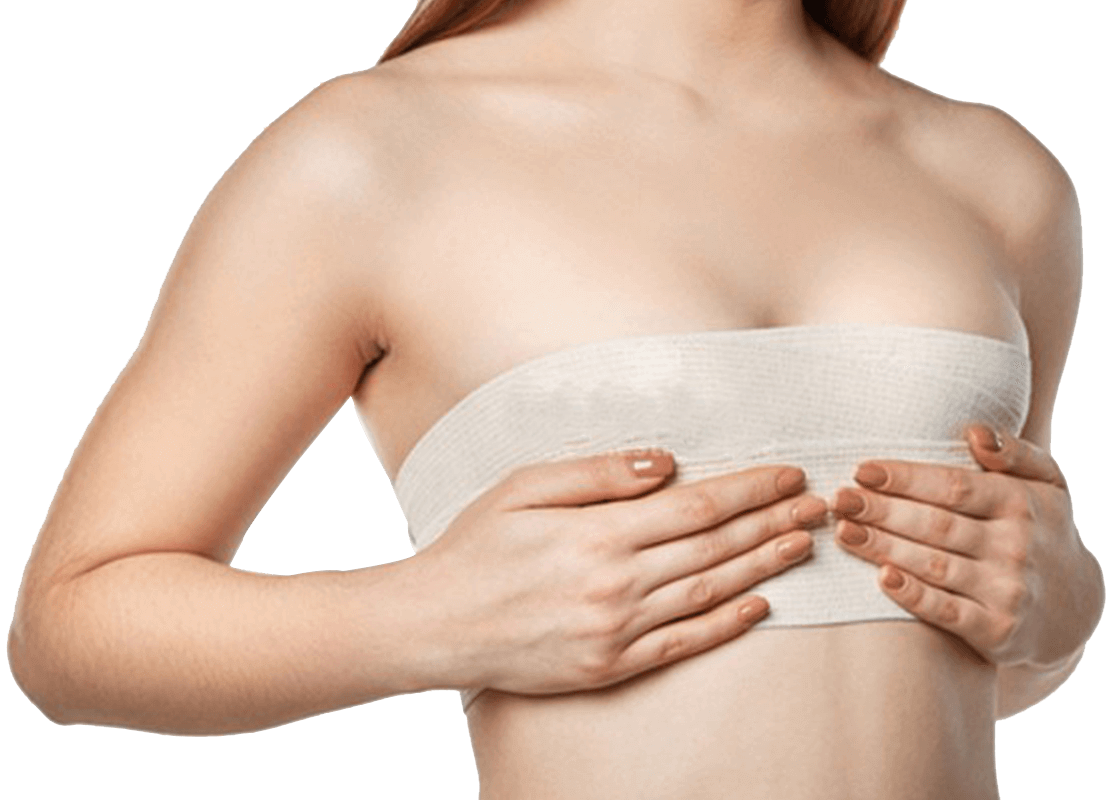
Breast reduction is a different discussion when weight and excessive volume are major concerns. It usually includes reshaping and lifting, but its main purpose includes removing breast tissue. A lift alone should not be promised as a reliable solution to symptoms caused by heavy breasts. Patients deciding between these options can compare the separate breast reduction and breast augmentation articles in this series, while keeping the present consultation focused on their main goal.
Supportive clothing and choosing no surgery
A well-fitting bra can change support and appearance while it is worn. Clothing adjustments may also address a concern that mainly occurs in particular outfits. These options do not remove excess skin, but they may provide enough improvement for someone who does not want scars, anaesthesia or recovery. Choosing no operation is a valid outcome of a consultation, including when a patient initially expected that surgery would be straightforward.
Exercise can strengthen the muscles beneath the breasts and support general fitness, but it cannot reproduce the skin removal and nipple repositioning of mastopexy. Treat claims of a scar-free surgical equivalent with caution. If a device, thread treatment or topical product is offered, ask what measurable change is expected and how long it has been studied. The comparison should include limitations, costs and risks rather than relying on the appeal of avoiding an incision.
Real indications for breast lift surgery
A consultation about mastopexy in Tunisia may be relevant when the concern is primarily breast position or an excess of skin around the existing volume. Examples include:
- Nipples that sit low on the breast or point downward, when the patient wants a higher position.
- Loose breast skin after pregnancy or weight change, once size and weight are sufficiently stable for assessment.
- A breast shape that appears elongated or drooping despite satisfactory overall volume.
- Differences in breast position that may be improved, while accepting that perfect symmetry is unlikely.
- Enlarged areolas that the patient wishes to discuss as part of a broader reshaping plan.
- A personal, consistent wish to change breast contour, with acceptance of scars and a realistic recovery period.
These indications do not establish that surgery is appropriate for a particular person. A surgeon may recommend waiting, investigating a breast symptom or considering a different operation. Expectations are especially important when the desired image shows much more upper breast volume than the patient currently has. If the acceptable outcome depends on having no visible scars, no possible change in sensation or a guaranteed cup size, a lift is unlikely to match those conditions.
Indications and contraindications for breast lift surgery
The following situations have different implications. Some call for postponement, some require additional assessment, and some may make elective surgery inappropriate unless the underlying issue is resolved. An online questionnaire cannot replace that distinction.
| Situation to assess | How it affects the decision |
|---|---|
| Stable breast shape and realistic goals | Supports a useful assessment of lifting, scars and the need for any volume change. It does not remove surgical risk. |
| Pregnancy or active breastfeeding | Usually a reason to defer elective lifting and reassess after breastfeeding has ended and the breasts have stabilised. |
| Significant ongoing weight change | May justify postponement because the skin envelope and breast contents are still changing. |
| Smoking, vaping or other nicotine exposure | Raises concern about tissue blood supply and healing. The surgeon sets the cessation and reassessment requirements. |
| Unexplained lump, nipple discharge or new skin change | Requires breast assessment before proceeding with an elective cosmetic plan. |
| Active infection or poorly controlled illness | May make surgery unsuitable at that time; treatment and medical optimisation take priority. |
| Previous breast operations or radiotherapy | Requires a more detailed assessment of scars, tissue quality and blood supply; prior records may be essential. |
| Previous blood clot or significant clotting risk | Requires an individual perioperative and travel plan, and may change whether surgery abroad is appropriate. |
| Medicines affecting bleeding or anaesthesia | Requires coordination with the prescribing clinician and anaesthesia team, without stopping medicines independently. |
| Inability to attend follow-up or extend the stay | May make the proposed travel arrangement unsuitable even if the operation itself is technically possible. |
| Pressure from someone else or expectations surgery cannot meet | Calls for further discussion; proceeding may be inappropriate if meaningful, informed consent is not possible. |
How the procedure is performed, step by step
Before the procedure
The first consultation should establish what you want to change and why. The surgeon reviews your health, prior surgery, pregnancies, breastfeeding history, medicines, allergies and relevant family history. A breast examination considers skin quality, nipple position, volume distribution and existing asymmetry. Photographs may form part of the medical record, with your consent. For a Canadian patient, a remote review can organise the discussion, but the operative decision remains subject to an in-person examination.
Breast imaging and other tests depend on age, symptoms, history and the proposed operation. A mammogram should not be ordered simply because every package includes one, nor should a concerning symptom be dismissed because the patient is young. Ask what testing is required, whether Canadian results will be accepted and who will review them before travel. If further investigation is necessary, the schedule should allow the cosmetic plan to pause without pressure to proceed.
The anaesthesia assessment addresses previous reactions, breathing conditions, sleep apnoea, clotting risk and medicines that may affect the procedure. Provide the complete list, including supplements, weight-management medicines, hormones and nonprescription products. Changes should be agreed with the appropriate clinicians. You should receive an explanation of fasting, nicotine restrictions, support garments and the anticipated stay. Consent should identify the proposed scars, whether an implant is included and what changes require a new discussion.
During the procedure
The surgical team confirms the operation and marks the breast while considering its position before anaesthesia. The anaesthetic plan is selected for the procedure and the patient's health; many lifts are performed under general anaesthesia. Monitoring and an appropriate recovery facility are part of the care, not optional conveniences. Ask who provides anaesthesia and how unexpected medical problems would be managed at the actual facility where the operation will take place.
The surgeon makes the agreed incisions, reshapes the breast tissue, adjusts the skin envelope and repositions the nipple and areola using the chosen technique. Internal sutures may support the reshaping. The amount of skin removed and the final closure depend on the anatomy and the need to preserve healthy tissue. The two sides may require different adjustments because most breasts are not identical before surgery. A drain may be used in some cases but is not universal. Dressings and a support garment are applied according to the plan. Ask whether any removed tissue will be examined and how you will receive the report.
After the procedure
Recovery staff monitor your breathing, circulation, pain, nausea and the operated breasts. Discharge depends on your condition and the planned setting. Leaving the surgical facility does not mean you can safely stay alone or manage an airport. You need the support arrangements specified by the team, including someone to accompany you and help with daily tasks. Confirm whether the accommodation provides any nursing care or is simply a place to stay.
Written instructions should describe prescribed medicines, dressings, showering, the support bra and restrictions on movement. They should also identify the symptoms that require a call or an urgent examination. Ask for these instructions in a language you can use confidently when tired or uncomfortable. An English-speaking or French-speaking coordinator may be helpful, but the ability to understand the surgeon's and anaesthesia team's medical explanations should be confirmed directly.
The first follow-up reviews the wounds, nipple circulation, swelling and comfort. It is an opportunity to correct practical problems, such as a garment that rubs an incision or uncertainty about dressing changes. Later appointments may be needed for drains, external stitches or wound checks. Before leaving the facility, know when you will be seen again, who can assess you overnight and how you would get back for an unexpected review.
Recovery and time away from normal activities
Breast lift recovery includes several separate milestones: feeling comfortable, having closed wounds, resuming physical activity and seeing the settled breast shape. Reaching one does not mean that all the others have been reached. The following periods describe a broad pattern for discussion. They are not an individual prescription, a guarantee of uncomplicated healing or permission to fly on a particular day.

| Approximate period | Expected changes and practical decisions |
|---|---|
| First few days | Soreness, swelling and fatigue are expected. Follow the discharge plan, obtain help with daily tasks and attend the arranged wound review. |
| First one to two weeks | Bruising and discomfort may begin to improve. Dressings, drains or external stitches may still require attention, and activity remains restricted. |
| Following several weeks | Some patients progressively resume lighter work and daily routines. Wound condition and the demands of each activity determine the pace. |
| Around six weeks and beyond | Exercise and heavier tasks may be reconsidered at review. Persistent wounds, discomfort or combined procedures can extend restrictions. |
| Following months | Breast shape and firmness continue to settle. Scars evolve for longer, and photographs become more useful for assessing the result. |
| Before any long flight | A clinical review must address healing, mobility, complications and clotting risk. A calendar interval alone is insufficient. |
Swelling and the appearance of the early result
The early breast shape may look higher, firmer or less natural than expected. Dressings and the support bra can make it difficult to judge the contour, and swelling may differ between the two sides. Keep a record of changes if the team requests photographs, but avoid treating every day as a new final result. The useful question is whether the progression fits what the surgeon expects for your operation.
A sudden change is different from gradual settling. Rapid enlargement of one breast, marked new tightness, increasing pain or a change in nipple colour needs prompt clinical advice. Sending an image can help the team understand a concern, but it does not replace examination when bleeding, infection or compromised tissue is possible. Ask before discharge which symptoms should take you directly to emergency care rather than waiting for a scheduled remote review.
Dressings and care of the incision junctions
Follow the specific plan for keeping incisions clean, changing dressings and showering. Some dressings are intended to remain in place until review, while others need a different routine. Do not remove adhesive strips, apply an unapproved cream or begin scar massage because an online patient used it successfully. A product suitable for a closed scar may be inappropriate on a wound that is still open or draining.
Patients with a vertical or anchor pattern should understand how to inspect the lower breast without pulling on the skin. You may need a mirror or help from a trusted person. If an area opens, ask for the size, dressing requirements and review schedule to be documented. Even a limited opening can change the practical plan for travel, particularly when dressing supplies and in-person care will be needed after returning home.
Support bras and everyday movement
The prescribed bra should support the breast without creating damaging pressure on incisions. Ask the team to check the fit rather than selecting a smaller size to obtain more compression. Underwires, seams and closures can rub in different places depending on the scar pattern. Obtain instructions for washing the garment and what to wear while it dries. If more than one bra is necessary, include that in the preparation and cost estimate.
Daily tasks often require more upper-body movement than patients expect. Washing hair, reaching into a cupboard, pushing a heavy door and lifting a child can strain the operated area. Arrange frequently used items within easy reach and ask how to get out of bed comfortably. Gentle movement may be encouraged, but permission to walk does not mean permission for lifting, vigorous stretching or exercise that causes breast movement.
Desk work and physically demanding employment
Returning to desk work depends on comfort, fatigue, wound care and the ability to concentrate without impairing medication. Working remotely may reduce commuting, but it does not remove the need for appointments and rest. A patient who spends the day on video calls may also need clothing and a sitting position that do not irritate the breasts. Discuss a gradual return where possible rather than committing to a demanding first day immediately after arrival in Canada.
Physical work requires a different assessment. Healthcare, childcare, warehouse work, cleaning and many service jobs involve pushing, pulling, overhead movement or lifting. Describe actual tasks to the surgeon instead of giving only a job title. Ask for a written account of restrictions that you can discuss with your employer. The required absence includes the trip, recovery in Tunisia and any remaining restrictions at home, not merely the days spent at the clinic.
Exercise and driving after breast lift surgery
The return to exercise should progress according to wound healing and the surgeon's assessment. Walking, running, swimming, resistance training and upper-body sport place different demands on the breast. A closed incision is one consideration, but discomfort, internal healing and the risk of impact also matter. Ask separately about your usual activities. A broad statement that exercise is allowed can be misunderstood when your routine involves heavy weights or contact sport.
Driving requires the ability to manoeuvre safely and perform an emergency action without hesitation, as well as freedom from sedating medicines. The same issue applies to a long drive from an airport after the return flight. Arrange someone else to drive until you are cleared and comfortable. Wearing a seat belt remains necessary; ask how to manage contact with the operated area safely rather than changing its position in a way that reduces protection.
Flying and the complete journey back to Canada
A flight after breast lift surgery needs an individual decision. Recent surgery, a long period of sitting and personal clotting risks must be considered together. The clinician should also assess whether you can move independently, manage pain and obtain appropriate care if a problem develops in transit. An itinerary with multiple connections may be more demanding than its longest flight suggests. Include airport transfers, queues, baggage and the final journey home in the discussion.
Ask whether you need a medical letter or airline assistance and arrange help with luggage before travel. Do not begin aspirin, anticoagulants or compression stockings on the assumption that every postoperative traveller needs the same approach. Preventive measures depend on your risk and the clinician's advice. A flexible booking is useful because an unexpected wound problem or new symptom may make delaying travel the more appropriate decision, even when the original stay has ended.
Follow-up after returning to Canada
Before departure, identify a clinician or service near home that can assess breast wounds if needed. Confirm whether they will accept the role, what information they require and whether there are fees. A presumed appointment with an unspecified family doctor is not a complete plan. This is particularly relevant if you do not have a regular primary care clinician or live far from a service that can assess postoperative complications.
Remote follow-up with the operating surgeon can support continuity, especially for reviewing the progression of scars and shape. It has limits when examination, testing or a procedure is needed. Keep the operation report, medication list and discharge instructions available to the Canadian clinician. Agree how questions will be communicated between teams and who will act on an abnormal finding. The patient should not be left to interpret conflicting clinical instructions alone.
Expected results and durability
Position and shape after the tissues settle
The intended outcome of mastopexy is a better relationship between the breast tissue, skin envelope and nipple position. Some change is apparent early, but the settled contour develops over time. A patient may feel that the breasts look more compact or sit differently in a bra even when no meaningful volume has been added. Bra sizing is inconsistent, so a named cup size is a poor substitute for discussing shape and proportion.
Review the outcome against the goals agreed before surgery. If the original aim was to lift existing tissue without an implant, a softer upper breast does not automatically indicate a failed operation. Conversely, a persisting concern deserves a proper review rather than a blanket instruction to accept every change. The surgeon should distinguish expected settling from a contour issue, recurrent drooping or a complication that needs investigation.
Permanent scars and their evolution
Breast lift scars are an unavoidable consequence of surgical skin removal. They may soften and become less prominent as they mature, but they do not disappear. Their position depends on the incision pattern, and their final appearance depends partly on individual healing. A scar concealed by one bra or swimsuit may be visible in another. Discuss this using your own clothing preferences, without assuming that all scars will remain hidden in every situation.
Scar treatment begins only when the wound is ready and the surgeon agrees. Ask about silicone products, sun protection and review of a scar that becomes raised, itchy or uncomfortable. No product can promise an invisible result. If your skin has formed thick scars previously, show the surgeon examples before deciding. Later scar treatment or revision may be considered in selected cases, but each option brings its own limitations and additional cost.

Nipple sensation and future breastfeeding
A lift can change nipple or breast sensation temporarily or permanently. This deserves a direct conversation if sensation is particularly important to you. Preserving the nipple on a tissue connection does not guarantee that every nerve will function exactly as before. Ask how the proposed technique and any previous operation influence the risk. A consent discussion should allow you to weigh this possibility alongside the expected improvement in appearance.
Breastfeeding after a breast lift may be possible, but milk production can be affected by changes to ducts and nerves. If you later become pregnant, tell your maternity team about the operation and seek lactation support when needed. The baby's growth and milk intake require appropriate monitoring. It is more accurate to plan for that possibility than to promise normal feeding or assume that a circular areolar scar proves complete loss of function.
Future changes and the possibility of another lift
The operation does not stop ageing, gravity or later changes in weight. Pregnancy can also change the breast again. Durability depends on the starting tissues, breast weight, the procedure and events after surgery. A long-lasting improvement does not mean a permanently fixed breast position. Stable weight can help make the result more predictable, but no lifestyle measure provides a guarantee against further drooping.
A future revision may be considered if the contour changes substantially or an unresolved issue remains. That decision is usually made after adequate healing and a fresh assessment, unless an urgent complication requires earlier intervention. Another operation involves new scars and potential effects on tissue blood supply. For Canadians who had surgery abroad, it also raises a practical question: whether reassessment and any treatment would be available locally or require another international trip.
Interpreting before and after photographs
Useful photographs show comparable lighting, posture, camera distance and views. Ask how long after surgery the later image was taken and whether the patient had a lift alone, an implant, a reduction or another procedure. A full upper breast in a photograph may reflect an implant rather than the lift itself. Differences in body weight and bra use can also change the impression, even when the photograph has not been digitally altered.
Risks and possible complications
A breast lift is elective surgery with real medical and cosmetic risks. Their likelihood and consequences depend on the patient, the operation and the care provided. A list cannot replace an individual consent discussion, but it should make clear what the proposed benefit must be weighed against.
- Bleeding or haematoma: a blood collection may cause swelling and pain and sometimes requires urgent treatment.
- Infection: increasing redness, discharge, fever or worsening pain may need examination, tests and treatment.
- Delayed healing or wound separation: an incision may take longer to close and require ongoing dressings or another procedure.
- Reduced tissue blood supply: skin, fat or part of the nipple and areola can be damaged, with possible tissue loss and further treatment.
- Changes in sensation: numbness, altered sensitivity or discomfort can be temporary or persistent.
- Unfavourable scars: scars may widen, thicken, remain conspicuous or cause symptoms despite careful surgery.
- Asymmetry or contour concerns: differences may persist or develop as healing progresses, and correction may be limited.
- Fluid collections or fat necrosis: a collection or firm area may require clinical assessment rather than being assumed to be normal swelling.
- Anaesthetic or medication complications: reactions and cardiopulmonary problems require appropriate assessment and monitoring.
- Blood clots: deep vein thrombosis and pulmonary embolism are serious risks considered alongside surgery and long travel.
- Breastfeeding difficulties: some patients may have reduced milk production after breast surgery.
- Further surgery: complications, recurrent drooping or dissatisfaction may lead to additional treatment, without a guaranteed final result.
Symptoms that need prompt or emergency assessment
Sudden breathlessness, chest pain, collapse or other severe symptoms require emergency medical care. A painful swollen leg also needs urgent assessment, particularly after surgery or travel. Do not wait for a routine message response from the clinic when the symptoms may be serious. Tell the treating team about the operation, date of surgery, recent flights and all medicines, including any prescribed clot-prevention treatment.
Changes in the breast need their own clear escalation route. Rapid one-sided enlargement, increasing severe pain, spreading redness, fever, concerning discharge or a nipple becoming unusually pale or dark should be assessed promptly. A photograph may not show temperature, tenderness or the depth of a wound. Your discharge instructions should state whom to contact immediately and where to go if that person cannot be reached.
Managing complications in Tunisia and in Canada
Before surgery, ask which facility would manage an urgent return to theatre, overnight observation or specialist assessment in Tunisia. Clarify who provides care if the operating surgeon is unavailable and how additional costs are handled. A telephone number is useful only when it connects to someone able to arrange an appropriate response. Accommodation staff or a travel coordinator cannot substitute for a clinician when a medical decision is needed.
After returning to Canada, seek care according to the severity of the problem rather than waiting to negotiate responsibility for costs. Inform the treating clinician that the surgery occurred abroad and provide the available records. Coverage and access depend on the service, province or territory and individual circumstances; do not assume that every consultation, dressing service or elective revision will be publicly funded. Financial arrangements should be clarified in advance wherever possible.
Why consider Tunisia for breast lift surgery?
Assessing the proposed care rather than the destination alone
Some Canadians explore Tunisia to compare a surgical proposal and its overall cost with options at home. The value of that comparison depends on the actual surgeon, facility and recovery arrangements. A lower advertised fee does not reveal whether the operation is a lift alone, whether a more extensive scar pattern is needed or how complications would be managed. It is sensible to request those details before interpreting an offer as equivalent to another quotation.
Direct communication in English or French
Confirm the language of consultations with the surgeon and anaesthesiologist before relying on the possibility of English or French communication. A clinic may have a multilingual administrative contact without every clinician providing detailed medical consultations in the same language. If interpretation is required, ask how it will be arranged for consent, anaesthesia assessment, discharge instructions and urgent concerns, not only for the first enquiry.
Balancing the initial stay with care at home
The stay must allow the team to assess early healing and make a specific decision about travel. A fixed package length does not establish the right departure date for every patient. For breast lifting, the condition of the incisions and the ability to manage wound care matter alongside general comfort. A patient who feels well may still need further local reviews before undertaking a long route with several connections.
Cost of breast lift surgery in Tunisia
The cost of a breast lift in Tunisia should be assessed as the cost of the whole episode of care. A headline surgical fee may leave out expenses that are especially important for Canadian patients. There is no reliable single amount that applies to every breast shape, technique, medical history and itinerary. Request a written quotation based on the proposed operation and keep any preliminary assumptions visible.
| Factor | Effect on total cost |
|---|---|
| Lift technique and complexity | The planned skin pattern, previous surgery and extent of reshaping affect the operative proposal. |
| Surgeon, anaesthesia and facility | Identify separate professional and facility charges and the monitoring or admission included. |
| Implants or other additions | A lift combined with an implant or another treatment requires a distinct description and price. |
| Consultations and investigations | Confirm which examinations, laboratory tests and breast imaging are included or obtained in Canada. |
| Dressings, medicines and garments | Ask about supplies, support bras, prescriptions and any nursing visits outside the facility. |
| Transatlantic travel and connections | Include all flights, baggage assistance where needed, ground transport and changeable fares. |
| Accommodation and companion | Budget for the recovery stay, a suitable room, meals and the practical help you may need. |
| Longer stay or changed return | Delayed healing can add accommodation, transport and ticket-change costs. |
| Time away from work and home | Include unpaid leave, childcare and help with tasks during restrictions. |
| Complications and insurance | Establish what additional care is charged and obtain written clarification of relevant coverage and exclusions. |
| Canadian follow-up | Allow for consultations, wound supplies and services that may not be covered under your circumstances. |
| Later revision | Clarify surgeon fees, facility and anaesthesia charges, travel and the conditions of any revision policy. |
Reading an itemized quotation
The quotation should name the proposed surgeon, operation and facility, and describe the planned admission and follow-up visits. It should distinguish the surgical procedure from transport and accommodation services. If the offer uses the phrase all-inclusive, ask for the actual inclusions and exclusions. A statement that postoperative care is included may refer only to scheduled checks during the original stay, leaving an extended stay or treatment elsewhere outside the price.

Request the currency, payment schedule, cancellation terms and the process if medical assessment changes the plan. Exchange rates and payment fees can affect the amount paid from Canada. Keep a dated copy rather than relying on a price shown in a message that may later be updated. Compare proposals for the same operation: a lift alone and a lift with implants are not interchangeable offers even when both are marketed as breast reshaping.
Insurance and a realistic contingency budget
Tell the insurer that the purpose of travel includes elective surgery and ask about complications, emergency treatment, evacuation and a prolonged stay. A general travel policy should not be assumed to cover those circumstances. Obtain the answer in writing and check whether the terms apply to your actual procedure and itinerary. If specialised coverage is proposed, review its limits and exclusions just as carefully as the original policy.
A contingency budget should be usable when a decision is needed, not dependent on obtaining a refund first. Consider how you would pay for extra nights, a companion's changed flight or urgent care if required. Also ask what financial arrangements apply if surgery is cancelled after the in-person consultation. Comparing total exposure may change an apparent saving, and it gives a clearer basis for deciding whether the trip is affordable.
Comparison: Tunisia and other medical tourism destinations
Compare named surgical teams and specific arrangements rather than assuming that a country determines care quality. For a Canadian considering mastopexy, continuity and the burden of the journey are especially relevant because wound reviews may continue after the initial recovery period. The table identifies questions to apply to each proposal; it does not rank destinations or establish that any option is appropriate for you.
| Option | Communication and consultation | Journey and recovery stay | Quote and continuity of care |
|---|---|---|---|
| Tunisia | Confirm direct English or French medical consultations and an in-person examination before the final decision. | Check the actual transatlantic route and allow flexibility for wound reviews before departure. | Identify the surgical facility, local complication care and the handover to a Canadian clinician. |
| Care in Canada | Confirm the surgeon's language and appointment access; proximity varies by home location. | International travel may be avoided, although domestic travel can still be substantial. | Clarify fees and whether follow-up and revisions are included; local access still needs confirmation. |
| Mexico | Verify the named team, interpretation needs and the time available for a complete assessment. | Travel burden depends on the Canadian departure point and treatment location. | Check the operation, facility, local review arrangements and care after crossing back into Canada. |
| Türkiye | Confirm who conducts medical discussions and how interpretation is provided when necessary. | Assess all flight legs, airport transfers and the ability to extend the recovery stay. | Separate the surgical quote from accommodation services and establish a practical postoperative handover. |
Tunisian cities to consider for this procedure
Start with the confirmed surgeon and operating facility
Choose the location after identifying the team and the facility where surgery would actually take place. A city's reputation cannot verify a surgeon's training or the suitability of an operating environment. Ask for the addresses of the consultation, operation and follow-up appointments. They may not all be in the same building, and the journey between them can matter when wearing a support bra and avoiding uncomfortable movement.
If Aylan Clinic proposes a particular location, request the corresponding medical arrangements rather than inferring them from a destination description. No city or facility should be treated as confirmed until it is identified in your proposal. This also makes it possible to check the realistic transfer from the arrival airport and the distance from accommodation to urgent care. Those distances should be considered for the actual addresses, not an approximate city centre.
Accommodation that supports breast surgery recovery
The room should make basic recovery tasks manageable. Ask about stairs, lift access, a suitable bed, washing facilities and space for a companion if one is needed. Clarify whether meals can be obtained without carrying heavy bags or making repeated journeys. A patient recovering from a lift may feel comfortable walking short distances but still struggle with lifting luggage, reaching overhead or transporting supplies.
A hotel description does not establish medical supervision. If nursing visits are promised, ask who provides them, what they include and how additional visits are arranged. If no clinical care is provided at the accommodation, that should be explicit. The aim is to know how dressings, medicines and unexpected symptoms will be handled on an ordinary recovery day, including evenings and days without a scheduled surgical appointment.
Transfers and access if the plan changes
Confirm transport for every required review and how an unscheduled return to the clinic would work. A package transfer may cover arrival and departure only. If the operation is postponed or the stay is extended, you may need additional journeys and accommodation. Ask who can help arrange them and who pays. These are practical questions that should have clear answers before tickets are purchased.
Which Canadian cities can patients travel from?
Canadian departure planning begins at home and ends when you are safely back there. The most convenient airport is not always the nearest one once connections, baggage handling and the return drive are considered. Flight schedules, seasonal services, transit conditions and airline requirements must be checked for your actual dates and passport. None of the following city groups implies a direct service to Tunisia.
Montreal Laval Longueuil and Quebec City
Patients in Montreal, Laval and Longueuil should include the journey to the departure airport and the help needed on returning to their neighbourhood. A companion who can collect you and carry luggage may be more useful than selecting an arrival time that leaves you travelling home alone. From Quebec City, compare the full itinerary with any proposed overland connection to another airport. The apparent convenience of one flight can disappear when a long drive is added after surgery.
For French-speaking patients, ask whether the surgeon and anaesthesia team can explain the mastopexy plan directly in French. English-speaking patients in Quebec should make the same check for English. Obtain records in a form usable by the clinician who will assess you at home. Before leaving, discuss where wound reviews could take place and how a concern about nipple circulation or an opening incision would be assessed promptly in your local area.
Ottawa Gatineau Sherbrooke Trois-Rivières Saguenay and Lévis
Patients in Ottawa and Gatineau may compare different departure airports, but the return arrangement deserves equal attention. Consider who will meet you, whether you will need to cross the city or continue farther, and how that journey fits your remaining restrictions. State your preferred clinical language separately from your address. Living in a bilingual region does not guarantee the same language access during surgery abroad or at every postoperative appointment.
For Sherbrooke, Trois-Rivières, Saguenay and Lévis, the overland leg may be a substantial part of the trip. An overnight stop before departure or after return may make the itinerary more manageable, depending on the route and medical advice. Discuss the complete journey with the team rather than only the time in the air. Plan wound care near your home community so that each routine review does not require another long journey to an airport city.
Toronto Hamilton Kitchener–Waterloo and London in Ontario
Patients around Toronto can compare available itineraries while considering traffic, check-in time and the need for assistance with bags. Those in Hamilton, Kitchener–Waterloo or London may have additional road or connecting travel. Check the conditions of the actual booking, including what happens when a connection is missed. A route that is affordable but inflexible can create pressure if the surgeon recommends staying longer for an incision check.
Vancouver Victoria Surrey and Kelowna
From British Columbia, compare total travel time, the number of connections and the recovery burden of the entire route. Patients in Surrey need to include transport to and from the chosen departure airport. Those in Victoria or Kelowna may need an additional flight or other transfer. Each leg introduces movement, waiting and baggage arrangements that deserve consideration while recovering from breast surgery.
Time-zone changes and fatigue can complicate medicine schedules and communication with the team in Tunisia. Ask for clear written instructions that can be followed during the journey and obtain advice about any dosing questions. Flexible return bookings and a companion may be particularly valuable on a long itinerary. Confirm a local review option before leaving British Columbia, including what happens if the first concern appears after a late arrival or over a weekend.
Calgary Edmonton Winnipeg Saskatoon and Regina
Patients in Calgary and Edmonton should evaluate the actual international connection and the practical demands of transit airports. From Winnipeg, Saskatoon or Regina, another domestic leg may be part of the itinerary. Do not compare routes using fare alone: the ability to change a flight, avoid rushed transfers and obtain assistance can matter after mastopexy. The operating team needs to know about all legs when discussing readiness to travel.
Follow-up should be planned close to where you actually live, including communities beyond these cities. If the nearest appropriate service requires a lengthy drive, decide who can take you and how often visits might be feasible. Ask the surgical team what information a local clinician would need for a wound concern. A clear record of the incision pattern and operation is more useful than a general letter stating only that cosmetic surgery was performed.
Halifax Moncton Dieppe Edmundston and Fredericton
Atlantic and Acadian patients may need several travel legs before reaching Tunisia. Compare the complete route from Halifax, Moncton or another chosen airport, including any ground journey from Dieppe, Edmundston or Fredericton. Check whether separate bookings would leave you responsible for a missed onward flight. When the return date depends on healing, the conditions for changing the whole itinerary are as relevant as the first ticket's price.
Patients who prefer French should verify that medical discussions, written instructions and postoperative questions can be handled in French by the relevant team. English-language needs also require direct confirmation. Arrange an accessible local assessment option before departure, especially if you anticipate returning outside ordinary clinic hours. Ask how a Canadian clinician can contact the surgeon about a wound finding without relying on the patient to translate technical information.
Charlottetown St. John's and smaller Atlantic communities
For patients departing from Charlottetown or St. John's, evaluate the possible domestic connection together with the international flights. Leave enough room to adapt if travel conditions change, and check the current schedule for the intended season. A tight return plan can be difficult to modify when several reservations depend on one another. Explain to the surgical team where you will spend the first night after reaching Canada.
If home is outside the departure city, consider the final road journey and access to follow-up supplies. You may need someone to collect prescriptions, transport you to a wound review or take over lifting tasks. These arrangements are specific to recovering from breast surgery and may continue after you feel generally well. Keep contact details and medical records available offline in case you need help during a connection or away from reliable internet access.
How to choose a surgeon for breast lift surgery
Use verifiable information when assessing a proposal:
- Confirm the surgeon's full identity, relevant specialty and current right to practise where the operation will occur.
- Ask about experience with your breast shape, prior operations and the proposed incision pattern.
- Arrange a direct medical consultation and confirm the language in which it will take place.
- Identify the operating facility, anaesthesia team, monitoring and emergency arrangements.
- Obtain an explanation of complications, unscheduled reviews and the process for further treatment.
- Request an itemized quotation, a medical schedule and a written plan for follow-up after returning to Canada.
Discussing a technique rather than buying a label
Ask the surgeon to explain why the proposed scar pattern fits your anatomy and what a less extensive pattern would leave uncorrected. Discuss how much upper fullness is achievable without an implant and whether your requested shape would require a different procedure. The answer should connect the technique to your goals. A fashionable name or promise of a minimal scar does not establish that the operation is right for you. Provide previous breast operation records where available, since they may influence planning.
Understanding responsibility throughout recovery
Find out who performs routine postoperative reviews and whether the operating surgeon will be available during your stay. Ask what happens if you develop a concern when that surgeon is absent. The answer should identify a medical arrangement, not simply reassure you that a coordinator will remain in contact. Also clarify whether the same team handles wound care and any possible return to the operating room.
Planning a medical stay in Tunisia
Planning breast lift in Tunisia requires a medical schedule that can adapt to the condition of your breasts before and after surgery. Start with the assessment, recovery support and follow-up arrangements, then build the itinerary around them. Confirm the availability of the proposed procedure and team with Aylan Clinic before treating an enquiry as an accepted surgical booking.
Medical preparation before leaving Canada
Provide the requested medical history, medicine list and previous breast records early enough for the team to review them. Photographs can support a preliminary discussion if requested through an appropriate private channel; ask which views are useful and how the images will be stored. Avoid assuming that an initial response based on pictures is final approval. In-person findings, test results or changes in health may alter the recommendation.
Arrange the relevant Canadian appointments before travel, particularly if a breast symptom needs investigation or a medicine requires coordinated planning. Discuss nicotine exposure honestly. Prepare the support needed at home for both departure and return, including childcare and lifting tasks. Check current entry and transit requirements for your nationality, passport and complete route with the appropriate official authorities; Canadian residence alone does not determine which rules apply.
Assessment in Tunisia before committing to the final plan
Allow time for the surgeon to examine you, review test results and explain the final operation. Ask to see the proposed scar positions and to discuss the likely appearance without a bra. If the plan now includes implants, a different scar pattern or a staged operation, request a fresh explanation of the implications. You should have space to consider the change rather than being expected to agree because surgery is already on the schedule.
Practical care during the first days
Keep essential items accessible without reaching overhead or carrying heavy bags. Follow the prescribed dressing and medicine instructions, and know how to contact the team if nausea, pain or garment discomfort prevents normal recovery tasks. If a companion is helping, include them in the practical explanation with your consent. They should know when a problem requires a clinician rather than trying to solve it independently.
Examination before the return flight
The preflight review should consider the actual journey, including connections and the final transport home. Eastern and central Canadian routes may still involve long transfers; western departures can add considerable travel time; Atlantic itineraries may require multiple legs. Provide your booking details so the clinician can assess the plan you will actually follow. Ask what findings would require postponement and how continued local care would be arranged.
Collect the operative report, discharge summary, prescriptions and instructions for follow-up before leaving. If wound care is ongoing, obtain a specific written plan and sufficient supplies for the journey. Confirm airline documentation and assistance requirements separately. Medical advice about fitness to travel and an airline's administrative acceptance are different issues; both should be addressed without assuming one automatically settles the other.
Continuing care after arrival home
Arrange the first Canadian review at a time suited to your clinical needs, and send the relevant records in advance when possible. Tell the clinician about any wound problem, drainage, new medicine or unexpected review during the stay. Continue to send information to the operating surgeon as agreed, while using local assessment for concerns that require examination. Keep a record of instructions so changes remain clear across both teams.
Longer-term reviews can address scars, sensation, breast shape and questions about activity. Continue appropriate breast health care and tell imaging staff about the lift and any other breast procedure performed. A new lump or persistent change should be assessed rather than attributed automatically to surgery. The end of the trip is a handover point in recovery, not the end of responsibility for monitoring your health.
Request a personalized opinion on breast lift surgery in Tunisia
To discuss breast lift surgery in Tunisia, tell Aylan Clinic what you would like to change about breast position, shape and volume. Include relevant medical history, previous breast surgery, medicines, pregnancy plans and your preferred language for medical conversations. Explain where you will travel from in Canada, how much flexibility you have and what support is available during recovery. These details help frame the questions that a proposed surgical team needs to assess.
Request confirmation of procedure availability, the proposed surgeon's identity, a direct consultation, a medical schedule and an itemized quote. Ask how the team would handle a change in technique, delayed healing or postponed travel, and what records will support follow-up in Canada. A remote preliminary opinion can help you explore the options, but it is not a definitive decision to operate. The final plan should follow appropriate assessment and a clear discussion of benefits, scars, limits and risks.
Continue exploring our breast surgery in Tunisia overview, the complete aesthetic surgery panorama, compare plastic surgery prices in Tunisia, or request a free, personalized quote.
Everything about Breast Lift in Tunisia
Technique, pricing, results and the full patient journey — every detailed answer in our complete guide.