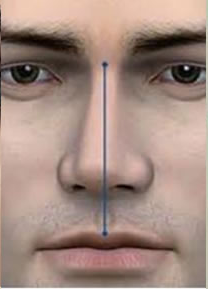
Ethnic rhinoplasty is often used to describe nose surgery in which a patient wants changes that respect features they associate with their family or cultural identity. The term does not describe one anatomy, one aesthetic or one surgical technique. Patients who identify with the same heritage may have very different noses and very different goals. For a Canadian patient considering treatment in Tunisia, the starting point is a conversation about what you personally want to change, what you want to preserve and how the nose functions. This guide sets out the questions, options and practical arrangements to discuss with a qualified surgeon; it cannot determine your candidacy.
Your goal defines the consultation
Describe the feature, not a category
You might want more definition in the tip, a change in bridge height, a different nostril outline or improved symmetry. You might want a small adjustment that friends cannot immediately identify. State those preferences in your own words. Labels tied to ethnicity can hide important detail: two patients can use the same label but ask for opposite changes. A useful surgical plan identifies the specific structures involved and predicts how changing them might alter the face as a whole.
Preserve what matters to you
Some patients wish to retain a recognizable family resemblance or a feature they consider part of their identity. Others want a more noticeable alteration. Both positions deserve careful listening without pressure to conform to a single beauty standard. Tell the surgeon which features you like, even if they appear in photographs you bring to illustrate a concern. Explicitly documenting what you wish to retain makes it easier to avoid an unwanted degree of change.
Discuss appearance and breathing together
A change to the bridge, tip or nostril shape may affect structural support and airflow. Conversely, a patient seeking better breathing may also want the outside of the nose to remain familiar. Ask the surgeon to assess the septum, nasal valves, turbinates and any inflammatory cause of congestion when symptoms are present. An external photo does not diagnose an internal obstruction. The proposed operation should state separately what it aims to accomplish for appearance and for breathing.
Use reference images carefully
Bring images that show a contour or degree of definition you appreciate, alongside photographs of your own nose taken consistently from several angles. Explain precisely which aspect you mean. An image of a different person cannot predict what your skin, bone and cartilage can achieve. Digital morphing is also a communication aid, not a promise. Ask the surgeon to explain which elements of the edited image require structural changes and which cannot be reproduced reliably.
Understanding your individual anatomy
Skin and soft tissue
The skin envelope helps determine how an underlying change becomes visible. Thicker soft tissue may soften the appearance of tip definition; thinner skin may reveal subtle framework irregularities. Either situation can occur in people of many backgrounds. During examination, the surgeon evaluates thickness, elasticity, texture and any prior scarring instead of inferring them from your ancestry. A realistic plan accounts for the way your tissue is expected to heal, while acknowledging that an exact result cannot be guaranteed.
Bone and cartilage framework
The width and shape of the upper nasal bones, the middle vault, the septum and the tip cartilages differ from person to person. The surgeon checks whether the apparent width of the nose comes from bone, cartilage, skin or the relationship between them. Tip projection and rotation depend on support, not just surface contour. A bridge that appears low in profile may be perfectly harmonious to its owner; it is a concern only if the patient wants a change and the proposed adjustment is feasible.
Nostril shape and the nasal base
Nostril width, flare and symmetry can be discussed without assuming a universal ideal. A patient may want no change at all to the base while refining the tip. Another may request a modest base adjustment. The surgeon should explain how the nostrils will look from the front and below, whether a separate incision would be required and how the proposed change may relate to breathing. Overly aggressive narrowing can create an appearance or functional result the patient did not intend.
Natural asymmetry
Most faces and noses differ slightly from side to side. One nostril may have a different contour, or the bridge may lean because of old trauma. A surgeon can assess whether the difference comes from the nasal framework, facial skeleton or soft tissue. Surgery can improve selected asymmetries but cannot promise perfect mirror symmetry. Look at the front, side and three-quarter views when discussing what matters to you; a change helpful from one angle can alter another.
Anatomy and identity are separate questions
The surgeon's job is to examine your nose as an individual, while your job is to say what a change would mean to you. Neither skin thickness nor ancestry determines how much change you should want. A respectful consultation avoids asking patients to justify the wish to retain a feature and avoids assuming they want to look like a different group. This distinction helps translate a personal preference into a precise, consentable surgical plan.
When ethnic rhinoplasty may be appropriate
Shape concerns
Common consultation topics include tip definition or support, bridge contour or height, width, nostril shape and asymmetry. They are topics for assessment rather than a set of changes that all patients require. A surgeon should explain whether a request can be met by reshaping existing tissue, adding structural support or leaving an area untouched. The desired extent of change should be described in terms that both patient and surgeon can recognize.
Breathing concerns
Tell the team about one-sided blockage, symptoms during exercise or sleep, prior injury, allergies and any treatment tried. Some problems relate to the septum or nasal valve; others arise from inflammation. A functional examination may show that medical treatment, a separate procedure or a combined operation is appropriate. Ethnic rhinoplasty with functional assessment should never rely on the idea that a particular heritage predicts a particular airway problem.
Previous surgery or injury
Revision surgery may involve scar tissue, altered cartilage or a weakened framework. Trauma can affect the bridge, septum and breathing. Bring records and earlier photographs if available. The surgeon may need to discuss grafts, realistic limits and timing in greater depth than in a primary case. A preference to restore a familiar family resemblance after an earlier operation deserves the same specific discussion as a wish for a new aesthetic result.
Candidate assessment
Suitability depends on physical examination, general health, the proposed scope of change and expectations. Share your medical conditions, previous procedures, medication, allergies, nicotine use and experiences with anaesthesia. If your goal depends on a feature that cannot safely be changed as much as you hope, the surgeon should say so. Deciding to defer or decline an operation can be an appropriate outcome of a well-conducted consultation.
Surgical approaches and options
Open and closed access
A closed approach uses incisions inside the nostrils. An open approach adds a small incision across the columella between them. Choice depends on visibility needed, the structural work planned, previous surgery and surgeon preference. Neither approach is inherently more authentic or more appropriate for a patient's ethnic identity. Ask how the proposed access helps meet your specific goals and what incision care will involve.
Tip refinement or support
Tip work may use sutures, repositioning of cartilage or grafts to modify projection, shape or stability. The decision depends on existing support and the skin envelope. A request for more definition does not necessarily require a sharply narrowed tip. Ask to see how the proposed change would relate to the bridge, nostrils and facial profile. The surgeon should also explain the likely pace at which tip swelling resolves.
Bridge reduction or augmentation
Some patients want to soften a prominent bridge; others want to add height or smooth a contour. Both operations must be planned with airflow and the middle vault in mind. Augmentation can require graft material or another selected technique, each with distinct limitations. Reduction may call for preservation or restoration of support after a hump is changed. The aim is the contour you agreed on, rather than an assumed straight or high bridge.
Cartilage sources
Grafts may come from the septum, ear or rib when the patient's structure and goals justify them. Septal cartilage availability can be limited after earlier surgery or when substantial support is needed. Ear cartilage has a different shape and strength from rib cartilage. The surgeon should describe why a particular source is proposed, where any donor-site incision would be, and whether another approach is possible. Grafting is a technical option, not an inevitable component of this category of rhinoplasty.

Base and nostril adjustment
A separate base procedure may be discussed if the patient explicitly wants a change in nostril width or flare. The plan should address incision location, degree of change, how symmetry will be judged and protection of the opening needed for airflow. Some patients prefer their original nasal base even if they choose bridge or tip surgery. Confirm that an operation elsewhere on the nose will not be taken as permission to alter the base without discussion.
Functional procedures
If examination identifies a deviated septum or a structural valve issue, septoplasty or targeted support may be considered. Turbinate treatment, when relevant, should be based on findings rather than routine. Allergy and inflammatory conditions may need continued medical management. Ask which procedure addresses which symptom and how the surgeon will protect breathing while making the appearance changes you want.
What injectables can and cannot do
Filler may conceal a limited contour difference temporarily, but it cannot reduce nasal dimensions, permanently change the framework or correct a structural obstruction. Nasal injections also carry rare but serious vascular risks and require specialist judgment. They should not be marketed as an easy substitute for a considered surgical plan. Observation remains an option when your current features already fit your preferences better than available alternatives.
| Personal goal | Individual assessment | Point to clarify in consent |
|---|---|---|
| Retain family resemblance | Features you value and degree of change | Which areas will remain intact |
| More tip definition | Skin envelope and cartilage support | Expected definition and healing time |
| Alter bridge contour | Bone, cartilage and profile balance | Reduction, augmentation or observation |
| Change nostril shape | Base anatomy and airflow | Separate incision and degree of change |
| Breathe more comfortably | Septum, valves and inflammation | Functional plan and its limits |
A respectful consultation in practice
Tell the surgeon what the result should feel like
Words such as natural, refined or balanced mean different things to different people. Make them concrete: for example, a slightly smoother profile while keeping your present nostrils, or improved tip support without a dramatic change to the bridge. State any result that would feel too narrow, too elevated or unlike you. A surgeon can then identify where your preferences align with what the tissues can safely support.
Discuss several angles and facial proportions
A profile-only conversation can miss the features that matter most from the front. The surgeon should examine front, profile, oblique and base views and explain how a structural adjustment may appear from each. Chin and cheek proportions may influence how the nose looks without needing surgery in those areas. You are free to keep the discussion limited to your nose; the purpose of assessing proportions is to make the requested change intelligible.
Ask for honest limits
A thick skin envelope, pre-existing deviation or an old operation can limit visible refinement or symmetry. The surgeon should explain these limits without reducing your preferences to stereotypes. Ask what range of change is likely, what cannot be predicted and how your own photographs will be used at follow-up. A realistic answer helps you decide whether the anticipated improvement is worth surgery and recovery.
Ensure you understand the plan
Before signing consent, ask for the planned changes in plain language: tip, bridge, bones, septum, valves and base if relevant. Confirm which features are deliberately left alone. Discuss incisions, graft material, anaesthesia and the alternatives. A brief description such as “ethnic nose correction” is too vague to guide meaningful consent. The team should also be able to explain who will answer questions once you are back in Canada.
Arranging care in Tunisia
Verify the surgeon and facility
Identify the surgeon who will perform the operation, their training and experience with the specific techniques proposed, and the facility where it will take place. Confirm the anaesthesia team and planned postoperative reviews. Before booking a flight, find out who makes medical decisions if recovery differs from the expected course. Coordination by Aylan Clinic should give you a clear pathway to the operating surgeon and written information about the proposed service.
Build time for evaluation and recovery
A remote conversation can begin planning, but a definitive operation must follow an appropriate in-person examination. The local schedule should include consultation, any necessary tests, the operation and postoperative review before departure. Do not fix a return date solely around a package length. The surgeon should advise when travel is appropriate based on healing and on any functional or graft work performed.
Confirm price and inclusions
Ask for an itemized quotation specifying surgeon, facility, anaesthesia, planned graft or donor site if applicable, routine follow-up, accommodation and transport if offered. Check how extra visits, medicines, changes in the procedure and unexpected care would be billed. Comparing price is reasonable, but compare the actual proposed operation and aftercare. A low number cannot tell you whether the plan reflects your preferences or whether the facility is suitable.
Plan communication across borders
Agree on the language used for consent and discharge instructions, and keep copies of the operative report, prescriptions and important clinical records. Find out how the team handles photos, scheduled remote appointments and urgent messages after your return to Canada. Identify a local clinician for problems that require examination. A continuing care plan should be settled before surgery rather than improvised when you are already travelling.
Preparing for the operation
Share complete health information
Tell the team about medicines, supplements, allergies, chronic conditions, prior operations and any issues with anaesthesia or healing. Discuss smoking, vaping or other nicotine use because it can affect recovery. Do not discontinue prescriptions without the clinician responsible for them advising you. The surgeon may request testing according to your health and the procedure. Inform the team if you develop illness or significant nasal inflammation shortly before surgery.
Set up practical support
Plan help with travel, meals, transport and the first recovery days as advised. Bring clothing that does not need to pass over your head. Ask when glasses, exercise, makeup and work can resume for your particular operation. Have a place to rest and a way to reach the team. Recovery planning is an ordinary part of arranging elective surgery, and it gives you space to follow instructions without pressure from a tight schedule.
Review consent at the right level of detail
Consent includes benefits you hope to gain, likely limitations, alternatives and material risks. These may include bleeding, infection, changes to breathing, asymmetry, graft or scar concerns and a possible need for additional treatment. The conversation should be proportionate, clear and specific to your case. Ask which issues are expected temporary effects of healing and which would need medical review. You should have enough information to choose freely.
Recovery and the evolving result
Immediately after surgery
The team may use an external splint, tapes or internal supports depending on what was done. Expect written advice about medication, cleaning and activity. Early swelling, bruising, congestion and some blood-tinged drainage can occur. The degree varies. A blocked feeling in the first days does not establish the eventual breathing result. Attend the planned postoperative visit and ask before removing or adjusting any support yourself.
The first weeks
Protect the nose from pressure and accidental impacts. Follow your surgeon's advice about sleeping position, cleaning, nose blowing, glasses and return to exercise. Bruising may improve while swelling continues. If graft material came from an ear or rib, follow the separate donor-site instructions too. Ask when you can travel and whether a further local assessment is required. Your personal schedule should reflect the actual procedure, not a generic recovery calendar.
Months of refinement
The surface of the nose and the underlying framework settle at different rates. Tip definition can develop slowly, particularly where soft tissue is relatively thick or substantial work was done. A temporary change in symmetry across weeks does not necessarily indicate the final result. Surgical sources describe rhinoplasty maturation as taking many months, sometimes a year or more. Take comparison photographs at agreed intervals in similar light and angles.
Breathing during healing
Swelling and crusting can temporarily make airflow feel different from the long-term result. Continue any prescribed care and report persistent or worsening obstruction to the team. If you had functional work, ask when breathing can be meaningfully reassessed and whether medical treatment for allergy remains necessary. A patient's account of breathing is important, but the clinician may also need to examine the nasal passages to understand a concern.
Responding to concerns
Contact the surgical team for unexpected symptoms, and seek urgent local assessment for significant bleeding, fever, worsening pain, pronounced redness or a sudden serious breathing problem. Arrange a Canadian clinical examination when photographs or messages cannot answer the question. This practical pathway protects continuity without making complications the centre of your decision. Save your records and the contact details you received in Tunisia.

What a satisfying result means
Look at the change you actually chose
Satisfaction depends on whether the result addresses your own priorities and still feels comfortable as part of your face. Compare preoperative and later photographs from consistent angles and note any breathing change separately. Do not judge success by whether the nose fits an external template. A small improvement that preserves valued traits may be more meaningful to you than a dramatic result.
Give healing enough time
Early swelling can obscure tip detail or make the base appear different. The surgeon can explain what is expected at each follow-up and when a concern can be assessed with confidence. If a persistent issue remains, discuss observation, medical treatment or, in selected cases, revision after appropriate healing. Revision is a new surgical decision, with its own anatomical limits and planning, rather than an automatic adjustment.
Nuances that make a personal plan possible
A vocabulary for change that you control
Words such as refined, natural or harmonious can conceal disagreement. Before your appointment, write three concrete statements: what you want to change, what must remain recognizable and what would feel like too much. For example, you may prefer a smoother bridge but want to keep the present tip position and nostril width. Another patient may make tip definition the priority and request no change to bridge height. The surgeon can reflect these statements back to you and mark proposed adjustments on your own photographs. If a term like ethnic rhinoplasty is used, ask what it means in this particular operative plan. Precise language protects your choices more reliably than an aesthetic label.
Family resemblance and personal autonomy
A family member's nose can be a helpful reference for a feature you value, but you do not need to resemble anyone else to justify your preference. Nor must you preserve a trait simply because another person calls it traditional. You can choose a modest or marked change for your own reasons. A respectful consultation listens to your preference without reading identity from appearance. If you bring family photographs, explain whether they illustrate a bridge line, a tip shape or an overall feeling. The surgeon should use them to understand your aim, then discuss what your anatomy can realistically support rather than offering to reproduce another person's nose.
Tip definition under a thicker envelope
Some patients have a soft-tissue envelope that makes delicate changes in the underlying tip less visible. That finding can occur across many populations and has to be examined, not assumed. A surgeon might plan stronger support or a restrained change in shape, but the visible outcome still depends on healing. Ask whether your goal concerns tip width, projection, rotation or the relationship to the nostrils. Improving one of these may be achievable without sharply narrowing the others. The consultation should set expectations for gradual refinement and for how much definition may be visible at a year. No photograph or simulation can promise a particular level of sharpness.
A low or high bridge is not a diagnosis
A person may value their current bridge height, wish to add volume or prefer a lower profile. The surgeon should not infer a goal from ancestry or from a descriptive word on a booking form. If augmentation is considered, discuss the proposed material, available cartilage and how the bridge will relate to the forehead and tip. If reduction is considered, discuss support of the middle vault and the impact from frontal as well as profile views. In either direction, ask what degree of change the plan actually offers. A contour can be attractive because it suits your face and your preference, not because it meets a single cultural template.
Nostrils can remain an intentional feature
Patients often worry that asking about their nasal base will be interpreted as permission to narrow it. State explicitly whether the nostril outline is something you like. If you do want a change, ask for a precise account of how much and where, including scar position and the lower view of the nose. A change to the tip may influence the visible nostrils even without a separate base procedure, so consider the relationship from multiple angles. Function matters too: the opening and surrounding support should remain appropriate for breathing. An agreed plan should distinguish a deliberate base procedure from secondary visual effects of work elsewhere.
Scar visibility and skin healing
The potential visibility of an open rhinoplasty incision varies with technique, tension and individual healing. Additional incisions, for example at a donor site or the nasal base, have their own healing patterns. Discuss any history of prominent or raised scars, pigment changes after injury or skin conditions that concern you. None of these can be predicted from ethnic identity alone. Ask where incisions are expected and how the team will guide wound care and sun protection. It is reasonable to weigh a small visible incision against the surgical access needed for the agreed structural work, rather than making the decision by a blanket rule.
Avoiding a result that feels too standardized
A portfolio of attractive photographs can help show a surgeon's technical skill, but similar noses in every example may also prompt useful questions. Ask how the surgeon adapts their plan to a patient who wants to keep a particular bridge, tip or base feature. Request an explanation of your own operation in terms of structures and degrees of change. A thoughtful answer should include what the surgeon proposes to leave alone. Your agreement is with an individualized plan, not with the clinic's general style. Taking time to reflect on that plan is especially helpful when the change carries personal meaning beyond the physical feature itself.
Front and profile can tell different stories
An increased bridge height may alter the profile more than the front view; a tip adjustment may change perceived width from the front but also affect the profile and nostril view. Ask the surgeon to walk through all standard angles. If you have a photo in which you particularly like your nose, show why. Discuss facial movement and smiling as well as static images if those situations drive your concern. This helps identify whether the requested change lies in bone, cartilage or the way the nose interacts with the rest of the face. A result should make sense when you see yourself in ordinary life, not only in one selected pose.
The airway is part of the design
The nasal passage is bounded by structures that can be changed during rhinoplasty. A discussion of a slimmer bridge or altered tip therefore includes how support will be maintained. If you already experience obstruction, the surgeon may examine the septum, valves and turbinates and ask about allergy symptoms. A functional procedure can be proposed if its indication is clear, but the conversation should not assume that a particular ancestry predicts obstruction. Likewise, keeping a familiar external appearance does not mean internal structural problems must be ignored. Ask what is expected for breathing immediately after surgery and after swelling has subsided.
Revision after an unwanted change in identity
Someone seeking revision may feel that an earlier operation changed more than intended. Describe the specific features you miss or want to restore, without relying only on a general statement such as “I no longer look like myself.” Earlier photos and operative records can reveal what was changed and which structures remain available. Restoring an exact previous nose may not be possible, but a surgeon may be able to discuss selected improvements. Revision planning must account for scar tissue, graft availability and breathing. A respectful consultation acknowledges the meaning of the concern while still giving an honest assessment of technical limits.
Communicating across languages and cultures
If your preferred language differs from the language used for consent, ask how complex details will be translated and checked. Terms for bridge height, nostril width and tip rotation may be understood differently by patient and surgeon. Annotated images can support the conversation, but the operative description should also be available in words you understand. Repeat the plan back: which parts change, which remain, and what is uncertain. Ask for discharge instructions in an accessible language and identify who can answer questions from Canada. Clear communication reduces the chance that a cultural label substitutes for an actual clinical agreement.
Privacy and photographs
Preoperative and postoperative photographs are useful for surgical planning and follow-up. Ask who will have access, how they will be stored, and whether separate permission is requested for educational or marketing use. You can discuss your treatment while maintaining appropriate control over public sharing of your image. If photographs are submitted from Canada, ask for a secure channel and a consistent set of views. The purpose of the images is to examine anatomy and track healing. They should not be used to compare your appearance against an ethnic archetype or a promised ideal.
An itinerary that supports consent
An international trip can compress decisions if surgery is booked very soon after first meeting the surgeon. Plan enough time for an in-person examination, questions, written consent and the option to reconsider. Include the required local follow-up before departure and keep a flexible return booking. If the actual recommendation differs materially from an earlier remote proposal, you should be able to evaluate the new plan without feeling trapped by flights or accommodation. Travel coordination is most useful when it protects this decision-making space. Ask who is available during evenings or weekends and how an unexpected additional visit would be handled.

Recovery when grafts are used
If a graft is taken from the ear or rib, recovery involves care of both the nose and donor site. Ask why the graft is needed, what tissue is expected to provide and where any donor-site incision will sit. Pain, activity restrictions and follow-up may differ from a procedure using only septal cartilage. The choice of graft is based on available tissue and the support needed, not automatically on the patient's ethnic background. Written instructions should cover both sites and make clear whom to contact about each. This also helps the clinician you might consult in Canada understand the full operation.
Following change without overinterpreting it
The first photographs after splint removal can be emotionally significant, especially when preserving familiar features matters. Swelling, congestion and temporary asymmetry can obscure the eventual shape. Agree on intervals for reviews and ask which changes are expected at each stage. Compare images with similar lighting and angles, and record breathing separately from appearance. If something feels unlike the agreed plan, describe the specific feature and ask the surgeon to assess it in the context of healing. A serious concern merits clear communication, but a day-to-day fluctuation should not be treated as a final result.
A useful decision is sometimes to wait
When the expected change is uncertain or the proposed result does not match your priorities, postponing surgery gives you room for another discussion or opinion. You may discover that a small refinement is preferable to a larger alteration, or that a breathing concern needs evaluation first. You may also decide you like your present features enough to avoid an operation. This is a valid outcome of consultation. Your decision should follow an explanation of achievable change, alternatives, recovery and follow-up, with no assumption that travel plans require you to proceed. Aylan Clinic can help coordinate information, while the choice remains yours.
Defining subtle versus noticeable change
Ask yourself how you would want a trusted friend to describe the result: perhaps they notice that your face looks rested without identifying surgery, or perhaps you welcome a clear difference in the nose. Neither preference is more legitimate. Give the surgeon examples of degrees of change you like and dislike, then ask what the framework and skin can realistically show. A subtle request can still require substantial structural precision, while a noticeable request can remain harmonious with valued features. Setting the desired degree explicitly also helps prevent a misunderstanding caused by words such as natural, which different people use differently.
Protecting function during refinement
Even when appearance motivates surgery, the planned changes should respect the nasal airway. Ask how a narrower bridge, tip repositioning or base adjustment would affect the valves and nostril openings. If breathing is already difficult, describe symptoms rather than accepting a purely visual assessment. The surgeon may discuss septal support, grafts or medical treatment for inflammation depending on findings. A plan to preserve a familiar external appearance can coexist with internal functional treatment. Record your baseline symptoms so the postoperative comparison considers both how the nose looks and how it works.
A shared record of preferences
A brief written summary can capture the decisions made during consultation: preferred bridge contour, acceptable tip definition, whether the base may be altered, priority given to breathing and features explicitly to be preserved. Review it with the surgeon alongside your photographs and the formal consent. This summary cannot make an exact result predictable, but it reduces ambiguity about the intended direction. If remote consultation took place before travel, confirm the same summary after the in-person examination. Any new recommendation should be explained in relation to the anatomy found, and you should have time to decide whether you accept the revised plan.
Choosing examples without comparisons that mislead
A gallery may contain useful examples of bridge, tip or nostril changes, but a photograph from someone with a different framework or skin envelope is a limited reference. Ask what specific technique or aesthetic choice the example illustrates. Photographs from several angles and at a clear postoperative interval are more informative than a single flattering image. You do not need to match a celebrity, family member or racialized category to communicate your preference. The most useful comparison is with your own starting appearance and the degree of change agreed with the surgeon.
Follow-up as part of respecting your goals
A follow-up appointment should revisit the preferences documented before surgery, rather than judge success by an outside template. Early visits check healing, incision care, airway symptoms and any graft site. Later photographs can show how the result evolves as swelling settles. If a concern remains, describe its location and when it became noticeable. Ask whether more observation, medical care or an in-person examination is appropriate. A remote review from Canada can be helpful for routine progress, but it cannot settle every question about breathing or structure. Plan access to local care before your return flight.
Discuss your preferences with Aylan Clinic
Send Aylan Clinic your concerns in your own words, including the features you hope to retain and any breathing symptoms or earlier nasal operation. The team can help organize a surgical consultation in Tunisia, clarify the proposed itinerary and provide an itemized plan. Ask for written answers on the intended changes, follow-up after returning to Canada and who will make decisions if your healing needs attention. Your identity and your goals should guide the conversation from the beginning.
Medical and travel references
- American Society of Plastic Surgeons, Rhinoplasty
- American Academy of Otolaryngology Head and Neck Surgery, Improving Nasal Form and Function after Rhinoplasty
- NHS, Nose reshaping
- CDC, Medical Tourism
You may also want to compare Revision Rhinoplasty in Tunisia.
Continue exploring our facial surgery in Tunisia overview, the complete aesthetic surgery panorama, compare plastic surgery prices in Tunisia, or request a free, personalized quote.
Everything about Ethnic Rhinoplasty in Tunisia
Technique, pricing, results and the full patient journey — every detailed answer in our complete guide.