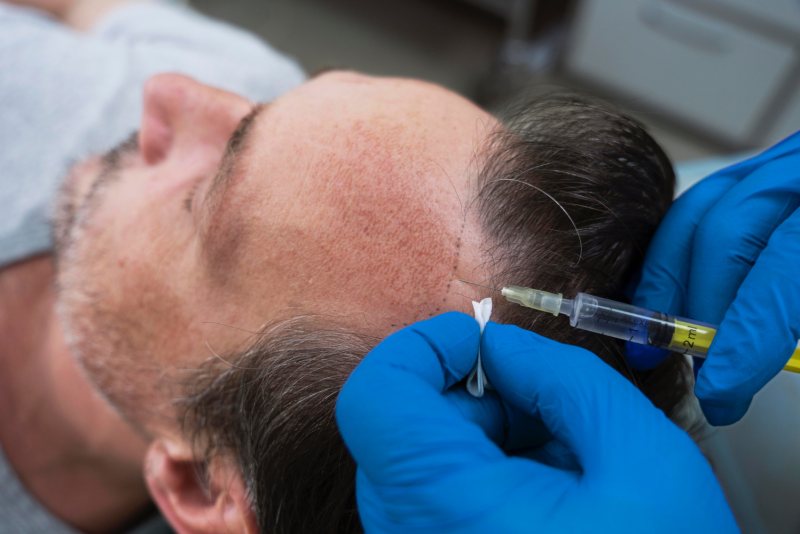
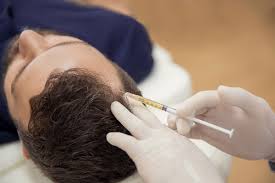
A men's hair transplant in Tunisia moves healthy follicular units from a suitable donor area to selected areas of thinning. It may improve the hairline or crown in a man with stable, diagnosed hair loss, but it cannot create new donor hair or stop untreated loss in surrounding hair. For Canadian patients considering travel, the central decision is whether the proposed design will still look natural as hair loss changes over time and whether safe follow-up is arranged after returning home.
In this article, you will find how male pattern loss is evaluated, the differences between FUE and FUT, reasons to postpone surgery, the operation and recovery, long-term results, risks, costs, travel planning from Canadian communities and questions to ask the surgeon.
What a men's hair transplant is and how it works
Male pattern loss and the scalp examination
Androgenetic alopecia is a common cause of progressive recession at the temples, thinning at the crown or both. The pattern, age of onset, family history and rate of change help a physician estimate future needs, but they cannot predict an exact endpoint. Sudden diffuse shedding, patchy loss, scalp inflammation or pain may have another cause. A clinician examines the scalp and hair shafts, reviews medication and health history and investigates when indicated before deciding whether transplantation is appropriate.
Follicular units and natural placement
Hairs naturally grow in groups of one or several follicles called follicular units. Surgery moves selected units to tiny recipient sites designed for the desired direction, angle and distribution. Fine, usually single-hair units may be important at the visible front, while thicker groups can contribute to coverage farther back. Hair calibre, curl, colour contrast with scalp and styling affect the visible result as much as the number of grafts. A graft count alone cannot promise a specific density.
Donor supply and lifetime planning
The back and sides of the scalp are often less affected by male pattern loss, but no photographed rectangle of hair guarantees a permanent, abundant supply. The surgeon should assess density, miniaturization, scars and the likely future pattern before harvesting. Extracted follicles do not regrow in the donor site, and both FUE and FUT leave scars. A man in his twenties with evolving loss may need a more conservative hairline and a larger reserve than someone whose loss has been stable for years.
Technical choices and alternatives for men
FUE versus FUT harvesting
Follicular unit excision (FUE) removes individual units with small punches, producing distributed tiny scars and commonly requiring some donor shaving. Follicular unit transplantation (FUT) removes a donor strip, which is dissected into units and leaves a linear scar. Both use recipient-site design and careful graft handling. Hair length, scalp laxity, prior operations, donor quality, scar preferences and future need determine the choice. Neither method is scarless or inherently superior for every man.
Hairline, crown and staged surgery
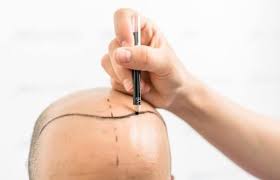
Frontal restoration often has a stronger framing effect than placing the same finite number of grafts over a large crown. A low, straight hairline can become conspicuous if hair behind it recedes. The surgeon may prioritize a transition at the front, defer the crown, or stage treatment after observing progression. Placing grafts into thinning native hair requires attention to its health and possible temporary shedding. The plan should describe what can be achieved in one session and what might be left untreated.
Medicines and nonsurgical options
Diagnosis-specific treatment may preserve native hair or reduce progression; a Canadian clinician can discuss suitability, adverse effects and monitoring before and after travel. Minoxidil and prescription options are not appropriate for everyone, and stopping treatment may change future coverage. Hair fibres, styling, scalp micropigmentation or a hair system can alter appearance without using donor follicles. Surgery can complement medical treatment, but transplanting follicles does not treat the biological cause of ongoing loss.
Real indications for a men's hair transplant
- Diagnosed pattern loss or another stable condition for which a specialist judges transplantation suitable.
- A recipient area with a realistic coverage goal and an adequate, carefully assessed donor supply.
- Healthy scalp and medical status compatible with elective surgery and local anesthesia.
- Willingness to consider continued loss, future treatment and long-term follow-up.
A wish to repair the temples or crown is understandable, but the largest possible graft number is not automatically the best plan. A surgeon may advise stabilizing loss, investigating another diagnosis, setting a higher hairline, staging surgery or postponing an operation when donor supply or expectations do not support a durable result.
Indications and contraindications for a men's hair transplant
| Situation to assess | How it affects the decision |
|---|---|
| Stable male pattern loss and adequate donor reserve | May support a mapped, conservative surgical plan. |
| Rapid or unexplained shedding | Seek diagnosis and stabilization before elective transplantation. |
| Active infection or inflammatory scalp disease | Treat and reassess; surgery into active disease may be inappropriate. |
| Marked donor thinning or extensive prior harvesting | Limit or rule out grafting; discuss nonsurgical coverage. |
| Uncontrolled illness or medicines affecting bleeding and healing | Obtain an individualized medical review and postpone when necessary. |
| Very young age with rapidly evolving recession | Consider future pattern and conservative design, often delaying surgery. |
| Expectation of guaranteed growth or an extremely low hairline | Revisit achievable coverage and the long-term appearance. |
How the procedure is performed step by step
Before the procedure
The surgeon should document the diagnosis, scalp condition, donor quality, prior treatments and the areas the patient values most. Photographs in consistent lighting and a donor assessment help establish a baseline. Ask to see a proposed hairline, planned recipient zones, estimated graft range, harvesting method and what will happen if safe yield differs on the day. Review medical history, medicines, allergies, anesthesia, the named operating physician and each team member's surgical role. An online estimate remains provisional until examination.
During the procedure
Hair transplantation usually uses local anesthesia, with additional medication or sedation according to a medical assessment. The team harvests grafts by the agreed method, protects them while outside the body, prepares recipient sites with appropriate angle and spacing, and inserts the units. Duration varies with the case and staffing. The physician should explain who harvests, makes recipient incisions and places grafts. A marketing label such as “sapphire” describes a tool choice, not a substitute for diagnosis or physician oversight.
After the procedure
An early check should assess bleeding, donor wounds and recipient sites before the patient leaves the facility. Written instructions cover washing, sleep, medication, sun, physical activity and contact numbers. Obtain the actual graft count and distribution, donor map, operative summary and details of any medicines. Small crusts and swelling may appear, and transplanted shafts can later shed before new growth is seen. Do not pick crusts or change care because an online timeline differs from the operating surgeon's instructions.
Recovery and time away from normal activities
| Approximate period | Expected changes and practical decisions |
|---|---|
| First days | Tenderness, crusts, redness and possible forehead swelling; protect grafts from friction. |
| Early postoperative review | Check donor and recipient healing before committing to a return journey. |
| Following weeks | Crusts settle; some transplanted shafts may shed; review abnormal pain or discharge. |
| Following months | New growth appears gradually and visual coverage continues to evolve. |
These are broad phases, not an individual timetable for flying, exercise or a final result.
Washing, headwear, work and exercise
Follow written instructions for the first wash, gentle cleansing, sleeping position and return to strenuous activity. A helmet or tight hat may rub fresh grafts; ask when one can be worn. Desk work and work involving dust, helmets or physical effort call for different arrangements. If the donor is shaved, the visible recovery may also affect time off. Avoid using dyes, styling products or topical treatments on healing skin until the team has given a specific date.

Warning signs and a long flight
Increasing pain, spreading redness, fever, pus, persistent bleeding or a dark, poorly healing area warrants prompt clinical assessment. The surgeon should inspect the scalp before departure; a package checkout time is not a medical clearance. Allow for transit, connections, swelling and protection of the recipient area during travel. If a complication arises after reaching Canada, seek local medical care promptly and share the operative details rather than waiting for an overseas video response.
Ongoing follow-up in Canada
Arrange access to a primary care clinician, dermatologist or hair-restoration physician near home who can assess a wound concern and discuss progressive native hair loss. Agree on the timing and method of photographic follow-up with the operating team. A local examination is necessary for suspected infection or donor damage. Confirm who reviews any prescribed hair-loss medicine, how records are transferred, and when a mature result will be assessed before discussing revision.
Expected results and durability
Early appearance versus later growth
Newly placed hair shafts are visible soon after the operation, but their appearance changes with crusts and later shedding. Growth develops over subsequent months, and the final cosmetic assessment takes considerably longer than the skin's initial healing. Some grafts may fail to grow. Photograph comparisons depend on hair length, lighting, styling and concealers. Ask for realistic coverage under everyday conditions rather than an exact numerical promise based on photographs alone.
Recession behind the grafts
Hair from a suitable donor region may retain its characteristics after transfer, but existing hair behind or around the grafts can continue to miniaturize. A dense, very low front line may look disconnected if surrounding hair thins. The surgeon should discuss an age-appropriate shape and how the design would look under plausible later loss. Ongoing medical management, when appropriate, and retaining donor reserve help preserve options; neither guarantees that another operation will be unnecessary.
Revision and scar visibility
A later session might refine density or a hairline after the first result has matured, provided there is usable donor hair and the reason for dissatisfaction is understood. More surgery entails more donor extraction and additional scarring. FUE dots can be visible with very short hair or heavy extraction; a FUT line may show if hair is cut short or a scar widens. Ask how the first operation protects future choices and how revision costs and care would be handled across countries.
Risks and possible complications
- Bleeding, infection or delayed healing: Increasing pain, discharge or fever requires examination.
- Visible donor thinning or scarring: Excess extraction or an unfavorable scar can limit hairstyles and future surgery.
- Shock loss and uneven growth: Nearby native hairs may shed; some grafts may not grow as expected.
- Unnatural hairline or direction: Poor placement can remain obvious once hair grows.
- Persistent altered sensation or discomfort: Donor and recipient sites may heal differently between patients.
- Continuing native hair loss: Surgery cannot prevent later thinning outside the grafted zones.
Managing a complication after return
Ask who will examine a problem while you remain in Tunisia and how urgent calls are handled after you return. A Canadian clinician needs the procedure date, medications, graft count and maps to assess a wound effectively. Clarify what the clinic will do if the result is disappointing after sufficient time and what costs are excluded. No warranty reverses an exhausted donor area or replaces timely treatment for infection.
Why consider Tunisia for a men's hair transplant?
Tunisia may be an option when an identified physician can assess the pattern, design a durable hairline and provide an early wound review. These requirements apply to the individual team, not a country's reputation. A man comparing proposals should ask whether his frontal area or crown is prioritized, what donor supply remains, and how progressive loss will be managed. Travel distance increases the importance of local Canadian care and a flexible return plan.
Direct clinical communication
Confirm that direct medical consultations with the operating surgeon and relevant team can occur in the patient's preferred English or French. A multilingual coordinator alone cannot answer detailed questions about donor safety, anesthesia or future loss. Request the physician's identity and practice status, written surgical roles and a way to obtain operative records. Do not infer fluency or staffing from promotional material.
Examination before booking surgery
Remote photographs may help a preliminary discussion, but lighting, wet hair and camera angles can obscure miniaturization. In-person examination may change the graft estimate or reveal a reason to defer. Ask what would happen if the surgeon finds poor donor quality after arrival, including revised costs and travel arrangements. The plan should leave enough time in Tunisia for postoperative examination before a transatlantic flight.
Cost of a men's hair transplant in Tunisia
| Factor | Effect on total cost |
|---|---|
| Diagnosis and donor assessment | May change whether surgery or a proposed graft number is suitable. |
| FUE or FUT and graft plan | Technique, case complexity and staged work affect the quotation. |
| Physician, facility and anesthesia | Confirm who operates and what medical services are included. |
| Flights and onward connections | International and domestic legs can exceed the quoted procedure fee. |
| Accommodation and time away from work | Allow for consultation, surgery, early review and flexibility. |
| Medicines and future care | Ongoing treatment and Canadian assessments may be additional. |
| Insurance and complications | Clarify exclusions, extra treatment and a possible longer stay. |
| Later session or revision | Preserve donor supply and budget for a separately assessed procedure. |
Ask for an itemized written quote identifying the physician, donor plan, proposed graft range, anesthesia, facility, medications, early checks and exclusions. Compare the total journey from home, not a price per graft. Confirm how the final graft count is documented, whether the quote changes if fewer units can safely be harvested, and whether any follow-up or revision costs fall to you in Canada.
Comparison: Tunisia and other medical tourism destinations
| Decision point | Tunisia | Care in Canada | Another destination |
|---|---|---|---|
| Assessment | Confirm in-person scalp and donor examination. | Local preoperative access varies. | Ask who examines and revises the plan. |
| Physician and language | Confirm the named operator and direct communication. | Confirm qualifications and clinical roles. | Verify roles and language directly. |
| Journey | Plan a transatlantic trip and early review. | Review travel and access within Canada. | Compare actual flight and ground legs. |
| Quote and follow-up | Itemize graft plan, exclusions and Canadian handover. | Ask for an equivalent written scope. | Request comparable records and aftercare. |
Compare individual surgeons, donor planning, clinical access and written scope rather than ranking whole countries. A high advertised graft total or low price does not show whether the result will remain appropriate if hair loss advances.
Tunisian cities to consider for this procedure
Tunis and the early scalp examination
A planned stay in Tunis may simplify access to an identified clinic, airport and early review, depending on the actual facility. Map the consultation, operation and donor check before making travel reservations. Confirm where to go for a concerning donor wound or swelling outside normal hours and whether the operating physician can examine it directly. City location alone says nothing about clinical quality.
Sousse and Monastir as practical alternatives
Sousse or Monastir can also be considered if a specifically identified physician, suitable facility and postoperative review are available there. Calculate ground transfers and how quickly the team can assess an urgent scalp concern. Ask which clinician will provide the records needed after return to Canada. Do not assume that an airport's proximity replaces an early examination or that any destination provides a particular surgical technique automatically.
Which Canadian cities can patients travel from?
Montreal, Laval and Longueuil
People in Greater Montreal can compare the whole itinerary, including local transfer and onward connections, and ask whether the Tunisian surgeon can discuss the hairline and donor plan directly in French or English. Arrange a clinician in Quebec who can assess a postoperative scalp problem and review longer-term hair-loss treatment. A return through Montreal may still require ground travel while swelling or donor tenderness persists; allow flexibility rather than timing travel around a fixed photograph appointment.
Quebec City, Lévis, Trois-Rivières, Saguenay and Sherbrooke
Patients outside Montreal should include the journey to the departure airport and back home in recovery planning. For Quebec City and Lévis, and for Trois-Rivières, Saguenay and Sherbrooke, the choice of departure point and domestic connection depends on actual dates. Confirm which local clinician could examine a painful donor site without another long trip. Ask for operative instructions in a language the patient understands and clarify how prescriptions will be monitored locally.
Ottawa, Gatineau, Toronto and surrounding Ontario cities
Ottawa and Gatineau residents may compare departure options on both sides of the provincial boundary while arranging follow-up near home. Toronto, Hamilton, Kitchener–Waterloo and London patients should account for ground travel, shifts or leave from work and the possibility of an extra day in Tunisia for a wound review. If work requires a hard hat or regular public presentation, discuss realistic return timing with the operating team. Verify transit requirements and actual connections for the booked route.
Vancouver, Victoria, Surrey and Kelowna
A journey from coastal British Columbia can involve several flight legs, time-zone changes and a long trip after the first check. Vancouver and Surrey residents may have different ground access than those starting in Victoria or Kelowna, where an additional leg may be needed. Build connection buffers, choose changeable return arrangements and identify local medical access for signs of infection. Do not let a prepaid itinerary determine whether the scalp is fit to travel.
Calgary, Edmonton, Winnipeg, Saskatoon and Regina
Patients from Alberta, Manitoba and Saskatchewan should map the complete route rather than assume a single international segment. Calgary and Edmonton departures may differ from travel starting in Winnipeg, Saskatoon or Regina; schedules change by date. Hair transplantation can also require headwear restrictions that matter in seasonal weather. Confirm practical access to a dermatologist or primary clinician at home and transfer the surgeon's records before a complication arises.
Halifax, Moncton, Dieppe, Edmundston, Fredericton, Charlottetown and St. John's
Atlantic and Acadian patients may face multiple ground and flight connections. Someone in Halifax has different airport access from a patient in Moncton, Dieppe, Edmundston or Fredericton; Charlottetown and St. John's add their own travel considerations. Request direct surgical discussion in English or French as preferred and written instructions for wound care. Identify a nearby clinician who can see a donor-site concern promptly, particularly if returning home involves another long drive or ferry and flight connection.
How to choose a surgeon for a men's hair transplant
- Confirm the proposed surgeon's identity, specialty, right to practice and relevant hair-restoration experience.
- Ask who diagnoses the loss, sets the hairline, harvests grafts and creates recipient sites.
- Review donor measurement, a long-term plan, realistic results and an itemized quote.
- Confirm the facility, anesthesia arrangements, early assessment and a route for complications.
Discuss the future pattern, not only today's photograph
A responsible surgeon should explain what happens if recession continues behind the proposed grafts. Ask which recipient areas deserve priority, how much donor supply will remain and what medical treatment might be considered. Request photographs of comparable cases with consistent conditions, while recognizing that another patient's hair characteristics do not predict yours. A plan that acknowledges uncertainty is more useful than a guarantee of a permanent exact density.
Verify surgical responsibility and follow-up
Ask directly which physician performs medical diagnosis, design and surgical steps and what support staff do. Confirm licensing and facility arrangements through appropriate sources. Obtain written contact details, a schedule for early wound review and a method for transmitting the operative record to a Canadian clinician. If a quote emphasizes graft volume without explaining donor limits or who makes recipient sites, seek clarification before consenting.
Planning a medical stay in Tunisia
For a men's hair transplant in Tunisia, reserve time for an in-person scalp examination, surgery, an early donor and recipient review, and changes if the surgeon advises against the planned graft number. Arrange local Canadian access for urgent complications and longer-term management before purchasing a fixed return ticket. Travel and transit requirements should be checked for the patient's actual nationality, route and dates.
Before leaving Canada
Bring a concise history of loss, family pattern, previous medication and surgery, relevant medical conditions and consistent hair photographs. Discuss any prescribed hair-loss medicine and how it will be continued after travel; do not stop or start it solely because a package recommends it. Ask what medical documents or tests the team needs. From Atlantic or western Canada, allow more time for connections and fatigue than a short local trip would require.
Consultation and early postoperative days
The face-to-face consultation should confirm the diagnosis, donor reserve, realistic recipient map, hairline and surgical roles. If the examination changes the plan, obtain the revised proposal before proceeding. After surgery, follow specific washing and protection instructions and attend the early review. Keep the surgeon's phone number and the name of a clinic able to examine bleeding, infection or donor damage during the stay.
Review before flying and after arriving home
A surgeon should inspect the scalp and assess any concerning symptoms before a long flight; no fixed number of nights guarantees readiness. Keep headwear and luggage from rubbing grafts. Carry written records, contact details and medicines in accordance with travel rules. After return, send scheduled photographs if requested, but have a clinician examine worsening pain, fever or a poorly healing area. Discuss later native-hair loss and the mature result at appropriate follow-up appointments.
Request a personalized opinion on a men's hair transplant in Tunisia
Tell Aylan Clinic how your hair loss has progressed, which area concerns you most, previous treatments, health history, departure city and preferred language for direct clinical discussion. Request the proposed surgeon's identity, provisional donor and recipient plan, medical schedule and an itemized quote with exclusions and follow-up.
A preliminary remote review can frame useful questions, but only a clinical examination can establish candidacy, a safe donor yield and an appropriate hairline. Ask how the team would revise the plan if the examination shows less usable donor hair or a different cause of loss.
You may also want to compare Hair Transplant for Women in Tunisia.
Continue exploring our hair transplant in Tunisia overview, the complete aesthetic surgery panorama, compare plastic surgery prices in Tunisia, or request a free, personalized quote.
Everything about Hair Transplant for Men in Tunisia
Technique, pricing, results and the full patient journey — every detailed answer in our complete guide.