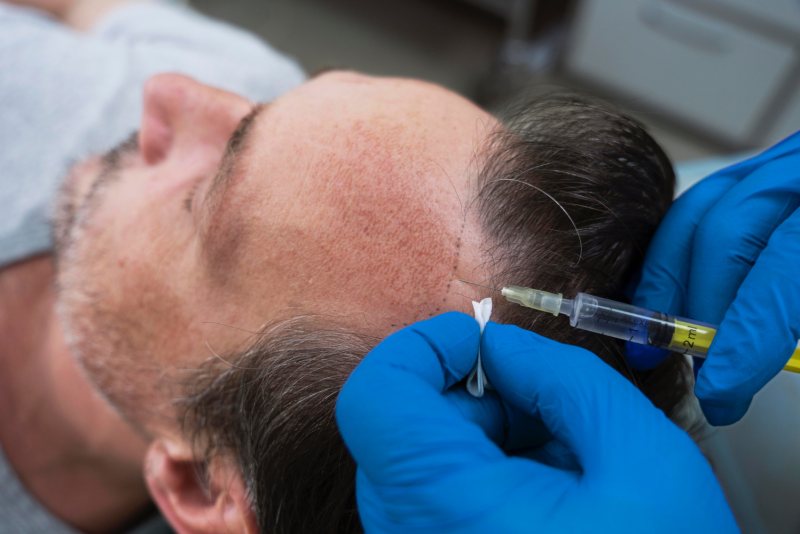
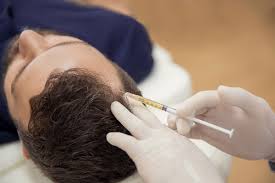
A women's hair transplant in Tunisia redistributes follicular units from an adequately healthy donor area to selected areas where hair has thinned or been lost. It may help an appropriate candidate with a stable pattern or localized loss, but women's thinning can be diffuse and can affect the supposed donor zone. A Canadian patient should first establish why hair is falling out and whether moving follicles will improve the area without leaving visible donor thinning.
In this article, you will find how female hair loss is assessed, which cases may benefit from transplantation, the differences between FUE and FUT, non-surgical options, the operation, recovery, risks, total travel costs and arrangements for follow-up after returning to Canada.
What a women's hair transplant is and how it works
Different causes can look similar
Female pattern hair loss often widens the central part or reduces coverage over the upper scalp, while the frontal edge may remain relatively intact. Shedding after illness, childbirth, stress or a change in nutrition, thyroid disease, iron deficiency, alopecia areata, traction from styling and inflammatory or scarring conditions can also alter density. They do not all call for surgery. A clinician should review timing, symptoms, hair practices, medication and family history, examine the scalp and request relevant tests or a biopsy when indicated. A photograph is not a diagnosis.
Donor hair must remain suitable
Follicular units are commonly harvested from the back and sides of the scalp and transferred into small recipient sites. A woman with diffuse thinning may have miniaturized follicles in the donor region too. Removing these units can expose the scalp there and provide less durable transplanted hair. Trichoscopy or another appropriate examination can help assess the distribution and health of hair. Donor supply is finite; the operating physician should discuss what will remain after extraction and how future thinning could change the result.
Density, part line and hairline design
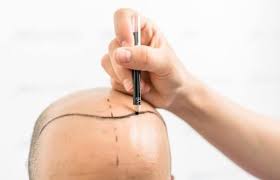
The aim may be to improve a widening part, reinforce a stable frontal region or cover a localized scar rather than lower the entire hairline. The surgeon should account for natural part direction, hairline softness, hair-shaft calibre, curl, colour contrast, existing hair and the size of the thin area. A given graft count does not guarantee a particular visual density. Inserting grafts among vulnerable native follicles requires careful planning, and some surrounding hairs may shed temporarily after surgery.
Technical choices and alternatives for women
FUE and the question of shaving
Follicular unit excision (FUE) removes individual units with small punches and leaves dispersed tiny scars. It often requires shaving some donor hair, although limited-shave approaches may be possible in selected cases and may involve different time or graft-yield constraints. Shaving preferences matter, but donor safety matters more: excessive extraction can make an already thin donor area conspicuous. Ask what will actually be shaved, whether the extraction pattern can be hidden with your usual style and who performs harvesting.
FUT, scars and hair length
Follicular unit transplantation (FUT) removes a narrow strip of donor scalp, then separates it into grafts for placement. It leaves a linear scar and involves sutures or staples, but may avoid broadly shaving a donor area in some cases. Scalp laxity, prior scars, donor density and hairstyle determine whether it is suitable. Both FUT and FUE are surgical procedures; neither can turn unstable donor hair into reliable permanent hair. The choice must follow diagnosis and the amount of safe graft supply.
Treatment without transplantation
Cause-specific care may be more effective when the problem is active shedding, inflammation or an underlying deficiency. A dermatologist may discuss topical or other medical treatment for diagnosed pattern loss, considering side effects, pregnancy plans, breastfeeding and relevant medical history. Do not start or stop a prescription because of marketing copy. Hairstyle changes, hair fibres, toppers or other hairpieces can improve coverage without using donor follicles. In some cases, treating the cause and waiting to reassess is the safest path.
Real indications for a women's hair transplant
- A confirmed, reasonably stable cause of hair loss with a localized or clearly mapped area to restore.
- Healthy, sufficient donor hair that can be harvested without visibly worsening coverage.
- A realistic goal for the part, frontal area or selected scar and an understanding of possible future thinning.
- Medical and scalp health compatible with elective surgery and an aftercare plan in both countries.
A wish for fuller hair does not by itself establish surgical candidacy. Diffuse unexplained thinning, active scalp disease and insufficient donor supply may call for investigation, treatment or a different cosmetic approach. The physician may recommend postponement even when a clinic can technically move grafts; a useful operation must leave the rest of the scalp in an acceptable condition.
Indications and contraindications for a women's hair transplant
| Situation to assess | How it affects the decision |
|---|---|
| Stable localized loss and robust donor hair | May support carefully mapped surgery after examination. |
| Sudden or diffuse shedding with unknown cause | Investigate and reassess before using donor follicles. |
| Miniaturization in the donor area | Can limit or rule out transplantation; extraction may reveal thinning. |
| Active inflammatory or scarring alopecia | Specialist assessment and disease control are essential; surgery may be unsuitable. |
| Recent postpartum change, pregnancy or breastfeeding | Discuss diagnosis, timing, medicines and elective surgery individually. |
| Uncontrolled illness or medication affecting healing | Seek a medical review and postpone surgery where appropriate. |
| Request for guaranteed full density over a broad area | Review safe graft supply and realistic visual coverage. |
How the procedure is performed step by step
Before the procedure
The surgeon or a suitable specialist should establish the diagnosis and assess the entire scalp, including areas hidden by longer hair. This may involve trichoscopy and selective laboratory testing or biopsy when the history and examination call for them. Discuss pregnancy plans and medication suitability without assuming a standard treatment fits every patient. Photograph the part and hairline consistently, map recipient and donor areas, agree on shaving if any, and review the named physician, anesthetic plan and each surgical role. A remote estimate can change after in-person assessment.
During the procedure
The physician and team harvest follicular units by the agreed method, preserve and sort the grafts, create appropriately angled recipient sites and place units to blend with existing hair. Local anesthesia is common, with any additional sedation subject to clinical assessment. The surgeon should explain how work among native hair will reduce avoidable injury, who makes the recipient sites and what will happen if the donor examination supports fewer grafts than expected. A cosmetic slogan or specialized blade cannot replace careful diagnosis and surgical judgment.
After the procedure
Before discharge, the team assesses donor and recipient sites and gives specific written instructions for washing, sleep, medication, headwear, styling and the first check. Ask for the actual graft count, donor map, implanted zones, operative summary and a clear contact route. Crusts, redness and swelling can occur; some transplanted shafts may shed before later regrowth. A visible change in the part soon after placement does not establish the final result. Protect grafts from friction and avoid changing products on healing skin without advice.
Recovery and time away from normal activities
| Approximate period | Expected changes and practical decisions |
|---|---|
| First days | Crusts, tenderness, redness and possible swelling; avoid rubbing the recipient sites. |
| Early review | Examine both donor and recipient areas before a long trip. |
| Following weeks | Some transplanted shafts may shed; assess unexpected pain or persistent inflammation. |
| Following months | Growth changes gradually; evaluate coverage after sufficient maturation. |
These phases are illustrative. The actual time to return to work, exercise or a flight depends on the procedure and healing.
Washing and styling existing hair
Gentle washing and protection of grafts should follow the surgeon's written plan. Long surrounding hair may camouflage a limited recipient area, but brushing, extensions, tight hairstyles, dye and heat tools can disturb healing if resumed too soon. Ask specifically when each can be used. If a donor area was shaved, plan how it will be concealed and whether work or public commitments make a longer break helpful. Avoid tension on the same scalp regions that may already have suffered traction loss.

Warning signs and the flight home
Increasing pain, spreading redness, fever, pus, persistent bleeding or a dark and poorly healing patch requires prompt medical assessment. A long journey can add friction, fatigue and difficulty attending another review. The operating physician should inspect wounds before travel, especially if donor closure needs attention after FUT. Build flexibility into the return itinerary. If concerning symptoms start after reaching Canada, arrange local examination rather than relying only on photographs sent overseas.
Follow-up in Canada
Before departure, identify a local clinician able to assess infection, wound healing or a change in the pattern of hair loss. Share the diagnosis, operative summary, graft count, donor and recipient maps and medication list. If an underlying condition needs ongoing treatment, clarify which Canadian prescriber or dermatologist will manage it. Scheduled photographs can document the part or hairline over time, but a painful, inflamed scalp needs in-person assessment.
Expected results and durability
Growth and realistic visual coverage
A newly filled part may appear denser immediately after placement, then look thinner again as grafted shafts shed. New hair develops over months, and the mature appearance takes much longer than initial wound healing. Results vary with hair calibre, curl, colour contrast, graft growth and any continued loss of native hair. A comparison photograph should use similar lighting, part position, hair length and styling; otherwise it may exaggerate an improvement that is less visible in daily life.
The difference between transplanted and native hair
Grafts may retain characteristics of a properly selected donor area, yet diffuse thinning elsewhere can continue. If the donor zone itself miniaturizes over time, the assumption of lasting graft stability may be weaker. Surgery does not treat thyroid disease, inflammatory scalp disorders, iron deficiency or the biological process behind pattern loss. A plan should address any underlying condition, preserve healthy surrounding follicles and acknowledge that coverage may change after the initial result.
Revision and future donor limits
A later procedure could refine a stable part or localized gap after the first result matures, but only if there is adequate donor hair and a clear reason for limited growth. Additional extraction can thin the back of the head or increase scarring. Women seeking a very broad density increase may not have sufficient donor supply for that goal. Ask for a conservative first plan, a timeline for reassessment and clarity about where a revision would be evaluated and funded.
Risks and possible complications
- Infection, bleeding and delayed healing: Increasing pain, discharge or fever needs clinical assessment.
- Visible donor thinning or scars: FUE overharvesting or a FUT line may affect styling options.
- Shock loss in native hair: Vulnerable existing hair may shed after work in a thin area.
- Uneven growth or unsuitable direction: A part or hairline can look unnatural if grafts are misplaced.
- Persistent discomfort or altered sensation: Healing differs between individuals and scalp areas.
- Continued underlying hair loss: A transplant does not prevent progression outside grafted zones.
A specific concern with diffuse loss
Removing grafts from a donor zone that is already thinning can worsen coverage at the back without creating durable fullness on top. The physician should assess miniaturization before any extraction and be prepared to decline surgery. If an inflammatory or scarring disorder is active, moving hair into affected tissue may fail to address the real problem. Ask what findings would change or cancel the plan after arriving in Tunisia and how follow-up will work in Canada.
Why consider Tunisia for a women's hair transplant?
Tunisia may be considered when an identified physician can explain the diagnosis, assess donor quality in person and offer a realistic plan for the part, hairline or localized loss. The attraction of an overseas quote should not override a needed dermatology assessment at home. Ensure the journey allows time for early wound review, particularly if a donor strip was used or the recipient area contains fragile native hair. Care quality must be assessed for the individual team and facility.
Clear consultation in the preferred language
Confirm that the proposed surgeon and relevant medical team can discuss the diagnosis, treatment alternatives, risks and consent directly in English or French as the patient prefers. A coordinator's translation is not evidence of the physician's own language ability. Request the physician's identity, clinical role, the facility details and an explanation of who will be responsible if the diagnosis changes after examination. No promise of “female-specific” equipment substitutes for that conversation.
Make a contingency plan for unsuitable donor hair
Ask what happens if a close scalp examination finds donor miniaturization or active disease despite reassuring photographs. The answer may be no surgery, a smaller procedure or further investigation, each with financial and travel consequences. Clarify deposit terms, accommodations and how records would be transferred for assessment in Canada. Knowing that surgery can be declined after arrival is part of informed planning, not a sign of poor service.
Cost of a women's hair transplant in Tunisia
| Factor | Effect on total cost |
|---|---|
| Diagnostic examination and tests | A diffuse condition may require additional assessment or change the plan. |
| Harvesting method and graft plan | FUE shaving choices or FUT closure can affect scope and follow-up. |
| Physician, facility and anesthesia | Confirm the operating roles and included medical services. |
| Flights and ground connections | Include all legs of the journey from the Canadian home city. |
| Accommodation and time off | Allow for consultation, surgery, early review and possible extension. |
| Medicines and treatment at home | Managing the cause of loss may require separate Canadian care. |
| Complications, insurance and revision | Clarify exclusions and costs if further treatment is needed. |
Request an itemized written quote, including assessment, the provisional graft range, harvesting method, anesthesia, medications, early reviews and exclusions. Budget for the possibility that surgery is modified or cancelled following examination. Include international and domestic transport, accommodation, time away from work, insurance and local medical follow-up. Do not compare quoted graft counts without considering whether donor hair is healthy enough to use.
Comparison: Tunisia and other medical tourism destinations
| Decision point | Tunisia | Care in Canada | Another destination |
|---|---|---|---|
| Diagnosis | Confirm physician assessment and donor examination. | A local specialist may monitor changes before surgery. | Ask who investigates diffuse thinning. |
| Technique | Discuss FUE, FUT, shaving and donor safety. | Compare a case-specific proposal. | Request the same case-specific details. |
| Journey | Plan a long flight and early review. | Local access may simplify repeated visits. | Compare real transit and ground travel. |
| Quote and follow-up | Include testing, exclusions and Canadian handover. | Obtain an itemized scope and follow-up plan. | Verify who manages later complications. |
An individual woman's diagnosis and donor stability matter more than a destination's promotional ranking. Compare the actual physician, surgical roles, records and access to a clinician after the trip. A proposal to defer surgery while investigating diffuse loss may be more useful than a large immediate graft package.
Tunisian cities to consider for this procedure
Tunis and access to the diagnosing physician
If the identified clinician practises in Tunis, ask whether consultation, any needed investigation, operation and early review can occur within the proposed stay. A rapid airport transfer does not replace checking a donor strip closure or recipient inflammation. Confirm where an unexpected scalp problem can be examined and who will communicate findings to the patient's Canadian clinician.
Sousse and Monastir as logistical options
Sousse and Monastir can be practical only when the proposed surgeon, suitable facility and prompt postoperative assessment are specifically identified. Include ground transfers and flexibility if the diagnosis requires a different plan or further review. A city's reputation cannot establish whether a team has the experience to distinguish diffuse female loss from a localized transplantable area.
Which Canadian cities can patients travel from?
Montreal, Laval and Longueuil
Greater Montreal residents can arrange a pretravel dermatology assessment when the cause of thinning is uncertain and confirm whether the surgeon in Tunisia can discuss it directly in French or English. Consider how the part, donor haircut or a FUT closure will look during the journey home. Identify a clinician in Quebec who can assess scalp inflammation or review any ongoing treatment. The total itinerary includes travel after arriving back in Montreal, not just the international flight.
Quebec City, Lévis, Trois-Rivières, Saguenay and Sherbrooke
From Quebec City and Lévis, or from Trois-Rivières, Saguenay and Sherbrooke, include ground travel to a departure airport and the return home while healing. Actual routes and connection times depend on the date. Ask for written instructions in a language you understand and establish where a possible donor wound can be checked locally. A future visit for evaluation of persistent diffuse loss may require a different specialist from the one who manages immediate postoperative care.
Ottawa, Gatineau, Toronto and nearby Ontario centres
Ottawa and Gatineau patients may use different departure airports but need the same plan for a local examination if redness or pain worsens. For Toronto, Hamilton, Kitchener–Waterloo and London, Ontario, consider commute, transit, time off work and whether the chosen harvesting method involves visible donor shaving. Arrange a Canadian clinician to manage the cause of thinning after travel; the operating team alone cannot reliably assess a changing scalp condition at a distance.
Vancouver, Victoria, Surrey and Kelowna
Travel from the Vancouver region may already be long, and Victoria or Kelowna may add another flight or ground leg. Allow buffers for connections and flexibility for an extra Tunisian postoperative check if needed. A lengthy return journey can make graft protection and comfortable headwear more complicated. Identify clinical access near home for a donor concern and keep the operative record readily available; video follow-up is helpful for routine photographs but insufficient for suspected infection.
Calgary, Edmonton, Winnipeg, Saskatoon and Regina
Patients in Alberta, Manitoba and Saskatchewan should compare actual schedules from Calgary, Edmonton, Winnipeg, Saskatoon and Regina rather than assume a direct route. Seasonal travel and additional connections can affect how much time is needed away from work. If a large part of the donor hair must be shaved, plan for the cosmetic effect on return. Before leaving, arrange how a clinician will investigate ongoing female pattern loss or another diagnosis locally.
Halifax, Moncton, Dieppe, Edmundston, Fredericton, Charlottetown and St. John's
Atlantic and Acadian patients may combine long ground travel with multiple flight legs. Halifax, Moncton and Dieppe differ in airport access from Edmundston or Fredericton; Charlottetown and St. John's can add further logistics. Confirm language for direct medical consent in English or French, as preferred, and make a practical route to a nearby clinician for wound review. A prepaid connection should never force departure when the scalp requires another examination.
How to choose a surgeon for a women's hair transplant
- Verify the named physician's identity, right to practise and experience assessing female hair loss.
- Ask who diagnoses diffuse thinning, checks donor miniaturization and performs each surgical step.
- Request a realistic recipient plan, donor map, technique choice and itemized written quote.
- Confirm the facility, anesthesia arrangements, complication route and Canadian handover.
Ask what diagnosis would rule out surgery
The physician should distinguish stable female pattern loss from shedding, inflammation, traction and scarring disease. Ask what examination or tests are needed and what findings would cause postponement. The proposed graft count should follow an assessment of donor quality and the size of the recipient area. A surgeon willing to discuss uncertainty and nonsurgical treatment gives the patient a clearer basis for consent than a promise based on uploaded photographs.
Review how the result will blend with existing hair
Ask to see the planned part or hairline, hair direction and donor extraction pattern in relation to the hairstyle you normally wear. Discuss whether recipient work may temporarily shed native hair, what shaving is required and how scars could appear if you later change hair length. Check who makes recipient sites and who will assess healing before departure. Photographs of another patient should use consistent lighting and should never be treated as a personal guarantee.
Planning a medical stay in Tunisia
For a women's hair transplant in Tunisia, build the itinerary around diagnosis and in-person examination, followed by surgery only if donor quality and scalp health support it. Allow time for an early review and a flexible return after the operating physician has checked healing. Confirm travel and transit requirements for the actual nationality, route and dates, and arrange both urgent wound care and continued hair-loss assessment near home in Canada.
Prepare a meaningful medical history
Before leaving, document when thinning began, whether shedding fluctuates, relevant health conditions, pregnancy or postpartum history where applicable, medicines, supplements, hair practices and previous treatments. A Canadian dermatologist may be able to investigate an uncertain cause before travel. Bring any useful test results, but allow the Tunisian physician to decide whether new examination or investigation is needed. State whether preserving a usual hairstyle or avoiding broad donor shaving is important to you.
In-person assessment and first days
At consultation, confirm the diagnosis, donor stability, recipient map, choice of FUE or FUT, anesthesia and surgical roles. If the plan changes after examination, request the revised clinical and financial scope before proceeding. Following surgery, protect grafts, follow washing instructions and attend the early check. Know where an unexpectedly painful or inflamed scalp can be examined during the stay, including outside routine office hours.
Departure and continued assessment at home
The physician should check wound healing before the flight and advise on headwear, hair care and any donor closure needs. Do not use a fixed checkout date as permission to fly. Carry the operative summary and medication list for a Canadian clinician. Follow the planned schedule for photographs and reviews, but seek prompt in-person care for fever, spreading redness, discharge or severe pain. Continue diagnostic or medical care for the underlying loss separately from judging transplant growth.
Request a personalized opinion on a women's hair transplant in Tunisia
Tell Aylan Clinic when and where thinning began, any shedding or scalp symptoms, previous diagnosis and treatments, relevant health or pregnancy history where applicable, preferred language for direct medical discussion and your Canadian departure city. Request the proposed physician's identity, examination plan, surgical schedule, written quote and follow-up arrangements.
A preliminary remote opinion can identify the information needed for consultation. The decision to transplant should wait for a proper scalp and donor assessment; if donor hair is unstable or the cause requires treatment, a revised plan or no surgery may better protect long-term coverage.
You may also want to compare Afro Hair Transplant in Tunisia.
Continue exploring our hair transplant in Tunisia overview, the complete aesthetic surgery panorama, compare plastic surgery prices in Tunisia, or request a free, personalized quote.
Everything about Hair Transplant for Women in Tunisia
Technique, pricing, results and the full patient journey — every detailed answer in our complete guide.