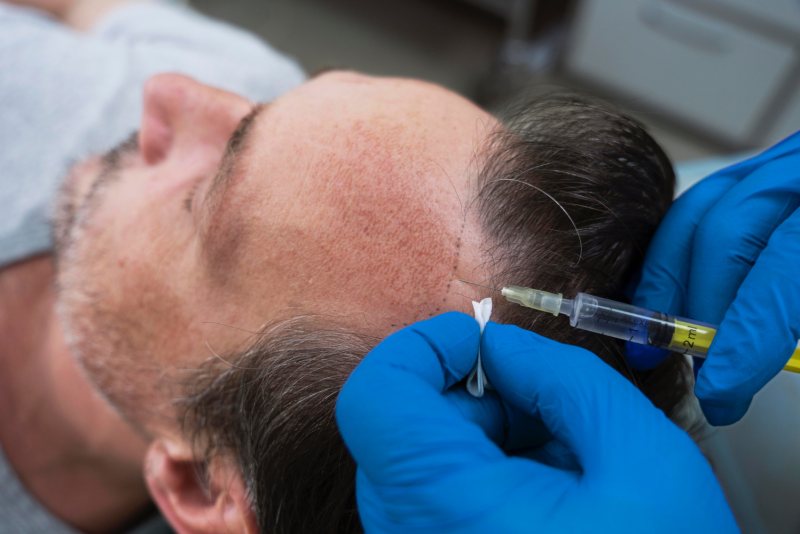
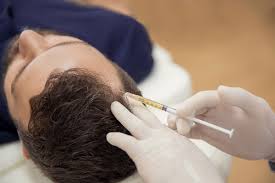
A DHI hair transplant generally means placing prepared follicular units with an implanter instrument, often described as a pen. The grafts still have to be harvested from a suitable donor area, commonly by follicular unit excision, or FUE. DHI describes an implantation workflow rather than a separate supply of hair or a guaranteed improvement over every other placement technique. For Canadians considering treatment in Tunisia, the central questions are the cause of hair loss, available donor hair, design, who performs each surgical step and how follow-up will work at home. This guide supports an informed consultation; only an individual examination can determine suitability.
What DHI describes
Implantation with a pen-like instrument
An implanter can hold a follicular unit and assist the clinician in creating or using a small recipient opening while placing the graft. Specific devices and workflows vary. The clinician still needs to control location, angle, direction and depth to match the surrounding hair. The instrument does not design a natural hairline on its own. Ask the team which implanter they use, how grafts are loaded, and who actually performs placement and makes the decisions that affect appearance.
Harvesting is a separate stage
In many DHI services, grafts are harvested individually by FUE, which uses small punches in the donor area. FUE is an excision technique; DHI usually refers to recipient implantation. Marketing comparisons often present them as alternatives when a single procedure may use both. The donor area must still be examined and managed carefully. A DHI label does not mean there is no incision, no scar or no limit on the number of follicles that can be taken.
Prepared follicular units
A follicular unit is a natural cluster containing one or more hairs. After harvesting, grafts are inspected, organized and handled before implantation. Their quality, time outside the body and handling procedures matter. The plan may reserve finer single-hair grafts for the frontal edge and larger units behind it. Ask how the team separates graft types and checks them during the session. No device can compensate for a poor donor assessment or careless handling.
What the name does not promise
DHI does not create new hair, stop ongoing androgenetic alopecia or guarantee that every graft will grow. Claims of scarless surgery, zero shedding or universally greater density should be questioned. It may be a useful placement option for a particular team and design, but choosing a method requires a full clinical plan. Ask what would be done differently with an implanter compared with another placement approach for your own scalp.
Diagnosis before technique
Patterned hair loss
The clinician should establish whether you have patterned hair loss and how it has evolved. Men may have recession, crown thinning or both; women may have widening of the central part or other patterns. Family history and older photographs help show progression. Transplanted hair can improve selected zones, while surrounding native hair may continue thinning. A sustainable plan must account for future change rather than focus only on the appearance at the end of the procedure day.
Other scalp or medical causes
Sudden shedding, patchy loss, scalp redness, scaling, pain or diffuse thinning may need evaluation before surgery. Causes can include illness, medication, nutritional or hormonal factors, autoimmune conditions and scarring alopecias. Active inflammatory disease may make transplantation inappropriate or require treatment first. A qualified clinician can recommend examination, laboratory investigation or dermatology input when indicated. A quoted graft number without a diagnosis is not a medical assessment.
Stability and age
Someone with rapidly changing hair loss may need treatment or observation before using a limited donor supply. There is no single age at which transplantation becomes appropriate for everyone. The clinician considers the pattern, rate of change, family history, donor quality and expectations. A very low hairline created early can look disconnected if hair behind it later recedes. Ask how the design would remain coherent as your hair changes and whether medical management should be considered before or after surgery.
Medical treatment remains relevant
Topical or prescription treatments may be discussed according to diagnosis, health and personal preference. They can address existing native hair or progression but have their own limits and possible adverse effects. DHI implantation does not replace this conversation. Ask which treatments are appropriate for you and who will monitor them after returning to Canada. Do not change prescribed medicine without speaking to the clinician responsible for it and the surgical team.
Donor planning
A finite supply
A donor follicle moved to the hairline is no longer available in the back of the scalp. The surgeon assesses density, hair calibre and the stability of the donor zone. A high graft count is not automatically a better plan if it makes the donor area patchy or leaves no reserve for later thinning. Ask for an estimate of sustainable harvesting and how extractions will be distributed. The implanter method in the recipient area does not increase the donor supply.
FUE extraction sites
Individual punches leave numerous small healing marks. The extent and visibility depend on distribution, skin, healing and hair length. FUE avoids a linear strip scar but is not scarless. Find out who chooses extraction sites and performs the incisions under applicable professional rules. The International Society of Hair Restoration Surgery emphasizes that FUE is a surgical skill and that patients should identify the physician responsible for its performance.
If a previous transplant used donor hair
A prior FUE or FUT procedure can reduce available grafts and change scar patterns. Bring the earlier report and photographs. The surgeon should examine both the donor zone and the existing hairline before proposing another session. DHI placement cannot overcome depleted donor hair. A sensible revision might concentrate on a small area, support native hair medically or use a non-surgical cosmetic option when additional harvesting would be unwise.
Hair texture and perceived density
Curvature, thickness, natural colour and contrast with the scalp affect how much coverage a graft can create. A numerical graft comparison between patients is therefore misleading. The surgeon may use different unit types in different parts of the recipient area to create a transition. Discuss the look you want in normal light and with your usual hairstyle. The goal is a credible result for your own hair characteristics, not a universal density number.
Designing the recipient area
A natural hairline
A hairline should relate to facial proportions, age and future thinning. A soft front edge usually requires careful selection and placement of appropriate grafts. Extremely straight or low lines can remain conspicuous even when graft growth is good. Review the drawn line in a mirror and in photographs before treatment. Ask how the clinician adapts it to your temples and the hair already present. The implanter pen carries the graft; clinical judgment sets the line.
Angle and direction
The front, temples and crown have different growth patterns. Hair placed in the wrong direction can resist ordinary styling and look unnatural. An implanter can facilitate controlled placement in skilled hands, but each insertion still requires attention. Ask who establishes recipient direction and how the team maintains consistency over a long procedure. The ISHRS describes placement depth, angle and direction as central to an aesthetic result regardless of instrument.
Distribution rather than maximum packing
Recipient density is limited by donor supply, existing hair and scalp conditions. Placing grafts very close together is not automatically better and can complicate handling or healing. A clinician balances an attractive front edge with coverage farther back and future reserve. Ask to see the planned map and graft allocation by zone. A claim of a fixed “DHI density” for every patient ignores these individual factors.
Crown and whorl
The crown has a spiral pattern and may cover a large area. The clinician must plan direction carefully, and a substantial number of grafts may create only modest visual coverage in a broad crown. If both front and crown need treatment, discuss priorities before the day of surgery. You may prefer stronger facial framing first, or may value the crown more. The donor budget should match that decision and account for further loss.
| Decision | DHI-specific question | Wider clinical issue |
|---|---|---|
| Graft harvest | Is FUE used and by whom? | Donor conservation and scar pattern |
| Graft loading | How are units selected and handled? | Tissue quality and workflow |
| Placement | Who sets angle, direction and depth? | Natural appearance |
| Hairline | Who draws and confirms it? | Age and future loss |
| Follow-up | Who evaluates growth in Canada? | Continuity of care |
DHI compared with other approaches
FUE plus pre-made recipient sites
In one workflow, the surgeon creates recipient sites and then grafts are inserted with appropriate instruments. In an implanter workflow, the device may be used for site creation and insertion in a connected step, according to its design. Both still require harvesting, graft handling, an accurate map and skillful placement. There is no reliable basis for assuming a result will be better solely because one workflow is called DHI. Discuss which approach your surgeon performs well and why it suits the area to be treated.

FUT as another harvesting choice
Follicular unit transplantation using a donor strip is a harvesting alternative in selected patients. It creates a linear donor scar and has different considerations from FUE. DHI may still describe how grafts are placed regardless of harvesting, though local clinic terminology varies. Ask the clinic to separate the donor method from the recipient method in writing. A patient comparing quotes should know whether the differences involve the donor scar, the hairline plan, the number of grafts or merely the implantation device.
Shaving choices
Some patients ask if DHI means the head need not be shaved. The answer depends on harvesting, recipient access, hair length and the clinic's workflow. A no-shave or partial-shave procedure may be possible in selected circumstances, but it can affect how the team works and what is realistic for the session. Ask exactly which zones would be trimmed and how the scalp would look during early recovery. A promise of an invisible procedure is not a substitute for an individualized explanation.
Evidence and marketing
There are many claims that DHI guarantees higher graft survival, greater density or faster recovery than all other methods. These statements require careful, comparable clinical evidence; marketing material alone does not establish them. Differences in surgeon skill, donor hair and case selection can influence outcomes. Ask what the clinic can document for its own approach and what limitations remain. Focus on diagnosis, design, team roles and donor protection instead of accepting a brand name as proof of quality.
Who may be a candidate
Stable donor and treatable recipient zone
A likely candidate has an identified cause of loss, a usable donor area and realistic goals for a recipient region. The scalp examination determines whether DHI placement is practical for the planned distribution. A healthy donor zone cannot be assumed from photos of the front. If diffuse thinning affects the back and sides, more medical evaluation may be necessary. Surgery should follow the findings, not a preselected package.
Women considering DHI
Women may have patterned loss, but diffuse thinning, scalp disease or other medical causes can change the plan. A clinician should examine the donor area and diagnose the cause before recommending implantation. A partial-shave option may be relevant to presentation and comfort, but it does not change the need for suitable grafts. Ask whether treatment of ongoing native hair loss would be useful and what degree of added coverage can realistically be achieved.
Repair after an earlier transplant
An implanter may be considered to add grafts to selected areas or refine a hairline, provided donor supply and scalp conditions allow it. The first procedure's density, direction and scars should be mapped. A repair can require removal or repositioning of poorly placed hairs, camouflage or a different approach. DHI is one possible placement method, not a diagnosis or a solution for an exhausted donor area. Seek a detailed assessment rather than a blanket offer to fill every gap.
When to defer
If hair loss is rapidly evolving, the diagnosis is unclear, the scalp is inflamed or donor reserves are too limited, the clinician may recommend treatment or observation first. A person whose only acceptable outcome is full adolescent density may also need a frank expectations discussion. Deferring a procedure preserves hair and future choices. A consultation remains useful for identifying the reason and creating a monitoring plan.
Arranging care in Tunisia
Identify who does the work
Ask for the physician responsible for the diagnosis and overall surgery, who draws the hairline, who harvests units, who loads the pens and who places the grafts. Verify qualifications and the facility's arrangements. A surgeon's brief appearance at the start does not answer which people perform the surgical steps. Aylan Clinic can coordinate access and travel, while the medical team needs to explain roles clearly and meet applicable professional standards.
Remote consultation and local confirmation
Send clear photographs of the front, temples, top, crown and donor area, plus older pictures and treatment history. Remote review helps identify questions but may not accurately diagnose a scalp condition or establish a final graft count. Plan time for in-person examination and a revised proposal if needed. Ask whether the hairline drawing, graft allocation and harvesting method will be confirmed before you consent.
Written quotation and scope
Ask whether the quote covers consultation, harvest, implantation, medications, facility, early follow-up, accommodation and transport if offered. Clarify how the graft number is counted and what happens if fewer or more grafts are judged suitable after examination. A DHI premium should be explained in terms of actual services and workflow. Compare the full clinical plan, not a single price per graft or device name. Leave room in travel arrangements if the operation must be rescheduled or modified.
A travel and follow-up plan
The first days involve caring for small donor wounds and newly implanted recipient sites. Arrange enough time for local checks and obtain the treating team's advice before a long flight to Canada. Know how to protect the scalp during travel, when headwear is allowed and whom to contact if a concern arises. Agree on scheduled photo reviews and identify local care for symptoms that need an examination. Follow-up should be arranged before treatment, as recommended in general guidance on international medical care.
Preparation and the day of treatment
Health and scalp history
List medical conditions, medicines, supplements, allergies, previous procedures, nicotine use and any scalp symptoms. Discuss minoxidil or other hair-loss medicines already in use. Do not stop prescribed treatment from a generic checklist; have the clinicians responsible for it agree on instructions. If you develop infection, significant shedding or inflamed scalp before the procedure, inform the team. Targeted examination or tests may change the plan.
Consent in plain language
The consent conversation should distinguish FUE or another harvest method from implanter placement, describe the proposed hairline, graft allocation, scar pattern, alternatives and reasonable limitations. Material risks include infection, bleeding, visible donor depletion, uneven growth, unwanted direction and ongoing loss of native hair. Discuss them without letting them obscure the expected benefit. Ask who will perform each step and what would happen if the donor assessment changes the planned graft range.
Harvest, preparation and implantation
After the final design is confirmed, the team uses local anaesthesia, harvests grafts and organizes them for placement. The units may be loaded into implanters and inserted according to the mapped recipient pattern. The length of the session depends on graft number, staffing and clinical workflow. Ask how comfort and graft handling are monitored. At discharge, obtain written instructions for donor and recipient care and the next review date.
Recovery and hair growth
First days
Small crusts form around grafts and the donor area needs gentle care. Swelling, tenderness or tightness may occur. Follow exact instructions for washing, sleeping, avoiding friction and protecting the scalp. Do not pick crusts or use cosmetic products before the team advises it. Headwear, exercise and travel should follow the clinician's plan, not a promise associated with the DHI name. Report symptoms that fall outside the expected recovery instructions.
Initial shedding
Transplanted hair shafts can shed in the weeks after surgery while follicles may later produce new hair. Existing hair in the recipient zone can also temporarily shed. This does not automatically mean the procedure has failed. The timing and degree vary, and an early photograph is not a reliable verdict on final density. Ask when you should send progress pictures and which changes merit an earlier examination.
Growth over months
New visible growth appears gradually and continues to mature. Different scalp zones and hair characteristics can make the result look uneven along the way. Use comparable photographs at agreed intervals with similar lighting and hair length. The team should explain when a meaningful final assessment is possible and how native hair loss will be monitored. No clinician can guarantee a specific percentage of growth for an individual before implantation.
Continuing care in Canada
Bring a written summary of the harvest method, graft count, treated zones, medication and follow-up instructions. Keep the surgeon's contact information and a route to local clinical care. Remote photographs are useful for routine questions, but fever, spreading redness, significant pain or another concerning symptom calls for medical assessment. If your hair-loss treatment continues in Canada, agree on which clinician will manage it.
Questions to ask about the implanter workflow
How the hairline is agreed
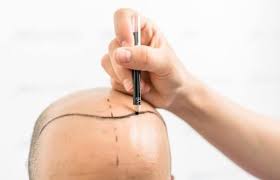
Ask to see the proposed front edge drawn on your scalp before anaesthesia or harvesting. The clinician should discuss whether the line remains appropriate if native hair behind it thins later. Check the left and right temple shape and how the new line connects to current hair. You can request a change at this stage. A pen-like implanter may help execute the agreed map, but it cannot decide the right height or contour. Keep a photograph of the agreed design so you can later compare the intended plan with the developing result, while allowing for the months needed for growth.
Who loads the grafts
Some workflows involve team members preparing follicular units and loading them into implanter devices. Ask how they are trained, how the units are inspected and how the physician supervises the process. A fine graft can be damaged by careless handling regardless of the quality of the implantation tool. This question is about the workflow you are buying, not an implication that one professional title automatically ensures a good result. The clinic should explain who handles each stage, who makes medical decisions and how continuity is maintained if the session lasts many hours. Documented roles are more informative than a photograph of one senior surgeon.
Who controls recipient angle
Direction changes across the hairline, temples, midscalp and crown. Ask whether the treating physician plans site angle for each zone and who performs the insertions. The tool can help a trained operator place a graft at a chosen angle, but an incorrect plan will still grow in an unwanted direction. If you already have native hair in the area, the new hairs should usually harmonize with it. Before treatment, show the clinician how you normally part or style your hair. This gives a practical reference for the recipient map and reduces the chance that a technically tidy implantation conflicts with daily styling.
How grafts are counted
A graft count refers to follicular units, not a guaranteed number of hairs. A unit may contain one or several hairs. Ask whether the estimate includes only successfully harvested and implanted units, how changes are recorded and whether finer single-hair units are reserved for the front edge. Very high numbers can sound appealing, but their suitability depends on donor capacity and recipient need. An itemized report at the end should show the actual count and treated zones. This is more useful for later follow-up than a headline number in a travel advertisement.
Is a dense frontal row appropriate
It can be tempting to concentrate many grafts at the visible front edge. A natural appearance often needs a softer transition and carefully selected units before higher density farther back. The clinician must also consider how densely the scalp can be treated, existing native hairs and future loss. Ask to see the intended gradient rather than only a line drawn at forehead level. A uniform front wall can look conspicuous as hair grows. An implanter can place units precisely in a planned pattern, but the aesthetic pattern itself comes from the surgeon's judgment.
Does the crown fit the donor budget
The crown's spiral design and large surface can absorb many grafts. If the proposed session includes front and crown, ask for the allocation to each and what improvement is expected in ordinary light. Decide whether facial framing or crown coverage is your priority. A plan that divides a limited supply too evenly may leave both zones looking thin. A staged approach can preserve options, though it also entails a later decision and expense. DHI is not a way around the arithmetic of finite donor follicles.
Can existing hair be protected
Implantation into a thinning area means working among native hairs. The surgeon should map their density and direction and explain how sites will be planned. Temporary shedding can occur after surgery, while the underlying patterned loss may also progress independently. Do not treat every change after transplantation as graft failure. Ask whether medical treatment could support existing hair and who will monitor it. The goal is improved overall appearance, including both the newly placed follicles and hair that was already there before the operation.
What if the donor is thin
A donor zone that is itself thinning may not provide stable or sufficient grafts. The clinician may recommend examination, medical assessment or a different cosmetic approach rather than a DHI session. An implanter cannot turn weak donor follicles into a reliable reservoir. Ask whether miniaturization is present in the back or sides and how it affects the expected outcome. If earlier FUE left uneven density, another extraction session may make the appearance worse. A frank explanation of donor limits protects you from an intervention that cannot meet your priority.
Should another treatment come first
Where hair loss is active or rapidly changing, a clinician may recommend diagnosis and medical treatment before surgery. A person with scalp redness or scaling may need inflammatory disease evaluated. Someone with recent diffuse shedding may recover hair without transplantation or may need investigation for another cause. Ask what evidence supports surgery now and whether a waiting period would clarify the pattern. This is especially important when travel and a fixed package date create pressure to proceed. The consultation should leave space to choose observation if it better serves the long-term goal.
What does partial shaving mean
A partial-shave procedure may trim the donor zone while leaving longer hair elsewhere; another technique may require access to more of the recipient area. The exact appearance in the first days depends on hair length, graft distribution and the surgeon's workflow. Ask for a clear description of which zones will be shaved and whether a style can conceal them afterward. Keeping some hair long does not mean the grafts can be rubbed or styled normally immediately. The recovery instructions should still explain washing, sleeping and protection from friction in both donor and recipient areas.
Can an earlier hairline be refined
A patient may seek correction of an overly straight or low front edge from a prior transplant. The surgeon needs to assess existing graft position, hair angle, donor supply and scalp condition. Adding a soft transition may help in some cases; others need a more complex repair plan. DHI placement may be one useful tool but cannot remove a misplaced graft or replenish an exhausted donor zone automatically. Bring previous reports and photographs, and ask which feature can realistically change. A revision should be discussed as a new clinical problem rather than as an automatic second package.
How the procedure feels
Local anaesthesia is commonly used during harvesting and placement, and the team may discuss additional measures for comfort. A long session can also be tiring because of positioning and breaks. Ask how discomfort is monitored and whether you can communicate with the physician during the procedure. You should understand the stages and know whom to tell if numbness wears off or you feel unwell. No responsible clinic should describe a surgical harvest as entirely sensation free for everyone. Comfort planning is part of quality care, even though many patients return home the same day.
Caring for recipient sites
Newly placed grafts need protection from rubbing, pressure and picking while small crusts form. Ask for a written schedule for washing, water pressure, sleeping position and permitted headwear. The exact protocol depends on your treating team and should not be replaced by generic internet dates. If you need to travel soon after treatment, discuss how to navigate a pillow, airport security, clothing and luggage without striking the scalp. Following practical instructions is more useful than relying on a claim of instant recovery associated with a branded technique.
Caring for the donor area
The donor zone has separate healing needs. With FUE, many small extraction sites heal; with a strip approach, there is an incision that may require suture care. Ask about washing, tenderness, sun protection and when a short haircut is appropriate. Do not assume a recipient-focused DHI package includes a detailed donor plan; it should. The future appearance of the donor area matters as much as the coverage at the front. A treatment summary should document the harvesting pattern and number of grafts so later clinicians can assess what reserve remains.
What shedding means
Many transplanted shafts shed after the operation before new growth appears. The follicle's later behaviour cannot be inferred from a single shed hair. Native hair near the recipient zone may also shed transiently. Ask the team when they expect photographs and at what point a persistent gap would justify a direct examination. A dramatic photo immediately after implantation is therefore a picture of placed shafts, not a preview of the final mature result. Understanding this sequence helps set realistic expectations without pretending that every graft is guaranteed to grow.
Reviewing progress at a distance
Agree on photographs from the front, sides, top, crown and donor zone under consistent light. Keep hair length and styling as similar as practical. A remote clinician can assess routine progress and advise on the next step, but photographs may not reveal an inflamed scalp or the cause of a new symptom. Identify local care in Canada for situations requiring examination. Ask who will answer messages, how long responses generally take and whether a video consultation is available. The handover should include the actual graft count, methods used and medication advice.
Comparing quotes sensibly
A DHI quote may be expressed per graft or as a package. Determine whether it includes physician assessment, harvesting, implantation, medicines, required early checks, accommodation and transfer. Ask whether the same person controls design and placement across the whole session and how many patients the team treats that day. Clarify the cost of an additional graft range, rescheduling or care after returning home. Two prices cannot be compared fairly if one includes a detailed long-term plan and the other only a technique label. Financial clarity supports the clinical choice.

Keeping future options open
The transplant uses donor hair permanently, while surrounding hair can continue to thin. Ask how much donor reserve the plan preserves and what the team expects if the crown or midscalp changes later. A conservative hairline and appropriate medical management may make a result easier to maintain. This does not mean every patient needs another operation; it means the first design should avoid forcing one. A DHI session is successful when it improves your current concern in a way that remains coherent as your hair changes, not merely when a large number of units are placed.
Evaluating a mature result
At a suitable later review, consider whether the new hair grows in a natural direction, the edge blends with existing hair and the priority area has improved. Assess the donor zone as well. A result may look different with wet hair, strong lighting or a shorter style; discuss what you consider a meaningful improvement rather than comparing an isolated close-up with a heavily styled advertisement. If the density is less than hoped, the clinician should examine growth, progression of native loss and remaining donor supply before suggesting another procedure.
Distinguishing site creation from placement
Some teams create recipient openings before inserting grafts; an implanter-based workflow can combine steps in a different sequence. The exact method varies with instrument and clinical practice. Ask the team to describe the operation in everyday language and to identify who determines each site's position, angle and depth. The terms “direct” and “immediate” should not be interpreted as proof that follicles never spend time outside the body. Handling and timing should be explained as part of the team's actual procedure, without unsupported promises about survival or superiority.
A claim about graft survival
A clinic may advertise a precise graft survival percentage for DHI. Ask how it was measured, over what interval, in which patients and whether it includes continuing loss of native hair. Photographs alone can make a numerical claim difficult to verify. Individual growth depends on many factors, including diagnosis, donor quality, graft preparation, placement and healing. A credible consultation can discuss expected growth and uncertainty without assigning an exact guaranteed percentage. Compare documented practices and the design offered for your scalp rather than choosing a treatment from one dramatic statistic.
A claim about no visible downtime
The use of an implanter does not remove FUE extraction sites or recipient crusts. You may have temporary redness, tenderness, swelling or a changed hairstyle if shaving is needed. Ask what appearance is typical during the first days for the number of grafts planned and when the team usually reviews healing. Decide whether you need time away from public-facing work or social events. Medical instructions about exercise and protecting grafts can extend beyond the point when you feel presentable. The exact course remains individual.
Keeping medication separate from the surgery package
Hair-loss medicines and immediate postoperative medicines serve different purposes. Ask which items are intended to support healing, which address continued native hair loss and which require a prescription or monitoring in Canada. A one-time DHI procedure does not make ongoing treatment unnecessary for everyone. Discuss possible adverse effects and alternatives with the prescribing clinician. Have a written handover so you do not stop a long-term medicine unintentionally when short-term postoperative instructions end.
The value of a conservative graft plan
A design that uses only the grafts needed for a visible priority may leave more options if the crown or midscalp thins later. Ask the surgeon how the proposed number was calculated and what coverage you would see with fewer or more units. A large session can be appropriate for some patients, but the donor zone must support it. The pen-like device does not create additional supply. Being conservative is not the same as accepting a weak result; it is an effort to balance present appearance, healthy donor density and future flexibility.
What to do if the plan changes on arrival
In-person examination may show a donor area different from the photographs, scalp inflammation or another cause of loss. Request a written explanation of any new diagnosis, graft range, price or technique. You should have time to consider the changes, ask questions and decline if the new plan does not match your priorities. A travel booking is not consent to every variation of surgery. If the clinician recommends treatment or observation instead, obtain a summary for your Canadian doctor and preserve the option of reassessment later.
Agreeing on the endpoint of treatment
Before surgery, identify what improvement would satisfy you: a less visible scalp along the part, a softer frontal frame or better coverage in a particular zone. Ask how the proposed graft number and distribution support that goal. The first postoperative photograph cannot show the final answer because implanted shafts may shed and grow again gradually. A later assessment should compare the agreed area, natural direction, donor appearance and any continued native hair loss. If you are considering additional density, wait until growth can be judged and have the donor reserve examined. That decision should be separate from the original package. A realistic endpoint gives both you and the clinic a common reference during months of recovery and makes an implanter method serve your priorities rather than become the result by itself.
Discuss DHI with Aylan Clinic
Tell Aylan Clinic which areas you would most like to improve, how long your hair has been thinning and what treatment you have already tried. Request a consultation that identifies the cause, assesses donor capacity and explains both harvesting and implanter placement. Ask for the proposed hairline, an itemized quotation, the names and roles of the clinical team, and a follow-up plan for your return to Canada. A method is useful when it fits a thoughtful long-term design for your own hair.
Medical and travel references
- International Society of Hair Restoration Surgery, FUE guide
- International Society of Hair Restoration Surgery, Hair graft placement
- American Society of Plastic Surgeons, Hair transplant recovery
- CDC, Medical Tourism
Continue exploring our hair transplant in Tunisia overview, the complete aesthetic surgery panorama, compare plastic surgery prices in Tunisia, or request a free, personalized quote.
Everything about DHI Hair Transplant in Tunisia
Technique, pricing, results and the full patient journey — every detailed answer in our complete guide.