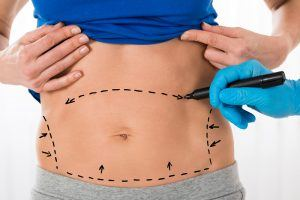
Drainless abdominoplasty in Tunisia generally refers to a tummy tuck closed without leaving temporary suction drains, often using progressive tension or quilting sutures to reduce space beneath the lifted abdominal skin. “Drainless” does not mean no incision, no fluid-collection risk or guaranteed rapid recovery. A Canadian patient needs to know why this closure suits the individual abdomen, when the surgeon might place a drain after all, and who will examine the wound before and after a long journey home.
In this article, you will find the meaning of drain-free closure, what the underlying operation may include, comparisons with a conventional drain plan, candidacy, operative steps, recovery, seroma risks, total costs, travel from Canadian regions and the follow-up questions to resolve before consenting abroad.
What drainless abdominoplasty actually changes
The tummy tuck still removes and rearranges tissue
In a full tummy tuck, the surgeon usually removes a lower section of excess skin and fat, pulls the remaining skin down and creates a new opening for the belly button. Plication of separated abdominal wall fascia may be performed when indicated. The precise scar and internal work depend on anatomy. A drainless abdominoplasty changes the method for managing the space beneath the lifted skin flap; it does not turn an operation into a non-surgical treatment. Anaesthesia, wound healing, support and clot-prevention planning still matter. Ask whether the proposal is full or mini abdominoplasty and whether plication or liposuction is included.
Skin excess can persist after pregnancy or substantial weight change and may require a low transverse excision. Not every bulge is caused by that skin: subcutaneous fat, visceral fat, rectus separation and a hernia require different assessment. A drain-free technique cannot remove fat around internal organs, treat obesity or repair every type of abdominal wall defect. Before comparing drains, first decide whether a tummy tuck is the right operation at all. The surgeon must examine skin quality, previous scars, circulation, abdominal wall and possible hernia in person.
Why fluid can collect beneath the flap
Lifting skin and fat separates tissue layers and leaves potential dead space between the abdominal flap and underlying fascia. Small blood vessels and lymphatic channels can produce fluid during healing. A temporary drain provides a path out; without a drain, a surgeon may use rows of sutures that tack the underside of the flap down to deeper fascia, reducing movement and pockets where fluid could collect. These are called progressive tension, quilting or adhesion sutures, though details differ. The closure method must be explained, because a simple statement that no tube is used tells a patient little about how space is managed.
A seroma can still develop after either type of operation. It may cause an enlarging soft bulge, asymmetry, pressure, fluid movement or unexpected wound drainage, but diagnosis requires clinical assessment and sometimes imaging. Some collections resolve with observation; others require aspiration or further treatment. A patient in Canada needs a practical route to local examination, because photographs alone may be insufficient. Avoid claims that a drain-free closure eliminates all collections or that drain placement itself proves a surgeon is less skilled.
“No drains” can be a conditional plan
The surgeon may intend to omit drains but decide to use one if bleeding, tissue quality, an extensive flap or another intraoperative finding warrants it. A safe consent process explicitly permits a clinically justified change and explains who will care for a drain after surgery. Conversely, avoiding a drain should not be a reason to skip checks for an expanding collection. Ask what criteria the surgeon uses, whether plication sutures and flap sutures serve separate purposes, and where drain removal or collection treatment would occur. The preference for travelling without a tube is understandable, but it cannot dictate a safety decision.
Technical comparison and alternatives
Progressive tension and quilting sutures
Progressive tension sutures fix the lifted skin flap to deeper tissue at several points during closure. They can reduce sliding, distribute tension and limit potential space. The exact suture material, pattern and number are technical choices for the surgeon, not a universal recipe. Evidence from comparative studies suggests this approach can be a reasonable alternative to routine drains in selected patients, but study populations and methods differ. Ask about the surgeon's outcomes and protocol, while remembering that published results do not predict your individual seroma risk. The surgeon must still inspect the wound and respond to new swelling.
Conventional drains, hybrid closure and decision points
A closed suction drain is a temporary tube leading to a collection reservoir. Patients or helpers may be asked to measure and record output before a clinician removes it. Some surgeons use drains even with flap-anchoring sutures, particularly when anatomy or combined procedures create concern. Others omit drains in most straightforward cases. Both strategies involve a scar, abdominal support, mobility limits and postoperative reviews. The meaningful comparison is the whole closure and follow-up plan: how fluid is prevented, detected and treated, and how a change in plan affects an international return journey.
Mini abdominoplasty, full abdominoplasty and liposuction
A mini abdominoplasty addresses a more limited region below the umbilicus and may not correct upper abdominal skin excess. A full operation usually involves wider skin redraping and work around the navel. Either can be planned with or without drains depending on technique and findings. Liposuction removes subcutaneous fat but does not remove substantial loose skin or reliably repair muscle separation. A panniculectomy addresses an overhanging lower apron with potentially different goals. Do not choose the operation by whether its marketing name promises fewer tubes; choose it by the tissues that need treatment and the risk that can be managed safely.
Plication, liposuction and combined surgery
The sutures used to close a separated abdominal wall are different from those that reduce dead space beneath the flap. Ask for both steps to be identified in the operative plan. Adding flank liposuction or another operation can change blood supply, swelling, operative duration and seroma or clot risk. Fat transfer and breast surgery are separate procedures, not default parts of a drain-free tummy tuck. A surgeon may advise narrower surgery or use a drain when combining steps. The overall benefit, anaesthesia burden and journey back to Canada must be reconsidered whenever another procedure is proposed.
Real indications for drainless abdominoplasty
- A full or limited tummy tuck is indicated for excess skin or selected abdominal wall concerns.
- The surgeon can explain how flap fixation reduces potential space in this individual case.
- Tissue quality and operative scope support considering closure without a drain.
- The patient understands that a drain may be placed if circumstances change.
- Local and overseas follow-up can assess a seroma or wound problem promptly.
These indications are not a promise of drain-free discharge. The surgeon may advise a drain, a different procedure, postponement or no surgery after examining the abdomen and medical history. Choosing a technique solely to make flying easier can hide a greater practical risk if a collection develops far from the operating team. The correct decision is a conditional clinical plan with clear aftercare.
Indications and contraindications for drainless abdominoplasty
| Situation to assess | How it affects the decision |
|---|---|
| Excess skin suitable for abdominoplasty | Establishes whether a tummy tuck is relevant before deciding on drain use. |
| Straightforward flap and viable tissue | May support a progressive tension closure if the surgeon finds it appropriate. |
| Extensive combined liposuction or bleeding concern | May alter the fluid strategy or make drain placement prudent. |
| Prior scars, hernia or complex abdominal surgery | Changes anatomy and may require a different plan or specialist assessment. |
| Marked wound-healing risk or nicotine | Can threaten the flap and may warrant postponement, not merely a different closure. |
| Active infection or uncontrolled illness | May rule out elective surgery until treated and reassessed. |
| Clot history or limited mobility | Requires individual prevention and travel decisions; no-drain status does not reduce these concerns. |
| Inability to access postoperative assessment | Makes distant surgery harder to justify if a collection or wound complication occurs. |
A factor may rule out the operation, require temporary postponement or merely change drain use. These are different decisions. The surgeon and anaesthesiologist should explain which applies after direct examination; a remote promise of “no drains” cannot substitute for that assessment.

How drainless abdominoplasty is performed, step by step
Before the procedure
The surgeon reviews weight history, previous abdominal operations, pregnancies, possible future pregnancy, scars, illnesses, medicines, nicotine use, bleeding and clot risks. Standing examination assesses skin excess, fat, the abdominal wall and a possible hernia. Clarify whether the planned operation is full or mini, the scar and navel design, whether plication is indicated, and the exact method used to secure the flap. Discuss conditions under which the surgeon will insert a drain. The anaesthesia team assesses fitness and tests. Confirm where a collection would be examined and who will review you before travel.
During the procedure
After anaesthesia and checks, the surgeon removes excess skin according to the agreed operation, repositions the remaining flap and performs any indicated abdominal wall repair. With a progressive tension technique, the surgeon places a series of sutures between the flap and deeper fascia as closure proceeds, reducing potential space and tension along the final incision. A new opening for the navel is made when required. The surgeon may still place a drain if findings justify it. Dressings and an abdominal binder may be applied. The operative note should record the actual closure, plication, any liposuction and whether drains were used.
After the procedure
Staff monitor breathing, circulation, pain, bleeding, skin perfusion, wound appearance and mobility. A lack of tubing can simplify some daily tasks, but it does not eliminate observation or the need to check for an enlarging collection. Obtain written instructions for the low incision, navel, binder, walking, medicines, bathing and urgent symptoms. If a drain was placed, learn how to measure output and arrange removal. Before discharge, know the direct surgeon's review date and the emergency facility. A Canadian clinician will need the final operative record, not the initial advertising label.
Recovery and time away from normal activities
| Approximate period | Expected changes and practical decisions |
|---|---|
| Immediately after surgery | Observation, wound and mobility checks, and confirmation of actual drain status. |
| First days | Tightness, bruising and swelling; watch for an expanding localized bulge or wound changes. |
| Following weeks | Gradual activity as cleared; a fluid collection may become apparent after early discharge. |
| Subsequent months | Swelling and scars evolve; definition and skin contour need time to settle. |
| Before any return flight | Direct examination for collection, wound integrity, mobility and clot risk. |
These phases do not authorize travel or exercise on a fixed day. A patient may find daily care easier without a tube but still have the same low scar, possible muscle repair and lifting limits. Keep a route back to clinical assessment if swelling changes after the initial review.
Wound and abdominal support
The low abdominal incision and any scar around the umbilicus need the team's specific dressing and washing instructions. The surgeon may prescribe a binder or compression garment and will say how it should fit; too much pressure can cause discomfort or compromise wound checks. If a drain is present, record its output as directed, protect the tubing and know who removes it. If no drain is present, a new swelling or fluid collection still needs assessment. Avoid nicotine and follow medication directions; do not stop a prescribed blood thinner or other drug without the treating clinician's advice.
Getting up, work and lifting
Early gentle walking may be encouraged as the care team directs, while the abdominal wall can feel tight and posture may be temporarily bent. Arrange help with transport, meals, childcare and bags. Desk work, physically demanding work, lifting a child and abdominal exercise place different demands on healing tissues and any muscle repair. Ask for tailored restrictions rather than a single return-to-work date. A patient who can walk short distances may still struggle with airport queues and a long sitting period. If mobility declines or pain worsens, contact a clinician promptly.
Warning signs and urgent review
Seek urgent medical assessment for chest pain, breathlessness, fainting, one-sided leg swelling, major bleeding, rapidly expanding painful abdominal swelling, severe pain, darkening skin, wound opening or fever with spreading redness. A firm, enlarging bulge or drainage from the incision also deserves review. While in Tunisia, use the surgical team's designated emergency facility. Once back in Canada, use local urgent or emergency care for acute symptoms and share the operative note, any drain history, medicine list and dates. A video call cannot diagnose a pulmonary embolism or manage serious wound loss.
Flying and the Canadian handover
A long flight after abdominal surgery can be uncomfortable and requires an individual assessment of wounds, mobility, anaesthetic recovery and clot risk. The surgeon should review you before departure and give instructions on movement and any prescribed prevention. The absence of a drain is not flight clearance. Keep a changeable return ticket and arrange help with luggage; if a wound, collection or other complication needs care, remain for reassessment. Before leaving, obtain the operative report and a clear remote follow-up schedule, and identify a local clinician or service in your province or territory for hands-on care.
Expected results and durability
The abdominal contour is determined by the operation
A drain-free closure does not create an inherently different cosmetic goal. Skin removal and any plication chiefly determine the profile; flap sutures are intended to manage space and closure. The lower scar and often a navel scar remain. A flatter contour depends on anatomy, visceral fat, tissue viability and healing. A surgeon should discuss whether the result you want comes from skin excision, muscle repair or an additional separately consented procedure, rather than crediting the absence of drains for every change.
Scar healing and possible collections
Scars mature over time and can widen or remain conspicuous. A collection beneath the flap may distort the contour and sometimes require aspiration or repeated review even when sutures were used. Sensation can change and swelling can persist. Early appearance is unreliable, especially if a binder or uneven fluid changes the silhouette. Ask how long the operating team will monitor the flap and what local resources are available after return to Canada. Never assume that removing a tube from the plan also removes the need for postoperative appointments.
Weight stability and honest photographs
Later pregnancy, major weight change and ageing can alter skin and any plication, regardless of whether drains were used. Before-and-after photographs should disclose the actual operation, time since surgery, posture, weight changes and any accompanying liposuction. A low scar may look shorter or less visible in a chosen pose than it will in daily life. Follow your own healing with consistent images for the surgeon, but seek in-person care for new fluid, darkening skin, fever or worsening pain. A successful initial closure does not guarantee a permanent shape.
Risks and possible complications
Abdominoplasty is major surgery despite a low-positioned incision. The technique used to manage fluid does not remove the risks of skin excision, abdominal wall repair, anaesthesia or travel. Ask the surgeon and anaesthesiologist how your health and proposed combination of procedures affect risk.
- Anaesthesia and cardiopulmonary events: Reactions, breathing difficulty and other problems require appropriate monitoring and a clear emergency pathway.
- Bleeding and haematoma: Blood can collect beneath the abdominal flap or incision, sometimes requiring prompt reassessment or another operation.
- Seroma: Fluid can collect whether or not a drain is used; examination, imaging or aspiration may be needed, and a collection can recur.
- Wound separation, infection and skin loss: Redness, fever, drainage, darkening tissue or an opening incision needs clinical review; nicotine and poor perfusion can worsen healing.
- Unfavourable scarring and umbilical changes: Scars are permanent, may widen or remain visible; the navel may heal or appear differently than intended.
- Asymmetry, contour change and numbness: Swelling and tissue rearrangement can leave unevenness or altered sensation, sometimes persistent.
- Muscle repair issues: Plication can be uncomfortable and may not permanently correct a bulge if weight, pregnancy or other anatomy later changes.
- Deep vein thrombosis and pulmonary embolism: Leg swelling, chest pain or breathlessness needs immediate evaluation; long travel is an added planning consideration.
- Further treatment: A complication or unsatisfactory result can require additional care; no revision can be promised before recovery is assessed.
Clarify where a serious complication would be treated in Tunisia and what documentation you will bring to Canada. For acute symptoms after returning, seek appropriate local emergency care immediately instead of waiting for an overseas reply. A routine remote follow-up cannot replace examination of an expanding collection, a wound problem or a possible clot.
Why consider Tunisia for drainless abdominoplasty?
The potential reason is an individually suitable surgical plan and a total cost that remains acceptable after travel, lost work, follow-up and complication contingencies. Compare the named surgeon and facility with realistic options in Canada, rather than assuming standards from a country's reputation. Because abdominoplasty creates a sizable wound and sometimes involves muscle repair, the ability to obtain in-person assessment and postoperative review matters especially when the patient will fly across the Atlantic.

Ask for a specific discussion of scar location, umbilical treatment, plication, fluid management, anaesthesia, observation and clot prevention. A patient with higher medical risk, an extensive combined procedure or limited local follow-up may be better served by a smaller plan or care closer to home. Direct consultations in English or French may help Canadians understand consent and wound instructions, but confirm what language the actual surgeon, anaesthesiologist and care team can use. A bilingual booking process cannot establish the language of clinical care or the quality of emergency response.
Cost of drainless abdominoplasty in Tunisia
An itemized quote is more useful than a headline fee. Ask whether it covers the surgeon, anaesthesia, operating facility, observation, dressings, binder, tests, medications and scheduled reviews. Clarify whether muscle plication, umbilical work and any separate liposuction are included. If a drain is proposed, ask about supplies, removal and reviews; if a drain-free closure is proposed, ask what it includes and whether placing a drain later changes the charge. A remote estimate can change after in-person examination.
| Factor | Effect on total cost |
|---|---|
| Extent of skin removal and repair | Incision length, umbilical work, muscle plication and any additional procedure affect time and care. |
| Surgeon, anaesthesia and facility | Confirm professional fees, operating room, recovery monitoring and possible overnight care. |
| Drains, dressings and binder | Ask what supplies, instruction, removal and postoperative checks are included. |
| Tests and medication | Identify preoperative workup, prescribed treatment and any excluded consultations. |
| Flights, connections and transfers | Compare the entire Canada–Tunisia return itinerary, companion and luggage needs. |
| Accommodation and work absence | Allow for assessment, surgery, in-person review and an extended stay if healing is delayed. |
| Complications and revisions | Clarify who treats a seroma, wound separation or clot, how costs are handled and what revision terms mean. |
| Insurance and Canadian follow-up | Check exclusions for elective surgery abroad and budget for local assessments after return. |
For Canadian patients, exchange rates, payment terms and non-refundable travel can change the total substantially. Request the precise operation name, inclusions, exclusions and contingency arrangements in writing. Ask what happens if an examination finds a hernia, makes a planned repair inappropriate or requires a longer stay. Coverage for elective care or complications differs by province, territory and private policy; verify it rather than assuming public coverage or a travel policy will pay.
Comparison: Tunisia and other medical tourism destinations
| Question | Tunisia | Canada | Another destination, such as France or Türkiye |
|---|---|---|---|
| Communication | Verify the surgeon's and anaesthesiologist's language and interpreter arrangements. | Clarify direct consultations and language options in the specific practice. | Verify the same details with the particular team. |
| Journey | Transatlantic travel and possible connections after abdominal surgery. | Often geographically closer, though remote regions still involve travel. | Route and transit burden depend on city and dates. |
| In-person review | Define assessment, wound review, possible drain removal and clearance before return. | Repeated local visits may be easier where care is available. | Clarify visits and time required abroad. |
| Quote | Compare skin excision, repair, drains or drain-free closure, setting and exclusions. | Compare an equivalent clinical plan and its fees. | Compare the same clinical plan, currency and contingencies. |
| Continuity | Arrange a documented handover and a Canadian assessment pathway. | Local follow-up may be simpler if surgeon and patient are nearby. | Plan the handover for that particular destination and journey. |
A country name does not establish quality. Compare the named surgeon and facility, the actual abdominal operation, anaesthesia and clot-prevention plan, wound care, distance and financial exposure if a complication develops. A patient who can access care near home should weigh continuity alongside any difference in quoted cost.
Tunisian cities to consider for this procedure
Tunis: a facility and review schedule that fit the operation
Tunis may be a practical base if the identified surgeon operates in an appropriate facility and can personally review the abdominal wound before departure. Confirm where surgery, observation, dressings and possible drain removal would occur. An accommodation address close to the treatment facility may be useful when bending, walking or sitting remains uncomfortable. Airport proximity alone does not resolve how an early wound problem or a suspected clot will be assessed.
Sousse and Monastir: continuity with the named team
Sousse or Monastir could be suitable when a specifically identified surgical and anaesthesia team provides the proposed operation, follow-up and access to urgent care there. Ask whether the operating surgeon will remain accessible for postoperative visits and where a seroma or wound problem would be treated. Avoid an itinerary that forces an uncomfortable intercity transfer immediately after surgery. A city's tourist reputation cannot prove clinical competence, and a convenient departure schedule cannot establish fitness for a flight.
Which Canadian cities can patients travel from?
The right comparison is the complete door-to-door itinerary, including the journey back while swollen and tired. Availability and connections depend on actual dates. A longer route may justify more recovery time in Tunisia, a companion, flexible booking, and a medical review before departure. Ask a clinician in Canada in advance whether they can assess a wound or a possible complication, without assuming that a routine public appointment can replace the operating team's follow-up.
Montreal, Quebec City, Laval and Longueuil
Montreal may offer several airport and connection choices, while Quebec City travellers should compare a local departure with ground transport to another hub. For Laval and Longueuil, getting to an airport can appear simple, but the total journey still includes check-in, transfers, waiting and the trip home after landing. Decide whether consultations and written aftercare instructions should be in English or French; verify which language the surgeon and anaesthesiologist actually use for direct medical discussions. Before departure, identify a Quebec-based clinician or service that can assess a wound or new symptom. Save the operative report, medication list and emergency contact in a format that can be shared promptly.
Ottawa, Gatineau, Sherbrooke, Trois-Rivières, Saguenay and Lévis
Ottawa and Gatineau patients may compare airports on either side of their usual travel corridor, while Sherbrooke, Trois-Rivières, Saguenay and Lévis can add a substantial overland leg. A return flight ending at a distant airport is not the end of recovery: arrange a manageable last leg and someone to help with bags. Weather, road conditions and connections can alter the practical duration. Ask who will remove or check dressings if required and where to seek urgent evaluation after arriving home. The language preferred for medical discussions should be stated in advance and confirmed with the individual clinicians involved.
Toronto, Hamilton, Kitchener–Waterloo and London, Ontario
Toronto residents can compare available itineraries, but should allow for the full time between home, the Tunisian facility and home again. From Hamilton, Kitchener–Waterloo and London, Ontario, airport access and the onward ground journey affect fatigue after surgery. Plan enough time away from work for the operation, observation, review and travel, with flexibility if recovery is slower. Arrange an Ontario contact for clinical questions, and understand that an emergency department addresses urgent symptoms but does not automatically provide planned aesthetic follow-up. Keep a clear English or French medical summary, including the incision, any muscle repair and prescribed medication.
Vancouver, Victoria, Surrey and Kelowna
Western Canadian journeys can involve additional flight segments and long periods seated. Vancouver and Surrey patients should consider ground access and connection buffers; Victoria and Kelowna patients may add another travel leg. Jet lag and disrupted sleep can make the first postoperative days harder, while a rigid return booking may pressure a patient to fly before a surgeon has reviewed swelling or mobility. Compare refundable or changeable travel options and realistic companion availability. Identify a local assessment pathway before leaving British Columbia and confirm how imaging or operative records could be transferred if a complication requires care.
Calgary, Edmonton, Winnipeg, Saskatoon and Regina
For Alberta and Prairie patients, access to a departure airport, layovers and the final trip home are part of the medical plan. Calgary and Edmonton offer different departure options on different dates; travellers from Winnipeg, Saskatoon and Regina should check the entire itinerary, including transit requirements. Ask how long sitting is reasonable for your individual clot risk and what preventive measures your treating team recommends; an abdominal binder is not a substitute for a medical prevention plan. After returning, know which local service can assess a suspected infection, leg swelling or unexplained breathlessness without waiting for an overseas video appointment.

Halifax, Moncton, Dieppe, Edmundston, Fredericton, Charlottetown and St. John's
Atlantic routes may require multiple legs and additional travel to reach the departure airport. Halifax patients should compare actual schedules; Moncton, Dieppe, Edmundston and Fredericton travellers should account for driving or regional connections; Charlottetown and St. John's can add another segment. Acadian and other bilingual patients can request French or English documentation and confirm the language used in each direct consultation. Include a buffer for weather and missed connections, and make a plan for returning home without carrying heavy bags. Follow-up access differs across provinces and communities, so identify a realistic local point of care before paying for travel.
How to choose a surgeon for drainless abdominoplasty
Verify the surgeon and the operating setting
Ask for the surgeon's full identity, specialty, right to practise and experience with abdominal skin removal and the proposed closure. Meet the responsible clinician directly and confirm who will perform the operation and manage an unexpected finding. Ask about the anaesthesiologist, facility, monitoring, overnight care and emergency transfer arrangements. A meaningful consultation includes discussion of scar position, umbilical appearance, muscle plication, possible drains and complications. If a coordinator cannot arrange direct access to the surgeon for these questions, do not treat a promotional description as a clinical plan.
Assess your anatomy and the reason for the chosen technique
The surgeon should examine skin excess, scars, fat distribution, abdominal wall, possible hernia and the quality of tissue around the proposed incision. Discuss prior pregnancies, weight changes, nicotine, diabetes, clotting history and medicines. Ask why a full operation is indicated rather than a mini procedure, panniculectomy, liposuction alone or no surgery. If drain-free closure is suggested, ask how dead space will be reduced and under which circumstances a drain would still be placed. The answer should reflect your anatomy, not a blanket promise.
Establish a complication and follow-up pathway
Request an itemized quote, written consent, a plan for wound checks, any drain management or collection assessment, and an examination before the return journey. Confirm 24-hour contacts and the facility that can treat a serious complication in Tunisia. Ask what records will be provided to a Canadian clinician, how a seroma or infection will be assessed after arrival and whether later revision care is covered. A revision policy does not guarantee a safe or effective second operation. Prefer verifiable facts about people, place, care and follow-up over a package label.
Planning a medical stay in Tunisia
For drainless abdominoplasty in Tunisia, plan assessment and postoperative care before choosing flights. Share medical records, photographs of the abdomen and scar concerns, medicine lists and travel constraints, then request a preliminary opinion and written scope. A remote exchange cannot replace physical examination of the skin and abdominal wall. Allow time in Tunisia for consultation, surgery, observation, wound review, possible drain removal or collection assessment and a medically justified delay in the return journey.
Preparation before departure
Disclose prior abdominal operations, hernias, pregnancies, weight changes, anaesthesia difficulties, blood-clot history, diabetes, nicotine use, allergies, medicines and supplements. Ask the surgeon and anaesthesiologist what testing or specialist input is required, and do not change prescribed medication independently. Arrange help with childcare, luggage and early daily tasks. Check insurance exclusions for elective surgery abroad and identify a Canadian clinician or service that could assess an incision. Keep records available to a companion. Verify current entry and transit requirements for your nationality and actual route.
The in-person assessment and consent
The surgeon should examine skin and fat while standing, assess possible diastasis or hernia and discuss the likely position and length of the lower scar. Confirm whether muscle plication and a new opening for the umbilicus are planned, what will happen to prior scars, and which fluid-control method is proposed. This visit can change the operation or postpone it. Consent should cover drains if they become necessary even when a drain-free closure is initially proposed. Confirm the language of direct medical discussions with the individual clinicians involved and obtain written instructions you can understand.
The first days and wound checks
Stay close enough to the facility for direct review, with help for food, dressing, showering and transport as needed. Follow instructions about walking, medication, binder, incision care and any drain measurements. Do not interpret ordinary postoperative swelling as proof that a collection is harmless; report a new one-sided or expanding bulge. Before leaving the facility, know who answers urgent calls and where to go if fever, bleeding, severe pain or breathing trouble develops. Ask which dressings or stitches require a further visit and whether a complication would change your accommodation needs.
Review before the flight home
The surgeon should examine the incision, umbilicus, mobility and any collection, then assess clot risk and the entire journey. If a drain remains or a wound requires treatment, a prepaid ticket should not determine departure. Long transatlantic segments and onward travel to western or Atlantic Canada can add substantial sitting and fatigue; plan movement and assistance as your team advises. A carrier's permission to board is separate from medical clearance. If the surgeon delays travel, arrange continued care and rebook rather than leave with an unresolved problem.
Follow-up once back in Canada
Take a discharge summary, operative note describing skin excision and any muscle repair, drain history if applicable, prescriptions, wound instructions and warning signs. Schedule the surgeon's remote review and identify where a local clinician can examine a seroma, infection or wound separation. Coverage and access differ across provinces and territories. For urgent symptoms, use local emergency services and give them the records; do not wait for a distant photographic review. Ask how the Tunisian team will communicate promptly with a Canadian clinician if further treatment is needed.
Request a personalized opinion on drainless abdominoplasty in Tunisia
Tell Aylan Clinic about loose skin, an abdominal bulge, previous operations, weight changes, medical conditions, medicines, nicotine use and your preferred language for direct consultations. Ask for the surgeon's identity, the exact skin and muscle plan, how the flap will be fixed, the circumstances that would require a drain, the observation schedule and an itemized estimate. Explain your Canadian departure point and the practical limits of your return itinerary.
A preliminary review cannot confirm that drain-free closure is suitable. The surgeon must examine you in person and explain the chance of a collection, the alternative closure options and the need for postoperative assessment. Establish both the Tunisian emergency pathway and a realistic route to in-person care after returning to Canada before making a decision.
You may also want to compare Brazilian Butt Lift in Tunisia.
Continue exploring the complete body contouring and aesthetic surgery overview, compare plastic surgery prices in Tunisia, or request a free, personalized quote.
Everything about Drainless Abdominoplasty in Tunisia
Technique, pricing, results and the full patient journey — every detailed answer in our complete guide.