
An Afro hair transplant in Tunisia transfers follicular units to selected areas of scalp hair loss while accounting for the shape of tightly curled hair and the course of follicles beneath the skin. Hair texture alone neither establishes the cause of loss nor determines the best surgical method. Canadian patients considering travel need a diagnosis, an experienced assessment of donor quality and a plan that protects the donor area and allows follow-up at home.
In this article, you will find how tightly curled hair changes harvesting and placement, why traction and scarring conditions must be identified, the trade-offs between FUE and FUT, recovery, risks, full travel costs and practical arrangements for English-speaking and French-speaking Canadians.
What an Afro hair transplant is and how it works
Hair curl above and beneath the scalp
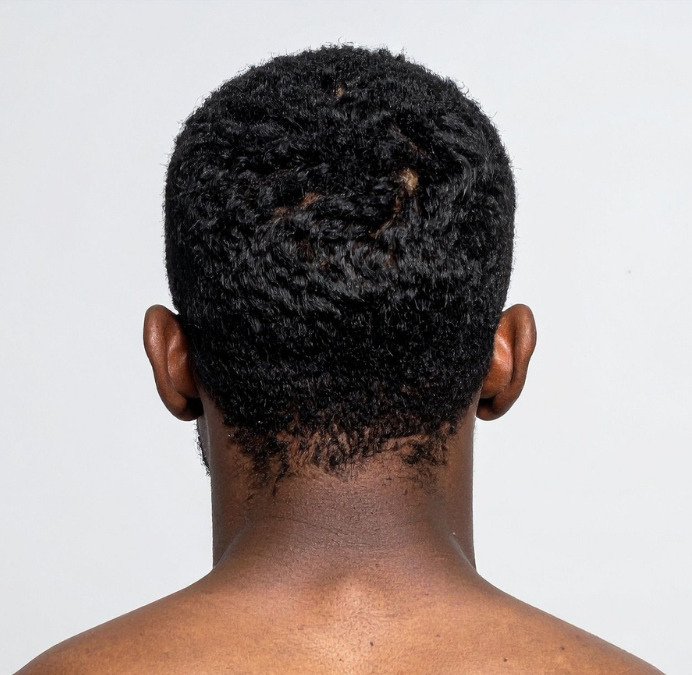
Tightly curled shafts often emerge at an acute angle, and the follicle beneath the surface may curve rather than follow a straight path. During harvesting, an operator who assumes a straight follicle can cut or damage a graft. Curl, shaft diameter, density and contrast with the scalp also change perceived coverage. These features vary among individuals; “Afro hair” is a description of texture, not a uniform anatomy or a diagnosis. The physician should examine actual hair and donor follicles rather than infer suitability from appearance or ancestry.
The diagnosis comes before extraction
A receding hairline can reflect pattern loss, traction from repeated tight styling, inflammation or more than one condition. Thinning at the crown may require evaluation for central centrifugal cicatricial alopecia (CCCA) or another scarring disorder. Itching, pain, scale or progressive patches are reasons to see a dermatologist. Examination, trichoscopy and sometimes biopsy or selected tests help distinguish conditions. An active inflammatory process needs diagnosis and treatment; transplantation cannot replace medical control of disease.
Donor supply and visual density
Follicular units are taken from a suitable donor region, commonly at the back or sides, and placed in planned recipient sites. A tightly curled hair shaft may provide useful visual coverage, but this does not mean more donor grafts exist or guarantee dense growth. The surgeon must assess donor miniaturization, prior traction, scars and how much can safely be removed. Extracted follicles do not regrow in the donor area. A plan should protect hairstyle options and preserve a reserve if loss advances later.
Technical choices and alternatives for textured hair
FUE and the curved follicle
Follicular unit excision (FUE) uses small punches to remove individual units. Curvature beneath the skin can make the path of a follicle harder to follow and may increase damage if the instrument, angle or operator's approach is unsuitable. Tools adapted to a case can help, but no branded punch guarantees intact grafts. FUE creates distributed small scars, may require donor shaving and can show overharvesting. Ask about the surgeon's experience with comparable curl patterns and how graft integrity will be assessed during the session.
FUT and linear donor harvesting
Follicular unit transplantation (FUT) removes a strip of donor scalp; units are then dissected under magnification. It can avoid some difficulties of blind individual extraction but leaves a linear scar and involves closure and different healing considerations. Scalp laxity, donor health, prior scars and preferred hairstyles affect its suitability. FUT is not automatically safer for every tightly curled hair type. The surgeon should explain why the selected method offers an appropriate balance of graft quality, donor appearance and future options.
Treating the cause and nonsurgical coverage
Reducing damaging tension can be central to management of traction alopecia, while inflammatory or scarring disease may require specialist treatment and monitoring. Pattern loss may have separate medical options, subject to an individualized discussion of benefits and adverse effects. Wigs, loose protective styling, fibres or scalp micropigmentation may provide coverage without using donor follicles. Surgery is considered only after the relevant cause and donor stability are clear; a cosmetic procedure cannot stop an untreated scalp disease.
Real indications for an Afro hair transplant
- A diagnosed, reasonably stable area of hair loss that a specialist judges transplantable.
- Healthy, sufficient donor hair after examination of follicle curl, density and scalp disease.
- A mapped hairline or recipient zone with realistic coverage and direction for the patient's natural texture.
- Willingness to protect the scalp, attend follow-up and manage ongoing hair loss where needed.
Tightly curled hair does not make someone automatically a better or worse surgical candidate. A physician may advise treating traction or inflammation, waiting for stability, selecting a smaller target area or declining surgery. A large advertised graft number is not useful if many follicles are damaged in extraction or if the donor region is left visibly sparse.
Indications and contraindications for an Afro hair transplant
| Situation to assess | How it affects the decision |
|---|---|
| Stable localized loss and sound donor hair | May support a carefully mapped transplant. |
| Active CCCA or another inflammatory scarring disorder | Treat and monitor first; surgery may be unsuitable. |
| Ongoing tight styling and traction | Reduce tension and assess whether loss can stabilize or improve. |
| Itching, tenderness, scale or unexplained crown loss | Investigate before elective harvesting or implantation. |
| Scar or keloid history | Discuss individual risk and method with the surgeon; do not assume outcome. |
| Low donor density or widespread miniaturization | Limit or rule out grafting and consider alternatives. |
| Uncontrolled illness or medication affecting healing | Obtain medical assessment and postpone if necessary. |
How the procedure is performed step by step
Before the procedure
The clinician reviews when and where loss began, symptoms, scalp-care practices, past hairstyles, previous treatments and any family pattern. Examination of the entire donor and recipient scalp is necessary, with trichoscopy or a biopsy when the diagnosis warrants it. The surgeon documents a realistic hairline or crown plan, anticipated graft range, method, donor extraction pattern and possible need to alter surgery if follicles prove difficult to harvest intact. Discuss scar history, anesthesia, the operating physician's identity and the role of each team member.
During the procedure
Local anesthesia is commonly used, with any additional sedation assessed individually. FUE harvests separate units; FUT removes a strip for microscopic dissection. The team protects grafts while outside the body, creates sites at angles suited to the recipient hair's exit direction and places units for a natural transition. The surgeon should monitor graft quality and donor appearance rather than pursue a predetermined maximum count. Ask who performs harvesting, recipient-site creation and implantation, and what happens when the actual safe yield differs from the estimate.
After the procedure
Before discharge, the team examines both scalp regions, gives clear washing, sleeping, headwear and medication instructions and schedules an early review. Request the actual graft count, extraction map, implanted zones and operative summary. Small crusts, redness and swelling may occur; some transplanted shafts can shed before later growth. Hair styling and scalp products used at home may need temporary adjustment. Do not pull on fresh grafts to hide the recipient area or resume tight braids or extensions before the physician confirms healing.
Recovery and time away from normal activities
| Approximate period | Expected changes and practical decisions |
|---|---|
| First days | Crusts, tenderness and possible swelling; avoid friction and tension. |
| Early postoperative review | Check donor wounds, graft sites and any closure before a long flight. |
| Following weeks | Some grafted shafts may shed; report unusual pain, inflammation or discharge. |
| Following months | Growth develops gradually; evaluate appearance after sufficient time. |
These are broad phases, not a guaranteed date for washing, returning to work or flying.
Cleansing, hairstyles and scalp products
Follow instructions for gentle washing rather than replacing them with a generic textured-hair routine. Ask specifically about detangling, oils, leave-in products, heat, chemical processing, wigs, headwraps, clips, braids and extensions. The goal is to avoid rubbing grafts and putting tension on fragile hairline follicles while keeping the scalp clean. People who wear protective styles should plan a practical low-tension approach during recovery. A shaved donor area may also influence styling and time away from public-facing work.
Warning signs and the return flight
Increasing pain, spreading redness, fever, pus, persistent bleeding or a dark poorly healing patch needs prompt assessment. Itching or tenderness that continues beyond expected healing may warrant review for the underlying condition, especially when a scarring alopecia was suspected. The surgeon should inspect the donor and recipient sites before departure. On a long flight with connections, protect the scalp from rubbing headwear and awkward sleeping positions; a package departure date cannot substitute for clinical clearance.
Follow-up in Canada
Arrange a local dermatologist or other suitable clinician able to evaluate inflammation and donor concerns, not only a routine photograph upload. If traction or a scarring disorder contributed to loss, ongoing management continues after the cosmetic operation. Transfer the diagnosis, any pathology report, procedure details, maps and medication list. A painful, inflamed or discharging scalp requires an in-person assessment in Canada. Clarify how the Tunisian team will review growth and when the mature result should be judged.
Expected results and durability
Coverage with tightly curled hair
Curl can influence the impression of fullness by covering scalp between hair shafts, but results still depend on calibre, viable graft number, recipient area, growth and ongoing native loss. A sharp contrast between a low transplanted line and future thinning behind it can look unnatural. Discuss an age-appropriate contour and the way grafts will blend with natural curl direction. A photograph under styled, dry hair cannot guarantee how the result will look after washing or in strong overhead light.
Skin healing and visible scars
FUE leaves multiple small scars; FUT leaves a linear one. Scar colour and visibility can differ from surrounding skin, and people with a history of raised scars need a direct discussion about their individual risk. A donor region cut close or overharvested may reveal marks. The recipient skin can also change pigment after inflammation. Ask how the method would look with the hair lengths and hairstyles you may want later. No extraction method can honestly promise scar-free healing.
Continued disease and possible revision
A transplant does not stop progression of pattern loss or cure CCCA, traction-related damage or another inflammatory condition. If the disease remains active, both native and grafted hair may be at risk. A revision might be considered only after an adequate growth period, reassessment of the cause and donor reserves and review of any scars. More extraction uses finite hair and can worsen donor appearance. Long-term dermatologic control may matter more than adding grafts.
Risks and possible complications
- Graft damage during harvesting: Curved follicles may be cut if extraction does not follow their course.
- Donor thinning and scarring: Excess extraction or an unfavorable scar can alter short hairstyles.
- Infection, bleeding or poor healing: Worsening pain, discharge or fever needs examination.
- Shock loss and uneven growth: Vulnerable native hair may shed and some grafts may not grow.
- Pigment change or raised scarring: Skin response must be discussed according to individual history.
- Unnatural angle or continuing disease: Hair direction and untreated scalp pathology can undermine the result.
Care across two countries
Ask who will examine an urgent problem while you remain in Tunisia and who can assess the scalp after your return. An overseas photograph is useful for communication but does not replace a local examination for suspected infection or active inflammation. Obtain a precise donor map and details of any sampled or treated disease. Clarify what happens financially and clinically if the procedure is reduced, deferred or yields less coverage than hoped.
Why consider Tunisia for an Afro hair transplant?
A Canadian patient may consider an identified Tunisian physician who can diagnose scalp loss, demonstrate relevant experience with tightly curled follicles and justify a safe harvesting strategy. Ask about actual cases of similar texture and conditions, without treating photographs as guarantees. Long-distance travel increases the importance of a conservative first plan, early review and access to a dermatologist back home. Neither a country's reputation nor a technique label establishes experience with a particular patient's hair.
Verify direct medical communication
Confirm that the diagnosing and operating physicians can discuss follicle curl, any scalp symptoms, scar history and alternatives directly in the patient's preferred English or French. A coordinator's translation should not be mistaken for the surgeon's language ability. Request the physician's name, right to practice, facility details and which clinician makes recipient sites. Confirm a method for sending records to a Canadian clinician if a condition such as CCCA needs monitoring.
What changes after an in-person assessment
Remote photographs cannot show the full path of a follicle below the skin or reliably establish inflammatory stability. A consultation may change the method, graft estimate or even the decision to operate. Agree before booking how deposits, accommodation and return flights would be handled if a biopsy, medical treatment or deferral is advised. Leave enough time for postoperative evaluation rather than scheduling departure immediately after graft placement.
Cost of an Afro hair transplant in Tunisia
| Factor | Effect on total cost |
|---|---|
| Diagnosis and possible scalp testing | Investigation may change or defer the operation. |
| Method and safe graft yield | FUE or FUT plans depend on curl, donor quality and scar considerations. |
| Physician, facility and anesthesia | Confirm who performs each surgical step and what is included. |
| Flights and domestic connections | Count all legs from the Canadian departure city. |
| Accommodation and work absence | Allow for consultation, surgery, early review and possible extension. |
| Medicines and Canadian care | Ongoing treatment of hair loss may be separate. |
| Complications or later revision | Clarify excluded treatment and future donor limits. |
Request a written itemized quote showing the physician, proposed method, graft range, donor and recipient map, facility, anesthesia, medicines, postoperative checks and exclusions. Ask how a lower safe yield or a decision not to operate affects payment. Compare the entire cost of travel, leave from work and Canadian follow-up, not only a price per graft. Extra grafts have no value when harvesting damages follicles or exhausts donor coverage.
Comparison: Tunisia and other medical tourism destinations
| Decision point | Tunisia | Care in Canada | Another destination |
|---|---|---|---|
| Diagnosis | Confirm scalp assessment and disease stability. | Local specialist visits may support monitoring. | Ask who investigates symptoms. |
| Curl-specific surgery | Review the operator's experience and donor plan. | Compare a case-specific proposal. | Verify similar experience directly. |
| Journey | Allow a transatlantic trip and early review. | Shorter travel may ease repeated visits. | Check actual flight and ground legs. |
| Quote and continuity | Include testing, exclusions and Canadian handover. | Ask for a comparable written scope. | Establish an aftercare route. |
The comparison should focus on the individual physician, safe graft handling and the ability to manage any underlying disease. A location does not predict the rate of graft damage, quality of a hairline or safety of a donor harvest.
Tunisian cities to consider for this procedure
Tunis and access to scalp assessment
If a named specialist operates in Tunis, confirm where the preoperative scalp evaluation, any indicated diagnostic work and early donor review will occur. Access to an airport matters less than access to the physician if pain, inflammation or a closure problem arises. Build the itinerary around actual appointments and a clear route for transferring findings to a Canadian dermatologist.
Sousse and Monastir as logistical alternatives
Sousse or Monastir may be practical when the proposed facility, surgeon and postoperative assessment are identified in advance. Calculate travel between airport, accommodation and the clinical team. Ask where an unexpected wound or scalp inflammation will be examined and whether a deferral following diagnosis would alter bookings. The city name itself cannot establish curl-specific surgical skill.
Which Canadian cities can patients travel from?
Montreal, Laval and Longueuil
Greater Montreal patients can discuss direct English or French medical consultation according to preference and arrange a Quebec dermatologist familiar with the diagnosed cause of loss. Ask the surgeon to see usual hairstyles and prior hairline photographs, not just tightly cropped promotional images. Plan ground travel after the return flight, especially if donor tenderness or headwear restrictions make a long journey uncomfortable. Route options and transit requirements must be checked for the actual dates.
Quebec City, Lévis, Trois-Rivières, Saguenay and Sherbrooke
From Quebec City and Lévis, or Trois-Rivières, Saguenay and Sherbrooke, add the journey to the departure airport and home again when estimating recovery time. Different hairstyles and scalp symptoms may call for a local dermatology visit before travel. Arrange where an inflamed recipient area or donor scar could be assessed after return. Request a diagnosis and written postoperative instructions in a language the patient understands, and keep flexibility around connections.

Ottawa, Gatineau, Toronto and nearby Ontario cities
Ottawa and Gatineau residents should compare actual airport access and organize follow-up in their home community, even if they fly through another city. Toronto, Hamilton, Kitchener–Waterloo and London patients can plan leave from work around visible crusts, a donor haircut and an early review. If a job requires tight headgear, discuss when it may safely return. A local clinician may need to manage underlying inflammatory loss separately from the Tunisian surgical follow-up.
Vancouver, Victoria, Surrey and Kelowna
Western Canadian itineraries can involve a long transatlantic journey and an additional domestic leg from Victoria or Kelowna. For Vancouver and Surrey residents, include ground travel and realistic rest after arrival; check connection buffers and changeable tickets. A fresh grafted hairline should not be rubbed by a hat or cramped sleeping position during travel. Identify a nearby clinician able to examine redness, discharge or tenderness rather than assuming a video call will settle a complication.
Calgary, Edmonton, Winnipeg, Saskatoon and Regina
From Calgary, Edmonton, Winnipeg, Saskatoon and Regina, compare the whole journey, not just the longest flight. Seasonal schedules and weather can affect connections. The postoperative hair-care plan may also limit close-fitting hats in cold weather. Arrange access to a local dermatologist when traction or scarring alopecia requires continued treatment. Ask for records documenting the scalp diagnosis and extraction distribution to make local review more useful.
Halifax, Moncton, Dieppe, Edmundston, Fredericton, Charlottetown and St. John's
Atlantic and Acadian patients may need several flight and ground legs. Halifax has different airport access from Moncton or Dieppe; Edmundston and Fredericton may involve longer drives, while Charlottetown and St. John's have their own connection needs. Verify direct medical communication in English or French as preferred, and identify a clinician who can assess healing near home. Do not let an inflexible onward ticket determine when it is safe to leave Tunisia.
How to choose a surgeon for an Afro hair transplant
- Verify the named physician's license, experience with comparable hair texture and role in the operation.
- Ask how scalp disease and donor miniaturization are assessed before grafting.
- Request a rationale for FUE or FUT, donor protection and monitoring of intact grafts.
- Confirm facility, anesthesia, complications pathway and written follow-up in Canada.
Ask for a diagnosis and a conditional plan
A surgeon should be able to explain whether the loss is pattern-related, traction-related, inflammatory or mixed, and what would delay surgery. Ask about examination and any tests, the stability needed before grafting and whether a Canadian dermatologist should provide ongoing care. The plan must be able to change after direct examination rather than force a predetermined graft count. This matters particularly when a crown appears smooth, tender or actively inflamed.
Examine technique and natural hair direction
Ask how the operator follows curved follicles during harvesting, documents graft damage and protects donor appearance. At the recipient area, discuss hairline shape, exit angle and curl direction in relation to the patient's usual style. Review comparable cases under ordinary lighting, acknowledging that individual growth varies. Confirm who makes recipient sites and who can examine an unexpected donor concern before the patient flies home.
Planning a medical stay in Tunisia
For an Afro hair transplant in Tunisia, reserve time for scalp diagnosis and in-person donor assessment before surgery, then an early check of graft and donor healing before the transatlantic journey. A plan should include the possibility of reducing or postponing surgery if active disease or poor donor quality becomes clear. Check entry and transit rules for the actual nationality, route and travel dates.
Prepare the scalp history before departure
Bring the chronology of loss, symptoms such as itch or tenderness, previous scalp diagnoses, medications, biopsy results if available and photographs with different hairstyles. Tell the physician about traction, chemical processing, close shaving and any raised-scar history. Do not abruptly change prescribed treatment without advice. Arrange a Canadian clinician for ongoing management of a scarring condition or an urgent wound problem after return.
Consultation and first postoperative days
Confirm the diagnosis, extraction method, likely graft yield, planned direction and what would make the surgeon stop or revise the operation. After surgery, follow individualized cleansing, sleeping and styling instructions; avoid traction and rubbing. Attend the early appointment even if the recipient area appears fine, since donor problems may be less visible under hair. Ask for the actual graft count and donor map before leaving.
Review before travel and after returning home
The operating physician should examine the scalp before departure and assess bleeding, inflammation or poor healing. Build flexible flights and a connection buffer, especially from western or Atlantic Canada. Carry the medical record and contact information. Routine photographs can show growth over time, but increasing pain, fever, discharge or worsening scalp symptoms need an in-person evaluation in Canada. Continue treatment of the original cause separately from judging the cosmetic result.
Request a personalized opinion on an Afro hair transplant in Tunisia
Tell Aylan Clinic where loss began, whether the scalp itches or hurts, previous diagnoses and styling practices, medical history, desired hairline or coverage, preferred language for direct medical discussion and Canadian departure city. Request the proposed surgeon's identity, examination plan, provisional donor strategy, medical schedule and itemized quote.
A remote review can organize the questions, but only a proper examination can establish the cause of loss, the safe donor yield and the appropriate method. If disease remains active or follicles cannot be harvested safely, a different treatment or postponement may protect both scalp health and future styling options.
You may also want to compare Beard and Moustache Transplant in Tunisia.
Continue exploring our hair transplant in Tunisia overview, the complete aesthetic surgery panorama, compare plastic surgery prices in Tunisia, or request a free, personalized quote.
Everything about Afro Hair Transplant in Tunisia
Technique, pricing, results and the full patient journey — every detailed answer in our complete guide.