
Breast reduction at Aylan Clinic Tunisia allows patients from Montreal, Quebec City, Toronto, Ottawa, Moncton and across Canada to reduce breast volume, lift and reshape the breast, and resolve the physical symptoms of heavy breasts — well below Canadian private prices. It is among the most satisfying procedures in plastic surgery because the benefit is functional as well as aesthetic: patients frequently report relief from years of back and shoulder pain within the first week. And one thing distinguishes Tunisia — it is a French-speaking country, not a clinic with French-speaking staff, which means the entire experience can happen in your own language, from the first consultation to the written aftercare you take home.
This page is the long guide: deciding, preparing, the stay in Tunisia, and the year that follows. If you are looking for the procedure itself — how the operation is performed, what the ten-day stay covers and how care is organised — see Breast Size Reduction in Tunisia. For the cost side of the decision, the plastic surgery prices in Tunisia page explains how quotes are built and compared. Before you read further, one practical note: breast reduction for symptomatic heavy breasts may qualify as a medically indicated procedure under your provincial plan. Part One explains how to check, and it is worth doing before you decide anything.
Part One — Deciding
What breast reduction does, and why satisfaction is so high
Excess glandular tissue, fat and skin are removed, the remaining breast is reshaped, and the nipple is repositioned higher on the chest. It is therefore both a reduction and a lift — a point that pleasantly surprises many patients, who arrive expecting only to be made smaller and find they are also lifted into a better position. The operation takes two to three hours under general anaesthesia.
What patients come for, in the order they usually notice it:
- Relief of physical symptoms. Neck and upper back pain. Deep permanent grooving where bra straps cut into the shoulders. Skin irritation and rashes beneath the breasts. Postural strain.
- The ability to exercise. Many patients have not run in years, and this is among the most frequently cited satisfactions.
- Clothes that fit. Being able to buy a dress off the rack, wear a fitted shirt, or find a bra without ordering it specially.
- Volume proportionate to your frame, and a lifted, reshaped breast.
- Better proportion overall, and often a noticeable change in how the whole silhouette reads.
Satisfaction is among the highest in plastic surgery because the procedure resolves something genuinely limiting. The scars are real and they are discussed openly. But the most common regret patients express is not about the scars — it is that they waited so long.
Checking your Canadian options first
We put this early because it matters and because most clinics do not mention it.
Might your reduction be covered? Possibly. In most provinces, breast reduction may be covered where heavy breasts cause documented physical symptoms, subject to criteria that typically include a minimum resection weight and evidence that conservative measures have not resolved the symptoms.
The practical position. Provincial plans generally do not reimburse surgery performed outside Canada. So even with a recognised medical indication, a reduction here will be at your expense. Two steps, in order: ask your provincial plan whether you meet the criteria and what the realistic wait is, then decide with that information.
Why most patients still travel. The wait. A patient who has had symptoms for a decade and is told she will wait another two years has a legitimate reason to look elsewhere. That is not an abstraction — it is two more years of not exercising, not buying the clothes she likes, and managing pain. The majority of our Canadian reduction patients arrive having already checked their provincial position. But they have checked, and we would rather you did too.
Might private insurance contribute? Some employer plans contribute to procedures with a documented medical indication. Ask your insurer directly, and request itemised invoicing that separates the surgical procedure from accommodation and travel — that separation is what makes a claim processable. We provide it as standard, in French or English.
Why Canadian patients choose Tunisia for this procedure
| Canada | Tunisia — Aylan Clinic | |
|---|---|---|
| Wait time | Often long, even with a medical indication | Rapid scheduling |
| Cost | Potentially covered if criteria met | At your expense, well below Canadian private |
| Language | English or French | French throughout the country |
| Surgeon training | Canadian | Frequently French-trained |
| Accommodation | Your responsibility | Included, full board |
| Companion | Additional cost | Free, accommodated and fed |
| Daily wound care | Scheduled appointments | Daily nursing visits |
| Pathology on removed tissue | Standard | Standard, and the result given to you |
Where the daily nursing matters most. Reduction involves more extensive incisions than most breast procedures, and the T-junction where they meet needs watching in the first days. Having a nurse check your dressings daily, rather than being seen once at a scheduled appointment, is a meaningful part of what the ten-day stay provides. Any minor healing issue is identified and managed while you are here.
Where the language matters most. Two moments specifically. The surgical marking, standing, on the morning of surgery: this is where the target volume is confirmed and where you have your last chance to say anything, and being able to say exactly what you mean matters here more than anywhere. And your nursing visits, where you describe how something feels and understand what you are told to do about it.
Surgeon training. A substantial proportion of Tunisian plastic surgeons trained in France — French medical schools, French hospital residencies, French board qualifications. Ask where yours qualified. We answer directly.
The techniques, and which applies to you
The choice is determined by how much volume needs removing and how far the nipple needs to travel — not by preference.
Inverted-T (anchor). The most widely used technique for significant reductions. Three scars: around the areola, vertically down to the fold, and horizontally along the inframammary fold. Its advantage is control. It allows large volumes to be removed, the nipple to be raised a considerable distance, and the final shape to be sculpted precisely. For substantial reductions this is the technique that produces the best form.
Vertical (lollipop). Avoids the horizontal scar, leaving a periareolar scar and a vertical line to the fold. Suited to moderate reductions. It produces a good, often slightly more projected shape, with mild gathering of the lower pole that settles over a few months. Where the volume and nipple elevation are within its range, it is an excellent option with a shorter scar.
Periareolar. A single scar around the areola, for minor corrections of volume and position.
Liposuction of the lateral chest. Frequently used alongside the main technique to refine the area toward the armpit. This detail is worth asking about. Reducing the breast without addressing lateral fullness leaves a contour that still bothers the patient in fitted clothing — and a number of patients tell us afterwards that the lateral work made more difference to how clothes fitted than the volume reduction did.
How much can be removed? Anywhere from a few hundred grams to over a kilogram per breast in significant cases. The objective is not a number — it is proportion to your frame. Your surgeon plans the target volume from your measurements and your build, and you discuss it together. Patients who arrive asking for a specific cup size are usually better served by discussing proportion instead.
Part Two — Preparing
From first contact to confirmed dates
The online consultation. Send photographs, measurements and a description of your symptoms. Your surgeon reviews them and provides an initial plan and quote, including the technique proposed and the approximate resection.
What to send: photographs from the front, three-quarter and profile, standing, arms at your sides and then raised, in a light-coloured bra and then without, unfiltered. Plus your height, weight, current bra size, underbust and bust measurements, number of pregnancies, and a description of your symptoms — where the pain is, what you cannot do, how long it has been going on. In French or in English, whichever you prefer.
What you receive: a plan naming the technique, the anticipated resection per side, and the expected recovery — with the reasoning — and an itemised quote, within 24 to 48 hours.
Questions worth asking before you commit:
- « Quelle technique recommandez-vous pour moi, et pourquoi celle-là ? » — the answer should reference your measurements and how far the nipple needs to travel.
- « Quel poids de résection anticipez-vous de chaque côté ? » — a serious answer indicates you have been assessed properly, and the figure may matter for an insurance enquiry.
- « L’imagerie mammaire est-elle incluse dans le bilan ? »
- « Le tissu retiré sera-t-il envoyé en anatomopathologie, et en aurai-je le résultat ? » — this is standard practice and the result belongs to you.
- « Puis-je voir des photos de cicatrices à un an ou plus ? » — three-month scars look concerning on everyone. One-year photographs are the informative ones.
- « La liposuccion de la région latérale est-elle incluse ? » — often the detail that determines how clothes fit afterwards.
- « Où votre chirurgien a-t-il été formé ? »
What to arrange at home before you travel. Stop smoking, and this matters more before a reduction than before most breast procedures. Reduction repositions the nipple on a pedicle of tissue that carries its blood supply, and nicotine constricts exactly those small vessels. Four weeks before and after makes a genuine difference. Canadian provincial quitlines are free, your pharmacist can advise on nicotine replacement, and combining behavioural with pharmacological support roughly doubles success rates. Tell us honestly where you are — a plan can be adapted for a patient who is still working on it.
Disclose hormonal contraception: it increases thrombotic risk, which compounds with surgery and a long flight. Have breast imaging done in Canada if you prefer — ultrasound for younger patients, mammogram from around 40 or earlier with a family history. It is usually covered at home, and bringing the images and report saves time here. Finally, identify a nurse or walk-in clinic who could manage dressings if needed. Most patients never need it, and having the option removes any uncertainty.
Getting your home ready
- Move everything to waist height — kitchen items, bathroom products, the clothes you will wear.
- Front-fastening tops. Nothing over the head for at least two weeks.
- Sleeping setup: three or four pillows plus one for each elbow.
- Prepare food or arrange deliveries. Lifting a full pan is out of the question in week one.
- Dressing supplies, in case you need them.
- Pet food and litter at floor level. No lifting pets or children.
- Practise getting out of bed — roll onto your side, push up with your elbows, do not pull with your arms.
- Arrange help for the first two or three days if you live alone.
One thing to buy in advance: a front-fastening soft bra in a size larger than your target, for the transition after the compression bra. And be prepared to buy new bras entirely once the shape settles at three months. Patients frequently forget to budget for this, and it is a genuinely pleasant expense.
The task patients most underestimate: washing your hair. Have it done at a salon, use dry shampoo, ask your companion, or use a detachable shower head at chest height.
Part Three — The Stay
Your ten days in Tunisia, day by day
Ten days is the standard for reduction.
Day 1 — Arrival. Your driver meets you at the airport and takes you to your hotel with your companion. Nothing clinical today.
Day 2 — Assessment. Clinical examination with full measurements: sternal notch to nipple distance, nipple to inframammary fold distance, nipple position relative to the fold, breast base width, skin elasticity, and estimated volume. Blood work, and breast imaging if you have not brought it. Then your consultation: the technique, the target volume, the expected scars, and photographs of results at one year on patients with a similar starting point. By the end of the day your plan is confirmed.
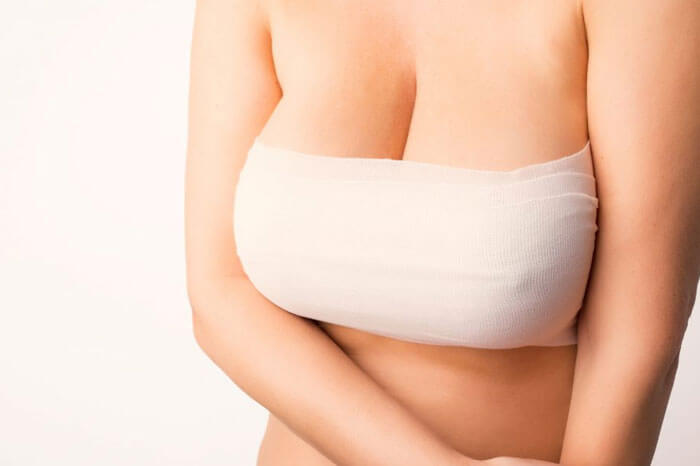
Day 3 — Surgery. Surgical marking in the morning, standing, taking twenty to thirty minutes. This is done standing because gravity defines what is being corrected — markings made lying down bear no relation to how your breast sits in life. Your surgeon marks the new nipple position and the extent of the resection with you upright, and this step largely determines the symmetry of your result. It is also your last opportunity to raise anything: if you have thought further about size, say so here. Then the procedure under general anaesthesia, two to three hours. You wake in a compression bra. Drains are sometimes used, depending on the extent of the resection. You will be asked to get up and walk within hours. One night in hospital, sometimes two for larger reductions.
Day 4 — Transfer to hotel. Discharge to your hotel with your first nursing visit. Drains removed if used. This is often the day patients find hardest — the anaesthetic has worn off and the tightness is at its most noticeable. Your companion earns their place today.
Days 5 to 8 — Recovery with daily nursing. A nurse visits daily to check your dressings, particularly at the T-junction, review your medication, and answer questions. Most patients notice a clear turning point around day four or five. And many notice something else in this window: the back and shoulder pain they have lived with for years is gone. The weight was removed the moment the surgery finished, and the body registers it quickly.
Day 9 — Surgical review. Your surgeon reviews the result and the incisions. Sutures removed if they are not the dissolving type. Many patients feel well enough for a gentle outing by this point.
Day 10 — Final check and departure. Final review, your pathology result, scar care instruction, and your documentation: operative report including resection weight per side, pathology report, and written aftercare guidance in French or English. Then your transfer to the airport.
If you would rather stay longer. Some patients extend by two or three days. The additional recovery before flying is genuinely comfortable, particularly for patients facing a long journey home.
What the stay actually feels like
The day of surgery. You will wake in a compression bra, groggy, possibly nauseous from the anaesthetic — common and treatable, so mention it. The dominant sensation is tightness and heaviness rather than sharp pain. Patients frequently remark that it hurts less than they expected, and reduction is often described as less painful than a submuscular augmentation, because no muscle is stretched.
Day one. Marked tightness, restricted arm movement, considerable fatigue. Practical realities: washing your own hair is difficult, reaching above shoulder height is uncomfortable, and getting out of bed requires the technique you practised. Ask for a stool softener before you need one.
Days two to three. Swelling and bruising peak. Bruising may extend further than you expect, sometimes toward the ribs. This looks alarming and is almost always harmless. Some patients feel low around this point; it is well documented after surgery of any kind and it passes within days.
Days four to five. The turning point. Tightness eases, arm movement improves, and most patients move from prescribed analgesia to paracetamol. This is also when many patients first notice the relief. Back pain, neck pain, the ache between the shoulder blades — frequently gone. It is the most consistently reported early observation.
What your breasts will look like. High, firm and swollen. This is not your result, and almost every patient goes through a phase of uncertainty here.
Managing the discomfort. Take the medication on schedule for the first two to three days rather than waiting for pain to build. Sleep propped on two or three pillows with a further pillow under each elbow. Walk gently and frequently, which prevents stiffness. Hold a small pillow against the chest when coughing or sneezing.
Flying home
How long to stay. Ten days minimum after breast reduction — longer than after augmentation, because the incisions are more extensive and the T-junction benefits from observation.
Why the interval. Haematoma risk is concentrated in the first week, and any delayed healing is far better identified and managed here than after a transatlantic flight. Your final review before departure confirms healing is progressing. Confirm your date with the clinical team before booking a non-changeable return fare.
Making the flight easier. Book an aisle seat; you should stand and walk every hour. Wear your compression bra, graduated compression stockings, and loose clothing that fastens at the front. Before boarding, take your analgesia, walk the terminal, and hydrate. During the flight, walk the aisle hourly, flex your ankles when seated, drink water, and avoid alcohol. Keep in your cabin bag: operative report, pathology result, medication, and a spare compression bra. Request airport assistance when booking — carrying and lifting bags is exactly what you have been told not to do. And avoid a same-day domestic connection: an overnight stay near your Canadian arrival airport makes the journey considerably more comfortable.

Part Four — The Year That Follows
Recovery at home, week by week
Weeks 2 to 6. Desk work at around fifteen days. Swelling subsides and the shape becomes progressively more natural. Around week three or four you will feel entirely normal and want to resume everything — the tissue is still healing. The compression bra is worn continuously, including overnight, for four to six weeks: it limits swelling, supports the reshaped tissue and contributes directly to the final result. Underwired bras are avoided for longer, since the wire presses on the inframammary scar. Sleep on your back, upper body slightly elevated, for three to four weeks; if you are a habitual side sleeper, build a barrier of pillows on each side so that rolling over wakes you before you complete the movement.
Months 3 to 6. The shape settles into its final form. This is when the result becomes genuinely assessable.
Months 12 to 18. Scar maturation completes. Scars that looked concerning at three months are typically fine pale lines by now.
Returning to work and exercise. Desk work — around fifteen days. Physical work — four to six weeks. Driving requires you to be off strong analgesia and able to perform an emergency manoeuvre, usually seven to ten days.
| Activity | Typical timing |
|---|---|
| Walking | From day one, actively encouraged |
| Stationary cycling, no upper body | 3 weeks |
| Elliptical, light | 4 weeks |
| Swimming | 4 – 6 weeks, once incisions are fully healed and confirmed |
| Running | 6 – 8 weeks |
| Lower body weights | 4 – 6 weeks |
| Upper body weights | 6 – 8 weeks |
| Yoga | Gentle forms at 4 weeks; avoid weight-bearing on the arms until 8 |
The running milestone is worth mentioning separately, because it is the moment many patients remember. A substantial proportion of reduction patients have not run in years — sometimes decades — because it was uncomfortable or impossible. Being cleared to run at six to eight weeks, and finding it comfortable, is among the most frequently reported satisfactions of the whole procedure. A well-fitted sports bra makes it better still.
Your scars: an honest and complete account
Where they will be. The inverted-T leaves three: a circle around the areola, a vertical line from areola to fold, and a horizontal line along the fold. The vertical technique omits the horizontal component. All of them sit in areas covered by any bra or swimsuit.
How they evolve, month by month.
- Weeks 1 to 3 — thin lines, often less dramatic than patients feared.
- Weeks 4 to 12 — red, firm, often slightly raised. This is the phase that alarms patients, and it happens to nearly everyone. It is the normal inflammatory phase of healing.
- Months 3 to 6 — redness begins to fade, firmness softens.
- Months 6 to 12 — steady improvement.
- Months 12 to 18 — final maturation. Most patients end with fine pale lines, visible on close inspection but unremarkable in a bra or swimsuit.
Some patients scar beautifully; others retain more visible marks. Genetics and skin type play a substantial role, and this is discussed at consultation.
Are the scars worth it? The honest answer comes from patients themselves, and it is consistent: satisfaction after breast reduction is among the highest in plastic surgery, despite the scars. The functional relief is substantial enough that most patients regard them as an entirely fair trade. And the most frequently expressed regret is not about the scars at all — it is not having had the surgery sooner.
A scar care protocol. Weeks 1 to 3: follow the wound care instructions exactly, and do not apply creams to an incision that has not fully closed. Weeks 3 to 6, once healed: gentle massage two or three times daily with a plain unscented moisturiser. Week 6 onward: silicone gel or sheeting, applied consistently — it is the best-evidenced topical treatment, and consistency matters more than which product you choose. Sun protection for at least twelve months is the most commonly neglected element and the most consequential: an immature scar exposed to ultraviolet light pigments permanently. Cover it or use a high-factor sunblock, including through a swimsuit. For Canadian patients, spring sun after a long winter is deceptively strong, and reflected light from water or snow counts.
If healing is slower at the T-junction. Mild delayed healing at the point where the incisions meet is not unusual, since that is where tension is greatest. It is generally minor and managed with dressings. This is precisely what the daily nursing visits are watching for, and it is why the ten-day stay matters.
Breastfeeding, weight and timing
Will I be able to breastfeed? This deserves a direct answer. Breast reduction may reduce or eliminate the ability to breastfeed, since glandular tissue is removed and the nipple is repositioned. Some techniques preserve the connection between nipple and gland better than others, and your surgeon will use the most conservative approach compatible with your target reduction. But no technique guarantees normal breastfeeding. Tell your surgeon if pregnancy is a consideration — it may influence the technique chosen.
Should I wait until after having children? If a pregnancy is imminent, waiting is generally preferable — both for breastfeeding capacity and for the stability of the result. If a pregnancy is some years away, or uncertain, this becomes a personal judgement. For a young woman with genuinely limiting symptoms, waiting a decade in discomfort is not an obviously better choice.
Does my weight need to be stable? Ideally for six months. Breast tissue contains a significant proportion of fat, and substantial weight change after surgery alters both volume and shape. If you are planning to lose weight, complete it first where you can — breasts frequently reduce with weight loss, which may change the extent of reduction needed. That said, heavy breasts make exercise harder, which is its own difficulty. If weight loss has stalled partly because activity is uncomfortable, that is a legitimate reason to proceed — and many patients find that losing weight becomes considerably easier afterwards, once exercise is comfortable. This is a genuine conversation rather than a rule, and it is worth having at your consultation.
Long-term follow-up in Canada
What is required. An annual clinical review, and continued breast cancer screening according to the guidelines for your age and family history. Tell your radiologist about your reduction at every examination: tissue rearrangement changes the mammographic appearance, and this information allows accurate interpretation. A baseline mammogram some months after surgery is good practice — it establishes a new reference point for future comparison.
Your pathology result. Request it and keep it in your medical file. It belongs in your Canadian records, and it is a useful piece of documentation to have. We provide it as standard, in French or English.
Is the result permanent? The removed tissue does not return. Skin continues to age and weight influences the remaining volume, so gradual settling over the years is normal and generally well accepted given the initial benefit. Stable weight and a well-fitted supportive bra during exercise both help maintain it.
What is not on the horizon. Worth noting, since it differs from augmentation: there is no programmed future surgery. No implant to replace, no periodic imaging of a device, no anticipated revision. In that sense reduction is a one-time cost, which is part of why patients describe it as good value.
Buying bras afterwards. Wait until three months before investing in bras, since the shape continues to settle until then. And have a professional fitting. A substantial proportion of reduction patients have never worn a correctly fitted bra, because their previous size was difficult to find — and getting it right afterwards adds noticeably to comfort and to how clothes sit.
Part Five — Practical Matters
Canadian patients: travelling to Tunisia from your region
Aylan Clinic works with patients from every province and territory in Canada. Wherever you live, the process begins the same way: a free consultation, in French or English, with photographs sent from home and no need to travel before your dates are confirmed.
Montreal and the surrounding region. Montreal is our largest Canadian source for Tunisia, and the reason is the combination of good connections and a francophone destination. Connections from Trudeau to Tunis typically route through Paris, Frankfurt or Istanbul, with frequent options. Patients from Laval, Longueuil and Brossard are all within easy reach of the airport. Everything from your first message to your one-year follow-up happens in French, including the operative report and pathology result you take to your doctor at home.
Quebec City and across the province. From Quebec City and the Capitale-Nationale region including Lévis, most patients connect through Montreal — as do patients from Trois-Rivières, Sherbrooke, Drummondville and Saint-Jérôme, all within driving distance of Trudeau. Gatineau patients depart from Ottawa or drive to Montreal. From Saguenay, a domestic connection through Montreal is the norm, with an overnight buffer on the return worth building in. For a reduction specifically, the francophone advantage matters at two moments: the standing surgical marking where your target volume is confirmed, and your daily nursing visits where you describe how the T-junction feels. Both are conversations where saying exactly what you mean counts.

Acadia and New Brunswick. We work with patients from Moncton, Fredericton and Saint John. Moncton and the surrounding Acadian communities are served in French throughout, as are Acadian patients across the province. Most connect through Montreal, which for francophone patients means French-language service from departure to arrival.
Francophone Ontario. Sudbury, Thunder Bay and Sault Ste. Marie all have substantial francophone populations, and those patients are served in French from first contact onward. Journeys involve a domestic connection, so an overnight stay near your arrival airport on the return is recommended rather than connecting the same day — which after a reduction is more taxing than patients anticipate. Ottawa patients typically connect through Montreal.
Greater Toronto Area and southern Ontario. Toronto patients connect through European hubs, with Paris and Frankfurt the most common routes to Tunis. Across the wider Greater Toronto Area we work with patients from Mississauga, Brampton, Markham, Vaughan, Richmond Hill and Oshawa. Along the lake: Hamilton, Burlington, Oakville, St. Catharines and Niagara Falls. In southwestern Ontario: London, the Waterloo region — Kitchener, Waterloo and Cambridge — plus Guelph, Windsor and Barrie. Being driven to Pearson is considerably easier than a domestic connection on the return. Kingston patients generally drive to Toronto or Montreal.
Vancouver and British Columbia. Vancouver patients face the longest journey — typically two connections and the better part of two days. We schedule assessment for the day after arrival. Across the Lower Mainland: Surrey, Burnaby and Richmond. From Victoria and Nanaimo, patients cross by ferry or short flight, and the ferry is the easier option on the return leg. Kelowna, Abbotsford and Kamloops patients connect through Vancouver or Calgary. Given the journey length, British Columbia patients frequently extend their stay, and we generally suggest it — the extra days before flying make the journey home noticeably more comfortable after a reduction.
Alberta. Calgary and Edmonton both offer European connections onward to Tunis. Red Deer and Lethbridge patients generally drive to Calgary. We schedule Alberta patients with the same rest-day approach as British Columbia.
Manitoba and Saskatchewan. Winnipeg patients connect through Toronto or Montreal. The francophone community of Saint-Boniface is served in French, as are Franco-Manitoban patients from the surrounding region — and for them the Montreal routing means French throughout the journey. From Saskatoon and Regina, journeys involve a domestic connection followed by two further flights. An overnight stay near your arrival airport on the return turns a long day into two manageable ones.
Atlantic Canada. Halifax patients typically route through Montreal or Toronto. From Charlottetown in Prince Edward Island and St. John’s in Newfoundland and Labrador, journeys involve two or three connections, with an overnight in between advisable.
Northern Canada. We work with patients from Whitehorse in Yukon, and from communities across the Northwest Territories and Nunavut. For northern patients any surgical procedure already involves travelling a considerable distance, frequently with a long wait for a specialist appointment. We plan northern itineraries with buffer days at both ends, and given the number of connections we generally recommend a longer stay before the return journey.
How we handle the logistics. Whichever city you are travelling from, your coordinator arranges airport transfers at both ends in Tunisia, confirms your hotel before you depart, and builds your schedule around your arrival time. Three recommendations for every Canadian patient: schedule your assessment for the day after you land, avoid a same-day domestic connection on your return, and book an aisle seat, since you should be standing and walking every hour.
What your package includes
- Free consultation in French or English, with a plan and quote from your photographs
- Full on-site assessment: clinical measurements, blood work, breast imaging
- Surgeon consultation with one-year result photographs, and standing surgical marking
- The procedure, general anaesthesia and hospitalisation
- Liposuction of the lateral chest where it forms part of the plan
- Drains where used, and their removal
- Compression bra
- Daily nursing visits and wound care throughout your hotel stay
- Surgical review before departure, with sutures removed if applicable
- Pathology examination of the removed tissue, with the result given to you
- Written aftercare and scar care guidance in French or English
- Operative report including resection weight per side
- Itemised invoicing separating the surgical procedure from accommodation and travel
- Hotel accommodation, full board
- A companion at no extra cost, accommodated and fed in the same room
- Airport–clinic–hotel transfers
- A personal coordinator from arrival to departure
- French-speaking care throughout, with English available on request
The surgical team. A senior plastic surgeon experienced in reductions across all volumes — frequently French-trained, and we will tell you where yours qualified. A female plastic surgeon is available on request. An anaesthetist carries out the pre-operative assessment and continuous monitoring. A dedicated nurse provides daily wound care throughout your stay.
Results by patient profile
Symptomatic heavy breasts — the classic case. A patient in her mid-thirties with daily neck and upper back pain, deep permanent grooving from bra straps, recurrent irritation beneath the breasts, and an inability to run. An inverted-T reduction removing several hundred grams per side. Her back pain was noticeably better by day five, and she ran for the first time in eleven years at week eight. This is the presentation we see most often, and the one where the functional change is most dramatic.
A moderate reduction with a shorter scar. A patient wanting a moderate reduction with associated sagging, whose measurements were within the range of the vertical technique. No horizontal scar, a good projected shape, and mild lower pole gathering that settled by four months.
Reduction with lateral liposuction. A patient whose main complaint, alongside volume, was fullness toward the armpit that showed in fitted clothing. Reduction was combined with liposuction of the lateral chest. She commented afterwards that the lateral contour made more difference to how clothes fitted than the volume reduction did — which is why the detail is worth asking about.
Asymmetric reduction. A patient whose breasts differed by roughly a cup size, both heavy. Different resection volumes on each side, planned separately from individual measurements, producing both reduction and improved symmetry.
After weight loss. A patient who had lost thirty kilograms and whose breasts were left heavy and deflated with substantial skin excess. An inverted-T reduction addressing both volume and skin, with her weight stable for eight months beforehand.
A patient who chose a larger target than expected. A patient who arrived asking to be made as small as possible, and who — after discussing proportion with her surgeon and seeing photographs — chose a target somewhat larger than her initial request. Eighteen months on she is pleased with the balance. This is the value of discussing proportion rather than a cup size.
A patient from Chicoutimi. A patient who chose Tunisia specifically so that the whole experience would be in French. Her comment afterwards concerned the standing marking: she had changed her mind about the target volume that morning, said so, and the plan was adjusted. « Je n’aurais pas osé le dire par interprète. »
Practical points to know
What to expect. Tightness and heaviness rather than sharp pain, frequently less than patients expect. Swelling and bruising peaking around forty-eight hours. Restricted arm movement for the first week. A clear turning point around day four or five, with back pain relief often noticeable in the same window. Desk work at around fifteen days. Shape settling over three to six months. Scars maturing over twelve to eighteen months.
Recognised points. Breast reduction is a well-established procedure with a strong record of patient satisfaction. As with any surgery under general anaesthesia there are recognised considerations, and your surgeon will discuss those relevant to you. The main ones: haematoma, bleeding into the surgical space, most likely in the first 48 hours; infection, uncommon and treated promptly; delayed healing at the T-junction, where tension is greatest — not unusual, generally minor, managed with dressings; altered nipple sensation, more likely than after augmentation since the nipple is repositioned, and often temporary; some residual asymmetry, since no chest is symmetrical to begin with; reduced or lost breastfeeding capacity, discussed above; scarring that varies between individuals, influenced by genetics and skin type; and venous thrombosis, which is why early mobilisation, compression stockings and the flying interval all matter.
Stopping smoking is the most useful thing you can do before this procedure specifically. Reduction repositions the nipple on a pedicle of tissue carrying its blood supply, and nicotine constricts exactly those small vessels. Four weeks before and after makes a genuine difference to healing.

Hormonal contraception increases thrombotic risk, which compounds with surgery and a long flight. Disclose it.
Who this suits. Adults with completed breast development, stable weight, in general good health. Surgery is not performed during pregnancy or breastfeeding.
Price: how it is built and how to compare it
Why we quote per case rather than publishing a price list. Because reduction varies considerably in extent. A moderate vertical reduction and a large inverted-T reduction with lateral liposuction are different undertakings in operating time and complexity. Your quote is built from your photographs and measurements, itemised, and fixed once you approve it.
What determines your price. Five factors: the extent of the reduction and the technique required, which follow from your measurements and target volume; whether liposuction of the lateral chest is included; whether asymmetry correction requires different planning on each side; the length of your stay, since accommodation, full board and daily nursing are included — and this procedure carries a ten-day standard; and any additional procedure carried out at the same time.
What is included in your quote. Everything in the package list above: the consultation and plan, full on-site assessment with measurements, blood work and breast imaging, surgeon consultation and marking, the procedure, anaesthesia and hospitalisation, drains where used, compression bra, ten days of accommodation with full board, daily nursing visits and wound care, surgical review and suture removal, pathology examination with the result given to you, written aftercare guidance, operative report with resection weight per side, itemised invoicing, airport transfers, and your coordinator throughout. A companion is accommodated and fed at no additional cost.
What sits outside it. Flights, travel insurance, follow-up in Canada, possible dressing care locally if healing at the T-junction is slower, scar care products, and new bras at three months.
How to compare quotes properly. Five checks:
- How many nights of accommodation, and are meals included? Ten days is the appropriate stay for this procedure, and a quote based on five is not comparable.
- How many nursing visits during the stay? Daily wound care and a single check before departure are materially different — and on this procedure the T-junction is what they are watching.
- Is breast imaging included?
- Is pathology examination of the removed tissue included, and will you receive the result? This is standard practice and it has genuine clinical value.
- Is a companion included? This adds substantially if it is extra.
Why the lowest quote is rarely the best value. On reduction, the savings available are identifiable: a shorter stay, fewer nursing visits, no breast imaging, and pathology omitted. The stay matters most. This is a procedure with more extensive incisions than most breast surgery, and ten days of monitored recovery before a transatlantic flight is the appropriate standard rather than a premium option.
Insurance in Canada. As set out earlier, your reduction may qualify as medically indicated in Canada. Care abroad is generally not reimbursed, but ask your insurer — some employer plans contribute to procedures with a documented indication. We provide itemised invoicing that separates the surgical procedure from accommodation and travel. That separation is what makes any claim processable, and we provide it in French or English. Travel medical insurance is worth arranging, and read the exclusions: many policies exclude complications of elective surgery. Ask in writing.
Payment. A deposit confirms your dates. The balance is settled on site, under terms set out in full when you approve your plan. There are no additional charges once accepted.
Getting your figure. Send photographs from the front, three-quarter and profile — standing, arms down then raised, in a light-coloured bra and then without, unfiltered. Add your height, weight, current bra size, underbust and bust measurements, pregnancies, and a description of your symptoms. You will receive a personalised plan and quote within 24 to 48 hours, including the technique proposed and the approximate resection, in French or English.
Glossary
| Term | Meaning |
|---|---|
| Hypertrophy | Excessive breast volume relative to body frame |
| Inverted-T (anchor) | Technique with three scars, for larger reductions |
| Vertical (lollipop) | Technique avoiding the horizontal scar |
| Pedicle | The tissue retained to carry blood supply to the repositioned nipple |
| Resection weight | The weight of tissue removed per breast, recorded in your operative report |
| Pathology examination | Laboratory analysis of removed tissue; standard practice |
| Inframammary fold | The crease beneath the breast |
| T-junction | Where the vertical and horizontal incisions meet |
| Lateral chest | The area toward the armpit, often addressed with liposuction |
How Canadians search for this
- “Breast reduction Tunisia cost” — the most common search. Our quotes include the ten-day stay with daily nursing.
- “Réduction mammaire Tunisie” — how most Quebec patients search, and the reason this page exists in both languages.
- “Breast reduction covered by RAMQ” — possible for symptomatic heavy breasts. Worth checking your provincial criteria and waiting time first.
- “Breast reduction covered by OHIP” — the Ontario equivalent; criteria vary by province.
- “Back pain from large breasts” — the core functional indication, and the symptom most frequently relieved within the first week.
- “Breast reduction scars after 1 year” — exactly the right search. One-year photographs are the informative ones.
- “Breast reduction waiting list Canada” — the reason most of our Canadian patients travel.
- “Is breast reduction worth it” — satisfaction is among the highest in plastic surgery, and the most common regret is not having done it sooner.
- “Can you breastfeed after breast reduction” — capacity may be reduced or lost. Disclose any pregnancy plans.
- “French speaking plastic surgery abroad” — Tunisia’s distinguishing feature, and not a marginal one for a francophone patient.
- “Breast reduction recovery time” — fifteen days off desk work, six to eight weeks before running.
- “Vertical vs anchor breast reduction” — determined by the volume removed and how far the nipple travels.
- “Bra fitting after breast reduction” — wait three months, and have a professional fitting. Many patients have never worn a correctly fitted bra.
In summary
Breast reduction at Aylan Clinic Tunisia combines experienced plastic surgeons — frequently French-trained — a technique chosen from your actual measurements, breast imaging and pathology examination as standard, and ten days with daily nursing visits watching the T-junction where it matters. And it takes place in a French-speaking country, which for a patient from Quebec, Acadia or francophone Ontario means the standing marking, the nursing visits and the written aftercare all happen in her own language. With accommodation, full board, itemised invoicing and a companion at no extra cost, well below Canadian private prices.
Four things worth doing before you decide:
- Ask your provincial plan about coverage and waiting times. Symptomatic heavy breasts may qualify in Canada. Most patients who travel do so because of the wait — but they have checked.
- Ask to see one-year scar photographs. Three-month scars look concerning on everyone, and one-year images are both informative and reassuring.
- Stop smoking for four weeks before and after. On this procedure it makes a genuine difference to healing.
- Plan the ten-day stay properly. More extensive incisions warrant monitored recovery before a transatlantic flight.
And one thing patients tell us constantly: the most common regret is not the scars. It is having waited so long.
When you are ready to move from the guide to the procedure itself, read Breast Size Reduction in Tunisia for how the operation is performed and what the stay covers, compare plastic surgery prices in Tunisia, browse the full breast surgery in Tunisia overview, or request a free, personalised quote with your photographs and measurements.
Related reading: breast lift (mastopexy), breast augmentation with implants, breast asymmetry correction, gynecomastia surgery and fat transfer breast augmentation.