
Dermal fillers at Aylan Clinic Tunisia add volume and definition to the face using injectable gel, typically hyaluronic acid, over appointments requiring little to no downtime, for a fraction of Canadian private prices. This guide begins with safety, because filler injection has a genuine, well-documented emergency risk that every patient should understand before their first appointment, not discover afterwards.
If you already know what filler is and want the treatment itself — areas treated, session length, stay in Tunisia and aftercare — see our procedure page on facial filler injections in Tunisia. For budgeting, our plastic surgery prices in Tunisia page sets out what treatments cost here. This guide sits in our wider aesthetic medicine in Tunisia section, and it exists to explain the risk, the reversal, and the questions worth asking any injector anywhere in the world.
Three things before you read further
Vascular occlusion is the emergency this page exists to explain. Filler accidentally injected into a blood vessel, or compressing one from outside, can cut off blood supply to skin or, in rare and serious cases, to the eye — and recognising it immediately, with the right treatment available on hand, is what prevents lasting harm.
Hyaluronic acid filler has a genuine safety advantage that non-HA and permanent fillers do not: it can be dissolved. An enzyme called hyaluronidase reverses it, which is why most reputable practice today uses HA filler and keeps hyaluronidase available at every appointment.
Knowing the facial anatomy of the specific area being treated is what actually prevents occlusion. It is a knowledge and technique question, not a product question.
One thing distinguishes Tunisia: it is a French-speaking country. Not a clinic with French-speaking staff — a country where French is a working language across medicine and daily life.
Part one — safety first
1. Vascular occlusion: what it is and why it matters
The mechanism. The face has an extensive network of blood vessels, some running close to the surface in specific, mappable locations. Filler injected directly into a vessel, or injected in a way that compresses a vessel from outside, can block blood flow — either to the skin supplied by that vessel, or, in specific danger zones, along a pathway that can reach the blood supply of the eye.
What it causes. Skin necrosis: the skin supplied by the blocked vessel dies, beginning with a distinctive pattern of pain and colour change, and progressing over hours to days if not treated. Vision loss: rare, and the most serious possible outcome, occurring when filler enters specific vessels that connect, through the facial vascular network, to the blood supply of the eye. This has been documented in the medical literature, particularly with certain injection sites and techniques.
Why immediate recognition matters. Vascular occlusion affecting skin, recognised and treated promptly with hyaluronidase (for HA filler), generally has a good outcome. Recognised late, it can cause permanent scarring or tissue loss. Vision-threatening occlusion is a true emergency requiring immediate specialist attention — and while it is rare, every practitioner injecting filler should know the warning signs and have a clear, immediate action plan.
What causes it. Injection technique — needle or cannula placement relative to the vessels in that specific area. Injecting under pressure, or a large bolus in a high-risk zone. And insufficient knowledge of the specific vascular anatomy of the area being treated, which is why experience and training in the exact area matters as much as general filler experience.
What prevents it.
- Detailed knowledge of facial vascular anatomy, area by area.
- Aspiration before injecting, where technique allows — drawing back slightly to check the needle is not in a vessel before injecting.
- Slow, low-pressure injection, in small increments.
- Using a blunt cannula rather than a sharp needle in higher-risk areas, where technique allows — a cannula is less likely to penetrate a vessel wall.
- And immediate access to hyaluronidase, at every single appointment, without exception.
2. Why hyaluronic acid filler, and why hyaluronidase must always be on hand
This is the safety advantage that shapes our entire approach to this treatment.
What hyaluronic acid is. A naturally occurring substance in the body, used as the base for most modern dermal fillers.
The reversibility advantage. Hyaluronidase is an enzyme that breaks down hyaluronic acid — which means an HA filler causing a vascular problem, an unwanted result, or a lump can be dissolved, generally within hours of administration for an urgent problem. This is a genuine, structural safety advantage that non-HA fillers and permanent fillers do not share: once a permanent filler is placed and causes a problem, there is no equivalent reversal option.
Why this matters for vascular occlusion specifically. If occlusion is recognised promptly, high-dose hyaluronidase injected into and around the affected area can dissolve the blocking filler and restore blood flow — which is why treating this emergency effectively depends on the filler being HA-based, and depends on hyaluronidase being immediately available, not ordered in after the fact.
What we do. We use hyaluronic acid filler as our default and near-universal choice, precisely because of this reversibility. We keep hyaluronidase on-site and immediately accessible at every filler appointment, without exception — not stored elsewhere, not needing to be sourced urgently. And we ensure the injecting practitioner is trained in recognising occlusion and in the emergency treatment protocol, not only in the injection technique itself.
What to ask any clinic. « Utilisez-vous de l’acide hyaluronique, et avez-vous de la hyaluronidase disponible sur place, immédiatement, à chaque rendez-vous ? » A clear “yes, always, on-site” is the answer you want. Anything hesitant or conditional is a reason for real caution.
3. Danger zones: where the risk concentrates
Knowledge specific to the area being treated, not general filler experience, is what actually manages this risk.
| Higher-risk area | Why it concentrates risk |
|---|---|
| The glabella (between the brows) | Historically associated with the most serious reported vision complications, due to the vascular connections in that specific area. |
| The nose | A compact area with vessels that have limited alternative routes for blood flow if compressed, making even small volumes potentially significant. |
| The nasolabial folds and the area around the mouth | Particularly near the corners of the mouth, where specific vascular danger points are well described. |
| The temples | Deeper vascular structures here require specific technique. |
Why these areas require particular caution. The vascular anatomy in each of these areas has specific, well-described danger points — and an injector experienced generally with filler, but not specifically trained in the anatomy of that particular zone, is at a genuine disadvantage there.
What we do. We treat each anatomical area according to its own specific risk profile and the technique that manages it, rather than applying the same approach to every part of the face. We use cannula technique preferentially in the higher-risk zones, where the clinical situation allows it. And we approach these specific areas, when treating them at all, with smaller volumes, slower injection, and heightened vigilance for the specific early signs of a problem.
Ask: « Quelle est votre approche spécifique pour cette zone en particulier, et pourquoi ? »
4. Recognising a problem, and what to do
This is the information every patient should have before treatment, not learn about afterwards.
Warning signs during or shortly after injection.
- Severe pain, disproportionate to the injection itself.
- Blanching — a distinctive white or dusky colour change of the skin, in a pattern following the area a specific vessel supplies.
- Changes in vision, however brief or subtle — an emergency sign requiring immediate action.
What happens if this occurs. Treatment is stopped immediately. Hyaluronidase is administered promptly, into and around the affected area. And where vision is affected in any way, immediate emergency medical attention is sought without delay — this is not a situation to wait and monitor.
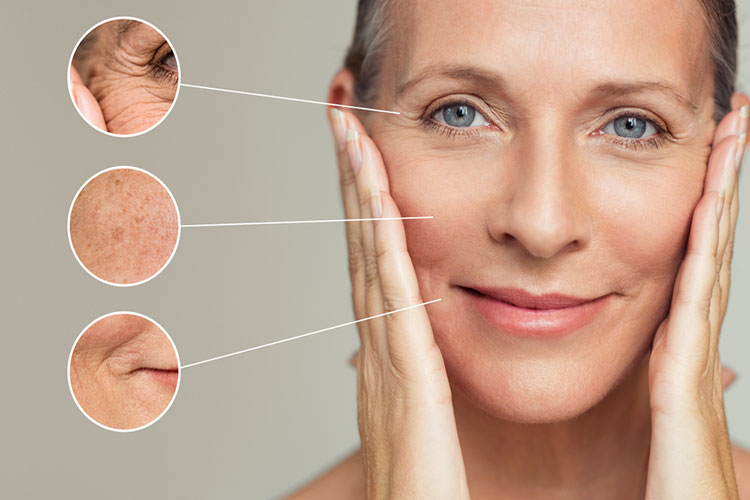
What we do. We explain these signs to you before treatment, not only document them in our own protocol — because you are the person who will notice if something feels wrong, and knowing what to say matters. And where any of these signs occur, we act immediately rather than waiting to see if they resolve on their own.
Part two — deciding
5. What fillers achieve, and where they are used
The areas.
- Cheeks — restoring volume lost with age, or enhancing natural contour.
- Lips — volume and shape, one of the most requested areas.
- Nasolabial folds and marionette lines — softening the folds running from nose to mouth and mouth to chin.
- Jawline and chin — definition and, in some patients, a degree of contouring that changes the lower face’s proportions.
- Temples, where volume loss with age can create a hollowed appearance.
- Under-eye hollows (tear trough) — a specific, technically demanding area requiring particular experience, given the thin skin and specific anatomy involved.
What it achieves well. Restoring volume that has been lost. Softening specific folds and lines caused by volume loss, rather than by muscle movement — our guide to Botox wrinkle injections in Tunisia covers that distinction, and the two are frequently used together for a comprehensive result. And enhancing natural contour and proportion.
What it does not do. It does not address dynamic lines from muscle movement — that is Botox territory. It does not improve skin texture, tone or quality — see our PRP facial rejuvenation and Morpheus8 pages for that. And it does not lift skin that has genuinely descended with significant laxity: volume can create the visual impression of some lift, and it is not a substitute for surgical correction where that is what is needed.
6. Natural results: the skill in restraint
The common complaint about filler done poorly. Overfilled, disproportionate results — an unnaturally full or distorted appearance, which has become a widely recognised and specifically criticised look.
What causes it. Excessive volume in a single session. Poor assessment of facial proportion. And a “more is better” approach, whether from the practitioner or from patient pressure for a dramatic single-visit change.
What good practice looks like. Conservative volumes, frequently building gradually over more than one session where a significant change is wanted, rather than maximising volume in a single visit. Assessment of your whole face and its natural proportions, not a single area in isolation. And an honest conversation if what you are asking for exceeds what will look proportionate on your specific face.
Ask: « Recommanderiez-vous plusieurs séances plus modérées plutôt qu’une seule séance importante ? »
7. Non-HA and permanent fillers: why we are cautious
Briefly, because they exist in the market and the reversibility point above bears directly on them.
Calcium hydroxylapatite and poly-L-lactic acid are other filler categories, with different mechanisms and duration profiles, used by some practitioners for specific indications.
Permanent fillers — silicone and certain other substances — carry the specific and serious disadvantage of not being reversible if a problem occurs, and complications, including delayed ones appearing years later, are more difficult to manage.
Our position: hyaluronic acid filler is our default for the great majority of patients and indications, specifically because of the reversibility described above — and we would discuss any non-HA option, where relevant, with that trade-off explained clearly.
8. Who should not have it
- Active infection or skin condition at the treatment site.
- A known allergy to the filler substance or its components.
- Pregnancy and breastfeeding — not established as safe, avoided as a precaution.
- A history of severe allergic reactions generally, requiring specific discussion.
- Certain autoimmune or connective tissue conditions, requiring individual assessment.
- And unrealistic expectations, particularly for dramatic single-session volume.
9. Your Canadian options
Dermal filler is not covered by provincial plans or private insurance: it is a cosmetic treatment.
Part three — preparing and the appointment
10. From first contact to your appointment
The consultation. Send photographs from multiple angles, and describe specifically what concerns you and what result you are hoping for. Tell us as well about previous filler treatment, where and when; any reaction to previous treatment; allergies; medications, particularly blood thinners, which increase bruising; pregnancy or breastfeeding status; and any autoimmune conditions.
What you receive. An assessment of which areas would genuinely address your concerns, a proposed volume and whether more than one session is recommended, and the cost.
Questions worth asking before you commit.
- « Utilisez-vous de l’acide hyaluronique, et la hyaluronidase est-elle disponible sur place à chaque rendez-vous ? » — the most important question.
- « Quelle est votre expérience spécifique dans cette zone ? »
- « Recommandez-vous plusieurs séances plus modérées ? »
What to arrange before your appointment. Avoid blood-thinning medications and supplements where medically appropriate — fish oil, vitamin E, ginkgo, aspirin where not medically necessary, and alcohol — for several days before, to reduce bruising. Confirm any change with your own physician first.
11. The appointment
- Thirty minutes to an hour, depending on the areas treated.
- Topical numbing cream applied where appropriate, and many fillers contain a local anaesthetic within the product itself.
- The area marked and the plan confirmed with you.
- Injection using needle or cannula technique, as appropriate to the specific area.
- Gentle massage of the treated area to smooth the product, where appropriate to the area.
- And you leave the same visit.
Part four — afterwards
12. Immediate aftercare
- Ice, gently, to reduce swelling and bruising.
- Avoid touching, pressing or massaging the treated area beyond any specific instruction given.
- Avoid strenuous exercise for 24 to 48 hours.
- Avoid alcohol for 24 hours.
- Sleep with your head elevated for the first night or two, where practical.
- And expect swelling, and possibly bruising, for several days to around two weeks, settling progressively.
13. The timeline
Immediate volume is visible right away, though initial swelling can make it look somewhat more voluminous than the settled result. The settled result is apparent at around two weeks — which is when to judge the outcome properly, not immediately.
Duration varies significantly by area and by the specific product. Lips and areas with more movement tend to metabolise filler faster than the cheeks, for instance. The range is generally six months to eighteen months or more, and this should be discussed specifically for your treated area.
14. Complications
- Bruising and swelling — common and temporary.
- Asymmetry — correctable in many cases with review and, where needed, minor adjustment.
- Lumps or irregularities — addressed with massage, time, or in some cases targeted hyaluronidase.
- Infection — uncommon, and requiring prompt treatment.
- A delayed inflammatory reaction — uncommon, sometimes occurring weeks or months after treatment, and treatable.
- The Tyndall effect — a bluish discolouration from filler placed too superficially, particularly under the eyes, treatable with hyaluronidase.
- And the serious ones covered in full in part one: vascular occlusion, skin necrosis, and, rarely, vision complications.
15. Your Canadian follow-up
Keep the product name, lot number, areas and volumes treated — which we provide. Report any of the warning signs above immediately, wherever you are, rather than waiting. And report persistent lumps, asymmetry, or any concern at review, even a routine one.
Part five — practical matters
16. Canadian patients: travelling to Tunisia from your region
Aylan Clinic works with patients from every province and territory in Canada.
Montreal and the surrounding region. Montreal is our largest Canadian source for Tunisia, with connections through Paris, Frankfurt or Istanbul. On this page the francophone advantage is at the safety conversation: you are being taught specific warning signs you must recognise immediately, and asking about hyaluronidase availability is a precise technical question where a vague or hesitant answer matters. Patients consistently tell us they retained the warning signs and the right questions to ask more clearly having discussed them in their own language.

Quebec City and across the province, Acadia and New Brunswick, Francophone Ontario, the Greater Toronto Area, Vancouver and British Columbia, Alberta, Manitoba and Saskatchewan, Atlantic Canada, and Northern Canada. This treatment requires no significant recovery time and no specific flight precautions.
One point applies to every region equally: know where your nearest emergency or ophthalmology care is for the days following treatment, given the rare but genuine vision-related risk described in part one. This is a sensible precaution regardless of where in Canada you live, and regardless of where you have the treatment.
How we handle the logistics. Your coordinator can arrange this alongside any other treatment during your stay.
Three recommendations. Ask specifically about hyaluronidase availability, every time. Learn the warning signs before your appointment. And favour a conservative, staged approach over a single dramatic session.
17. What your package includes
- Consultation in French or English, with assessment of your whole face and realistic goals.
- Hyaluronic acid filler as the default choice, for its reversibility.
- Hyaluronidase available on-site at every appointment, without exception.
- Technique matched to the specific anatomical area being treated.
- Written aftercare in French or English, including the specific warning signs to watch for.
- A treatment record stating the product, lot number, areas and volumes.
- Continued contact in French or English.
- French-speaking care throughout, with English available on request.
In summary
This guide begins with safety because filler injection carries a genuine, well-documented emergency risk that every patient should understand beforehand.
Vascular occlusion — filler entering or compressing a blood vessel — can cause skin necrosis and, rarely, vision loss. Recognised immediately and treated promptly, it generally resolves well; recognised late, it can cause lasting harm. Which is why the warning signs are information you should have before treatment, not learn about afterwards.
Hyaluronic acid filler has a genuine, structural safety advantage: it can be dissolved with hyaluronidase. Which is why HA filler is our default choice, and why hyaluronidase must be immediately available at every single appointment, without exception — and why « utilisez-vous de l’acide hyaluronique, et la hyaluronidase est-elle disponible sur place ? » is the single most important question to ask any injector, anywhere.
And the specific anatomical knowledge of the area being treated — not general filler experience alone — is what actually prevents occlusion in practice. The glabella, the nose, the nasolabial folds and the temples each have their own well-described risk points requiring specific technique.
At Aylan Clinic Tunisia that means hyaluronic acid filler as the default, hyaluronidase on-site at every appointment without exception, technique matched to the specific area being treated, and the warning signs explained to you clearly before treatment begins. It takes place in a French-speaking country, which matters when the safety information and the questions worth asking are this precise.
Three things to hold onto. Ask specifically whether hyaluronidase is available on-site, immediately, every time — this is the question that matters most, anywhere you have filler. Learn the warning signs of vascular occlusion before your appointment: severe disproportionate pain, skin colour change, or any vision change, reported immediately, without waiting. And a conservative, staged approach beats a single dramatic session — ask whether your goals would be better served by more than one moderate visit.
When you are ready, the treatment itself is set out on our facial filler injections in Tunisia page, alongside the rest of our aesthetic medicine in Tunisia section and our plastic surgery prices in Tunisia. Send your photographs and you will have an honest answer within 24 to 48 hours, including whether a more conservative or staged approach would serve you better — request a free, personalised quote.
Facial Filler Injections in Tunisia
Areas treated, session length, aftercare and the full patient journey — on the procedure page.