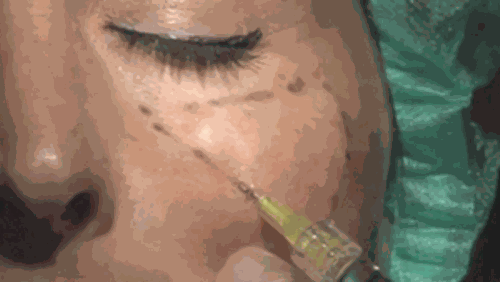
Facial fat transfer, also called facial lipofilling or autologous fat grafting, moves a patient's own fat from a donor area to selected parts of the face. Its main purpose is to restore or adjust volume, not to lift substantially loose skin. The surgeon harvests fat, prepares it and places small amounts in carefully chosen facial areas. Some transferred fat is reabsorbed during healing, so the final contour cannot be predicted precisely from the amount injected on the day of surgery.
For a patient traveling from Canada to Tunisia, planning must address both the face and the donor site, postoperative review and care after returning home. This guide explains possible treatment areas, limitations, alternatives, procedure steps, risks and follow-up. Aylan Clinic can coordinate the visit, while the operating surgeon determines whether fat transfer is appropriate, where it may be placed and how to minimize risks in the particular facial anatomy. No particular volume retention or youthful appearance can be guaranteed.
Understanding facial volume
Where volume loss appears
The temples, cheeks, midface and areas around the mouth may lose or redistribute volume with aging, weight change or previous treatment. A depression can also follow an injury or operation. The same shadow may have different causes in different faces. Ask the surgeon to identify whether a hollow reflects missing volume, descended tissue, bone structure or skin change. A filling technique is more relevant to a true volume deficit than to a skin fold created chiefly by laxity. Accurate diagnosis prevents adding fullness where the face actually needs repositioning.
The effect of light and expression
Photographs can make a cheek hollow appear deeper with side lighting or a downward camera angle. A face also changes during speech and smiling, when fat and muscle move differently. The surgeon should examine the patient in person in several expressions before drawing an injection map. If a concern is only visible in one edited photograph, discuss whether an operation will improve appearance in daily life. Standardized images are useful for documentation, but they cannot replace assessing facial movement and tissue thickness directly.
Fat transfer versus a facelift
Fat grafting adds or redistributes soft tissue volume. A facelift repositions descended tissues and may remove excess skin. In a person with both hollow cheeks and significant jowls, either alone may leave part of the concern untreated. A surgeon may propose one operation, the other or a carefully planned combination. Ask what the face would look like if only the proposed fat transfer were performed. Excessive filling to imitate a lift can make a face look heavy without correcting tissue descent.
Fat transfer versus nanofat
Conventional facial lipofilling aims to add volume using viable fat tissue. Nanofat is processed into a finer emulsion generally discussed for superficial skin quality rather than dependable volumization. The words can appear together in a package, but they describe different goals and preparation methods. Ask what material will be placed in each region and whether the aim is contour or a possible surface improvement. A nanofat treatment should not be described as interchangeable with deep cheek filling, and a volume graft should not be sold as a guaranteed skin regeneration treatment.
Fat transfer versus hyaluronic acid filler
A hyaluronic acid filler does not require liposuction of a donor area and can offer a different level of flexibility, but it has its own vascular and other risks. Fat transfer uses autologous tissue and may leave a lasting component if the graft takes, while its survival is less predictable and the procedure is more involved. Some fillers can be dissolved using a specific enzyme; transplanted fat cannot be dissolved in the same way. Ask the clinician to compare the choices for the exact facial area and your tolerance for uncertainty and recovery.
Areas a surgeon may assess
Temples
Temple hollowing may make the outer brow and upper face appear skeletal. Fat may be discussed to soften this contour, but the area contains important vessels and requires experienced anatomical judgment. A fuller temple may change the overall balance without altering the brow's actual position. Ask how much change is proposed and whether prior filler or surgery affects safety. The choice of tissue plane and technique belongs to the surgeon. Sudden vision change or other acute neurological symptoms after any facial injection require emergency assessment.
Cheeks and midface
A conservative cheek graft may restore volume in an area where fat compartments have thinned. The desired effect could be a softer transition rather than an exaggerated rounded cheek. The surgeon should distinguish a hollow from a low position of cheek tissues or a prominent nasolabial fold caused by multiple factors. Too much fat can create puffiness, and uneven survival can cause asymmetry. Ask what areas will be treated separately and when a meaningful assessment of the final cheek contour can be made.
Under-eye transition
Some under-eye hollows relate to the junction between lower eyelid and cheek. This is a delicate region where thin skin, existing bags, fluid retention and vascular anatomy all matter. Fat may be inappropriate when a protruding fat pad or loose eyelid skin is the main concern. Irregularity or persistent swelling can be particularly visible here. Ask whether eyelid surgery, observation or another treatment would address the specific feature more directly. An under-eye plan needs a separate explanation rather than a generic promise to fill every shadow.
Nasolabial region and lower face
A fold beside the nose may arise from cheek descent, skin characteristics and local anatomy. Adding volume nearby may change the transition but will not erase every expression line. The lower face can be especially sensitive to overfilling because extra weight can soften definition. Ask the surgeon to identify whether the proposed placement supports a hollow or merely masks a fold. A full face should remain balanced in both front and profile views. Small targeted grafts may be more sensible than trying to eliminate every natural crease.
Lips and fine contours
Fat transfer to the lips or small facial contours requires a different expectation from broader cheek filling. Swelling can be noticeable, and the amount that remains varies. Some surgeons prefer a different material or avoid an injection depending on anatomy and the patient's goal. Ask whether the desired change is subtle shape adjustment or a larger volume increase, and what risks are particular to the site. A patient should not assume that fat extracted for the cheeks will automatically be suitable or necessary for the lips.
Scars and localized depressions
A soft-tissue depression from trauma or earlier surgery may be assessed for fat grafting, sometimes as part of a broader scar treatment plan. Scar tissue can affect the ease of placement and graft survival. The surgeon should explain whether the main problem is a volume deficit, tethering, pigmentation or texture, because fat alone may not correct all of them. More than one treatment may be needed, and improvement cannot be guaranteed. Bring prior operative details and photographs when available so the surgeon understands the cause of the contour defect.
Candidate selection
A defined volume concern
A good starting point is a specific area of volume loss that can reasonably be addressed with added tissue. Ask the surgeon to mark the proposed zones and explain what will stay the same. A person who mainly wants tighter skin, fewer surface wrinkles or a different bone shape may not be satisfied with lipofilling alone. The clinician should discuss realistic ranges of improvement and the possibility that a second session might be considered after healing. The decision should be based on anatomy rather than on a trend toward an overfilled appearance.
Stable weight
Weight changes can affect both donor-site fat and the appearance of the grafted face. If substantial weight loss is underway, it may be sensible to wait until the facial contour stabilizes. Later weight gain can also change the fullness of living transferred fat. Ask how planned lifestyle or medical weight changes might affect the result. Fat transfer does not freeze the face at one age or body weight. A stable baseline makes photographs and postoperative judgment more useful, although no stable weight guarantees a fixed amount of graft survival.
Availability of donor fat
A donor area might be the abdomen, flank or thigh, depending on anatomy and the surgeon's technique. Only a limited quantity may be needed for the face, but a very lean patient may have less tissue suitable for harvesting. The surgeon should examine the donor site and explain the access marks, bruising and possible contour change. A face-focused quotation should still account for a separate harvest procedure. Donor fat is the patient's own tissue, yet its collection is still a surgical step with its own recovery.

Medical history and medicines
Tell the surgeon about diabetes, bleeding conditions, clotting history, allergies, previous anesthesia, infections, medicines and supplements. Smoking or nicotine exposure can impair healing and may affect the suitability of an elective grafting procedure. Do not stop prescribed drugs without coordinated advice from your clinicians. A condition that is not stable or an infection at the donor or recipient site can require postponement. Preoperative review should identify both anesthesia risks and factors that could interfere with wound healing or the interpretation of postoperative swelling.
Prior fillers or facial operations
Filler, implants, threads, facelifts and previous fat grafting can change the anatomy and the desired target. Bring product names, dates and operative reports if possible. A bump caused by old filler should not be treated automatically as a lack of fat elsewhere. Scar tissue can also influence placement and how evenly a graft survives. The surgeon may suggest waiting, dissolving a suitable existing filler with an appropriate clinician or choosing another method. A remote photograph cannot reliably identify every prior material beneath the skin.
Expectations and consent
The intended change should be described in concrete terms: softer temple hollows, a fuller cheek transition or correction of a specific depression. A patient should understand that the surgeon may deliberately place a little more fat to account for expected loss, but overcorrection has limits and cannot ensure a particular final shape. Some fat will not survive, and asymmetry may persist. A consultation should discuss what a modest result would look like, what outcome would be unacceptable and whether no operation is preferable to an uncertain benefit.
Planning treatment from Canada
An initial remote review
Send clear front, profile and three-quarter photographs in neutral lighting, plus the history of facial treatments and weight changes. Identify each area of concern separately. This can help the surgeon plan questions and a preliminary estimate, but the actual injection map requires in-person examination. Ask whether a previous filler or surgery could change the indication. Confirm that a quoted plan may be revised after examining the skin, donor area and facial movement in Tunisia. Travel commitments should not create pressure to proceed with a new plan immediately.
Meeting the operating surgeon
Ask who harvests, processes and injects the fat, and what experience the surgeon has with the particular facial regions proposed. Confirm the facility, anesthesia and emergency arrangements. The surgeon should discuss vascular anatomy, measures used to lower injection risk and the response plan for sudden vision loss or neurological symptoms. Such events are uncommon but potentially severe. Ask how results are documented and who will assess concerns after your return to Canada. A coordinator can arrange appointments but should not make the clinical decision.
Designing an injection map
The map should identify the recipient areas, the desired visual change and any side-to-side difference. Ask whether the surgeon plans deep structural support, superficial smoothing or both, and whether any region will be avoided for safety. This conversation is more informative than a total number of millilitres presented without context. Volume injected is not the same as volume retained. A plan that changes on the day of surgery should be explained and documented, particularly when additional regions or a different type of fat preparation are proposed.
Understanding costs
An itemized estimate should include the surgeon, anesthesia, facility, fat harvest, preparation, facial placement, postoperative reviews and any accommodation or transport services. Ask whether a second grafting session, complication care or revision would be charged separately. A universal price cannot account for different recipient areas and combined operations. Obtain the written terms before paying a deposit or booking a flight. If in-person assessment changes the recommendation, you should have time to review both the medical and financial implications rather than accept a substituted procedure on the spot.
Preparing the travel schedule
Facial and donor-site bruising can make travel and work uncomfortable. Build time for an in-person review after surgery and flexibility if recovery does not follow the expected course. Ask about activity restrictions, long flights and when you can manage luggage. The safe departure date depends on your operation, anesthesia, healing and any complication, not a standard package itinerary. Identify a clinician in Canada who can evaluate an urgent issue after your return. Remote check-ins are helpful for routine follow-up but cannot replace examination when needed.
How the operation is performed
Harvesting fat
The surgeon makes small access incisions at a selected donor area and removes fat through a cannula. The amount and method depend on the facial plan and donor-site anatomy. Ask where the incisions will be, how the area will be closed and whether a garment is recommended. Small incisions still leave scars and may be followed by bruising, numbness or contour irregularity. The aim of a facial harvest is to obtain suitable tissue, not necessarily to achieve a noticeable body-contouring result. Any promised donor-site change should be discussed separately.
Processing the graft
Harvested material is prepared to separate usable fat from other fluid or debris according to the surgeon's chosen method. Methods vary and the word 'purified' does not mean the result is uniform or guaranteed to survive. Ask how the tissue is handled, whether all fat is used during the same operation and what would be done if insufficient usable material is available. A claim that one processing device ensures a particular retention percentage is difficult to apply to an individual patient. The surgical technique and recipient tissue both matter.
Placing small parcels
Fat is generally placed in small amounts distributed through selected tissue planes rather than injected as one large deposit. This aims to support integration and a smoother contour, while technique must also account for blood vessels and other anatomy. The surgeon decides the depth and direction appropriate for each area. Avoid relying on an online rule about an injection plane to judge whether your own treatment is safe; ask the operating surgeon to explain the plan and training. Any unusually painful or sudden visual or neurological symptom needs immediate attention.
Anesthesia and monitoring
Local anesthesia with or without sedation or general anesthesia may be used, depending on the extent of grafting, combined surgery and patient health. Ask who provides anesthesia, whether fasting is required, how long you will be observed and who must accompany you afterward. The donor site and face may have different discomfort patterns. The team should give written medication, wound and emergency instructions before discharge. Even a small-volume graft involves a harvest and facial injection and deserves a proper clinical setting and postoperative plan.
Combined facial surgery
A facelift, eyelid operation or scar procedure may be combined with fat transfer when each addresses a distinct issue. Combining treatments changes anesthesia time, swelling and the ability to judge which step produced a result or complication. Ask what the primary procedure would achieve without grafting and why the additional volume is needed now. A separate later session may be reasonable in some cases. Do not assume that fat should be placed in every area accessible during another operation. The overall plan should remain anatomically justified and clearly consented to.
Healing and safety
Early facial swelling
Swelling and bruising can initially make the face look overfilled or uneven. Avoid judging the final contour in the first days. Follow the surgeon's advice about pressure, sleeping position, skin care and activity, since excessive manipulation could disturb healing. Ask when photographs are useful for comparison and which symptoms warrant a prompt call. Fever, increasing redness, rapidly progressive swelling or significant pain should be assessed. An image alone may not distinguish normal healing from an infection or blood collection, especially after a combined procedure.
Donor-site recovery
A small facial graft may still involve bruising or soreness in the abdomen, thighs or another harvest site. Ask whether compression is advised, how to care for access marks and when exercise is appropriate. A new lump, spreading redness or worsening pain at the donor site needs review. Long-haul travel may be uncomfortable even when the face appears relatively calm. Plan clothing, transport and time away from work with both treatment sites in mind. Do not overlook donor-site risks because the marketing page emphasizes the facial result.
Graft survival and settling
Some transplanted fat is reabsorbed, while a surviving component can persist. The proportion varies with patient, site and technique, and there is no reliable individual guarantee. Early swelling also makes apparent fullness an unreliable measure of actual retention. A surgeon may wait several months before judging whether another session would help. Weight changes and aging can continue to alter the face. Ask when your planned follow-up photographs should be compared and what degree of change would be considered within the expected course for your particular treatment.
Lumps and irregularities
Uneven placement or survival may produce a visible contour difference, palpable lump or fat necrosis. The thin under-eye region can reveal small irregularities more readily than a fuller cheek. An examination may be needed to identify the cause and decide whether observation, imaging or another treatment is appropriate. Do not massage an unexpected lump without specific advice. Revision can be complex because transplanted living tissue cannot be dissolved as a hyaluronic acid filler might be. A surgeon should explain this limitation before treatment.

Infection bleeding and scars
Both donor and facial access points can bleed or become infected, and anesthesia introduces separate risks. Discuss medication, wound care and the signs that require same-day assessment. Small scars can remain at the harvest and injection sites, although they may fade. A patient with a history of abnormal scarring should disclose it early. A written response plan should include a reachable local contact in Tunisia and a way to share the operative record with a Canadian clinician. Avoid waiting for a routine video review when symptoms are worsening.
Rare vascular events
Facial fat injection has been associated in published reports with rare but severe vascular embolism, including vision loss and stroke. The anatomy of particular facial regions makes this a material point in consent. A sudden change in vision, severe headache or new neurological symptom during or after injection requires emergency assessment immediately. Ask the surgeon how they choose technique and region, what safeguards are used and where an emergency would be managed. No technique can support a promise of zero risk, and the face should not be treated like a risk-free filler site.
When the result is limited
A modest visible change may reflect resorption, an initial underestimate of the deficit or the fact that the main issue was skin descent rather than volume. A too-full result may reflect swelling early on or excess persistent tissue later. Wait for an appropriate clinical review before deciding on correction. Ask whether a second session would target a specific residual hollow and what its additional risks and costs would be. Repeating grafting automatically because an advertised retention percentage was not met is not a sound individualized plan.
Follow-up across borders
Review before leaving Tunisia
Arrange an examination of both face and donor area before flying. The surgeon should assess incisions, swelling and symptoms and provide personalized advice about travel and activity. A scheduled flight is not medical clearance. Ask for an alternative plan if a wound problem or unusual symptom means you should stay longer. Keep contact details and know where to seek urgent care locally. Having a post-operative review is particularly important when an international return flight will separate you from the treating team.
Records for Canadian care
Request the operative report with donor and recipient areas, material preparation and approximate graft placement, plus anesthesia, medicines and any complication. Include discharge instructions and the surgeon's contact route. A local doctor or ophthalmologist facing a new symptom needs precise information rather than the label 'natural rejuvenation'. Ask how the Tunisian surgeon would communicate with Canadian clinicians if necessary. Store records securely and keep a copy available during travel. A routine video review may monitor healing, but an urgent finding calls for hands-on care.
Longer-term assessment
An early improvement can change as swelling resolves and fat reabsorbs. Plan later photographs in comparable light and a scheduled discussion of the contour after the expected settling period. If one side remains different, describe exactly what has changed and whether it is still evolving. Do not plan another procedure solely from a selfie. The original surgeon may advise examination or referral. Long-term aging and weight changes remain possible after successful transfer, so the outcome is a living facial contour rather than a permanent fixed photograph.
Additional decisions that shape the result
Volume and facial proportions
A volume plan should preserve the proportions of the whole face rather than simply filling every depression. The cheek, temple and jawline may need different amounts to look coherent in front and profile views. Ask the surgeon what the priority is if the available donor fat is limited or if adding volume in one place would make another area seem hollow by comparison. A patient's preferred look may be subtle and recognizable, not a dramatic change. The surgeon should describe which areas will be left untreated and why, as well as those that will receive grafts.
Structural hollow versus skin quality
Fat grafting may change a three-dimensional hollow without removing pigmentation, fine surface lines or rough texture. Sometimes volume restoration changes shadows enough to make the skin appear smoother, yet that is an indirect visual effect. Ask whether the surgeon expects a contour change or a genuine change in skin appearance. If the concern is acne marks or sun damage, a dermatologic treatment may be more relevant. Distinguishing these goals prevents the patient from expecting one procedure to resolve unrelated features. Any proposed nanofat addition should have its own explanation and evidence discussion.
Planned overcorrection
A surgeon may place slightly more fat than the desired final volume because some is expected to resorb. However, there is no reliable way to know exactly what proportion will survive in your face. Ask what early fullness would be normal and what would suggest too much persistent tissue. Marked intentional overfilling can carry its own risk of a heavy or irregular result. A conservative plan may favor reassessment and a later graft instead of a large first transfer. The right choice depends on the recipient area, skin envelope and your tolerance for possible revision.
Choosing donor-site location
The donor site should be chosen for accessible suitable tissue and safe harvest, not merely because the patient wants that body area slimmed. A small facial graft often removes too little fat to create a body-contouring effect. Ask whether the selected location will be visible in swimwear, how the tiny access scars may heal and whether a contour difference is expected. Previous liposuction or surgery may change the tissue available there. If more than one site is proposed, clarify why and whether this changes the operative time, cost or postoperative compression needs.
The impact of smoking and nicotine
Smoking and other nicotine exposure may impair wound healing and affect tissue blood supply, matters relevant to both a donor incision and a living graft. Tell the surgeon accurately about cigarettes, vaping and nicotine replacement. Ask what cessation period the team recommends and whether the operation should be delayed if you cannot meet it. Do not conceal use to keep a travel date. If quitting is difficult, discuss support with a clinician before booking surgery. A person can be healthy in other respects and still have a modifiable risk that changes the suitability of an elective procedure.
Skin changes with aging
Transferred fat that remains can continue to behave as living tissue, while the rest of the face continues to age. Skin laxity, bone change and weight shifts may later alter how the graft looks. A satisfactory result at one year is not a promise that the same proportions will persist indefinitely. Ask how the planned distribution might look as cheeks descend or weight changes. Avoid choosing an exaggerated fullness to compensate for possible future aging. The goal should suit the face now while allowing for natural variation over time and the possibility that a future treatment may be discussed.
Comparing outcomes honestly
Before-and-after images should use comparable lighting, camera distance, head position and expression. Ask when the after images were taken and whether they follow the disappearance of swelling. A patient who also had a facelift or eyelid surgery cannot illustrate the independent effect of fat transfer. Different starting anatomy also changes the likely result. Use photographs to discuss direction and range, not to select an exact face to copy. Your surgeon should be able to describe ordinary results and limitations as well as especially favorable examples.
Understanding consent for high-risk regions
Not every facial area has the same vascular anatomy, and the surgeon may recommend avoiding a region even when you want it filled. Ask why a proposed site is appropriate and what symptoms need immediate escalation. A risk discussion about rare blindness or stroke should explain practical emergency action without presenting such events as routine. If the plan includes the temple, nose, forehead or periocular region, request a specific explanation of anatomical judgment. You can decide that the potential benefit in one area does not justify its risks while proceeding with a different, independently justified part of the plan.
Evaluating the first days after surgery
A newly grafted face can look fuller, uneven or unfamiliar while swelling is active. Keep a record of symptoms, medicines and photographs as directed, but avoid repeatedly pressing the areas to test whether the fat has taken. A change in color, unexpectedly increasing pain or fever warrants a call. If you experience sudden visual or neurological change, seek emergency care immediately rather than waiting to speak with the clinic. A clear distinction between routine swelling and emergency symptoms should appear in the written discharge instructions for you and your companion.
Discussing a later touch-up
A second session may be considered if a residual hollow remains after the first graft has settled, but it requires a new assessment and another harvest. More injected fat is not automatically the right answer when the original diagnosis involved tissue descent or skin texture. Ask what specific feature a touch-up would correct and whether a smaller targeted graft or another approach is appropriate. Clarify the expense, travel and risks of repeating treatment. A later revision should be presented as a possibility, not as a guaranteed part of the first procedure or proof that it failed.

Special considerations after major weight loss
Facial volume loss after substantial weight reduction may coexist with extra skin. Replacing a little volume can soften a hollow, but a loose skin envelope may continue to hang or fold. A surgeon may suggest waiting until weight stabilizes and comparing grafting with lifting or a staged plan. Ask how the continuing weight trajectory could affect transplanted fat and whether the donor area is also changing. An operation selected while weight is still falling may be difficult to evaluate later. The aim should reflect the anatomy likely to remain after weight stabilizes.
Deciding when treatment is worthwhile
If the expected improvement is slight and the concern is visible only to you in very specific lighting, consider whether harvest, anesthesia, travel and uncertainty are worthwhile. This is a personal decision rather than a threshold a clinic can set for every patient. Ask the surgeon to articulate the most likely modest result, not just the best one. A patient may choose to wait, use a temporary approach, seek another opinion or do nothing. That choice should remain open even after a preliminary itinerary has been organized or a consultation fee paid.
Reviewing a prior graft
If you have already had facial lipofilling, bring the earlier operative note and photographs when available. A surgeon needs to distinguish persistent transplanted fat from a new hollow, scar or retained filler. The first graft may have changed tissue planes or left a lump that affects further placement. Ask whether imaging or an extended examination is useful. Another transfer should address a specific residual concern rather than recreate the previous treatment automatically. The expected survival of a new graft cannot be inferred precisely from one earlier result, particularly if weight or other facial treatments have changed since then.
Communicating after a complication
Before surgery, identify a named contact at the operating facility and ask how quickly the team can respond to urgent messages. A Canadian clinician evaluating fever, a donor-site wound, a facial lump or a sudden visual symptom may need the treatment map and operative report. Ask whether the surgeon can speak directly with local professionals and how records can be securely transferred. A routine photo check may support uncomplicated healing, but serious symptoms demand local evaluation at once. Knowing who will coordinate information avoids losing time to administrative questions when a clinical decision is needed.
Medical sources
NHS. Surgical fat transfer, procedure, recovery and risks. https://www.nhs.uk/tests-and-treatments/cosmetic-procedures/cosmetic-surgery/surgical-fat-transfer/
American Society of Plastic Surgeons. An exploration of facial rejuvenation through fat grafting. https://www.plasticsurgery.org/news/articles/an-exploration-of-facial-rejuvenation-through-fat-grafting
Wang K et al. Severe Vascular Complications Caused by Facial Autologous Fat Grafting. Annals of Plastic Surgery, 2021. https://pubmed.ncbi.nlm.nih.gov/33443884/
Tonnard P et al. Nanofat grafting basic research and clinical applications. Plastic and Reconstructive Surgery, 2013. https://pubmed.ncbi.nlm.nih.gov/23783059/
You may also want to compare FaceTite + QuantumRF in Tunisia.
Continue exploring our facial surgery in Tunisia overview, the complete aesthetic surgery panorama, compare plastic surgery prices in Tunisia, or request a free, personalized quote.
Everything about Facial Fat Grafting and Nanofat in Tunisia
Technique, pricing, results and the full patient journey — every detailed answer in our complete guide.