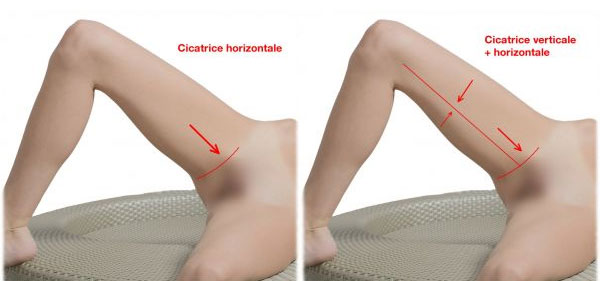
Thigh lift in Tunisia is an operation to remove loose skin, with some fat when appropriate, from the inner or outer thighs. For Canadian patients, the central decisions are where the excess skin lies, how far a visible scar must extend, how walking and sitting affect the wound, and whether a safe recovery period can be arranged before the journey home. A small groin crease incision and a long vertical incision answer different anatomical problems; neither label describes a guaranteed result.
In this article, you will find the main thighplasty options, genuine indications and reasons to postpone, the operative stages, wound care and complications, an approach to costs, travel from Canadian cities and questions to put directly to the surgeon. The page treats both contour and practical function, while recognizing that only an individual examination can establish an appropriate plan.
What a thigh lift changes
Excess skin after weight loss
Major weight loss can leave a drape of skin around the upper inner leg, sometimes reaching toward the knee. This can affect clothing, movement, hygiene and self-image. The distribution matters more than the label “thigh lift”: skin limited to the upper thigh might be addressed differently from a long fold running down the leg. The surgeon should inspect standing and sitting positions, skin quality, old scars, and the relation of the fold to the groin. Excision leaves a permanent scar and can create tension near a mobile crease. A successful contour choice respects that trade-off rather than promising skin removal without a visible line.
Skin, fat and swelling are separate questions
A thigh may look wide because of fat, skin laxity, muscle shape, fluid or a combination. Liposuction can reduce selected fat deposits but cannot reliably remove substantial loose skin; excision removes skin but is not a weight-loss treatment. Unexplained leg swelling, pronounced asymmetry, suspected venous disease or lymphedema requires assessment before cosmetic surgery. An operation on skin does not solve a vascular disorder. A patient considering surgery should also discuss changes in weight and nutrition, especially after bariatric surgery. If the cause of enlargement is uncertain, the responsible clinician may defer an operation until it is understood.
Groin and walking mechanics
The inner thigh meets the groin, a site exposed to moisture, friction and movement. Skin removal can change the pull on nearby tissue and may require careful anchoring and design. A scar that is hidden when standing may become noticeable with swimwear or as it settles. Bending, getting into a vehicle, climbing stairs and sitting for a long flight place different stresses on the incision. Discuss these ordinary movements during planning. The goal is an acceptable contour and functional recovery, not the maximal skin excision that can be drawn on a photograph.
Surgical techniques and alternatives
Shorter upper-inner-thigh incision
When excess is concentrated near the groin, an incision placed around the upper thigh crease may allow removal of a limited band of skin. The surgeon must judge how much downward laxity this actually addresses. An overly ambitious short incision may leave the lower fold or place tension on the groin, changing scar position during healing. Ask what contour improvement is expected at the mid-thigh and whether a short line will be seen in your usual clothing. An examination is needed to weigh the desire for a less extensive scar against the amount of excess below the crease.
Vertical medial thighplasty
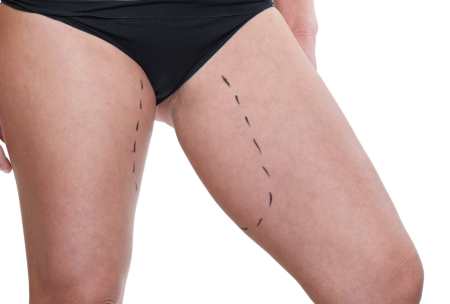
A longer inner-leg incision can address excess skin extending farther down the thigh. The price is a visible vertical scar that can extend toward the knee when indicated. Its length and exact position vary with anatomy. The surgeon should explain how the closure accommodates movement, which tissue will remain and whether an upper groin component is included. Bilateral scars may not heal identically. Ask to see results with the legs apart and together, and with the scar shown clearly. A photograph that crops out the scar gives little help with this central decision.
Outer thigh or lower body lift
Loose skin on the lateral thigh and buttock can sometimes be addressed through an upper outer-thigh or circumferential lower-body lift approach. That is not interchangeable with a medial thigh lift. A patient may have both inner and outer excess, but treating all surfaces together can lengthen surgery and complicate wound care. The surgeon should map the specific surfaces to be lifted, the direction of pull, the expected scars and whether staging is preferable. An operation described simply as “thigh lift” should never leave the patient guessing which side of the thigh is actually included.
Liposuction, exercise and deferring surgery
Selected liposuction may be combined with excision or offered alone where the skin can contract. Excessive fat removal next to a planned incision can compromise contour or tissue support; its role must be explained in the individual plan. Exercise can improve strength and weight management but cannot reliably erase a significant redundant fold. For mild laxity, a permanent scar may be a poor trade-off. Continued weight change or insufficient recovery support may justify postponement. A careful consultation explores the option of no surgery and what a less extensive operation could realistically achieve.
Real indications for thighplasty
- Persistent excess skin causes contour, friction, hygiene or clothing concerns.
- The excess extends beyond what liposuction alone can reasonably address.
- Weight and general health allow a considered discussion of wound healing.
- The patient accepts the likely scar, limitations and possibility of revision.
- Direct follow-up and practical help can be arranged during and after travel.
These are assessment prompts, not an automatic indication. Skin irritation may need separate treatment; an active rash or infection may postpone elective surgery. The surgeon should establish whether a problem is primarily upper-inner, long medial or outer-thigh laxity. An operation that removes a fold yet places its scar in an unacceptable location may fail the patient's goals. Discuss expected gain and cost in visible scarring using your own anatomy.
Indications and reasons to postpone
| Finding | Meaning for the plan |
|---|---|
| Upper inner skin excess | May permit a shorter groin-associated incision when laxity is limited. |
| Long medial skin fold | Often requires a vertical scar to address the full length. |
| Outer thigh and buttock laxity | May point toward a different lift or a staged combination. |
| Predominantly fatty fullness with elastic skin | Liposuction or no operation may be more appropriate. |
| Ongoing major weight change or nutritional deficiency | Can weaken planning and healing; assessment and stabilization may be needed. |
| Smoking or nicotine exposure | Increases concern for wound problems and requires surgeon-led optimization. |
| Active rash, infection, unexplained leg swelling | Requires examination and treatment or diagnosis before elective excision. |
| Clot history or limited walking | Changes prevention, anaesthesia and return-flight planning. |
These considerations are not a remote eligibility test. The surgeon and anaesthesiologist assess personal conditions, medications and the likely extent of surgery. A physical examination remains necessary to decide whether tissue can be removed safely and whether a different intervention, or no intervention, is preferable.
How a thigh lift is performed
Before surgery: skin map and consent
The surgeon examines the thighs in positions that show the full skin fold and marks proposed removal while checking how the line will move with the leg. Confirm whether the plan is medial, lateral or both; whether the scar runs along the groin, down the inner thigh or around the hip; and whether liposuction is included. Review previous weight-loss or body-contouring operations, nutrition, clotting history, medications, smoking, diabetes and leg swelling. The anaesthesia team assesses fitness and any indicated testing. Written consent should describe the realistic scar and wound problems as clearly as the intended contour.
During the operation
Under the planned anaesthesia and monitoring, the surgeon removes the agreed skin and, when appropriate, associated fat, then closes the wound in layers while limiting unsafe tension. A vertical approach may need a longer incision than an upper-groin approach. Selected patients may need drains, dressings or compression; the actual use varies. The operating report should record which surfaces and procedures were treated. A promise that a wound is “hidden” cannot account for every person's healing, and combined procedures change operative time and observation needs.
After surgery and before discharge
The clinical team monitors circulation, breathing, bleeding, pain and movement. Ask for a demonstration of dressing care, any drain management and how to inspect areas close to the groin. Clarify safe walking, sitting, bathing, toilet use and how to avoid tension while getting in and out of a chair. Written instructions should cover fever, new drainage, worsening redness and a wound that opens. Establish who will examine the incision in person during the Tunisian stay, and which facility handles a complication outside normal clinic hours.
Recovery and time away from ordinary activities
| Phase | Practical expectations and checks |
|---|---|
| Immediate postoperative observation | Review bleeding, leg circulation, pain, movement and wound dressings. |
| Early days | Swelling and tightness; help with washing, clothing, meals and short safe walks. |
| Following weeks | Gradual movement and wound checks; job and exercise restrictions remain individual. |
| Later months | Scar maturation, residual swelling and assessment of final contour. |
| Before a flight to Canada | Direct wound assessment, mobility review and personalized clot-risk plan. |
A timeline cannot be inferred from the incision name alone. A long inner-thigh wound may be affected by rubbing when walking and tension while seated. Arrange an adaptable return date rather than treating the ability to stand in an airport queue as proof of readiness to fly.
Incisions, moisture and friction
The inner thigh can be a difficult place to keep a dressing secure. Follow the surgeon's method for cleaning, drying and changing dressings; avoid friction and unsupervised scar products on open skin. A new foul discharge, spreading redness, darkening, unexpected swelling or wound separation requires examination. In patients with a long vertical scar, check the entire length, including points hard to see when standing. Seek assistance rather than twisting or straining to inspect a wound. Compression, if prescribed, should fit without pressure injury.
Walking, sitting and work
Gentle movement often supports recovery, but the allowed amount depends on pain, wound condition and the team’s instructions. Stairs, cycling, running, lifting and prolonged sitting place different forces on the thighs. Discuss the real demands of your work, childcare and travel rather than asking for a single universal return-to-work day. A patient who develops increased pain or drainage after activity should contact a clinician. Planning help at home matters: an outer-thigh operation and a long medial incision may limit activities in different ways.
Drains, swelling and garments
Some plans include temporary drains or a compression garment. Ask who records output, removes any drain and checks whether swelling is expected or a collection. Do not remove a drain yourself unless specifically taught and instructed. A garment may improve comfort and swelling control but does not prevent every seroma or clot. If it causes numbness, skin pressure or excessive pain, obtain a fit review. Uneven swelling early on does not alone establish an asymmetrical final result; sudden marked swelling or severe pain is different and merits prompt clinical assessment.
Returning to Canada
A surgeon should examine the incisions and determine whether the entire itinerary is reasonable, including ground travel after arrival. Long sitting, transfers and carrying bags may be difficult after thigh surgery. Discuss individualized venous-thrombosis prevention, opportunities to move during travel, and the plan if clearance is delayed. Keep the discharge summary, operation report, medications and wound instructions accessible. Before departure, identify a Canadian service that could inspect the wound, since photographs and remote advice cannot resolve every infection or collection.
Results, scars and longer-term change
What contour change may be visible
A thigh lift may remove a fold and smooth the treated area, though skin, fat and muscle still shape the leg. A short upper incision has limits on how much lower-thigh laxity it can correct; a long medial incision treats more length but adds visible scarring. The surgeon should explain untreated zones and the likely contour when standing, walking and sitting. Early swelling obscures the result, and the two legs may settle differently. Exact thigh circumference and clothing size cannot be guaranteed.
The permanent scar and its position
A groin scar may descend or widen; a vertical scar is usually visible when the inner thigh is exposed. Pigmentation, hypertrophy or delayed healing can make a scar more conspicuous. Ask for photographs at different stages that show the scar, not just a flattering overall contour. Scar management begins only when the wound is ready and under individual instructions. Revision can sometimes address a persistent problem but requires another healing period and cannot promise an invisible line. The patient's acceptance of a possible scar is part of informed consent.
Weight change and recurrence of laxity
Removing skin does not stop ageing or later weight fluctuation. Weight gain can change the underlying fat distribution, while major later loss may create new laxity. Good nutrition and stable weight support planning, but no behaviour guarantees a perfect scar. Evaluate results only after enough time for swelling and healing, and contact the team sooner for a wound problem. Ask which follow-up findings call for in-person care rather than attributing every asymmetry or discomfort to normal recovery.
Planning for post-weight-loss tissue quality
A patient after substantial weight loss may have skin laxity at the abdomen, buttocks and thighs at the same time. The visible thigh fold is only part of the assessment. Prior bariatric surgery, a restricted diet or ongoing rapid weight change can affect nutrition, wound healing and the stability of a contour plan. Ask the responsible team whether nutritional testing or support is appropriate, and whether staging would leave the legs easier to move and the wounds easier to care for. Prior body-lift scars can also influence what tissue can be moved at the thigh and where another scar might be placed.
The goal is to make the benefit and the burden visible before travel: what skin is removed, where the permanent line sits, how bathing and walking are managed and who can check a wound close to the groin. If a clinic offers several operations in one visit, compare the total incision length and ability to care for each wound independently. The shortest total trip is not necessarily the safest recovery plan. An initial examination may reasonably change the order of procedures or suggest more time for weight stabilization.
Risks and possible complications
Thighplasty creates an incision in a mobile, sometimes high-friction area. Risk depends on wound length, health, combined procedures and aftercare. The surgeon and anaesthesiologist must discuss your individual situation; the following list is a starting point for informed consent.
- Anaesthesia and cardiopulmonary events: Breathing, medication or other anaesthetic complications may occur and require suitable monitoring.
- Bleeding and haematoma: Blood may collect beneath a closure and need examination or treatment.
- Seroma and swelling: Fluid collections and prolonged leg swelling can require follow-up and occasionally intervention.
- Wound opening and infection: Moisture, friction and tension may complicate healing; spreading redness, fever or discharge needs prompt care.
- Skin or fat loss: Tissue with compromised circulation may heal poorly, especially around a tight or extensive closure.
- Scars and asymmetry: Scars can widen, migrate or remain visible, while sides may heal and contour differently.
- Sensation and persistent discomfort: Numbness, sensitivity or pain may last beyond initial bruising.
- Deep vein thrombosis and pulmonary embolism: Surgery, reduced mobility and a long return journey make an individualized prevention discussion essential.
- Recurrence or further surgery: Laxity can return with later weight change or ageing; revision adds risks and cannot guarantee perfection.
Seek urgent evaluation for chest pain, breathlessness, fainting, one-sided calf swelling, major bleeding or rapidly worsening leg symptoms. In Tunisia, use the named emergency facility; in Canada, seek appropriate local urgent care. Bring the operation report and medication list. Do not wait for a remote message when a serious complication is possible.
Clinical reference points
The American Society of Plastic Surgeons describes thighplasty options and discusses risks including seroma, wound separation, scarring, thrombosis and pulmonary complications. The relevant reference is “Thigh Lift: Risks and Safety” (plasticsurgery.org/cosmetic-procedures/thigh-lift/safety). This page translates general information into travel-planning questions and cannot replace a surgeon's individual assessment or consent.
Why consider Tunisia for thigh lift?
A reasonable decision would depend on the specific surgeon, facility, operation, total cost and continuity of care. Skin excision creates scars and wound-healing demands that are not reduced by a country's name or a package price. An in-person examination can revise the extent or make a staged approach safer. A patient with complex medical risks, limited recovery support or poor access to Canadian follow-up may be better served by treatment nearer home or a different plan.

Before travelling, ask about the incision map, anaesthesia, observation, clot prevention, dressings, possible drains and the examination before flying. Long connections add fatigue and sitting after surgery. Direct discussion in English or French may help Canadian patients understand consent, but verify the language used by the actual surgeon, anaesthesiologist and nursing team. A bilingual website does not establish those clinicians' language or the emergency pathway. Compare the practical ability to manage a complication on both sides of the Atlantic.
Cost of thigh lift in Tunisia
Request a written quote for the exact sites and operation rather than a package name. It should list the surgeon, anaesthesia, facility, possible overnight observation, tests, dressings, drains if used, compression garment, medicines and scheduled follow-up. Ask whether any liposuction or another excisional procedure is included or separate. The in-person examination can change the incision design and price. A distant patient also needs to price delayed travel and complication care rather than treating a fixed departure as assured.
| Factor | Effect on total cost |
|---|---|
| Extent of skin excision | Incision length, number of surfaces and any staged operation change operative time and aftercare. |
| Surgeon, anaesthesia and facility | Confirm named professionals, monitoring, operating room and overnight arrangements. |
| Dressings, drains and garments | Ask what supplies, teaching, removal and wound reviews are included. |
| Tests and medicines | Clarify preoperative assessment, prescriptions and excluded consultations. |
| Flights and connections | Budget for full travel from Canada, companion support, baggage and ground transfers. |
| Accommodation and work absence | Allow for direct review, limited mobility and a possible extension of the stay. |
| Complications and revision | Ask who treats a wound, collection or clot and how later surgery is priced. |
| Insurance and Canadian care | Check elective-surgery exclusions and plan local assessment after return. |
Currency conversion, change fees and time away from work can materially affect the final amount. Ask what happens if the surgeon recommends less surgery, a staged plan or postponement. Public coverage or private travel insurance should not be assumed for elective surgery abroad or a complication. An itemized estimate needs to identify exclusions and the pathway for unexpected treatment so a Canadian reader can compare genuinely equivalent proposals.
Comparison: Tunisia and other medical tourism destinations
| Question | Tunisia | Canada | Another destination, such as France or Türkiye |
|---|---|---|---|
| Communication | Verify the direct surgeon's and anaesthesiologist's language and interpreter arrangements. | Confirm language and direct consultation options in the local practice. | Verify the named team's language and documentation. |
| Journey | Transatlantic flight and possible connections after skin excision. | Often shorter travel, though remote patients may still need long trips. | Compare actual routing and total travel time. |
| Assessment | Arrange examination, postoperative wound review and clearance before departure. | In-person reviews may be easier when care is accessible locally. | Clarify how many reviews and days abroad the plan requires. |
| Quote | Compare the precise incision, included procedures, facility and contingency costs. | Request an equivalent clinical quote. | Compare the same scope and aftercare in local currency. |
| Follow-up | Bring records and arrange a Canadian examination pathway. | Nearby follow-up may support continuity. | Plan a handover for the actual destination and route. |
None of these country labels proves a particular surgeon or facility is safe. Assess the named team, the operation's extent, wound management, travel burden and realistic access to revision or emergency care. A lower initial quote may be offset by more difficult follow-up if a long incision opens after return.
Tunisian cities to consider for this procedure
Tunis: align the facility and postoperative reviews
Tunis may be practical if the identified surgeon operates at an appropriate facility and can examine incisions before departure. Confirm the address of the consultation, surgery, observation and emergency assessment, as well as transport between them. Accommodation near the actual treatment setting may be more useful than a hotel chosen solely for tourism. A flight schedule is not a reason to skip a wound review or travel with an unresolved collection.
Sousse and Monastir: confirm care with the identified team
Sousse or Monastir may suit a patient when a specifically identified surgeon and anaesthesia team provide the planned operation and direct follow-up there. Ask who examines a wound outside office hours, where a clot or infection would be evaluated and whether an intercity transfer is necessary. A city's reputation cannot prove a surgeon's experience with your anatomy. Arrange accommodation and onward travel around clinical access and mobility rather than a holiday itinerary.
Which Canadian cities can patients travel from?
The right comparison is the complete door-to-door itinerary, including the journey back while swollen and tired. Availability and connections depend on actual dates. A longer route may justify more recovery time in Tunisia, a companion, flexible booking, and a medical review before departure. Ask a clinician in Canada in advance whether they can assess a wound or a possible complication, without assuming that a routine public appointment can replace the operating team's follow-up.
Montreal, Quebec City, Laval and Longueuil
Montreal may offer several airport and connection choices, while Quebec City travellers should compare a local departure with ground transport to another hub. For Laval and Longueuil, getting to an airport can appear simple, but the total journey still includes check-in, transfers, waiting and the trip home after landing. Decide whether consultations and written aftercare instructions should be in English or French; verify which language the surgeon and anaesthesiologist actually use for direct medical discussions. Before departure, identify a Quebec-based clinician or service that can assess a wound or new symptom. Save the operative report, medication list and emergency contact in a format that can be shared promptly.
Ottawa, Gatineau, Sherbrooke, Trois-Rivières, Saguenay and Lévis
Ottawa and Gatineau patients may compare airports on either side of their usual travel corridor, while Sherbrooke, Trois-Rivières, Saguenay and Lévis can add a substantial overland leg. A return flight ending at a distant airport is not the end of recovery: arrange a manageable last leg and someone to help with bags. Weather, road conditions and connections can alter the practical duration. Ask who will remove or check dressings if required and where to seek urgent evaluation after arriving home. The language preferred for medical discussions should be stated in advance and confirmed with the individual clinicians involved.
Toronto, Hamilton, Kitchener–Waterloo and London, Ontario
Toronto residents can compare available itineraries, but should allow for the full time between home, the Tunisian facility and home again. From Hamilton, Kitchener–Waterloo and London, Ontario, airport access and the onward ground journey affect fatigue after surgery. Plan enough time away from work for the operation, observation, review and travel, with flexibility if recovery is slower. Arrange an Ontario contact for clinical questions, and understand that an emergency department addresses urgent symptoms but does not automatically provide planned aesthetic follow-up. Keep a clear English or French medical summary, including the incision sites and prescribed medicines.
Vancouver, Victoria, Surrey and Kelowna
Western Canadian journeys can involve additional flight segments and long periods seated. Vancouver and Surrey patients should consider ground access and connection buffers; Victoria and Kelowna patients may add another travel leg. Jet lag and disrupted sleep can make the first postoperative days harder, while a rigid return booking may pressure a patient to fly before a surgeon has reviewed swelling or mobility. Compare refundable or changeable travel options and realistic companion availability. Identify a local assessment pathway before leaving British Columbia and confirm how imaging or operative records could be transferred if a complication requires care.
Calgary, Edmonton, Winnipeg, Saskatoon and Regina
For Alberta and Prairie patients, access to a departure airport, layovers and the final trip home are part of the medical plan. Calgary and Edmonton offer different departure options on different dates; travellers from Winnipeg, Saskatoon and Regina should check the entire itinerary, including transit requirements. Ask how long sitting is reasonable for your individual clot risk and what preventive measures your treating team recommends; a compression garment is not a substitute for an individual clot-prevention plan. After returning, know which local service can assess a suspected infection, leg swelling or unexplained breathlessness without waiting for an overseas video appointment.

Halifax, Moncton, Dieppe, Edmundston, Fredericton, Charlottetown and St. John's
Atlantic routes may require multiple legs and additional travel to reach the departure airport. Halifax patients should compare actual schedules; Moncton, Dieppe, Edmundston and Fredericton travellers should account for driving or regional connections; Charlottetown and St. John's can add another segment. Acadian and other bilingual patients can request French or English documentation and confirm the language used in each direct consultation. Include a buffer for weather and missed connections, and make a plan for returning home without carrying heavy bags. Follow-up access differs across provinces and communities, so identify a realistic local point of care before paying for travel.
How to choose a surgeon for thigh lift
Verify professional identity and the facility
Request the surgeon's name, specialty, right to practise and experience with the exact pattern of skin excess. Confirm who will operate, who will administer anaesthesia and which facility can handle unexpected bleeding, a clot or a wound problem. Ask about observation and the postoperative team. A direct consultation should explain the incision, expected scars, any liposuction, drains and alternatives. A coordinator's answers are useful for logistics but cannot replace informed consent with the responsible clinician.
Test the plan against your anatomy and health
Assessment should include weight trajectory, skin quality, prior scars, nutrition, medicines, diabetes, nicotine, mobility and personal or family clot history. Ask which tissues will be removed and which concerns will remain; a photograph cannot show every fold or the degree of safe tension on closure. If more than one area is proposed, ask why a single stage is appropriate and what would prompt a smaller operation. A competent surgeon may decline or postpone rather than offer the maximum amount of skin removal.
Plan for complications before leaving home
Ask where you would be assessed at night in Tunisia, who checks the wound before flying and how operative records are delivered. Clarify drain removal if relevant, what constitutes an urgent symptom and where local Canadian care is available. A remote surgeon can advise and share the operation details, while hands-on assessment may be needed for a collection, wound opening or infection. Request an itemized quote and a written revision policy without interpreting it as a guarantee that further surgery is safe or free.
Planning a medical stay in Tunisia
For thigh lift in Tunisia, begin with a preliminary surgical assessment rather than a fixed ticket. Share useful photographs, weight and medical history, prior scars, medicines and the activities you need to resume. Ask what must be confirmed by an in-person examination and reserve time for consultation, operation, observation, wound reviews and a possible delay. The actual incision and mobility after surgery should determine the recovery accommodation and return journey.
Preparation before departure
Disclose weight-loss surgery if relevant, nutritional problems, prior operations, diabetes, nicotine, anaesthesia difficulties, clot history, allergies, medicines and supplements. Ask which tests or specialist opinions the surgeon and anaesthesiologist need. Do not independently stop prescribed medication. Arrange a companion when practical, help with daily tasks and a Canadian service that can examine an incision. Check coverage exclusions for elective overseas surgery and keep records accessible. Verify current entry and transit requirements for your citizenship and actual route, including any connection.
In-person examination and consent
The surgeon should examine skin folds and tissue quality standing and, where useful, sitting or with movement. Confirm the boundaries of removal, position and length of scars, any liposuction, drains, compression, anaesthesia and observation. A remote plan may be narrowed, staged or cancelled after direct assessment. Request consent information in a language you understand and verify that the responsible clinicians can discuss medical decisions directly in English or French, or with suitable interpretation. Ask how the facility would respond to bleeding, infection or a clot.
The early postoperative period
Stay close enough for in-person reviews and practical assistance. Follow the written instructions for walking, positioning, wound hygiene, medicines and any drain measurements. Record new symptoms and promptly report an enlarging collection, increasing pain, redness or loss of mobility. Ask before discharge who answers urgent calls and which facility sees you outside office hours. Travel sightseeing or heavy baggage can strain fresh incisions. The surgeon should specify when dressings are changed and whether a further check is needed before any journey.
Examination before the flight
A clinician should examine the incisions, mobility, any collection or drain and signs relevant to blood clots. The return route from Quebec, Ontario, the Prairies, British Columbia or Atlantic Canada can differ markedly in total sitting and connections. Discuss movement, clothing or garment fit, help with luggage and the last trip home. If healing is delayed, extend the stay for reassessment rather than follow a prepaid itinerary. Airline permission to board does not replace the operating team's individual medical assessment.
Follow-up after reaching Canada
Take a discharge summary, detailed operative report, medicines, wound instructions, drain record if applicable and direct surgeon contact. Attend planned remote surgical reviews and arrange a local examination for a collection, infection or wound separation. Canadian access and coverage vary by province and community. For chest pain, breathlessness, one-sided leg swelling, major bleeding or serious wound changes, use local emergency services immediately and share the records. Clarify how the Tunisian team will communicate with a Canadian clinician who needs operative details.
Request an individual thigh-lift assessment
Tell Aylan Clinic which parts of the inner or outer thighs bother you, whether skin rubs or becomes irritated, your weight history, prior surgery, medical conditions, nicotine and medications. Ask for a direct discussion with the named surgeon about scar placement, the limits of a shorter incision, whether liposuction is useful and the expected restrictions before returning to Canada. Request a written itemized plan and the location of surgery, observation and emergency review.
A remote image is a starting point, not final approval for a specific incision. The surgeon should examine the legs in person, discuss the permanent scar and check for swelling or healing concerns. Leave room in the itinerary for a wound review and a delayed flight if needed, and identify local Canadian care before making non-refundable travel arrangements.
You may also want to compare RibXcar Rib Resection and Arm Lift in Tunisia.
Continue exploring the complete body contouring and aesthetic surgery overview, compare plastic surgery prices in Tunisia, or request a free, personalized quote.
Everything about Thigh Lift in Tunisia
Technique, pricing, results and the full patient journey — every detailed answer in our complete guide.