
Rhinoplasty at Aylan Clinic Tunisia reshapes the nose — the bridge, the tip, the nostrils, the width — and, where indicated, corrects the breathing at the same time, over a stay of eight to ten days, for up to 60% less than Canadian private prices. Two things determine whether you are satisfied. First, your breathing must be assessed, not just your appearance: a substantial proportion of people seeking cosmetic rhinoplasty have an undiagnosed obstruction, and a purely cosmetic operation can make breathing worse if the internal structures are ignored. Second, the swelling timeline is longer than almost anyone expects — your final result is at twelve to eighteen months, and the tip is the last thing to settle. And one thing we will not do: promise you a specific nose, because your result is limited by your skin thickness, your cartilage and your bone.
This page is the guide. When you want the procedure itself — how the operation is performed, what the stay involves day by day and what aftercare we provide — see our Nose Job in Tunisia page. For an itemised idea of what a stay costs, see plastic surgery prices in Tunisia. One thing distinguishes Tunisia: it is a French-speaking country. Not a clinic with French-speaking staff — a country where French is a working language across medicine and daily life. On this surgery that matters at the planning consultation, where you describe what you want changed and what you want kept. This guide is organised around your journey: deciding, preparing, the stay, and the year that follows.
Part one — deciding
What rhinoplasty is
The operation reshapes the bone and cartilage that give the nose its form, and redrapes the skin over the new framework. That last part matters more than patients realise: you cannot change the skin. The operation takes two to four hours, under general anaesthesia.
Open or closed?
Closed rhinoplasty places all incisions inside the nostrils. There is no visible scar. Its advantages are less swelling initially, a faster early recovery, and no external scar at all. Its limitation is that the surgeon works with less direct visibility, which makes complex tip work and precise grafting harder.
Open rhinoplasty adds a small incision across the columella, the strip of skin between the nostrils, allowing the skin to be lifted and the structures seen directly. Its advantages are direct visualisation and precise control, particularly for tip reshaping, grafting, asymmetry correction and revision. Its considerations are a small external scar — which in the great majority of patients becomes very difficult to see — and somewhat more swelling initially.
We choose from what needs to be done, not from preference. Simple bridge reduction frequently suits a closed approach. Complex tip work, grafting, marked asymmetry or revision generally warrants open. Ask: « Ouverte ou fermée, et pourquoi dans mon cas ? » A surgeon who does one for everyone is fitting you to their method.
What can be changed
A dorsal hump. Tip shape, projection and rotation. Nostril width and flare. Bridge width. Deviation. A drooping tip. And the nasolabial angle — how the nose meets the lip.
Preservation rhinoplasty: worth knowing about
A newer approach, increasingly used, and worth asking about. In the traditional approach a dorsal hump is removed by shaving down the bone and cartilage, which opens the roof of the nose. The nasal bones are then broken and brought together to close it — an osteotomy. It is well established, predictable, and it works.
In the preservation approach, rather than removing the hump, the whole dorsum is lowered by removing tissue from underneath, keeping the natural bridge line intact. Where it suits, the natural dorsal aesthetic lines are preserved, there is less internal disruption, and potentially fewer of the irregularities that can appear years after traditional hump removal. The considerations: it is not suitable for every nose, it is technically demanding, and the long-term data is shorter than for the traditional approach, simply because it is newer. Some patients need traditional techniques regardless — and a hybrid is common.
We mention it because it is worth asking about, and because a surgeon who can explain when preservation suits and when it does not is thinking about your nose specifically. We do not present it as automatically better. It is another technique, suitable for some noses. The same logic applies to ultrasonic (piezo) rhinoplasty: a tool chosen for the case, not a slogan.
Breathing: assessed, not assumed
This is the section that distinguishes a properly planned rhinoplasty. The nose is a functional organ. A rhinoplasty changes the internal architecture whether or not that is the intention — and narrowing a nose that already has a marginal airway can produce obstruction that was not there before.
What is assessed: the septum, for deviation — and deviation is present in a very large proportion of people, frequently undiagnosed. The internal and external nasal valves, the narrowest parts of the airway — and where a cosmetic narrowing would compromise them, support grafts are placed to prevent it. The turbinates, which enlarge with allergy and chronic congestion. And any previous trauma.
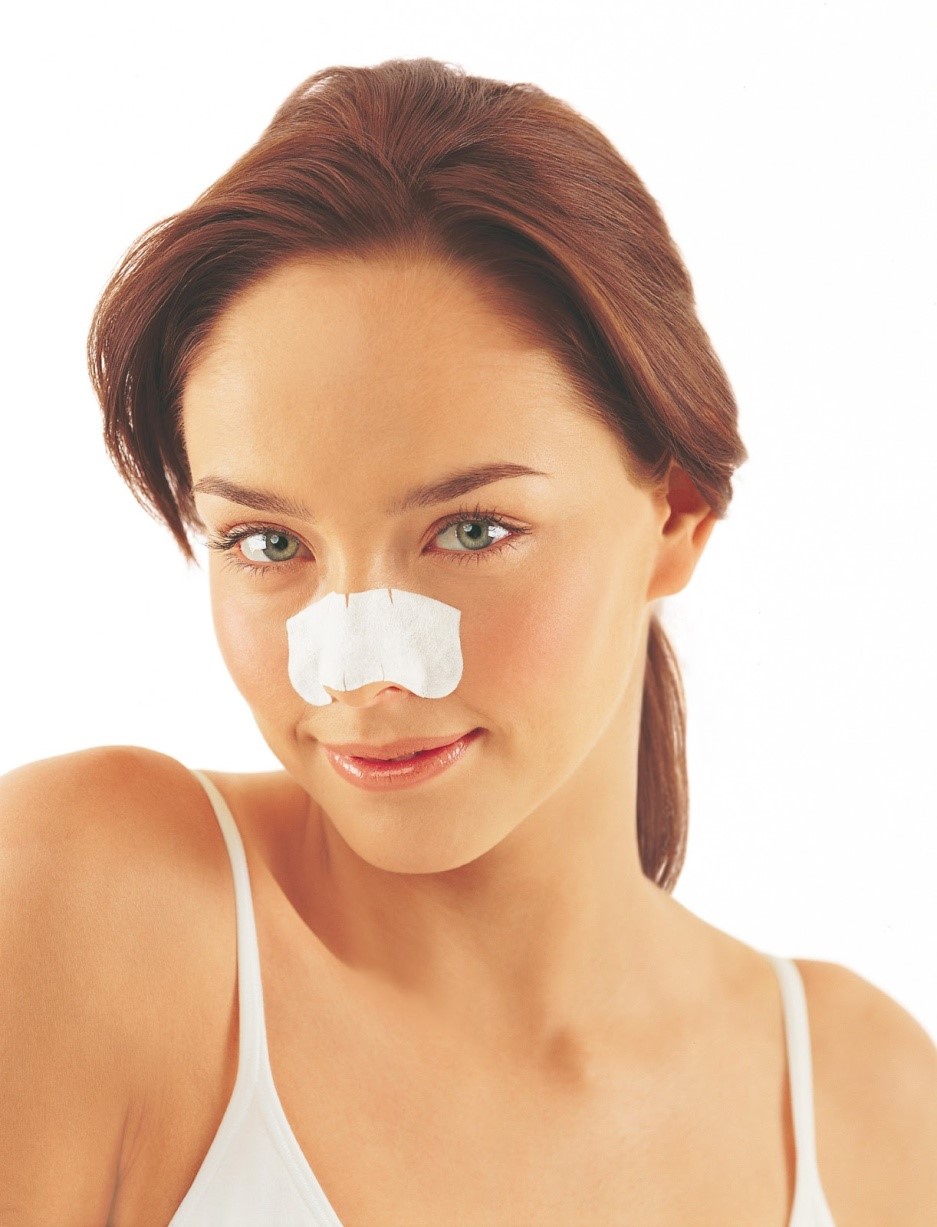
What patients report that they should mention: difficulty breathing through one side; worse breathing lying down, or on one side; chronic mouth breathing, particularly at night; snoring; recurrent sinus infections; using decongestant sprays regularly — and if you use one daily, say so, because prolonged use causes rebound congestion that is itself a problem. And, a useful clue, whether nasal strips help. If they do, you very likely have a valve problem, and that is worth telling us.
What we do: examine the inside of your nose, not only the outside. And where obstruction is present, correct it at the same time — septoplasty, turbinate reduction, or valve support. Our septoplasty guide covers the functional side in detail. Combining matters because doing it later means a second operation on a nose that has already healed once — which is harder, and which risks the cosmetic result. Ask: « Ma respiration sera-t-elle évaluée, et une correction fonctionnelle est-elle nécessaire ? » A clinic that plans a cosmetic rhinoplasty without examining inside your nose is not assessing you properly.
Your Canadian options
Cosmetic rhinoplasty is not covered, and the comparison is private against private.
Functional surgery is different: septoplasty for documented obstruction is covered by provincial health plans, and so is turbinate reduction. Which means that if your main problem is breathing, there is a funded pathway in Canada — and it is worth pursuing.
The combined situation. Where you have both a breathing problem and a cosmetic concern, the Canadian pathway frequently covers the functional part only — and a patient may be offered a septoplasty that does not address the external shape. That is a genuine reason patients look abroad for a combined procedure, and it is an honest one.
After trauma. Where your nose was broken and both appearance and breathing were affected, some provinces consider reconstruction differently from cosmetic surgery. It is worth asking your physician, in writing, rather than assuming.
What limits your result
This is the section that prevents disappointment.
Skin thickness is the single greatest determinant of what a rhinoplasty can achieve, and it cannot be changed. Thin skin drapes closely over the new framework and shows definition well — and it shows every irregularity; it is unforgiving of technical imperfection. Thick skin conceals irregularities, and it also conceals definition: a refined tip under thick skin will look less refined, because the skin does not contract down onto it. Thick skin also swells longer — frequently eighteen months or more for the tip, against twelve for thin skin. Where your skin is thick, we will tell you what is realistically achievable, because promising a sharply defined tip under thick skin is promising something the skin will not permit.
Cartilage quality. Weak or thin cartilage requires grafting for support, and it limits how much reduction is safe, because a nose reduced without adequate support collapses over the years. Strong, thick cartilage is easier to shape but harder to refine.
Bone structure. The width of the bony base and the shape of the nasal bones set limits on narrowing.
Facial proportions. A nose is judged in a face. The same nose looks different on different faces, and a chin that projects poorly makes a nose look larger than it is.
What this means: your result is what your anatomy permits, executed well. It is not a nose you saw on someone else, because that nose sits on different bone, under different skin, in a different face. A surgeon who tells you this is planning your operation. One who agrees to any request without assessing these is not.
The chin: the assessment nobody expects
The nose and chin balance each other in profile. A chin that sits back — retrognathia — makes the nose appear larger and more projecting than it is. Practically, some patients seeking rhinoplasty would get a better result from a chin augmentation, or from both. Reducing the nose alone in a patient with a receding chin can produce a profile that still looks unbalanced — and she will not understand why, because the nose is smaller.
We assess your profile as a whole, and raise it where it applies. A chin implant or a genioplasty is a modest addition to a rhinoplasty — frequently done at the same sitting — and it can transform a profile more than the nose alone. Our chin surgery guide covers it. Ask: « Mon menton influence-t-il l’apparence de mon nez ? » Where the answer is yes, knowing it before surgery is the difference between a good result and a puzzling one.
Where we would want more information first
Where expectations are not achievable. Where what you want is not what your anatomy permits, we say so before operating rather than after.
Where the distress seems disproportionate. Body dysmorphic disorder is more common in patients seeking rhinoplasty than in most cosmetic surgery populations; this is well documented. Where a patient describes severe preoccupation with a feature that is within normal variation, or a history of multiple procedures with persistent dissatisfaction, surgery frequently does not resolve it. We raise it without judgement and recommend psychological assessment before deciding. That is not a refusal. It is a recommendation that surgery may not be the tool that helps.
Under eighteen. Generally not — nasal growth continues into the late teens, typically completing around sixteen to seventeen in girls and seventeen to eighteen in boys. Operating before growth is complete risks a result that changes.
Active smoking. It matters more here than in most facial surgery; see below.
Cocaine use. Asked about directly and without judgement, because it damages the septal blood supply and the nasal lining, and operating on a nose with that damage risks perforation and collapse. Tell us honestly. It changes the assessment and it is not a moral question.
Uncontrolled allergic rhinitis. Treated first, because operating on a congested, inflamed nose gives a poor result.
Part two — preparing
From first contact to confirmed dates
The online consultation. Send photographs, and the angles matter: front, straight on, neutral expression, hair back; both profiles; both three-quarter views; a basal view, from below, showing the nostrils and the tip — the angle most often missing, and the one that shows tip shape and nostril symmetry; and a smiling photograph, because the tip drops when many people smile, and it is relevant. All in natural daylight, unfiltered, no makeup on the nose.
Plus: what specifically you want changed and what you want kept, your breathing, any previous nasal surgery or trauma, any allergy or sinus problems, your medical history and medications, whether you smoke, and your age.
What you receive is a plan stating what is achievable given your anatomy, whether functional correction is indicated, the approach proposed and why, the stay, the swelling timeline, and the cost — within 24 to 48 hours. And where what you have asked for is not achievable, the plan will say so.
On simulations. Some clinics provide digital morphing of your photograph. Our position: it is a communication tool, not a promise. Where we use one, it is to establish what you are asking for and to show what is realistic — and it is explicitly not a guarantee of the outcome, because the result depends on healing, skin and cartilage. A clinic presenting a simulation as what you will get is overstating what any surgeon can deliver. Ask how they use it, and be cautious of one that treats it as a contract.
Questions worth asking before you commit
- « Ma respiration sera-t-elle évaluée ? »
- « Quelle est l’épaisseur de ma peau, et qu’est-ce que cela limite ? » — a surgeon who answers this specifically is assessing you.
- « Ouverte ou fermée, et pourquoi ? »
- « Faut-il des greffons, et d’où viendront-ils ? »
- « Mon menton influence-t-il le profil ? »
- « Quand verrai-je le résultat définitif ? » — twelve to eighteen months, and a clinic saying three months is not being straight with you.
- « Quelle est votre politique en cas de retouche ? »
- « Où votre chirurgien a-t-il été formé ? »
What to arrange at home before you travel
Stop smoking. Treat any allergy or congestion, and tell us what you use. Stop nasal decongestant sprays if you use them daily — with your physician’s guidance, because stopping causes rebound congestion. Arrange time off: two weeks minimum before you are presentable. And arrange your Canadian follow-up.
Smoking
It matters more in rhinoplasty than in most facial surgery. The nasal skin has a delicate blood supply, and it is lifted and redraped during the operation. Smoking constricts exactly those small vessels, and it is associated with skin necrosis at the tip and columella — a serious complication that can cause permanent deformity.
We ask for four weeks before and four weeks after, and ideally permanently. This includes vaping and nicotine replacement in the immediate perioperative period: it is the nicotine, not the smoke, that constricts vessels. Discuss timing with us. Canadian provincial quitlines are free. If you are not going to stop, tell us honestly — we would rather plan around it than be unaware.
Part three — the stay
Your stay in Tunisia: eight to ten days
Day 1 — Arrival. Your driver meets you at the airport and takes you to your hotel with your companion. Nothing clinical today.
Day 2 — Consultation and planning. The appointment that determines your result. A full examination, external and internal, including your septum, valves and turbinates. Assessment of skin thickness, cartilage and bone. Profile analysis including the chin. Photographs from all standard angles. Then the planning conversation: what you want changed, what you want kept, and what is achievable given your anatomy. Take your time here. Say precisely what bothers you — and, equally, what you like about your nose and want preserved, which patients frequently forget to mention. Blood tests and anaesthetic assessment follow.
Day 3 — Surgery. Two to four hours, under general anaesthesia. Functional correction performed at the same time where indicated. Internal splints where a septoplasty was done, and an external splint on the bridge. Most patients do not have nasal packing — modern practice uses internal splints instead, which are considerably more comfortable. One overnight in hospital, then to your hotel.
Days 4 to 6 — The swollen days. Swelling and bruising peak at day two to three, and bruising around the eyes is expected, frequently substantial. You will breathe through your mouth, which is uncomfortable and normal. Head elevated, ice around the eyes (not on the nose), and your medication on schedule. Review appointments during this period.
Day 7 — Splint removal. The external splint comes off, and internal splints where present. This is the appointment patients most anticipate, and it is important to know what you will see: a swollen nose. Not your result. The bridge is usually recognisable immediately; the tip is not. It will be swollen, upturned and firm — and that is expected at day seven. Taping may be applied for a further period.
Days 8 to 10 — Final review and departure. Final examination, and your documentation: an operative report describing exactly what was done, including any functional correction and any grafts and their source; written aftercare in French or English; your taping instructions; the swelling timeline; and a letter for your Canadian physician. Then your transfer to the airport.
Grafts: where they come from and why it matters
Grafts are frequently needed, and frequently not explained. They are used to support the tip, preventing it from dropping or losing definition over the years; to support the nasal valves, preventing breathing obstruction after narrowing; to build up a dorsum that is too low, or to correct asymmetry; and to strengthen a weak or over-resected framework.
Septal cartilage is the first choice. Taken from your own septum through the same incisions, it is strong, straight and requires no additional site. Where available, this is what we use.
Ear cartilage comes from the concha, through a small incision behind the ear. It is curved rather than straight, suitable for some purposes, and the scar is hidden.
Rib cartilage is used where substantial graft material is needed, typically in revision or in a nose with little septal cartilage available. It means a chest scar, a more involved recovery, and post-operative discomfort at the donor site — which is frequently more uncomfortable than the nose itself. Where rib is anticipated, you should know before you travel, because it changes the recovery.
What we will not use. Permanent synthetic implants for the dorsum are used by some surgeons and we avoid them where autologous tissue is an option, because of long-term risks of infection, extrusion and migration, sometimes years later. Ask: « Utiliserez-vous mes propres tissus, et d’où ? » A clinic proposing a synthetic implant should explain why, and what the long-term considerations are.
The first two weeks honestly
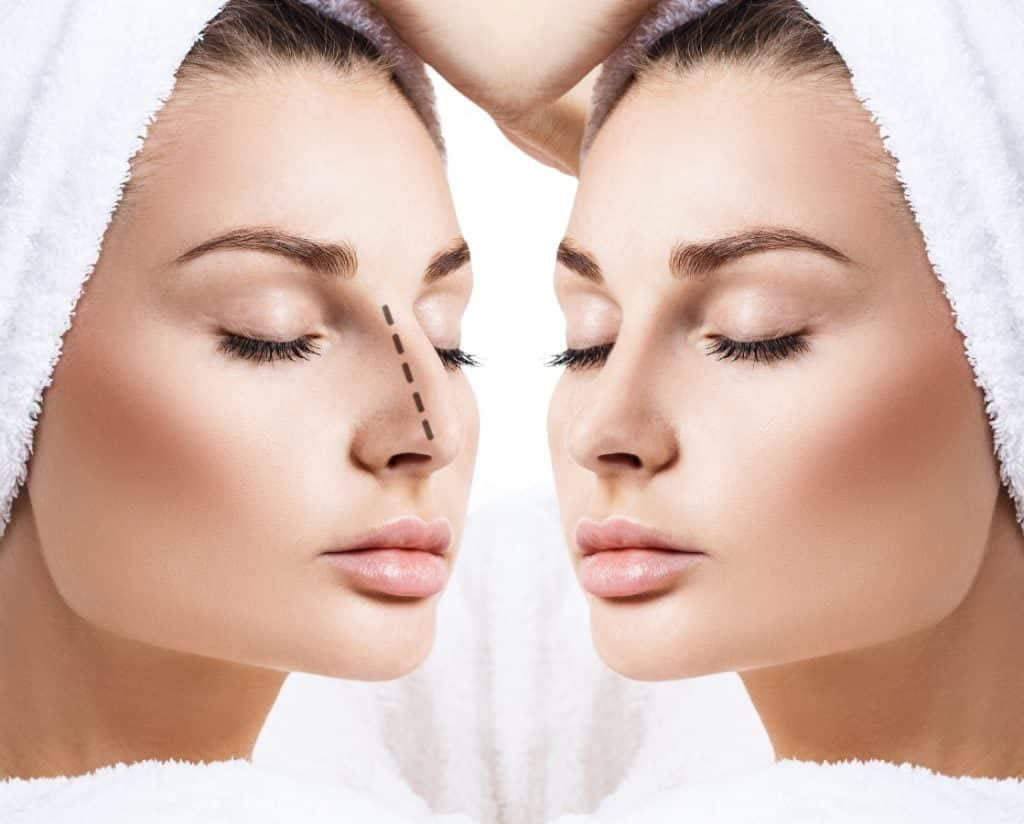
Bruising appears around both eyes, frequently substantial, and sometimes extending down the cheeks. It peaks at day two to three and resolves over ten to fourteen days. Where osteotomies were performed — the nasal bones broken to narrow the nose — bruising is more pronounced.
Breathing is blocked for one to two weeks. You will breathe through your mouth, which disturbs sleep and dries the throat. Saline spray as instructed helps considerably.
Discomfort is less than most patients expect: rhinoplasty is generally not a painful operation. Pressure and congestion rather than pain, managed with simple analgesia. Headache is common in the first days.
What to avoid. No blowing your nose for two to three weeks, which is harder than it sounds. Sneeze with your mouth open. No glasses resting on the bridge for four to six weeks — and this genuinely matters; if you wear glasses, arrange contact lenses, or ask about taping arrangements. No strenuous activity for three to four weeks. No swimming for four weeks. Sleep with your head elevated for two weeks. And no sun on the nose, which matters for months.
When you will look presentable. Honestly: two weeks for most people, with makeup covering residual bruising. Three weeks to look unremarkable to people who do not know. And several months before the nose looks settled to you. Plan your return to work accordingly.
Part four — the year that follows
The swelling timeline: the section to reread
It is longer than almost anyone expects, and it is the most common source of unnecessary worry.
| Stage | What is happening |
|---|---|
| Week 1 | Maximum swelling, splint on. |
| Weeks 2 to 4 | Major swelling resolves. The nose looks larger than the eventual result, and the tip is noticeably swollen and upturned. |
| Months 1 to 3 | Steady improvement. Most people around you will think it looks good. You will still see swelling. |
| Months 3 to 6 | Refinement continues. The bridge is largely settled. |
| Months 6 to 12 | The tip continues to refine. This is the slowest area by a wide margin. |
| Months 12 to 18 | Final result — and for thick skin, sometimes longer. |
Why the tip takes longest. The tip has the thickest skin and the most soft tissue, and lymphatic drainage there is slowest to re-establish. Thick skin can take eighteen months or more.
The upturned tip is almost universal early, and it alarms patients. The tip is deliberately set slightly higher than the target, because it drops as swelling resolves and as it settles over the following year. A tip that looks correct at three months will look too low at eighteen. Where yours looks upturned at three months, that is generally the plan working.
What this means for you. Do not judge your result before twelve months, and preferably eighteen. Do not seek revision before twelve months. And do not photograph yourself daily and compare, which a number of patients do and which causes unnecessary distress. Take a photograph at one month, three, six and twelve, and compare those rather than day to day.
Protecting the result
Taping is frequently recommended at night for several weeks after splint removal, which helps control swelling. Follow the instruction you are given — protocols vary.
Sun. Strict protection for at least six months. The skin is healing and swollen, and it pigments readily — and pigmentation over the nose after rhinoplasty can be persistent. High-factor sunscreen, reapplied, and a hat where you can. This matters particularly for patients returning to a Canadian summer.
Glasses. Four to six weeks off the bridge. After that, normally.
Trauma. Protect the nose for at least three months — the bones take that long to consolidate fully. No contact sport for three months, and a guard thereafter if you play.
Massage. Some surgeons prescribe tip massage, and some do not. Follow yours, and do not invent a regime from the internet: inappropriate massage can affect the result.
Breathing after surgery
Early on, breathing is blocked for one to two weeks, then progressively improving, with saline spray as instructed. Later, where functional correction was performed, breathing is generally substantially improved — frequently the change patients value most, and one they did not expect to notice. Where a purely cosmetic narrowing was done in a nose with a marginal airway and no support grafting, breathing can be worse, which is precisely why the functional assessment matters.
If breathing is not right at six months, tell us. Persistent obstruction after rhinoplasty is assessable and frequently treatable, and it should not be accepted as the price of a cosmetic result.
Numbness and sensation
Common, expected, and rarely mentioned beforehand. Numbness of the tip is near-universal after an open rhinoplasty, and it resolves over six to twelve months for the great majority. A small area of permanent altered sensation at the tip is possible. Numbness of the front teeth and upper lip occurs in some patients and settles over weeks to months. And a stiff-feeling tip and upper lip for several months, which softens. None of this is a complication. It is expected, and knowing it prevents worry.
Revision: the realistic position
How often. Revision rates after rhinoplasty are higher than after most cosmetic operations — published figures are typically in the range of five to fifteen per cent, and they are higher for complex primary cases. This is not a reflection of poor surgery. It reflects that the nose heals unpredictably, that cartilage moves as scar contracts, and that millimetre differences are visible. Any surgeon claiming a zero revision rate is not being straight with you.
When. Not before twelve months, and preferably eighteen. Operating into swollen, unhealed tissue produces a poor result, and a number of “problems” at six months are not problems at fifteen. Our secondary rhinoplasty guide sets out what a revision assessment involves.
Ask about the policy before you travel, specifically: what is included, what is charged, and over what period. Get it in writing. A clinic with a clear written revision policy is one that expects to be accountable. A clinic that is vague about it is one to be cautious of. Our revision terms are set out in writing before you commit, and we discuss them at the planning consultation rather than waiting for you to ask.
Your Canadian follow-up
What is required is little, medically: a review with a physician if you have any concern, and your taping and sun protection, which are the substantive aftercare.
Arrange before you travel a Canadian physician willing to see you if something needs attention — a wound concern, a suspected infection, or a breathing problem. Most family doctors will, and it is a short conversation: « J’aurai une rhinoplastie à l’étranger. Je reviendrai avec un compte rendu opératoire. Pourriez-vous me voir si quelque chose nécessitait une évaluation ? »
What warrants urgent attention: fever, increasing pain, spreading redness, or discharge — possible infection; significant bleeding that does not settle with pressure and sitting upright; a sudden change in the shape of the nose; a dark or dusky area of skin, particularly at the tip or columella, which is urgent. Take your operative report with you.
Keep your operative report. It describes exactly what was done, including grafts and their source — essential information for any future surgeon, and particularly for a revision.
Canadian coverage. Cosmetic rhinoplasty is not covered. Functional septal surgery is. Treatment of any complication is covered, as any medical care is.
Part five — practical matters
Canadian patients: travelling to Tunisia from your region
Aylan Clinic works with patients from every province and territory in Canada.
Montreal and the surrounding region is our largest Canadian source for Tunisia. Connections from Trudeau to Tunis typically route through Paris, Frankfurt or Istanbul. Patients from Laval, Longueuil and Brossard are all within easy reach of the airport. One connection matters here, because flying with a recently operated nose and blocked nasal passages is uncomfortable.
Quebec City and across the province. From Quebec City and the Capitale-Nationale region including Lévis, most patients connect through Montreal — as do patients from Trois-Rivières, Sherbrooke, Drummondville and Saint-Jérôme. Gatineau patients depart from Ottawa or drive to Montreal. From Saguenay, a domestic connection through Montreal is the norm.
On this surgery the francophone advantage is at the planning consultation. You are describing what you want changed and — just as importantly — what you want kept. That is a conversation of fine distinctions: a little narrower but not pinched, the hump removed but not a scooped bridge, refined but still recognisably your nose. Those are precise things to say, and most people can only say them precisely in their own language. And what you say at that consultation is what gets built.

Acadia and New Brunswick. We work with patients from Moncton, Fredericton and Saint John. Moncton and the surrounding Acadian communities are served in French throughout.
Francophone Ontario. Sudbury, Thunder Bay and Sault Ste. Marie all have substantial francophone populations, served in French from first contact onward. Ottawa patients typically connect through Montreal.
Greater Toronto Area and southern Ontario. Toronto patients connect through European hubs. Across the wider Greater Toronto Area: Mississauga, Brampton, Markham, Vaughan, Richmond Hill and Oshawa. Along the lake: Hamilton, Burlington, Oakville, St. Catharines and Niagara Falls. In southwestern Ontario: London, the Waterloo region — Kitchener, Waterloo and Cambridge — plus Guelph, Windsor and Barrie. Kingston patients generally drive to Toronto or Montreal.
Vancouver and British Columbia. Vancouver patients face the longest journey, typically two connections. We frequently recommend extending by a day or two, so that you fly after the splint is off and the worst congestion has settled. Across the Lower Mainland: Surrey, Burnaby and Richmond. From Victoria and Nanaimo, ferry or short flight. Kelowna, Abbotsford and Kamloops connect through Vancouver or Calgary.
Alberta. Calgary and Edmonton both offer European connections. Red Deer and Lethbridge patients generally drive to Calgary.
Manitoba and Saskatchewan. Winnipeg patients connect through Toronto or Montreal, and Saint-Boniface is served in French. From Saskatoon and Regina, a domestic connection plus two further flights. Note the dry winter air, which is uncomfortable on a healing nose — saline spray and a humidifier help considerably.
Atlantic Canada. Halifax routes through Montreal or Toronto. From Charlottetown and St. John’s, two or three connections.
Northern Canada. We work with patients from Whitehorse in Yukon, and from communities across the Northwest Territories and Nunavut. Two practical points. Dry air: northern winter air is very dry, and a healing nose is uncomfortable in it, so saline spray and humidification matter, and we set that out in your aftercare. And access to assessment if something needed attention, which is worth arranging before you travel. We plan the full stay plus buffer, given the journey.
How we handle the logistics. Your coordinator arranges transfers, confirms your hotel, and builds your schedule around your arrival time. Five recommendations: send a basal view photograph, the angle most often missing; say what you want kept, not only what you want changed; tell us about your breathing honestly; arrange contact lenses if you wear glasses; and do not judge your nose before twelve months.
Flying home
Eight to ten days, after splint removal where possible. Cabin pressure and dry air are uncomfortable on a healing nose: saline spray frequently during the flight, and hydrate well. Do not blow your nose. Take an aisle seat, and walk periodically. Sleep upright rather than reclined if you can. And expect that you will look bruised — sunglasses and a scarf are what most patients use, and there is no reason to be self-conscious about it.
What your package includes
- Free consultation in French or English, with an honest assessment of what your anatomy permits
- Full on-site assessment: external and internal examination including septum, valves and turbinates
- Assessment of skin thickness, cartilage and bone, with the limits explained
- Profile analysis including chin position
- Standardised photography from all angles
- Blood tests and anaesthetic assessment
- An unhurried planning consultation, covering what you want changed and what you want kept
- Rhinoplasty, open or closed as your case requires
- Functional correction where indicated — septoplasty, turbinate reduction or valve support
- Grafts from your own tissue, with the source stated in your plan
- Internal and external splints, and generally no packing
- One overnight in hospital
- Medication and aftercare supplies
- Review appointments and splint removal during your stay
- Operative report describing exactly what was done, including grafts and their source
- Written aftercare in French or English, including the swelling timeline and sun protection
- Your taping instructions
- A letter for your Canadian physician
- A written revision policy, provided before you commit
- Continued contact in French or English after you return
- Hotel accommodation, full board
- A companion at no extra cost, accommodated and fed in the same room
- Airport–clinic–hotel transfers
- A personal coordinator from arrival to departure
- French-speaking care throughout, with English available on request
The clinical team: a plastic or ENT surgeon specialising in rhinoplasty, frequently French-trained; an anaesthetist; and a dedicated nurse.
Results by patient profile
A dorsal hump with an undiagnosed septal deviation. A patient of twenty-nine who wanted her hump removed, and who mentioned in passing that she had always slept on one side to breathe. Examination found a significant septal deviation. Hump reduction was performed with septoplasty and spreader grafts to support the valves. Her comment afterwards was about the breathing — which she had assumed was normal, having never known otherwise.
Where thick skin set the limit. A patient wanting a sharply defined tip, with thick sebaceous skin. We explained that thick skin does not contract down onto a refined framework, and that the definition she was describing was not achievable on her nose. We agreed a more modest, achievable plan. She is satisfied at eighteen months, because she was told at the outset rather than disappointed at twelve.
Where the chin was the issue. A patient who described her nose as too large in profile. Her nose was well proportioned; her chin sat significantly back. A conservative rhinoplasty with a chin implant at the same sitting. The profile change came mostly from the chin — and she would not have known to ask.
The tip at three months. A patient who contacted us at three months worried her tip was too upturned and too wide. We explained the timeline and sent her the comparison photographs. At fourteen months her tip had settled exactly as planned. This conversation happens frequently, and it is why the timeline is in the main text rather than the small print.
A rib graft case. A patient requiring substantial support with insufficient septal cartilage. Rib cartilage, discussed and consented before she travelled. Her chest was more uncomfortable than her nose for the first week — exactly as she had been told. Knowing beforehand is what made that manageable.
Where we recommended assessment first. A patient describing intense preoccupation with a nose that was well within normal variation, and two previous procedures elsewhere with persistent dissatisfaction. We recommended psychological assessment before any further surgery. She was not pleased. It was the right recommendation, and operating would not have helped her.
A patient from Trois-Rivières. A patient who chose Tunisia so the planning conversation could happen in French. Her comment was about precision. She said she was able to explain that she wanted the hump gone but not a scooped bridge, and that she wanted to still look like her mother. « Ce sont des nuances. Je n’aurais jamais su les dire autrement, et c’est exactement ce qu’on m’a fait. »
Practical points to know
What to expect: a thorough external and internal examination before anything is planned; substantial bruising around the eyes for ten to fourteen days; blocked breathing for one to two weeks, with mouth breathing; a swollen nose at splint removal, not your result; two weeks before you are presentable, three to look unremarkable; and a final result at twelve to eighteen months, with the tip last.
Recognised points. Rhinoplasty is among the most commonly performed facial operations, with well-documented outcomes. Your surgeon will discuss the considerations relevant to you. The main ones: persistent swelling, particularly of the tip and particularly with thick skin; asymmetry, since perfect symmetry is not achievable; irregularities of the bridge, more visible under thin skin; breathing obstruction, which support grafting is used to prevent; revision, at published rates of roughly five to fifteen per cent; numbness, usually temporary; bleeding; infection, uncommon; septal perforation, uncommon; skin problems at the tip or columella, substantially more likely in smokers; scarring at the columella after an open approach, usually inconspicuous; donor site discomfort where rib was used; and the general risks of surgery under general anaesthesia.
Three things within your control: not smoking; sun protection for six months; and waiting twelve to eighteen months before judging your result.
Who this suits: adults with realistic expectations informed by their own anatomy, breathing assessed, not smoking, and prepared for a long swelling timeline.
Who should wait or reconsider: under-eighteens, generally; anyone expecting a nose that their skin and cartilage will not permit; and anyone whose preoccupation appears disproportionate.

Price: how it is built and how to compare it
What determines your price: whether the case is primary or revision, since revision is substantially more complex; whether functional correction is included; whether grafts are needed, and their source, since rib adds to the operation and the recovery; whether chin surgery is combined; and the length of stay. The quote is itemised, and fixed once you approve it.
What is included: everything in the package list above — the full internal and external assessment, the planning consultation, the operation, functional correction where indicated, grafts, the anaesthetic, one hospital night, splints and medication, review appointments and splint removal, the operative report, written aftercare and taping instructions, the letter for your Canadian physician, a written revision policy, continued contact, hotel with full board, transfers, and your coordinator. A companion is accommodated and fed at no additional cost.
What sits outside it: flights, travel insurance, and any revision, per the written policy.
How to compare quotes properly — five checks. Is the inside of your nose examined, and is functional correction included where needed? A cosmetic quote that ignores your airway is not a complete plan. Is the swelling timeline stated honestly? A clinic promising a final result at three months is not being straight with you. Are grafts included, and is the source stated? Rib changes the operation, the recovery and the cost. Is there a written revision policy? Ask for it before you commit. And does the surgeon tell you what your anatomy will not permit? The most important check, and the hardest to see in a price.
Why the lowest quote is a concern here. Because on this operation what you are paying for is judgement. The difference between a good rhinoplasty and a poor one is measured in millimetres, and it is visible in the centre of your face for the rest of your life. And because revision rhinoplasty is considerably more expensive and more difficult than getting it right the first time — which makes surgeon selection worth more than any price difference in this series.
Canadian coverage. Cosmetic rhinoplasty is not covered. Functional septal surgery is. Treatment of any complication is covered.
Getting your figure. Send photographs from all five angles including the basal view, in daylight, unfiltered. Plus what you want changed and what you want kept, your breathing, previous surgery or trauma, allergy or sinus problems, your medical history and medications, whether you smoke, and your age. A plan and quote follow within 24 to 48 hours, in French or English — including where what you have asked for is not achievable.
Glossary
| Term | Meaning |
|---|---|
| Open rhinoplasty | With a small columellar incision, allowing direct visualisation. |
| Closed rhinoplasty | All incisions inside the nostrils. |
| Preservation rhinoplasty | Lowering the dorsum rather than removing the hump. |
| Osteotomy | Controlled fracture of the nasal bones to narrow the nose. |
| Septum | The partition between the nostrils; deviation is very common. |
| Nasal valve | The narrowest part of the airway; supported with grafts during narrowing. |
| Turbinates | Structures inside the nose that enlarge with allergy. |
| Spreader graft | Cartilage placed to support the internal valve. |
| Columella | The strip between the nostrils, where the open incision is made. |
| Basal view | The photograph from below; the angle most often missing. |
How Canadians search for this
- “Rhinoplasty Tunisia cost” — the most common search. Ask whether functional assessment is included.
- “Rhinoplastie Tunisie” — how most Quebec patients search, and the reason this page exists in both languages.
- “Open vs closed rhinoplasty” — the approach should follow what needs doing, not the surgeon’s default.
- “How long does rhinoplasty swelling last” — twelve to eighteen months for the final result, with the tip last.
- “Why is my nose still swollen after 6 months” — because it takes twelve to eighteen. Entirely normal.
- “Rhinoplasty tip too upturned” — almost universal early, and deliberate; the tip drops as it settles.
- “Preservation rhinoplasty” — a newer technique preserving the natural dorsum; suitable for some noses.
- “Rhinoplasty breathing problems after” — preventable with proper valve support, and assessable if it occurs.
- “Rhinoplasty revision rate” — five to fifteen per cent in published series. A surgeon claiming zero is not being straight with you.
- “Rib graft rhinoplasty” — for substantial support; the chest is frequently more uncomfortable than the nose.
- “Can I wear glasses after rhinoplasty” — not on the bridge for four to six weeks. Arrange contacts.
- “Septoplasty covered Canada” — yes, for documented obstruction.
- “French speaking rhinoplasty surgeon abroad” — Tunisia’s distinguishing feature.
In summary
Rhinoplasty at Aylan Clinic Tunisia includes assessment of your breathing as well as your appearance, an honest statement of what your skin, cartilage and bone will permit, functional correction at the same operation where indicated, grafts from your own tissue with the source stated, and a written revision policy provided before you commit. It takes place in a French-speaking country, which matters at the planning consultation — where the distinctions are fine and what you say is what gets built. With accommodation, full board and a companion at no extra cost, for up to 60% less than Canadian private prices.
Five things to hold onto. Make sure the inside of your nose is examined: a very large proportion of people have septal deviation, and a cosmetic narrowing without valve support can leave you breathing worse. Ask what your skin thickness allows, because thick skin will not contract onto a sharply refined tip, and being told that beforehand is what prevents disappointment. Say what you want kept, not only what you want changed — patients consistently forget this, and it is half the brief. Ask whether your chin affects your profile, because for some patients the chin changes the profile more than the nose does. And do not judge your nose before twelve months: the tip is the last thing to settle, it is deliberately set high, and a great deal of unnecessary worry comes from looking too early.
Send your photographs and you will have an honest answer within 24 to 48 hours — in French or in English.
Ready for the procedure itself? Read our Nose Job in Tunisia page for how the operation is performed, the stay and the aftercare, then compare plastic surgery prices in Tunisia before you decide.
Related guides: ethnic rhinoplasty in Tunisia, secondary rhinoplasty in Tunisia, ultrasonic rhinoplasty in Tunisia, septoplasty in Tunisia and chin surgery in Tunisia.
Continue exploring our facial surgery in Tunisia overview, or request a free, personalised quote.