
This page begins with safety, because this operation has a history that no other cosmetic procedure has. A Brazilian Butt Lift transfers your own fat, harvested by liposuction, to the buttock — and the way that fat is injected determines whether the operation is safe. Fat entering a large vein in the gluteal muscle can travel to the heart and lungs, and it has caused deaths. The prevention is specific: fat into the subcutaneous layer only, never into or beneath the muscle. That single sentence is the most consequential thing in this guide, and it is the first question you should ask any surgeon, anywhere, before price and before results.
Three things before you read further. Fat embolism is the reason this page leads with safety — BBL has carried the highest mortality rate of any cosmetic operation, and the cause is specific and well understood. The safety standard is clear and it is not universally followed. And mortality has fallen substantially since those standards were adopted — this is not an operation that cannot be done safely. It is an operation where how it is done matters more than anywhere else in cosmetic surgery. One thing distinguishes Tunisia: it is a French-speaking country. Not a clinic with French-speaking staff — a country where French is a working language across medicine and daily life. If you want the procedure page itself — technique, stay, aftercare and what is included — see Brazilian Butt Lift in Tunisia, and compare figures on our plastic surgery prices in Tunisia page.
Part one — Safety first
1. Fat embolism: what happened and why
The anatomy. The gluteal muscle contains large veins. They are thin-walled, and under the pressure of a fat injection they can open. Fat entering them travels to the right side of the heart and into the pulmonary circulation.
What it causes. Pulmonary fat embolism — obstruction of the blood vessels of the lungs. It can be immediate, on the operating table, or delayed by hours. And it is frequently fatal.
Why this operation specifically. Because large volumes of fat are injected under pressure, near those veins. No other cosmetic procedure combines those factors.
The history. As BBL popularity rose through the 2010s, reported deaths rose with it. Surveys of plastic surgeons found a mortality rate that was, for a time, the highest of any cosmetic operation — substantially higher than abdominoplasty, which was previously the benchmark. Investigations of fatal cases found a consistent finding: fat within the gluteal muscle and within the gluteal veins. Which identified the mechanism, and which made prevention possible.
2. The safety standard
Stated plainly, because it is what you should be asking about.
The rule. Fat is injected into the subcutaneous layer only — the fat layer above the muscle. Never into the gluteal muscle. Never beneath it.
Why the subcutaneous layer is safe. The veins that cause fatal embolism are within and beneath the muscle. The subcutaneous layer does not contain them. Which means fat placed there cannot enter them.
What professional bodies have recommended. Multi-society task forces convened by the major plastic surgery organisations issued advisories following the mortality findings. Their core recommendations:
- Subcutaneous placement only.
- The cannula angled away from the deep tissue — never downward toward the muscle.
- A larger-bore, blunt cannula rather than a fine one — because a larger cannula is less likely to enter a vein and is easier to control.
- Constant awareness of cannula tip position throughout.
- And avoidance of a downward-angled approach from a superior incision, which directs the tip toward the deep plane.
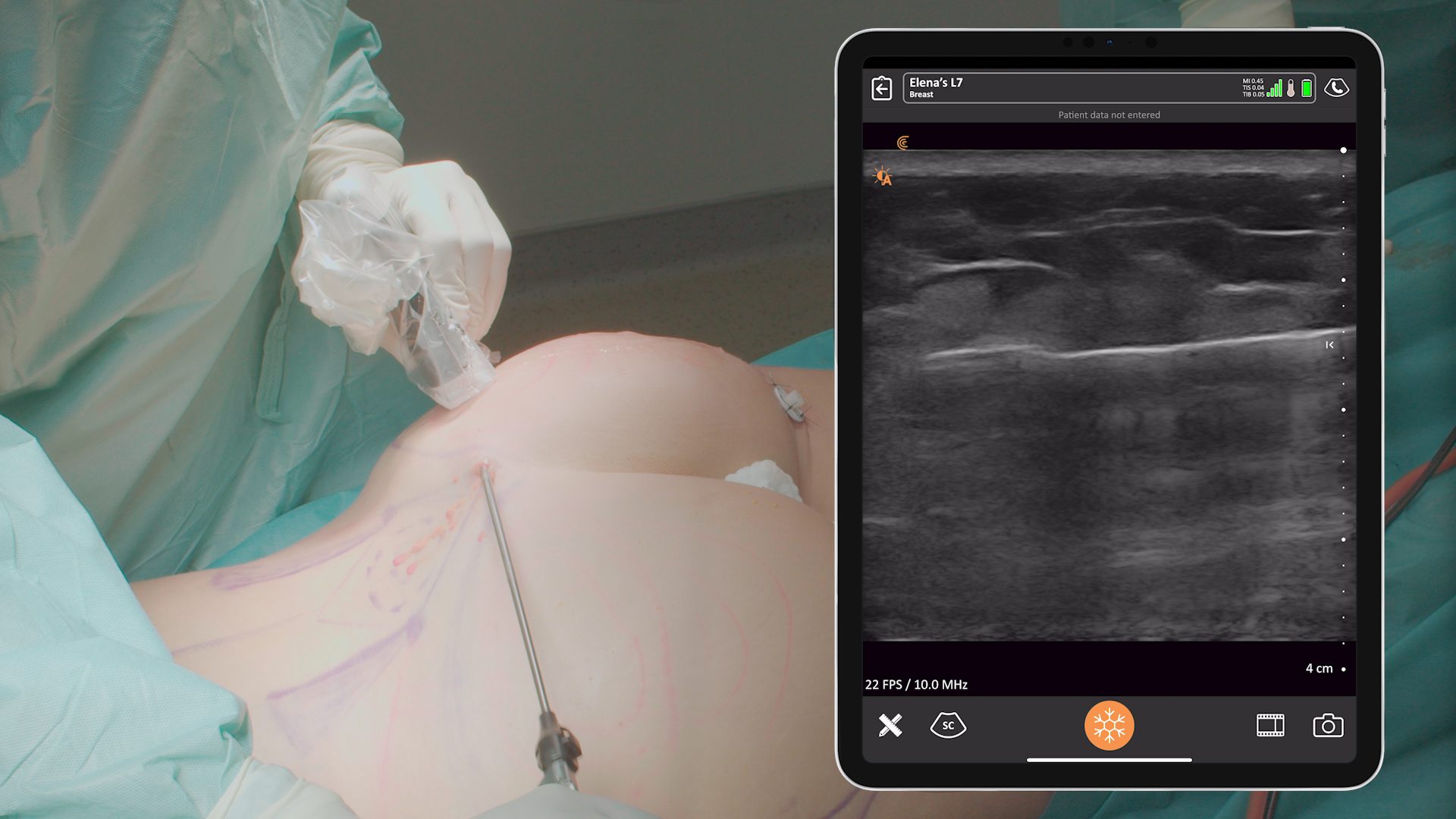
Ultrasound guidance. Real-time ultrasound during injection allows the surgeon to see the plane the cannula is in. Its adoption has been associated with a further reduction in reported mortality, and several jurisdictions and professional bodies have moved toward recommending or requiring it. We consider it valuable, and section 12 sets out our practice.
What we do. Subcutaneous injection exclusively. No intramuscular placement in any case, for any reason. And we state it in your operative report.
3. Mortality has fallen, and why that matters
Because a patient reading section 1 needs the rest of the picture. Following the advisories and the adoption of subcutaneous-only technique, reported mortality in surveyed series fell substantially. With ultrasound guidance, reported figures have fallen further — and some large series report no deaths.
What this means. This is not an operation that cannot be done safely. It is an operation where technique determines safety to a degree that is unusual in cosmetic surgery.
And what follows from that. The question is not whether to have a BBL. It is who performs it and how. Which makes the questions in section 4 the most consequential in this entire guide library.
4. The questions to ask any surgeon, anywhere
Before price. Before results. Before anything.
- « Injectez-vous la graisse exclusivement dans le plan sous-cutané ? » — the only acceptable answer is yes, exclusively. Any mention of intramuscular placement, of “deep” injection, or of placing fat “under the muscle for projection” is a reason to stop the conversation.
- « Utilisez-vous l’échographie pendant l’injection ? »
- « Quel calibre de canule, et quelle orientation ? »
- « Combien de BBL réalisez-vous par an ? »
- « Y a-t-il une limite de volume par côté, et laquelle ? » — section 7.
- « Combien de temps dure l’intervention, et combien de patients par jour ? » — because a surgeon performing several BBLs in a day is working at a pace that concerns us.
What a good answer sounds like. Specific, technical, and unhesitating — because a surgeon who takes this seriously has answered it many times.
What a poor answer sounds like. Vagueness. Deflection to results or price. Or reassurance without technical content — “it’s completely safe with us” is not an answer.
Part two — Deciding
5. What the operation is
The two halves. Liposuction, harvesting fat — typically from the abdomen, flanks and lower back, often as a liposuction 360 — which itself improves the result by defining the waist. And transfer, injecting processed fat into the subcutaneous layer of the buttock.
Processing. The harvested fat is processed — by decantation, filtration or centrifugation — to remove blood, oil, fluid and local anaesthetic. Which concentrates viable fat, and which affects survival.
Volume and survival. Not all transferred fat survives. A proportion is absorbed over the first months — and the surviving proportion varies between patients and between techniques. Which means the volume injected exceeds the volume that remains — and any surgeon quoting a precise final volume is quoting something they cannot know. Section 8.
The waist contribution. A substantial part of the visual result comes from the liposuction rather than the transfer — because the buttock projects by contrast with the waist. A patient with a defined waist and modest transfer frequently looks better than one with the reverse.
6. Do you have enough fat?
The requirement patients most often fail.
The problem. A BBL requires donor fat. A thin patient has little — and there is no substitute, because synthetic fillers in the buttock are a separate matter with their own problems, and buttock implants are a different operation entirely.
What is needed. Enough harvestable fat from the abdomen, flanks, back and thighs to provide the volume required, allowing for the proportion that will not survive.
What we assess. Pinch testing at each potential donor site, standing. And an honest statement of what your donor supply will produce.
Where there is not enough. We say so. And the options are: a more modest result, gaining weight before surgery — which some patients do and which we would discuss carefully — or buttock implants. Rather than harvesting aggressively from a thin patient, which produces contour irregularity in the donor areas and a modest buttock result.

Ask: « Ai-je suffisamment de graisse, et qu’est-ce que cela produira réellement ? »
7. Volume limits
A second safety consideration distinct from the injection plane.
Why volume matters. Injecting too much fat into a limited space raises the pressure in that space. Which compromises the blood supply to the fat itself — producing fat necrosis — and which increases the risk of fat entering vessels.
What we do. A volume limit per side, based on the recipient space and the patient’s anatomy rather than on what is requested. And where a patient asks for more than the tissue will accommodate, we say so.
Why patients ask for more. Because images circulate showing results that are, in some cases, not achievable by fat transfer alone — and in some cases were achieved by implants, by filters, or by both.
What excessive volume produces. Fat necrosis — firm lumps of dead fat, which can become painful, calcify, or form oil cysts. Poor overall survival, because overcrowded fat does not vascularise. And an unnatural shape.
Ask: « Quelle est votre limite de volume par côté, et pourquoi ? » A surgeon with a limit is applying judgement. One without is taking instruction.
8. What fat transfer can and cannot achieve
What it does well. Increases volume and projection, within limits. Improves shape — filling hip dips, correcting a flat upper pole, smoothing the transition from back to buttock. And the waist definition from the harvest, section 5.
What it does less well. Very large increases in a single session — section 7. Lifting a ptotic buttock — fat adds volume; it does not lift skin. Where there is significant sagging, an excisional buttock lift is a different operation. And correcting significant asymmetry entirely, which usually improves rather than resolves.
The survival question. A proportion of transferred fat is absorbed over the first three to six months. Reported survival varies widely across the literature, and an honest surgeon gives a range rather than a figure. Which means: your result at six months is smaller than at one week, and that is expected rather than a failure.
Second sessions. Common, and frequently planned from the outset where the desired volume exceeds what one session can safely place. Which is a legitimate and safer approach than a single excessive session.
9. Who should not have this
- Insufficient donor fat — section 6.
- Unstable weight — because transferred fat behaves like the fat it came from, and it enlarges and shrinks with your weight. Section 17.
- Expectations based on images that are not achievable by fat transfer — section 7.
- Smoking — four weeks before and after, because it compromises fat survival directly.
- Significant buttock ptosis expecting a lift.
- A history of thromboembolism, without careful assessment.
- Significant cardiac or respiratory disease — because the consequence of even a small embolic event is greater.
- And a body mass index above the range where the combined operation is appropriate.
10. Your Canadian options
Not covered. And a specific point worth knowing: the safety discussion on this page applies wherever you have the operation. A Canadian surgeon and a Tunisian surgeon face the same anatomy — and the questions in section 4 are the ones to ask either. Regulatory frameworks differ, and some jurisdictions have introduced specific requirements for BBL, including ultrasound guidance. Which is worth being aware of when comparing.
Part three — Preparing and the stay
11. From first contact to confirmed dates
The online consultation. Send photographs:
- Back, standing straight, in close-fitting underwear.
- Both sides.
- Both posterior oblique views — which show the hip and the transition from waist to buttock.
- Front, showing the donor areas.
- And a photograph of the abdomen and flanks pinched — section 6.
Natural daylight, no filters, no posing — and specifically not the arched-back pose, which misrepresents the starting point. Plus: your age, height and weight and stability, weight history, pregnancies, which donor areas you would accept being treated, previous surgery, medications including hormonal contraception, any clot history, whether you smoke, and any medical conditions. And any reference images — which we will discuss honestly, section 7.
What you receive. A plan stating whether you have sufficient donor fat and what it will produce — section 6 — the volume limit per side — section 7 — the donor areas, whether a second session is likely, the technique including the injection plane and ultrasound use, the stay, and the cost. Within 24 to 48 hours. And where your donor supply or your expectations do not align, the plan will say so.
What to arrange at home before you travel. Stop smoking — four weeks, and it affects fat survival directly. Stabilise your weight — section 17. Discuss hormonal contraception with your physician. Arrange help at home, because sitting is restricted — section 13. Obtain a BBL cushion. And arrange time off — three to four weeks.
12. Your stay in Tunisia
Ten to twelve days.
Day 1 — Arrival. Your driver meets you at the airport and takes you to your hotel with your companion. Nothing clinical today.
Day 2 — Consultation and marking. Standing examination of the buttock, the hips and all donor areas. Pinch assessment of each donor site — section 6. Assessment of buttock shape, projection, ptosis and asymmetry — and asymmetry is documented before rather than discovered after. Skin quality of the donor areas. Blood tests, weight, anaesthetic assessment. Then the planning conversation — volume per side, donor areas, the expected absorption, and whether a second session is likely.
Day 3 — Surgery. Three to five hours. Markings made standing. Liposuction of the donor areas — frequently a 360, and our liposuction 360 with BBL page covers that combination in detail. Fat processed. Transfer into the subcutaneous layer only — with a blunt large-bore cannula, angled away from the deep plane, with continuous awareness of tip position, and under ultrasound guidance. Section 2. Garment applied. One to two nights of observation — and monitoring in the immediate postoperative period matters here, because delayed embolic presentation is recognised.
Days 4 to 11 — Recovery and review. No sitting on the buttock — section 13. Drainage from the donor sites. Walking from day one. Lymphatic massage of the donor areas, not the buttock — section 14. Daily review.
Day 12 — Final review and departure. Final examination, and your documentation: an operative report stating the donor areas and volumes harvested, the volume transferred per side, the injection plane, the cannula used, and the use of ultrasound guidance; written aftercare in French or English, including the sitting restriction, the garment schedule, sleeping guidance and flight precautions; and a letter for your Canadian physician. Then your transfer to the airport.
Part four — Recovery
13. The sitting restriction
The defining practical feature of this recovery.
Why. Pressure on transplanted fat compromises its blood supply before it establishes one. Which reduces survival, and can produce areas of fat necrosis.
The rule. No sitting directly on the buttock for two to three weeks — your surgeon will specify. Then sitting on a BBL cushion — a firm cushion with a cut-out that transfers weight to the thighs — for a further period.
What this means practically. You lie face down or on your side to sleep. You stand, or lie, rather than sit. You eat standing or lying. Toileting requires care — leaning forward onto the thighs. And driving is not possible for the restricted period.
The flight home. Section 19 — and this is the specific problem for a Canadian patient, which is why the stay is longer and why the cushion matters.
What patients say. That this, rather than the pain, is the hard part. And that they underestimated it.
14. Aftercare specific to a BBL
The garment. Compression on the donor areas — and the garment must not compress the buttock. Which means a specific garment design — and an ordinary liposuction garment compressing the buttock works against the fat survival you are trying to protect. We provide the right one, and this is worth checking anywhere.
Lymphatic massage. Of the donor areas only. Not the buttock — for the first weeks, because manipulation of newly grafted fat is counterproductive. Your surgeon will specify when and whether buttock massage becomes appropriate.
Sleeping. Face down or on the side, for several weeks. A pillow under the hips when prone, which helps.
Walking. Encouraged and frequent — for thromboembolic reasons.
Hydration and protein. Reasonable general advice for graft survival, and not a substitute for technique.
15. What can go wrong
Beyond section 1.
- Fat necrosis — firm lumps within the buttock, from fat that did not survive. Can be painful, can calcify, and can form oil cysts. More likely with excessive volume — section 7. Frequently settling; sometimes requiring drainage or excision.
- Asymmetry — common to a degree, and frequently pre-existing, which is why it is documented beforehand.
- Under-correction — because absorption is unpredictable, section 8.
- Contour irregularity in the donor areas — a real risk in a thin patient harvested aggressively, section 6.
- Infection — uncommon, and an infected fat graft is a significant problem requiring drainage.
- Seroma — in the donor areas.
- Thromboembolism — a long operation, prolonged immobility from the sitting restriction, and a flight home. Which is a specific and elevated concern in this operation.
- And the serious ones — fat embolism, section 1; and infection extending deep, which is rare and serious.
What to report immediately. Chest pain, breathlessness, or a feeling of impending doom — at any point in the first days. Emergency department. Calf pain or swelling. Fever, spreading redness, or discharge. And severe or increasing buttock pain.
16. The result, and the timeline
| Stage | What you see |
|---|---|
| Week 1 | Swollen and considerably larger than the final result. This is not your result. |
| Weeks 2 to 6 | Swelling settling and volume decreasing, which patients find alarming and which is expected. |
| Months 2 to 4 | Absorption largely complete. |
| Months 4 to 6 | The settled volume. |
| Months 6 to 12 | The final shape, as donor area swelling also resolves. |
The psychological point. You will look smaller at three months than at one week. That is absorption, not failure. And patients who were not told this believe the operation has failed.
Second sessions. Considered at six months or later, once the result is settled — section 8.
17. Weight, and living with the result
Transferred fat behaves like fat. It came from your abdomen, and it retains that behaviour — enlarging when you gain weight and shrinking when you lose. Which means significant weight loss after a BBL reduces the result. And significant gain increases it, sometimes disproportionately.
The practical consequence. Weight stability matters more here than in most cosmetic surgery — because the result is literally made of the tissue that responds to it.
And the donor areas. Fat cells removed from the abdomen and flanks do not return, so subsequent gain distributes elsewhere. Combined with a BBL, that pattern is more pronounced.
Over years. The buttock ages — skin descends, and volume redistributes. A fat transfer result is not static, and that is worth expecting.
18. Your Canadian follow-up
Arrange a physician before you travel. « J’aurai un transfert de graisse fessier à l’étranger. Pourriez-vous me voir si nécessaire ? »
What warrants urgent attention. Chest pain or breathlessness — emergency department, immediately, and this applies for the first days and weeks. Calf pain or swelling. Fever with buttock pain, redness or discharge.
What warrants a routine appointment. A firm lump in the buttock — fat necrosis, section 15. A donor area swelling — seroma. Persistent asymmetry at six months.
Canadian coverage. Not covered. Treatment of any complication is covered. Take your operative report — which states the injection plane, the volumes and the technique, and which any physician assessing you will want.
Part five — Practical matters
19. Canadian patients: travelling to Tunisia from your region
Aylan Clinic works with patients from every province and territory in Canada. And the flight home is the specific practical problem of this operation — because you cannot sit on the buttock.
Montreal and the surrounding region. Montreal is our largest Canadian source for Tunisia, with connections through Paris, Frankfurt or Istanbul. Patients from Laval, Longueuil and Brossard are within easy reach of the airport. One connection is a substantial advantage here — fewer total hours in a seat you should not be sitting in normally.
Quebec City and across the province. From Quebec City and the Capitale-Nationale region including Lévis, most patients connect through Montreal — as do patients from Trois-Rivières, Sherbrooke, Drummondville and Saint-Jérôme. Gatineau patients depart from Ottawa or drive to Montreal. On this operation the francophone advantage is at the safety conversation. You are being told about fat embolism, about the injection plane, and about the questions to ask any surgeon — and those are precise technical matters where a misunderstanding has consequences unlike anywhere else in cosmetic surgery. Patients consistently tell us they asked the questions in section 4 properly, of us and of other clinics, because they could do it in their own language. That is the single most useful thing this page can do for you.
Acadia and New Brunswick. We work with patients from Moncton, Fredericton and Saint John. Moncton and the surrounding Acadian communities are served in French throughout.
Francophone Ontario. Sudbury, Thunder Bay and Sault Ste. Marie all have substantial francophone populations, served in French from first contact onward. Ottawa patients typically connect through Montreal.
Greater Toronto Area and southern Ontario. Toronto patients connect through European hubs. Across the wider Greater Toronto Area: Mississauga, Brampton, Markham, Vaughan, Richmond Hill and Oshawa. Along the lake: Hamilton, Burlington, Oakville, St. Catharines and Niagara Falls. In southwestern Ontario: London, the Waterloo region — Kitchener, Waterloo and Cambridge — plus Guelph, Windsor and Barrie. Kingston patients generally drive to Toronto or Montreal.
Vancouver and British Columbia. Vancouver patients face the longest journey — typically two connections. And this is the most difficult journey in our library for this operation. What we require: a BBL cushion used throughout, an aisle seat, standing and walking every hour, compression stockings, ankle exercises, and hydration. And we routinely recommend extending the stay by four or five days for west coast patients — so that more of the sitting restriction has passed before you fly. Some patients arrange a business-class seat that reclines flat, which is a genuine solution where it is affordable. Across the Lower Mainland: Surrey, Burnaby and Richmond. From Victoria and Nanaimo, ferry or short flight. Kelowna, Abbotsford and Kamloops connect through Vancouver or Calgary.
Alberta. Calgary and Edmonton both offer European connections. Red Deer and Lethbridge patients generally drive to Calgary. An overnight rather than same-day domestic connection, and the cushion throughout.
Manitoba and Saskatchewan. Winnipeg patients connect through Toronto or Montreal. Saint-Boniface is served in French. From Saskatoon and Regina, a domestic connection plus two further flights.
Atlantic Canada. Halifax routes through Montreal or Toronto. From Charlottetown and St. John’s, two or three connections.
Northern Canada. We work with patients from Whitehorse in Yukon, and from communities across the Northwest Territories and Nunavut. Two points. The journey with a sitting restriction — the most demanding combination we deal with — and we plan an extended stay accordingly. And emergency access — because the serious complications of this operation can present in the days after you return. Know where your nearest emergency department is, and arrange a physician before you travel.
How we handle the logistics. Your coordinator arranges transfers, confirms your hotel, and builds your schedule around your arrival time.
Five recommendations. Ask section 4’s questions of every clinic. Send unposed photographs. Buy a BBL cushion before you travel. Plan the flight home around the sitting restriction. And expect to look smaller at three months than at one week.
20. What your package includes
- Free consultation in French or English, with an honest statement of whether your donor fat will produce the result you want — section 6
- Full on-site assessment: standing examination of buttock, hips and all donor areas, pinch assessment of each donor site, documentation of pre-existing asymmetry, and donor skin quality
- Blood tests, weight, anaesthetic assessment
- A planning conversation stating the volume limit per side and the reasoning — section 7
- Liposuction of the donor areas, with fat processed for transfer
- Subcutaneous transfer exclusively, with a blunt large-bore cannula angled away from the deep plane, under ultrasound guidance — section 2
- Thromboembolic risk assessment, compression and prophylaxis
- One to two nights of observation with monitoring
- A compression garment designed not to compress the buttock — section 14
- Lymphatic massage of the donor areas during your stay
- Medication and aftercare supplies
- Daily review across the stay
- Operative report stating donor areas and volumes harvested, volume transferred per side, the injection plane, the cannula, and the use of ultrasound guidance
- Written aftercare in French or English, including the sitting restriction, cushion use, sleeping guidance, garment schedule, flight precautions, and the symptoms requiring emergency assessment
- A letter for your Canadian physician
- Continued contact in French or English after you return
- Hotel accommodation, full board
- A companion at no extra cost, accommodated and fed in the same room
- Airport–clinic–hotel transfers
- A personal coordinator from arrival to departure
- French-speaking care throughout, with English available on request
The clinical team. Plastic surgeon experienced in gluteal fat transfer, frequently French-trained; anaesthetist; dedicated nurse; lymphatic drainage therapist.

21. Results by patient profile
The right candidate. A patient of thirty-one with ample abdominal and flank fat, stable weight, and a realistic target. A 360 harvest and a moderate subcutaneous transfer within our volume limit. At eight months her waist and buttock relationship is what she wanted — and much of the visual result came from the waist.
Where the donor supply was the limit. A slim patient wanting a substantial increase. We explained that her donor fat would produce a modest change — section 6 — and that harvesting aggressively would leave donor irregularity for a small gain. She chose a modest result, knowingly. And declined the alternative of gaining weight first, which was her decision to make.
Where we declined the requested volume. A patient asking for a volume beyond what the tissue would accommodate. We explained fat necrosis and the survival consequences of overcrowding — section 7. She had the volume we considered safe, with a second session discussed for later. Which is the safer route to the same place.
Where absorption caused alarm. A patient who contacted us at ten weeks convinced the operation had failed. She was smaller than at one week, which is absorption — section 16. At six months she was satisfied. And she had been told this beforehand — which is why the conversation at three months was reassurance rather than a crisis.
Where the reference image was not achievable. A patient with images of a result that was, in our assessment, not achievable by fat transfer. We said so — section 7 — and explained what fat transfer would and would not produce. She proceeded with realistic expectations, which is the only basis we operate on.
A patient from Montréal. A patient who had contacted four clinics. Her comment was about the question that separated them. « J’ai demandé partout s’ils injectaient uniquement en sous-cutané. Deux cliniques ont répondu clairement. Deux ont éludé. J’ai choisi parmi les deux premières. »
22. Practical points to know
What to expect. A safety conversation before anything else. Standing assessment of the buttock and all donor areas. A three to five hour operation. One to two nights of observation. No sitting on the buttock for two to three weeks. Looking substantially smaller at three months than at one week. And a settled result at four to six months.
Recognised points. Gluteal fat transfer carries risks that your surgeon will discuss with you. The most serious: pulmonary fat embolism — section 1 — which subcutaneous-only technique is designed to prevent; and venous thromboembolism, elevated here by the operation length and the immobility. The others: fat necrosis, unpredictable absorption and under-correction, asymmetry, infection, seroma in the donor areas, contour irregularity in the donor areas, oil cysts and calcification, and the general risks of anaesthesia and of liposuction.
Three things within your control. Asking the questions in section 4, of every clinic. Respecting the sitting restriction. And weight stability afterwards.
Who this suits. Adequate donor fat, stable weight, realistic expectations, and a willingness to manage the sitting restriction and the journey home.
Who should consider something else. Insufficient donor fat — buttock implants. Significant ptosis — an excisional lift. And anyone whose expectations come from images that fat transfer cannot produce.
23. Price: how it is built and how to compare it
What determines your price. The donor areas and the liposuction volume — frequently a 360. The volume transferred. The nights of observation. And the length of stay. Itemised, and fixed once you approve it.
What is included. Everything in section 20. A companion is accommodated and fed at no additional cost.
What sits outside it. Flights, travel insurance, a BBL cushion, lymphatic massage in Canada, and any second session.
How to compare quotes properly. Five checks, and the first is not about money.
| Check | Why it matters |
|---|---|
| Is the injection subcutaneous only? | Section 2 — and this is the question, not a question. |
| Is ultrasound guidance used? | Associated with further reductions in reported mortality. |
| Is there a volume limit per side, and what is it? | Section 7 — a surgeon with a limit is applying judgement. |
| How many BBLs per day and per year? | A surgeon doing several in a day is working at a pace that concerns us. |
| Is overnight observation with monitoring included? | Delayed embolic presentation is recognised. |
Why the lowest quote is the most dangerous in cosmetic surgery. Because this is the operation where cutting corners has killed people. Volume limits, ultrasound guidance, overnight monitoring and a measured operating pace are all costs. And a clinic competing on price in this procedure is competing on the things that keep you alive. We would rather you chose another clinic that answers section 4 well than the cheapest one that does not answer it at all.
Canadian coverage. Not covered. Treatment of any complication is covered.
Getting your assessment. Send back, both sides, both posterior oblique views and front, unposed and unfiltered, plus pinch photographs of the donor areas. A plan and quote follow within 24 to 48 hours, in French or English — including an honest statement of what your donor fat will produce. You can also request a free, personalised quote.
24. Glossary
| Term | Meaning |
|---|---|
| BBL | Gluteal fat transfer, harvested by liposuction |
| Subcutaneous plane | The fat layer above the muscle; the only safe injection plane |
| Gluteal veins | Large thin-walled veins within and beneath the muscle; the route of fatal embolism |
| Pulmonary fat embolism | Fat obstructing the lung circulation |
| Ultrasound guidance | Real-time imaging of the cannula plane |
| Fat necrosis | Non-surviving fat forming firm lumps |
| Absorption | The proportion of transferred fat that does not survive |
| BBL cushion | A cut-out cushion transferring weight to the thighs |
| Donor area | Where the fat is harvested; usually abdomen, flanks and back |
25. How Canadians search for this
- “BBL Tunisia cost” — the most common search. Ask section 4’s questions first.
- “BBL Tunisie prix” — how most Quebec patients search.
- “Is BBL safe” — it has carried the highest mortality of any cosmetic operation, the cause is fat embolism from injection into or beneath the muscle, and subcutaneous-only technique with ultrasound guidance has reduced mortality substantially. Sections 1 to 3.
- “BBL deaths” — the mechanism is specific and understood, which is what made prevention possible.
- “Subcutaneous vs intramuscular BBL” — subcutaneous only. There is no acceptable reason for intramuscular placement, and any mention of it should end the conversation.
- “Ultrasound guided BBL” — associated with further reductions in reported mortality, and increasingly recommended or required.
- “How much fat survives BBL” — a proportion is absorbed over three to six months, and the range is wide — a surgeon quoting a precise figure is quoting something unknowable.
- “Can I sit after BBL” — not on the buttock for two to three weeks, then on a cushion. The defining practical feature of this recovery.
- “BBL flight home” — the specific problem for a Canadian patient — a cushion, an aisle seat, standing hourly, and a longer stay before flying.
- “Not enough fat for BBL” — a common finding — and aggressive harvesting from a thin patient produces donor irregularity for a modest gain.
- “BBL fat necrosis” — firm lumps from fat that did not survive, more likely with excessive volume.
- “French speaking plastic surgeon abroad” — Tunisia’s distinguishing feature.
In summary
This page begins with safety because this operation has a history no other cosmetic procedure has. Fat injected into or beneath the gluteal muscle can enter large veins and travel to the lungs — and that mechanism made BBL, for a period, the cosmetic operation with the highest mortality rate. Investigations of fatal cases found the same thing consistently: fat in the muscle and in the gluteal veins.
Which identified the prevention. Fat into the subcutaneous layer only, never into or beneath the muscle — with a blunt large-bore cannula angled away from the deep plane, and increasingly with ultrasound guidance. Where those standards are followed, reported mortality has fallen substantially. Which means the question is not whether to have a BBL. It is who performs it and how — and « injectez-vous exclusivement en sous-cutané ? » is the most consequential question in this entire guide library.

Beyond that: your donor fat determines what is achievable, volume has a limit set by the tissue rather than by the request, a proportion of the fat is absorbed over three to six months, and you cannot sit on the buttock for two to three weeks — which for a patient flying home to Canada is the defining practical problem. At Aylan Clinic Tunisia that means subcutaneous transfer exclusively, stated in your operative report, ultrasound guidance, a volume limit per side with the reasoning given, overnight observation with monitoring, and an honest statement of what your donor fat will produce. It takes place in a French-speaking country, which matters when the questions you need to ask are this precise — with accommodation, full board and a companion at no extra cost, for up to 60% less than Canadian private prices.
Five things to hold onto.
- Ask every clinic whether they inject subcutaneously only. The answer must be yes, exclusively — and any mention of intramuscular placement should end the conversation.
- Ask whether ultrasound guidance is used, and what the volume limit per side is. A surgeon with a limit is applying judgement.
- You will look smaller at three months than at one week. That is absorption, and it is expected rather than failure.
- Plan the sitting restriction and the flight home. A cushion, an aisle seat, standing hourly — and a longer stay before flying.
- Do not choose this operation on price. This is the one procedure where competing on cost means competing on the things that keep you alive — and we would rather you chose a different clinic that answers these questions well.
Send your photographs and you will have an honest answer within 24 to 48 hours — including whether your donor fat will produce what you are asking for. The procedure page itself, with the technique, the stay and the aftercare in detail, is Brazilian Butt Lift in Tunisia. Compare figures on plastic surgery prices in Tunisia, see the wider body contouring in Tunisia overview, or request a free, personalised quote.
Everything about BBL in Tunisia
Injection plane, volume limits, the sitting restriction and the flight home — every detailed answer on the procedure page.