
Blepharoplasty at Aylan Clinic Tunisia addresses the upper eyelids, the lower eyelids, or both — removing excess skin, and repositioning rather than simply removing fat — over a stay of seven to nine days, for up to 60% less than Canadian private prices. Before you book anything, check two things: upper eyelid surgery may be covered in Canada where the lid obstructs your visual field, and your brow may be the problem rather than your eyelid. For lower eyelids, two further questions determine the result — whether your dry eye was assessed, and whether the fat was repositioned rather than discarded.
This guide is organised around your journey: deciding, preparing, the stay, and the months that follow. It sits alongside our procedure page for Eyelid Reshaping in Tunisia, which sets out how the operation itself is performed, the stay and the aftercare. For figures across our full range, see plastic surgery prices in Tunisia. One thing distinguishes Tunisia: it is a French-speaking country. Not a clinic with French-speaking staff — a country where French is a working language across medicine and daily life, which matters at an assessment more technical than patients expect.
Part one — deciding
1. Upper and lower: two different operations
They are grouped under one name, and they are genuinely different operations.
Upper blepharoplasty removes excess upper eyelid skin, with conservative adjustment of fat where it is contributing. It addresses hooding, a heavy upper lid, skin resting on the lashes, and in some patients a visual field restriction. It is straightforward, predictable, and among the most satisfying operations in facial surgery. Thirty to sixty minutes, frequently under local anaesthesia with or without sedation.
Lower blepharoplasty addresses the under-eye — bags, hollows, the tear trough, and excess skin. It is technically more demanding and less forgiving, because the lower lid is a mobile structure held in position by ligaments and muscle tone, and operating on it can change its position. Frequently the better operation is to reposition fat rather than remove it. One to two hours.
They are frequently combined with each other, and with a brow lift — with the sequencing mattering.
2. Your Canadian pathway for upper eyelids
This is the most useful section for some readers, and it is worth reading before you price anything.
It may be covered. Where upper eyelid skin descends far enough to obstruct the visual field, several provinces fund upper blepharoplasty as a functional procedure. The assessment is a formal visual field test, performed with the lids in their natural position and then taped up, comparing the two. Criteria and thresholds vary by province, and the referral is generally to an ophthalmologist or oculoplastic surgeon.
Who might qualify:
- Patients whose upper lid skin rests on the lashes or overhangs them.
- Patients who find themselves raising their brows or tilting their head back to see.
- Patients whose upper field of vision is genuinely restricted — and who frequently have not connected the two.
What to do. Ask your family doctor for a referral, describing the functional problem rather than the appearance. In French: « Est-ce que mes paupières gênent mon champ de vision ? Puis-je être évaluée ? » It costs nothing to find out, and where you qualify, the funded route at home is better than ours.
The honest limits. Coverage applies to upper lids only — lower blepharoplasty is cosmetic everywhere in Canada. And where you qualify, the funded operation addresses function: it is conservative, and it may not achieve the aesthetic result you want. Some patients pursue the funded route and are entirely satisfied. Some find it does less than they hoped. Both are worth knowing.
3. Brow or eyelid? The test
Thirty seconds, and it determines the operation.
The test. Look in a mirror, relaxed. Lift your outer brow gently with a finger, to where it used to sit, without pulling the eyelid skin. If the hooding largely disappears, your brow is the problem. If a fold of skin remains on the lid itself, your eyelid is. If both improve and a fold remains, you need both.
Why it matters. Removing eyelid skin in a patient with a descended brow pulls the brow lower still. The eye looks better briefly, the brow looks heavier, and she has lost eyelid skin she may need later — because a brow lift afterwards requires skin to accommodate the higher brow.
The sequencing point. Where both are done, the brow is lifted first and the eyelid skin is then removed conservatively, because lifting the brow already takes up some of the excess. Doing them together allows that judgement. Doing the eyelid first, and the brow later, does not. Our brow lift page covers this from the other direction.
4. Dry eye: assessed, not assumed
This is the section that prevents the commonest avoidable problem.
Why it matters. Blepharoplasty can reduce how completely the eyes close, temporarily and occasionally longer. The eyelids are also part of the tear film mechanism — blinking spreads tears, and the lid position determines how well. A patient who already has dry eye can find it substantially worse after surgery, and in a small number, persistently.
What to tell us:
- Whether your eyes feel gritty, burn, or water excessively — and watering is frequently a sign of dryness rather than the opposite, which surprises patients.
- Whether you use drops, and how often.
- Whether contact lenses have become less comfortable.
- Whether you are uncomfortable in wind, air conditioning or on flights.
- And the one patients forget: whether you have had laser refractive eye surgery. LASIK and similar procedures are associated with dry eye, and it is directly relevant.
Also relevant: thyroid disease, Sjögren’s syndrome, rosacea and blepharitis, and medications including antihistamines, antidepressants and some blood pressure drugs.
What we do. We assess it, including lid closure, lid tone and tear film. Where dry eye is significant, we modify the plan — removing less skin, avoiding certain lower lid techniques, or recommending treating it first. In some patients we would recommend against lower blepharoplasty altogether, and we say so.
Afterwards. Lubricating drops are part of the aftercare rather than optional, and ointment at night for the first weeks.
5. What upper blepharoplasty does and does not do
What it does: removes the hooding and the heaviness, opens the eye, restores a visible lid crease where skin had obscured it, and in some patients improves the visual field.
What it does not do: it does not lift the brow; it does not treat crow’s feet, which are muscle-driven and need toxin or resurfacing; it does not change the shape of the eye — a patient wanting a different eye shape is describing something else; it does not treat dark circles; and it does not treat fine lines on the lid skin, which need resurfacing.
A note on eyelid crease height. Where a crease is set too high, the eye looks operated, and this is a recognisable error. In patients of East Asian heritage in particular, the crease may be naturally low or absent, and creating a Western crease changes the character of the eye. That is a legitimate choice where it is what the patient wants, and it must be her choice. We ask directly, and we do not assume.
6. Lower eyelids: repositioning rather than removing
This is the technical point that determines whether you look rested or hollow.
The old approach. Fat removed from the under-eye bags. It looks good at six months. At five and ten years, as the face loses volume, that eye looks hollow and skeletal — because fat that was supporting the area is gone and cannot be replaced easily. This is one of the commonest late problems in facial surgery, and it is seen in a generation of patients operated on this way.
The modern approach. The fat causing the bag is released and repositioned downward and forward, into the hollow beneath it — the tear trough. That does two things at once: the bag flattens, and the hollow fills. And the fat stays in the face, rather than being discarded. Where more volume is needed, fat grafting is added.
Why this matters most. An under-eye hollow is considerably harder to correct than a bag. Removing too much fat is easy and quick; replacing it later is difficult, and the results are less predictable. Which is why a conservative, repositioning approach is the right default.
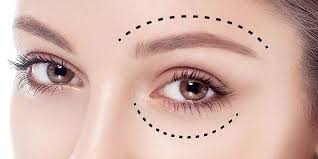
Ask: « Allez-vous retirer la graisse ou la repositionner ? » An answer describing repositioning is a modern plan. An answer describing removal alone is worth questioning.
7. The lower lid position: the risk that matters
This is specific to lower blepharoplasty, and it is the reason that operation is the more demanding one.
What can happen. The lower lid can pull downward — scleral show, where white shows beneath the iris — or, in more marked cases, turn outward, which is ectropion. Both cause a visible change in eye shape, and both cause irritation, watering and dryness.
Why. The lower lid is held in position by ligaments at its inner and outer corners, and by muscle tone. Removing skin, or operating in a lid that is already lax, can overcome that support.
Who is at risk:
- Patients with pre-existing lid laxity, which increases with age and is frequently unrecognised.
- Patients with prominent eyes, where the globe projects relative to the cheekbone — a specific and important anatomical factor.
- Patients with a negative vector, where the cheekbone sits behind the front of the eye in profile.
- Patients who have had previous lower lid surgery.
- And patients with thyroid eye disease.
The test. The snap-back test — the lower lid is pulled gently downward and released, and a lid that returns slowly or not until you blink is lax. And the distraction test — how far the lid can be pulled away from the eye. Both are simple, and both should be performed before any lower lid surgery.
What is done about it. Canthopexy or canthoplasty — tightening or repositioning the outer corner support — added to the blepharoplasty where laxity is present. And a transconjunctival approach, operating through the inside of the lid with no external skin incision, which avoids the skin tension that causes lid retraction and is the technique of choice where skin excess is minimal.
What to ask. « Ma paupière inférieure est-elle lâche, et avez-vous fait le test ? » and « Une canthopexie est-elle nécessaire ? » A surgeon who performs the snap-back test in front of you and answers specifically is assessing you.
8. Where we would want more information first
- Previous eyelid or brow surgery — where upper eyelid skin has already been removed, there may not be enough to allow a brow lift or a further blepharoplasty.
- Dry eye.
- Thyroid eye disease, which changes the assessment entirely and requires the thyroid to be stable first.
- Prominent eyes or a negative vector.
- Glaucoma or other eye disease — and where you are under an ophthalmologist, tell us.
- Bleeding tendency or anticoagulants — retrobulbar haematoma, though very rare, is the sight-threatening complication of this operation.
- Smoking — four weeks before and after.
- Uncontrolled blood pressure.
- Recent botulinum toxin or filler around the eyes — tell us what and when. Filler in the tear trough in particular distorts the assessment, and we frequently dissolve it before planning.
9. Your Canadian options
Upper eyelid surgery may be covered where the visual field is obstructed. Lower blepharoplasty is cosmetic and not covered anywhere in Canada. And the combination — where a patient qualifies for upper lids functionally but wants lower lids too — frequently means paying privately for part of it, which is a genuine reason patients look abroad.
Part two — preparing
10. From first contact to confirmed dates
The online consultation. Send photographs:
- Front, completely relaxed, eyes open, looking straight at the camera.
- Front with eyes closed, which shows upper lid skin and any closure difficulty.
- Front looking upward.
- Front looking downward.
- Both profiles, which show eye prominence and the cheekbone relationship.
- And a smiling photograph.
Natural daylight, no makeup, no filters, hair back. Plus: your age, what specifically bothers you, whether you raise your brows or tilt your head to see, previous eyelid, brow or facial surgery, any filler or toxin around the eyes and when, any dry eye symptoms and any laser eye surgery, any thyroid disease, any eye conditions or ophthalmologist, medications and supplements, whether you smoke, and your blood pressure.
What you receive. A plan stating whether your problem is brow or eyelid, whether upper, lower or both, whether fat will be repositioned, whether canthopexy is indicated, whether dry eye changes the plan, the stay, and the cost — within 24 to 48 hours. And where the Canadian funded pathway may apply, the plan will say so.
Questions worth asking before you commit:
- « Est-ce mon sourcil ou ma paupière ? »
- « Allez-vous retirer la graisse ou la repositionner ? » — the key lower lid question.
- « Avez-vous testé la laxité de ma paupière inférieure ? »
- « Une canthopexie est-elle nécessaire ? »
- « Une voie transconjonctivale est-elle possible ? »
- « Mon œil est-il proéminent ? »
- « Où votre chirurgien a-t-il été formé ? »
What to arrange at home before you travel: ask about the Canadian pathway for upper lids; treat any dry eye, and bring your drops; stop botulinum toxin three months before, and tell us about any tear trough filler; stop smoking four weeks before and after; get your blood pressure controlled; review medications and supplements — fish oil, vitamin E, ginkgo, ginseng and garlic increase bleeding; arrange someone to be with you for the first day or two, because your vision will be blurred from ointment; and arrange time off — ten to fourteen days, with bruising.
Part three — the stay
11. Your stay in Tunisia
Seven to nine days.
Day 1 — arrival. Your driver meets you at the airport and takes you to your hotel with your companion. Nothing clinical today.
Day 2 — consultation and assessment. A full periocular assessment:
- Upper lid skin, crease position, and fat compartments.
- The brow lifting test.
- Lower lid laxity: snap-back and distraction tests.
- Eye prominence and the cheekbone relationship, assessed in profile.
- Fat compartments and the tear trough.
- Tear film and lid closure.
- Visual acuity, and where indicated, referral for a formal eye assessment before proceeding.
- Documentation of pre-existing asymmetry — eyelid asymmetry is present in almost everyone, and pointing it out beforehand matters.
- Photographs, blood pressure, blood tests, anaesthetic assessment.
Then the planning conversation.
Day 3 — surgery. Upper blepharoplasty takes thirty to sixty minutes, frequently under local anaesthesia with sedation, with the incision in the natural lid crease and conservative skin removal — a defined amount left to allow the eye to close. Lower blepharoplasty takes one to two hours: a transconjunctival approach where skin excess is minimal, with no external incision; a subciliary approach, just beneath the lashes, where skin needs removing; fat released and repositioned into the tear trough; canthopexy where indicated. A brow lift, where combined, is performed first, with eyelid skin removed conservatively afterwards. Then ointment and cold compresses. Day case.
Days 4 to 6 — recovery. Swelling and bruising, peaking at day two to three — frequently more extensive than patients expect, and it can track down onto the cheek. Blurred vision from ointment, which is expected and temporary. Watering, grittiness and light sensitivity, normal in the first days. Head elevated, cold compresses, drops and ointment on schedule. Review appointments, with lid position checked.
Day 7 — suture removal. Sutures are removed at around days five to seven.
Days 8 to 9 — final review and departure. A final examination, including lid closure and lid position. Your documentation: an operative report describing exactly what was done — the approach, the skin removed, whether fat was repositioned or removed, and any canthopexy; written aftercare in French or English; the drop and ointment schedule; scar care; and a letter for your Canadian physician. Then your transfer to the airport.
12. The first two weeks
Swelling and bruising. More than patients expect — the eyelid skin is the thinnest on the body, and it bruises readily. It peaks at day two to three and resolves over ten to fourteen days, and it frequently tracks downward onto the cheek, which surprises people.
Vision. Blurred from ointment, intermittently, for the first days. Do not drive until it is clear and you feel confident.
Dryness and watering. Both are common early, and watering is frequently a response to dryness. Drops and ointment as instructed — this is not optional.
Light sensitivity. Common, and sunglasses help considerably, and also cover the bruising.
Restrictions: head elevated for several days; no rubbing the eyes, at all; no contact lenses for two weeks, and longer if advised; no eye makeup for two weeks; no strenuous activity or bending for two weeks; no swimming for three weeks; and sun protection, with sunglasses.
Part four — the months that follow
13. The result over time
The timeline:

- Weeks 1 to 2 — swelling and bruising, sutures out.
- Weeks 2 to 4 — presentable with makeup, most patients returning to work around ten to fourteen days.
- Months 1 to 3 — swelling settling, scars pink and firm.
- Months 3 to 6 — scars fading, the result apparent.
- Months 6 to 12 — scars mature, and lower lid swelling, which lingers longest, fully resolves.
What patients underestimate. How long lower lid swelling lasts — frequently three to six months, and a slight fullness at two months is not a returned bag. And scar maturation, which takes months.
Longevity. Upper blepharoplasty results are durable, frequently a decade or considerably more, though skin continues to age. Lower blepharoplasty is generally durable where fat was repositioned rather than removed. Ageing continues from the new position.
14. What to watch for
Set out plainly, and one of these is urgent.
The urgent one. Severe pain with rapidly increasing swelling, pressure behind the eye, and worsening vision. This is retrobulbar haematoma — bleeding behind the eye. It is very rare, it is sight-threatening, and it requires immediate treatment. Typically within the first twenty-four hours, and occasionally later. Go to an emergency department immediately. Take your operative report, and say you have had eyelid surgery. Do not wait to contact us first — contact us afterwards.
The others:
- Inability to close the eyes fully — common early and usually temporary, and it needs ointment overnight to protect the cornea. Persistent inability needs assessment.
- Lower lid pulling down — assessed, and frequently improving with massage and time.
- Persistent dryness beyond a few weeks.
- Increasing redness, discharge or fever — infection.
- A visible lump in the scar — frequently a small cyst or granuloma, and usually settling.
- Asymmetry — frequently swelling, and assessed at three months.
15. Scars
- Upper lid: in the natural crease, and in most patients very difficult to see once healed.
- Lower lid, subciliary: just beneath the lashes, usually inconspicuous.
- Lower lid, transconjunctival: no external scar at all, which is one of its advantages.
- Where a lateral extension was needed, it lies in a crow’s foot line.
Care: sun protection with sunglasses, silicone from around three weeks where advised, and tell us about any keloid history — though keloid is uncommon on eyelid skin.
16. Your Canadian follow-up
Little is required medically, though arrange a physician who will see you if needed: « J’aurai une blépharoplastie à l’étranger. Je reviendrai avec un compte rendu opératoire. Pourriez-vous me voir si nécessaire ? » And where you have an ophthalmologist, tell them.
What warrants urgent attention. The retrobulbar haematoma symptoms are the ones to memorise.
Canadian coverage. Surgery abroad is not reimbursed. Treatment of any complication is covered, as any medical care is, including any eye problem.
Part five — practical matters
17. Canadian patients: travelling to Tunisia from your region
Aylan Clinic works with patients from every province and territory in Canada. And on upper eyelids specifically, check the Canadian pathway first.
Montreal and the surrounding region. Montreal is our largest Canadian source for Tunisia, with connections through Paris, Frankfurt or Istanbul. Patients from Laval, Longueuil and Brossard are within easy reach of the airport.
Quebec City and across the province. From Quebec City and the Capitale-Nationale region including Lévis, most patients connect through Montreal — as do patients from Trois-Rivières, Sherbrooke, Drummondville and Saint-Jérôme. Gatineau patients depart from Ottawa or drive to Montreal. On this operation the francophone advantage is at the assessment, which is more technical than patients expect: you are being told whether your problem is brow or eyelid, whether your lower lid is lax, whether your eye is prominent, and whether fat will be moved or removed. Those distinctions determine your result, and patients consistently tell us they asked better questions in their own language.
Acadia and New Brunswick. We work with patients from Moncton, Fredericton and Saint John. Moncton and the surrounding Acadian communities are served in French throughout.
Francophone Ontario. Sudbury, Thunder Bay and Sault Ste. Marie all have substantial francophone populations, served in French from first contact onward. Ottawa patients typically connect through Montreal.
Greater Toronto Area and southern Ontario. Toronto patients connect through European hubs. Across the wider Greater Toronto Area: Mississauga, Brampton, Markham, Vaughan, Richmond Hill and Oshawa. Along the lake: Hamilton, Burlington, Oakville, St. Catharines and Niagara Falls. In southwestern Ontario: London, the Waterloo region — Kitchener, Waterloo and Cambridge — plus Guelph, Windsor and Barrie. Kingston patients generally drive to Toronto or Montreal.
Vancouver and British Columbia. Vancouver patients face the longest journey, typically two connections. A specific point for the flight: cabin air is very dry, and a recently operated eye is uncomfortable in it. Bring your drops in hand luggage, use them frequently, and wear sunglasses. Across the Lower Mainland: Surrey, Burnaby and Richmond. From Victoria and Nanaimo, ferry or short flight. Kelowna, Abbotsford and Kamloops connect through Vancouver or Calgary.
Alberta. Calgary and Edmonton both offer European connections. Red Deer and Lethbridge patients generally drive to Calgary. And the dry climate matters — artificial tears and a humidifier are worth having.
Manitoba and Saskatchewan. Winnipeg patients connect through Toronto or Montreal, and Saint-Boniface is served in French. From Saskatoon and Regina, a domestic connection plus two further flights. Prairie winter air is very dry, and this is the region where post-operative dry eye is most uncomfortable: a bedroom humidifier is worth having before you travel.
Atlantic Canada. Halifax routes through Montreal or Toronto. From Charlottetown and St. John’s, two or three connections.
Northern Canada. We work with patients from Whitehorse in Yukon, and from communities across the Northwest Territories and Nunavut. Dry air is the central practical issue — drops, ointment and humidification are part of the aftercare rather than optional. And access to assessment matters here more than for most facial procedures, because the one urgent complication is sight-threatening: know where your nearest emergency department is. We plan the full stay plus buffer.
How we handle the logistics. Your coordinator arranges transfers, confirms your hotel, and builds your schedule around your arrival time.
Five recommendations: check the Canadian pathway for upper lids; do the brow mirror test; tell us about dry eye and any laser eye surgery; ask whether fat will be repositioned or removed; and memorise the retrobulbar haematoma symptoms.
18. What your package includes
- Free consultation in French or English, with an assessment of whether your problem is brow or eyelid — and whether the Canadian funded pathway may apply.
- Full on-site assessment: upper lid skin and crease, brow position, lower lid laxity by snap-back and distraction testing, eye prominence, fat compartments, tear film and lid closure, and visual acuity.
- Documentation of pre-existing asymmetry.
- Standardised photography, blood pressure assessment, blood tests, anaesthetic assessment.
- Upper blepharoplasty with conservative skin removal.
- Lower blepharoplasty with fat repositioned into the tear trough rather than simply removed.
- Transconjunctival approach where indicated.
- Canthopexy where lower lid laxity requires it.
- Brow lift where combined and quoted, performed first with conservative eyelid skin removal.
- Fat grafting where additional volume is needed.
- Local anaesthesia with sedation, or general where combined.
- Lubricating drops and night ointment, and medication.
- Day case.
- Review appointments across the stay, with lid position checked.
- Suture removal.
- Scar care supplies.
- Operative report describing the approach, the skin removed, whether fat was repositioned or removed, and any canthopexy.
- Written aftercare in French or English, including the drop schedule and the urgent symptoms to recognise.
- A letter for your Canadian physician.
- Continued contact in French or English after you return.
- Hotel accommodation, full board.
- A companion at no extra cost, accommodated and fed in the same room.
- Airport–clinic–hotel transfers.
- A personal coordinator from arrival to departure.
- French-speaking care throughout, with English available on request.
The clinical team: a plastic or oculoplastic surgeon experienced in eyelid surgery, frequently French-trained; an anaesthetist; and a dedicated nurse.
19. Results by patient profile
Upper lids, with the brow left alone. A patient of fifty-four whose brow sat well and whose upper lids carried genuine skin excess. Upper blepharoplasty under local with sedation, conservative skin removal. Back to work at ten days. One of the most satisfying operations in facial surgery, and it delivers reliably.

Where the brow was the problem. A patient who asked for upper blepharoplasty, whose hooding resolved on the brow lifting test. A brow lift instead, with no eyelid skin removed. Had she had blepharoplasty, her brow would have been pulled lower still — and she would have lost skin she needed.
Fat repositioned, not removed. A patient of forty-eight with under-eye bags and early tear trough hollowing. Transconjunctival lower blepharoplasty with fat repositioned into the trough, not removed. At a year her under-eye is smooth rather than hollow. The old approach would have looked good at six months and hollow at ten years.
Where canthopexy was needed. A patient with prominent eyes, a negative vector, and a lax lower lid on snap-back testing. Canthopexy added to her lower blepharoplasty. Without it, the risk of her lid pulling downward was materially elevated. The tests take thirty seconds and they determine the plan.
Where we declined lower lids. A patient with significant untreated dry eye and previous laser refractive surgery. We recommended treating the dry eye first, with her ophthalmologist, and advised against lower blepharoplasty at that time. She had upper lids only.
Tear trough filler dissolved first. A patient with substantial filler under the eyes placed over several years. We dissolved it before assessing, because it distorted the picture entirely — what looked like adequate volume was filler. The plan changed once we could see her actual anatomy.
A patient from Sherbrooke. A patient who chose Tunisia so the assessment could happen in French. Her comment was about a question she had not known to ask: « On m’a demandé si j’avais eu une chirurgie des yeux au laser. J’avais oublié de le mentionner, et apparemment c’était important. »
20. Practical points to know
What to expect: a technical assessment including lid laxity testing before anything is planned; a short operation, frequently under local with sedation; bruising for ten to fourteen days, frequently tracking onto the cheek; blurred vision from ointment in the first days; ten to fourteen days before you are presentable; and lower lid swelling that takes three to six months to settle fully.
Recognised points. Blepharoplasty is among the most commonly performed facial operations, with high published satisfaction. Your surgeon will discuss the considerations relevant to you. The main ones: retrobulbar haematoma, very rare and sight-threatening, and the symptoms to memorise; dry eye, new or worsened; incomplete eye closure, common early and usually temporary; lower lid retraction, scleral show or ectropion, which lid laxity testing and canthopexy exist to prevent; over-resection of upper lid skin, compromising closure and difficult to correct; over-resection of lower lid fat, producing a hollow eye, which is the commonest late aesthetic problem; asymmetry, including pre-existing asymmetry persisting; visible scarring, uncommon on eyelid skin; cysts or granulomas in the scar, usually settling; change in eyelid crease height, which can look operated; infection, uncommon; double vision, rare and usually temporary; and the general risks of the anaesthetic used.
Three things within your control: telling us about dry eye and laser eye surgery; not rubbing your eyes, at all; and using the drops and ointment as instructed.
Who this suits. Adults with genuine eyelid skin excess or fat bags, assessed for brow position and lid laxity, with dry eye addressed, and realistic expectations.
Who should wait or reconsider. Anyone whose problem is the brow; anyone with significant untreated dry eye, for lower lids in particular; anyone with unstable thyroid eye disease; and anyone wanting a different eye shape, which is a different conversation.
21. Price: how it is built and how to compare it
What determines your price: upper, lower, or both; whether canthopexy is included; whether fat is repositioned or grafted; whether a brow lift or facelift is combined; the anaesthetic; and the length of stay. Itemised, and fixed once you approve it. You can also compare our full range of plastic surgery prices in Tunisia.
What is included. Everything listed in the package section — the full assessment with lid laxity testing, the planning conversation, the operation with fat repositioning, canthopexy where indicated, combined procedures where quoted, the anaesthetic, drops, ointment and medication, review appointments with lid position checks, suture removal, scar care, the operative report, written aftercare, the letter for your Canadian physician, continued contact, hotel with full board, transfers, and your coordinator. A companion is accommodated and fed at no additional cost.
What sits outside it: flights, travel insurance, artificial tears ongoing, and any revision.
How to compare quotes properly — five checks:
- Has your brow been assessed? A blepharoplasty quote issued without checking brow position may be for the wrong operation.
- Was lower lid laxity tested? Snap-back and distraction — and a clinic that does not test is not managing the risk of lid retraction.
- Will fat be repositioned or removed? Removal alone is an outdated default that looks hollow in a decade.
- Is canthopexy included where needed?
- Has dry eye been assessed?
Why the lowest quote is a concern here. Because the two things that go wrong on this operation are invisible in a price: a lower lid that pulls down, from a laxity that was never tested; and a hollow eye in ten years, from fat that was removed rather than repositioned. Both are difficult to correct, and both come from assessment and judgement rather than from cost.
Canadian coverage. Upper lids may be covered where the visual field is obstructed, and it is worth pursuing. Lower lids are cosmetic everywhere. Treatment of any complication is covered.
Getting your figure. Send photographs including eyes open, eyes closed, looking up, looking down, and both profiles, in daylight and unfiltered. Plus your age, what bothers you, whether you raise your brows or tilt your head to see, previous surgery, any filler or toxin around the eyes, dry eye symptoms and any laser eye surgery, thyroid disease, medications, and whether you smoke. A plan and quote follow within 24 to 48 hours, in French or English, including where the Canadian funded pathway may apply.
22. Glossary
| Term | What it means |
|---|---|
| Upper blepharoplasty | Removal of excess upper eyelid skin |
| Lower blepharoplasty | Surgery to the under-eye: bags, hollows and skin |
| Transconjunctival | Through the inside of the lower lid; no external scar |
| Subciliary | Just beneath the lashes |
| Tear trough | The hollow beneath the lower lid |
| Fat repositioning | Moving fat into the hollow rather than removing it |
| Snap-back test | Assessing lower lid laxity |
| Negative vector | A cheekbone sitting behind the front of the eye; raises lid retraction risk |
| Canthopexy | Tightening the outer corner support |
| Scleral show / ectropion | The lower lid sitting low or turning outward |
| Retrobulbar haematoma | Bleeding behind the eye; very rare and sight-threatening |
23. How Canadians search for this
- “Blepharoplasty Tunisia cost” — the most common search.
- “Blépharoplastie Tunisie” — how most Quebec patients search.
- “Is eyelid surgery covered in Canada” — upper lids may be, where the visual field is obstructed, on formal testing.
- “Droopy eyelids or brow” — do the mirror test, because getting it wrong pulls the brow lower still.
- “Under eye bags surgery” — the key question is whether fat will be repositioned or removed.
- “Hollow eyes after blepharoplasty” — the commonest late problem, from fat removed rather than repositioned, and harder to correct than the original bag.
- “Lower eyelid pulling down after surgery” — lid retraction, which laxity testing and canthopexy exist to prevent.
- “Transconjunctival blepharoplasty” — through the inside of the lid, no external scar, and the technique of choice where skin excess is minimal.
- “Dry eye after blepharoplasty” — assess it beforehand, and tell your surgeon about any laser eye surgery.
- “Blepharoplasty recovery time” — ten to fourteen days before presentable, and lower lid swelling for three to six months.
- “Eyelid surgery gone wrong” — the two that matter are lid retraction and a hollow eye, and both are assessment failures rather than bad luck.
- “French speaking eyelid surgeon abroad” — Tunisia’s distinguishing feature.
In summary
Two things to check before you book anything. Upper eyelid surgery may be covered in Canada where the lid obstructs your visual field — several provinces fund it on formal testing, and it costs nothing to ask. And your brow may be the problem rather than your eyelid: the mirror test takes thirty seconds, and removing eyelid skin in a patient with a descended brow pulls the brow lower still, and takes skin she may need later.

For lower eyelids, two things determine the result. Whether your dry eye was assessed, because blepharoplasty can worsen it substantially. And whether the fat is repositioned into the tear trough rather than simply removed, because removal looks good at six months and hollow at ten years, and a hollow eye is harder to correct than a bag. And whether your lower lid was tested for laxity, because a lax lid can pull downward after surgery — which canthopexy exists to prevent.
At Aylan Clinic Tunisia that means snap-back and distraction testing before any lower lid surgery, fat repositioned rather than discarded, canthopexy where indicated, and an operative report recording exactly what was done. It takes place in a French-speaking country, which matters at an assessment more technical than patients expect. With accommodation, full board and a companion at no extra cost, for up to 60% less than Canadian private prices.
Five things to hold onto:
- Check the Canadian pathway for upper lids. Where your visual field is obstructed, it may be funded — and that route is better than ours.
- Do the mirror test. Brow or eyelid — and getting it wrong is the commonest planning error in upper facial surgery.
- Ask whether fat will be repositioned or removed. Removal is the outdated default, and it produces the hollow eye seen in a generation of patients.
- Ask whether your lower lid laxity was tested. Snap-back and distraction take thirty seconds, and they are what prevent a lid that pulls downward.
- Tell us about dry eye and any laser eye surgery. Patients forget the second one constantly, and it is directly relevant.
Send your photographs and you will have an honest answer within 24 to 48 hours, including where the funded route at home may apply. The procedure itself, step by step, is set out on our eyelid reshaping in Tunisia page; figures are on our plastic surgery prices in Tunisia page; and you can request a free, personalised quote at any time.
Related reading: our facial surgery in Tunisia overview, the forehead and brow lift page, fox eye lift, combined facelift and eyelid surgery, and facial fat grafting.