
Can an eyebrow transplant work? The short answer is yes — and two things decide whether you should have it: why your eyebrows are thin, and whether you are willing to trim them every week for the rest of your life. An eyebrow transplant at Aylan Clinic Tunisia places single scalp hairs into the brow at the very flat angles eyebrow hair requires, over a stay of three to five days, for up to 60% less than Canadian private prices. Eyebrow loss can be a medical sign — thyroid disease, iron deficiency, alopecia areata and, importantly, frontal fibrosing alopecia, a scarring condition that destroys transplanted grafts and frequently announces itself in the eyebrows before the scalp. That must be excluded first.
This guide explains the decision, the assessment, the technique and the commitment. When you are ready to look at the procedure itself — the stay, the surgery and the aftercare — see our page on Eyebrow Hair Grafting in Tunisia. For budgeting, our overview of plastic surgery prices in Tunisia sets out how packages are built, and our hair transplant in Tunisia hub covers the wider family of hair restoration procedures. Three things before you read further. The transplanted hair is scalp hair, and it keeps growing — which means trimming roughly weekly, permanently; a patient unwilling to do that should not have this procedure. The angles are the most extreme in hair restoration — almost parallel to the skin, changing direction three or four times across a single brow — which is why this is technically demanding out of proportion to its size. And one thing distinguishes Tunisia: it is a French-speaking country. Not a clinic with French-speaking staff — a country where French is a working language across medicine and daily life.
Part one — deciding
1. What an eyebrow transplant treats
Over-plucking. The commonest reason — years of plucking, waxing or threading, which can eventually damage the follicle permanently. Frequently in women who followed a thin-brow fashion in earlier decades, and whose brows never recovered.
Congenitally sparse brows. Thin from the outset, with no loss.
Scars. From trauma, surgery or burns — a defined, non-progressive target, and a good indication.
Trichotillomania, where the pulling has genuinely stopped. That condition is decisive, and it is covered in its own section below.
After chemotherapy, where regrowth has been incomplete — and after a period of stability.
Gender-affirming brow work — shaping and density, as part of a broader plan.
Asymmetry, where one brow is noticeably thinner than the other.
2. Why your eyebrows are thin: the assessment comes first
This is the section this page exists for.
Frontal fibrosing alopecia
The one that matters most. A scarring alopecia — the same condition covered at length in our guidance for women’s hair restoration — which affects the frontal hairline and, very frequently, the eyebrows. Eyebrow loss is often the first sign, preceding the hairline changes by months or years.
Why it is decisive: it destroys follicles permanently, and it destroys transplanted grafts by the same process.
The signs to report: eyebrow loss with any frontal hairline recession; a pale, smooth, shiny band at the hairline; redness or scale around individual hairs; itching, burning or tenderness; and small bumps in the brow area.
What must happen: dermatological assessment in Canada — covered — frequently with a biopsy, and the condition must be inactive for a sustained period before any transplant is considered. We screen for this specifically, and we decline where it is suspected.
Thyroid disease
Both underactive and overactive thyroid cause hair loss — and loss of the outer third of the eyebrow is a recognised, though not universal, sign of hypothyroidism. Treatable, and covered in Canada.
Iron deficiency
Low ferritin is a well-recognised contributor to diffuse hair loss, and the same points apply to the brows as to the scalp.
Alopecia areata
Can affect the eyebrows, sometimes alone. It frequently recovers, spontaneously or with treatment — and transplanting into active disease is inappropriate.
Other causes
Certain medications, nutritional deficiency, eczema or seborrhoeic dermatitis of the brow, and leprosy in relevant epidemiological contexts.
What we ask for
Blood tests — thyroid function, ferritin, full blood count — arranged with your physician in Canada, where they are covered. And a clear history of how the loss developed. Where you have not had them, we will ask you to.
3. The angles: why this is technically demanding
A small procedure with a difficult technique.
How eyebrow hair grows
Almost flat against the skin — at an angle considerably more acute than scalp or even beard hair. And the direction changes across a single brow: at the medial head, hairs point upward and slightly outward; along the body, they angle progressively outward; at the arch, direction shifts; and at the tail, they point outward and slightly downward. There are also opposing directions within the brow — upper hairs angling down, lower hairs angling up — which creates the natural interlocking appearance.
Why it decides the result
A graft placed at the wrong angle stands up. An eyebrow with hairs standing up is immediately and obviously wrong — more so than anywhere else on the face, because brows are small and closely observed.
The technique
Single hairs, exclusively — never multi-hair grafts, which produce a tufted appearance that cannot be corrected without removal. Implanter placement, generally — the same instrument family used in DHI hair implantation — because implanters allow precise angle control and placement among existing hairs. Fine grafts selected specifically, because coarse scalp hair looks wrong in a brow. And a graft count that is modest by transplant standards — typically a few hundred per brow.
What to ask
« Comment allez-vous reproduire les directions changeantes du sourcil ? » — « Uniquement des cheveux uniques ? » — « Combien de greffes de sourcils réalisez-vous par an ? »
4. It grows, and you will trim it
This is the commitment that decides whether the procedure is for you.
Why
Eyebrow hair has a short growth cycle and stops at a natural length. Scalp hair does not. Which means transplanted eyebrow hairs keep growing — and if left alone they will reach several centimetres.
The practical reality
Trimming roughly weekly, for life, with small scissors, to match your natural brow length.
They may also need training
The hairs may not lie in the direction you want initially — and brushing them into place, sometimes with a brow gel or soap, becomes part of the routine. This settles over the first year as the hairs adapt, and it does not disappear entirely.
Who should not have this
Anyone unwilling to trim weekly. We say it plainly at the consultation, because a patient who was not expecting it is unhappy at four months — when the hairs are long and unruly and she did not know they would be. Ask yourself honestly.
5. Texture, and choosing the right donor hair
A detail that determines whether it looks natural.
The problem
Scalp hair is coarser than eyebrow hair in most people. And coarse hair in a brow looks wrong — too thick, too shiny, too obviously different.
Where grafts are taken from
The finest available scalp hair — frequently from the nape, above the ears, or the area behind the ear, where hair tends to be finer than the occipital centre. And selected individually during graft preparation.
Colour
Scalp hair and eyebrow hair frequently differ in shade — and brows are usually darker. The transplanted hair will match your scalp, not your original brow, which in most patients is acceptable and in some is noticeable. They also grey at different rates, which is worth knowing.
What we do
Select the finest donor hair available, and tell you honestly if your scalp hair is coarse enough that the result will look different from a natural brow. Ask: « D’où prendrez-vous les greffons, et sont-ils assez fins ? »
6. Trichotillomania
A specific situation requiring a specific answer.
What it is. A compulsive urge to pull out hair — and the eyebrows are among the commonest sites.
Why it matters here. Transplanted hairs can be pulled out exactly as native ones were. And the donor supply spent is not recoverable.
What is required. That the pulling has genuinely stopped, and stayed stopped — typically for a sustained period of at least a year, and ideally with appropriate psychological support in place. A transplant into an active condition will fail, and it may worsen distress.
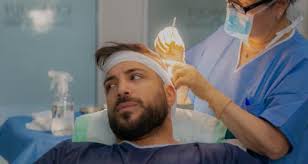
How we approach it. Directly and without judgement. We ask, and where it is the cause we discuss whether the condition is controlled. Where it is not, we recommend addressing that first — and that support is available in Canada. That is a recommendation for treatment that works rather than surgery that will not.
7. Microblading, tattooing and what they mean here
Many patients arrive having had them.
Microblading and cosmetic tattooing deposit pigment in the skin to simulate brow hairs. They can look good, they fade and require repeating, and the colour can shift over years.
What they mean for surgery. Scarring from repeated microblading can affect the tissue, and dense scar tissue takes grafts less well. Tell us what you have had and when. Existing pigment does not prevent a transplant — and it will still be there afterwards, beneath the new hairs, which some patients like and others do not. Removal of tattoo pigment before transplanting is possible and generally requires laser sessions and time.
| Option | Permanence | Ongoing requirement | Uses donor supply |
|---|---|---|---|
| Microblading / cosmetic tattooing | Reversible over time; fades | Repeating sessions and cost indefinitely | No |
| Eyebrow transplant | Permanent | Trimming weekly, for life | Yes |
Both are legitimate, and a patient who wants a low-commitment option should consider the first.
8. Where we would want more information first
- Suspected frontal fibrosing alopecia — the most important.
- Active alopecia areata.
- Untreated thyroid disease or iron deficiency.
- Active trichotillomania.
- Eczema or dermatitis in the brow area — treated first.
- Recent brow lift or blepharoplasty, which alters the tissue and the nerve supply, and where waiting is sensible.
- Keloid tendency — uncommon on the brow and worth disclosing.
- Smoking — four weeks before and after.
9. Your Canadian pathway
More relevant here than on most hair pages. Blood tests for thyroid and ferritin are covered. Dermatological assessment for suspected frontal fibrosing alopecia is covered — and it must come first. Treatment of an underlying condition is covered. And support for trichotillomania is available. Which means: for a proportion of patients reading this, the next step is a Canadian appointment, not a flight.
Part two — preparing
10. From first contact to confirmed dates
The online consultation
Send photographs. Front, with no makeup at all on the brows — which is essential, because pencil and powder conceal exactly what we need to see. Both brows in close-up, straight on. Both profiles. And a photograph of your frontal hairline with the hair pulled back, because the scarring-alopecia screen requires it. Natural daylight, no filters.
Plus: your age, how the loss developed and over what period, your plucking and waxing history, whether you have had microblading or tattooing and when, any thyroid disease or iron deficiency, your blood results if you have them, any scalp itching, burning, redness or hairline recession, any hair pulling, your medications, and whether you smoke.
What you receive
An assessment stating the likely cause, whether investigation should come first, whether a scarring process is suspected, the graft number and design proposed, the trimming commitment stated explicitly, the stay, and the cost. Within 24 to 48 hours.
Questions worth asking before you commit
- « Avez-vous exclu une alopécie frontale fibrosante ? » — the decisive question.
- « Combien de greffes de sourcils réalisez-vous par an ? »
- « Uniquement des cheveux uniques, et d’où proviennent-ils ? »
- « Faudra-t-il les tailler, et à quelle fréquence ? » — an honest answer is weekly, for life.
- « Le dessin sera-t-il fait avec moi ? »
What to arrange at home before you travel
Blood tests — thyroid function and ferritin — and bring the results. Dermatological assessment where a scarring process is a possibility. Stop plucking and waxing for several weeks before, so the true pattern is visible. Stop smoking — four weeks before and after. And arrange time off: seven to ten days, because the crusting is on your face and visible.
Part three — the stay
11. Your stay in Tunisia
Three to five days — the shortest stay in our hair series, because the procedure is small.
| Day | What happens |
|---|---|
| Day 1 — Arrival | Your driver meets you at the airport and takes you to your hotel with your companion. Nothing clinical today. |
| Day 2 — Consultation and design | Examination of the brows, the frontal hairline and the scalp donor area. Trichoscopy, including the brow itself for signs of a scarring process. Review of your blood results. Then the design, drawn on your face with you, in a mirror, and photographed. |
| Day 3 — The procedure | Two to four hours under local anaesthesia. A small area of scalp donor hair trimmed, selected for fineness and usually easily concealed. FUE extraction, with grafts selected individually for calibre. Implanter placement of single hairs at the acute angles and changing directions. No dressing. |
| Day 4 — Review and first wash | Demonstrated at the clinic, with particular care around the eyes. |
| Days 4 to 5 — Final review and departure | Final examination and your documentation, then your transfer to the airport. |
The design conversation takes time and it should — brow shape is the aesthetic decision, and it is discussed in terms of where the head, arch and tail sit relative to your eye and your face. There is also an explicit conversation about trimming. Where a scarring process or an untreated cause is suspected, we say so at this point, and the section on declining applies.
Your documentation at departure: an operative report stating grafts per brow, the donor site and the technique; written aftercare in French or English, including trimming guidance; and a letter for your Canadian physician.
12. The first two weeks
Appearance
Small crusts at each graft, on the brow, and visible. Swelling of the brow and sometimes around the eyes for several days — and it can track downward to the eyelids, which surprises patients. Crusts falling over seven to ten days. Your brows will look darker and denser than the eventual result initially, then the hairs shed.
What to avoid
No makeup on the brows for the period specified — typically around ten days. No rubbing, picking or touching. No plucking or waxing, at all, until instructed. Sleeping on your back for the first nights. No swimming or sauna for a month. And sun protection, which matters on the face.
Washing
Gently, as demonstrated — and this area is close to the eyes, so technique matters.
Part four — what follows
13. Shedding, growth and the wait
The same biology as any transplant, and more visible. Shedding at two to six weeks — and on the brows this is conspicuous, because there is little to hide it. Your brows will look as they did before, or slightly thinner. Growth from three to four months. A meaningful result at six to eight months. And the final result at twelve months.
The training period
From around four months, as hairs grow, they will grow long and in their own directions. This is when the trimming begins, and when brushing them into place matters. Patients frequently find this the disconcerting phase, and it settles.
Judging it
Do not judge before ten to twelve months. And expect that the final density is lower than the immediate post-operative appearance suggested.
14. If we recommend against it
Stated explicitly. If frontal fibrosing alopecia is suspected, if a treatable cause is untreated, if alopecia areata is active, or if hair pulling is ongoing — we will say so, and explain what should happen instead. No pressure and no renegotiation. Ask about deposit terms before you travel. A clinic willing to transplant a brow with an unrecognised scarring process is producing a failure and consuming donor supply for nothing.
15. Your Canadian follow-up
Little is required medically, though arrange a physician who will see you if needed.
What warrants attention
- Increasing redness, swelling or pus — infection, uncommon and important near the eye.
- Any new hairline recession, scalp tenderness or further brow loss, which could indicate a scarring process developing. Report it.
- Folliculitis, common at three to five months.
Ongoing
Thyroid and ferritin review where those were factors. And your trimming routine, for life. Take your operative report.
Part five — practical matters
16. Canadian patients: travelling to Tunisia from your region
Aylan Clinic works with patients from every province and territory in Canada. This is the shortest stay in our hair series, which makes the travel calculation straightforward.
Montreal and the surrounding region
Montreal is our largest Canadian source for Tunisia, with connections through Paris, Frankfurt or Istanbul. Patients from Laval, Longueuil and Brossard are within easy reach of the airport. A three to five day stay with one connection is very manageable.

Quebec City and across the province
From Quebec City and the Capitale-Nationale region including Lévis, most patients connect through Montreal — as do patients from Trois-Rivières, Sherbrooke, Drummondville and Saint-Jérôme. Gatineau patients depart from Ottawa or drive to Montreal.
On this page the francophone advantage is at the design conversation. Brow shape is a fine aesthetic judgement — where the arch sits, how high the tail goes, how thick the head is — and describing the brow you want requires vocabulary. Patients consistently tell us they described it more precisely in their own language, and on a permanent design that matters.
Acadia and New Brunswick
We work with patients from Moncton, Fredericton and Saint John. Moncton and the surrounding Acadian communities are served in French throughout.
Francophone Ontario
Sudbury, Thunder Bay and Sault Ste. Marie all have substantial francophone populations, served in French from first contact onward. Ottawa patients typically connect through Montreal.
Greater Toronto Area and southern Ontario
Toronto patients connect through European hubs. Across the wider Greater Toronto Area: Mississauga, Brampton, Markham, Vaughan, Richmond Hill and Oshawa. Along the lake: Hamilton, Burlington, Oakville, St. Catharines and Niagara Falls. In southwestern Ontario: London, the Waterloo region — Kitchener, Waterloo and Cambridge — plus Guelph, Windsor and Barrie. Kingston patients generally drive to Toronto or Montreal.
Vancouver and British Columbia
Vancouver patients face the longest journey — typically two connections. For a two to four hour procedure that is a substantial journey, worth weighing, and better combined with another procedure if you were considering one. You travel home with visible crusting on your brows, which glasses partly conceal. Across the Lower Mainland: Surrey, Burnaby and Richmond. From Victoria and Nanaimo, ferry or short flight. Kelowna, Abbotsford and Kamloops connect through Vancouver or Calgary.
Alberta
Calgary and Edmonton both offer European connections. Red Deer and Lethbridge patients generally drive to Calgary.
Manitoba and Saskatchewan
Winnipeg patients connect through Toronto or Montreal. Saint-Boniface is served in French. From Saskatoon and Regina, a domestic connection plus two further flights.
Atlantic Canada
Halifax routes through Montreal or Toronto. From Charlottetown and St. John’s, two or three connections.
Northern Canada
We work with patients from Whitehorse in Yukon, and from communities across the Northwest Territories and Nunavut. Two points. Dermatological access: where frontal fibrosing alopecia needs excluding and assessment requires travelling south, arranging it first is sensible. And the visibility: brow crusting is on your face and cannot be covered, which in a small community is noticed. Timing is worth considering. We plan the full stay plus buffer.
How we handle the logistics
Your coordinator arranges transfers, confirms your hotel, and builds your schedule around your arrival time. Five recommendations: photograph your brows with no makeup; send a hairline photograph too; get thyroid and ferritin tested; ask whether you can commit to weekly trimming; and stop plucking for several weeks before.
17. What your package includes
- Free consultation in French or English, with an assessment of why your brows are thin.
- Examination of the frontal hairline and brow for signs of a scarring process, with referral to dermatology in Canada where suspected.
- Review of your thyroid and ferritin results, and a recommendation for investigation where missing.
- Trichoscopic assessment of the scalp donor area, with donor hair selected for fineness.
- Blood tests where indicated.
- A brow design drawn with you, in a mirror, and photographed before surgery.
- An explicit conversation about the trimming commitment.
- FUE extraction from a fine-hair donor site, with grafts selected individually for calibre.
- Implanter placement of single hairs at acute angles, with direction mapped across each brow.
- The first wash performed at the clinic and demonstrated, with care around the eyes.
- Medication and aftercare supplies.
- Review appointments across the stay.
- Operative report stating grafts per brow, the donor site, and the technique.
- Written aftercare in French or English, including trimming and brushing guidance.
- A letter for your Canadian physician.
- Continued contact in French or English through the growth period.
- Hotel accommodation, full board.
- A companion at no extra cost, accommodated and fed in the same room.
- Airport–clinic–hotel transfers.
- A personal coordinator from arrival to departure.
- French-speaking care throughout, with English available on request.
The clinical team: a surgeon experienced in eyebrow restoration specifically, frequently French-trained; an experienced technical team working under supervision; and a dedicated nurse.
18. Results by patient profile
Over-plucking restored
A patient of forty-six who had plucked her brows thin in her twenties and whose growth never recovered. Around two hundred and fifty grafts per brow, single hairs, angled to the changing directions. At twelve months her brows are full and she trims them weekly — which she was told about before she committed.
Where frontal fibrosing alopecia was found
A patient with thinning brows and a slightly receded hairline she had attributed to age. The hairline showed a pale smooth band. We declined and recommended dermatological assessment in Canada, where frontal fibrosing alopecia was confirmed. Grafts would have been destroyed — and the brows are frequently where it announces itself first.
Where the thyroid was the cause
A patient with loss of the outer third of both brows. Her thyroid function had not been checked. It was underactive, and treatment produced partial regrowth — after which a much smaller transplant completed the result.
Where hair pulling was ongoing
A patient who disclosed, when asked directly, that she still pulled. We explained that transplanted hairs can be pulled out exactly as native ones were, and recommended addressing the condition first. That conversation was handled without judgement, and it was the right advice.
Where microblading had been done
A patient with several years of microblading and dense pigment in both brows. We explained that grafts could be placed and that the pigment would remain beneath them. She chose to have laser pigment removal first, then the transplant.
A patient from Québec
A patient who chose Tunisia for the design conversation. Her comment was about being told the commitment: « On m’a dit clairement qu’il faudrait les tailler chaque semaine, à vie. C’est la première clinique qui me l’a dit avant, pas après. »
19. Practical points to know
What to expect
An assessment of why your brows are thin, before any design. Blood tests requested if you have not had them. A two to four hour procedure under local anaesthesia. Visible crusting on your brows for seven to ten days, with possible swelling around the eyes. Shedding at two to six weeks, which is conspicuous. An awkward phase from four months as hairs grow long. And a final result at twelve months — with weekly trimming thereafter, permanently.
Recognised points
The general considerations are those set out on our hair restoration and FUE grafting pages. Eyebrow-specific: incorrect angles, producing hairs that stand up — the commonest aesthetic failure, and very visible; a tufted appearance from multi-hair grafts; texture or colour mismatch with the native brow; grafts requiring lifelong trimming; asymmetry between the two brows; poor graft survival, since brow skin is less vascular than scalp; destruction of grafts by an unrecognised scarring process; loss of grafts to continued pulling; folliculitis; and cysts.
Three things within your control
Getting thyroid and ferritin tested first. Reporting hairline changes and scalp symptoms. And committing honestly to weekly trimming.
Who this suits
Adults with a known, non-progressive cause, no suspected scarring process, treated underlying conditions, and a genuine willingness to trim weekly for life.
Who should not proceed yet
Anyone with suspected frontal fibrosing alopecia — and eyebrow loss with hairline recession is the pattern to watch. Anyone with untreated thyroid disease or iron deficiency. Anyone with active alopecia areata or ongoing hair pulling. And anyone unwilling to trim.
20. Price: how it is built and how to compare it
What determines your price
The number of grafts — typically a few hundred per brow. Whether one or both brows. And the length of stay. Itemised, and fixed once you approve it.
What is included, and what sits outside it
Everything listed in the package section above. A companion is accommodated and fed at no additional cost. Outside it: flights, travel insurance, your Canadian investigations, and any second session — which is occasionally wanted for density at twelve months.
How to compare quotes properly
| Check | Why it matters |
|---|---|
| Has the clinic asked why your brows are thin, and asked for blood tests? | A quote issued without that may be for a transplant into a condition that will destroy it. |
| Has the frontal hairline been examined? | Frontal fibrosing alopecia announces itself in the brows — a clinic looking only at the brows is not screening for it. |
| Single hairs only, and from a fine donor site? | Multi-hair grafts produce a tufted brow; coarse hair looks wrong in a brow. |
| Has the trimming commitment been stated? | A clinic that does not mention it is setting you up for an unpleasant surprise at four months. |
Why the lowest quote is a concern here
Because the procedure is small and the price differences are modest. What varies is whether the cause was investigated — and a brow transplanted into frontal fibrosing alopecia fails completely, having consumed donor supply and a recovery for nothing.

Canadian coverage
Surgery is not covered. Thyroid and ferritin testing, dermatological assessment, and treatment of underlying causes are — and they come first.
Getting your assessment
Send close photographs of both brows with no makeup, plus your frontal hairline with the hair pulled back, in daylight and unfiltered. And your thyroid and ferritin results, your plucking history, and any microblading. A response follows within 24 to 48 hours, in French or English — including where investigation at home should come first.
21. Glossary
| Term | Meaning |
|---|---|
| Frontal fibrosing alopecia | A scarring alopecia affecting hairline and eyebrows; destroys grafts. |
| Alopecia areata | Patchy autoimmune loss; frequently recovers. |
| Trichotillomania | Compulsive hair pulling; must have stopped before surgery. |
| Single-hair graft | The only unit used in brow work. |
| Implanter | The device allowing precise angle control. |
| Direction mapping | Planning the changing hair directions across each brow. |
| Microblading | Cosmetic tattooing simulating brow hairs. |
| Shedding | The loss of transplanted hairs at two to six weeks. |
22. How Canadians search for this
- “Eyebrow transplant Tunisia cost” — the most common search.
- “Greffe de sourcils Tunisie” — how most Quebec patients search.
- “Do eyebrow transplants need trimming” — yes, roughly weekly, for life. It is scalp hair and it keeps growing.
- “Eyebrow loss outer third” — a recognised sign of hypothyroidism, and worth a blood test.
- “Eyebrow loss and receding hairline” — the pattern of frontal fibrosing alopecia, which destroys grafts, and which must be excluded.
- “Eyebrow transplant angles” — the most extreme in hair restoration, changing direction several times across a single brow.
- “Microblading vs eyebrow transplant” — reversible and repeating versus permanent and trimmed.
- “Eyebrow transplant after over-plucking” — the commonest indication, and a good one.
- “Eyebrow transplant hairs growing in wrong direction” — expected in the first year, and brushing them trains them.
- “Eyebrow transplant survival rate” — brow skin is less vascular than scalp, and a second session for density is occasionally wanted.
- “Trichotillomania eyebrow transplant” — only once the pulling has genuinely stopped, because grafts are pulled out the same way.
- “French speaking hair surgeon abroad” — Tunisia’s distinguishing feature.
In summary
Two things decide whether you should have this. First, why your eyebrows are thin — because eyebrow loss can be a medical sign. Thyroid disease, iron deficiency and alopecia areata are treatable, and frontal fibrosing alopecia destroys transplanted grafts — and it frequently announces itself in the eyebrows before the hairline. Eyebrow loss with any frontal recession needs dermatological assessment before surgery anywhere. Second, whether you will trim them every week for the rest of your life. The transplanted hair is scalp hair; it keeps growing rather than stopping at brow length — and a patient who was not told this is unhappy at four months when the hairs are long and unruly.
Technically, the angles are the most extreme in hair restoration — almost flat against the skin, changing direction three or four times across a single brow, with opposing directions creating the natural interlock. Single hairs only, placed with implanters, from the finest donor hair available. At Aylan Clinic Tunisia that means the cause investigated before the design, the frontal hairline examined specifically, a brow drawn with you and photographed, the trimming commitment stated explicitly, and a willingness to send you to a Canadian dermatologist instead. It takes place in a French-speaking country, which matters when you are describing a permanent shape. With accommodation, full board and a companion at no extra cost, for up to 60% less than Canadian private prices.
Five things to hold onto. Get your thyroid and ferritin checked first — both cause eyebrow loss, both are treatable, and both are covered in Canada. Send a hairline photograph too, because eyebrow loss with frontal recession is the pattern of a scarring alopecia that destroys grafts. You will trim them weekly, permanently; if that is not acceptable, this is not your procedure, and microblading is a legitimate alternative. Single hairs only, from fine donor hair — multi-hair grafts produce a tufted brow that cannot be corrected without removal. And if you still pull your eyebrows, treat that first: transplanted hairs are pulled out exactly as native ones were, and that donor supply does not come back.
When you are ready for the procedure itself, read our page on Eyebrow Hair Grafting in Tunisia, compare plastic surgery prices in Tunisia, explore the wider hair transplant in Tunisia hub, or request a free, personalized quote. Send your photographs, with no makeup, and you will have an honest answer within 24 to 48 hours — including where investigation at home should come first.