
The short answer is yes, we use it — and it combines two established technologies in a specific way, with a real technical consideration around needle depth and skin tone that most marketing for it does not mention. Morpheus8 at Aylan Clinic Tunisia combines microneedling with radiofrequency energy delivered through the needles, remodelling tissue at a controllable depth beneath the skin, over appointments requiring several days of visible downtime, for a fraction of Canadian private prices.
This guide is the long, pedagogical version: what the device actually is, what it genuinely achieves and where it stops, and the two technical conversations worth having before you book. When you want the practical procedure page instead — how the session runs, what your stay looks like, and the aftercare — read Morpheus8 skin treatment in Tunisia. For budgeting, our plastic surgery prices in Tunisia page sets out where this sits alongside the rest of our aesthetic medicine range.
Three things before you read further
It is a specific manufactured device
From InMode, combining two established principles: fractional microneedling and radiofrequency. Section 1 below — understanding what each component contributes helps you understand what the combination genuinely does, rather than treating “Morpheus8” as a single unexplained technology.
Needle depth is the key variable
And it is a genuine safety and efficacy question, not a marketing detail. Section 2 — the device’s ability to deliver radiofrequency at a controlled, adjustable depth is its actual technical distinction, and how that depth is chosen for your skin and your goals matters considerably.
Post-inflammatory hyperpigmentation is a real consideration
In darker skin tones, with any fractional energy-based device, including this one. Section 4 — and a clinic that does not discuss this with patients of darker skin types is not giving complete information.
One thing distinguishes Tunisia: it is a French-speaking country. Not a clinic with French-speaking staff — a country where French is a working language across medicine and daily life.
Part one — deciding
1. What it actually is: two technologies combined
Fractional microneedling, the first component
Fine needles create a controlled pattern of micro-injuries in the skin, triggering the body’s wound-healing response and stimulating collagen production — an established technique in its own right, used with or without additional energy delivery.
Radiofrequency through the needles, the second component
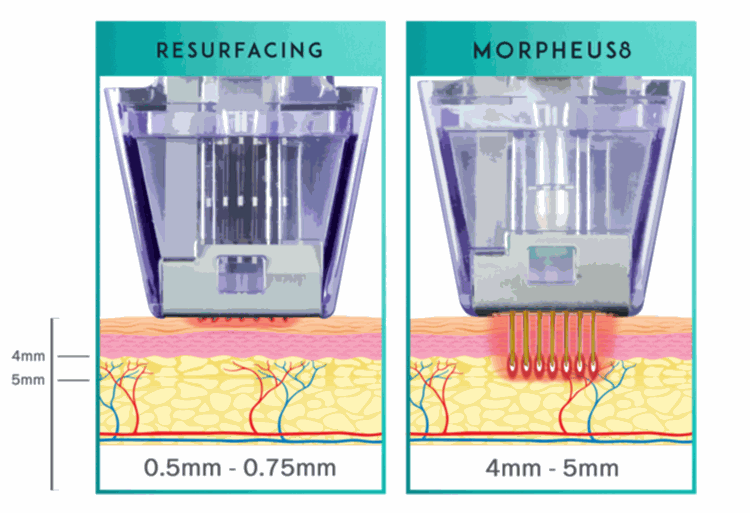
The specific distinction of this device: the needles themselves deliver radiofrequency energy at their tips, rather than only creating a mechanical channel. Which allows thermal energy to be delivered beneath the skin surface, at a depth determined by how far the needles penetrate — rather than only at the surface, as with some other radiofrequency approaches, such as the external applicators described in our multipolar radiofrequency guide. Our BodyTite Quantum RF and argoplasma pages both describe subdermal radiofrequency and plasma delivery for the body; this is a related principle applied to the face, and using microneedling as the delivery mechanism specifically.
The combined effect
Mechanical micro-injury from the needling, plus thermal coagulation of collagen at the depth the needles reach — producing both the wound-healing collagen response that microneedling alone triggers, and the more immediate thermal contraction our argoplasma and BodyTite guides describe for their respective applications.
What this is used for
- Skin texture and mild to moderate laxity of the face, neck and, in some protocols, the body.
- Acne scarring, where the combination of mechanical and thermal effects can improve the appearance of certain scar types.
- And mild jowl or lower-face laxity, where the depth control allows treatment of tissue somewhat deeper than surface-only approaches reach.
2. Needle depth: the technical distinction that actually matters
The section that separates a genuinely informed treatment from a generic one.
Why depth is adjustable, and why that matters
The device allows the practitioner to set how deep the needles penetrate, which determines the depth at which radiofrequency energy is delivered. Different depths address different concerns: more superficial settings for texture and fine lines; deeper settings for more significant laxity or for reaching the fat layer in some body applications.
Why this is a genuine skill question
Treating every patient and every area with the same standard depth setting is not individualised treatment — it is applying one protocol regardless of the specific skin thickness, concern, and area being treated. Thinner-skinned areas (around the eyes, for instance) require different, generally shallower settings than thicker-skinned areas of the face or body.
What good practice looks like
Depth selected specifically for the area and the concern being treated, not a single default setting used everywhere. And an assessment of your skin thickness and the specific problem before treatment, rather than proceeding directly to a standard protocol.
What to ask
« Comment déterminez-vous la profondeur des aiguilles pour ma zone et mon objectif spécifiques ? » A specific, considered answer indicates individualised treatment. A generic answer suggests a standard protocol applied regardless.
3. What it achieves, and its limits
The genuine effect
- Improved skin texture.
- A degree of tightening — our BodyTite and argoplasma guides both make the point, for their respective technologies, that energy-based tightening devices achieve a modest to moderate effect, considerably less than surgical excision, and the same honest framing applies here.
- Improvement in the appearance of certain acne scar types.
- And some improvement in mild jowl or lower-face laxity, in appropriately selected patients.
The limit
Significant skin laxity, particularly of the lower face and neck, is a fraction better addressed by surgical approaches — our facelift and neck lift guides — and this device, like the other energy-based tightening technologies in our library, is not a substitute for excision where excision is genuinely what a patient’s degree of laxity requires.
Where the confusion comes from
As with our argoplasma and BodyTite guides’ point about combined liposuction-plus-tightening images, before-and-after photographs for facial energy devices can reflect good lighting, makeup, and the effect of multiple combined treatments — making the isolated contribution of this specific device harder to judge from images alone than the marketing suggests.
The honest position
A genuinely useful tool for texture, mild-to-moderate laxity, and certain scarring, used within realistic expectations, and not marketed as a facelift alternative for patients whose laxity actually requires surgery.
| Concern | What this device does | Where it stops |
|---|---|---|
| Skin texture, fine lines | Genuine improvement; more superficial depth settings | Several sessions may be discussed; effect is gradual |
| Mild to moderate laxity | Modest to moderate tightening at a controlled depth | Considerably less than surgical excision |
| Certain acne scar types | Mechanical and thermal effect on scar appearance | Improvement in appearance, not erasure |
| Significant lower-face or neck laxity | Not the right tool | Better addressed by facelift or neck lift surgery |
4. Skin tone and pigmentation: the consideration to discuss directly
Set out clearly here, because it is not always volunteered.
The risk
Post-inflammatory hyperpigmentation — darkening of the treated skin during healing — is a recognised risk with fractional energy-based devices, including radiofrequency microneedling, and it occurs more frequently in darker skin tones. This is a general principle across fractional and energy-based skin treatments, not specific to poor technique alone, though appropriate settings and technique for the specific skin type reduce the risk.
What increases the risk
- Higher energy or depth settings than appropriate for the skin type.
- Insufficient sun protection during healing.
- And, in some cases, individual skin sensitivity that is not always predictable in advance.
What reduces it
- Settings appropriately calibrated for the specific patient’s skin type, rather than a uniform approach regardless of skin tone.
- Strict sun protection during the healing period — which our body guides describe as important for scars generally, and which matters particularly here.
- And, where the risk is judged to be higher, a test area or more conservative initial settings.
What we do
Discuss this specifically with patients of darker skin tones, rather than treating it as an unmentioned general risk that applies equally to everyone. Calibrate settings to skin type. And provide clear sun protection guidance for the healing period. Ask: « Comment ajustez-vous les paramètres selon mon phototype cutané ? »
5. Who should not have it
- Active acne or skin infection in the treatment area.
- A pacemaker or other implanted electronic device — as with our BodyTite guide’s equivalent section, requiring specific caution given the radiofrequency energy involved.
- Keloid or significant hypertrophic scarring tendency, requiring individual discussion.
- Pregnancy, as a precaution.
- Recent significant sun exposure or a tan, which raises pigmentation risk — treatment is generally deferred until this has settled.
- And unrealistic expectations of a surgical facelift-equivalent result — section 3 above.
6. Your Canadian options
Available in Canada, and not covered by provincial plans.
Part two — preparing and the appointment
7. From first contact to your appointment
The consultation
Send photographs, in good natural light, of the areas of concern. Plus: your skin type and tone, any previous energy-based facial treatments, any keloid history, any implanted electronic device, medications, and whether you smoke.
What you receive
An assessment of whether this suits your specific concern, or whether a surgical or different approach would serve you better, the depth and settings proposed for your skin and goals, and the cost.
Questions worth asking before you commit
- « Comment déterminez-vous la profondeur des aiguilles pour moi ? » — section 2.
- « Comment ajustez-vous les paramètres selon mon phototype ? » — section 4.
- « Une exérèse chirurgicale me conviendrait-elle mieux que ce traitement ? » — section 3.
8. The appointment
- Around forty-five minutes to ninety minutes, depending on the area.
- Topical numbing applied, generally for a significant period beforehand given the sensation involved.
- Settings — depth and energy — determined for your specific skin and area.
- The device passed systematically across the treatment area.
- And you leave the same visit, though see section 9 — the visible downtime here is more significant than for PRP for the face or standard injectables such as botox.
Part three — afterwards
9. Recovery, honestly
More visible downtime than most treatments in our injectables library.
- Significant redness and swelling for several days, sometimes longer.
- Small, pinpoint scabbing or a grid-like pattern at the treatment sites, generally resolving over five to seven days.
- Skin may feel rough or sandpaper-like during this healing phase.
- Makeup generally avoided for a day or two, then used to conceal the healing pattern if needed.
- And full settling of both the visible healing and the treatment’s tightening effect taking several weeks to a few months.
10. Complications
- Prolonged redness or swelling.
- Post-inflammatory hyperpigmentation — section 4, the most important one to discuss beforehand for darker skin tones.
- Infection, uncommon.
- Thermal injury — similar in principle to the risk our argoplasma and BodyTite guides describe, and prevented by appropriate settings and technique for the specific depth and area.
- Scarring, uncommon with appropriate technique.
- And an inadequate result relative to expectations, particularly where the underlying laxity was more significant than the technology addresses — section 3.
11. Your Canadian follow-up
Report any unusual or worsening redness, or signs of infection, promptly. And watch for any darkening of the treated skin over the following weeks, particularly if you have a darker skin tone, reporting it if it appears more pronounced than expected.
Part four — practical matters
12. Canadian patients: travelling to Tunisia from your region
Aylan Clinic works with patients from every province and territory in Canada.
Montreal and the surrounding region, and across Canada
On this page the francophone advantage is at two specific technical conversations — how needle depth is chosen for your particular concern, and how settings are calibrated for your skin tone specifically — both of which are precise questions worth asking properly, in your own language, rather than accepting a generic answer.
Given the several days of visible healing this treatment involves, timing it around your travel — rather than immediately before a return flight where you would prefer to look your best — is worth planning, and your coordinator can help sequence this alongside any other treatment during your stay.
13. What your package includes
- Consultation in French or English, with an honest assessment of whether this treatment suits your concern or a different approach would serve you better.
- Depth and energy settings individualised to your area and skin type.
- Specific discussion of pigmentation risk for darker skin tones.
- Written aftercare in French or English, including sun protection guidance.
- Continued contact in French or English.
- French-speaking care throughout, with English available on request.
In summary
Morpheus8 combines two established technologies — fractional microneedling and radiofrequency delivered through the needles — and its genuine technical distinction is the ability to deliver thermal energy at a controlled, adjustable depth beneath the skin.
That depth control is a real skill question, not a marketing detail. Treatment individualised to your specific skin thickness and concern is meaningfully different from a single standard setting applied to everyone, and it is worth asking directly how your treatment is calibrated.
And post-inflammatory hyperpigmentation is a genuine consideration for darker skin tones with any fractional energy-based device, including this one — which should be discussed directly rather than left unmentioned.
Its effect, like the other energy-based tightening technologies in our library, is real and moderate — useful for texture, mild-to-moderate laxity and certain scarring, and not a substitute for surgical correction where significant laxity is genuinely present.
At Aylan Clinic Tunisia that means an honest assessment of whether this treatment suits your specific concern, needle depth chosen for your area rather than applied as a default, settings calibrated to your skin tone with pigmentation risk discussed directly, and realistic expectations set before you begin. It takes place in a French-speaking country, which matters when the technical questions worth asking are this specific.
Three things to hold onto
- Ask how needle depth is chosen for your specific concern. A single default setting is not individualised treatment.
- Ask directly about pigmentation risk if you have a darker skin tone. This is a genuine consideration that should be discussed, not assumed away.
- It tightens modestly — ask honestly whether your degree of laxity needs this or needs surgery. Significant laxity is better served by our facelift or neck lift guides.
Send your photographs and you will have an honest answer within 24 to 48 hours — including where a different or surgical approach would serve you better. The practical details of the session, the stay and the aftercare are on our Morpheus8 skin treatment in Tunisia page; compare the cost against the rest of the range on plastic surgery prices in Tunisia, browse the wider aesthetic medicine in Tunisia section, or request a free, personalised quote.
Morpheus8 Skin Treatment in Tunisia
How the session works, the settings, your stay and the aftercare — the practical procedure page.