
Ultrasonic rhinoplasty at Aylan Clinic Tunisia — also called piezo rhinoplasty — uses ultrasonic vibration to cut and reshape the nasal bones, over a stay of eight to ten days, for up to 60% less than Canadian private prices. The short answer is yes, we use it. This guide is honest about what it changes and what it does not: it is a better instrument for the bony third of your nose, it does not touch the cartilage that forms your tip, and it does not shorten the twelve to eighteen month swelling timeline.
This page covers the instrument. The operation itself — assessment, tip technique, recovery, travel and follow-up — is set out on our intervention page, Piezo Rhinoplasty in Tunisia, and in our main complete guide to rhinoplasty in Tunisia. If you have not read the main rhinoplasty guide, read that first. For the cost side of the decision, see plastic surgery prices in Tunisia. Everything here sits within our broader facial surgery in Tunisia section.
The honest position, stated at the top
- Ultrasonic instrumentation is a genuine advance, and it is an instrument rather than an operation.
- What it improves is real but specific: it works on bone with precision and without the blunt force of a chisel, and published series report less bruising in the first ten days.
- What it does not do is change the parts of a rhinoplasty that most determine your result. The tip is cartilage, not bone — and ultrasonic instruments do not touch cartilage.
- And it does not shorten the swelling timeline. Your result is still at twelve to eighteen months. Any clinic marketing piezo as a fast-recovery rhinoplasty is overstating it.
- What matters more than the instrument is the surgeon holding it.
One thing distinguishes Tunisia: it is a French-speaking country, which matters at the consultation where you ask about your tip.
Part one — deciding
1. What ultrasonic rhinoplasty is
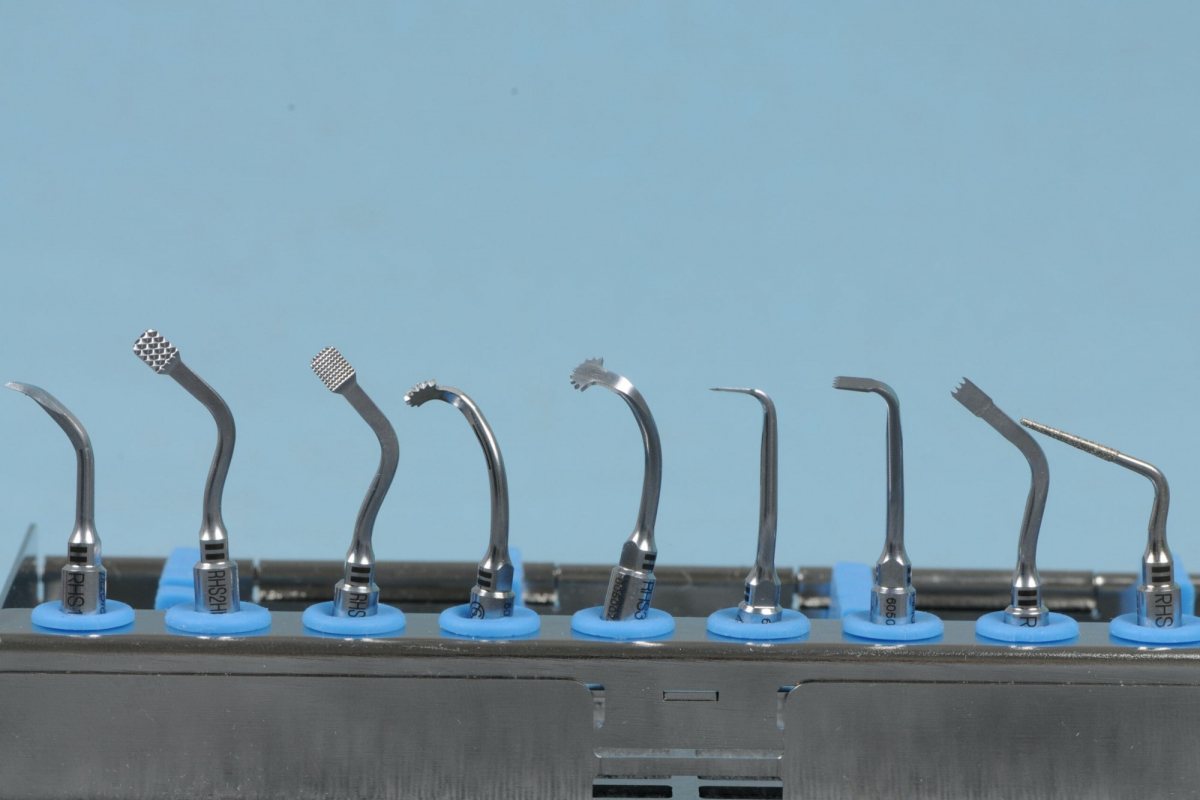
The technology. A piezoelectric handpiece delivers ultrasonic vibration to a fine tip, which cuts and abrades bone while leaving soft tissue unharmed. That selectivity is the central property: the vibration frequency cuts mineralised tissue — bone — and does not cut mucosa, cartilage, blood vessels or nerves. The same technology has been used in oral and maxillofacial surgery for years, and it entered rhinoplasty more recently.
What it replaces. Traditional rhinoplasty shapes bone with a rasp, an osteotome and a mallet. Hump reduction means filing with a rasp or cutting with an osteotome. Narrowing the nose means controlled fractures of the nasal bones — osteotomies — created with a chisel and mallet. These techniques are well established and they work. What they involve is blunt force, and the fracture lines are guided by the surgeon’s skill rather than precisely cut.
What ultrasonic instruments do instead. The hump is reduced by ultrasonic abrasion, in fine controlled passes. Osteotomies are cut rather than fractured — a precise line, in the exact position planned. And the soft tissue over the bone, and the blood vessels within it, are not cut by the instrument.
2. It is an instrument, not an operation
This is the most important framing on this page. “Ultrasonic rhinoplasty” is marketed as a type of rhinoplasty. It is not. It is a rhinoplasty in which the bony work is done with a different instrument. Everything else is the same operation — the approach, the tip work, the grafting, the functional correction, and the judgement about what your nose needs.
What this means practically. A surgeon with excellent judgement using a rasp produces a better result than a surgeon with poor judgement using a piezo. The instrument improves precision in one part of the operation. It does not supply the plan.
Why we say it. Because a number of clinics market piezo as though it were the deciding factor in choosing a surgeon. It is not — section 7 sets out what is. We use ultrasonic instruments because they are better for the bony work, and we would rather you chose us for the assessment and the plan than for the handpiece.
3. What it genuinely improves
Precision on bone. The clearest benefit. An osteotomy cut with an ultrasonic tip follows exactly the line the surgeon draws. A fracture created with a chisel follows the line of least resistance in the bone — which is usually where the surgeon intended, and sometimes is not. Where a fracture propagates unpredictably, it produces irregularity that has to be managed. Ultrasonic cutting removes that variable, and it matters most in thin or fragile nasal bones, asymmetric bones, and revision cases where the bones have been cut before.
Fine control of hump reduction. The hump can be reduced in very fine increments, with the surgeon assessing between passes. A rasp removes bone less controllably, and an osteotome removes it in a single cut. For a small hump, or where a specific dorsal line is being created, that control is genuinely useful.
Preservation of soft tissue. Because the instrument does not cut mucosa or vessels, the periosteum and the lining can be preserved where traditional instruments would disrupt them. This is the mechanism behind the bruising difference in section 4.
Where it helps most. Thin bones. Asymmetric bones. Revision osteotomies. Preservation rhinoplasty techniques, where precise dorsal work is central. And small, precise hump reductions.
Where it makes least difference. Thick, robust bones in a straightforward reduction — where a competent traditional osteotomy achieves the same result.
4. The bruising: what the evidence actually shows
This is the most marketed claim, and it is worth stating precisely.
What is reported. Published comparative series and meta-analyses report less ecchymosis and periorbital oedema in the early post-operative period with ultrasonic techniques — typically assessed over the first seven to ten days. Patients in those series were, on average, less bruised at day one, day three and day seven. That is a real finding and it is worth having.
What it does not mean. It does not mean no bruising: you will still bruise, and some patients bruise substantially regardless of technique. It does not mean a shorter overall recovery — swelling resolution over twelve to eighteen months is unchanged, as section 6 sets out. And it does not mean a better final result: the published evidence on final aesthetic outcome does not show a clear difference. The difference is in the early period.
How to read the claim. “Less bruising in the first week” is accurate. “Recover in half the time” is not. “A better nose” is not supported by the evidence.
Why the difference matters to you. Practically, you may be presentable somewhat sooner, which for a patient travelling home and returning to work has genuine value. That is worth having, and it is not a reason to choose one surgeon over another.
5. What it does not touch: the tip
This is the section that matters most, because the tip determines most rhinoplasty results.
The anatomy. The upper third of the nose is bone. The lower two-thirds are cartilage. The tip — its shape, projection, rotation and definition — is entirely cartilage.
What this means. Ultrasonic instruments cut bone. They do not work on cartilage. Which means the tip is shaped exactly as it always was — by cutting, suturing and grafting cartilage, with the surgeon’s judgement and technique.
Why this is the key point. Because the tip is where most rhinoplasty results are won or lost. It is the most visible part of the nose, the most technically demanding to shape, the last to settle, and the most common site of revision. A patient choosing a surgeon because they use ultrasonic instruments is choosing on the basis of the third of the nose that is generally easier, and ignoring the two-thirds that is harder.
What to ask instead. « Comment allez-vous traiter ma pointe ? » — « Utilisez-vous des greffons de structure, et lesquels ? » — « Compte tenu de mon épaisseur de peau, quel degré de définition est réaliste ? » Those questions tell you far more about your likely result than the instrument does.
6. It does not shorten the swelling timeline
Stated plainly, because it is the most common misunderstanding. The timeline is unchanged.
| Stage | What happens |
|---|---|
| Week 1 | Maximum swelling, splint on |
| Weeks 2 to 4 | Major swelling resolves, possibly with less bruising than traditional technique |
| Months 1 to 3 | Steady improvement |
| Months 3 to 12 | The tip refines slowly |
| Months 12 to 18 | Final result, and longer with thick skin |
Why. Because swelling resolution is driven by lymphatic recovery in soft tissue, which is not affected by how the bone was cut. The tip — where swelling lasts longest — was never touched by the instrument.
What this means. A clinic advertising ultrasonic rhinoplasty as a “quick recovery” or “see your result in weeks” procedure is misrepresenting it. You may look presentable a few days sooner. Your nose settles on the same schedule as any other.
7. What actually determines your result
The honest ranking, in descending order of importance, and it is why this page exists.
- The assessment. Whether your breathing was examined, whether your skin thickness and cartilage strength were assessed, and whether the plan fits your anatomy. Our main rhinoplasty guide covers this.
- The tip technique. Structural support, grafting, and judgement — section 5.
- The surgeon’s experience and judgement. Millimetres, in the centre of your face.
- Your own anatomy, which sets the limits.
- Your aftercare, particularly sun protection and not smoking.
- The instrument used on the bone.
Ultrasonic instrumentation is genuinely useful, and it is sixth on that list.
What this means for choosing a clinic. Ask about the first five. A clinic whose main differentiator is the handpiece has told you about its equipment rather than about its judgement.
8. When we would use it, and when we would not
Where we use it. Most cases involving bony work — hump reduction and osteotomies. Particularly: thin or fragile bones, asymmetric bones, revision cases, and preservation rhinoplasty, where precise dorsal work is central.
Where traditional instruments remain appropriate. Where the bone is thick and robust and a straightforward osteotomy is planned, a well-executed traditional osteotomy is a good operation. And in combination: many operations use ultrasonic instruments for part of the bony work and conventional instruments for another part, because each has strengths.
The honest position. We would not decline to operate on a patient because ultrasonic instruments were not indicated, and we would not use them where a conventional technique serves better. The instrument follows the case.
The trade-offs, stated. Ultrasonic work takes longer — the operation is typically somewhat longer, because fine passes take more time than a single osteotome cut. Longer operating time means longer anaesthesia, which is a minor consideration in a healthy patient and worth stating. And there is a learning curve: the technique is not simply a matter of owning the equipment. Ask how long your surgeon has used it, which is a more useful question than whether they have it.
9. Your Canadian options
Cosmetic rhinoplasty is not covered in Canada. Functional septal surgery for documented obstruction is — and our septoplasty page sets out that pathway. Ultrasonic instrumentation is available in Canada, at some private practices, and it is not a reason in itself to travel. The reason to travel is cost and access; the reason to choose a particular surgeon is the assessment and the technique, section 7.
Part two — preparing
10. From first contact to confirmed dates
The online consultation. As for any rhinoplasty — and our main rhinoplasty guide sets out the full submission. Photographs from five angles: front, both profiles, both three-quarters, and the basal view from below, which is the one most often missing. Natural daylight, unfiltered, no makeup on the nose. Plus: what you want changed and what you want kept, your breathing, previous surgery or trauma, allergy or sinus problems, your medical history and medications, whether you smoke, and your age.
What you receive. A plan stating what is achievable given your anatomy, whether ultrasonic instrumentation is indicated for your bony work and why, how the tip will be addressed (section 5), whether functional correction is needed, the stay, the swelling timeline, and the cost. Within 24 to 48 hours.
Questions worth asking before you commit.
- « Comment allez-vous traiter ma pointe ? » — more important than the instrument question.
- « L’instrumentation ultrasonique est-elle indiquée dans mon cas, et pourquoi ? »
- « Depuis combien de temps utilisez-vous cette technique ? »
- « Ma respiration sera-t-elle évaluée ? »
- « Quand verrai-je le résultat définitif ? » — twelve to eighteen months, unchanged by the instrument.
- « Quelle est votre politique en cas de retouche ? » — in writing.
What to arrange at home before you travel. Stop smoking, four weeks before and after. Treat any allergy or congestion. Arrange contact lenses if you wear glasses — no glasses on the bridge for four to six weeks. Arrange time off: two weeks, and possibly presentable slightly sooner than with traditional technique.
Part three — the stay
11. Your stay in Tunisia
Eight to ten days, as for any rhinoplasty.
Day 1 — Arrival. Your driver meets you at the airport and takes you to your hotel with your companion.
Day 2 — Consultation and planning. Full external and internal examination, including septum, valves and turbinates. Assessment of skin thickness, cartilage strength and bone quality — and bone quality is what determines whether ultrasonic instrumentation adds most. Photographs, profile analysis, and the planning conversation. Blood tests and anaesthetic assessment.
Day 3 — Surgery. Two to four hours, somewhat longer than an equivalent traditional operation, because fine ultrasonic passes take time. Bony work with ultrasonic instrumentation where indicated. Tip work with cartilage technique and structural grafting — section 5, and this is where most of the operation’s difficulty lies. Functional correction where indicated. Splints, and one overnight in hospital.
Days 4 to 6 — Recovery. Swelling and bruising, peaking at day two to three — and frequently less bruising than with traditional technique, though it varies between patients. Mouth breathing, head elevated, ice around the eyes. Review appointments.
Day 7 — Splint removal. The splint comes off, and the nose will be swollen. The bridge is frequently recognisable early, and the bony work is where ultrasonic precision shows. The tip will be swollen and upturned, and that is unchanged by the instrument. Taping applied.
Days 8 to 10 — Final review and departure. Final examination, and your documentation: an operative report describing exactly what was done, including which instrumentation was used and where; written aftercare in French or English; taping instructions; the swelling timeline; and a letter for your Canadian physician. Then your transfer to the airport.
12. The first weeks
As for any rhinoplasty, with one difference: bruising is frequently less in the first week, which is the practical benefit. Everything else is the same.
- Blocked breathing for one to two weeks.
- No blowing your nose for two to three weeks.
- No glasses on the bridge for four to six weeks.
- No strenuous activity for three to four weeks.
- Head elevated for two weeks.
- Strict sun protection for six months.
Our main rhinoplasty guide sets out the aftercare in full.
Part four — what follows
13. The result, and how to judge it
On the same timeline as any rhinoplasty — section 6. Twelve to eighteen months, with the tip last, and longer with thick skin.
What ultrasonic work shows. A clean dorsal line, where osteotomies were cut precisely. Fewer bony irregularities along the lateral walls — the irregularities that can appear months after traditional osteotomies as small step-offs. And a more predictable bony narrowing.
What it does not show. A different tip. Faster settling. Or a result that differs from what an experienced surgeon achieves with traditional instruments in a straightforward case.
14. Your Canadian follow-up
As for any rhinoplasty, and our main guide covers it. Arrange a Canadian physician before you travel who will see you if anything needs attention.
What warrants urgent attention: fever, increasing pain, spreading redness or discharge; significant bleeding; and a dark or dusky area of skin at the tip or columella, which is urgent.
Keep your operative report. It states which instrumentation was used and where, which is useful information for any future surgeon. Canadian coverage: cosmetic rhinoplasty is not covered; functional septal surgery is; treatment of any complication is covered.
Part five — practical matters
15. Canadian patients: travelling to Tunisia from your region
Aylan Clinic works with patients from every province and territory in Canada.
Montreal and the surrounding region. Montreal is our largest Canadian source for Tunisia, with connections through Paris, Frankfurt or Istanbul. Patients from Laval, Longueuil and Brossard are within easy reach of the airport. Where reduced early bruising matters practically — a return to work, an event — it is a genuine if modest advantage for a patient flying home.
Quebec City and across the province. From Quebec City and the Capitale-Nationale region including Lévis, most patients connect through Montreal, as do patients from Trois-Rivières, Sherbrooke, Drummondville and Saint-Jérôme. Gatineau patients depart from Ottawa or drive to Montreal. On this page the francophone advantage is at the consultation where you ask about the tip, because that is the conversation that determines your result — and it is a more technical conversation than asking whether a clinic has a piezo handpiece. Understanding what structural grafting means, what your skin will permit, and how your tip will be supported, is what you are really choosing on.
Acadia and New Brunswick. We work with patients from Moncton, Fredericton and Saint John. Moncton and the surrounding Acadian communities are served in French throughout.
Francophone Ontario. Sudbury, Thunder Bay and Sault Ste. Marie all have substantial francophone populations, served in French from first contact onward. Ottawa patients typically connect through Montreal.
Greater Toronto Area and southern Ontario. Toronto patients connect through European hubs. Across the wider Greater Toronto Area: Mississauga, Brampton, Markham, Vaughan, Richmond Hill and Oshawa. Along the lake: Hamilton, Burlington, Oakville, St. Catharines and Niagara Falls. In southwestern Ontario: London, the Waterloo region — Kitchener, Waterloo and Cambridge — plus Guelph, Windsor and Barrie. Kingston patients generally drive to Toronto or Montreal.
Vancouver and British Columbia. Vancouver patients face the longest journey, typically two connections. We recommend extending by a day or two, so you fly after splint removal. Across the Lower Mainland: Surrey, Burnaby and Richmond. From Victoria and Nanaimo, ferry or short flight. Kelowna, Abbotsford and Kamloops connect through Vancouver or Calgary.
Alberta. Calgary and Edmonton both offer European connections. Red Deer and Lethbridge patients generally drive to Calgary.
Manitoba and Saskatchewan. Winnipeg patients connect through Toronto or Montreal, and Saint-Boniface is served in French. From Saskatoon and Regina, a domestic connection plus two further flights. Dry winter air is uncomfortable on a healing nose — saline spray and humidification help.
Atlantic Canada. Halifax routes through Montreal or Toronto. From Charlottetown and St. John’s, two or three connections.
Northern Canada. We work with patients from Whitehorse in Yukon, and from communities across the Northwest Territories and Nunavut. Dry air matters, and access to assessment if something needs attention is worth arranging before you travel. We plan the full stay plus buffer.
How we handle the logistics. Your coordinator arranges transfers, confirms your hotel, and builds your schedule around your arrival time.
Five recommendations. Ask about the tip, not the handpiece. Send the basal view photograph. Say what you want kept. Arrange contact lenses. And do not expect the instrument to shorten your swelling timeline.
16. What your package includes
- Free consultation in French or English, with an honest assessment of what your anatomy permits
- Full on-site assessment: external and internal examination including septum, valves and turbinates
- Assessment of skin thickness, cartilage strength and bone quality
- An honest statement of whether ultrasonic instrumentation is indicated in your case and why
- Standardised photography from all angles
- Blood tests and anaesthetic assessment
- An unhurried planning consultation, covering what you want changed and what you want kept
- Rhinoplasty with ultrasonic instrumentation for the bony work where indicated
- Tip work with structural grafting — section 5
- Grafts from your own tissue, with the source stated
- Functional correction where indicated
- Splints, one overnight in hospital, medication
- Review appointments and splint removal during your stay
- Operative report stating which instrumentation was used and where
- Written aftercare in French or English, including the unchanged swelling timeline
- Taping instructions
- A letter for your Canadian physician
- A written revision policy, provided before you commit
- Continued contact in French or English after you return
- Hotel accommodation, full board
- A companion at no extra cost, accommodated and fed in the same room
- Airport–clinic–hotel transfers
- A personal coordinator from arrival to departure
- French-speaking care throughout, with English available on request
The clinical team. A plastic or ENT surgeon specialising in rhinoplasty, using ultrasonic instrumentation where indicated and frequently French-trained; an anaesthetist; and a dedicated nurse.
17. Results by patient profile
Thin bones, asymmetric. A patient with thin nasal bones and a pre-existing asymmetry, where traditional osteotomies carried a real risk of unpredictable fracture. Ultrasonic osteotomies cut precisely along the planned lines. This is where the instrument earns its value most clearly.
A small hump, precisely reduced. A patient with a modest dorsal hump who wanted a straight dorsum without over-reduction. Ultrasonic abrasion in fine passes, assessed between each. The control is genuinely better than a rasp for this specific task.
Where the tip was the whole operation. A patient who contacted us specifically asking for ultrasonic rhinoplasty. Her concerns were entirely about her tip — its width and lack of definition — with almost no bony work needed. We explained that ultrasonic instruments do not touch cartilage (section 5) and that her operation would be a tip operation. She had it, and she was satisfied. She had been choosing on the basis of the third of the nose that was not her problem.
Where traditional technique was used. A patient with thick, robust bones and a straightforward reduction. Conventional osteotomies performed, with ultrasonic instrumentation used for the dorsal work only. The instrument follows the case, section 8.
Revision osteotomies. A patient whose nasal bones had been cut at a previous operation, with the healing lines unpredictable. Ultrasonic cutting through previously fractured bone was considerably more controlled than repeat traditional osteotomy would have been. One of the clearest indications. Our secondary rhinoplasty page covers revision in full.
A patient from Laval. A patient who chose Tunisia and who arrived asking about the technology. Her comment afterwards was about what she learned at the consultation — that the question she should have been asking was about her tip. « J’étais venue poser une question sur un appareil. On m’a expliqué que ma vraie question était ailleurs. »
18. Practical points to know
What to expect. A rhinoplasty, with all of the assessment, planning, recovery and timeline set out in our main guide. Possibly less bruising in the first week. A somewhat longer operation. And the same swelling timeline — twelve to eighteen months, with the tip last.
Recognised points. The considerations are those of rhinoplasty generally, and our main rhinoplasty guide sets them out in full: prolonged tip swelling, asymmetry, irregularities, breathing obstruction, revision at five to fifteen per cent, numbness, bleeding, infection, and the general risks of general anaesthesia. Specific to ultrasonic technique: a longer operating time, a learning curve for the surgeon, and thermal injury to soft tissue if the instrument is used without adequate irrigation — which correct technique prevents.
Three things within your control. Asking about the tip rather than the instrument. Not smoking. And waiting twelve to eighteen months before judging your result.
Who this suits. Anyone having a rhinoplasty in which bony work is needed, and particularly patients with thin, fragile or asymmetric bones, and revision cases.
Who will not benefit particularly. Patients whose concerns are entirely about the tip — section 5, and we will tell you.
19. Price: how it is built and how to compare it
What determines your price. The complexity of the operation — not principally the instrument. Whether functional correction is included. Whether grafts are needed, and their source. And the length of stay. Itemised, and fixed once you approve it. Our price page for Tunisia gives the broader picture.
Is ultrasonic more expensive? Somewhat, where it is used: the operation takes longer and the instrumentation has a cost. The difference is modest relative to the whole procedure.
What is included. Everything in section 16. A companion is accommodated and fed at no additional cost.
How to compare quotes properly. Five checks, and only one of them concerns the instrument.
- How will the tip be addressed? The most important question, and the one this page exists to redirect you to.
- Is the inside of your nose examined, and is functional correction included?
- Is the swelling timeline stated honestly? A clinic advertising piezo as a fast-recovery rhinoplasty is overstating it.
- Is there a written revision policy?
- And is ultrasonic instrumentation indicated for your case, or offered as a selling point?
Why the instrument is the wrong basis for choosing. Because it is sixth on the list in section 7. A clinic whose main differentiator is its equipment has told you what it owns rather than how it assesses. And the difference between a good rhinoplasty and a poor one is judgement about your specific anatomy, which no handpiece supplies.
Canadian coverage. Cosmetic rhinoplasty is not covered. Functional septal surgery is.

Getting your figure. Send photographs from five angles including the basal view, with what you want changed and what you want kept, your breathing, previous surgery, your medical history, and whether you smoke. A plan and quote follow within 24 to 48 hours, in French or English — request a free, personalised quote.
20. Glossary
| Term | Meaning |
|---|---|
| Ultrasonic / piezo rhinoplasty | Rhinoplasty in which the bony work is done with ultrasonic instrumentation |
| Piezoelectric | The technology generating the ultrasonic vibration |
| Osteotomy | Cutting or fracturing the nasal bones to narrow the nose |
| Rasp | The traditional file used to reduce a bony hump |
| Osteotome | The traditional chisel used with a mallet |
| Ecchymosis | Bruising |
| Dorsum | The bridge of the nose |
| Periosteum | The soft tissue layer over bone, preserved more readily with ultrasonic technique |
21. How Canadians search for this
- “Ultrasonic rhinoplasty Tunisia” — the most common search.
- “Rhinoplastie ultrasonique Tunisie” — how most Quebec patients search.
- “Piezo rhinoplasty” — the same technique.
- “Is ultrasonic rhinoplasty better” — better for the bony work specifically, with less early bruising in published series. It does not change the tip or the timeline.
- “Ultrasonic rhinoplasty recovery time” — possibly presentable a few days sooner. The twelve to eighteen month swelling timeline is unchanged.
- “Piezo vs traditional rhinoplasty” — precision on bone, less early bruising, a longer operation, and no difference to the tip.
- “Ultrasonic rhinoplasty tip” — the instrument does not touch cartilage. The tip is shaped conventionally, section 5.
- “Does ultrasonic rhinoplasty hurt less” — bruising is reported as less; pain after rhinoplasty is generally modest either way.
- “Ultrasonic rhinoplasty cost” — somewhat more where used, and modest relative to the whole procedure.
- “Best rhinoplasty technique” — the question to ask is about your surgeon’s assessment and tip technique, section 7.
- “French speaking rhinoplasty surgeon abroad” — Tunisia’s distinguishing feature.
In summary
Ultrasonic rhinoplasty is a genuine advance, and it is an instrument rather than an operation. What it improves is real and specific: precise osteotomies cut rather than fractured, fine control of hump reduction, and less bruising in the first seven to ten days. It helps most with thin, fragile or asymmetric bones and in revision.
What it does not do is change the parts of a rhinoplasty that most determine your result. The tip is cartilage, the instrument cuts bone, and the tip is where most rhinoplasty results are won or lost. And it does not shorten the swelling timeline — your result is still at twelve to eighteen months.
We use it at Aylan Clinic Tunisia where it is indicated, and we would rather you chose us for the assessment and the plan than for the handpiece. It takes place in a French-speaking country, which matters at the consultation, where the question that determines your result is about your tip. With accommodation, full board and a companion at no extra cost, for up to 60% less than Canadian private prices.
Five things to hold onto.
- It is an instrument, not an operation. A surgeon with excellent judgement using a rasp beats a surgeon with poor judgement using a piezo.
- It does not touch your tip. The tip is cartilage, it is where most results are determined, and it is shaped conventionally.
- Less bruising in the first week is accurate. “Half the recovery time” is not. The twelve to eighteen month timeline is unchanged.
- It helps most with thin, fragile or asymmetric bones, and in revision — and makes least difference in a straightforward reduction of robust bone.
- Ask about the tip, the grafting, your skin and your breathing. Those are the first five things on the list. The instrument is sixth.
Send your photographs and you will have an honest answer within 24 to 48 hours, in French or in English.
When you are ready to look at the operation itself, read our intervention page on Piezo Rhinoplasty in Tunisia, compare plastic surgery prices in Tunisia, explore the wider facial surgery in Tunisia section, or request a free, personalised quote.
Related guides: Rhinoplasty in Tunisia, Ethnic Rhinoplasty in Tunisia, Secondary Rhinoplasty in Tunisia and Septoplasty in Tunisia.