
A deep plane facelift at Aylan Clinic Tunisia repositions the face as a single composite unit: the dissection is carried beneath the SMAS, the retaining ligaments that tether the tissues down are released under direct vision, and skin and SMAS are lifted together rather than the skin being pulled. That is what allows the midface — the cheek and the nasolabial fold — to move, which skin-only and simple SMAS techniques largely do not achieve. The stay is twelve to fourteen days, and the cost is up to 60% less than Canadian private prices. “Deep plane” describes a dissection plane, not a brand, and a great deal of surgery marketed as deep plane is not one.
This guide is the long, pedagogical companion to our procedure page on deep plane face lift in Tunisia, which sets out how the operation itself is organised, the stay and the aftercare. Here we go further into the anatomy, the questions that establish whether you are genuinely being offered a deep plane lift, who the operation suits and who would be better served by less, the complications that shape the fourteen days, and the year that follows. Figures for the whole facial range are collected on our plastic surgery prices in Tunisia page, and the wider context sits in our facial surgery in Tunisia overview.
Three things before you read further. It is not automatically the right operation for everyone — a younger patient with early laxity and good volume may be better served by less, and we will say so. It is a bigger operation than the alternatives, with a longer recovery, a longer numbness period and real risks. And one thing distinguishes Tunisia: it is a French-speaking country. Not a clinic with French-speaking staff — a country where French is a working language across medicine and daily life. The guide is organised around your journey: deciding, preparing, the stay, and the year that follows.
Part one — deciding
The anatomy, briefly
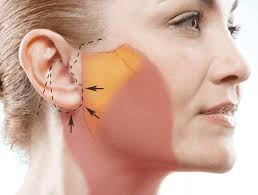
You need three facts to understand every facelift technique. The SMAS — the superficial musculoaponeurotic system — is a layer of fibrous tissue and muscle beneath the skin and fat, covering the face. It is continuous with the platysma in the neck and with the muscles of facial expression. It is what holds the shape of the face, and it is what descends with age.
The retaining ligaments are fibrous bands tethering the SMAS and skin to the underlying bone and deep tissue at defined points — over the cheekbone, along the jaw, and beside the mouth. They hold the face in position, and they are what prevents the tissues moving when a surgeon tries to lift them. Releasing them is the whole point of the deep plane.
The facial nerve runs beneath the SMAS, branching to supply the muscles of expression. Its position relative to the dissection plane is what makes facelift surgery demanding, and what determines how technically difficult each technique is.
What “deep plane” actually means
The definition, precisely. The dissection is carried out beneath the SMAS, in the plane between the SMAS and the deeper structures — the sub-SMAS plane. Skin and SMAS are lifted together as one composite flap rather than separated.
That permits two things. The retaining ligaments can be divided under direct vision, which releases the tissues so they can actually move. And because skin and SMAS move together, the tension is taken on the deep layer rather than on the skin.
Three consequences follow, and they are the argument for the technique. The midface moves. The skin is not under tension, which means the scars heal better and the result does not look tight or pulled. And the repositioning is structural, which is why the result holds.
What it is not: a brand, a trademarked technique, or a single surgeon’s method. It is a dissection plane, described in the surgical literature for decades and refined since. And it is not automatically better for every patient.
Where the term is misused matters to you as a buyer. A great deal of surgery is marketed as “deep plane” that is not. SMAS plication — folding and suturing the SMAS without dissecting beneath it — is not a deep plane lift. A SMASectomy — removing a strip of SMAS and closing it — is not either. Both are legitimate operations. Neither releases the retaining ligaments, and neither repositions the midface the way a deep plane does.
The questions that establish it
Ask these of any surgeon, anywhere.
« Quels ligaments de rétention allez-vous libérer ? » — the single most useful question. A deep plane lift involves releasing specific named ligaments: the zygomatic ligaments over the cheekbone, the masseteric ligaments along the jaw line, and the mandibular ligament. A surgeon performing a genuine deep plane lift will name them. A surgeon performing plication will not, because plication does not release them.
« La peau et le SMAS sont-ils déplacés ensemble ou séparément ? » — deep plane: together, as one composite flap. SMAS techniques: skin elevated separately from the SMAS.
« Où est la tension du résultat ? » — deep plane: on the deep layer. Skin-only lift: on the skin, which is what produces a tight, pulled look and poor scars.
« Est-ce que le lifting va repositionner ma pommette et mon sillon nasogénien ? » — a deep plane lift should improve both. A lower SMAS technique largely does not. If a surgeon says a plication lift will lift your midface, that is not accurate.
Why ask at all? Because the recovery, the cost and the result differ substantially, and because you are entitled to know which operation you are having. A surgeon who answers these clearly is doing what they say. One who deflects is worth being cautious about.
What it does that other techniques do not
The midface is the central argument. The cheek fat pad descends with age, flattening the cheekbone and deepening the nasolabial fold. A skin-only or lower SMAS lift pulls the lower face and jawline and largely leaves the midface where it was — which is why some facelift results look improved at the jaw and unchanged in the middle of the face, and why the patient looks tightened rather than restored. A deep plane lift releases the midface and repositions it upward and outward, restoring cheek projection and softening the nasolabial fold.
The jawline and neck are improved by both techniques. The deep plane does so with less skin tension, and in combination with platysma work it addresses the neck more completely — our neck lift in Tunisia page covers that in detail.
Longevity. Published follow-up suggests deep plane results hold longer than skin-only lifts, because the lift is structural rather than cutaneous. No facelift stops ageing. It resets the position of the tissues, and they continue to age from there.
The vector is a technical point worth knowing. Deep plane lifts are generally lifted in a more vertical direction — upward — rather than backward toward the ear. A backward vector tightens and can look pulled; a vertical vector restores. Ask: « Dans quelle direction allez-vous repositionner les tissus ? »
What it does not do
Stated so that you plan the rest properly.
- It does not improve skin quality — texture, fine lines, pigmentation, sun damage. A facelift repositions; it does not resurface.
- It does not treat the eyelids. Our blepharoplasty in Tunisia page covers that, and the two are frequently combined.
- It does not lift the brow or forehead — a separate operation, covered on our brow lift in Tunisia page.
- It does not fill volume. Where the face has lost fat, repositioning what remains is not the same as restoring volume, and fat grafting is frequently done at the same time.
- It does not remove deep nasolabial or marionette lines entirely — it softens them.
- It does not treat the perioral area — the fine lines around the mouth, which need resurfacing or a lip lift.
Where you want all of these, the plan is a combination, and the section on combining and staging below sets out what we do together and what we do not.
Is it the right operation for you?
Honestly assessed, because it is not for everyone.
Where a deep plane lift is clearly indicated: midface descent with flattening of the cheek and a deepening nasolabial fold; jowling; jawline loss; moderate to significant laxity, typically from the late forties onward; and a patient who wants a single, durable operation rather than repeated smaller interventions.
Where less would serve you better: early laxity with good volume and good skin, where a mini facelift in Tunisia or a limited SMAS technique achieves what you want with a shorter recovery. Where the problem is principally the neck, a neck lift may be the operation. Where the problem is principally volume loss rather than descent, facial fat grafting may achieve more. Where the problem is skin quality, resurfacing. And where you are in your thirties with minimal laxity, we would generally say it is too early, and say so.
Where we would want more information first: smoking, which matters more here than in almost any operation; poorly controlled hypertension, which substantially increases the risk of haematoma, the most common early complication, and must be controlled before surgery; bleeding disorders or anticoagulants, disclosed and managed; significant weight fluctuation, which should be stabilised first; unrealistic expectations, or expectations of looking like a different person; and a history of poor scarring or keloid, which changes the plan.
Deep plane versus the alternatives
| Skin-only | SMAS plication | Deep plane | |
|---|---|---|---|
| Ligaments released | No | No | Yes |
| Midface repositioned | No | Minimally | Yes |
| Tension on | Skin | SMAS sutures | Deep layer |
| Scar quality | Poorer under tension | Good | Good |
| Longevity | Shortest | Intermediate | Longest |
| Technical demand | Lowest | Intermediate | Highest |
| Numbness duration | Shorter | Intermediate | Longer |
| Recovery | Shorter | Intermediate | Longer |
The honest summary: the deep plane does more, lasts longer, and asks more of you — in recovery, in cost, and in the surgeon’s skill.
What we combine, and what we stage
Frequently combined at the same operation. Neck lift with platysmaplasty — almost always, because the face and neck age together and lifting one without the other looks incongruous; our cervicofacial facelift in Tunisia page covers the combined operation. Blepharoplasty — upper, lower or both, very commonly combined, and our facelift and blepharoplasty page covers the planning. Fat grafting, to restore volume where repositioning alone is not enough, and it is frequently what makes the result look restored rather than merely lifted. Brow lift, where the upper third has descended — though this is assessed carefully, because an over-lifted brow is a recognisable operated look.
Frequently staged. Skin resurfacing — laser or peel. It is performed at the same sitting in some hands, and we generally stage it, because resurfacing an undermined skin flap carries a risk to the blood supply. Typically three to six months later, which means a second trip or treatment in Canada. Where you want it, say so at planning so the sequence is set out from the start.
What we would not combine: too much at once. A long operation under general anaesthesia in an older patient carries its own risks, and there is a point at which adding procedures stops being efficient and starts being unwise. Where your wish list is long, we will propose a sequence — and explain why.
Your Canadian options
Cosmetic facial surgery is not covered in Canada, so the comparison is private against private. Two things are worth knowing. Deep plane facelift is performed by relatively few surgeons in Canada, and availability varies considerably by region — which is itself a reason patients look abroad. And the cost difference is substantial: facelift surgery is among the more expensive cosmetic procedures, so a 60% difference is a large absolute figure. What you give up is proximity to your surgeon during recovery, which is why the stay is twelve to fourteen days.
Smoking
It matters more here than almost anywhere in this series. A facelift lifts the skin as a flap, and that flap survives on a blood supply that has been partially divided. Nicotine constricts exactly the small vessels that flap depends on. Smoking is associated with a substantially higher rate of skin flap necrosis — death of an area of skin, which heals by scarring and can cause permanent visible deformity. This is the single most serious avoidable complication of facelift surgery, and it is overwhelmingly a smoker’s complication.
What we require: four weeks before and four weeks after, minimum. This includes vaping and nicotine replacement in the perioperative window, because it is the nicotine that constricts vessels. Discuss timing with us. Canadian provincial quitlines are free.
If you will not stop, tell us honestly. We may decline, or we may modify the technique to a less extensive dissection — and either way you should know that your risk is materially elevated. A clinic that does not ask about smoking before a facelift is not managing your safety.
Part two — preparing
From first contact to confirmed dates
The online consultation. Send photographs, and the angles matter: front with a neutral expression and hair back off the face and ears; both profiles; both three-quarter views; a photograph looking down slightly, which shows the jawline and neck; a photograph with the chin lifted, showing the neck; and a smiling photograph. Natural daylight, no makeup, no filters.
Send with them your age, what specifically bothers you, what you want kept, any previous facial surgery or treatments including fillers and threads, your blood pressure and whether it is controlled, all medications including blood thinners and supplements, any bleeding tendency, any keloid history, whether you smoke, and your weight stability. And tell us about fillers specifically.
What you receive is a plan stating whether a deep plane lift is the right operation for you or whether something less would serve you better, what will be combined, what is staged, the stay, the recovery timeline, and the cost — within 24 to 48 hours.
Questions worth asking before you commit: the four questions above, plus « Le lifting du cou et le platysma sont-ils inclus ? », « Un lipofilling est-il indiqué dans mon cas ? », « Combien de liftings deep plane réalisez-vous par an ? », « Quelle est la durée de l’engourdissement ? » — and an honest answer is months — and « Où votre chirurgien a-t-il été formé ? »
What to arrange at home before you travel. Stop smoking. Get your blood pressure properly controlled, and bring recent readings; this is not a formality. Review medications and supplements with your physician, and note that a number of common supplements increase bleeding, including fish oil, vitamin E, ginkgo, ginseng and garlic tablets — stop them two weeks before, on medical advice. Arrange colour treatment of your hair beforehand if you colour it, because you will not be able to for several weeks. Arrange help at home for the first week after your return. And arrange time off: three weeks minimum before most patients are comfortable in public.
Fillers, threads and previous treatments
Tell us, and be complete.
Fillers. Hyaluronic acid fillers can be dissolved, and where substantial filler is present we frequently dissolve it before surgery, because it distorts the assessment of your actual volume and tissue position. Permanent or semi-permanent fillers — polymethylmethacrylate, polyacrylamide, silicone — are a different matter. They cannot be dissolved, they cause scarring in the tissue planes, and they make the dissection considerably harder. If you have had any filler you cannot name, tell us, and try to find out what it was.
Threads. Barbed suspension threads leave scar tissue in the exact planes a facelift dissects through. They make the operation harder and can affect the result. Tell us what was placed and when.
Previous surgery. Any previous facelift, brow lift or blepharoplasty changes the anatomy, and previous scars, previously dissected planes and altered blood supply all matter. Your previous operative report, where you can obtain it, is genuinely useful.
Radiofrequency and ultrasound skin tightening. Tell us. Devices delivering energy into the deeper layers can produce fibrosis in the planes we dissect.
Part three — the stay
Your stay in Tunisia, day by day
Twelve to fourteen days.
Day 1 — arrival. Your driver meets you at the airport and takes you to your hotel with your companion. Nothing clinical today.
Day 2 — consultation and planning. Full facial assessment: skin quality, laxity, volume, the position of the midface, the jawline, the neck, the brow and the eyelids. Assessment of asymmetry, which is present in everyone and which patients frequently have not noticed — pointing it out before surgery prevents it being attributed to the operation afterwards. Standardised photographs. Blood pressure and blood tests. Anaesthetic assessment. Then the planning conversation: what will be done, what will be combined, what is staged, and what the result will and will not include.
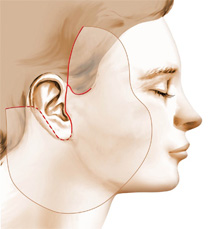
Day 3 — surgery. Four to six hours, depending on what is combined, under general anaesthesia. Incisions in front of the ear following the natural contour, around the earlobe, behind the ear into the hairline, and within the hair at the temple; where the neck is addressed, a small incision under the chin. Composite flap elevation, ligament release, repositioning and fixation. Platysma work in the neck where planned. Fat grafting where planned. Drains, typically removed at day one or two. A light dressing. One or two nights in hospital.
Days 4 to 7 — the swollen days. Swelling peaks at day two to four, and bruising is extensive, frequently down the neck and into the chest. This is the period patients find hardest, and it is worth knowing that you will look worse before you look better. Head elevated at all times, including sleeping. Cold compresses. Medication on schedule. Blood pressure monitored. Gentle walking from day one, which matters.
Days 8 to 10 — suture removal. Sutures removed in stages, typically days six to ten depending on the site. Swelling beginning to settle, bruising changing colour. You will start to see the shape.
Days 11 to 14 — final review and departure. Final examination, and your documentation: an operative report describing exactly what was done — the plane, the ligaments released, the platysma work and any grafting — written aftercare in French or English, scar care instructions, the recovery timeline, and a letter for your Canadian physician. Then your transfer to the airport.
Why fourteen days. Because the haematoma window is the first two days, the flap viability window is the first week, and suture removal is at day six to ten. A patient who flies home at day five is travelling with sutures in, a fragile flap, and no one to assess it.
Haematoma: the complication that shapes the stay
The most common early complication of facelift surgery, and the one the first days are structured around.
What it is: a collection of blood under the flap, typically within the first twenty-four to forty-eight hours, and occasionally later.
Why it matters: a significant haematoma compresses the flap and compromises its blood supply, which is what turns it from an inconvenience into a risk to the skin. It requires prompt evacuation, usually a return to theatre. Managed promptly, the outcome is generally good. Managed late, it is not.
What raises the risk: uncontrolled or poorly controlled blood pressure — the single largest factor, and why we insist on it being controlled before surgery; a surge in blood pressure after surgery, from pain, from nausea and vomiting, or from agitation, which is why pain and nausea are managed actively; blood thinners and supplements; straining, bending and lifting in the first days; and male sex, which is a documented risk factor.
What we do: control blood pressure before, during and after; meticulous haemostasis, drains and a dressing; active management of pain and nausea; and observation through the window, which is why you are in hospital for the first night or two and reviewed daily thereafter.
What you do: keep your head elevated; no bending, straining or lifting; take your medication; and tell us immediately if one side becomes swollen, tight or painful. Asymmetric swelling with increasing pain is the sign, and it is urgent.
Part four — the year that follows
The recovery timeline
- Week 1 — swelling at maximum, extensive bruising, drains out, hospital then hotel. You will look alarming, and it is expected.
- Week 2 — sutures out, bruising fading, swelling beginning to settle. Still visibly operated.
- Weeks 3 to 4 — most patients are presentable with makeup, and most return to desk work around three weeks.
- Weeks 4 to 8 — swelling continues to settle. Firmness and lumpiness under the skin are normal and resolve.
- Months 3 to 6 — the result becomes apparent. Scars are still pink.
- Months 6 to 12 — scars mature and fade. Numbness resolving.
- Twelve months — the settled result.
What patients underestimate: how long tightness and firmness last — frequently three to six months, and it is normal; how long numbness lasts; and how uneven the early recovery looks, because the two sides swell and settle at different rates, and asymmetry in the first weeks is not the result.
Numbness, and the ear
Expected, prolonged, and rarely explained properly beforehand.
What is numb: the skin in front of and behind the ear, the cheek, and frequently the earlobe. Near-universal after a facelift.
How long: improving over three to six months, and frequently not fully normal until nine to twelve. A small area of permanent altered sensation, usually near the ear, is common — and most patients stop noticing it.
The great auricular nerve runs in the neck beneath the flap, and it is the nerve most commonly affected. Injury to it causes numbness of the earlobe and lower ear, usually temporary, occasionally lasting.
Practical consequences: be careful with hair dryers, curling tongs and hot water for several months, because you will not feel heat properly in the numb areas and burns are a real and under-mentioned risk. And with earrings, wait until sensation is returning, and be careful with heavy ones.
Scars
Where they are: in front of the ear, following the natural contour, and in most patients becoming very difficult to see; around the earlobe and behind the ear, largely hidden; into the hairline at the temple and behind; and under the chin where the neck was addressed.
What affects them: tension — and the deep plane technique places tension on the deep layer rather than the skin, which is one of its advantages for scar quality; smoking, which impairs healing; sun, for the first year; and your own healing tendency, so where you have a keloid history, tell us.
The hairline is a specific point worth knowing. Incisions placed badly can raise the sideburn, distort the hairline behind the ear, or create a visible step, and these are recognisable signs of a facelift. Careful incision planning avoids them, and it is one of the things that distinguishes a well-planned operation. Ask: « Comment allez-vous placer les incisions pour préserver ma ligne de cheveux ? »
Care: sun protection for a year, strictly; silicone gel or tape from around three weeks, as instructed; and where a keloid tendency exists, treatment started early.
How long does it last?
A deep plane lift resets the position of your facial tissues. Published follow-up suggests good durability, with patients frequently described as looking younger than their untreated peers a decade later. But ageing continues from the new starting point.
What patients should expect is a substantial, durable improvement — not a permanent one. Most patients are satisfied for many years. Some seek a further, generally smaller, procedure after a decade or more.
What preserves it: sun protection; not smoking; weight stability, since substantial weight loss after a facelift produces new laxity; skin care and, where appropriate, resurfacing; and treating the things a facelift does not address — the eyelids, the brow, volume and skin quality.
Your Canadian follow-up
What is required is little medically, though arrange a physician who will see you if needed before you travel: « J’aurai un lifting cervico-facial à l’étranger. Je reviendrai avec un compte rendu opératoire. Pourriez-vous me voir si quelque chose nécessitait une évaluation ? »
What warrants urgent attention: asymmetric swelling with increasing pain and tightness — possible haematoma, urgent, and it can occur after you return; a dark, dusky or blistering area of skin — possible flap compromise, urgent; fever, spreading redness or discharge — infection; and an inability to move part of your face, which, while temporary weakness is not uncommon, should be assessed. Take your operative report.
Keep your operative report. It records the plane, the ligaments released and everything done, and it is useful for any future surgery.
Canadian coverage. Cosmetic surgery is not covered. Treatment of any complication is covered, as any medical care is.
Part five — practical matters
Canadian patients: travelling to Tunisia from your region
Aylan Clinic works with patients from every province and territory in Canada.
Montreal and the surrounding region. Montreal is our largest Canadian source for Tunisia, with connections through Paris, Frankfurt or Istanbul. Patients from Laval, Longueuil and Brossard are within easy reach of the airport. One connection matters at day fourteen, when you are still swollen and easily tired.
Quebec City and across the province. From Quebec City and the Capitale-Nationale region including Lévis, most patients connect through Montreal — as do patients from Trois-Rivières, Sherbrooke, Drummondville and Saint-Jérôme. Gatineau patients depart from Ottawa or drive to Montreal. From Saguenay, a domestic connection through Montreal is the norm, and an overnight rather than a same-day connection is worth building in.
On this surgery the francophone advantage is at the planning consultation. You are describing what you want changed and what you want kept, and the distinctions are fine: refreshed but not different, the jawline back but not tight, still looking like yourself. Those are precise things to say, and patients consistently tell us they said them properly in French.
Acadia and New Brunswick. We work with patients from Moncton, Fredericton and Saint John. Moncton and the surrounding Acadian communities are served in French throughout.
Francophone Ontario. Sudbury, Thunder Bay and Sault Ste. Marie all have substantial francophone populations, served in French from first contact onward. Ottawa patients typically connect through Montreal.
Greater Toronto Area and southern Ontario. Toronto patients connect through European hubs. Across the wider Greater Toronto Area: Mississauga, Brampton, Markham, Vaughan, Richmond Hill and Oshawa. Along the lake: Hamilton, Burlington, Oakville, St. Catharines and Niagara Falls. In southwestern Ontario: London, the Waterloo region — Kitchener, Waterloo and Cambridge — plus Guelph, Windsor and Barrie. Kingston patients generally drive to Toronto or Montreal.

Vancouver and British Columbia. Vancouver patients face the longest journey, typically two connections. We frequently recommend extending to fifteen or sixteen days, and an overnight on arrival rather than a same-day domestic connection. Two connections at day fourteen, swollen and tired, is demanding, and airport assistance is worth arranging. Across the Lower Mainland: Surrey, Burnaby and Richmond. From Victoria and Nanaimo, ferry or short flight. Kelowna, Abbotsford and Kamloops connect through Vancouver or Calgary.
Alberta. Calgary and Edmonton both offer European connections. Red Deer and Lethbridge patients generally drive to Calgary.
Manitoba and Saskatchewan. Winnipeg patients connect through Toronto or Montreal, and Saint-Boniface is served in French. From Saskatoon and Regina, a domestic connection plus two further flights.
Atlantic Canada. Halifax routes through Montreal or Toronto. From Charlottetown and St. John’s, two or three connections.
Northern Canada. We work with patients from Whitehorse in Yukon, and from communities across the Northwest Territories and Nunavut. Two points. Privacy: in a small community, two weeks away followed by a visible change is noticed, and we plan around that without comment — your documentation goes only where you direct. And access to assessment: the haematoma window is largely passed by day fourteen, but flap and wound problems can still occur, so arrange a physician who will see you. We plan the full stay plus buffer, given the journey.
How we handle the logistics. Your coordinator arranges transfers, confirms your hotel, and builds your schedule around your arrival time. Five recommendations: ask the four questions; get your blood pressure controlled; stop smoking; colour your hair before you travel; and plan three weeks before you are comfortable in public.
What your package includes
- Free consultation in French or English, with an honest assessment of whether a deep plane lift is the right operation for you or whether less would serve you better
- Full on-site assessment: skin quality, laxity, volume, midface position, jawline, neck, brow and eyelids
- Assessment and documentation of pre-existing asymmetry
- Standardised photography
- Blood pressure assessment, blood tests, anaesthetic assessment
- An unhurried planning consultation, covering what will be done, combined, and staged
- Deep plane facelift — composite flap elevation with named retaining ligament release
- Neck lift with platysmaplasty where planned
- Fat grafting where indicated
- Blepharoplasty or brow lift where combined and quoted
- General anaesthesia, drains, dressings
- One or two nights in hospital, with blood pressure managed through the haematoma window
- Daily review across the stay
- Staged suture removal
- Medication and scar care supplies
- Operative report describing the plane, the ligaments released, and everything performed
- Written aftercare in French or English, including the recovery timeline, numbness, and burn precautions
- Scar care instructions
- A letter for your Canadian physician
- Continued contact in French or English after you return
- Hotel accommodation, full board
- A companion at no extra cost, accommodated and fed in the same room
- Airport–clinic–hotel transfers
- A personal coordinator from arrival to departure
- French-speaking care throughout, with English available on request
The clinical team: a plastic surgeon experienced in deep plane technique, frequently French-trained; an anaesthetist; and a dedicated nurse for daily review across the stay.
Results by patient profile
Midface descent. A patient of fifty-six with flattened cheeks, deep nasolabial folds and early jowling. Deep plane lift with vertical vector repositioning, platysmaplasty, and fat grafting to the cheeks. Her nasolabial folds softened and her cheek projection returned, which a lower SMAS lift would largely not have achieved. The clearest indication for the technique.
Where we recommended less. A patient of forty-two with early jawline laxity, good volume, good skin, and no midface descent. We explained that a deep plane lift was more than her face needed, and that a limited SMAS technique would achieve what she wanted with a shorter recovery. She had that. The deep plane remains available to her in fifteen years.
Where blood pressure delayed surgery. A patient whose blood pressure was poorly controlled at assessment. We deferred surgery until it was managed, which took six weeks and a change of medication with her Canadian physician. This is not a formality — poorly controlled hypertension is the largest risk factor for haematoma.
Permanent filler complicating the plan. A patient who had had a filler she could not name placed some years earlier. It proved to be a semi-permanent product, and the tissue planes were scarred, making the dissection considerably harder. We managed it, and the result was good — and knowing beforehand is what allowed the operation to be planned properly. Tell us about every injectable you have had.
Combined with eyelids. A patient having a deep plane lift with upper and lower blepharoplasty at the same operation: a single anaesthetic, a single recovery, and a coherent result.
A patient from Québec. A patient who chose Tunisia so the planning conversation could happen in French. Her comment was about a distinction she needed to make precisely: « Je voulais avoir l’air reposée, pas tirée. Et je voulais qu’on me reconnaisse. Il fallait que je puisse le dire exactement comme ça. »
Practical points to know
What to expect: a four to six hour operation, frequently combined with neck and eyelids; one or two nights in hospital; extensive swelling and bruising peaking at day two to four, and you will look worse before better; sutures out at days six to ten; three weeks before most patients are comfortable in public; numbness for months; and a settled result at twelve months.
Recognised points. Facelift surgery is well established with good published outcomes in appropriately selected patients, and your surgeon will discuss the considerations relevant to you. The main ones: haematoma, the most common early complication, where blood pressure control is the largest modifiable factor; skin flap necrosis, overwhelmingly a complication of smoking; facial nerve injury, uncommon, usually temporary where it occurs and occasionally permanent, with the branches most at risk being those to the lower lip and the forehead; great auricular nerve injury, causing earlobe numbness; prolonged numbness, near-universal and usually resolving; infection, uncommon; scarring, including hairline distortion and a raised sideburn where incisions were poorly planned; earlobe distortion, the so-called pixie ear, from tension at the lobe; asymmetry, including pre-existing asymmetry becoming more noticeable; hair loss around the incisions, usually temporary; prolonged firmness and swelling, normal for months; salivary gland injury, uncommon; and the general risks of a long operation under general anaesthesia.
Three things within your control: not smoking; blood pressure control; and keeping your head elevated and not straining in the first days.
Who this suits: adults with midface descent, jowling and jawline loss, in good health with controlled blood pressure, not smoking, with realistic expectations, and able to stay twelve to fourteen days.
Who should consider less: early laxity with good volume — a mini-lift or limited SMAS technique; a problem confined to the neck — a neck lift; volume loss rather than descent — fat grafting; and anyone in their thirties with minimal laxity, for whom it is too early, and we will say so.
Price: how it is built and how to compare it
What determines your price: what is included — face alone, or with neck, eyelids, brow and fat grafting; the extent of the dissection; whether it is primary or secondary; and the length of stay. Itemised, and fixed once you approve it.
What is included: everything in the package list above — the full assessment, the planning consultation, the operation, combined procedures where quoted, the anaesthetic, one or two hospital nights, drains and dressings, daily review across the stay, staged suture removal, medication and scar care, the operative report, written aftercare, the letter for your Canadian physician, continued contact, hotel with full board, transfers, and your coordinator. A companion is accommodated and fed at no additional cost.
What sits outside it: flights, travel insurance, skin resurfacing where staged, and any revision.
How to compare quotes properly — five checks. Is it genuinely a deep plane lift? Ask the four questions, and a quote for “deep plane” at the price of a plication is probably a plication. Is the neck and platysma included? A face lifted without the neck looks incongruous, and it is frequently quoted separately. Is fat grafting included where indicated? What is the length of stay — twelve to fourteen days covers the haematoma window, the flap window and suture removal, and five days does not. And does the clinic require blood pressure control and smoking cessation? One that does not is not managing the two largest risks.

Why the lowest quote is a serious concern here. Because “deep plane” is marketed far more often than it is performed, and the cheapest way to offer it is to perform a plication and call it one. And because the stay is where the safety is: sending a facelift patient home at day five means she travels with sutures in, a flap still at risk, and nobody to assess her. This is a technically demanding operation with serious avoidable complications, and surgeon selection matters more than price.
Canadian coverage. Not covered. Treatment of any complication is covered, as any medical care is.
Getting your figure. Send photographs from all the angles described above, in daylight and unfiltered, plus your age, what bothers you and what you want kept, previous surgery and all injectables and threads, your blood pressure, all medications and supplements, any keloid history, whether you smoke, and your weight stability. A plan and quote follow within 24 to 48 hours, in French or English — including where we think less would serve you better.
Glossary
- SMAS — the fibrous and muscular layer beneath the skin that descends with age
- Deep plane — dissection beneath the SMAS, lifting skin and SMAS as one composite flap
- Retaining ligaments — bands tethering the face to bone; released in a deep plane lift
- Zygomatic and masseteric ligaments — the named ligaments a deep plane lift releases
- SMAS plication — folding and suturing the SMAS without releasing the ligaments
- Composite flap — skin and SMAS moved together
- Vector — the direction of lift; vertical restores, backward tightens
- Platysmaplasty — repair of the neck muscle
- Haematoma — a collection of blood under the flap; the most common early complication
- Great auricular nerve — the nerve causing earlobe numbness when affected
How Canadians search for this
- “Deep plane facelift Tunisia” — the most common search.
- “Lifting deep plane Tunisie” — how most Quebec patients search.
- “Deep plane vs SMAS facelift” — the deep plane releases the retaining ligaments and repositions the midface; SMAS techniques largely do not.
- “What is a deep plane facelift” — a dissection plane beneath the SMAS, not a brand.
- “How to tell if it’s really a deep plane” — ask which ligaments will be released.
- “Deep plane facelift recovery time” — three weeks before most patients are comfortable in public, and a settled result at twelve months.
- “Facelift numbness how long” — months, improving over three to six and frequently not fully normal until nine to twelve.
- “Facelift haematoma” — the most common early complication, and blood pressure control is the largest modifiable factor.
- “Facelift smoking” — skin flap necrosis is overwhelmingly a smoker’s complication. Four weeks before and after, minimum.
- “Pixie ear deformity” — earlobe distortion from tension; avoided by taking tension on the deep layer.
- “How long does a deep plane facelift last” — good durability in published follow-up, and ageing continues from the new starting point.
- “French speaking facelift surgeon abroad” — Tunisia’s distinguishing feature.
In summary
“Deep plane” describes a dissection plane, not a brand — beneath the SMAS, lifting skin and SMAS as one composite flap, and releasing the retaining ligaments that hold the tissues down. That is what allows the midface to move, the cheek and the nasolabial fold, which skin-only and simple SMAS techniques largely do not achieve. And it places the tension on the deep layer rather than the skin, which is why the result does not look pulled and the scars heal well.
It is also a bigger operation than the alternatives, with a longer recovery, months of numbness, and real risks — and it is not automatically right for everyone. Where less would serve you better, we will say so. At Aylan Clinic Tunisia that means a twelve to fourteen day stay covering the haematoma and flap windows, blood pressure control as a requirement rather than a formality, the neck and platysma included, and an operative report naming the plane and the ligaments released. It takes place in a French-speaking country, which matters at the planning consultation, where the distinctions are fine and you need to say them precisely. With accommodation, full board and a companion at no extra cost, for up to 60% less than Canadian private prices.
Five things to hold onto. Ask which retaining ligaments will be released — a surgeon performing a genuine deep plane lift will name them, and a great deal of surgery marketed as deep plane is plication. Ask whether the neck is included, because a face lifted without the neck looks incongruous and it is frequently quoted separately. Get your blood pressure controlled before you travel: it is the largest modifiable risk factor for haematoma, and it is not a formality. Stop smoking, because skin flap necrosis is overwhelmingly a smoker’s complication and it can cause permanent deformity. And plan for fourteen days and three weeks: fourteen days here covers the windows that matter, and three weeks before you are comfortable in public.
Send your photographs and you will have an honest answer within 24 to 48 hours, including where we think less would serve you better. Read the procedure page on deep plane face lift in Tunisia for how the operation, the stay and the aftercare are organised, compare figures across the range on our plastic surgery prices in Tunisia page, explore the wider facial surgery in Tunisia overview or the complete aesthetic surgery panorama, or request a free, personalised quote.