
Hair exosomes in Tunisia are marketed as a way to address scalp thinning with cell-derived extracellular vesicles, but products, sources and methods of delivery differ widely. The clinical evidence for reliable hair regrowth remains preliminary, especially for a particular commercial preparation, and long-term safety is not well characterized. Canadian patients need a diagnosis and the precise product, route, quality controls and oversight before considering travel for such treatment.
In this article, you will find what exosomes are, what early research can and cannot establish, why topical use differs from injection or microneedling, alternatives for hair loss, possible adverse effects, full travel costs and arrangements for care after returning to Canada.
What exosomes are and how a scalp treatment is proposed
Extracellular vesicles and biological sources
Exosomes are very small vesicles released by cells that can carry proteins, lipids and other biological material. Products described as exosomes may be derived from human cells, animal or plant materials or different manufacturing processes, and some labels use related terms such as extracellular vesicles or conditioned medium. These are not identical products. The proposed biological mechanism does not prove that a particular vial contains a standardized active dose or will stimulate meaningful growth in human scalp follicles.
Scalp diagnosis before a product discussion
Pattern hair loss involves progressive follicle miniaturization, but sudden shedding, alopecia areata, inflammatory or scarring disorders, medication effects and nutritional or endocrine problems can resemble it. A clinician should assess symptoms, family and treatment history and the whole scalp, with trichoscopy or selected tests where appropriate. Treating active inflammation or an underlying cause may be more urgent than an elective exosome application. A patient should not infer a diagnosis from an online photograph or a product advertisement.
What a treatment claim is actually promising
Advertisements may say “regeneration,” “new follicles” or “permanent density,” yet early research does not establish those outcomes for a named patient or product. Exosomes do not transplant follicles and should not be portrayed as a form of hair cloning. Ask whether the proposal aims to reduce shedding, change hair-shaft thickness or increase measured density, and what comparator supports that expectation. A clinician should state in plain language what is unknown and how a lack of response will be handled.
Evidence, delivery choices and alternatives
Laboratory findings versus human outcomes
Preclinical work explores signaling pathways that might influence follicle activity, and small human studies have reported encouraging signals in selected settings. Yet published clinical work is limited by small samples, inconsistent preparations, short follow-up and weak or absent comparison groups. Results from one source or delivery method cannot establish the effect of another. There is no reliable personalized estimate of benefit, ideal dose or duration for the broad category “exosomes.” Careful trials and manufacturing standards remain necessary.
Topical, microneedled and injected products
A preparation placed on intact scalp may remain largely at the surface; microneedling or injection deliberately changes access to tissue and introduces additional infection and product-quality considerations. Do not assume a topical cosmetic is authorized for use through broken skin. Ask who will administer it, what depth and amount are planned, whether a device or another ingredient is involved and how sterile handling is documented. If the provider cannot identify the route and the exact product, informed consent is incomplete.
Established choices and no treatment
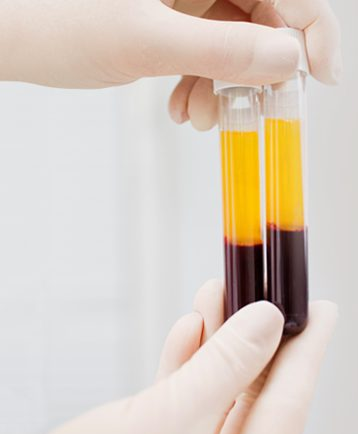
Diagnosis-specific medicines can be discussed with a clinician, taking account of side effects, contraindications, pregnancy plans and monitoring. PRP is an injection treatment prepared from the patient's own blood, with a separate and variable evidence base. A conventional transplant moves finite donor follicles when surgery is appropriate. Hairstyle changes or camouflage may meet a cosmetic goal without a biological product. Sometimes observation or treatment of a different scalp condition is more sensible than paying for an experimental course.
Real indications for discussing hair exosomes
- A diagnosed form of hair loss with an honest discussion of the early and uncertain evidence.
- A specifically identified product with source, quality testing, intended route and applicable oversight documented.
- Medical review of scalp condition, allergies, infections and any additional procedure used for delivery.
- A willingness to decline or stop the intervention if benefit cannot be measured or risks are unclear.
These are conditions for an informed discussion, not established clinical indications that guarantee candidacy. A person with complete long-standing baldness should not be promised new follicles from exosomes. Active scarring disease or unexplained shedding requires proper assessment. If product origin, safety documentation or regulatory status is uncertain, postponing an elective intervention may be the appropriate decision.
Indications and contraindications for proposed exosome treatment
| Situation to assess | How it affects the decision |
|---|---|
| Pattern thinning with remaining hair | Early research may be discussed, but benefit is not established for an individual product. |
| Sudden or unexplained loss | Investigate diagnosis and treat a correctable cause first. |
| Active scalp infection, inflammation or suspicious lesion | Obtain appropriate medical assessment; defer elective skin penetration. |
| Unknown source, batch or quality controls | Do not proceed until the product can be identified and verified. |
| Injection justified by a cosmetic topical label | Clarify the applicable authorization and route; do not assume equivalence. |
| Immune, infection or allergy concerns | Obtain individualized medical advice; uncertainty may favor avoidance. |
| Promise of permanent regrowth after one session | Challenge the claim and review better supported options. |
How a proposed exosome scalp procedure is performed
Before the procedure
An appropriate clinician examines the scalp, confirms the diagnosis, reviews medical history and medicines, and discusses alternatives. Request a full product name, manufacturer, biological source, batch, contents, quality and sterility testing, storage conditions, intended use and route. Ask what regulatory framework applies where the procedure would occur and whether documented authorization or trial oversight is relevant. Obtain separate consent for microneedling or injection, a baseline photograph plan and a clear stopping rule. A remote quote should not settle any of these clinical questions.
During the procedure
There is no single standardized exosome scalp technique. A provider might propose surface application, microneedling or injections, each with different skin effects and requirements. The actual method should match the disclosed product and consent; scalp preparation and sterile equipment are critical when skin is punctured. Ask who administers the product, whether anesthetic or other substances are used, what area is treated and what amount is delivered. Do not equate a brief appointment with evidence of efficacy or safety.
After the procedure
The clinician should check for pain, bleeding, dizziness, rash or other immediate reactions and provide written instructions for cleansing, scalp products, exercise and urgent contact. Obtain the product name, batch, source, amount, route, treatment map and details of any device or additional agent. A topical application and a needling procedure can have different aftercare. If future sessions are proposed, agree on when progress will be assessed with consistent photographs and what would lead to discontinuation.
Recovery and time away from normal activities
| Approximate period | Expected changes and practical decisions |
|---|---|
| Treatment day | Response depends on whether skin remained intact or was punctured. |
| Following days | Watch for worsening pain, redness, swelling, discharge or fever. |
| Following months | Compare consistent photographs only at a planned clinical review. |
| Before further sessions | Reassess diagnosis, actual response, safety and cumulative cost. |
A short recovery claim cannot be generalized across products and delivery methods and is not a guarantee of safe travel.
Washing, styling and additional procedures
Ask for instructions specific to the route used. Microneedling or injections can leave sensitive sites that should not be rubbed with hairpieces, helmets, tight braids or abrasive styling tools. Do not add an unfamiliar serum to punctured scalp unless the treating clinician has explained its identity and appropriateness. Continue any prescribed hair-loss treatment only as directed by its prescriber. A cosmetic topical product marketed for routine use is not automatically suitable for freshly wounded skin.

Warning signs and transatlantic travel
Increasing pain, spreading redness, pus, fever, persistent bleeding, a severe rash or unusual swelling needs prompt clinical assessment. A potentially contaminated or poorly characterized biological product raises particular concerns when a reaction appears after a long flight. Ask the provider to examine the scalp before departure, especially following needling or injection. Keep the full product record accessible and allow flexibility for an additional review. A fixed ticket must not decide medical clearance.
Follow-up in Canada
Identify a Canadian clinician who can assess infection or an unusual reaction, and give them the exact product and batch information rather than the generic word “exosomes.” An ongoing dermatologist can reassess hair-loss diagnosis and compare baseline photographs over time. Ask how to report a suspected adverse event through appropriate local channels and how the Tunisian clinician will respond to requests for product documentation. If further treatments are proposed, determine whether each remains justified by a measurable benefit.
Expected results and durability
What early studies can and cannot tell a patient
Small heterogeneous studies have reported changes in some hair measures, but they do not establish that a particular commercial product will regrow hair in a given scalp. The composition, dose and method of delivery may differ substantially. Short observation periods cannot determine long-term durability or uncommon harms. A patient should not be promised a fixed increase in density, the creation of new follicles or permanent prevention of thinning. An honest outcome discussion includes the possibility of no meaningful improvement.
Measuring change without misleading images
Compare photographs taken with the same part, hair length, lighting, angle and styling. A clinician may use trichoscopy or another consistent measure, but natural hair cycles, medicines and cosmetic fibres can still complicate interpretation. Immediate scalp shine or swelling after a session is not regrowth. Set a review interval before the first treatment and ask what level of change would be worth further cost and exposure. If other therapies began at the same time, attribution to exosomes becomes weaker.
Repeat treatment and uncertainty
No universally established dose, session count or maintenance schedule exists for this category of products. A clinic may recommend repeats without knowing how long any improvement would last. Ask whether the same batch and formulation would be used again and what safety data support repeated exposure. A changing diagnosis or lack of progress should prompt reassessment rather than automatic renewal of a package. Standard hair loss may continue regardless of a proposed exosome course.
Risks and possible complications
- Infection: Skin puncture and biological material require careful quality and sterile handling.
- Inflammation, pain or rash: Reactions may be difficult to attribute without product details.
- Unknown contents or inconsistent potency: Different sources and processes are not interchangeable.
- Uncertain long-term effects: Small studies may not detect rare or delayed harms.
- Delayed diagnosis or effective care: Marketing can distract from treatable causes of shedding.
- Financial loss without benefit: Repeat sessions and international travel add cost to uncertain results.
Product safety and regulatory questions
Health Canada's classification of human-derived exosome products depends on claims, composition and how they are used; a topical cosmetic notification is not approval for therapeutic injection. Products that claim to treat hair loss may be regulated differently from surface cosmetics. This Canadian framework does not automatically determine the legal status of treatment in Tunisia. Ask for evidence that the exact product and proposed route meet applicable local requirements, and retain documents so a Canadian clinician can investigate a suspected reaction.
Why consider Tunisia for hair exosomes?
A Canadian might seek a consultation in Tunisia if a specific clinician can investigate thinning and discuss options, but an exosome offer alone is not a reason to assume better outcomes abroad. The distance complicates assessment of an adverse reaction and any repeated course. Request the exact product and evidence before travel and consider whether diagnosis and better supported management are accessible near home. No country, facility or brand should be treated as uniformly safe or effective.
Language and direct informed consent
Confirm that the diagnosing and treating clinician can discuss product source, route, uncertain efficacy, risks and alternatives directly in English or French as preferred. A multilingual coordinator cannot substitute for a medical explanation. Request the clinician's identity and right to practice, facility details and who would perform microneedling or injection. Ask for a written treatment and emergency plan that can be shared with a Canadian clinician.
When to postpone the trip
A remote photograph cannot confirm the cause of shedding or verify product sterility. If the proposed clinic cannot provide the manufacturer, batch traceability, source, testing, route and applicable oversight, it may be reasonable to postpone a purely elective appointment. Also defer while active scalp infection or unexplained inflammatory symptoms are assessed. Clarify deposits, accommodation and travel changes before booking; a prepaid package should not force a medically uncertain procedure.
Cost of hair exosomes in Tunisia
| Factor | Effect on total cost |
|---|---|
| Diagnosis and scalp examination | Tests may change whether treatment is appropriate. |
| Exact product and quality documentation | Sources, preparation and traceability differ. |
| Delivery method | Surface application, microneedling and injection have different scope and aftercare. |
| Number of sessions | No standard course exists; repeat visits can be expensive. |
| Flights, connections and accommodation | Count the total journey from home in Canada. |
| Time off, insurance and complications | Elective care and later local assessment may be separate. |
| Alternative therapy and monitoring | Ongoing diagnosis-specific care can add cost. |
Request an itemized price for the exact product, administration, any microneedling or device, anesthetic, reviews and possible repeat sessions. Compare total travel, lodging, work absence and Canadian follow-up with the uncertain benefit. Ask what is refundable if examination changes the diagnosis or the product cannot be documented satisfactorily. A price per vial cannot be compared meaningfully without knowing what it contains and how it would be delivered.
Comparison: Tunisia and other medical tourism destinations
| Decision point | Tunisia | Care in Canada | Another destination |
|---|---|---|---|
| Diagnosis | Confirm in-person scalp evaluation. | Local follow-up may help clarify changing loss. | Ask who establishes diagnosis. |
| Product and route | Verify exact source, testing and Tunisian requirements. | Check Canadian classification for the actual use. | Verify local oversight separately. |
| Journey | Plan a long return and possible repeat visits. | Local assessment may be easier. | Calculate all visits and transit. |
| Cost and follow-up | Include product record and Canadian handover. | Compare full courses and alternatives. | Clarify adverse-event care. |
Compare the actual product, clinician and evidence, not entire countries. A treatment advertised with the same biological name may be very different in source, quality control and delivery.
Tunisian cities to consider for this procedure
Tunis and access to product information
If a named clinician proposes a scalp treatment in Tunis, ask where the product is stored or prepared, where it would be administered and who can assess a reaction before departure. The city and airport do not establish the product's authorization or effectiveness. Build an in-person diagnostic consultation into the itinerary before agreeing to any injection or microneedling.
Sousse and Monastir as logistical alternatives
Sousse or Monastir may be practical if the clinician, facility, product documentation and urgent-care route can be confirmed. Include ground transport for any follow-up visit or unexpected reaction. A local reputation or fashionable brand name does not establish sterility, manufacturer traceability, safety with skin penetration or meaningful hair growth.
Which Canadian cities can patients travel from?
Montreal, Laval and Longueuil
Greater Montreal patients can request direct discussion in English or French as preferred and compare an overseas experimental proposal with local diagnosis and established options. A Quebec dermatologist can investigate thinning and receive the exact product and route information if a reaction occurs. Include the ground journey after landing and the potential need for repeat trips in a full cost calculation. Confirm actual flight and transit requirements for the travel dates.
Quebec City, Lévis, Trois-Rivières, Saguenay and Sherbrooke
Travellers from Quebec City and Lévis, Trois-Rivières, Saguenay or Sherbrooke should count travel to the departure airport on every proposed session. Arrange an accessible clinician near home for injection-site infection and long-term hair-loss assessment. Request written product information and aftercare in a language understood by the patient. A treatment whose composition is unknown is particularly difficult to hand over to a Canadian provider after several connections and a long drive.
Ottawa, Gatineau, Toronto and nearby Ontario cities
Ottawa and Gatineau residents can compare airport access but still need a clinician near home to assess unusual scalp symptoms. Toronto, Hamilton, Kitchener–Waterloo and London patients should include work absence and repeat appointments in the budget. Ask whether any proposed course has a defined review and stopping point. A product applied during a brief visit should not be marketed as a completed solution to progressive hair loss.
Vancouver, Victoria, Surrey and Kelowna
From Vancouver or Surrey, the long flight and ground journey can be demanding; Victoria and Kelowna may add another connection. Repeating this travel for an uncertain intervention deserves especially careful cost and benefit discussion. Keep a flexible return if microneedling or injection leads to an unusual scalp reaction. Establish local care for infection and compare the plan with therapies and monitoring available in British Columbia.
Calgary, Edmonton, Winnipeg, Saskatoon and Regina
Patients starting in Calgary, Edmonton, Winnipeg, Saskatoon or Regina should verify actual routes and seasonal timing for each proposed appointment. Ask for a treatment record that includes source, batch and delivery method so a local clinician can investigate symptoms after return. Continue diagnosis-specific care at home instead of relying on an undocumented overseas product. Consider the cumulative cost of further flights before paying for a series.
Halifax, Moncton, Dieppe, Edmundston, Fredericton, Charlottetown and St. John's
Atlantic and Acadian travellers may combine several ground and flight legs. Halifax, Moncton, Dieppe, Edmundston, Fredericton, Charlottetown and St. John's have differing airport access and care options. Verify direct medical discussion in English or French as preferred and identify someone local who can examine a painful or inflamed scalp. A fixed onward ticket should never shorten a needed clinical assessment in Tunisia.
How to choose a clinician and evaluate a product
- Verify the provider's identity, right to practice and ability to diagnose hair loss.
- Obtain the exact product, source, batch, sterility testing, proposed route and local oversight.
- Ask what clinical evidence supports this product for this diagnosis and how benefit will be measured.
- Confirm separate consent, complication care, full costs and Canadian handover.
Ask what would change the diagnosis
A clinician should be willing to look for pattern thinning, inflammatory loss, alopecia areata, shedding after illness or another cause. Request the tests and follow-up that would be appropriate before an elective product is used. If a different diagnosis requires established treatment, ask whether the exosome proposal will be withdrawn. A provider offering the same vial to every form of alopecia without examination gives little basis for medical consent.
Read the product and route documents
Ask whether the exosomes are actually isolated or the material is conditioned medium, and how the source, processing, testing and storage are documented. Check intended route, applicable Tunisian status and who is accountable for complications. A cosmetic label cannot establish safety for injection. Compare any clinical data with the exact preparation being offered, not just the broad term “exosomes,” and request a copy of the record before leaving the facility.
Planning a medical stay in Tunisia
For hair exosomes in Tunisia, reserve time for diagnosis and a direct explanation of the precise product, then proceed only if the clinician can justify the proposed route and the patient accepts the uncertainty. Arrange a review before travel and Canadian clinical access for reactions and ongoing hair-loss care. Check entry and transit requirements for the actual nationality, route and dates, and keep plans flexible if the product or diagnosis cannot be verified.
Preparation before leaving Canada
Bring the course of thinning, previous diagnoses, medicines, medical conditions and consistent photographs. If the scalp is painful, inflamed or shedding suddenly, seek a proper examination first. Request product and facility documents before buying a fixed ticket, and ask what happens if the in-person clinician advises against treatment. A Canadian clinician can help establish an independent baseline and discuss better supported options.
Consultation, treatment and early observation
Review the medical diagnosis, source and batch, sterility and quality controls, route, added devices, expected uncertainty and financial terms. The procedure should match the signed consent. Follow specific instructions for the actual skin exposure; an intact-skin application differs from puncture or injection. Attend a check for any unusual pain, rash or swelling before departure, and retain the exact record rather than a generic receipt stating only “exosomes.”
Departure and longer-term care at home
The treating clinician should assess the scalp before the long flight if there has been any skin penetration or reaction. Seek local medical care for fever, discharge, spreading redness or severe symptoms after return and give the clinician the product details. Use standardized photographs to evaluate change, while recognizing that growth cycles and other treatments may affect the appearance. Reassess diagnosis, benefit, safety and cost before any repeat session.
Request a personalized opinion on hair exosomes in Tunisia
Tell Aylan Clinic when and where loss began, scalp symptoms, previous diagnoses and treatments, health history, preferred language for direct clinical discussion and Canadian departure city. Request the proposed clinician's identity, diagnostic plan, full product and route documentation, the medical schedule and an itemized quote including follow-up and possible repeat sessions.
A remote preliminary discussion cannot establish the diagnosis or the safety of a specific preparation. An in-person clinician should review the scalp and verify product source, quality and applicable oversight; limited research does not justify a guaranteed or permanent hair-regrowth claim.
You may also want to compare No-Shave Hair Transplant and Hair Transplant with Exosomes in Tunisia.
Continue exploring our hair transplant in Tunisia overview, the complete aesthetic surgery panorama, compare plastic surgery prices in Tunisia, or request a free, personalized quote.
Everything about Exosomes for Hair Loss
Technique, pricing, results and the full patient journey — every detailed answer in our complete guide.