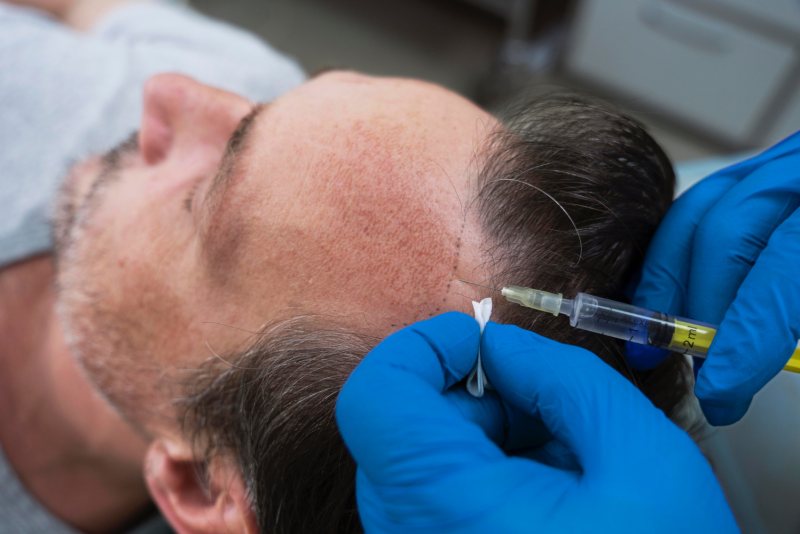
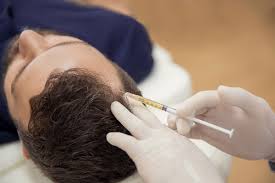
An unshaven hair transplant in Tunisia may leave the recipient hair long, conceal a partly shaved donor area, or harvest long-haired grafts without broadly shaving the donor area. These are different plans with different workloads and visual effects. None makes the operation incision-free or guarantees that grafted hairs remain visible throughout healing.
For patients travelling from Canada, this guide explains exactly what to clarify about shaving, donor safety, FUE technique, appearance during recovery, cost, scheduling and care at home. The choice depends on the scalp examination and treatment goal. Aylan Clinic can discuss an individual plan, but availability of any particular unshaven method must be confirmed with the treating surgeon.
What an unshaven hair transplant is and how it works
Three separate shaving decisions
Ask about the donor area, where grafts are removed; the recipient area, where they are placed; and the length of the transplanted hair shafts. A donor area can be fully shaved, partly shaved in concealed strips or left broadly unshaven. The recipient hair may remain long even if donor harvesting involves shaving. Grafts themselves may be trimmed or retain long shafts. A provider's phrase “no shave” does not answer all three questions. Have the clinician mark the precise zones and state the anticipated visible change in writing.
Partial shave and concealed harvesting
In a partial-shave FUE plan, narrow donor areas may be clipped and then covered by surrounding longer hair. This can suit some hairstyles and graft targets, but visibility depends on hair length, thickness, parting and how many follicles are needed. A large session may require more donor access than can be concealed comfortably. The recipient area can sometimes remain unshaven, although nearby hair may make placement slower and more demanding.
Long-hair or directly unshaven FUE
Some techniques harvest follicular units while leaving surrounding donor hair long. Depending on the exact method, the extracted shaft may remain long, be individually trimmed or be cut by the punch. Long-hair grafts allow a preliminary visual preview but their shafts can still shed in the weeks after surgery. The approach is technically demanding and may increase the risk of follicle transection if poorly performed. Ask the surgeon how graft injury is monitored and why this approach is suitable for your hair.
Small wounds and long-term donor supply
Whether hair is shaved has no power to eliminate the small FUE extraction wounds or recipient incisions. FUE leaves multiple small donor scars and overharvesting can create lasting patchiness hidden at first by long hair. A conservative map and examination for donor miniaturization remain essential. Concealment is a recovery preference, not an indication to take more grafts or disregard future hair loss.
Unshaven FUE and other harvesting choices
Conventional shaved FUE
Clipping the donor area can make visualization and extraction more straightforward for a larger session. Clipping the recipient region can also aid site creation and placement among existing hair. The disadvantage for some patients is a visible change in hairstyle while hair grows back. Ask whether a full shave would make a clinically important difference for the proposed graft number, handling or operative time. A patient can prefer a limited-shave plan while accepting that an extensive operation may be better staged.
FUT and concealment
Strip harvesting, or FUT, removes a strip of donor scalp and leaves a linear scar that may be covered by longer hair. It can sometimes be performed without broadly shaving surrounding hair; the recipient area can also remain long in selected cases. It is a different donor operation with distinct scarring and recovery considerations. Compare it with partial-shave and unshaven FUE on anatomy, hairstyle, donor preservation and future needs rather than assuming “no shave” describes one specific method.
Treat the cause of loss
Hair transplantation redistributes existing follicles and does not treat progressive loss of surrounding hair. A clinician should diagnose diffuse shedding or inflammatory disease, discuss suitable medical treatment and explain how the appearance may change later. Styling, hair systems or scalp camouflage might serve an immediate appearance goal without surgery. Keeping existing hair long can also make it harder to see thinning beneath it, so photographs and scalp examination are useful before a decision.
Real indications for an unshaven hair transplant
- A confirmed hair-loss diagnosis and healthy, sufficient donor follicles.
- A strong preference to retain existing hairstyle during early recovery, with a feasible plan for donor and recipient access.
- A treatment area and graft number that fit the proposed partial-shave or unshaven technique without compromising safety.
- Acceptance that crusts, redness, possible shock loss and later graft-shaft shedding may still be visible.
- An arranged postoperative examination and local care pathway after return to Canada.
An unshaven approach is sometimes chosen for discretion or a long hairstyle, including for a patient seeking work without a major haircut change. Suitability remains clinical. A surgeon may recommend a smaller staged session, limited donor shave, conventional shave, FUT or postponement after direct examination. Do not book solely on a promise that nobody will notice the operation.
Indications and contraindications for an unshaven hair transplant
| Examination finding or preference | Planning consequence |
|---|---|
| Long hair can cover narrow donor strips | Partial shaving may meet a discretion goal. |
| Healthy donor and manageable graft target | Unshaven FUE may be considered by an experienced surgeon. |
| Large area requiring extensive harvesting | More shaving, staging or another method may be appropriate. |
| Dense long hair at the recipient site | Placement may need more time and careful protection of native hair. |
| Active scalp disease or unexplained diffuse loss | Investigate and treat before surgery. |
| Prior donor depletion | Do not assume hair length conceals long-term harm. |
| Absolute need for an invisible early result | Discuss crusts, swelling and shedding before consent. |
The clinician must examine hair calibre, density, curl, length, parting, donor miniaturization and scalp health. Photographs can help a first conversation but cannot establish that every intended extraction site can be accessed safely without clipping. If examination changes the plan, agree on the new shave pattern and graft count before surgery.
How the procedure is performed step by step
Design and marking
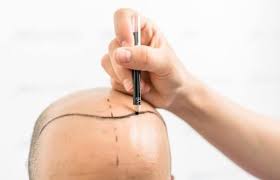
The surgeon diagnoses the loss and marks donor and recipient regions, intended hairline and exact shaving pattern. Ask to see what hair will be clipped, whether it will be hidden by hair above it and whether recipient hair will be cut. The team explains the safe graft range, anesthesia, operative time, possible need to extend a trimmed strip and the person performing each surgical step. Photograph the agreed haircut and markings for your records if the clinician permits.
Harvesting, handling and implantation
With local anesthesia, the team isolates individual donor follicular units. In a concealed-strip approach, only selected donor strips are clipped. In directly unshaven FUE, the surgeon works among long surrounding hair; the extracted shafts may be kept long or shortened. Grafts are handled carefully and placed at planned angles. Long recipient hair may obstruct access and requires care to avoid catching or damaging native shafts and grafts. Ask how the surgeon checks graft quality and adjusts if the no-shave approach proves impractical.
Postoperative assessment
Check both donor and recipient areas in a mirror with the care team. Confirm the actual graft count, locations harvested, what was shaved and how to wash and comb hair without dislodging fresh grafts. Obtain written medication and emergency instructions and an in-person review before a long flight. Long hair can hide small areas of inflammation, so inspect according to the clinician's instructions rather than assuming concealment means healing is complete.
Recovery and time away from normal activities
| Stage | What may still be noticeable |
|---|---|
| First days | Crusts, redness, swelling and localized donor tenderness. |
| Early weeks | Healing of clipped strips; temporary shedding of grafted shafts or native hairs. |
| Following months | Gradual new growth and changing coverage. |
| Longer term | Mature result and any further native hair loss. |
Keeping hair long can help hide some donor changes, but it does not accelerate wound healing or guarantee privacy. Recovery depends on session size, scalp condition, technique and individual response.

Washing and combing long hair
Ask for a demonstration of how to wash around grafts, dry hair and release tangles without pulling newly implanted units. Avoid rubbing, vigorous brushing, tight styling, hair colour or products until specifically cleared. Long transplanted shafts can be caught by a comb or hat. The operating team's instructions take priority because timing and placement differ by case.
Work, exercise and warning signs
Time off depends on visible redness, occupational headwear, physical exertion and personal comfort. It is possible to retain a hairstyle yet still have swelling or crusts near the hairline. Persistent bleeding, fever, worsening pain, spreading redness, discharge or a dark area needs prompt examination. Part long hair to inspect a painful donor spot rather than relying on a photograph of the whole head.
Flight and early review
Schedule a scalp check before departure and give yourself flexibility to delay travel if necessary. Ask how to protect long hair and grafts against rubbing during a long flight and onward connection. A local Canadian clinician should be available for a direct examination of a wound concern. Remote photos may support routine updates but cannot rule out problems hidden by long hair.
Expected results and durability
Early preview is temporary
Implanted long hair shafts can produce an immediate visual preview, but the hairs can shed before new growth appears. This is an important distinction if a no-shave package advertises instant density. Crusts, swelling and the direction of surrounding hair affect the first impression. Mature coverage takes months and is not guaranteed by the length of implanted shafts.
A natural result depends on planning
The intended hairline, choice of follicular units, orientation, graft handling and remaining native hair determine how natural the result looks. Keeping existing hair long can make the initial recipient density difficult to judge. Donor health and even harvesting remain central. Request comparable mature photographs in natural lighting, showing both recipient and donor regions with styling disclosed.
Continued loss and further procedures
Native hair may continue to thin behind new grafts. A medical plan may help manage this risk for selected patients. A later revision is limited by remaining donor follicles; prior concealed harvesting should be included in the total donor map. Wait until growth has matured before evaluating whether another procedure is justified. The first operation should preserve enough donor supply for possible future change.
Risks and possible complications
- Small FUE scars and patchy donor density: Long hair may conceal harm temporarily, but it cannot restore removed follicles.
- Follicle transection: Working around longer hair can be technically demanding; ask how quality is monitored.
- Infection, bleeding or slow healing: Wounds still exist in both donor and recipient regions.
- Shock loss or poor growth: Existing or implanted shafts may shed and growth varies.
- Tangling or accidental traction: Washing, combing and headwear must protect new grafts.
- Unnatural direction or asymmetry: Careful site design remains necessary among native hair.
Managing a problem after the flight
For fever, spreading redness, discharge, significant bleeding or worsening pain, obtain prompt local clinical care and contact the original team. Bring the donor map, actual graft count and medications. Ask which expenses are covered and who coordinates a complication review before booking. A photograph under long hair may not show a painful infection or poor healing, so do not defer in-person examination for an overseas reply.
Why consider Tunisia for an unshaven hair transplant?
A Canadian patient may consider Tunisia if an identified surgeon can explain a clinically sound limited-shave or directly unshaven plan, perform or supervise appropriate steps and provide accessible early checks. Confirm which exact variant is offered and whether its availability depends on scalp examination. Travel, cost and care at home remain part of the decision.
Specific proposal rather than a label
Ask for a diagram or written description of donor and recipient shave patterns, graft-shaft length, expected session size, operating roles and contingency if the planned technique cannot safely reach the graft target. A photograph of a person with long hair after surgery does not establish that no hair was clipped or that the entire scalp is free from crusts.
Language and continuity
Confirm direct consent in English or French according to your needs and obtain instructions on handling long hair during recovery. Establish who examines the scalp before flying and who can treat a problem in Canada. The surgeon should discuss realistic discretion, not promise a completely invisible operation.
Cost of an unshaven hair transplant in Tunisia
| Component | Question to ask |
|---|---|
| Operative method | Is partial-shave or directly unshaven FUE actually proposed? |
| Graft target | Is a smaller or staged session needed for safe harvesting? |
| Physician and staff | Who performs donor incisions and recipient planning? |
| Anesthesia and follow-up | Are medications, washes and early reviews included? |
| Flights and stay | What do connections, flexible tickets and extra days cost? |
| Canadian care | What visits or prescriptions may be separate? |
| Change of plan | How does pricing change if clipping or graft number changes? |
An unshaven procedure may require more time and specialized handling, but no universal premium or price applies. Obtain an itemized quote after consultation and ask for the terms if the surgeon recommends a partial or full shave. Include transport from your Canadian city, accommodation, time off, possible companion and complications. Compare the total plan with local and other international options, including the likelihood of a second visit.
Comparison: Tunisia and other medical tourism destinations
| Decision | Tunisia | Canada | Another destination |
|---|---|---|---|
| Technique | Confirm exactly which zones remain long. | Ask the local surgeon the same question. | Compare actual shave maps. |
| Clinician | Verify operator and experience with long-hair cases. | Local access varies. | Confirm operator and experience. |
| Recovery | Plan early review before a long flight. | In-person follow-up may be closer. | Compare travel duration and local handover. |
| Price | Include any method premium and travel. | Obtain a full itemized quote. | Include travel and changes of plan. |
The meaningful comparison is the safe donor plan, realistic concealment, clinical responsibility and access to care. A country name alone says little about the quality of an individual procedure.
Tunisian cities to consider for this procedure
Tunis and the operating physician
If a named physician operates in Tunis, confirm where donor examination, surgery and early wound review occur. Ask whether the same physician checks the scalp before departure and how quickly a concern can be seen. Easy airport access does not establish who makes recipient incisions or whether the donor will be protected. Map accommodation and transfers around the actual facility.
Sousse, Monastir and clinical access
Sousse or Monastir may work with an identified physician and facility that can provide the procedure and postoperative review. Clarify how any early infection or graft-site concern would be managed there. A city's reputation does not verify surgical roles, donor safety or graft quality. Plan transport and a flexible return only after the medical schedule, including a wound assessment, has been confirmed.
Which Canadian cities can patients travel from?
Montreal, Laval and Longueuil
Greater Montreal patients can compare international airport access with local evaluation of hair-loss diagnosis and donor reserve. Ask the Tunisian operating physician directly whether consent and troubleshooting can take place in French or English as preferred. Identify a Quebec clinician who can examine an infected or poorly healing FUE donor site after return and discuss ongoing treatment for native hair loss. A follow-up photo alone may hide a small painful area.
Quebec City, Lévis, Trois-Rivières and Saguenay
The overland or domestic connection to a departure airport increases travel time while the scalp is healing. Leave enough time for a Tunisian wound check and request the donor map before leaving. Patients in Saguenay or Trois-Rivières should know whether a local physician can assess redness or discharge promptly. Discuss how an eventual growth review or possible later revision would be organized without assuming another trip is medically advisable.
Ottawa, Gatineau and Sherbrooke
Several airport and ground routes may be possible, but the entire journey matters more than one flight segment. Arrange a Canadian clinician able to examine the scalp if pain worsens and confirm the physician's direct consultation language. If a clinic advertises FUE as scarless, request a clear explanation of FUE donor scarring before travel. A patient should understand both the visible recipient healing and the donor consequences.
Toronto, Hamilton, Kitchener–Waterloo and London
Ontario departure choices should be compared with time off work for surgery, early crusting and postoperative review. Consider a local diagnosis first if loss is diffuse or inflammatory. Ask exactly who will make the recipient sites and whether the quoted graft count follows an assessment of donor miniaturization. A local clinician should receive the operative summary and medication list so an early infection can be managed without another international journey.
Vancouver, Surrey, Victoria and Kelowna
The long route from British Columbia, jet lag and connections may be uncomfortable with tender donor skin. Victoria and Kelowna may add another flight, and Surrey patients should include ground transfers. Ask about safe head covering and cleaning during travel, reserve flexible tickets and arrange local medical evaluation for a wound concern. The shaving plan does not remove the practical need to protect recently placed grafts on a crowded or lengthy journey.
Calgary and Edmonton
Albertans should calculate airport access, connections and the day-by-day postoperative schedule. A local clinician can help confirm the cause of hair loss before travel and check an unexpected healing problem afterward. Compare every offer with a complete plan explaining donor extraction, recipient design and follow-up. If the scalp will be shaved or heavily crusted, consider work demands and whether enough recovery time remains after reaching home.
Winnipeg, Saskatoon and Regina
Prairie itineraries may involve transit stops and more than one night away from home on the return. The surgeon should check both donor and recipient zones before the flight. Obtain the number of grafts actually placed and where they were extracted; that information is essential if a future Canadian surgeon evaluates sparse growth or donor thinning. Establish prompt local care for fever or discharge instead of relying solely on a message to Tunisia.
Halifax, Charlottetown and St. John's
Atlantic routes can involve several travel legs and variable schedules. Allow an early examination of healing and avoid compressing surgery, wash instructions and flight into an unworkable timetable. Patients with an additional island connection should know how to protect grafts and where to seek local care for infection. Verify actual flights and transit requirements for the travel date; a procedure name cannot compensate for an inaccessible surgeon after departure.
Moncton, Dieppe, Edmundston and Fredericton
Acadian and bilingual patients should verify direct communication with the operating physician about both donor extraction and recipient-site planning. Add the road leg to an airport to the recovery itinerary. Ask for a written operative summary that a New Brunswick clinician can use without relying on the patient to translate instrument names or wound findings. Local availability for an in-person assessment matters if a donor wound becomes painful.
Smaller communities and the territories
Extra domestic travel and limited access to a hair-restoration specialist can make early complication management harder. Establish a local physician or referral route before booking. If unusual shedding suggests a condition needing diagnosis, investigate it rather than pursuing surgery immediately. Check seasonal connections and the feasibility of later follow-up, especially if a long-term medication plan is proposed.
How to choose a surgeon for an unshaven hair transplant
Experience with the exact unshaven method
Verify the surgeon's identity, right to practise, training and examples of comparable mature cases. Ask whether they routinely perform partial-shave, fully unshaven or long-hair graft procedures, and which variant is proposed for you. Establish who performs the punch incisions, creates recipient sites and inserts grafts under local rules. A clinician should explain limitations and be willing to change or defer the plan if examination reveals an unsafe donor area.
Ask for a precise haircut map
Request a drawing of shaved donor strips, recipient trimming and expected graft-shaft length. Discuss the maximum feasible session, operative time, quality control and what happens if the target cannot be reached safely. Ask how the donor will look with your usual styling and in wind or wet hair. A claim that no one will notice the operation is incompatible with the possibility of visible redness, crusts, swelling or shedding.
Planning a medical stay in Tunisia
Build the schedule around a direct scalp examination, agreed shave pattern, surgery, washing instruction and early clinical review. Keep the return trip flexible. A no-shave label does not remove the need to protect grafts or assess a wound before a long flight.
Before leaving Canada
Seek evaluation for atypical shedding, collect treatment and medication history, and arrange access to a Canadian clinician. Send representative hair and scalp photographs for preliminary discussion, including usual styling and donor length. Ask the Tunisian surgeon what parts of the unshaven plan remain conditional on direct examination. Check current entry, transit and insurance terms for the itinerary.
Consultation in Tunisia
Review the diagnosis, safe donor reserve, recipient design and the exact donor, recipient and graft-shaft shaving choices. Agree how a change in graft target or shave pattern will be handled before surgery. Confirm the physician's direct role, consent language and complication arrangements. A remote package description must not override findings from a scalp examination.
Surgery and departure check
Learn to wash and comb long hair without traction on grafts. Have both donor and recipient areas examined before departure, including areas hidden under surrounding hair. Keep the operation summary and ask for guidance on protective headwear and the long return journey. Seek assessment if bleeding, pain or infection develops rather than following an inflexible flight date.
Care in Canada
Give a local clinician the actual graft count, donor map, medications and postoperative instructions. Seek in-person assessment for concerning symptoms. Arrange routine progress photographs and a later mature-result review with the original surgeon, and discuss continuing native-hair loss with a qualified local clinician.
Request a personalized opinion on an unshaven hair transplant in Tunisia
Describe to Aylan Clinic your loss pattern, usual hairstyle and hair length, prior treatments or operations, medical history and departure city in Canada. Request a preliminary discussion with the proposed surgeon about exact donor and recipient shaving, graft-shaft length, safe graft range, cost and follow-up.
Only examination can confirm whether a partial-shave, directly unshaven, conventional or nonsurgical approach is appropriate. Ask for the final plan and any changes in writing before consenting.
You may also want to compare Temporal Hairline Restoration in Tunisia.
Continue exploring our hair transplant in Tunisia overview, the complete aesthetic surgery panorama, compare plastic surgery prices in Tunisia, or request a free, personalized quote.
Everything about No-Shave Hair Transplant in Tunisia
Technique, pricing, results and the full patient journey — every detailed answer in our complete guide.