Temporal recession restoration in Tunisia focuses on the corners of the frontal hairline. It requires a design that fits the face and remains credible if untreated hair continues to thin. For Canadian patients, the decision also involves a finite donor reserve, a long return journey and local follow-up. Filling the corners is not always necessary, and it does not stop future hair loss.
This guide explains the diagnosis, distinction between frontal recessions and temporal points, surgical planning, alternatives, recovery, complications, costs and Canadian departure considerations. Aylan Clinic can discuss a preliminary request, while the operating surgeon must confirm the design and suitability after examining the scalp.
What temporal recessions are
Frontal corners and temporal points
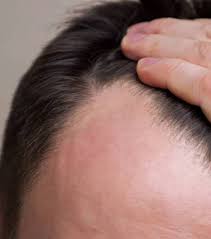
The temporal recessions are the areas at the left and right corners of the frontal hairline that may recede with pattern hair loss. They should be distinguished from the temporal points or sideburn transitions on the sides of the face. Filling frontal corners and reconstructing temporal points involve different hair angles, density and design. Before a quotation, point to the exact zones on a photograph and ask the surgeon to mark them during examination.
A mature hairline can be natural
Some recession is part of a mature adult hairline and does not always need restoration. A straight, low juvenile line can look out of place as surrounding hair continues to thin. The appropriate shape depends on facial proportions, existing frontal hair, age, likely progression, hair calibre and donor reserve. The surgeon should show the proposed design from the front and both profiles. A subtle change in the corners may create a better balance than an aggressive advance of the entire hairline.
Diagnosis before a cosmetic design
Pattern loss is common but not the only reason a corner appears thin. Traction, scarring alopecia, injury, inflammation or diffuse shedding can change treatment. Unequal recession may be natural or may prompt closer examination. If the scalp is inflamed or loss is rapidly progressing, diagnosis and stabilization take priority over graft placement. A preliminary photo is useful for discussing goals, but scalp examination is needed before committing donor follicles.
How temporal restoration is planned
Hairline shape and irregularity
An effective design usually avoids a drawn-on border. The first rows use suitable individual follicular units and small irregularities, with more density placed behind the edge as appropriate. The physician must match the natural change in direction across the frontal hairline and into each corner. A plan for two symmetrical triangles cannot simply be copied onto every face; the existing pattern and future loss dictate the outline.
Graft selection and safe donor harvesting
The surgeon assesses donor density, miniaturization, hair texture and previous harvesting before estimating a graft range. FUE removes units individually and leaves numerous small donor scars; FUT removes a strip and leaves a linear scar. Either approach may supply grafts, depending on individual factors. The donor is finite. A patient who may later lose mid-scalp or crown hair should ask how many grafts will remain if the corners are treated now.
Treating adjacent native hair
Grafts placed into thinning frontal hair must be positioned to reduce injury to existing follicles. The team may recommend medical management for ongoing loss, after discussing eligibility and adverse effects with a qualified clinician. A transplant redistributes follicles; it does not stop pattern loss in untreated hair. The intended result should be judged in the context of the full forehead, frontal forelock and likely future pattern.
Real indications for temporal recessions restoration
- Diagnosed and sufficiently stable loss of the frontal corners with a realistic goal.
- A healthy donor area with enough reserve for both the proposed surgery and plausible later loss.
- A hairline design suited to facial proportions, age, hair texture and existing frontal hair.
- A patient who understands scarring, delayed growth and the possibility of continued native hair loss.
- Access to an early wound check and Canadian care after travel.
Some patients prefer to retain a mature recession or try nonsurgical options first. A surgeon should be able to explain why treatment is sensible now or why waiting would protect donor supply. The aim is a coherent long-term result, not a fixed number of grafts for each corner.
Indications and contraindications
| Clinical finding | What it may mean for the plan |
|---|---|
| Stable patterned recessions and healthy donor hair | May support a conservative restoration. |
| Very early or rapidly progressive loss | Consider monitoring and treatment before surgery. |
| Inflamed, scarred or painful scalp | Diagnose and control the underlying condition. |
| Diffuse donor miniaturization or prior overharvesting | Graft supply may be unsafe or insufficient. |
| Request for an extremely low straight hairline | Review appearance with future loss and donor limits. |
| No local access to complication care | Arrange a Canadian contact before travelling. |
The examination also considers general health, medications, healing conditions, smoking and previous operations. A large advertised graft package cannot replace a careful assessment of a relatively small but highly visible recipient area.
How the procedure is performed step by step
Consultation and marking
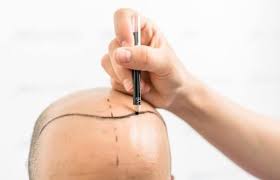
The surgeon reviews photographs of earlier hairlines, the timeline of loss and treatment history. After examining scalp and donor areas, they mark the proposed corners and discuss how they relate to the central frontal line and temporal points. Ask for front, side and oblique views of the design, estimated safe graft range, anesthesia plan and the person responsible for each surgical step. The marking can be revised after discussion before local anesthesia.
Harvesting and recipient work
The team harvests grafts by the agreed donor method, protects them during handling and prepares the recipient area. Small incisions must account for direction, depth, spacing and the angle at which surrounding hair emerges. Individual units typically suit the foremost edge; other units can add coverage behind it. Excessively dense packing may jeopardize graft growth or existing hair. The surgeon should record actual harvesting and placement rather than treating an estimate as a guaranteed count.
Immediate care
After surgery, review the result in a mirror without confusing implanted shafts with mature growth. Receive specific washing, sleeping, medication, sun, hat and activity instructions. Attend an early donor and recipient check before flying home. Obtain the final graft count, donor map, clinic contact and operative summary for a clinician in Canada.
Recovery and return to daily activities
| Period | Common issue or action |
|---|---|
| First days | Redness, small crusts, tenderness or forehead swelling may appear. |
| Before the flight | Obtain an in-person review of donor and frontal corners. |
| Following weeks | Crusts settle and implanted shafts may shed. |
| Following months | Growth develops gradually and later matures. |
The frontal corners are difficult to hide with some hairstyles, so consider work commitments and social events. A supposed discreet or fast technique does not guarantee an invisible recovery.
Protecting the new corners
Avoid rubbing or scratching the frontal edge. Follow specific instructions for gentle washing, sleeping position, headwear, exercise, sunscreen and return to physical work. A tight hat or helmet can contact the delicate sites. If travel involves overhead luggage and multiple flights, plan how to avoid accidental blows. The donor area may still be tender, even when the recipient work is small.
Concerning symptoms
Persistent bleeding, fever, spreading redness, discharge, increasingly painful skin or a dark poorly healing patch requires prompt medical assessment. An early photograph can help communication with the operating team, but it does not replace a direct examination when symptoms are worsening. Tell the team about any change before the return flight and establish a local clinician in Canada.
Expected results and durability
Early appearance versus mature growth
The newly placed hair shafts show an outline initially, but many can shed before growing again. Growth emerges over months and the hairline takes time to mature. Density depends on actual growth, hair calibre, colour contrast, graft distribution and adjacent native hair. A first-day photograph cannot demonstrate a final result. Ask when the surgeon will evaluate growth and how consistent images should be taken at home.
Natural direction and both profiles
The change in direction through each corner is visible from several angles. A mismatch can make a small grafted area conspicuous even when follicles survive. The surgeon should explain how the design connects the central line to the sides and whether existing asymmetry should be preserved or adjusted. Comparable mature before-and-after photographs are more useful when the lighting, styling and both profiles are shown.
Later recession around the grafts
Transplanted follicles may remain while surrounding native hair continues to thin. That can leave an isolated patch or a gap behind a low restored corner. Long-term medication may be considered for eligible patients, with local supervision and discussion of risks. A second transplant may be possible only if donor supply remains adequate. The initial plan should reserve hair for changes that cannot be known with certainty today.
Risks and possible complications
- Unnatural hairline: Poor placement, abrupt density or incorrect angles can be conspicuous in the frontal corners.
- Donor scars or depletion: Both harvesting approaches leave scars and excessive extraction can limit future choices.
- Poor growth or shock loss: Not all grafts take, and existing hair may shed temporarily or continue to thin.
- Bleeding, infection and healing problems: Local symptoms need assessment rather than waiting for a routine online review.
- Asymmetry or dissatisfaction: A design agreed before surgery may look different when viewed with later hair loss.
- Anesthesia or medication reactions: Individual health and prescriptions need review.
Responding after return to Canada
Arrange a local clinician who can examine a painful or infected area. Provide the operative record, graft count, donor map, medications and surgery date. Seek prompt care for severe symptoms and contact the Tunisian surgeon as well. A future correction overseas does not replace urgent treatment. Ask in advance which reviews, revisions or complication costs are included.
Why consider Tunisia for temporal restoration
A Canadian patient may consider Tunisia when an identified, qualified surgeon offers direct consultation, careful hairline design, safe donor planning and timely postoperative review. A small area can be aesthetically demanding. A low advertised price or a large graft target does not establish that the proposed shape will remain natural as loss progresses.
See the design before consenting
Ask the operating surgeon to mark the exact frontal corners and any temporal points separately. Review front and side views, planned angles, extraction method and reserve for later hair loss. Confirm who makes donor and recipient incisions, and whether the clinic will revise or defer treatment if the examination shows limited donor quality.
Language, records and continuity
Verify that the clinician can explain the design and risks directly in a language you understand, with appropriate interpretation if needed. Obtain instructions and a route to contact the team from Canada. Identify local follow-up before surgery, since an infection or unexpected wound cannot wait for another international trip.
Cost of temporal restoration in Tunisia
| Element | What to establish |
|---|---|
| Consultation and design | Who examines the scalp and marks the hairline? |
| Donor method | What harvesting, anesthesia and facility fees apply? |
| Graft count | Is the quote based on an estimate or the safe actual count? |
| Postoperative care | Which checks, medications and washing visits are included? |
| Travel | What do flights, connections, transfers and flexible tickets cost? |
| Canadian care | Are local consultations or prescriptions extra? |
| Changes or revision | What happens if the plan changes or growth disappoints? |
Request an itemized quote in a stated currency and ask how a lower graft count affects pricing. Add accommodation for early review, work absence, insurance terms, domestic travel and exchange-rate changes. A small recipient area can still involve significant fixed surgical and international travel costs.
Comparison with other destinations
| Question | Tunisia | Canada | Another destination |
|---|---|---|---|
| Hairline design | Meet and verify the operating surgeon. | Compare accessible local consultations. | Request the same direct design review. |
| Donor protection | Ask for a map and future reserve. | Ask for a map and future reserve. | Ask for a map and future reserve. |
| Follow-up | Early review abroad, then Canadian care. | Original team may be closer. | Confirm a return-home handover. |
| Total budget | Add flights and time away. | Request complete local pricing. | Add travel and exclusions. |
Country-wide rankings cannot predict the quality of an individual hairline. Compare the clinical plan and ability to manage complications and later loss.
Tunisian cities to consider for this procedure
Tunis and the operating physician
If a named physician operates in Tunis, confirm where donor examination, surgery and early wound review occur. Ask whether the same physician checks the scalp before departure and how quickly a concern can be seen. Easy airport access does not establish who makes recipient incisions or whether the donor will be protected. Map accommodation and transfers around the actual facility.
Sousse, Monastir and clinical access
Sousse or Monastir may work with an identified physician and facility that can provide the procedure and postoperative review. Clarify how any early infection or graft-site concern would be managed there. A city's reputation does not verify the particular method, clinician or follow-up. Plan transport and a flexible return only after the medical schedule, including a wound assessment, has been confirmed.
Which Canadian cities can patients travel from?
Montreal, Laval and Longueuil
Greater Montreal patients can compare international airport access with local evaluation of hair-loss diagnosis and donor reserve. Ask the Tunisian operating physician directly whether consent and troubleshooting can take place in French or English as preferred. Identify a Quebec clinician who can examine an infected or poorly healing FUE donor site after return and discuss ongoing treatment for native hair loss. A follow-up photo alone may hide a small painful area.
Quebec City, Lévis, Trois-Rivières and Saguenay
The overland or domestic connection to a departure airport increases travel time while the scalp is healing. Leave enough time for a Tunisian wound check and request the donor map before leaving. Patients in Saguenay or Trois-Rivières should know whether a local physician can assess redness or discharge promptly. Discuss how an eventual growth review or possible later revision would be organized without assuming another trip is medically advisable.
Ottawa, Gatineau and Sherbrooke
Several airport and ground routes may be possible, but the entire journey matters more than one flight segment. Arrange a Canadian clinician able to examine the scalp if pain worsens and confirm the physician's direct consultation language. If a clinic advertises FUE as scarless, request a clear explanation of FUE donor scarring before travel. A patient should understand both the visible recipient healing and the donor consequences.
Toronto, Hamilton, Kitchener–Waterloo and London
Ontario departure choices should be compared with time off work for surgery, early crusting and postoperative review. Consider a local diagnosis first if loss is diffuse or inflammatory. Ask exactly who will make the recipient sites and whether the quoted graft count follows an assessment of donor miniaturization. A local clinician should receive the operative summary and medication list so an early infection can be managed without another international journey.
Vancouver, Surrey, Victoria and Kelowna
The long route from British Columbia, jet lag and connections may be uncomfortable with tender donor skin. Victoria and Kelowna may add another flight, and Surrey patients should include ground transfers. Ask about safe head covering and cleaning during travel, reserve flexible tickets and arrange local medical evaluation for a wound concern. The technique does not remove the practical need to protect recently placed grafts on a crowded or lengthy journey.
Calgary and Edmonton
Albertans should calculate airport access, connections and the day-by-day postoperative schedule. A local clinician can help confirm the cause of hair loss before travel and check an unexpected healing problem afterward. Compare offers by hairline design, safe donor extraction and follow-up. If the scalp will be shaved or heavily crusted, consider work demands and whether enough recovery time remains after reaching home.
Winnipeg, Saskatoon and Regina
Prairie itineraries may involve transit stops and more than one night away from home on the return. The surgeon should check both donor and recipient zones before the flight. Obtain the number of grafts actually placed and where they were extracted; that information is essential if a future Canadian surgeon evaluates sparse growth or donor thinning. Establish prompt local care for fever or discharge instead of relying solely on a message to Tunisia.
Halifax, Charlottetown and St. John's
Atlantic routes can involve several travel legs and variable schedules. Allow an early examination of healing and avoid compressing surgery, wash instructions and flight into an unworkable timetable. Patients with an additional island connection should know how to protect grafts and where to seek local care for infection. Verify actual flights and transit requirements for the travel date; a procedure name cannot compensate for an inaccessible surgeon after departure.
Moncton, Dieppe, Edmundston and Fredericton
Acadian and bilingual patients should verify direct communication with the operating physician about both donor extraction and recipient-site creation. Add the road leg to an airport to the recovery itinerary. Ask for a written operative summary that a New Brunswick clinician can use without relying on the patient to translate instrument names or wound findings. Local availability for an in-person assessment matters if a donor wound becomes painful.
Smaller communities and the territories
Extra domestic travel and limited access to a hair-restoration specialist can make early complication management harder. Establish a local physician or referral route before booking. If unusual shedding suggests a condition needing diagnosis, investigate it rather than pursuing surgery immediately. Check seasonal connections and the feasibility of later follow-up, especially if a long-term medication plan is proposed.
How to choose a surgeon for temporal restoration
Examine the surgeon's own outcomes
Verify credentials, legal right to practise and direct role in examination, hairline design and critical surgical steps. Request mature examples of comparable frontal-corner work under ordinary lighting, showing both sides and donor area. A surgeon should discuss the relationship between the corners, central forelock, temples and future pattern rather than drawing a standard horizontal line.
Ask about future hair loss
The clinician should explain donor measurements, safe graft range, medical alternatives, expected scarring and how the design remains credible if untreated hair recedes. Ask what would lead them to recommend postponement. An offer to add more grafts without discussing the donor reserve is not an individualized plan.
Planning a medical stay in Tunisia
Before leaving Canada
Document the history of recession, previous treatments, family pattern, scalp symptoms and medications. Seek a local opinion for unusual loss. Identify a Canadian clinician for complications, request an itemized quote and check current entry, transit and insurance requirements for the actual itinerary. Photograph the usual hairstyle from front and sides for a preliminary conversation.
Examination and consent in Tunisia
Confirm the diagnosis, donor quality, proposed line and whether temporal points are included. Ask the operating surgeon to explain alternative designs, medication or deferral. Agree on staffing, anesthesia, potential changes to the graft number and direct communication during recovery before consenting.
Check before departure and after return
Schedule an in-person check of both donor and recipient areas before a long flight. Carry wound-care instructions, the operative summary and contact details. In Canada, obtain local assessment for worsening symptoms, plan treatment of progressive hair loss where appropriate and arrange photographs for later mature-result review.
Request a personalized opinion on temporal restoration
Describe your recession history, previous care, usual hairstyle, medical history and Canadian departure city to Aylan Clinic. Request a direct discussion with the proposed surgeon about the exact corners and any temporal points, long-term hairline design, donor reserve, alternatives and the full quote.
A preliminary discussion can identify useful photographs and questions. The final decision requires an individual scalp examination and a plan for care after returning to Canada.
You may also want to compare Hair Stem Cell Therapy and No-Shave Hair Transplant in Tunisia.
Continue exploring our hair transplant in Tunisia overview, the complete aesthetic surgery panorama, compare plastic surgery prices in Tunisia, or request a free, personalized quote.
Everything about Temple Restoration in Tunisia
Technique, pricing, results and the full patient journey — every detailed answer in our complete guide.