
The short answer is yes — and the first question is whether your temporal recession should be restored at all. Temple restoration at Aylan Clinic Tunisia rebuilds the triangular temporal points at the corners of the hairline, over a stay of three to five days, for up to 60% less than Canadian private prices. In men, receding corners are usually normal maturation rather than balding, and restoring them fully produces a hairline that looks juvenile on an adult face. In women, temporal loss is not normal, and restoration is frequently appropriate.
This guide is the pedagogical companion to our procedure page on temple hairline reconstruction in Tunisia, which sets out how the operation itself works, the stay and the aftercare. Read this page to decide whether the procedure is right for you, then read the procedure page for the practical detail. Our hair transplant in Tunisia overview maps the whole field, and plastic surgery prices in Tunisia shows how a quotation is built and compared.
Three things before you read further.
Temporal recession is normal maturation in men. Almost every man loses the adolescent hairline corners by his late twenties — and restoring them fully produces a hairline that looks wrong on an adult face immediately, before any further loss.
The angles here are the most acute on the scalp. Hairs in the temporal point lie almost flat and point downward and backward — and grafts placed at frontal angles look obviously wrong in a very visible place.
And this is a small area where design decides everything. A few hundred grafts, placed with judgement, and the difference between a natural result and a recognisable one is millimetres of position.
Our main hair transplant guide covers diagnosis, donor supply and hairline design — read it first if you have not.
One thing distinguishes Tunisia: it is a French-speaking country. Not a clinic with French-speaking staff — a country where French is a working language across medicine and daily life.
Part one — deciding
1. What the temporal points are
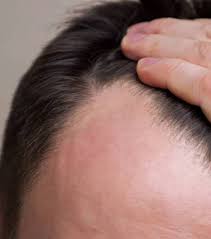
The anatomy. The triangular wedges of hair at each corner of the hairline, between the frontal hairline and the temporal hairline running down toward the sideburn. They frame the upper face, and their shape and position affect how wide or narrow the forehead reads.
What happens to them. In men, they recede as part of normal maturation — and further with androgenetic alopecia. In women, they are typically preserved — and where they are lost, traction alopecia is a frequent cause. Our afro hair transplant guide and our guide for women cover it.
Why they matter aesthetically. A hairline without temporal points looks bare at the corners — and the forehead reads as wider. And a hairline with points restored too fully looks juvenile on an adult face, which is the subject of the next section.
2. Maturation versus loss
This is the distinction that determines whether to operate.
The adolescent hairline. Low, with rounded corners and full temporal points. Which nearly every man has at eighteen and nearly none has at thirty-five.
The mature hairline. Higher, with defined temporal recession. This is normal. It is what an adult male hairline looks like, and it is not balding.
Why it matters here. A man who asks for his temporal points restored to where they were at eighteen is asking to look juvenile — and the result reads as transplanted immediately. And in a man with progressive loss, it is worse — because the recession continues behind the restored points, leaving islands.
What we do. Distinguish maturation from loss. And where the recession is maturation, we say that restoring it fully is not advisable — and propose a conservative softening instead, or nothing.
In women, the calculation is different — temporal loss is not normal maturation, and restoration is frequently appropriate.
Ask: « S’agit-il d’une maturation normale ou d’une perte ? »
3. The angles
This is the technical reason the area is demanding.
How temporal hair grows. Very flat against the scalp — the most acute angles anywhere on the head. Pointing downward and backward, following the direction of the temporal hairline toward the sideburn. And the direction changes across the point itself.
Why it decides the result. A graft placed at a frontal hairline angle stands away from the skin. In an area that is at eye level, at the side of the face, visible to everyone who looks at you. It is one of the most recognisable signs of a poorly executed transplant.
The technique. Single-hair grafts exclusively — temporal hair is fine and grows as single follicles. Fine grafts selected specifically — and coarse grafts here look wrong regardless of angle. Implanter placement, generally — for angle control and because there is usually existing hair to work among. And direction mapped across each point before placement. Our DHI guide explains implanter placement in detail.
What to ask: « Comment allez-vous reproduire les angles temporaux ? » and « Uniquement des cheveux fins et uniques ? »
4. Design: where the point sits
A small area where millimetres matter.
The considerations. How far forward the apex sits. The angle of the temporal hairline running down to the sideburn. Symmetry between the two sides — and most faces are slightly asymmetric to begin with, which we document. And the relationship to the frontal hairline — because the two must read as one continuous line.
The common errors. Points placed too low and too far forward — the juvenile look. Points that are too pointed or too geometric — natural points are irregular. A visible junction between the restored point and the frontal hairline. Asymmetry, which is more noticeable here than almost anywhere. And density that is too high — temporal points are naturally less dense than the frontal hairline, and packing them looks artificial.
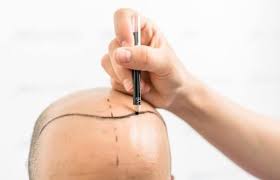
What we do. Draw both points with you, in a mirror, and photograph them before we begin. And design conservatively, because adding is straightforward and removing transplanted hair is not.
5. Where it fits with other work
With a hairline transplant. Frequently combined — and the two must be designed together, because they form one line. Our main hair transplant guide covers hairline design.
With a temporal lift. A different thing entirely — that is a facial procedure lifting the outer brow. Our temporal malar lift page covers it, and the names are confusingly similar.
In women with traction alopecia. A common and appropriate indication — where the tension has genuinely stopped. Our afro hair transplant guide covers the condition.
After a facelift. Where the sideburn has been displaced or a scar is visible — a genuinely useful repair indication. Our facelift and blepharoplasty page covers the hairline distortion that causes it.
6. Who should not have it
- Young men with maturation rather than loss.
- Men with progressive recession not on medical treatment — because the loss continues behind the restored points. Our guide for men covers medical treatment.
- Women with active traction — where the styling has not stopped.
- And anyone wanting the adolescent position.
7. Your Canadian options
Not covered by provincial plans.
And a practical point: this is a small procedure — frequently a few hundred grafts — and the absolute saving is modest. It is at its best combined with hairline work, where the design must be done together anyway.
Part two — preparing
8. From first contact to confirmed dates
The online consultation. Send photographs:
- Front, hairline visible, hair pushed back.
- Both temples specifically, straight on — the essential views.
- Both three-quarter views.
- And the donor area.
- Natural daylight, no filters.
Plus: your age, how the recession developed and over what period, family history, whether you take finasteride or minoxidil, for women, styling history and the workup described in our guide for women, and whether you smoke.
What you receive. A plan stating whether your recession is maturation or loss, whether restoration is advisable, the design proposed, the graft number, a medical treatment recommendation, the stay, and the cost. Within 24 to 48 hours. And where we think the recession should be left alone, the plan will say so.
Questions worth asking before you commit.
- « Maturation ou perte ? » — the question that decides it.
- « Où exactement placez-vous l’apex, et pourquoi là ? »
- « Comment reproduisez-vous les angles ? »
- « Le dessin sera-t-il fait avec moi et photographié ? »
- « Recommandez-vous un traitement médical ? »
Part three — the stay
9. Your stay in Tunisia
Three to five days — short, because the procedure is small.
Day 2 — consultation and design. Trichoscopy, donor assessment and, in men, assessment of miniaturisation behind the frontal hairline — because it predicts whether the recession will continue. Then the design, drawn on both temples with you in a mirror and photographed. Where we recommend against it, we say so here.
Day 3 — the procedure. Two to four hours, under local anaesthesia. FUE extraction, with fine grafts selected specifically. Implanter placement at acute angles, direction mapped across each point. Combined with hairline work where planned.
Day 4 — first wash and review. Performed at the clinic and demonstrated.
Days 4 to 5 — final review and departure. Final examination, and your documentation: an operative report stating grafts per temple, the donor site and the technique; written aftercare in French or English; and a letter for your Canadian physician.
10. The first weeks and the result
Our main hair transplant guide covers recovery and growth in full. Temple-specific notes:
- Crusting at the temples is visible — it is at the side of the face and less easily concealed than the top.
- Shedding at two to six weeks, as everywhere.
- Growth from three to four months, and a result at ten to twelve — frequently apparent slightly earlier than crown work, because the area is small and the density modest.
11. Your Canadian follow-up
Our main guide sets out the follow-up pathway. And continue your medical treatment — particularly relevant here, because recession continuing behind restored points is exactly the failure this page warns about.
Part four — practical matters
12. Canadian patients: travelling to Tunisia from your region
Aylan Clinic works with patients from every province and territory in Canada. And this is at its best combined with hairline work.
Montreal and the surrounding region. Montreal is our largest Canadian source for Tunisia, with connections through Paris, Frankfurt or Istanbul. Patients from Laval, Longueuil and Brossard are within easy reach of the airport.
Quebec City and across the province. From Quebec City and the Capitale-Nationale region including Lévis, most patients connect through Montreal — as do patients from Trois-Rivières, Sherbrooke, Drummondville and Saint-Jérôme. Gatineau patients depart from Ottawa or drive to Montreal.
On this page the francophone advantage is at the maturation conversation. You are being told that what you want restored is a normal adult change rather than a loss — and that restoring it fully would make you look juvenile rather than young. That is a fine distinction, and patients consistently tell us they accepted a more conservative design because they could follow it properly in French.
Acadia and New Brunswick. We work with patients from Moncton, Fredericton and Saint John. Moncton and the surrounding Acadian communities are served in French throughout.
Francophone Ontario. Sudbury, Thunder Bay and Sault Ste. Marie all have substantial francophone populations, served in French from first contact onward. Ottawa patients typically connect through Montreal.
Greater Toronto Area and southern Ontario. Toronto patients connect through European hubs. Across the wider Greater Toronto Area: Mississauga, Brampton, Markham, Vaughan, Richmond Hill and Oshawa. Along the lake: Hamilton, Burlington, Oakville, St. Catharines and Niagara Falls. In southwestern Ontario: London, the Waterloo region — Kitchener, Waterloo and Cambridge — plus Guelph, Windsor and Barrie. Kingston patients generally drive to Toronto or Montreal.
Vancouver and British Columbia. Vancouver patients face the longest journey — typically two connections. And for a two to four hour procedure that is substantial — better combined with hairline work, which is how most of our west coast patients have it. Across the Lower Mainland: Surrey, Burnaby and Richmond. From Victoria and Nanaimo, ferry or short flight. Kelowna, Abbotsford and Kamloops connect through Vancouver or Calgary.
Alberta. Calgary and Edmonton both offer European connections. Red Deer and Lethbridge patients generally drive to Calgary.
Manitoba and Saskatchewan. Winnipeg patients connect through Toronto or Montreal. Saint-Boniface is served in French. From Saskatoon and Regina, a domestic connection plus two further flights.
Atlantic Canada. Halifax routes through Montreal or Toronto. From Charlottetown and St. John’s, two or three connections.
Northern Canada. We work with patients from Whitehorse in Yukon, and from communities across the Northwest Territories and Nunavut. And the same point — a small procedure, better combined, and crusting at the temples is visible at the side of the face, which in a small community is noticed.
Our unshaven hair transplant page covers whether a no-shave approach suits you, which is frequently appropriate for temple work because the graft numbers are low.
We plan the full stay plus buffer.
How we handle the logistics. Your coordinator arranges transfers, confirms your hotel, and builds your schedule around your arrival time.
Five recommendations. Ask whether it is maturation or loss. Send straight-on photographs of both temples. Ask where exactly the apex will sit. Consider combining it with hairline work. And start medical treatment if the recession is progressive.
13. What your package includes
- Free consultation in French or English, with an assessment of whether restoration is advisable at all
- Trichoscopic assessment of donor density and, in men, miniaturisation predicting further recession
- A design drawn on both temples with you, in a mirror, and photographed
- Documentation of pre-existing asymmetry
- Blood tests where indicated
- A medical treatment recommendation
- FUE extraction with fine grafts selected specifically
- Implanter placement of single hairs at acute temporal angles, with direction mapped across each point
- Combination with hairline work where planned and quoted
- Unshaven approach where appropriate
- The first wash performed at the clinic and demonstrated
- Medication and aftercare supplies
- Review appointments across the stay
- Operative report stating grafts per temple, the donor site and the technique
- Written aftercare in French or English
- A letter for your Canadian physician
- Continued contact in French or English through the growth period
- Hotel accommodation, full board
- A companion at no extra cost, accommodated and fed in the same room
- Airport–clinic–hotel transfers
- A personal coordinator from arrival to departure
- French-speaking care throughout, with English available on request
14. Results by patient profile
| Profile | Situation | What was done |
|---|---|---|
| Where we said it was maturation | A patient of thirty-two wanting his eighteen-year-old temporal points back, with a mature hairline and no active loss | We explained that restoring them fully would look juvenile rather than young. A conservative softening instead, which framed his face without reading as transplanted |
| Traction alopecia in a woman | Temporal loss from years of tight styling, stopped two years earlier | Restoration at both temples, unshaven, with fine single grafts — a good indication |
| Combined with a hairline | A patient having frontal work, whose temples had receded with it | Designed together as one continuous line, which is the correct way |
| After a facelift | A patient whose sideburn had been displaced by a facelift incision | Grafts restoring the sideburn and temporal point, concealing the scar — a genuinely useful repair indication |
| Where the angle was the whole thing | A patient who had had temple grafts elsewhere placed at frontal angles, standing away from his scalp visibly | Correction meant removing and replacing them, which is difficult |
A patient from Québec. A patient who chose Tunisia for the design conversation. His comment was about the distinction: « On m’a expliqué la différence entre une maturation normale et une perte. Je voulais rajeunir, pas avoir l’air adolescent. J’ai compris la différence. »
15. Practical points to know
What to expect. An assessment of whether restoration is advisable. A design drawn on both temples and photographed. A two to four hour procedure under local anaesthesia. Visible crusting at the sides of your face for seven to ten days. And a result at ten to twelve months.
Recognised points. The general considerations are those set out in our main hair transplant guide and our FUE guide. Temple-specific: incorrect angles, producing hairs standing away from the scalp — very visible and difficult to correct; an apex placed too low or too far forward, producing a juvenile hairline; asymmetry, more noticeable here than elsewhere; excessive density, which looks artificial; coarse grafts, which look wrong in fine temporal hair; and continuing recession behind the restored points where medical treatment is not used.
Three things within your control. Accepting a conservative design. Starting medical treatment where the recession is progressive. And combining it with hairline work rather than travelling for it alone.
Who this suits. Women with temporal loss, men with genuine recession beyond maturation on medical treatment, traction alopecia where tension has stopped, and post-facelift repair.
Who should not have it. Men with normal maturation. Men with progressive recession not on treatment. And anyone wanting the adolescent position.
16. Price: how it is built and how to compare it
What determines your price. The number of grafts — typically a few hundred. Whether combined with hairline work. Whether an unshaven approach is used. And the length of stay. Itemised, and fixed once you approve it.
What is included. Everything listed in section 13. A companion is accommodated and fed at no additional cost.
How to compare quotes properly. Four checks.
- Has the clinic distinguished maturation from loss? A clinic willing to restore an adolescent position without that conversation is not advising you.
- How are the angles planned, and who creates the sites?
- Single fine grafts only?
- Is the design drawn and photographed before surgery?
Why the lowest quote is the wrong question here. Because this is a small area at eye level where design decides everything — and the two failure modes, wrong angles and a juvenile position, are both permanent and difficult to correct.
Canadian coverage. Not covered. Treatment of any complication is covered.
Getting your assessment. Send straight-on photographs of both temples, plus front, three-quarters and the donor area. A plan and quote follow within 24 to 48 hours, in French or English — including where the recession should be left alone. You can request a free, personalised quote to start.
17. Glossary
| Term | Meaning |
|---|---|
| Temporal point | The triangular wedge of hair at each hairline corner |
| Mature hairline | The higher, temporally recessed adult male hairline; normal |
| Apex | The forward tip of the temporal point |
| Temporal hairline | The line running down toward the sideburn |
| Single fine grafts | The only appropriate unit here |
| Traction alopecia | A frequent cause of temporal loss in women |
18. How Canadians search for this
- “Temple hair transplant Tunisia” — the most common search.
- “Golfes temporaux greffe Tunisie” — how most Quebec patients search.
- “Receding temples normal” — in men, yes: maturation rather than balding.
- “Temporal point restoration” — appropriate in women, and in men only beyond normal maturation.
- “Hair transplant temples angle” — the most acute on the scalp, pointing downward and backward. Grafts at frontal angles stand away visibly.
- “Temple hair loss women” — frequently traction alopecia, and treatable once the tension has stopped.
- “Sideburn restoration after facelift” — a useful repair indication.
- “Temple transplant looks fake” — usually wrong angles or an apex placed too low and forward.
- “Widow’s peak vs temporal points” — different features, and both affect how the hairline reads.
- “French speaking hair surgeon abroad” — Tunisia’s distinguishing feature.
In summary
The first question is whether your temporal recession should be restored at all.
In men it is normal maturation — almost every man loses the adolescent corners by his late twenties — and restoring them fully produces a juvenile hairline that reads as transplanted immediately. In women it is not normal, and restoration is frequently appropriate, with traction alopecia a common cause.
The angles here are the most acute on the scalp, pointing downward and backward toward the sideburn — and grafts placed at frontal hairline angles stand away from the skin, at eye level, at the side of your face. It is one of the most recognisable signs of poor work, and it is difficult to correct.
And this is a small area where design decides everything — a few hundred grafts, single and fine, with the apex position and the line to the sideburn judged in millimetres.
At Aylan Clinic Tunisia that means maturation distinguished from loss, both temples drawn with you and photographed, single fine grafts at temporal angles, and a willingness to tell you the recession should be left alone. It takes place in a French-speaking country, which matters at a conversation built on a fine distinction. With accommodation, full board and a companion at no extra cost, for up to 60% less than Canadian private prices.
Five things to hold onto.
- Ask whether it is maturation or loss. In men, receding corners are normal — and restoring them fully looks juvenile rather than young.
- The angles are the most acute on the scalp. Ask how they will be reproduced, and who creates the sites.
- Single fine grafts only. Coarse grafts look wrong in temporal hair regardless of angle.
- Design it with your hairline. They form one continuous line and must be planned together.
- If your recession is progressive, get on medical treatment — otherwise it continues behind the restored points.
Send straight-on photographs of both temples and you will have an honest answer within 24 to 48 hours — including where the recession should be left alone.
When you are ready for the practical detail, read the procedure page on temple hairline reconstruction in Tunisia, compare plastic surgery prices in Tunisia, explore the full hair transplant in Tunisia overview, or request a free, personalised quote.