
A mini facelift at Aylan Clinic Tunisia addresses early laxity of the lower face and jawline through shorter incisions and a more limited dissection, over a stay of seven to nine days, for up to 60% less than Canadian private prices. The honest question is not whether you can have one — it is whether you are one of the patients it actually suits, because most people who ask about a mini-lift are not. This guide exists to tell you that plainly: what the term really covers, what a mini-lift does and does not do, why it does not treat the neck, and what a realistic recovery looks like.
This is the guide. The procedure itself — technique, theatre time, stay and aftercare — is set out on our mini face lift in Tunisia page, and the figures sit alongside every other operation on our plastic surgery prices in Tunisia page. Read this guide first if you are still deciding whether a mini-lift is your operation at all; read the procedure page once you know that it is.
Three things before you read further. First, “mini facelift” is not a defined operation — it covers everything from a genuine limited-dissection lift to a skin-only tightening marketed under an invented brand name, and the differences are enormous. Second, a mini-lift does less, and lasts less long — that is not a criticism, it is the trade, and a patient who wants a full result from a mini operation will be disappointed. Third, it does not treat the neck — the single commonest reason patients are unhappy with one, because the neck is frequently what was bothering them in the first place. We would rather turn away a mini-lift patient than perform one that will not achieve what she came for.
One thing distinguishes Tunisia: it is a French-speaking country. Not a clinic with French-speaking staff — a country where French is a working language across medicine and daily life. This guide is organised around your journey: deciding, preparing, the stay, and what follows.
Part one — Deciding
1. What a mini facelift is
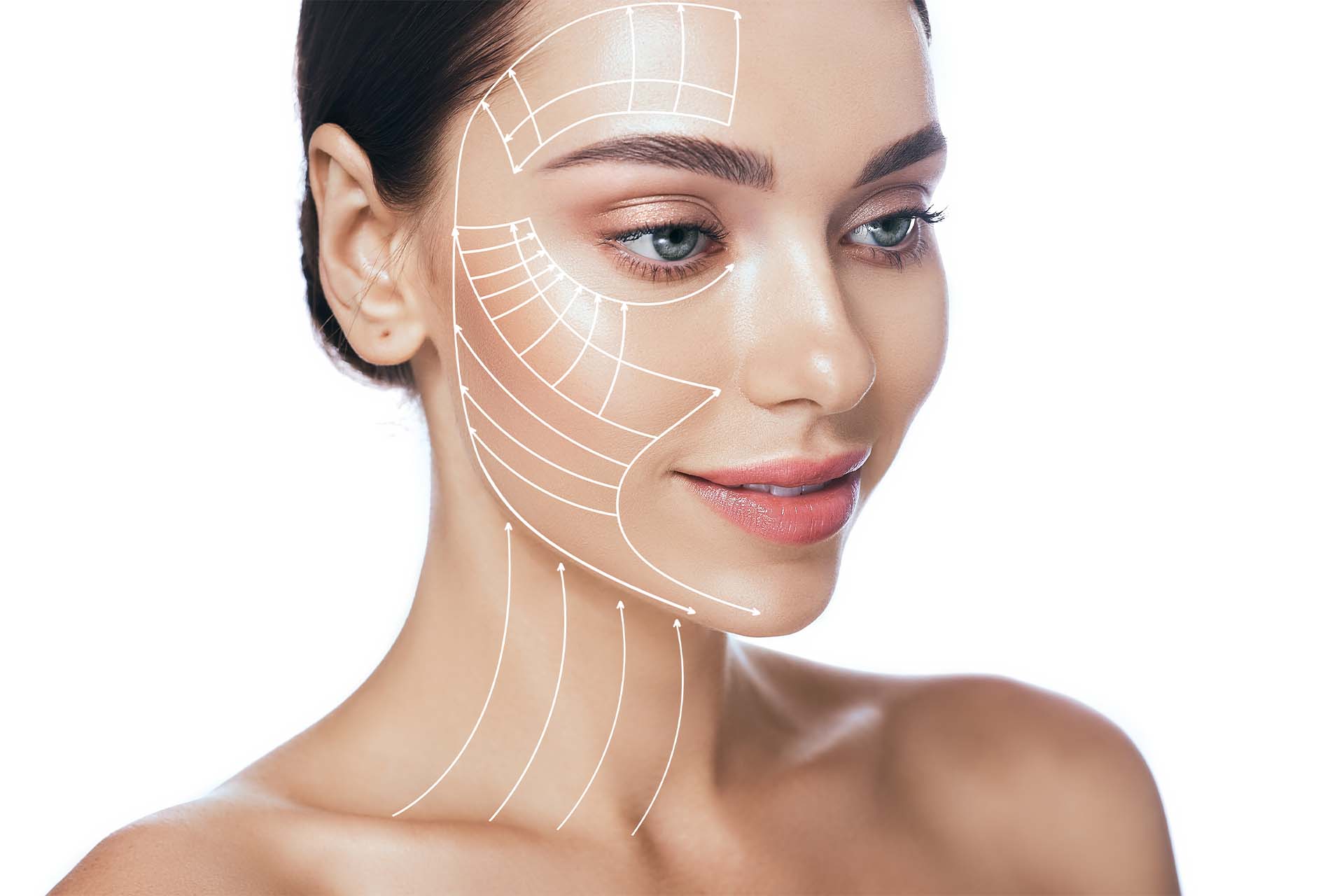
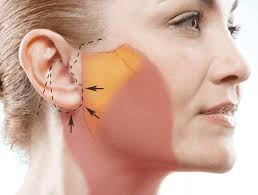
The principle. A shorter incision, a more limited dissection, and a lift focused on the lower face and jawline. Typically: an incision in front of the ear, frequently not extending as far behind the ear or into the hairline, with dissection limited to the area around the jowl and the lower cheek. The SMAS is addressed — and how it is addressed is the whole question, because that varies enormously from clinic to clinic. The operation takes one and a half to three hours, under general anaesthesia or sedation with local.
What it targets. Early jowling. Mild loss of jawline definition. Mild laxity of the lower cheek. That is the list, and it is deliberately short.
What “mini” actually refers to. The extent of the dissection and the length of the incisions — not a reduced operation on the same anatomy. And it is worth being precise: less dissection means less movement of tissue, which means less correction. That is the trade.
2. The term means different things
And the differences are enormous.
A genuine limited-SMAS lift. A short incision with real dissection of the SMAS, tightened by plication, SMASectomy or a short-flap technique. A legitimate operation with a real result in the right patient.
A skin-only “mini-lift”. Skin lifted and excess removed, with no work on the SMAS. Shorter recovery, minimal cost — and a result that is modest and short-lived, because the tension is on the skin. Where the skin takes the tension, the result relaxes quickly and the scars are poorer. This is what a great deal of cheap “mini facelift” surgery actually is.
Branded procedures. A number of trademarked names describe short-incision lifts — and most are variations on limited-SMAS technique with a marketing name attached. Some are performed well. Some are not. The name tells you nothing. The technique does.
Thread lifts. Not a facelift at all, and marketed adjacent to them. Barbed sutures placed under the skin to suspend tissue. Modest and short-lived effects in published series, and they leave scar tissue in the planes a surgeon would later dissect — which matters if you have a facelift afterwards.
| What is being sold | What is actually done | What you get |
|---|---|---|
| Genuine limited-SMAS lift | Short incision, real SMAS dissection, plication, SMASectomy or short flap | A real, worthwhile result in the right patient |
| Skin-only “mini-lift” | Skin lifted and trimmed, no SMAS work | Modest, short-lived, tension on the skin, poorer scars |
| Branded short-incision lift | Usually limited-SMAS technique with a trademarked name | Depends entirely on the surgeon, not the brand |
| Thread lift | Barbed suspension sutures under the skin | Not a facelift; modest, short-lived, scars the surgical planes |
What to ask. « Le SMAS sera-t-il disséqué et traité, ou seulement la peau ? » and « Où sera la tension du résultat ? » A surgeon performing a genuine limited-SMAS lift will answer both clearly.
3. What it does and does not do
This is the honest section.
What a mini-lift achieves. Improvement in early jowling. A cleaner jawline, where the laxity is mild. A modest lift of the lower cheek. In the right patient, a genuine and worthwhile result with a shorter recovery than a full lift.
What it does not achieve. It does not lift the midface — the cheek fat pad, the nasolabial fold and the area beneath the eye are not repositioned, because that requires releasing the retaining ligaments, and a mini-lift does not. It does not treat the neck. It does not correct significant laxity: where there is substantial skin excess, a short incision cannot redistribute it, and attempting to produces bunching behind the ear and a distorted earlobe. It does not last as long. And it does not treat skin quality, eyelids, brow or volume — as no lift does.
The honest framing. A mini-lift is a smaller operation producing a smaller result for a shorter time. For the right patient that is exactly the right trade. For the wrong patient it is an operation, a recovery and a cost, for a result that does not address what she came for.
4. It does not treat the neck
The single commonest source of disappointment, and it deserves its own section.
Why. A mini-lift’s incisions and dissection do not reach the neck. There is no submental incision, so the platysma is not repaired, subplatysmal fat is not addressed, and the jaw-to-neck angle is not created. Limited lateral tightening may produce a small improvement at the upper neck. It does not address bands or a blunted angle.
Why it matters. Because the neck is frequently what actually bothers the patient. A patient who says she wants “a little tightening of the jawline” frequently means she does not like her neck — and a mini-lift will not change it.
What we do. Ask directly what bothers you, and look at your neck. Where your neck is the issue, we say so — and a neck lift or a face and neck lift is the operation that covers it. Ask yourself before you enquire: when you look in the mirror, is it your jawline or your neck? The answer determines which operation you need.
5. How long it lasts
Shorter than a full lift, and worth knowing before you choose.
The published position. Limited-dissection lifts produce results of shorter duration than extended SMAS or deep plane techniques — because less tissue is repositioned and the fixation is less extensive. Skin-only lifts are shorter still.
What that means practically. Many patients are satisfied for several years, and some seek a fuller operation afterwards.
And a point worth making. Having a mini-lift does not prevent a full lift later — but it is not neutral either. The previously dissected planes are scarred, and a subsequent full lift is somewhat more demanding than a primary one. Which is why the next section matters: if you are likely to need a full lift within a few years, having a mini-lift first may not be the efficient route.
6. Who it genuinely suits
The right patient. Typically forty to fifty-five, though age matters less than anatomy. Early jowling without significant skin excess. A good neck — no bands, no significant laxity, a preserved angle. Good skin elasticity. Good volume, or volume addressed with fat grafting at the same operation. And realistic expectations of a modest, worthwhile improvement.
Also suited. A patient who has had a full lift some years earlier and wants a refresh, where a limited procedure is frequently appropriate. And a patient who genuinely cannot take the recovery of a full lift, for work or family reasons, and who accepts the trade.
Who it does not suit. Anyone whose main concern is the neck. Anyone with midface descent — flattened cheeks and deep nasolabial folds, which a mini-lift does not reach. Anyone with significant skin laxity, where a short incision cannot handle the excess. Anyone in their sixties or beyond with substantial descent, generally. And anyone who wants a durable, comprehensive result — for whom a mini-lift is a smaller operation done twice rather than a larger one done once.
What we do. Tell you honestly. A meaningful proportion of patients who enquire about a mini-lift are told that it will not do what they want — and offered either a fuller operation or, in some cases, a non-surgical alternative. Ask: « Un mini-lift fera-t-il vraiment ce que je veux, ou me faut-il davantage ? »
7. What to have instead, where it is not right
A face and neck lift — where the neck is involved, or where laxity is moderate. Our face and neck lift page covers it.
A deep plane lift — where the midface has descended. Our deep plane facelift page covers it, and sets the techniques against each other.
A neck lift alone — where the face has aged well and the neck has not, which happens. Our neck lift page sets out the test.
Fat grafting — where the problem is volume loss rather than descent. A hollowed cheek and temple read as ageing even where there is little sagging. Our facial fat grafting page covers it, and it is frequently the more appropriate operation in a younger patient.
Energy-based tightening — FaceTite and similar devices: more than external devices, less than surgery. Our guidance is honest about where the line sits.
And doing nothing yet — which is a legitimate answer. Where a patient in her early forties has minimal laxity, we will say that surgery is premature, and that good skin care, sun protection and, where appropriate, non-surgical treatment will serve her better for now.
8. Anaesthesia: a genuine practical advantage
One of the real benefits of a smaller operation.
The options. General anaesthesia, as for a full lift. Or sedation with local anaesthesia — which is feasible for a genuinely limited procedure, and which a number of patients prefer.
Why it matters. Less nausea and grogginess. A shorter recovery on the day. And for a patient with a reason to avoid general anaesthesia, a real advantage.
The caveat. It depends on the extent of what is being done. Where fat grafting, eyelids or anything else is combined, general anaesthesia is frequently more appropriate. And a patient who is anxious will generally do better asleep. We discuss it at planning, and the choice is yours within what is clinically sensible.
9. Your Canadian options
A mini facelift is not covered by any provincial plan, so the comparison is private against private. And a point worth making: the cost difference on a mini-lift is a smaller absolute figure than on a full lift, simply because the operation costs less to begin with. Which means the travel calculation is less favourable — and where you are having a mini-lift alone, that is worth weighing honestly. Where it is combined with other procedures, the arithmetic changes.
Part two — Preparing
10. From first contact to confirmed dates
The online consultation. Send photographs: front, neutral, hair back; both profiles; both three-quarter views; a profile with the chin lifted, showing the neck; and a photograph with the neck tensed — which shows whether you have platysma bands, and therefore whether a mini-lift is the wrong operation. Natural daylight, no makeup, no filters.
Plus: your age, what specifically bothers you — and be precise about whether it is the jawline or the neck — previous surgery and all injectables, threads and devices, your blood pressure, medications and supplements, keloid history, whether you smoke, and weight stability.
What you receive. A plan stating whether a mini-lift will achieve what you want and, where it will not, what would — the technique proposed, the stay, the recovery, and the cost. Within 24 to 48 hours. And where your photographs show a neck problem or midface descent, the plan will say that a mini-lift is not the operation.
Questions worth asking before you commit. « Un mini-lift fera-t-il ce que je veux ? » — the question this page exists for. « Le SMAS sera-t-il traité, ou seulement la peau ? » « Mon cou sera-t-il amélioré ? » — and the honest answer is largely no. « Combien de temps le résultat va-t-il durer ? » « Où votre chirurgien a-t-il été formé ? »
What to arrange at home before you travel. Stop smoking — four weeks before and after; skin flap necrosis is overwhelmingly a smoker’s complication, and it applies to a mini-lift as to any lift. Get your blood pressure controlled, and bring readings. Review medications and supplements — fish oil, vitamin E, ginkgo, ginseng and garlic tablets increase bleeding. Colour your hair beforehand if you do. And arrange time off — two weeks realistically.
11. Threads and fillers: tell us
Relevant here particularly, because patients considering a mini-lift have frequently had both.
Threads. Barbed suspension threads leave scar tissue in the exact planes a lift dissects through. They make the dissection harder and can affect the result. Tell us what was placed and when.
Fillers. Hyaluronic acid fillers distort the assessment of your true volume and tissue position — and where substantial filler is present we frequently dissolve it before assessing. Permanent and semi-permanent fillers cannot be dissolved, scar the planes, and make surgery harder. If you have had a filler you cannot name, try to find out what it was.
Energy devices. Radiofrequency and ultrasound treatments delivering energy into the deeper layers can produce fibrosis in the planes we dissect. Tell us what you have had.
Part three — The stay
12. Your stay in Tunisia
Seven to nine days — shorter than a full lift, and longer than a day case.
Day 1 — Arrival. Your driver meets you at the airport and takes you to your hotel with your companion. Nothing clinical today.
Day 2 — Consultation and planning. Full facial assessment — laxity, volume, midface position, jawline, and the neck. And a direct conversation about whether a mini-lift is the right operation. Where it is not, we say so, and set out what would be. Documentation of pre-existing asymmetry. Photographs, blood pressure, blood tests, anaesthetic assessment.
Day 3 — Surgery. One and a half to three hours, under general anaesthesia or sedation with local. Short incisions in front of the ear, extending around the lobe and a limited distance behind. Limited dissection, with the SMAS addressed by the technique agreed. Fat grafting where planned. Skin redraped and excess removed, without tension. Frequently no drain, depending on extent. Day case or one overnight.
Days 4 to 6 — Recovery. Swelling and bruising peak at day two to three — less than after a full lift, and more than patients expect. Head elevated, cold compresses, medication. Review appointments.
Days 7 to 8 — Suture removal. Sutures removed at around days five to seven.
Day 9 — Final review and departure. Final examination, and your documentation: an operative report describing exactly what was done — the extent of dissection and how the SMAS was treated; written aftercare in French or English; scar care; and a letter for your Canadian physician. Then your transfer to the airport.
13. If we say a mini-lift is not right for you
Stated explicitly, because it happens often. If, at the consultation, we conclude that a mini-lift will not achieve what you came for, we will say so. And you have three options: proceed with a fuller operation, where that is feasible within your stay and your arrangements — we will tell you honestly whether it is; return another time for the appropriate operation; or decide not to proceed, and that is the end of it, without pressure.
Ask about deposit terms before you travel, and get the answer in writing. A clinic that would perform a mini-lift on a patient who needs more, because she has already flown, is not one to travel to.
Part four — What follows
14. Recovery, honestly
| Period | What to expect |
|---|---|
| Week 1 | Swelling and bruising, sutures in. You will look operated. |
| Week 2 | Sutures out, bruising fading. Most patients are presentable with makeup toward the end of the second week. |
| Weeks 3 to 4 | Swelling settling, return to normal activity. |
| Months 2 to 3 | Firmness resolving, the result apparent. |
| Months 3 to 6 | Settled result, scars fading. |
What “shorter recovery” actually means. It means two weeks rather than three before you are comfortable in public. It does not mean a few days. A number of clinics market mini-lifts as a “weekend procedure” or a “lunchtime lift” — and that is not accurate for any operation that dissects tissue and places sutures. Plan two weeks.
Numbness. Less extensive than after a full lift, and still present — around the ear and the treated area, improving over two to four months.
15. Scars
In front of the ear, following the natural contour. Around the earlobe, and a limited distance behind. Shorter than a full lift’s — which is one of the genuine advantages.
What affects them: tension — and this is where skin-only mini-lifts fare worst — smoking, sun, and your own healing. Care: sun protection for a year, silicone gel or tape from around three weeks, and early treatment where a keloid tendency exists.
And the earlobe. Tension at the lobe produces distortion — the so-called pixie ear — and it is a recognisable sign of a lift done under skin tension.
16. Your Canadian follow-up
Little is required medically, though arrange a physician who will see you if needed.
What warrants urgent attention. Asymmetric swelling with increasing pain and tightness — possible haematoma, and urgent. A dark or dusky area of skin. Fever, spreading redness or discharge. Inability to move part of your face. Take your operative report with you.
Canadian coverage. Not covered. Treatment of any complication is covered.
Part five — Practical matters
17. Canadian patients: travelling to Tunisia from your region
Aylan Clinic works with patients from every province and territory in Canada.
Montreal and the surrounding region. Montreal is our largest Canadian source for Tunisia, with connections through Paris, Frankfurt or Istanbul. Patients from Laval, Longueuil and Brossard are within easy reach of the airport. For a seven to nine day stay this is a manageable trip.
Quebec City and across the province. From Quebec City and the Capitale-Nationale region including Lévis, most patients connect through Montreal — as do patients from Trois-Rivières, Sherbrooke, Drummondville and Saint-Jérôme. Gatineau patients depart from Ottawa or drive to Montreal.
On this operation the francophone advantage is at a specific moment: when we tell you a mini-lift will not do what you want. That is a disappointing message, and it is a nuanced one — explaining that the operation is real and useful and that it does not reach the structures causing your concern. Patients consistently tell us they understood it properly in French, and it is what lets them choose the right operation rather than the smaller one.
Acadia and New Brunswick. We work with patients from Moncton, Fredericton and Saint John. Moncton and the surrounding Acadian communities are served in French throughout.
Francophone Ontario. Sudbury, Thunder Bay and Sault Ste. Marie all have substantial francophone populations, served in French from first contact onward. Ottawa patients typically connect through Montreal.
Greater Toronto Area and southern Ontario. Toronto patients connect through European hubs. Across the wider Greater Toronto Area: Mississauga, Brampton, Markham, Vaughan, Richmond Hill and Oshawa. Along the lake: Hamilton, Burlington, Oakville, St. Catharines and Niagara Falls. In southwestern Ontario: London, the Waterloo region — Kitchener, Waterloo and Cambridge — plus Guelph, Windsor and Barrie. Kingston patients generally drive to Toronto or Montreal.
Vancouver and British Columbia. Vancouver patients face the longest journey — typically two connections. And here the cost consideration applies most sharply: for a mini-lift alone, the saving is a smaller absolute figure, and a two-connection journey each way is a substantial undertaking for a modest operation. Where it is combined with other procedures, the arithmetic changes — and we will set it out honestly. Across the Lower Mainland: Surrey, Burnaby and Richmond. From Victoria and Nanaimo, ferry or short flight. Kelowna, Abbotsford and Kamloops connect through Vancouver or Calgary.
Alberta. Calgary and Edmonton both offer European connections. Red Deer and Lethbridge patients generally drive to Calgary. Same consideration as British Columbia for a mini-lift alone.
Manitoba and Saskatchewan. Winnipeg patients connect through Toronto or Montreal, and Saint-Boniface is served in French. From Saskatoon and Regina, a domestic connection plus two further flights.
Atlantic Canada. Halifax routes through Montreal or Toronto. From Charlottetown and St. John’s, two or three connections.
Northern Canada. We work with patients from Whitehorse in Yukon, and from communities across the Northwest Territories and Nunavut. And here we would be particularly direct: for a northern patient, a long multi-connection journey for a modest and shorter-lasting operation is worth weighing carefully. Where a fuller operation is what your face needs, having that once is a better use of the journey than a mini-lift now and a full lift in five years. We will say so.
How we handle the logistics. Your coordinator arranges transfers, confirms your hotel, and builds your schedule around your arrival time.
Five recommendations. Ask yourself whether it is your jawline or your neck. Send the tensed-neck photograph. Ask whether the SMAS is treated or only the skin. Plan two weeks, not a weekend. And ask whether a fuller operation would serve you better.
18. What your package includes
- Free consultation in French or English, with an honest assessment of whether a mini-lift will achieve what you want
- Full on-site assessment: laxity, volume, midface position, jawline and neck
- Assessment with the neck tensed, to identify whether the neck is the real problem
- Documentation of pre-existing asymmetry
- Standardised photography, blood pressure assessment, blood tests, anaesthetic assessment
- A clear statement of technique — how the SMAS will be treated
- Mini facelift with limited dissection and SMAS treatment
- Fat grafting where indicated and quoted
- General anaesthesia or sedation with local, as agreed
- Dressings and medication
- Day case or one overnight
- Review appointments across the stay
- Suture removal
- Scar care supplies
- Operative report describing the extent of dissection and how the SMAS was treated
- Written aftercare in French or English
- A letter for your Canadian physician
- Continued contact in French or English after you return
- Hotel accommodation, full board
- A companion at no extra cost, accommodated and fed in the same room
- Airport–clinic–hotel transfers
- A personal coordinator from arrival to departure
- French-speaking care throughout, with English available on request
The clinical team: plastic surgeon, frequently French-trained; anaesthetist; dedicated nurse.
19. Results by patient profile
The right patient. A patient of forty-seven with early jowling, a good neck, good skin elasticity and good volume. A limited-SMAS lift with a short incision. Presentable at two weeks, and a result she describes as looking like herself, rested. This is the profile the operation is for.
Where the neck was the real issue. A patient who asked for a mini-lift and whose photographs showed prominent platysma bands. We explained that a mini-lift does not reach the neck, and that the neck was what she was actually unhappy with. She had a face and neck lift instead. This is the commonest conversation on this page.
Where the midface had descended. A patient of fifty-nine with flattened cheeks and deep nasolabial folds. A mini-lift would have improved her jawline and left the middle of her face unchanged. We recommended a deep plane lift.
Where we said it was too early. A patient of forty-one with minimal laxity, good volume and good skin. We said surgery was premature, and recommended sun protection, skin care and reassessment in a few years. She did not have an operation. That was the right answer.
A refresh after a previous lift. A patient who had had a full lift eleven years earlier and wanted a modest refresh. A limited procedure, with a shorter recovery. A good indication, and one that is frequently overlooked.
A patient from Sherbrooke. A patient who chose Tunisia so the consultation could happen in French. Her comment was about the honesty of being told no: « On m’a expliqué que ce que je voulais changer, c’était mon cou, et qu’un mini-lift ne le toucherait pas. J’aurais payé pour une opération qui ne réglait pas mon problème. »
20. Practical points to know
What to expect. An honest assessment of whether this is your operation — and a real possibility that it is not. A one and a half to three hour procedure, frequently under sedation with local. Swelling and bruising for two weeks. Sutures out at days five to seven. Two weeks before you are comfortable in public — not a weekend. And a modest, worthwhile result of shorter duration than a full lift.
Recognised points. Limited facelift techniques are well established, and your surgeon will discuss the considerations relevant to you. The main ones: haematoma, less common than after a full lift and not absent, with blood pressure control the largest modifiable factor; skin flap necrosis, overwhelmingly a smoker’s complication; facial nerve injury, uncommon and usually temporary; numbness, less extensive than after a full lift; earlobe distortion, more likely where tension was taken on the skin; scarring, including hairline distortion; asymmetry; under-correction, which is the inherent limitation rather than a complication; early relaxation of the result, particularly after skin-only techniques; and the general risks of anaesthesia.

Three things within your control. Being honest with yourself about whether it is your jawline or your neck. Not smoking. And blood pressure control.
Who this suits. Early jowling, a good neck, good skin elasticity, good volume, and realistic expectations of a modest result.
Who should have something else. Anyone whose main concern is the neck. Anyone with midface descent. Anyone with significant laxity. And anyone who wants a durable comprehensive result — for whom a mini-lift is a smaller operation done twice.
21. Price: how it is built and how to compare it
What determines your price. The technique — limited-SMAS or skin-only, and they should not cost the same. Whether fat grafting or anything else is combined. The anaesthetic. And the length of stay. Itemised, and fixed once you approve it. Our plastic surgery prices in Tunisia page sets the mini-lift alongside every other facial operation.
What is included. Everything listed above — the assessment, planning consultation, the operation, fat grafting where quoted, the anaesthetic, dressings and medication, review appointments, suture removal, scar care, the operative report, written aftercare, the letter for your Canadian physician, continued contact, hotel with full board, transfers, and your coordinator. A companion is accommodated and fed at no additional cost.
What sits outside it. Flights, travel insurance, and any revision or subsequent fuller operation.
How to compare quotes properly — four checks. Is the SMAS treated, or only the skin? That is the most important check, and a skin-only lift is a different operation with a shorter-lived result and poorer scars. Has the clinic told you what it will not do — specifically the neck and the midface? What is the honest recovery — two weeks, not a weekend? And how long is the result expected to last?
Why the lowest quote is a particular concern here. Because “mini facelift” is the category in which skin-only surgery is most often sold as something more. A cheap mini-lift is frequently a skin tightening — which relaxes within a year or two and leaves scars under tension. And because the cheapest mini-lift of all is the one you did not need.
Canadian coverage. Not covered. Treatment of any complication is covered.
Getting your figure. Send photographs from all angles, including the tensed-neck view, in daylight and unfiltered. Plus your age, what bothers you — jawline or neck — previous surgery and all injectables, threads and devices, your blood pressure, medications, keloid history, whether you smoke, and weight stability. A plan and quote follow within 24 to 48 hours, in French or English — including where a fuller operation would serve you better.
22. Glossary
- Mini facelift — a short-incision, limited-dissection lift of the lower face; not a defined operation
- SMAS — the fibrous and muscular layer beneath the skin
- Limited-SMAS technique — genuine dissection and treatment of the SMAS through short incisions
- Skin-only lift — skin tightened without SMAS work; shorter-lived, poorer scars
- Plication — folding and suturing the SMAS
- Retaining ligaments — not released in a mini-lift, which is why the midface does not move
- Pixie ear — earlobe distortion from skin tension
- Thread lift — suspension sutures; not a facelift, and they scar the surgical planes
23. How Canadians search for this
- “Mini facelift Tunisia cost” — the most common search. Ask whether the SMAS is treated.
- “Mini lifting Tunisie” — how most Quebec patients search.
- “Mini facelift vs full facelift” — a smaller operation, a smaller result, a shorter duration, and it does not treat the neck or the midface.
- “Does a mini facelift help the neck” — largely no, and it is the commonest source of disappointment.
- “Weekend facelift” — not accurate. Plan two weeks.
- “How long does a mini facelift last” — shorter than a full lift, and shorter still where only skin was tightened.
- “Mini facelift at 40” — frequently too early. We will say so.
- “Thread lift vs mini facelift” — threads are not a facelift, their effects are modest and short-lived, and they scar the planes a surgeon would later dissect.
- “Best age for a mini facelift” — anatomy matters more than age.
- “Mini facelift scars” — shorter than a full lift’s, and poorer where tension was taken on the skin.
- “French speaking facelift surgeon abroad” — Tunisia’s distinguishing feature.
In summary
Most people who ask about a mini facelift are not the patient it suits — and this guide exists to tell you honestly whether you are. “Mini facelift” is not a defined operation: a genuine limited-SMAS lift produces a real result in the right patient; a skin-only tightening marketed under the same name does not, and it is the category in which that substitution happens most often. It does less and lasts less long, which is the trade rather than a criticism. And it does not treat the neck — the commonest reason patients are unhappy with one, because the neck was frequently what was bothering them.
At Aylan Clinic Tunisia that means an assessment that tells you whether a mini-lift will achieve what you came for, a clear statement of how the SMAS will be treated, and an honest recovery expectation of two weeks rather than a weekend. It takes place in a French-speaking country, which matters at the moment we tell you a smaller operation will not do what you want. With accommodation, full board and a companion at no extra cost, for up to 60% less than Canadian private prices.
Five things to hold onto. Ask yourself whether it is your jawline or your neck. Ask whether the SMAS is treated or only the skin. Plan two weeks, not a weekend. Ask whether a fuller operation would serve you better — a mini-lift done twice is not more efficient than a full lift done once. And if you are in your early forties with minimal laxity, it may be too early, and we will say so rather than operate.
Send your photographs and you will have an honest answer within 24 to 48 hours — including where a smaller operation is not the right one.
Next steps: read the procedure page for mini face lift in Tunisia, compare the figures on our plastic surgery prices in Tunisia page, explore the wider facial surgery in Tunisia overview, or request a free, personalised quote.