
FaceTite at Aylan Clinic Tunisia uses radiofrequency energy delivered beneath the skin to melt fat and contract tissue in the lower face and neck, through entry points of a few millimetres, over a stay of four to six days, for up to 60% less than Canadian private prices. The short answer is that it suits a specific group — and this page is about where this technology genuinely sits, because it is marketed at both ends of a range it does not occupy.
Three things before you read further. It does more than external devices and considerably less than a facelift, and it is frequently marketed as a « non-surgical facelift », which it is not: it is a minimally invasive procedure performed under local anaesthesia with a real recovery. Skin quality is what determines whether it works, and in a patient with genuinely lax skin it under-delivers, which is the commonest disappointment. And it does nothing to the platysma, so a patient with visible neck bands will not have them treated, whatever the fullness improves. This guide is the companion to our procedure page, Facetite Quantumrf Jawline Treatment in Tunisia, which sets out how the treatment itself runs, the stay and the aftercare; the figures behind the arithmetic are on our plastic surgery prices in Tunisia page. One thing distinguishes Tunisia: it is a French-speaking country. Not a clinic with French-speaking staff — a country where French is a working language across medicine and daily life. This guide is organised around your journey: deciding, preparing, the stay, and the months that follow.
Part one — deciding
1. What the technology is
The principle. Radiofrequency energy is delivered through a probe placed beneath the skin, with a paired electrode on the surface. Energy passes between them, heating the tissue in between. This does two things: it melts fat, which is then aspirated or reabsorbed, and it heats the fibrous layer beneath the skin, producing contraction and, over months, a collagen response.
How it is performed. Under local anaesthesia with tumescent infiltration, frequently with light sedation. Entry points of a few millimetres, typically beneath the chin and near the ears. Forty-five minutes to ninety minutes for the lower face and neck. Temperature is monitored at the skin surface and at the probe — and this matters, because the therapeutic effect and the risk of burn sit close together, as section 8 explains.
Quantum RF and the related devices. Several devices deliver radiofrequency beneath the skin under different trade names, including systems combining it with liposuction or with external energy. The principle is the same. Marketing names differ and the technology is broadly comparable; what matters more is the operator, the temperature control, and whether you are the right patient. The same family of technology is used on the body — see BodyTite QuantumRF contouring for that application.
2. Where it actually sits
This is the framing section, and the point of this page.
| External RF / ultrasound | FaceTite | Mini facelift | Face and neck lift | |
|---|---|---|---|---|
| Invasive | No | Minimally | Yes | Yes |
| Anaesthetic | None | Local ± sedation | Local or general | General |
| Fat reduction | Minimal | Yes | Limited | Yes |
| Skin tightening | Modest | Moderate | By excision | By excision |
| Skin removed | No | No | Yes | Yes |
| Platysma treated | No | No | No | Yes |
| Midface | No | No | No | With deep plane |
| Recovery | None | 7–14 days | ~2 weeks | ~3 weeks |
| Duration | Months | Years | Years | Longest |
| Scars | None | Tiny entry points | Visible | Visible |
The honest positioning. It does substantially more than an external device. It does substantially less than a facelift — because it does not remove skin, and it does not touch the platysma. It is not a « non-surgical facelift », and that phrase is the source of most disappointment with it. The surgical alternatives it is measured against are the mini facelift, the combined face and neck lift and the deep plane facelift.
Where it genuinely wins. No skin excision means no visible scars, which for some patients is decisive. Local anaesthesia rather than general. A shorter recovery than surgery. And a genuine result in the right patient — section 5.
3. Skin quality decides it
This is the assessment that determines whether it works for you.
The mechanism depends on retraction. The energy contracts the fibrous layer and stimulates collagen — and the skin must then retract onto the smaller contour. Skin that retracts does well. Skin that does not, does not: no amount of energy makes inelastic skin behave elastically.
What predicts retraction. Age, because younger skin retracts better, broadly. Sun damage, which degrades elastin, and which is frequently the limiting factor in patients who look younger than their skin. Smoking history. Prior significant weight loss, which stretches skin. And genetics.
The test. Pinch the skin beneath your jaw and release it. If it snaps back quickly, retraction is likely to be good. If it returns slowly, or sits creased, retraction will be limited — and surgery, which removes the excess, is the more honest answer.
What we do. Assess it, and tell you. A meaningful proportion of patients who enquire about FaceTite have skin that will not retract adequately, and we recommend surgery, or nothing. Ask: « Ma peau va-t-elle se rétracter suffisamment ? »
4. It does not treat the platysma
This is the second limitation, and the commonest unmet expectation in the neck.
Why. The platysma bands are muscle. Radiofrequency delivered in the fat layer above it does not divide, tighten or reposition muscle.
What this means. A patient with visible vertical neck bands will still have them. The neck may look slimmer, because fat was reduced — and the bands will be unchanged, and occasionally more visible because there is less fat concealing them.
Who this affects. Anyone with cords visible at rest or on tensing. Our neck contouring and neck lift guide has the test: tense your neck and look.
What we do. Assess your neck tensed, and tell you if bands are present. Where they are, a platysmaplasty is what addresses them — and that is surgery. Ask: « Ai-je des cordes platysmales, et cette technique va-t-elle les traiter ? » The honest answer to the second half is no.
5. Who it genuinely suits
The right patient. Mild to moderate fullness with good skin elasticity — typically late thirties to early fifties, though skin matters more than age. A defined problem of contour rather than laxity: a soft jawline, early jowling, submental fullness. No platysma bands, per section 4. Someone who does not want a scar, and for whom that is decisive. Someone who cannot take a three-week recovery, and who accepts the trade. Or someone unwilling to have general anaesthesia.
Also suited. As an adjunct to surgery — radiofrequency-assisted contouring of the neck combined with a facelift — which some surgeons use to treat areas the lift does not reach.
Who it does not suit. Significant skin laxity, per section 3, where excision is the answer. Visible platysma bands, per section 4. Subplatysmal fullness — fat beneath the muscle, which this cannot reach any more than liposuction can; our double chin treatment guide covers the four causes. Midface descent, since this does nothing for the cheek or the nasolabial fold. And a patient expecting a facelift result, per section 2.
What we do. Tell you which group you are in. And a meaningful proportion of enquiries are redirected to surgery, or told that nothing is needed yet.
6. The realistic result
What changes. Reduced fullness beneath the chin and along the jawline. A modest tightening, frequently described in published series as in the range of a fifth to a third of what surgery achieves. A cleaner jawline contour. And no scars beyond entry points of a few millimetres.
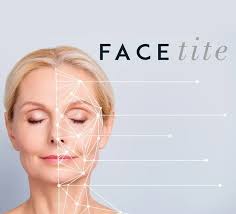
The timeline. Immediate change from fat reduction and swelling, which is misleading. Then swelling, for weeks. Then progressive tightening over three to six months, as collagen remodels. And the final result at six to twelve months. This is slow, and patients expecting a visible change at four weeks are disappointed by swelling.
Duration. Years — the fat removed does not return in the same way, and the collagen effect is durable. Ageing continues from there, and it does not prevent future laxity.
What it will not do. It will not produce a facelift result. And a clinic showing you facelift before-and-after images for this procedure is misrepresenting it.
7. FaceTite or a facelift? The honest comparison
Where FaceTite is the better choice. Good skin elasticity with a contour problem. A patient who will not accept scars. A patient who cannot take three weeks. A patient in her forties for whom surgery is genuinely premature, and where this buys useful years.
Where a facelift is the better choice. Genuine skin excess, because removing it is the only way to address it. Platysma bands. Midface descent. And a patient who wants the result that surgery produces and is prepared for the recovery.
The sequence question. Having FaceTite does not prevent a facelift later. It does create some fibrosis in the treated plane, which makes a subsequent dissection somewhat less clean, though considerably less so than threads. Worth knowing, and not a reason to avoid it.
Our position. We will tell you which you need. And where a patient wants FaceTite because she is not ready for surgery, and her skin will retract, that is a reasonable choice we support — with honest expectations.
8. The specific risk: thermal injury
Worth stating plainly, because it is the risk that matters here.
Why. The technology works by heating tissue, and the therapeutic temperature and the injurious temperature are not far apart.
What can happen. Burns, to the skin or to the deeper tissue, producing blistering, areas of discoloration, irregular contour, or in more marked cases, scarring.
What prevents it. Temperature monitoring at the skin surface and at the probe tip, which is built into the devices and which must be respected. Continuous movement of the probe, rather than dwelling in one area. Adequate tumescent infiltration, which protects the tissue. And operator experience, which is the largest factor.
What to ask. « Comment la température est-elle contrôlée pendant le traitement ? » And: « Combien de ces traitements réalisez-vous par an ? » A clinic that describes the monitoring and the technique is doing it deliberately.
And nerve considerations. The marginal mandibular nerve, supplying the lower lip, runs in the treatment area of the jawline and neck. Thermal injury to it is uncommon and produces temporary weakness of the lower lip. It is a recognised consideration, and it is why the depth and the temperature matter.
9. Where we would want more information first
- Significant skin laxity — section 3.
- Platysma bands — section 4.
- Previous facial surgery, threads or energy treatments, which change the plane.
- Fillers, and permanent fillers in particular, which can behave unpredictably with heat.
- Any implant in the treatment area.
- Autoimmune or connective tissue disease, which affects healing.
- Smoking, which impairs skin retraction — and retraction is the whole mechanism.
- A keloid tendency.
- And any pacemaker or implanted electronic device, which is a specific contraindication with radiofrequency, and which patients must disclose.
10. Your Canadian options
Not covered. FaceTite and comparable devices are available privately in Canada, and availability is reasonably good in major centres. Which means the comparison is private against private — and for a procedure of this scale, the absolute saving is modest. Travelling for it alone is worth weighing, and combining it with other treatment changes the arithmetic.
Part two — preparing
11. From first contact to confirmed dates
The online consultation. Send photographs: front, relaxed; both profiles; a profile with the chin lifted, showing the neck; a photograph with the chin tucked down, showing fullness and laxity; and — importantly — one with your neck tensed, showing whether you have platysma bands, per section 4. That is the view most often missing. Natural daylight, no makeup, no filters.
Plus: your age, height and weight, whether the fullness is soft or firm, whether your skin snaps back when pinched (section 3), previous surgery, threads, fillers or energy treatments, any pacemaker or implanted device, medications, whether you smoke, and your weight stability.
What you receive. A plan stating whether your skin will retract adequately (section 3), whether you have platysma bands (section 4), whether the fullness is above or beneath the muscle, what is realistically achievable, and whether surgery would serve you better. Within 24 to 48 hours.
Questions worth asking before you commit.
- « Ma peau va-t-elle se rétracter suffisamment ? » — section 3.
- « Ai-je des cordes platysmales ? » — section 4.
- « Ma graisse est-elle au-dessus ou en dessous du muscle ? »
- « Quel pourcentage du résultat d’un lifting puis-je espérer ? » — an honest answer is a fraction.
- « Comment la température est-elle contrôlée ? » — section 8.
- « Où votre praticien a-t-il été formé ? »
What to arrange at home before you travel. Stop smoking — four weeks before and after, and it matters because retraction is the mechanism. Disclose any pacemaker or implanted device. Tell us about all fillers, threads and energy treatments. Stabilise your weight. And arrange time off: ten to fourteen days, with swelling and a compression garment.
Part three — the stay
12. Your stay in Tunisia
Four to six days.
Day 1 — arrival. Your driver meets you at the airport and takes you to your hotel with your companion. Nothing clinical today.
Day 2 — consultation and assessment. A full assessment: skin elasticity, by pinch and release (section 3); platysma bands, with the neck tensed (section 4); fat distribution, above or beneath the muscle, which determines what is reachable; the jawline and the chin position; documentation of pre-existing asymmetry; photographs, and blood tests where indicated. Then the planning conversation, including what proportion of a surgical result to expect (section 6). Where we conclude surgery is what you need, we say so — and section 15 applies.
Day 3 — treatment. Forty-five minutes to ninety minutes. Local anaesthesia with tumescent infiltration, frequently with light sedation. Entry points of a few millimetres, beneath the chin and near the ears. Radiofrequency delivered with continuous probe movement and temperature monitoring (section 8). Fat aspirated where indicated. A compression garment applied (section 13). Day case.
Days 4 to 5 — recovery. Swelling, peaking at day two to three — and the area will look fuller than before, which is normal and disconcerting. Bruising, frequently extending down the neck. Firmness and lumpiness beneath the skin, which is expected and which settles over months. Garment worn as instructed. Review appointment.
Day 6 — final review and departure. Final examination, and your documentation: a treatment record stating the device, the energy delivered and the areas treated; written aftercare in French or English, including garment instructions; and a letter for your Canadian physician. Then your transfer to the airport.
13. The garment and the first weeks
The garment. Worn continuously for the first days, then at night for several weeks — your specific instruction is in your plan. It supports skin retraction onto the new contour, and it reduces swelling. Patients stop it early because it is uncomfortable, and that is the commonest aftercare error.
Swelling. Peaks at day two to three, and makes the area fuller than before treatment. Substantially settled by three to four weeks, and continuing for months.
Firmness and lumpiness. Expected, and frequently more pronounced than patients anticipate. It settles over two to four months, and massage helps where advised.
Numbness. Of the treated area, common and usually temporary.
Restrictions. No strenuous activity for two weeks. No sun on the treated area for months, because heated skin pigments readily. And no smoking.
Part four — the months that follow
14. The slow result
Restated because it is the commonest source of premature disappointment.
| Period | What you see |
|---|---|
| Weeks 1 to 4 | Swelling. The area looks worse, not better. |
| Weeks 4 to 8 | Swelling settling, firmness present. |
| Months 3 to 6 | The tightening effect emerging as collagen remodels. |
| Months 6 to 12 | The final result. |
What this means. Do not judge it at six weeks. And a patient who wants to see a change for an event in two months should not have this — surgery gives a faster visible result, which is counterintuitive and true.
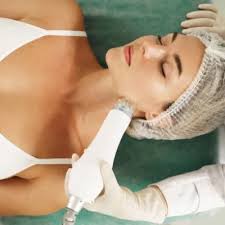
Longevity. Years. Ageing continues, and a second treatment is possible after a year where more is wanted.
15. If we recommend surgery instead
Stated explicitly, because it happens frequently. If your skin will not retract adequately, or you have platysma bands, or your fat is beneath the muscle, we will say that surgery is what you need. And you can proceed with it if that is feasible within your arrangements, return another time, or decide not to. No pressure, and no renegotiation. Ask about deposit terms before you travel. A clinic willing to treat a patient with lax skin and bands, because she has already flown, is producing a disappointed patient.
16. Your Canadian follow-up
Little is required, though arrange a physician who will see you if needed.
What warrants attention. Blistering, or an area of skin that becomes discoloured, painful or hard — possible thermal injury, assessed promptly. Increasing pain, redness or fever — infection. Weakness of the lower lip — section 8, assessed. Persistent hard lumps beyond three months. Take your treatment record.
Canadian coverage. Not covered. Treatment of any complication is covered.
Part five — practical matters
17. Canadian patients: travelling to Tunisia from your region
Aylan Clinic works with patients from every province and territory in Canada. And this technology is widely available privately in Canada, which is worth weighing against a long journey.
Montreal and the surrounding region. Montreal is our largest Canadian source for Tunisia, with connections through Paris, Frankfurt or Istanbul. Patients from Laval, Longueuil and Brossard are within easy reach of the airport. For a four to six day stay this is manageable, and it is the region where this makes most practical sense as a standalone treatment.
Quebec City and across the province. From Quebec City and the Capitale-Nationale region including Lévis, most patients connect through Montreal — as do patients from Trois-Rivières, Sherbrooke, Drummondville and Saint-Jérôme. Gatineau patients depart from Ottawa or drive to Montreal. On this treatment the francophone advantage is at the expectations conversation. You are being told where this sits — more than an external device, considerably less than a facelift — and what proportion of a surgical result to expect. That is a nuanced positioning, and patients consistently tell us they understood it properly in their own language and chose accordingly.
Acadia and New Brunswick. We work with patients from Moncton, Fredericton and Saint John. Moncton and the surrounding Acadian communities are served in French throughout.
Francophone Ontario. Sudbury, Thunder Bay and Sault Ste. Marie all have substantial francophone populations, served in French from first contact onward. Ottawa patients typically connect through Montreal.
Greater Toronto Area and southern Ontario. Toronto patients connect through European hubs. Across the wider Greater Toronto Area: Mississauga, Brampton, Markham, Vaughan, Richmond Hill and Oshawa. Along the lake: Hamilton, Burlington, Oakville, St. Catharines and Niagara Falls. In southwestern Ontario: London, the Waterloo region — Kitchener, Waterloo and Cambridge — plus Guelph, Windsor and Barrie. Kingston patients generally drive to Toronto or Montreal.
Vancouver and British Columbia. Vancouver patients face the longest journey, typically two connections. And here we would be direct: this technology is available in Vancouver, and a two-connection journey for it alone is difficult to justify. Where it is combined with other treatment, the arithmetic changes. Across the Lower Mainland: Surrey, Burnaby and Richmond. From Victoria and Nanaimo, ferry or short flight. Kelowna, Abbotsford and Kamloops connect through Vancouver or Calgary.
Alberta. Calgary and Edmonton both offer European connections. Red Deer and Lethbridge patients generally drive to Calgary. Same consideration — and high-altitude sun matters for pigmentation, section 13.
Manitoba and Saskatchewan. Winnipeg patients connect through Toronto or Montreal. Saint-Boniface is served in French. From Saskatoon and Regina, a domestic connection plus two further flights.
Atlantic Canada. Halifax routes through Montreal or Toronto. From Charlottetown and St. John’s, two or three connections.
Northern Canada. We work with patients from Whitehorse in Yukon, and from communities across the Northwest Territories and Nunavut. And here access is the argument: where this technology is not available locally and a journey south would be required anyway, the comparison improves. Sun protection matters through a northern spring, with reflection off snow. We plan the full stay plus buffer.
How we handle the logistics. Your coordinator arranges transfers, confirms your hotel, and builds your schedule around your arrival time. Five recommendations: do the pinch test; send the tensed-neck photograph; disclose any pacemaker or implanted device; ask what proportion of a surgical result to expect; and wear the garment as instructed.
18. What your package includes
- Free consultation in French or English, with an honest assessment of whether your skin will retract adequately
- Full on-site assessment: skin elasticity, platysma bands with the neck tensed, fat distribution above or beneath the muscle, jawline and chin position
- Documentation of pre-existing asymmetry
- Standardised photography, blood tests where indicated
- A planning conversation stating what proportion of a surgical result to expect
- Radiofrequency-assisted contouring with temperature monitoring and continuous probe movement
- Tumescent local anaesthesia, with light sedation where preferred
- Fat aspiration where indicated
- Your compression garment
- Medication
- Day case
- Review appointment before departure
- Treatment record stating the device, energy delivered and areas treated
- Written aftercare in French or English, including garment instructions and sun protection
- A letter for your Canadian physician
- Continued contact in French or English after you return
- Hotel accommodation, full board
- A companion at no extra cost, accommodated and fed in the same room
- Airport–clinic–hotel transfers
- A personal coordinator from arrival to departure
- French-speaking care throughout, with English available on request
The clinical team. A plastic surgeon experienced in energy-assisted contouring, frequently French-trained; an anaesthetist where sedation is used; and a dedicated nurse.
19. Results by patient profile
The right patient. A patient of forty-three with submental fullness, a softening jawline, and skin that snapped back briskly on pinching. FaceTite to the lower face and neck, under local with light sedation. At eight months her jawline was cleaner and her submental fullness reduced — and she has no scars. She had been told honestly that it was a fraction of a surgical result, and it was what she wanted.
Where the skin would not retract. A patient of fifty-eight with marked laxity and skin that creased on pinching. We explained that retraction is the mechanism, and that her skin would not deliver it. We recommended a face and neck lift. Treating her would have produced a slimmer neck with the same loose skin — and a disappointed patient.
Where the bands were the issue. A patient whose tensed-neck photograph showed prominent platysma cords. We explained that radiofrequency does not treat muscle, and that reducing fat could make her bands more visible, not less. She had a neck lift with platysmaplasty.
Where the fat was beneath the muscle. A patient with submental fullness that could not be pinched. Subplatysmal fat, which this technology cannot reach any more than liposuction can. Our double chin guide covers the four causes, and this is one of them.
As an adjunct. A patient having a facelift, with fullness in an area the lift did not address. Radiofrequency contouring combined at the same operation. A legitimate and increasingly common use.
A patient from Québec. A patient who chose Tunisia so the positioning could be explained in French. Her comment was about the honesty of the comparison: « On m’a dit clairement que ce n’était pas un lifting sans chirurgie, et quelle proportion du résultat je pouvais espérer. C’est la première fois qu’on me donnait un chiffre. »
20. Practical points to know
What to expect. A pinch test and a tensed-neck assessment before anything is planned. A forty-five to ninety minute treatment under local. Tiny entry points and no visible scars. Swelling making the area fuller for three to four weeks. Firmness and lumpiness for two to four months. A compression garment. And a slow result over six to twelve months.
Recognised points. Radiofrequency-assisted contouring is well established, and your surgeon will discuss the considerations relevant to you. The main ones: thermal injury — burns, blistering, discoloration or scarring — the specific risk of this technology, section 8; inadequate skin retraction, producing a slimmer but still loose neck, the commonest disappointment; contour irregularity or over-reduction, producing a hollow; prolonged firmness and lumpiness; prolonged swelling; numbness, usually temporary; marginal mandibular nerve weakness, uncommon and usually temporary; pigmentation, particularly with sun exposure; infection, uncommon; asymmetry; and the general risks of the anaesthetic used.

Three things within your control. Being honest about your skin quality — the pinch test. Wearing the garment as instructed. And sun protection for months.
Who this suits. Adults with good skin elasticity, mild to moderate fullness, no platysma bands, and realistic expectations of a fraction of a surgical result.
Who should have surgery instead. Significant laxity. Platysma bands. Subplatysmal fat. Midface descent. And anyone expecting a facelift result.
21. Price: how it is built and how to compare it
What determines your price. The areas treated. Whether it is combined with surgery. The anaesthetic. And the length of stay. Itemised, and fixed once you approve it.
What is included. Everything in section 18. A companion is accommodated and fed at no additional cost.
What sits outside it. Flights, travel insurance, and any subsequent surgery.
How to compare quotes properly — four checks. Has your skin elasticity been assessed? Retraction is the mechanism, and a quote issued without a pinch test may be for a treatment that will under-deliver. Have your platysma bands been checked, with the neck tensed (section 4)? What proportion of a surgical result is stated — because a clinic promising a facelift result is misrepresenting it? And how is temperature controlled (section 8), which is the safety question?
Why the lowest quote is the wrong question here. Because the technology is broadly comparable between devices, and the operator is not. Thermal injury is an operator-dependent risk, and the commonest poor outcome is treating a patient whose skin was never going to retract. Both are assessment and technique, not price.
Canadian coverage. Not covered. Treatment of any complication is covered.
Getting your assessment. Send photographs including the tensed-neck view and a chin-tucked view, in daylight and unfiltered. Plus your age, height and weight, whether your skin snaps back when pinched, previous surgery, threads, fillers or energy treatments, any pacemaker or implanted device, medications, and whether you smoke. A response follows within 24 to 48 hours, in French or English — including where surgery would serve you better.
22. Glossary
| Term | Meaning |
|---|---|
| FaceTite | Radiofrequency-assisted contouring delivered beneath the skin |
| Radiofrequency | Energy used to melt fat and contract tissue |
| Tumescent anaesthesia | Dilute local anaesthetic infiltrated into the tissue |
| Skin retraction | The mechanism by which tightening occurs |
| Platysma | The neck muscle; not treated by this technology |
| Subplatysmal fat | Fat beneath the muscle; not reachable |
| Thermal injury | Burn from excessive heating; the specific risk |
| Marginal mandibular nerve | Supplies the lower lip; runs in the treatment area |
| Compression garment | Supports retraction onto the new contour |
23. How Canadians search for this
- « FaceTite Tunisia cost » — the most common search.
- « FaceTite Tunisie » — how most Quebec patients search.
- « Is FaceTite a non-surgical facelift » — no. It is minimally invasive, performed under local, with a real recovery, and it does considerably less than a facelift. Section 2.
- « FaceTite vs facelift » — a fraction of the result, no scars, a shorter recovery; and it does not remove skin or treat the platysma.
- « FaceTite loose skin » — retraction is the mechanism, and skin that does not retract will not tighten. Section 3.
- « FaceTite neck bands » — it does not treat them, and reducing fat can make them more visible.
- « FaceTite results how long » — a slow reveal over six to twelve months, which surprises patients.
- « FaceTite burn » — thermal injury is the specific risk, and temperature control and operator experience are what prevent it.
- « FaceTite lumps » — firmness and lumpiness for two to four months are expected.
- « Quantum RF » — a comparable device; the principle is the same and the operator matters more than the name.
- « FaceTite before and after » — look for images at six to twelve months, not at four weeks.
- « French speaking facial surgeon abroad » — Tunisia’s distinguishing feature.
In summary
This technology is marketed at both ends of a range it does not occupy. It does substantially more than an external radiofrequency or ultrasound device — it is delivered beneath the skin, under local anaesthesia, with a real recovery. And it does substantially less than a facelift, because it removes no skin and does not touch the platysma. « Non-surgical facelift » is the phrase that causes most of the disappointment with it.
Two assessments determine whether it works for you: whether your skin retracts, which is the mechanism and which a pinch test predicts, and whether you have platysma bands, which it does not treat. And the result is slow — six to twelve months — which means a patient who needs a visible change in two months is better served by surgery, counterintuitive as that is.
At Aylan Clinic Tunisia that means a pinch test and a tensed-neck assessment before anything is planned, temperature monitoring throughout, an honest statement of what proportion of a surgical result to expect, and a willingness to recommend surgery instead — which we do frequently. It takes place in a French-speaking country, which matters at a positioning conversation that is genuinely nuanced. With accommodation, full board and a companion at no extra cost, for up to 60% less than Canadian private prices.
Five things to hold onto. Do the pinch test: retraction is the mechanism, and skin that creases rather than snapping back will not tighten, whatever energy is delivered. Check for neck bands with your neck tensed, because this does not treat muscle and reducing fat can make bands more visible. Ask what proportion of a surgical result to expect, because a clinic promising a facelift result is misrepresenting it. Expect a slow reveal over six to twelve months, and do not plan it around an event in two months. And remember it is widely available in Canada: travelling for it alone is worth weighing, and combining it changes the arithmetic.
Send your photographs, including the tensed-neck view, and you will have an honest answer within 24 to 48 hours — including where surgery would serve you better. Read the procedure page, Facetite Quantumrf Jawline Treatment in Tunisia, for how the treatment and the stay actually run; compare the figures on our plastic surgery prices in Tunisia page; explore the wider facial surgery in Tunisia section; or request a free, personalized quote.