
If a clinic has offered you a stem cell treatment for hair loss, the most useful question is what is actually in the syringe, because in most cases it is not stem cells. The phrase is used commercially for a range of preparations, platelet-rich plasma, exosome products, processed fat and various proprietary mixtures, most of which contain few or no characterised stem cells, and none of which is an approved treatment for hair loss in Canada. This guide explains what stem cells are, what is usually being injected under that label, where regulators stand, why the term sells so well, and which options genuinely have evidence behind them.
This is a background guide, written to be read before you commit to anything. If you have already been quoted for a cell-based scalp injection and want to see how such a treatment is actually organised, assessed and followed up, read our procedure page on stem cell hair therapy in Tunisia, which sets out what a responsible clinic can and cannot offer. For the wider hair programme and its costs, our hair transplant in Tunisia overview and our plastic surgery prices in Tunisia page give the practical framing. Our guide to PRP for hair loss covers the regenerative option that does have evidence behind it.
Three things before you read further. There is no approved stem cell treatment for androgenetic alopecia, not in Canada, not in the United States, and not in other major jurisdictions, and regulators have taken enforcement action against clinics marketing unapproved cell products. The word is doing the selling: “stem cell” carries scientific authority, and it is frequently attached to preparations that would sound considerably less impressive described accurately. And the genuine science is at the research stage: hair follicle regeneration and cell-based therapy are active fields with real laboratory progress, and that is not the same as a treatment you can buy today.
1. What stem cells actually are
The definition
Stem cells are cells capable of self-renewal and of differentiating into other cell types. This is a real and important biological category, and one where the science is genuine. The problem is not the biology. The problem is what the word is attached to in a commercial setting.
The types relevant to this field
Mesenchymal stromal cells, taken from bone marrow, fat or umbilical cord, are the source most commonly invoked in cosmetic settings. Hair follicle stem cells reside in the bulge region of the follicle and drive the hair cycle; these are the biologically relevant ones for hair, and they are not what is being injected in a clinic setting. Induced pluripotent stem cells are a research tool, not a clinical product here.
The distinction that matters
Injecting mesenchymal cells or cell-derived material is not the same as restoring hair follicle stem cells. The marketing frequently blurs the two, and the blur is where the premium price lives. When a clinic says “stem cells”, ask which cells, from where, and what they are supposed to do to the follicle.
2. What is usually in the syringe
This is the practical question, and it has a small number of likely answers.
Platelet-rich plasma
PRP is frequently marketed as a “stem cell” or “regenerative” treatment. It contains platelets and growth factors. It does not contain stem cells in any meaningful quantity. PRP does have genuine evidence, and our PRP guide grades it honestly, but describing it as stem cell therapy is inaccurate.
Exosome products
Exosomes are extracellular vesicles, frequently derived from stem cells. Derived from is not the same as containing, and exosome products are not approved as hair loss treatments. Our exosomes guide covers the regulatory position and the evidence in full.
Processed adipose tissue
Fat is harvested, processed and injected, sometimes described as containing the “stromal vascular fraction”. That fraction does contain a mixed cell population including some stromal cells. Whether a given preparation contains a meaningful, characterised stem cell population depends entirely on the processing, and most clinic-level preparations are not characterised at all. Regulators treat substantially manipulated cell products as drugs requiring authorisation.
Conditioned media and cell culture supernatants
This is the fluid cells were grown in, containing secreted factors. No cells. It is marketed under various names, and the names rarely make the absence of cells obvious.
Proprietary blends
Products sold under trade names, with composition not always disclosed. Where composition is not disclosed, you cannot assess what you are being offered, and neither can anyone reviewing your care afterwards.
The question to ask
Ask directly: what exactly is in the syringe, and what characterisation can you provide me? A clinic that answers precisely, naming the source, the processing method and the characterisation, is operating transparently. A clinic that answers “stem cells” without specifying any of those three is not.
| What is offered | What it actually contains | Honest status |
|---|---|---|
| Platelet-rich plasma | Platelets and growth factors, your own blood | Real evidence, not stem cell therapy |
| Exosome product | Extracellular vesicles, often stem cell derived | Derived from, not containing; not approved |
| Processed fat | Mixed cell population, rarely characterised | Depends entirely on processing |
| Conditioned media | Secreted factors, no cells | Cell-free by definition |
| Proprietary blend | Composition not always disclosed | Cannot be assessed |
3. The regulatory position
This is the decisive point, and it matters more than any argument about the underlying biology.
In Canada
Cell therapies are regulated as biologic drugs, requiring authorisation from Health Canada before they can be administered as treatment. There is no authorised stem cell product for androgenetic alopecia.
In the United States
The Food and Drug Administration regulates cell-based products as biological products and drugs, and has stated that clinics offering unapproved stem cell treatments are operating outside the law. Enforcement actions and public safety warnings have followed, including in response to reported serious adverse events.
Internationally
Positions vary, and the general picture is that stem cell products for hair loss have not completed approval pathways in major jurisdictions.
Why this matters to you
A treatment administered outside a regulatory framework has not been assessed for identity, purity, potency, consistency, safety or efficacy. Which means you cannot know what you received, whether it was what was claimed, or whether it was prepared to any standard. That is the core issue, more than any question about the biology.
4. Why the term is used
Stated plainly, because recognising the pattern is useful. “Stem cell” carries enormous scientific authority. It signals cutting-edge, regenerative and transformative, and it justifies a premium price. That creates a commercial incentive to apply it loosely.
The patterns
PRP rebranded as stem cell therapy is the commonest. Exosomes described as stem cell treatment, derived from rather than containing, is next. Fat injection described as stem cell transfer is a third. And tiered packages, where the top tier is distinguished by a “stem cell” component, are a fourth.
What an honest description sounds like
“This is platelet-rich plasma, prepared this way, with this evidence base.” Or: “This is an exosome product from this source, which is not an approved treatment, with this evidence.” Both are legitimate things to offer with honest labelling. “Stem cell therapy” without specification is not a description. It is a claim.
5. The real science, fairly
The field deserves accuracy in both directions. Hair follicle regeneration is a genuine and active area of research. Work on follicle neogenesis, dermal papilla cell culture and cell-based approaches to hair restoration is ongoing in serious laboratories, and some of it is promising.
The problems being worked on are real: maintaining the inductive capacity of cultured dermal papilla cells, achieving correct hair direction and cycling, and establishing safety. Clinical trials of some cell-based approaches have been conducted or are underway. And none of that has produced an approved therapy.
Which is the honest position: this may become a treatment. It is not one yet. A clinic selling today’s injection as tomorrow’s science is trading on a future that has not arrived.
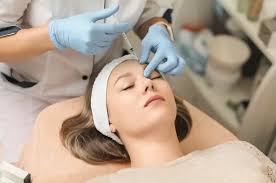
6. What we offer, and what we do not
Stated plainly. We do not offer stem cell therapy for hair loss. We do not consider it an established treatment, for the reasons on this page.
We offer PRP, described accurately as platelet-rich plasma, with the evidence graded honestly, as our PRP guide sets out. We do not offer exosomes, and our exosomes guide explains why. And we consider medical treatment and hair transplantation the interventions with the strongest evidence for androgenetic alopecia. Where a patient asks us about stem cells, we set out this page.
7. What has evidence instead
For androgenetic alopecia
Finasteride and minoxidil have strong evidence, are available on prescription in Canada, and are frequently covered by drug plans. Our men’s guide and our women’s guide set out how each is used.
For coverage where follicles are gone
A transplant, because nothing injected replaces a follicle that no longer exists. Our main hair transplant guide covers what that involves.
As a regenerative adjunct
PRP: moderate evidence, your own blood, an interrogable protocol. It is an adjunct, not a substitute for a DHT blocker.
For women
Investigation first, including iron, thyroid and androgens, because a treatable medical cause is common and the investigation is covered in Canada.
And low-level laser therapy
Modest published evidence, home devices available, a reasonable non-pharmacological addition rather than a primary treatment.
8. If you are considering it anyway
It is your decision, and it is better made informed. Ask what is in the syringe, and get it in writing. Ask the source, the processing method and the characterisation. Ask whether the product is authorised as a treatment, and by which authority. Ask what human trials support that specific product. Ask how it compares with PRP, which has stronger evidence.
Continue your established medical treatment, because none of these preparations is a DHT blocker. Have objective measurement, meaning baseline and follow-up trichoscopic density rather than photographs alone. And set a point at which you will stop if there is no measurable benefit.
9. Your Canadian position
There is no authorised stem cell treatment for hair loss in Canada. What is available is: finasteride and minoxidil, on prescription and frequently covered; PRP, privately; investigation of medical causes, covered; dermatological assessment, covered; and hair transplantation, privately.
That list contains the better-supported options, and for most patients one of them is the answer.
| Option in Canada | Evidence | Coverage |
|---|---|---|
| Finasteride and minoxidil | Strong | Prescription, frequently covered |
| Investigation of medical causes | Essential, especially for women | Covered |
| Dermatological assessment | Diagnostic | Covered |
| PRP | Moderate, adjunct | Private |
| Hair transplantation | Strong for coverage | Private |
| Stem cell therapy | No approved product | Not authorised |
In summary
If a clinic has offered you a stem cell treatment for hair loss, the useful question is what is actually in the syringe, because in most cases it is not stem cells. The term is used commercially for platelet-rich plasma, exosome products, processed fat and proprietary blends, most containing few or no characterised stem cells. PRP has genuine evidence and is not a stem cell treatment. Exosomes are derived from stem cells, which is a different thing, and are not approved. And fat preparations are rarely characterised at all.
There is no approved stem cell treatment for androgenetic alopecia in Canada, the United States or other major jurisdictions, and regulators have taken enforcement action against clinics marketing unapproved cell products. The underlying science is genuine and at the research stage: follicle neogenesis and cell-based restoration are serious fields with real progress, and that is not the same as a treatment you can buy today.
We do not offer it. We offer PRP, described accurately as platelet-rich plasma, with the evidence graded honestly, and we consider medical treatment and transplantation the interventions with the strongest evidence.
Five things to hold onto
- Ask what is in the syringe, and get the source, processing and characterisation in writing. “Stem cells” without specification is a claim, not a description.
- There is no approved stem cell treatment for hair loss in Canada or the United States, and enforcement action has followed unapproved marketing.
- PRP is not stem cell therapy. It has real evidence, and it is platelets and growth factors.
- The research is genuine and unfinished. This may become a treatment. It is not one yet.
- The best-supported options are finasteride and minoxidil, a transplant where follicles are gone, and PRP as an adjunct, and for women, investigation first.
If you have androgenetic alopecia and are not on medical treatment, that is the conversation that will do most for your hair. If you still want to look at what a cell-based scalp injection would involve and how it would be assessed, our procedure page on stem cell hair therapy in Tunisia is the place to go next, alongside the hair transplant in Tunisia overview and our plastic surgery prices in Tunisia page. You can also request a free, personalised quote and tell us what you have been offered, and we will tell you plainly what it is.